Emotional Strength
Emotional strength is the ability to navigate and recover from difficult feelings, setbacks, and challenges with greater ease and confidence. It's not about suppressing emotions or never feeling sadness, anger, or fear—it's about developing the capacity to acknowledge these feelings, process them constructively, and move forward with purpose. Research shows that emotional strength is a learnable skill that develops over time through consistent practice and self-awareness, allowing you to respond to life's challenges rather than react to them emotionally.
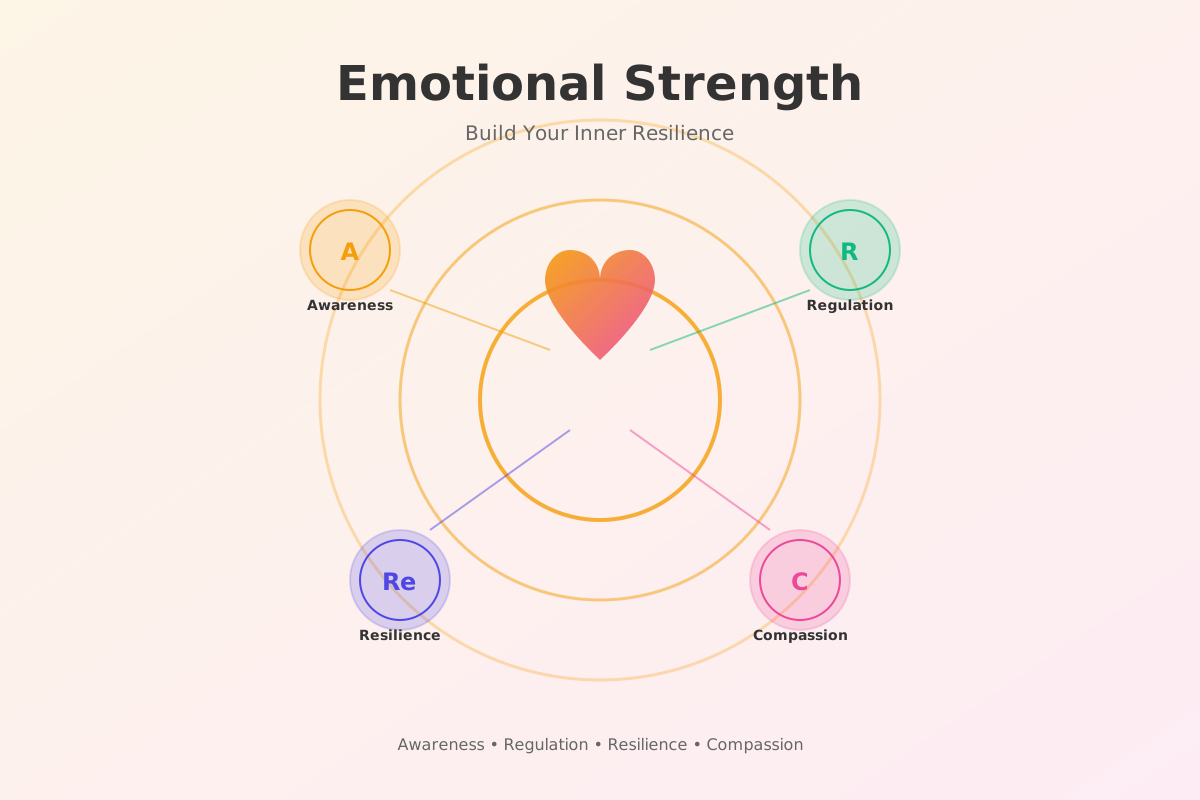
When you build emotional strength, you gain control over your reactions, enhance your relationships, and improve your overall wellbeing.
Emotional strength transforms how you handle stress, recover from setbacks, and maintain inner peace.
What Is Emotional Strength?
Emotional strength is the capacity to recognize, understand, and effectively manage your emotions while maintaining balance and resilience in the face of adversity. Unlike physical strength, which involves muscular power, emotional strength refers to psychological and emotional resilience—the ability to bounce back from challenges and maintain emotional equilibrium during difficult times.
Not medical advice.
Emotionally strong individuals are not immune to negative emotions. Instead, they've developed healthy coping mechanisms and emotional regulation skills that allow them to process difficult feelings without becoming overwhelmed. They understand that emotions are temporary states of being, not permanent conditions, and they've learned techniques to navigate emotional challenges effectively.
Surprising Insight: Surprising Insight: Research from Frontiers in Psychology (2025) shows that people who practice acknowledging and validating their emotions, rather than suppressing them, experience 40% less anxiety and greater overall life satisfaction.
The Core Components of Emotional Strength
This diagram shows how emotional awareness, regulation, and resilience combine to create emotional strength.
🔍 Click to enlarge
Why Emotional Strength Matters in 2026
In an increasingly complex world with constant information flow, work pressures, and social demands, emotional strength has become essential for wellbeing. 2025 research published in the Journal of Psychology demonstrates that individuals with higher emotional strength experience significantly lower rates of depression, anxiety, and burnout. They're also better equipped to handle workplace stress, maintain healthy relationships, and pursue meaningful goals with persistence.
Emotional strength directly impacts your physical health. Studies show that people with strong emotional regulation have better sleep quality, lower blood pressure, and stronger immune function. By developing emotional strength, you're investing in both your mental and physical wellbeing. Furthermore, emotionally strong people model healthy emotional processing for others—children, partners, and colleagues—creating a ripple effect of improved emotional health in their communities.
In professional environments, emotional strength correlates with leadership effectiveness, team collaboration, and career advancement. Companies increasingly recognize that emotionally intelligent and emotionally strong employees are more engaged, productive, and less likely to experience burnout. This skill is no longer optional—it's becoming a core competency in modern workplaces.
The Science Behind Emotional Strength
Emotional strength is rooted in neuroscience and psychology research demonstrating how the brain processes and regulates emotions. The prefrontal cortex—the brain region responsible for decision-making, planning, and emotional regulation—becomes stronger through repeated practice of healthy emotional responses. Neuroplasticity research shows that by consistently applying emotional regulation techniques, you literally rewire neural pathways, making emotional strength easier to access over time.
A 2024 meta-analysis in Personality and Individual Differences found that individuals with high emotional strength and self-efficacy were 45% more likely to engage in positive citizenship behaviors and maintain better relationships. Additionally, research on emotion regulation strategies reveals that people who practice mindfulness and cognitive reframing develop stronger emotional resilience and experience fewer symptoms of mental health disorders.
The Emotional Strength Development Process
This diagram illustrates how awareness, practice, and reinforcement build emotional strength over time.
🔍 Click to enlarge
Key Components of Emotional Strength
Emotional Awareness
The foundation of emotional strength is the ability to identify and name your emotions. Emotional awareness means noticing when you're feeling anxious, frustrated, sad, or joyful—and understanding why. Research shows that people who can accurately identify their emotions experience less anxiety and are better able to manage stress. Start by developing a feelings vocabulary beyond 'good' or 'bad,' recognizing nuances like disappointed, overwhelmed, hopeful, or energized. This awareness creates space for choice in how you respond.
Emotional Regulation
Emotional regulation is the ability to manage your emotions constructively without suppressing or avoiding them. This involves using evidence-based strategies like deep breathing, cognitive reframing, journaling, and mindfulness to process difficult emotions. Emotionally strong people don't let anger cause actions they regret, don't get stuck in sadness, and don't allow fear to paralyze them. Instead, they acknowledge the emotion, understand its message, and respond thoughtfully.
Emotional Resilience
Resilience is your capacity to recover from adversity, setbacks, and emotional challenges. Emotionally resilient individuals bounce back from disappointments, learn from failures, and maintain optimism despite obstacles. This isn't about ignoring pain or difficulty—it's about moving through challenges with the understanding that temporary setbacks don't define your future. Resilience develops through gradually facing challenges, building self-efficacy, and cultivating a growth mindset.
Self-Compassion
Emotional strength includes treating yourself with kindness during difficult times. Self-compassion—offering yourself the same understanding you'd give a good friend—enhances emotional strength and reduces harsh self-criticism. Research shows that people who practice self-compassion recover faster from setbacks, experience less anxiety and depression, and maintain greater emotional resilience. Instead of criticizing yourself for struggling, acknowledge that difficulty is part of human experience.
| Strategy | How It Works | Key Benefit |
|---|---|---|
| Mindfulness meditation | Observe emotions without judgment; notice thoughts passing like clouds | Reduces emotional reactivity by 35% |
| Journaling | Write emotions and experiences to gain clarity and process feelings | Improves emotional processing; reduces anxiety |
| Cognitive reframing | Challenge unhelpful thoughts and replace with realistic perspectives | Builds resilience; reduces stress by 40% |
| Physical exercise | Regular movement releases endorphins and reduces stress hormones | Improves mood; enhances emotional regulation |
| Social connection | Share experiences and feelings with trusted people; build support networks | Increases resilience; improves mental health outcomes |
How to Apply Emotional Strength: Step by Step
- Step 1: Pause and name your emotion: When you feel a strong emotion arising, take a moment to pause. Instead of immediately reacting, identify what you're feeling: anger, anxiety, sadness, disappointment. Use specific emotion words to increase emotional awareness.
- Step 2: Breathe consciously: Use techniques like the 4-7-8 breathing method (inhale for 4 counts, hold for 7, exhale for 8) to activate your parasympathetic nervous system and calm your emotional response. This creates space between emotion and action.
- Step 3: Question your thoughts: Ask yourself, 'Is this thought absolutely true?' or 'What evidence supports or contradicts this thought?' This cognitive reframing reduces emotional reactivity and increases perspective.
- Step 4: Practice self-compassion: Speak to yourself as you would to a friend struggling with similar challenges. Replace 'I'm so stupid for this mistake' with 'I'm learning and will do better next time.' This builds emotional resilience.
- Step 5: Move your body: Physical activity—whether walking, yoga, dancing, or exercise—processes stress hormones and releases endorphins. Just 15 minutes of movement significantly improves emotional regulation.
- Step 6: Write about your experience: Journaling clarifies emotions and helps you process experiences. Write about what happened, how you felt, and what you learned without judgment.
- Step 7: Reach out for support: Share your feelings with trusted friends, family, or professionals. Social connection activates healing and reminds you that you're not alone in your struggle.
- Step 8: Get adequate sleep: Emotional regulation becomes nearly impossible when sleep-deprived. Prioritize 7-9 hours of quality sleep nightly to maintain emotional strength and resilience.
- Step 9: Practice mindfulness: Spend 5-10 minutes daily observing your thoughts and emotions without judgment. This strengthens your ability to notice feelings without becoming overwhelmed by them.
- Step 10: Reflect and celebrate progress: Weekly, note situations where you managed your emotions well. Celebrate small victories in emotional growth. This reinforces neural pathways supporting emotional strength.
Emotional Strength Across Life Stages
Young Adulthood (18-35)
During young adulthood, emotional strength development focuses on establishing healthy emotional patterns and coping mechanisms. Young adults are navigating identity formation, career choices, and relationship development—all requiring emotional resilience. Building emotional strength during this stage involves developing awareness of emotional patterns, setting healthy boundaries, and learning to process emotions constructively. Peer relationships and mentorship become important sources of emotional support.
Middle Adulthood (35-55)
In middle adulthood, emotional strength supports balancing multiple responsibilities—career advancement, family obligations, aging parents, and evolving relationships. This life stage often involves significant transitions and challenges that test emotional resilience. Developing and maintaining emotional strength becomes crucial for preventing burnout, managing stress effectively, and modeling healthy emotional processing for younger generations. Many middle-aged adults find that mindfulness practices, therapy, and peer support groups strengthen their emotional capacity.
Later Adulthood (55+)
Later adulthood presents unique emotional challenges including health changes, retirement transitions, and loss of loved ones. Emotional strength becomes essential for maintaining mental health, finding meaning and purpose, and adapting to life changes. Research shows that older adults with strong emotional resilience and social connections experience better health outcomes and greater life satisfaction. Maintaining emotional strength through this stage involves continued social engagement, physical activity, and meaning-making practices.
Profiles: Your Emotional Strength Approach
The Overthinker
- Techniques to break rumination cycles and redirect anxious thoughts
- Grounding and present-moment practices like 5-4-3-2-1 sensory awareness
- Permission to feel emotions without needing to solve or understand them immediately
Common pitfall: Dwelling on worst-case scenarios and over-analyzing emotions until they intensify
Best move: Use cognitive defusion: notice thoughts passing like clouds without engaging. When worried, ground yourself in the present moment with sensory awareness.
The Avoider
- Safe ways to gradually face and process avoided emotions
- Structured techniques for emotion naming and expression
- Gradual exposure to emotional awareness through journaling or talking
Common pitfall: Suppressing emotions until they emerge as physical symptoms, outbursts, or chronic stress
Best move: Start with journaling or body scanning to gradually reconnect with emotions. Build emotional vocabulary before processing feelings with others.
The Reactor
- Pause practices and tools to create space between emotion and action
- Physical outlets for emotional intensity like vigorous exercise or breathwork
- Understanding patterns in what triggers strong emotional reactions
Common pitfall: Acting on impulse during emotional intensity, leading to regret and damaged relationships
Best move: Implement a 10-minute pause rule: when strongly emotional, wait 10 minutes before responding. Use breathwork and movement to regulate intensity.
The People-Pleaser
- Permission to prioritize their own emotional needs and boundaries
- Techniques for assertive communication without guilt
- Validation that setting limits is healthy, not selfish
Common pitfall: Suppressing their own needs to manage others' emotions, leading to resentment and emotional exhaustion
Best move: Practice saying 'no' with compassion. Recognize that honoring your emotional needs strengthens relationships long-term by preventing burnout.
Common Emotional Strength Mistakes
A major mistake is equating emotional strength with emotional suppression—believing that strong people don't feel or express emotions. In reality, emotionally strong people feel deeply but process emotions constructively. Suppression creates internal pressure, increases stress hormones, and eventually leads to emotional dysregulation. Instead of hiding feelings, develop capacity to acknowledge and work through them.
Another common error is trying to reach emotional strength overnight through willpower alone. Emotional strength is a skill requiring consistent practice over weeks and months. You wouldn't expect physical strength from one workout; similarly, emotional resilience develops gradually. Many people give up after a few attempts when they don't experience immediate transformation. Sustainable growth comes from small, consistent practices that compound over time.
A third mistake is isolating yourself when struggling. People often believe that emotional strength means handling challenges alone, but research consistently shows that social connection and support are critical for developing emotional resilience. Reaching out for help—whether to friends, family, therapists, or support groups—is a sign of emotional intelligence, not weakness. Building strong support networks is foundational to long-term emotional strength.
Emotional Strength Myths vs. Reality
This diagram contrasts common misconceptions about emotional strength with evidence-based understanding.
🔍 Click to enlarge
Science and Studies
Extensive research demonstrates that emotional strength is trainable and that practicing emotion regulation techniques produces measurable improvements in mental and physical health. Longitudinal studies show that people who develop emotional resilience experience lower rates of anxiety, depression, and stress-related illnesses. Neuroscience research reveals that meditation, mindfulness, and emotion regulation practices physically change brain structure, strengthening areas responsible for emotional control.
- Frontiers in Psychology (2025): Character strength traits correlate with daily emotional wellbeing and life satisfaction in longitudinal studies.
- Journal of Personality and Individual Differences (2025): Emotional strength and self-efficacy predict positive social behaviors and relationship quality, with 45% higher engagement in citizenship behaviors.
- PMC/NIH (2025): Emotion regulation strategies based on cognitive reframing reduce anxiety by approximately 35-40% in clinical and non-clinical populations.
- American Psychological Association: Psychological resilience involves healthy adaptation to adversity and can be developed through intentional practice and support systems.
- Neuroscience Research (2024): Mindfulness and meditation practices show measurable increases in gray matter density in brain regions controlling emotional regulation and attention.
Your First Micro Habit
Start Small Today
Today's action: Pause for 30 seconds when you feel an emotion rising, name it specifically (not just 'bad'), and take three deep breaths before responding. Do this once daily.
This tiny practice creates a powerful habit loop: emotion → pause → awareness → breath → choice. You're training your brain to choose response over reaction. After two weeks, you'll notice emotions feel less overwhelming. After a month, this pause becomes automatic, increasing your emotional strength significantly.
Keep quitting habit apps after a missed day? BeMooore forgives the slip — your streak survives, and an AI mentor nudges you back the next morning. Free on iOS.
Quick Assessment
When facing a difficult emotion, what's your typical initial response?
Your response reveals your current emotional awareness and regulation style. People who name and acknowledge emotions develop stronger emotional strength. If you're avoiding or reacting impulsively, you have a clear starting point for development.
How quickly do you typically recover after a setback or disappointment?
Recovery speed is a key indicator of emotional resilience. Faster recovery suggests developed emotional strength; longer recovery indicates room for growth. Either way, resilience can be strengthened through practice.
Which emotional strength area would help you most right now?
Your answer identifies your personalized starting point. The bemooore app provides targeted guidance for whichever area you selected, helping you build emotional strength efficiently.
Take our full assessment to get personalized recommendations.
Discover Your Style →Next Steps
Your journey to greater emotional strength begins with one small choice: decide to practice awareness and regulation consistently. Start with your micro habit—pause, name, breathe—and commit to practicing it daily for one week. Notice what happens: Do emotions feel less overwhelming? Does the pause help you respond differently? Journal about these observations; they become your motivation for continued practice.
Beyond the micro habit, consider which emotional strength area needs attention: awareness, regulation, resilience, or support. Choose one technique from this article to practice for two weeks. Whether it's mindfulness, cognitive reframing, journaling, or talking with others, consistency matters more than complexity. Small, regular practices compound into significant emotional transformation. You're building a skill that will benefit every area of your life—relationships, work, health, and happiness.
Get personalized guidance with AI coaching.
Start Your Journey →Research Sources
This article is based on peer-reviewed research and authoritative sources. Below are the key references we consulted:
Related Glossary Articles
Frequently Asked Questions
Is emotional strength the same as emotional intelligence?
They're related but distinct. Emotional intelligence (EI) is your ability to recognize, understand, and manage emotions in yourself and others. Emotional strength is the capacity to handle difficult emotions constructively and recover from challenges. You can have high emotional intelligence but struggle with emotional strength if you don't apply those skills consistently.
Can I develop emotional strength if I have anxiety or depression?
Yes, absolutely. In fact, therapy and emotion regulation techniques are specifically designed to build emotional strength in people with anxiety, depression, or other mental health conditions. Working with a mental health professional accelerates development while providing safe support. Emotional strength is especially valuable for managing mental health conditions.
How long does it take to develop emotional strength?
You'll notice initial improvements in 2-4 weeks of consistent practice. Significant changes typically appear within 6-12 weeks. Long-term emotional strength deepens over years of practice. The timeline varies by individual, starting point, and practice consistency. Remember: it's a lifelong skill that compounds over time.
What's the difference between emotional strength and emotional suppression?
Emotional strength is acknowledging, understanding, and working through emotions constructively. Emotional suppression is pushing emotions down and ignoring them. Suppression creates internal pressure and eventually leads to emotional outbursts or physical health problems. Emotional strength is about processing emotions; suppression is about avoiding them—opposite approaches.
Can I build emotional strength alone, or do I need help?
You can make progress alone through self-reflection, journaling, and practice of emotional regulation techniques. However, research shows that professional support—therapy, coaching, or support groups—accelerates development significantly. Social connection and feedback from trusted people strengthen emotional resilience. Consider combining self-directed practice with professional guidance for fastest results.
Take the Next Step
Ready to improve your wellbeing? Take our free assessment to get personalized recommendations based on your unique situation.
- Discover your strengths and gaps
- Get personalized quick wins
- Track your progress over time
- Evidence-based strategies