Workplace Excellence

Team Management

Imagine walking into a meeting where everyone feels safe speaking up, ideas flow freely, and the team moves toward goals with perfect clarity. That's what exceptional team management creates. Whether you're leading five people or fifty, the ability to build trust, communicate clearly, and align your team toward a shared vision determines everything. Research shows that teams with strong management practices are 39% more engaged, 25% more profitable, and significantly more innovative. Yet most managers learn through trial and error. This guide shows you the science-backed strategies that actually work.

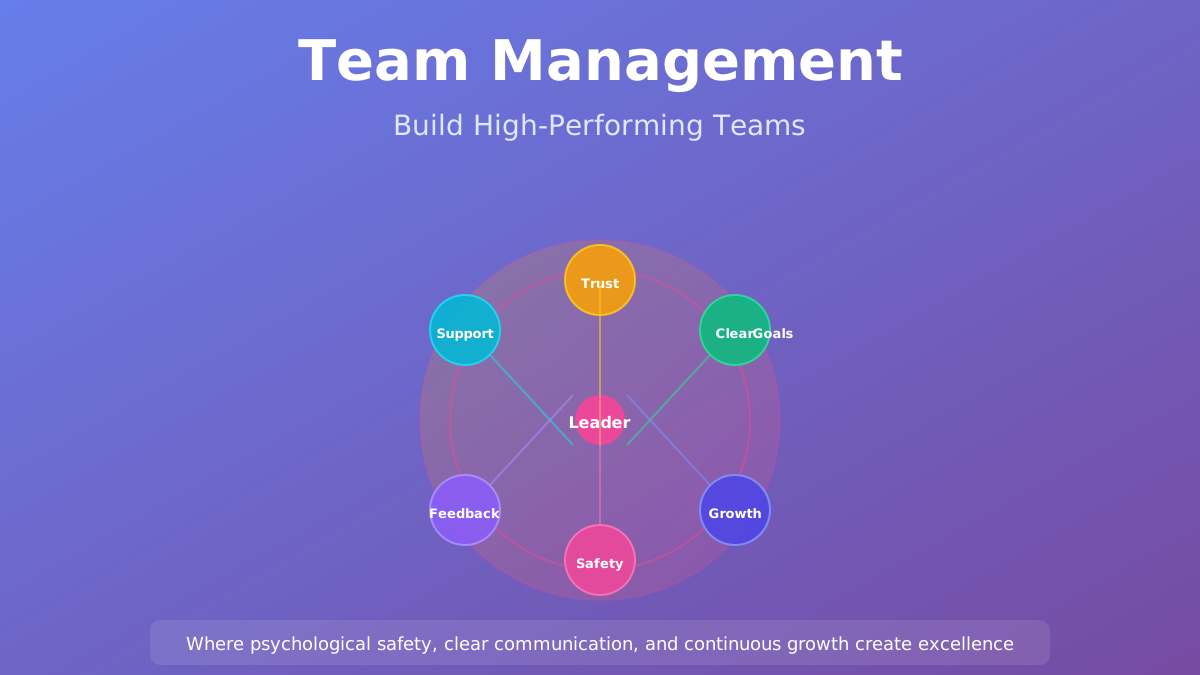
Hero image for team management

Team management isn't about controlling people. It's about creating the conditions where people do their best work.

Throughout this guide, you'll discover the four pillars that make teams unstoppable: psychological safety, crystal-clear communication, strategic alignment, and continuous development.

What Is Team Management?

Team management is the practice of organizing, directing, and supporting a group of people to achieve specific goals while maintaining morale, engagement, and growth. It encompasses everything from setting clear expectations and providing feedback, to building trust and removing obstacles that prevent people from succeeding.

Not medical advice.

Effective team management balances three dimensions: task management (getting work done), people management (developing talent), and cultural management (building the environment where both flourish). A manager's primary job is to amplify the capabilities of their team, not to do all the work themselves.

Surprising Insight: Surprising Insight: Teams with high psychological safety report 27% less turnover, make fewer mistakes, and innovate 3x faster than teams operating in fear. Yet most organizations still manage through command-and-control rather than trust-building.

The Four Pillars of Team Management

Visual framework showing psychological safety, communication, alignment, and development as foundations for team success

graph TB A[Psychological Safety] B[Clear Communication] C[Strategic Alignment] D[Continuous Development] E[High-Performing Team] A -->|Trust & Vulnerability| E B -->|Shared Understanding| E C -->|Unified Purpose| E D -->|Growth & Capability| E style A fill:#667eea style B fill:#764ba2 style C fill:#ec4899 style D fill:#f59e0b style E fill:#10b981

🔍 Click to enlarge

Why Team Management Matters in 2026

The workplace has fundamentally changed. Hybrid teams span geographies. Generational differences create diverse perspectives. Attention is fragmented. In this landscape, managers who can build cohesion, maintain clarity, and keep people engaged have an enormous competitive advantage. Companies with strong team management practices outperform peers by 25% in profitability.

Beyond financial metrics, effective team management directly impacts wellbeing. Managers who invest in their people's growth, provide autonomy, and create psychologically safe environments see dramatic improvements in employee satisfaction, mental health, and work-life balance. People don't quit jobs—they quit bad managers. And people thrive under great ones.

In 2026, the teams that win are those led by managers who understand that their job is to remove obstacles, provide clarity, build trust, and develop talent. It's a fundamental shift from command-and-control to servant leadership.

The Science Behind Team Management

Decades of research into team effectiveness point to consistent patterns. Google's Project Aristotle studied 180 teams to identify what makes some exceptional and others mediocre. They found that five key dynamics matter most, with psychological safety at the top.

Psychological safety, the belief that you can take interpersonal risks without fear of negative consequences, is the foundation. When people feel safe, they speak up with ideas, admit mistakes early, ask for help, and collaborate more fully. This directly improves learning, innovation, and performance.

How Psychological Safety Drives Team Performance

Flow diagram showing the path from psychological safety to learning behavior to team effectiveness

graph LR PS[Psychological<br/>Safety] LB[Learning<br/>Behavior] IE[Information<br/>Exchange] KS[Knowledge<br/>Sharing] TE[Team<br/>Effectiveness] PS -->|Encourages| LB LB -->|Enables| IE IE -->|Increases| KS KS -->|Drives| TE style PS fill:#667eea style LB fill:#764ba2 style IE fill:#ec4899 style KS fill:#f59e0b style TE fill:#10b981

🔍 Click to enlarge

Key Components of Team Management

Building Psychological Safety

Psychological safety is created when managers normalize mistakes, invite participation, respond non-defensively to feedback, and model vulnerability. This doesn't mean being a friend—it means being trustworthy, clear about expectations, and willing to admit when you don't know something. Leaders build safety by framing work as a learning opportunity, explicitly inviting diverse perspectives, and treating errors as data for improvement rather than character flaws.

Establishing Clear Communication

Clear communication means consistent messaging about goals, expectations, progress, and priorities. It means regular one-on-ones where both manager and team member share what matters, what's working, and what's not. It means transparency about decisions, even unpopular ones, with the reasoning behind them. Communication clarity reduces anxiety, prevents misalignment, and ensures everyone knows how their work contributes to bigger goals.

Driving Strategic Alignment

Strategic alignment connects individual work to team goals to organizational strategy. When people understand not just what they're doing but why it matters, engagement soars. This requires managers to cascade goals downward, ensure individual objectives connect to team metrics, and regularly reinforce how daily work supports the organization's direction.

Investing in Development

Team members need growth opportunities to stay engaged. This includes feedback on what they're doing well and where they can improve, stretch assignments that build new capabilities, mentorship, and clear pathways for advancement. The World Economic Forum predicts 50% of employees will need reskilling by 2025. Managers who invest in development keep talent, reduce turnover by 25%, and build a stronger team.

Team Management Competencies: What Effective Managers Do
Competency What It Looks Like Impact on Team
Trust-Building Admits mistakes, keeps commitments, shows consistency 27% less turnover, higher engagement
Active Listening Listens to understand, asks clarifying questions, remembers details Better decisions, stronger relationships
Clear Feedback Specific, timely feedback focused on behavior not character Faster growth, improved performance
Delegation Assigns meaningful work at the edge of capability Developed talent, reduced manager bottleneck
Emotional Intelligence Recognizes own emotions and those of others Better conflict resolution, team cohesion

How to Apply Team Management: Step by Step

Watch how culture and trust form the foundation of team success.

  1. Step 1: Assess your current team climate by reflecting on psychological safety, communication clarity, goal alignment, and development opportunities. Ask yourself: Would my team feel safe disagreeing with me? Do they understand how their work matters?
  2. Step 2: Schedule one-on-one conversations with each team member before making changes. Listen without judgment. Understand their perspectives, frustrations, and aspirations. This builds trust and gives you crucial data.
  3. Step 3: Frame your expectations clearly. Be specific about what success looks like, why that work matters, and how progress will be measured. Ambiguity breeds anxiety. Clarity builds confidence.
  4. Step 4: Model psychological safety by admitting a mistake you made or something you don't know. Show that you're learning. This gives permission for others to be human and imperfect.
  5. Step 5: Establish a regular feedback rhythm—monthly or quarterly one-on-ones where you discuss progress, provide feedback, and talk about development. Make it safe to share concerns and ideas.
  6. Step 6: Create space for diverse perspectives. Explicitly ask quiet team members for their input. Create psychological safety for dissent. Diverse viewpoints catch blind spots and improve decisions.
  7. Step 7: Recognize and celebrate progress publicly. Acknowledge both outcomes and effort. Celebrate learning from failures. This reinforces the behaviors you want to see more of.
  8. Step 8: Remove obstacles. Ask team members: What's slowing you down? What would help you do better work? Then address those barriers. Your job is to make them successful.
  9. Step 9: Invest in development. Identify skills each person wants to build. Assign stretch work, provide mentorship, provide learning resources. Create pathways for growth.
  10. Step 10: Hold yourself accountable. Track the metrics that matter—engagement, turnover, performance, innovation. Notice what changes when you shift how you manage. Stay committed to the new approach.

Team Management Across Life Stages

Young Adulthood (18-35)

Early-career team members want clear feedback, development opportunities, and autonomy. They're building capabilities and exploring what kind of work matters to them. Effective management at this stage means providing structure and coaching, giving them meaningful projects with support, and helping them see how their work develops them.

Middle Adulthood (35-55)

Mid-career professionals have expertise and often carry more responsibility—family, mentoring, managing up and down. They want purpose, respect for their expertise, flexibility, and recognition that their contributions matter. Management here means leveraging their strengths, giving them influence, and understanding their evolving needs.

Later Adulthood (55+)

Experienced team members offer wisdom, continuity, and mentorship to younger people. They may want to shift toward meaningful work rather than climbing, or they may want continued growth. Effective management respects their contributions, creates legacy opportunities, and allows flexibility around when and how they work.

Profiles: Your Team Management Approach

The Command-and-Control Manager

Needs:
  • Learn that trust is faster than control
  • Understand that psychological safety drives performance
  • Practice delegating and stepping back

Common pitfall: Micromanaging creates resentment, stifles initiative, and loses talented people. Teams become dependent rather than capable.

Best move: Start with one small delegation. Set clear success criteria, then let go. Notice what happens. Usually things work fine, and people feel trusted.

The Hands-Off Manager

Needs:
  • Understand that absence isn't autonomy
  • Learn to provide structure and clarity
  • Develop coaching conversations

Common pitfall: Without clear goals and feedback, teams drift. People don't know if they're doing well. Good people leave for clarity elsewhere.

Best move: Start with monthly one-on-ones with a clear structure: goals, progress, feedback, development. Be present and engaged, even if you're not controlling.

The Conflict-Avoidant Manager

Needs:
  • Learn that avoiding conflict creates bigger problems
  • Develop skills for difficult conversations
  • Understand that people respect directness

Common pitfall: Unaddressed performance issues, interpersonal tensions, and unclear standards fester. High performers leave because standards aren't maintained.

Best move: Practice one difficult conversation. Address behavior clearly and kindly. Usually it goes better than expected. People respect directness when it's kind.

The Coaching Manager

Needs:
  • Continue developing emotional intelligence
  • Refine ability to see potential in people
  • Learn to balance support with stretch

Common pitfall: Sometimes being too nice means not addressing performance issues directly enough. Perfect coaching is impossible—good enough is fine.

Best move: Trust your instincts about what people need. Combine support with challenge. Keep learning from how your team responds.

Common Team Management Mistakes

The biggest mistake managers make is assuming people know what success looks like, how they're doing, and why their work matters. They skip the foundational conversations about goals, progress, and feedback. This creates anxiety and misalignment. Solution: Over-communicate about goals, progress, and feedback. You'll be surprised how many misunderstandings you prevent.

Another common error is treating all team members the same. People have different preferences, capabilities, and needs. Some want autonomy, others want more structure. Some want to climb the ladder, others want meaningful work without pressure. Solution: Have individual conversations. Learn what each person needs. Adapt your approach.

Many managers also fail to address performance issues early. They wait, hope it improves, and eventually blow up. Early, kind conversations about misalignment prevent resentment, protect team morale, and often help the person course-correct. Solution: When you notice misalignment, address it within days, not weeks.

The Team Management Pitfall Cycle

How common mistakes compound and create negative team dynamics

graph TD A[Unclear<br/>Expectations] B[Anxiety &<br/>Misalignment] C[Mistakes<br/>Multiply] D[Manager<br/>Frustrated] E[More<br/>Control] F[Less<br/>Engagement] G[Turnover] A -->|Creates| B B -->|Leads to| C C -->|Causes| D D -->|Triggers| E E -->|Reduces| F F -->|Results in| G style A fill:#ff6b6b style B fill:#ff8787 style C fill:#ffa5a5 style D fill:#ffc3c3 style E fill:#ffe0e0 style F fill:#fff5f5 style G fill:#ff6b6b

🔍 Click to enlarge

Science and Studies

Research consistently demonstrates that effective team management practices drive measurable outcomes in engagement, performance, retention, and innovation. Here are the key studies and findings:

Your First Micro Habit

Start Small Today

Today's action: Schedule one 30-minute one-on-one conversation this week with someone on your team. Listen to understand their perspective on three things: what's going well, what's challenging, and what they'd like to develop. Don't solve, just listen.

One conversation builds trust and gives you crucial data about your team's real situation. This tiny action shifts you from assuming to understanding. Repeated weekly, it transforms your relationship with your team and their perception of your leadership.

Track your management micro habits and get personalized AI coaching with our app.

Quick Assessment

How would you describe your current approach to team management?

Your experience level shapes which strategies will have the most impact. Early managers benefit most from clarity and systems. More experienced managers often need to deepen skills like emotional intelligence and difficult conversations.

What's your biggest challenge right now with your team?

Different challenges point to different priorities. Alignment issues suggest clearer communication is needed. Safety issues point to building trust through consistency and vulnerability. Engagement issues often trace to development and autonomy.

How comfortable are you having difficult conversations with team members?

Skill with difficult conversations directly predicts team health. Avoiding conversations creates bigger problems. Most managers underestimate how much people respect directness when it's delivered with care.

Take our full assessment to get personalized recommendations for your team.

Discover Your Style →

Building Trust as a Foundation

Trust is the currency of effective teams. When people trust their manager, they're more willing to take risks, admit mistakes, and collaborate fully. Trust isn't built through charisma or grand gestures. It's built through consistency: doing what you say you'll do, treating people fairly, listening without judgment, and following through on commitments.

Many managers underestimate the power of simple consistency. If you say you'll follow up in a week, do it in a week. If you promise confidentiality, keep it. If you say you value input, actually ask for it and act on what you hear. These small behaviors compound over months to create deep trust.

Trust is also built through transparency. When decisions need to be made, explain your reasoning. When you make a mistake, admit it. When you don't know something, say so. This vulnerability gives permission for others to be human. It breaks down the pretense that leaders have all the answers.

Managing Different Personality Types

Your team isn't homogeneous. You'll have introverts and extroverts, detail-oriented people and big-picture thinkers, people who want autonomy and people who want structure. Effective managers adapt their approach to what different people need.

Some team members thrive with frequent check-ins and detailed feedback. Others feel micromanaged. Some want to know the big picture context; others just want clear tasks. Some people process information by talking; others need time to think. Learning these preferences and adapting to them is what separates good managers from great ones.

This doesn't mean treating people unfairly—everyone should have clear expectations and regular feedback. But it does mean being flexible in HOW you deliver that feedback, HOW much autonomy you give, and HOW you provide information. Invest time in learning what each person responds to.

Handling Performance Issues Effectively

One of the most challenging aspects of team management is addressing performance issues. Many managers avoid these conversations, hoping the problem will resolve itself. It won't. Instead, unaddressed issues grow, spreading resentment and lowering team morale.

The key is to address issues early and directly, but with respect. Before the conversation, be specific about what you've observed. Focus on concrete behaviors and outcomes, not personality or character. For example: instead of 'You're not reliable,' try 'The project deadlines have been missed the last three times. That's created pressure for the team.'

Approach the conversation as problem-solving, not punishment. Ask questions: What's getting in the way? What support would help? Is it a capability issue, a clarity issue, or something else? Usually, you'll discover a reason you weren't aware of. Together, you can create a plan to improve. This approach preserves dignity while addressing the issue.

Creating Psychological Inclusion Beyond Safety

Psychological safety is the foundation, but inclusion goes deeper. Inclusion means people feel they belong, that their unique perspectives are valued, and that they can bring their whole selves to work. Managers create inclusion by actively seeking diverse perspectives, ensuring quiet voices are heard, and genuinely valuing differences.

This might mean explicitly asking your quietest team member for their input, or deliberately seeking out perspectives that differ from yours. It means examining your own biases about who has good ideas or who should be in leadership roles. It means creating space for people to do their best work regardless of background, gender, age, or any other factor.

Inclusive teams make better decisions. They catch blind spots because they have diverse perspectives. They're more innovative because different backgrounds and experiences lead to creative solutions. They have better morale because people feel genuinely valued.

The Role of Feedback Loops

Feedback is the breakfast of champions, as Ken Blanchard famously said. But most people rarely receive quality feedback. They work in a void, unsure if they're doing well or poorly, creating anxiety and missed opportunities for growth.

Effective managers create regular feedback loops. This includes positive feedback that recognizes good work. Too many managers are stingy with praise, thinking they'll make people lazy. The opposite is true—people who know what they're doing well are more engaged and open to development feedback.

But positive feedback is only half the equation. Development feedback—specific guidance on where someone can improve—is equally important. The magic is in the balance: specific positive feedback that shows you're paying attention, combined with development feedback delivered with the belief that the person can improve.

Managing Remote and Hybrid Teams

Hybrid and remote work require different approaches to team management. Without in-person presence, you lose informal interactions that build relationships. You need to be more intentional about creating connection and ensuring people don't feel isolated.

This means more one-on-one time, not less. It means having some virtual social connection—not forced fun, but genuine space to know each other. It means being clear about expectations around communication and responsiveness. It means trusting people to get work done without being able to see them.

Remote management also requires extra attention to inclusion. It's easy for quiet people to disappear, for their contributions to be invisible. Managers need to actively ensure everyone's voice is heard and valued, regardless of geography.

Measuring Team Management Success

How do you know if your team management approach is working? The metrics matter. Look at engagement scores—people should feel motivated and connected to their work. Monitor turnover—losing people is expensive and disruptive. Track performance metrics specific to your team. Notice error rates and how quickly the team adapts to change.

But also notice the qualitative signals. Are people speaking up in meetings? Are they collaborating across silos or working in isolation? Do people feel the team is moving forward, or is there frustration and confusion? Do they seem energized by their work or depleted?

The best metric might be simple: Would your team members want to work with you again? Are they recommending people to join your team? Are they growing and developing? These signals tell you whether your team management is creating an environment where people and work can thrive.

Next Steps

Exceptional team management isn't a destination—it's a continuous practice. Start with one change: schedule regular one-on-ones, or provide specific feedback, or facilitate a team conversation about what psychological safety means to your group. Whatever you choose, notice what shifts as you show up differently for your team.

The research is clear: teams with strong management practices outperform others significantly. More importantly, people under good management feel better about their work and themselves. You have an opportunity to meaningfully improve people's work lives. That's powerful. Remember that team management is ultimately about creating the conditions where people can do their best work, grow, and find meaning in what they do.

Get personalized guidance on developing your team management skills with AI coaching.

Start Your Journey →

Research Sources

This article is based on peer-reviewed research and authoritative sources. Below are the key references we consulted:

Frequently Asked Questions

How often should I meet one-on-one with my team?

Monthly is minimum, weekly is ideal. These conversations are where trust is built, feedback is exchanged, and development is planned. They're not optional; they're foundational.

What should I do if a team member is underperforming?

Address it early and directly. Have a conversation focused on specific behaviors and outcomes, not character. Understand if it's a capability issue (need training), a clarity issue (don't understand what's expected), or a commitment issue (aren't prioritizing the work). Then provide support, coaching, or clarity accordingly.

How do I handle conflict within my team?

Address it early before resentment builds. Facilitate conversations between people with different perspectives. Help them understand each other's views. Often conflict stems from different goals or values, not personality. When people understand each other, they can usually work it out.

Can I be friends with my team?

You can be friendly and warm without being friends. The asymmetry of power means you can't have the same relationship you have with peers. But you can be personable, interested in their wellbeing, and warm. Respect the professional boundary while maintaining humanity.

What if I'm inheriting a team with low trust?

It takes time to rebuild trust, but it's possible. Start by listening without judgment. Address any legitimate grievances. Be consistent and reliable. Keep your word about small things. Acknowledge that trust was broken and you're committed to rebuilding it. Small actions compounded over months rebuild trust.

Take the Next Step

Ready to improve your wellbeing? Take our free assessment to get personalized recommendations based on your unique situation.

Continue Full Assessment
workplace excellence work & relationships wellbeing

About the Author

LA

Linda Adler

Linda Adler is a certified health transformation specialist with over 12 years of experience helping individuals achieve lasting physical and mental wellness. She holds certifications in personal training, nutrition coaching, and behavioral change psychology from the National Academy of Sports Medicine and Precision Nutrition. Her evidence-based approach combines the latest research in exercise physiology with practical lifestyle interventions that fit into busy modern lives. Linda has helped over 2,000 clients transform their bodies and minds through her signature methodology that addresses nutrition, movement, sleep, and stress management as interconnected systems. She regularly contributes to health publications and has been featured in Women's Health, Men's Fitness, and the Journal of Lifestyle Medicine. Linda holds a Master's degree in Exercise Science from the University of Michigan and lives in Colorado with her family. Her mission is to empower individuals to become the healthiest versions of themselves through science-backed, sustainable practices.

×