Strength Training Program
A strength training program is a structured plan using progressive resistance exercises to build muscle, increase strength, and improve overall fitness. Whether you're beginning your fitness journey or looking to advance your abilities, the right strength training program provides the foundation for sustainable physical transformation. Scientific research shows that consistent strength training reduces injury risk by 30%, builds lean muscle mass, improves cardiovascular health, supports bone density, and increases metabolic rate by up to 7% within just ten weeks.
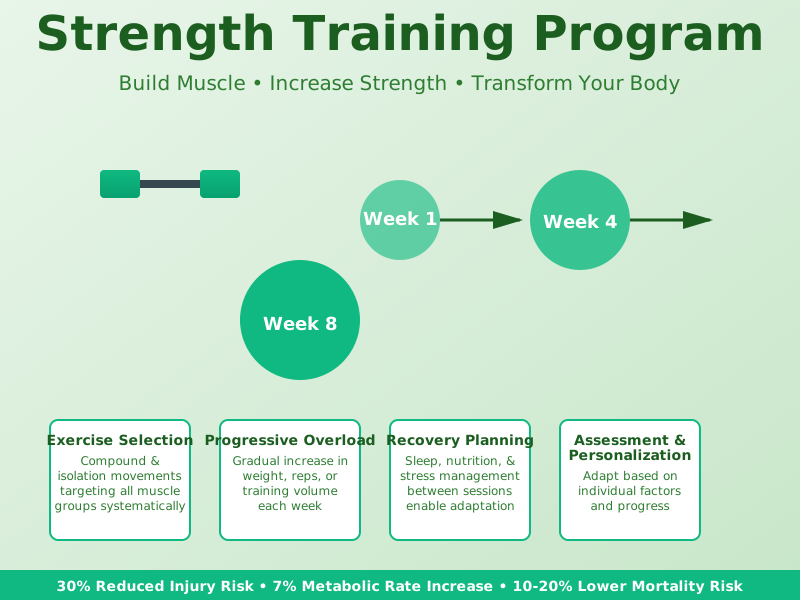
The most effective strength training programs share common elements: progressive overload, proper form, appropriate recovery, and personalized progression. Rather than random workouts, structured programs guide you through phases that adapt to your body's changing capacity, ensuring you continue making gains while preventing plateaus and injuries that derail many fitness enthusiasts.
This comprehensive guide explores how to select, design, and implement a strength training program tailored to your goals, whether you aim to build muscle, increase raw strength, improve athletic performance, or enhance daily functional abilities across all life stages.
What Is a Strength Training Program?
A strength training program is a systematized approach to resistance exercise that progressively challenges your muscles to build strength, size, and endurance. Unlike random exercise, structured programs incorporate variables like exercise selection, sets, reps, rest periods, progression schemes, and deload weeks to optimize results while managing fatigue and injury risk. The program creates a roadmap showing exactly what exercises to perform, how many repetitions and sets, how much weight to lift, and how to systematically progress over time.
Not medical advice.
Strength training programs range from simple beginner routines that can be performed at home with minimal equipment to complex periodized systems used by competitive athletes and strength athletes. The fundamental principle underlying all effective programs is progressive overload—continuously challenging muscles slightly beyond their current capacity, forcing adaptation and growth. This might mean adding more weight, performing additional reps, reducing rest periods, or improving exercise technique each week or training cycle.
Surprising Insight: Surprising Insight: Research published in 2024 found that supervised strength training achieved 88.2% adherence rates, while app-guided training achieved 81.2%, and self-guided training only 52.2%. The structure and accountability of a well-designed program dramatically improves consistency—the primary predictor of fitness success.
Strength Training Program Components
Key elements that make up an effective strength training program structure
🔍 Click to enlarge
Why Strength Training Program Matters in 2026
In 2026, structured strength training programs address the epidemic of sedentary lifestyles and metabolic dysfunction affecting modern populations. As remote work becomes standard, people move less than ever before, leading to muscle loss, poor posture, reduced metabolic capacity, and increased injury risk. Strength training programs reverse these trends by building muscle tissue—the most metabolically active tissue in the body—which burns more calories at rest and improves insulin sensitivity, directly combating type 2 diabetes.
The mental health benefits of strength training programs equal their physical benefits. Regular resistance training reduces depression and anxiety symptoms, improves cognitive function, enhances sleep quality, builds confidence and self-efficacy, and provides measurable progress in an increasingly uncertain world. For aging populations, strength training programs maintain independence, reduce fall risk by 30%, preserve bone density, and support longevity and quality of life far more effectively than aerobic exercise alone.
Society is recognizing that effective fitness requires structure and accountability. The shift from random workouts to programmed training reflects how people now understand that consistency, progression, and personalization drive results. AI-assisted and app-guided strength training programs democratize access to professional coaching, making expert-level program design available regardless of location or budget, while supervised training remains the gold standard for maximum adherence and safety.
The Science Behind Strength Training Program
Strength training programs work by creating targeted muscle damage during exercise, triggering the body's adaptive response to rebuild muscle tissue stronger and larger during recovery periods. When you perform resistance exercises against sufficient load, you damage muscle fibers at the microscopic level. Your body responds by synthesizing new muscle proteins, increasing fiber size (hypertrophy) and strength. This process requires adequate protein intake, quality sleep, and appropriate recovery—components that effective programs systematically manage.
Research demonstrates that resistance training creates systemic health adaptations beyond muscle. Studies show strength training increases bone mineral density by 1-3%, reduces resting blood pressure, improves cholesterol profiles by decreasing LDL and triglycerides while increasing HDL, enhances cardiovascular function, improves insulin sensitivity and glucose control, reduces visceral fat deposition, and increases resting metabolic rate. These changes accumulate, creating what researchers call the 'exercise effect'—where regular structured training produces measurable improvements in dozens of health markers.
Muscle Adaptation Response Cycle
How progressive resistance training creates muscle growth and strength adaptation
🔍 Click to enlarge
Key Components of Strength Training Program
Exercise Selection and Movement Patterns
Effective strength training programs prioritize compound exercises—movements that engage multiple muscle groups simultaneously—over isolation exercises that target single muscles. Compound movements like squats, deadlifts, bench presses, rows, and overhead presses provide superior strength development, burn more calories, create hormonal responses that boost growth, and translate to improved functional ability in daily activities. Programs typically structure workouts around 2-4 primary compound lifts performed with heavy loads for lower rep ranges (3-6 reps), followed by supplementary exercises and higher-rep accessory work that builds muscular endurance and addresses weak points.
Progressive Overload Systems
Progressive overload is the systematic increase in training stimulus over time—the mechanism that prevents adaptation plateaus and ensures continuous improvement. Programs implement progressive overload through multiple methods: adding weight to lifts (most common), increasing total repetitions or sets, reducing rest periods between sets, improving exercise technique and range of motion, or decreasing deload frequency. The most effective programs clearly specify progression targets—exactly how you'll increase difficulty each week—preventing guesswork and maintaining motivation through measurable achievement of intermediate milestones.
Training Frequency and Recovery Planning
Strength training programs balance training frequency—how many sessions per week—with recovery requirements. Research shows that training each muscle group 2-3 times per week optimizes muscle protein synthesis and strength development. Most effective programs use split routines (training different muscle groups on different days) rather than full-body workouts daily, allowing adequate recovery while maintaining high frequency. Programs also incorporate deload weeks every 4-6 weeks—periods of reduced volume and intensity—that allow the nervous system to recover, prevent overtraining, and actually enhance performance when training resumes.
Assessment and Personalization Factors
Quality strength training programs include assessment mechanisms to personalize progression based on individual factors like age, training experience, goals, available equipment, time availability, and injury history. Beginner programs focus on technique mastery and building work capacity with moderate loads (60-70% of maximum). Intermediate programs increase intensity, incorporate periodization, and add complexity. Advanced programs use sophisticated periodization models, accommodating resistance, and sport-specific adaptations. Programs that reassess every 4-6 weeks and adjust based on progress ensure continued adaptation rather than stagnation.
| Experience Level | Training Frequency | Primary Focus |
|---|---|---|
| Beginner (0-6 months) | 3-4 days/week | Form mastery, work capacity, foundational strength |
| Intermediate (6-24 months) | 4-5 days/week | Progressive overload, hypertrophy, periodization |
| Advanced (24+ months) | 5-6 days/week | Specialized goals, advanced periodization, competition preparation |
How to Apply Strength Training Program: Step by Step
- Step 1: Assess your current fitness level by evaluating strength on basic exercises like push-ups, squats, and plank holds without weight—this establishes your baseline and appropriate starting intensity
- Step 2: Define your specific strength training goal: building muscle size (hypertrophy), increasing maximum strength, improving athletic performance, or functional fitness for daily activities
- Step 3: Select a program format matching your experience: beginners should choose established 3-4 day routines like Strong Lifts 5x5 or Starting Strength; intermediate lifters benefit from periodized programs; advanced lifters may hire coaches for sport-specific programming
- Step 4: Establish your training schedule: choose the same days and times each week, block 45-60 minutes for sessions, and ensure at least one rest day weekly—consistency matters more than perfection
- Step 5: Master exercise form before adding significant weight: film yourself, watch instructional videos, or work with a trainer to ensure proper technique on all exercises—poor form creates injury risk and reduces effectiveness
- Step 6: Track your workouts in detail: record the exercise, weight, sets, reps, and how you felt—this data drives progression decisions and maintains motivation through visible progress
- Step 7: Implement progressive overload gradually: increase weight by 2-5 pounds per week when possible, or add 1-2 reps per set when you reach your target rep range—avoid jumping 10+ pounds immediately
- Step 8: Prioritize recovery by sleeping 7-9 hours nightly, consuming adequate protein (0.7-1 grams per pound bodyweight), managing stress through meditation or breathing techniques, and taking deload weeks every 4-6 weeks
- Step 9: Review progress every 4 weeks: measure strength gains on major lifts, track body composition, assess energy levels, and adjust programming if progress plateaus for 2+ consecutive weeks
- Step 10: Progress from beginner to intermediate training: after 6-8 weeks of consistent beginner programming, transition to higher frequency or more complex splits to prevent adaptation and maintain motivation through novelty
Strength Training Program Across Life Stages
Young Adulthood (18-35)
Young adults benefit most from aggressive strength training programs focusing on building foundational strength and muscle mass. This phase represents the optimal window for maximal muscle growth potential due to high testosterone levels, rapid recovery, and fewer previous injuries. Programs should emphasize compound lifts with progressive overload, introduce periodization concepts, and establish training habits that persist lifelong. Young adults often prioritize aesthetic goals (building visible muscle), strength sports participation, or athletic performance enhancement. Programs in this phase typically use moderate-to-high volume with moderate-to-heavy loads, train 4-5 days weekly, and recover quickly from training stress.
Middle Adulthood (35-55)
Middle-aged adults maintain existing strength and muscle through consistent training while managing increasing injury risk and longer recovery requirements. Strength training programs must balance intensity with injury prevention, incorporating more mobility work, longer warm-ups, and strategic deload periods. Career and family demands often reduce available training time, making programs that maximize results in 4-5 days weekly more practical. Hormonal changes (declining testosterone in men, menopause in women) mean that consistency becomes even more critical. Programs benefit from working with trainers to address accumulated movement restrictions and previous injuries affecting exercise performance. The focus shifts toward sustainable training practices and maintaining active lifestyle rather than competitive goals.
Later Adulthood (55+)
Older adults use strength training programs primarily for health, independence, and quality-of-life maintenance. Research demonstrates that strength training in later adulthood preserves bone density (preventing osteoporosis), maintains muscle mass and metabolic rate, reduces fall risk by preventing strength loss, improves balance and coordination, supports cognitive function, and extends both lifespan and healthspan. Programs emphasize functional movements that translate to daily activities, incorporate balance and stability work, use lighter loads with careful form, allow longer recovery periods, and include flexibility and mobility training. Training frequency remains important (2-3 days weekly), but intensity is lower. Supervision becomes more valuable for ensuring safety and correct technique.
Profiles: Your Strength Training Program Approach
The Goal-Driven Optimizer
- Clear metrics and measurable progress toward specific targets
- Structured progression plans with milestone achievements
- Data tracking systems that demonstrate consistent improvement
Common pitfall: Advancing too quickly, neglecting form for heavier weights, burning out from excessive training
Best move: Choose periodized programs with built-in progression phases, track metrics weekly, celebrate milestone achievements rather than chasing unrealistic timelines
The Time-Constrained Professional
- Efficient programs maximizing results in minimal time (3-4 days, 45 minutes)
- Simple routines without complex equipment or technical requirements
- Flexibility to train during early morning or evening hours consistently
Common pitfall: Inconsistent scheduling, choosing programs too advanced for available time investment, program-hopping
Best move: Select established efficient routines like StrongLifts 5x5 or efficient 3-day splits, pre-schedule training like business meetings, use home equipment or hotel gyms
The Community-Motivated Trainer
- Accountability through group training or coaching relationships
- Social connection and shared experiences with training partners
- Regular feedback and encouragement from qualified coaches or community
Common pitfall: Training intensity depends on others' availability, program inconsistency when group schedules conflict
Best move: Join group training programs or gym communities, hire a coach for periodic check-ins, train with consistent partners who share commitment level
The Cautious Comeback Athlete
- Programs respecting previous injuries and movement restrictions
- Gradual progression emphasizing form mastery over weight advancement
- Frequent reassessment and modification based on pain or discomfort
Common pitfall: Overestimating current capacity, repeating previous injury patterns, training through pain signals
Best move: Work with physical therapists or coaches experienced with injury rehabilitation, start with beginner programs regardless of historical fitness level, prioritize perfect form
Common Strength Training Program Mistakes
The most common strength training program mistake is neglecting progressive overload—continuing the exact same workout with identical weight, reps, and sets week after week. Without increasing training stimulus, muscles have no reason to adapt and strength plateaus quickly. This often stems from fear of failure or injury, but appropriate progression (5-pound increases every 1-2 weeks) creates the stimulus necessary for continuous improvement. Tracking workouts religiously and setting specific progression targets prevents this costly oversight.
Sacrificing form for heavier weight represents the second major mistake—lifting load that requires cheating, compensation patterns, or reduced range of motion. This reduces exercise effectiveness, increases injury risk dramatically, and can reinforce dysfunctional movement patterns. Appropriate weight selection allows controlled execution through full range of motion while maintaining tension throughout. The psychological challenge is accepting that using less weight than ego desires is actually smarter: you'll progress faster, avoid injuries that cause training interruptions, and develop superior movement quality.
Inadequate recovery planning derails many ambitious strength trainers. Programs require not just the workout itself but sleep, nutrition, and stress management supporting adaptation. Training hard repeatedly without recovery creates overtraining—where performance actually decreases, motivation drops, and injury risk increases. Beginner mistakes include training the same muscle groups on consecutive days, training too hard every session without intensity variation, sleeping less than 7 hours nightly, and eating insufficient protein. Quality programs schedule recovery just as carefully as training stress.
Common Strength Training Program Mistakes
Frequent errors that prevent progress and increase injury risk in strength training
🔍 Click to enlarge
Science and Studies
Extensive peer-reviewed research confirms that properly designed and executed strength training programs produce remarkable health outcomes. Multiple large-scale studies from prestigious institutions demonstrate consistent benefits across diverse populations, ages, and fitness levels. The evidence base supporting resistance training as medicine has never been stronger, with researchers now understanding mechanisms explaining why strength training benefits so many health conditions.
- A 2024 systematic review in PMC found that strength training reduces injury risk by 30% in sport populations, with particular effectiveness preventing groin and hamstring injuries through hamstring-focused programming
- Harvard T.H. Chan School of Public Health research shows just 30-60 minutes weekly of strength training correlates with 10-20% reduced all-cause mortality, plus specific reductions in cancer and cardiovascular disease risk
- A 2025 study published in the Journal of Strength and Conditioning Research found supervised training achieved 88.2% adherence, app-guided training 81.2%, and self-guided only 52.2% over 10-week programs
- National Institutes of Health research demonstrates that 10 weeks of resistance training increases lean body mass 1.4kg, increases resting metabolic rate 7%, and reduces fat mass 1.8kg
- WHO guidelines recommend muscle-strengthening activities at least 2 days weekly for adults, recognizing resistance training as critical component of comprehensive health promotion
Your First Micro Habit
Start Small Today
Today's action: Perform 10 bodyweight squats and 10 push-ups today, tracking reps in your phone—this establishes the baseline for progressive overload and begins building training consistency
This micro habit requires zero equipment, takes 2 minutes, but initiates the neural adaptations of strength training and proves you can execute consistent practice. Once established, you add 1-2 reps daily or introduce weight, building momentum toward a full strength training program without overwhelming your system.
Keep quitting habit apps after a missed day? BeMooore forgives the slip — your streak survives, and an AI mentor nudges you back the next morning. Free on iOS.
Quick Assessment
How would you describe your current strength training experience?
Your experience level determines appropriate program complexity and progression speed. Beginners need form mastery and fundamental strength foundations; experienced lifters can handle periodization and advanced variation.
What's your primary goal for strength training?
Your goal determines program emphasis: muscle-building requires higher volume, strength-building favors lower reps and heavier loads, functional training emphasizes movement quality, athletic training includes sport-specific demands.
How many days weekly can you realistically commit to strength training?
Training frequency affects program design and results. More frequent training allows higher volume but requires better recovery management. Less frequent training must maximize efficiency through compound exercises and intelligent periodization.
Take our full assessment to get personalized recommendations.
Discover Your Style →Next Steps
Now that you understand how strength training programs create systematic physical and mental transformation, the next step is selecting a program matching your experience level and scheduling your first session. Review the program types described, identify whether you're a beginner, intermediate, or experienced trainee, and commit to starting this week. The gap between knowledge and action is where most people lose momentum—having perfect information means nothing without execution.
Build accountability into your commitment by telling friends or family about your new strength training program, tracking workouts in a visible location, or joining a community of people pursuing similar goals. Research shows public commitment and social accountability dramatically increase follow-through. Use the micro habit to establish the neurological pattern of training, then expand into the full program. Remember that consistency over perfection drives results—a 70% adherence to a good program outperforms sporadic 100% effort toward an inconsistent approach.
Get personalized guidance with AI coaching.
Start Your Journey →Research Sources
This article is based on peer-reviewed research and authoritative sources. Below are the key references we consulted:
Related Glossary Articles
Frequently Asked Questions
How long does it take to see results from a strength training program?
Beginner results appear within 2-4 weeks through neural adaptations and performance improvements, though visible muscle gains typically require 8-12 weeks of consistent training with proper nutrition. Strength improvements show faster than muscle growth, often evident weekly. The key is consistency—missing workouts delays results much more than any single perfect session accelerates progress.
Should I train at home or join a gym for a strength training program?
Both work effectively with appropriate equipment. Home training offers convenience and requires less equipment investment but limits maximum load potential. Gym training provides access to heavier weights, variety of equipment, and often creates community accountability. Choose based on lifestyle: busy professionals benefit from home efficiency; those seeking social motivation thrive in gym communities. Many successful programs use a hybrid approach.
How do I know if my strength training program is working?
Track strength metrics: are lifts getting heavier while maintaining form? Measure body composition: increasing lean mass and decreasing fat indicates proper training plus nutrition. Monitor performance: can you do more reps at the same weight or complete workouts faster? Assess how you feel: improved energy, better sleep, and enhanced mood indicate positive adaptation. Reassess monthly and adjust if no progress appears for 4+ consecutive weeks.
Can strength training programs work without expensive equipment?
Absolutely. Bodyweight programs, resistance bands, dumbbells, and kettlebells support excellent strength development. The fundamental principle is progressive overload—whether achieved with barbells or adjusting leverage on bodyweight exercises. Some of the most effective beginner programs use limited equipment. Expensive equipment provides convenience and load options but isn't necessary for results. More important than equipment is consistent execution of an intelligently designed program.
How do I avoid injury in a strength training program?
Prioritize form mastery over weight progression—use weight that allows controlled execution through full range of motion. Warm up adequately before heavy training. Progress gradually, increasing load 2-5 pounds weekly rather than jumping large amounts. Include adequate recovery: 7-9 hours sleep, sufficient protein, and deload weeks every 4-6 weeks. Listen to pain signals—sharp pain differs from muscle fatigue and requires program modification. Consider working with a trainer, especially initially, to identify movement flaws before they cause injury.
Take the Next Step
Ready to improve your wellbeing? Take our free assessment to get personalized recommendations based on your unique situation.
- Discover your strengths and gaps
- Get personalized quick wins
- Track your progress over time
- Evidence-based strategies