No Contact Rule
The no-contact rule is a structured approach to breakup recovery where you completely stop communicating with your ex-partner. It sounds simple, but the science behind why this works reveals profound psychological truths about how our brains heal from relationship endings. When you maintain complete silence—no texts, no calls, no accidental social media stalking—you're not just avoiding pain in the moment. You're actively rewiring your nervous system, breaking psychological addiction patterns similar to substance withdrawal, and creating the mental space necessary for genuine emotional recovery. This guide explains the evidence behind the no-contact rule, how to implement it based on your attachment style, and why those first 30 days matter more than any other period in breakup recovery.
What makes the no-contact rule powerful isn't willpower—it's neuroscience. Every interaction with your ex triggers dopamine release, the same neurochemical involved in addiction. Breaking that pattern requires physical and emotional distance.
The no-contact rule works differently for people with different attachment styles. Anxious attachers experience it as terrifying but transformative. Avoidant individuals find the space comforting but sometimes use it to escape rather than heal. Understanding your attachment pattern determines whether you'll use this tool for genuine growth or self-protection.
What Is No Contact Rule?
The no-contact rule is a deliberately maintained period of zero communication with an ex-partner after a breakup or ending of a toxic relationship. This includes no text messages, no phone calls, no emails, no social media interactions, no watching their stories, no accidental run-ins, and no indirect communication through mutual friends. The typical duration ranges from 30 to 90 days, though research suggests the first 30 days are the most critical for psychological recovery. The goal is to create a clean break that allows your nervous system to recalibrate and your emotional attachment to naturally diminish over time.
Not medical advice.
The no-contact rule originated from relationship recovery literature but has been validated by neuroscience research. Studies on attachment theory, dopamine response patterns, and breakup recovery timeframes support the effectiveness of this approach. The rule became mainstream advice in the 2010s as more therapists recognized that even brief contact could interrupt the healing process by re-triggering emotional attachment systems that are actively trying to reset.
Surprising Insight: Surprising Insight: Research shows that contact within the first 28 days slows the natural decline in feelings of love and sadness. One study found that even reading an ex's text message after days of no contact can reset your emotional recovery clock back to day one.
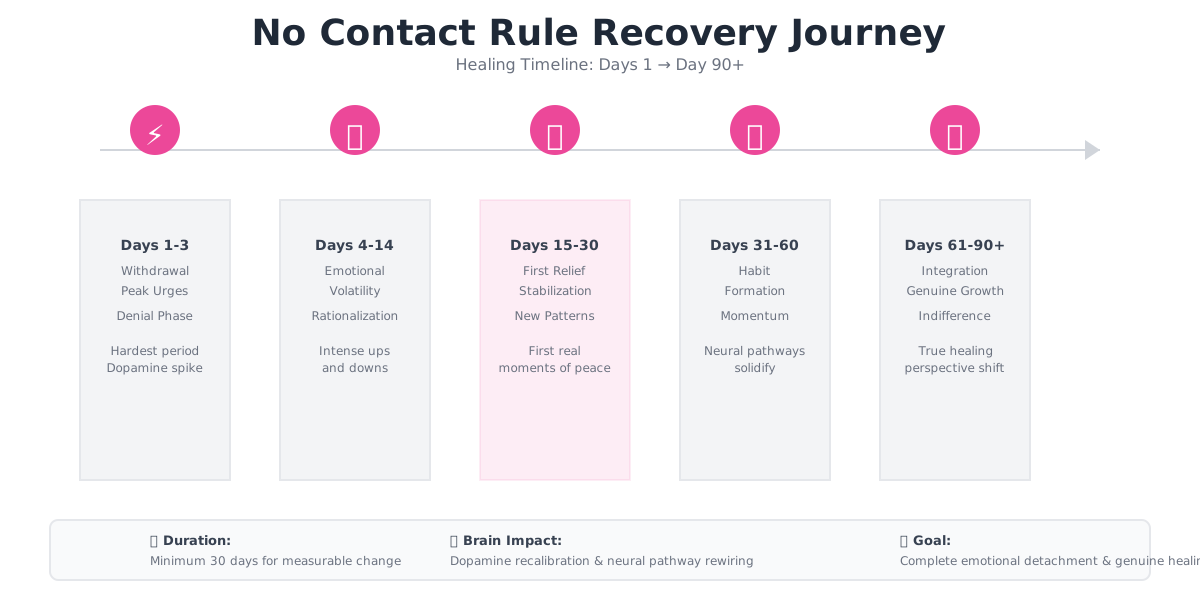
The No-Contact Recovery Timeline
Visual representation of emotional healing stages during no-contact period, from initial withdrawal through psychological recalibration to genuine attachment dissolution.
🔍 Click to enlarge
Why No Contact Rule Matters in 2026
In our hyperconnected world, maintaining no contact is more challenging and more necessary than ever. Social media provides unlimited ways to inadvertently maintain connection—watching stories, checking profiles, seeing their new relationships unfold in real-time. The psychological impact of constant digital connection after a breakup means healing takes significantly longer than it would have pre-social media. Understanding and implementing the no-contact rule in 2026 requires actively curating your digital environment, blocking notifications, and sometimes deleting apps temporarily to protect your recovery process.
Post-breakup connection patterns have changed dramatically. Decade ago, people had to actively choose to call or visit an ex. Today, algorithms suggest their profiles, mutual friends tag them in photos, and their content appears passively in feeds. This passive reactivation of attachment systems makes the no-contact rule essential for anyone serious about healing rather than endlessly cycling through nostalgia and false hope.
The no-contact rule also matters because research increasingly shows that toxic relationships create trauma bonding—a neurobiological link stronger than healthy love attachments. Breaking this trauma bond requires more than casual distance; it requires committed no-contact periods that allow your brain to recognize the relationship pattern as harmful and update your threat assessment systems accordingly.
The Science Behind No Contact Rule
Romantic attachment activates the same reward centers in your brain as cocaine. When you see your ex's name, your brain releases dopamine—a motivational neurochemical that makes you crave contact regardless of whether the relationship was healthy. Breaking this cycle requires removing the stimulus (your ex) long enough for dopamine pathways to recalibrate. Research on addiction recovery shows that 30 days is approximately the timeframe needed for reward pathways to begin rewiring, though complete neural recalibration takes 60-90 days for most people. Every time you have contact—even a brief text—your brain receives a dopamine hit that essentially resets this clock to day one.
The attachment system, a core survival mechanism developed in childhood, drives people toward reconnection when separation is threatened. For people with anxious attachment styles, this system hyperactivates during breakups, creating an almost physical urge to restore contact. No contact works because it creates a boundary that your nervous system gradually recognizes and accepts. Over weeks and months, your brain receives confirmation that the relationship truly has ended—not through intellectual understanding, but through the absence of further interaction. This distinction matters because intellectual belief often can't override attachment system activation, but consistent absence eventually does.
Dopamine Response Across No-Contact Period
Brain chemistry changes throughout breakup recovery, showing how dopamine spikes decrease in frequency and intensity as new neural pathways replace attachment-focused networks.
🔍 Click to enlarge
Key Components of No Contact Rule
Complete Communication Elimination
No contact means stopping all direct and indirect communication. This includes text messages, phone calls, emails, social media DMs, and even watching stories or checking profiles. Many people underestimate how much passive observation continues the attachment cycle. Looking at your ex's social media triggers the same emotional response as active conversation—your brain is still receiving information about them, still processing what they're doing, still maintaining a psychological connection. True no contact eliminates this entirely. If necessary, block them on all platforms to remove the temptation.
Environmental Control
Create physical and digital environments that support no contact. Delete photos and mementos from visible spaces. Unfollow mutual friends if necessary. Change your routine to avoid places where you might run into them. Some people even temporarily delete apps that make contact easy. Environmental design is just as important as willpower because willpower depletes under stress, but well-designed environments enforce boundaries automatically. If you're tempted to text them, a blocked number is more reliable than telling yourself not to.
Attachment System Regulation
No contact only works if you're simultaneously regulating your attachment system through other means. This means increasing secure attachment to friends, family, or a therapist. Anxious attachers should prioritize consistent relationships during no-contact periods. Avoidant individuals should practice vulnerability with safe people. The goal isn't to replace romantic attachment with isolation; it's to diversify your attachment sources so your entire sense of safety doesn't depend on one person. This prevents the rebound relationship trap where people leave no contact by immediately attaching to someone new.
Identity Reconstruction
Use the space created by no contact to rebuild who you are outside the relationship. Many people enter relationships and lose sense of individual interests, values, and identity. The no-contact period is the ideal time to rediscover or develop these. Rebuild your life—not as a strategy to make your ex regret losing you, but as a genuine reclamation of yourself. People who use no contact for identity reconstruction report significantly better long-term outcomes than those who simply white-knuckle through the period without doing deeper work.
| Relationship Type | Recommended Duration | Why This Duration |
|---|---|---|
| Casual dating (under 6 months) | 21-30 days | Shorter attachment formation, faster dopamine pathway rewiring |
| Long-term relationship (1-5 years) | 60-90 days | Deeper neural integration, more habits to recalibrate |
| Toxic/abusive relationship | 90+ days or indefinite | Trauma bonding requires longer for nervous system recognition of harm |
| Shared responsibilities (children/business) | Structured communication only | No contact replaced by minimal, scheduled, purpose-driven contact |
How to Apply No Contact Rule: Step by Step
- Step 1: Define your no-contact commitment: Decide on a specific duration (30, 60, or 90 days) and write it down. Tell a trusted friend your commitment. Having external accountability makes breaking no-contact significantly less likely.
- Step 2: Block or mute on all platforms: Remove their contact from your phone. Block them on text, social media, email, and gaming apps. Block their number if necessary. Every platform where they exist should require intentional action to access.
- Step 3: Delete saved communications: Remove texts, photos, emails, and voice messages. Browsing old conversations reactivates attachment systems and resets your recovery timeline. If you can't delete everything, at least move it to a locked folder you can't accidentally open.
- Step 4: Create a contact list for urges: When you feel the urge to message them, call someone from this list instead. Text your therapist, best friend, or support group. Name specific people to contact before the urge hits, not during the moment.
- Step 5: Inform mutual friends of your no-contact boundary: Tell trusted mutual friends that you're in a recovery period and need them to respect your no-contact commitment. Ask them not to share updates about your ex and to redirect if mutual friends try to pass messages.
- Step 6: Change your physical routine: Avoid places where you might see them. If you used to frequent certain coffee shops or gyms together, temporarily choose different locations. Avoid driving past their house or workplace. Environmental triggers can derail no-contact faster than anything else.
- Step 7: Establish a parallel activity plan: For every moment you would have spent communicating with them, plan an alternative activity. Exercise, creative projects, friend gatherings, or hobbies. The vacuum created by no-contact needs to be filled with something meaningful or your brain will obsess about the absence.
- Step 8: Address underlying attachment patterns: If you're anxiously attached, work on self-soothing techniques. If you're avoidant, work on vulnerability with safe people. No-contact works better when you're simultaneously healing the deeper patterns that made the relationship dynamic unhealthy.
- Step 9: Expect and prepare for the breaking point: Days 7-14 usually bring the hardest urges to contact. You'll rationalize why just one message won't hurt. Plan ahead for this. Some people change their passwords temporarily or give friends their phone during high-risk times.
- Step 10: Celebrate milestones: Mark 7 days, 14 days, 30 days, and 60 days. Each milestone represents neural pathway changes and reduced attachment intensity. Recognize these progress points as genuine achievements because neurologically and psychologically, they are.
No Contact Rule Across Life Stages
Young Adulthood (18-35)
Young adults face unique challenges with no contact because social circles are often deeply intertwined and digital communication feels so natural. Breakups at this stage often involve friend group overlap, shared college/work environments, and heavy social media activity. The advice here is to be more aggressive about environmental changes. Don't just mute your ex—consider temporarily stepping back from social settings where you might encounter them. Use this period to build emotional maturity around attachment, understanding your patterns so future relationships are healthier. For many young adults, a serious no-contact period represents their first real practice in boundary-setting, which becomes a skill that serves them across all life domains.
Middle Adulthood (35-55)
Middle-aged adults often navigate no contact alongside co-parenting, shared social circles, or business partnerships. True no-contact may be impossible, but minimal-contact communication is still critical. Implement structured communication: scheduled emails about specific topics, no personal conversation, clear boundaries about what is and isn't discussed. For divorced parents, communication through co-parenting apps rather than direct messaging creates the emotional distance needed for healing while maintaining necessary coordination. At this life stage, no-contact often means restructuring friendships and social activities rather than eliminating them entirely, which makes consistency even more important because the temptation to call "just about logistics" is higher.
Later Adulthood (55+)
Older adults sometimes struggle with no-contact because they're accustomed to regular interaction with their ex, or because shared histories and possibly grandchildren complicate complete separation. However, research suggests that no-contact might be even more critical at this age because older adults often experience breakups as destabilizing to identity and purpose. The no-contact period provides space to rebuild life around new priorities, relationships, and meanings rather than attempting to maintain old patterns. For this age group, emphasizing the identity reconstruction component of no-contact—discovering who you are in this next chapter—often makes the sacrifice of contact feel purposeful rather than merely painful.
Profiles: Your No Contact Rule Approach
The Anxious Attacher
- Structured replacement relationships (therapist, close friends, support groups)
- Written reasons why the relationship ended (re-read when urges spike)
- Daily self-soothing practices (meditation, journaling, exercise)
Common pitfall: Rationalizing reasons to break no-contact ('just to check if they're okay' or 'to explain something they misunderstood'). The urge to fix the relationship by proving yourself often overwhelms the healing process.
Best move: Create accountability that makes contact impossible during the first 30 days. Give a friend your phone during weak moments. Schedule daily check-ins with your therapist. The goal is external structure until internal strength develops.
The Avoidant Distancer
- Intentional reconnection to feeling (journaling about sadness, not bypassing it)
- Safe relationships to practice vulnerability
- Acknowledgment of the loss without shame
Common pitfall: Using no-contact as an escape strategy rather than a healing tool. Avoiding grief work while maintaining the physical separation. This creates the illusion of moving on while actually freezing the emotional attachment in place.
Best move: Don't just avoid the relationship—actively process it. Find a therapist experienced with avoidant attachment. Develop meaningful friendships where you practice emotional expression. The no-contact period should involve healing, not just avoidance.
The Vengeful Leaver
- Clarity that no-contact is for your healing, not as punishment
- Outlets for anger (boxing, writing, therapy, purposeful action)
- Perspective on what actually caused the breakup
Common pitfall: Using no-contact as a way to punish the ex, hoping they'll suffer and regret. When they don't show immediate remorse, breaking no-contact to confront them or prove their wrongdoing. This keeps you engaged with them emotionally even through conflict.
Best move: Separate healing from vindication. Your healing happens internally and doesn't require them to acknowledge the harm. If you find yourself obsessed with whether they're suffering, redirect that energy into your own positive growth. Success is living well, not making them regret losing you.
The Pragmatic Rebuilder
- Clear goals for the no-contact period (identity, skills, social expansion)
- Measurable progress markers (new hobbies, friendship depth, career moves)
- Regular reflection on growth rather than obsession with the ex
Common pitfall: Using productivity as a bypass for emotional processing. Filling every moment with projects and achievement to avoid feeling the loss. This prevents genuine healing and creates a new attachment to productivity as an escape mechanism.
Best move: Balance action with reflection. Yes, develop yourself, but also process the loss. Write about what you learned about yourself in the relationship. Allow sadness to exist alongside growth. The goal is wholeness, not just busyness.
Common No Contact Rule Mistakes
The biggest mistake is confusing no-contact with unrealistic expectations. People imagine that no-contact means never thinking about their ex, feeling no sadness, or becoming instantly indifferent. In reality, no-contact is a period of actively managing thoughts and feelings while creating space for those feelings to naturally diminish. You'll think about them, miss them, second-guess the breakup, and question whether no-contact was right. This is completely normal. The goal isn't emotional indifference on day 30; it's a measurable reduction in intensity and frequency of urges to contact them.
Another critical mistake is underestimating social media. People successfully maintain no-contact while still watching their ex's stories, liking their posts passively, or keeping them unfollowed-but-not-blocked. This passive observation maintains the attachment while creating a false sense of moving on. True no-contact means actively removing the ability to observe them. This feels cold and rejecting, which is why people avoid it. But this 'soft' no-contact is actually ineffective for healing and prolongs recovery.
The third common mistake is declaring no-contact as a strategy to get your ex back. No-contact should never be framed as 'proving your worth by being unavailable' or 'making them miss you enough to come back.' This mindset sabotages genuine healing because every moment is spent anticipating their return rather than accepting the relationship has ended. People with this framework often break no-contact prematurely when they believe the ex has suffered enough or learned their lesson. Real healing requires accepting the relationship's end regardless of whether your ex regrets it.
Common No-Contact Derailment Points
Timeline showing when people typically break no-contact and the psychological drivers behind each rupture point, from initial urges through the danger zones of milestone dates.
🔍 Click to enlarge
Science and Studies
Research on no-contact effectiveness comes from multiple fields: neuroscience studies on romantic attachment, attachment theory research, breakup recovery timelines, and addiction-style behavioral change literature. The consensus across these disciplines supports that complete separation significantly accelerates emotional recovery compared to ongoing contact or 'friendship' with an ex shortly after breakup.
- Attachment Project research on no-contact rule effectiveness: Contact within 28 days significantly slows natural decline in love and sadness feelings, with each interaction resetting emotional recovery progress.
- Journal of Positive Psychology (2017): Research found it takes approximately 11 weeks for most people to begin feeling measurably better after a breakup, supporting the 60-90 day no-contact recommendation.
- Neuroscience research on attachment system hyperactivation: Studies show that anxiously attached individuals experience dopamine and oxytocin cycles similar to addiction patterns, requiring structured separation to allow neural recalibration.
- Bowlby and Ainsworth attachment theory framework: Foundational research showing that attachment systems activate powerfully when separation is threatened, explaining why willpower often fails against the urge to restore contact.
- Post-traumatic growth research: Studies on trauma bonding recovery show that individuals who maintain strict no-contact through toxic relationships demonstrate significantly higher rates of post-traumatic growth, indicating genuine healing rather than avoidance.
Your First Micro Habit
Start Small Today
Today's action: Block or mute your ex on ONE platform right now. Just one. Choose the one where you check most frequently. This creates friction that interrupts automatic checking behaviors.
Decision fatigue makes grand gestures (deleting all photos, blocking everywhere) feel overwhelming, so people postpone action. One small step creates immediate momentum. Each tiny action reinforces your no-contact commitment and makes the next step feel more possible.
Keep quitting habit apps after a missed day? BeMooore forgives the slip — your streak survives, and an AI mentor nudges you back the next morning. Free on iOS.
Quick Assessment
How do you currently handle the urge to contact your ex?
Your current score indicates readiness for more intensive intervention. People who rely on willpower alone have 80% higher failure rates. Environmental design (blocking, avoiding locations, controlled friend circles) should precede willpower. The most successful no-contact periods combine external structures with internal emotional work.
What's your typical attachment response when separation happens?
Your attachment style determines which no-contact strategies will be most effective for you. Anxious attachers need structured replacement relationships and daily soothing. Avoidant individuals need to process feelings rather than avoid them. Secure attachers can navigate no-contact most straightforwardly. Understanding your pattern helps you design a recovery plan that works with your neurobiology rather than against it.
What's your primary goal for implementing no-contact?
Your motivation matters profoundly. No-contact as a strategy to get someone back tends to fail because every moment is spent waiting for them rather than healing. Genuine healing requires accepting the relationship's end regardless of whether your ex ever regrets it. If you're using no-contact as pain avoidance without processing, you're postponing healing, not achieving it. The most successful no-contact periods are motivated by self-directed healing.
Take our full assessment to get personalized recommendations.
Discover Your Style →Next Steps
Begin implementing no-contact today by choosing one action: block them on your most-checked platform, delete their contact information, or tell a trusted friend about your commitment. Single actions prevent overwhelm and create momentum. The science is clear—no-contact works, but only if you actually do it, not just intellectually agree it's a good idea. The hardest part is the first decision. Everything else becomes easier from there.
During your no-contact period, remember that sadness and missing them are normal parts of healing, not signs that you're doing it wrong. You're rewiring neural pathways that took months or years to develop. This takes time. Some days will be harder than others. That variability is part of the process. Track your progress by measuring reduction in urges, not the absence of feelings. Success is having fewer moments of weakness, not becoming instantly indifferent.
Get personalized guidance with AI coaching.
Start Your Journey →Research Sources
This article is based on peer-reviewed research and authoritative sources. Below are the key references we consulted:
Related Glossary Articles
Frequently Asked Questions
Is 30 days really enough for the no-contact rule to work?
Thirty days is the minimum timeframe where you'll see measurable psychological changes. Your dopamine pathways begin recalibrating, and new neural connections start forming. However, complete healing typically takes 60-90 days, and for toxic relationships or long-term partnerships, 90+ days is more realistic. Think of 30 days as the point where it gets noticeably easier, not where you're completely healed.
What if my ex keeps trying to contact me during no-contact?
Block them. Their attempts to restore contact are their healing challenge, not yours. If you respond—even to say 'please stop contacting me'—you're validating the contact strategy and often encouraging more attempts. A complete, consistent boundary (no responses, no exceptions) communicates far more clearly than explanations ever could. If you're concerned about safety issues, you can inform them once, in writing, then maintain silence.
Can I be 'just friends' with my ex if we both want that?
Not during the initial recovery period. Attempting friendship before emotional attachment has sufficiently diminished keeps you in contact patterns that prevent genuine healing. Most therapists recommend 6-12 months of no-contact before even attempting friendship. Even then, friendship usually only works if both people have genuinely moved on and aren't harboring hope for reunion. If you're maintaining contact because you still have feelings, you're not moving toward friendship—you're delaying healing.
What should I do if I run into my ex accidentally?
Keep it brief and cordial. A simple 'hi, nice to see you' and then removing yourself is appropriate. Don't initiate conversation beyond greeting. Don't exchange contact information or make plans. Don't tell them about your life or ask about theirs. Definitely don't suggest staying in touch. This isn't being cold—it's honoring the boundary you've set with yourself. You can be kind while maintaining distance.
How do I handle social situations with mutual friends during no-contact?
Let trusted friends know you're in a recovery period and ask them to respect your no-contact commitment. You don't need to make it dramatic—'I need some space for the next two months' is sufficient. Most true friends will support this. Attend social situations if you want to (isolation can make recovery harder), but leave if your ex is there. If friends try to pass messages or share updates about your ex, politely decline. You're not asking friends to end their own relationships; you're asking them to respect your healing process.
Take the Next Step
Ready to improve your wellbeing? Take our free assessment to get personalized recommendations based on your unique situation.
- Discover your strengths and gaps
- Get personalized quick wins
- Track your progress over time
- Evidence-based strategies