Love Bombing
Have you ever felt swept off your feet by someone who seemed almost too perfect? Someone who showered you with constant attention, extravagant gifts, and declarations of deep love within the first few weeks? That exhilarating rush of feeling absolutely cherished and seen can feel like a dream come true. Yet this dream can quickly transform into a nightmare. What feels like genuine love at first may actually be a calculated manipulation tactic called love bombing—a psychological strategy used to gain control and power in relationships. Understanding love bombing could protect you from one of the most insidious forms of emotional abuse.
Love bombing isn't about actual love at all. It's about control. Behind the excessive compliments, constant contact, and grand romantic gestures lies a darker purpose: gaining power over another person's emotions and decisions.
This article explores what love bombing really is, how to recognize its warning signs, and most importantly, how to protect your emotional well-being and recover if you've experienced it.
What Is Love Bombing?
Love bombing is excessive communication, extreme flattery, and intense displays of affection at the beginning of a romantic relationship, used deliberately to obtain power and control over another person. It's an insidious form of emotional manipulation that exploits our fundamental human need for connection and validation. The person engaging in love bombing (the bomber) overwhelms their target with attention to create emotional dependency and lower the target's defenses against future manipulation.
Not medical advice.
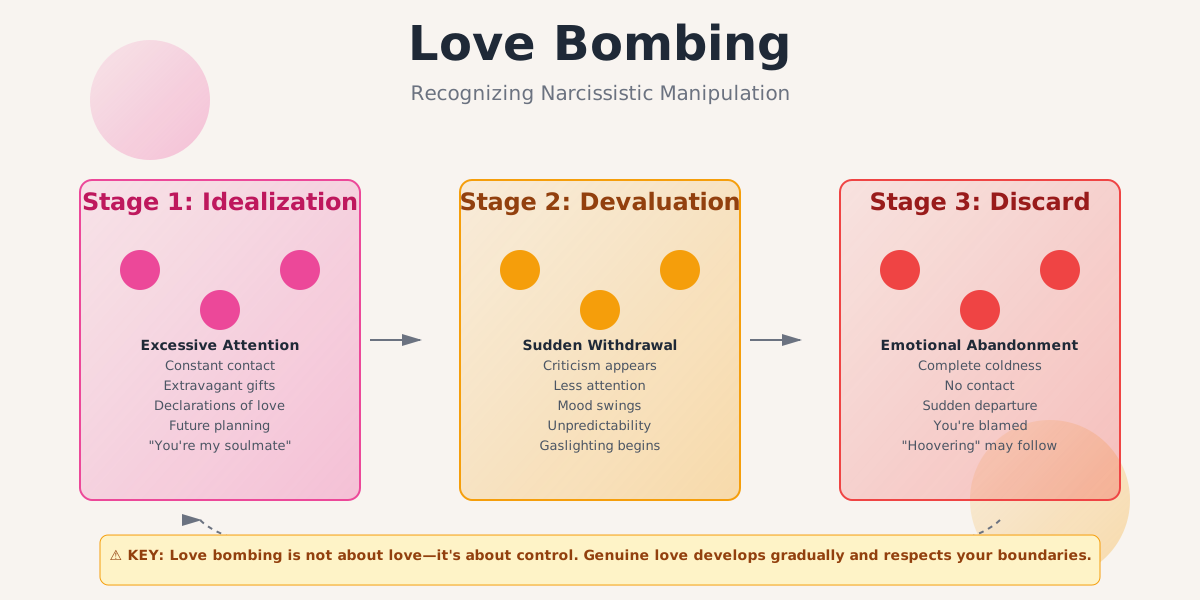
Love bombing is particularly associated with individuals who have narcissistic personality traits or full narcissistic personality disorder. Research from 2024 shows a strong positive correlation between love bombing behavior and narcissism, as well as between love bombing and emotional abuse. The pattern is deliberate and cyclical: idealization leads to devaluation, which leads to discard. What begins as an overwhelming flood of affection systematically transitions into withdrawal, criticism, and emotional unavailability—often creating trauma bonds that make victims feel stuck in the relationship.
Surprising Insight: Surprising Insight: Millennials have shown a drastic increase in narcissistic traits compared to previous generations, and mental health services on college campuses have increased significantly, with love bombing cited as an emerging concern among young adults in relationships.
The Love Bombing Cycle
The three predictable stages that characterize narcissistic love bombing patterns in relationships.
🔍 Click to enlarge
Why Love Bombing Matters in 2026
In our hyperconnected world where relationships often begin online, love bombing has become easier to execute and harder to recognize. Text messages, social media, and constant connectivity mean love bombers can maintain an intensity of contact that would have been impossible in previous decades. Dating apps have created new environments where love bombers can quickly move from prospect to prospect, leaving emotional casualties along the way.
The psychological impact of love bombing is substantial. Survivors report anxiety, depression, low self-esteem, and in severe cases, post-traumatic stress disorder. Young adults particularly show vulnerability to love bombing, as their brains are still developing the capacity for recognizing manipulation and setting boundaries. Understanding love bombing is essential protection for your emotional well-being and your ability to build genuinely healthy relationships.
Moreover, recognizing love bombing helps break cycles of abuse. Many people who experience love bombing go on to become vulnerable to repeat victimization. Learning the warning signs and understanding the psychology behind these tactics empowers you to make informed relationship decisions and potentially avoid years of emotional pain.
The Science Behind Love Bombing
Neuroscience reveals why love bombing works so effectively at manipulating our brains. When we experience attention and affection, our brains release dopamine, the neurotransmitter associated with pleasure, reward, and motivation. Love bombers deliberately trigger these neurochemical responses, creating an addiction-like dependency. The sudden and dramatic nature of love bombing creates even stronger dopamine surges than gradual, genuine relationship development would produce.
Additionally, love bombing satisfies deep human needs for belonging, validation, and significance. When someone makes us feel completely seen, understood, and valued, our nervous system shifts into a state of safety and openness. Skilled manipulators exploit this biological reality. They mirror our values, interests, and vulnerabilities back to us—a technique called mirroring—making us feel extraordinarily compatible. This neurobiological response, combined with psychological manipulation, creates powerful trauma bonds that can persist long after the relationship ends.
How Love Bombing Triggers Neurotransmitters
The neurochemical response cycle that makes love bombing so psychologically powerful and addictive.
🔍 Click to enlarge
Key Components of Love Bombing
Excessive Compliments and Flattery
Love bombers flood their targets with praise that often feels disproportionate to the relationship timeline. You might hear statements like 'You're my soulmate,' 'I've never met anyone like you,' or 'You're perfect for me' within days of meeting. This praise is designed to bypass your critical thinking and make you feel uniquely special and unchallengeable in the bomber's eyes.
Constant Communication
The love bomber maintains relentless contact—multiple texts daily, long phone calls, or messages on multiple platforms. They seem to always be available and expect you to be available for them. This constant presence serves multiple purposes: it creates a sense of intimacy, prevents you from maintaining other relationships, and establishes their expectations for how much attention you should give them.
Rapid Escalation and Future Planning
Love bombers talk about the future immediately and intensely. They may discuss marriage, children, moving in together, or retirement plans within the first few weeks. By painting elaborate future scenarios, they create a sense of inevitability and make it harder for you to exit the relationship later. Your rational mind questions the speed, but your emotions have been primed to go along with the program.
Extravagant Gifts and Grand Gestures
From expensive jewelry to elaborate surprise trips or surprising you at work with flowers and gifts, love bombers demonstrate their affection through material means. These gifts serve to trigger gratitude, establish obligation, and create public displays that make you feel pressured to appear equally committed to the relationship.
| Aspect | Love Bombing (Red Flag) | Healthy Love Development |
|---|---|---|
| Timeline for Declarations | "I love you" within days or weeks | "I love you" emerges naturally after months |
| Pace of Relationship Escalation | Rapid talk of marriage/moving in together | Gradual discussions about future together |
| Response to Boundary Setting | Becomes angry or turns it back on you | Respects your boundaries and adjusts behavior |
| Pattern of Attention | Intense, constant, demanding reciprocation | Consistent but allows for personal space |
| Gift Giving | Expensive gifts early, creating obligation | Thoughtful gifts that reflect genuine knowledge |
| Communication Style | Controlling, mirroring your interests exactly | Authentic sharing of genuine self |
How to Apply Love Bombing Awareness: Step by Step
- Step 1: Notice the pace: If someone is moving very fast with declarations of love, future planning, or commitment within the first few weeks, pause and observe rather than matching their intensity.
- Step 2: Assess authenticity: Ask yourself whether this person is showing genuine interest in who you really are, or if they're simply mirroring your stated interests and values back to you without depth.
- Step 3: Monitor your boundaries: Watch how the person responds when you set a boundary or express that you'd like to slow things down. Do they respect it, or do they become angry, withdrawn, or turn it around on you?
- Step 4: Maintain perspective: Keep friendships and family relationships strong. Love bombers often isolate victims by creating jealousy about other relationships or demanding that you spend all your time with them.
- Step 5: Trust your gut: If something feels too good to be true, it might be. Your intuition picks up on incongruencies between words and actions that your conscious mind might not immediately recognize.
- Step 6: Observe consistency: Does this person's behavior align with their words? A genuine partner shows consistency between what they say they believe and how they actually behave.
- Step 7: Check for accountability: When you point out problematic behavior, does this person take responsibility and change, or do they deflect, blame you, or deny what happened?
- Step 8: Notice withdrawal patterns: Be alert for sudden changes in attention or shifts from idealization to criticism. These are classic markers of the transition from the love bombing phase to the devaluation phase.
- Step 9: Communicate your concerns: Express your observations and concerns directly and calmly. A genuine partner will listen and work with you; a manipulator will become defensive.
- Step 10: Seek external perspectives: Talk to trusted friends and family about your new relationship. Sometimes people who care about us can see red flags that our attachment system is making us overlook.
Love Bombing Across Life Stages
Young Adulthood (18-35)
Young adults are particularly vulnerable to love bombing because their brains are still developing judgment and decision-making capacity around relationships. They may have limited experience with recognizing manipulation, and they often have a strong drive for connection and belonging. The combination of digital communication platforms and dating apps creates an environment where love bombers can rapidly intensify relationships. Young adults in this stage often lack the relationship experience to distinguish between genuine enthusiasm and calculated manipulation.
Middle Adulthood (35-55)
Middle-aged adults who have experienced divorce or relationship disappointment may be more vulnerable to love bombing because they've learned that relationships take work, and they might interpret excessive attention as evidence of genuine care and commitment after their relationship struggles. Additionally, increased responsibilities (children, career) might make them appreciate someone who seems to understand their needs so perfectly, creating blind spots to manipulative behavior.
Later Adulthood (55+)
Older adults sometimes become targets of love bombing, particularly those who are widowed or divorced and re-entering the dating world. Loneliness combined with renewed hope for companionship can make them overlook warning signs. Additionally, some love bombers specifically target older adults for financial gain, making this population especially vulnerable to predatory behavior masked as romance.
Profiles: Your Love Bombing Awareness Approach
The Romantic Skeptic
- Permission to question intensity without feeling cynical
- Language to discuss concerns without damaging new relationships
- Strategies to honor genuine connection while staying protective
Common pitfall: Becoming so defensive that they sabotage genuinely healthy relationships out of fear
Best move: Balance open-heartedness with observational awareness; let relationships develop naturally while maintaining healthy questioning
The Emotionally Hungry
- Recognition of their deep need for connection and validation
- Support in building self-worth independent of romantic relationships
- Strategies to meet attachment needs in sustainable ways
Common pitfall: Overlooking serious red flags because the attention feels so good compared to loneliness
Best move: Work on self-compassion and internal validation before evaluating new relationships; consider therapy to address attachment patterns
The Practical Observer
- Information and patterns to analyze objectively
- Permission to follow their analytical instincts
- Clear frameworks for evaluating relationship progress
Common pitfall: Over-analyzing emotions out of existence and missing the intuitive wisdom of their heart
Best move: Use your analytical strengths to catch red flags, but trust your emotional intelligence equally; integrate both head and heart
The Hopeful Connector
- Validation that their hope for connection is healthy
- Clear signs to watch for that might indicate manipulation
- Ways to stay open while maintaining protective awareness
Common pitfall: Pushing through warning signs because they believe positive intent and genuine effort can overcome any obstacle
Best move: Stay hopeful about people, but recognize that some obstacles are red flags, not challenges to overcome through love
Common Love Bombing Mistakes
One common mistake is dismissing love bombing as simply 'too much too soon' without recognizing the intentional manipulation underneath. People often rationalize: 'They're just very enthusiastic about relationships' or 'They show love intensely.' But love bombing isn't about enthusiasm—it's about control. Another mistake is assuming that expensive gifts or grand gestures equal genuine care. Manipulators use material displays specifically because they're designed to make you feel obligated and special, without actually requiring them to be vulnerable or genuinely intimate.
A critical mistake is setting a boundary and then abandoning it when the love bomber responds with withdrawal or escalation. When someone becomes cold or angry after you ask to slow down or create space, that's exactly when you need to hold your boundary firmer. Instead, many people interpret this reaction as a sign they were wrong to question the pace, and they allow themselves to be pulled back into the relationship to restore the 'good' feelings.
Another significant error is confusing trauma bonding with love. The intense emotional connection you feel after cycles of idealization, devaluation, and reconciliation isn't love—it's a neurobiological response to unpredictability and intermittent reinforcement. This confusion makes it extraordinarily difficult to leave love bombing relationships, even when you logically recognize the manipulation.
The Trap of Trauma Bonding
How the cycle of idealization, devaluation, and reconciliation creates addiction-like attachment.
🔍 Click to enlarge
Science and Studies
Recent psychological research has validated love bombing as a distinct manipulation tactic with measurable psychological consequences. Studies show correlations between love bombing behavior, narcissistic personality traits, and emotional abuse perpetration. The International Journal of Interdisciplinary Approaches in Psychology published research in 2024 documenting a strong positive correlation between love bombing and both narcissism and emotional abuse among young adults. This research confirms what victims have reported: love bombing is intentional, it's linked to narcissistic traits, and it frequently precedes emotional abuse.
- International Journal of Interdisciplinary Approaches in Psychology: A Study on Love Bombing, Narcissism and Emotional Abuse among Young Adults in Relationship and Situationship (2024) - Confirmed strong correlations between love bombing, narcissism, and emotional abuse
- University of Arkansas: Love-Bombing: A Narcissistic Approach to Relationship Formation - Academic examination of the tactic as part of the narcissistic cycle
- Psychology Today: Understanding Narcissistic Love Bombing Cycles - Clinical perspective on idealize-devalue-discard pattern
- American Psychological Association Resources: Documentation of love bombing as manipulation tactic in narcissistic personality disorder
- Cleveland Clinic Mental Health Resources: Love Bombing and Recovery - Evidence-based information on trauma recovery from love bombing
Your First Micro Habit
Start Small Today
Today's action: Notice one thing: Next time you're in a new relationship, observe whether this person respects a small boundary you set (like not texting immediately, wanting to spend an evening with friends, or preferring to move slower). Write down how they respond. This single observation begins building your awareness muscle.
Your nervous system learns through observation before crisis hits. By consciously noticing responses to small boundaries, you're training your intuition and building a library of patterns to recognize. This micro habit creates a safety net before manipulation escalates.
Track your boundary-setting observations and get personalized AI coaching with our app.
Quick Assessment
In your current or recent relationship, how much time has passed before the person wanted serious commitment (moving in, marriage, future planning)?
The timeline for commitment conversations reveals whether someone is moving at a healthy pace or potentially love bombing. Healthy relationships allow time for trust and genuine knowledge of each other to build.
When you've asked your partner to slow down or spend time apart, what usually happens?
How someone responds to boundary-setting is crucial. Respect for boundaries is foundational to healthy relationships. Defensive or manipulative responses when boundaries are set are serious warning signs.
Do your friends and family members seem comfortable with your new relationship, or are they expressing concerns?
People who love you can sometimes see patterns you're too close to recognize. If multiple trusted people express concerns, it's worth exploring why, even if it's uncomfortable.
Take our full assessment to get personalized recommendations.
Discover Your Style →Next Steps
If you recognize love bombing in your current or recent relationship, your next step is to create safety for yourself. This might mean establishing boundaries, maintaining support systems, documenting behaviors, or quietly planning an exit strategy. Trust your instincts more than your feelings in the moment, because your nervous system may be chemically bonded to this person in ways that override your rational judgment.
If you've ended a love bombing relationship, prioritize professional support. A therapist who specializes in emotional abuse or trauma can help you process what happened, understand why you were vulnerable, and rebuild healthy relationship patterns. Join support communities where you can connect with others who've experienced similar manipulation—knowing you're not alone is profoundly healing.
Get personalized guidance with AI coaching.
Start Your Journey →Research Sources
This article is based on peer-reviewed research and authoritative sources. Below are the key references we consulted:
Related Glossary Articles
Frequently Asked Questions
Isn't love bombing just someone being enthusiastically in love? How is it different from genuine enthusiasm?
Genuine enthusiasm is consistent with actions, respects your pace and boundaries, and shows authentic interest in who you are. Love bombing is inconsistent, pushes your boundaries, relies on mirroring rather than genuine knowing, and includes sudden shifts to coldness or criticism. Genuine love builds trust; love bombing deliberately bypasses it through overwhelming emotion.
Can someone love bomb without realizing they're doing it?
While some individuals with anxious attachment styles may move quickly in relationships without conscious manipulative intent, classic love bombing is deliberate. It's a learned tactic used by people with narcissistic traits to gain control. If the pattern continues after you've expressed discomfort with the pace, it's intentional, not accidental.
If I've been love bombed, does that mean I'm damaged or gullible?
No. Love bombing is specifically designed to exploit normal human needs for connection and belonging. It's not a sign of weakness or lack of intelligence—it's a sign you're capable of genuine connection and you trusted someone who exploited that capacity. Many highly intelligent, emotionally aware people have been targeted by love bombers.
How do I recover from being love bombed? Will I ever trust again?
Recovery involves processing the trauma with professional support (therapy, particularly trauma-focused approaches like EMDR or CBT), grieving the loss of the fantasy you were sold, and gradually rebuilding self-trust. Yes, you can trust again, but with better discernment. Working with a therapist helps you rebuild healthy attachment patterns.
Is it ever safe to maintain contact with someone who love bombed me?
Recovery is typically easier and more complete with no contact. Continued contact often prevents full emotional healing and leaves you vulnerable to 'hoovering'—when the love bomber returns with renewed love bombing to pull you back in. Unless there are significant reasons to maintain contact (co-parenting children, shared property), complete no-contact usually supports the healthiest recovery.
Take the Next Step
Ready to improve your wellbeing? Take our free assessment to get personalized recommendations based on your unique situation.
- Discover your strengths and gaps
- Get personalized quick wins
- Track your progress over time
- Evidence-based strategies