Holistic Wellness Programs
Imagine a health approach that doesn't compartmentalize your body, mind, and spirit into separate boxes. Holistic wellness programs integrate every dimension of your being—physical, mental, emotional, social, and spiritual—into one comprehensive system. Rather than treating symptoms in isolation, these programs address the root causes of imbalance. In 2026, with research showing that integrated wellness approaches reduce stress by up to 40% and improve employee engagement by 73%, holistic wellness programs have become essential for anyone seeking sustainable health transformation.
These programs combine evidence-based practices like meditation, yoga, nutrition counseling, and movement with personalized health plans tailored to your unique needs and life stage.
Whether you're managing chronic stress, seeking preventive care, or wanting to optimize your overall health, holistic wellness programs offer a structured pathway to lasting well-being.
What Is Holistic Wellness Programs?
Holistic wellness programs are comprehensive health initiatives designed to improve and maintain well-being across multiple interconnected domains. According to the National Center for Complementary and Integrative Health (NCCIH), whole person health refers to helping individuals restore their health in biological, behavioral, social, and environmental domains rather than just treating disease. These programs recognize that true health cannot be achieved by addressing only one aspect of wellness.
Not medical advice.
Holistic wellness programs typically incorporate physical fitness, nutrition education, stress management, mindfulness practices, emotional healing, and spiritual exploration. They emphasize prevention, personalization, and the interconnectedness of all health dimensions. Research shows that individuals participating in holistic programs experience better long-term health outcomes, improved mental clarity, enhanced emotional regulation, and greater life satisfaction compared to conventional single-focus health interventions.
Surprising Insight: Surprising Insight: Companies investing in holistic wellness programs with four or more offerings achieve returns of 150% or more, according to 2024 research. The global corporate wellness market reached USD 70.65 billion in 2024 and is projected to reach USD 128.18 billion by 2033.
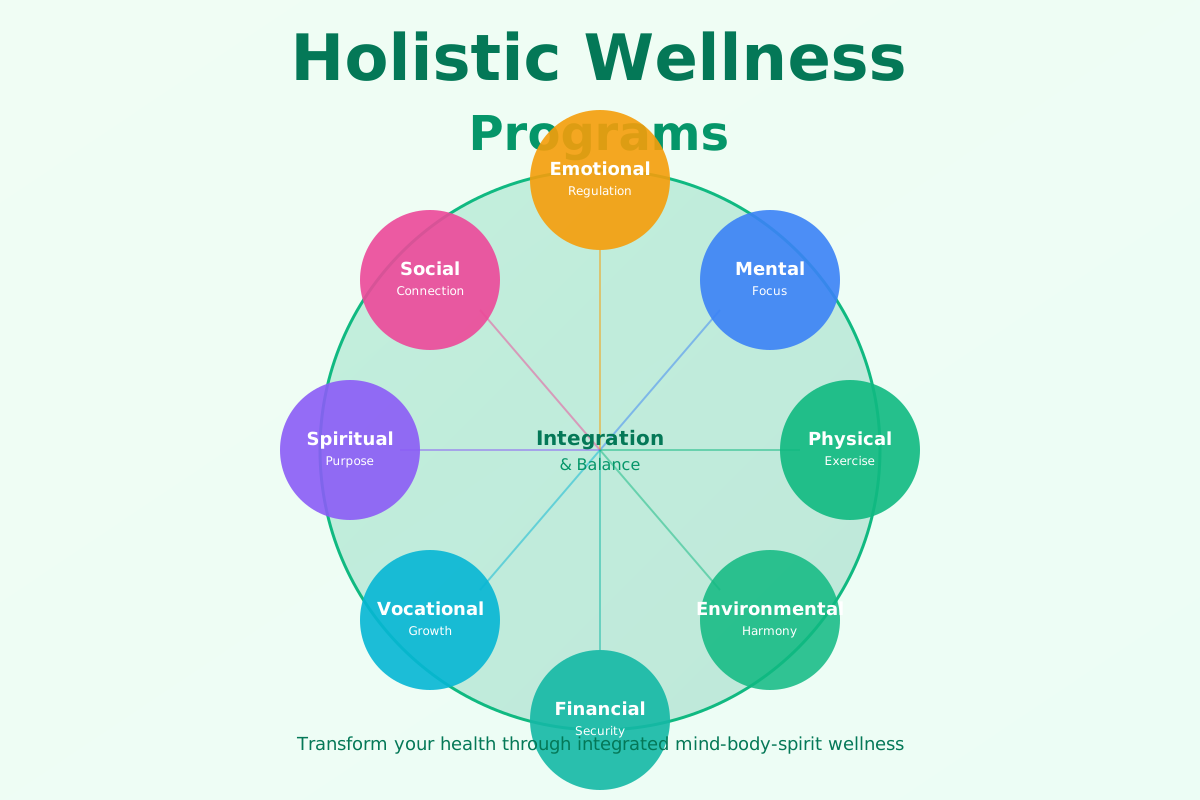
The Eight Dimensions of Wellness
Holistic wellness encompasses eight interconnected dimensions that together create complete well-being
🔍 Click to enlarge
Why Holistic Wellness Programs Matter in 2026
In an era marked by chronic stress, sedentary lifestyles, and fragmented healthcare, holistic wellness programs address a critical gap. Modern individuals face unprecedented mental health challenges, with anxiety and depression affecting millions globally. Traditional medical models often treat symptoms separately, missing the interconnected nature of health issues. Holistic programs fill this void by acknowledging that stress impacts physical health, poor sleep disrupts emotional regulation, financial anxiety affects relationships, and lack of purpose undermines motivation.
The 2024 research from the National Center for Complementary and Integrative Health reveals that 40% of Americans now use complementary and integrative health practices. Organizations implementing holistic wellness initiatives report 23% better performance from employees with high wellbeing, 89% higher member retention, and significantly reduced healthcare costs. Personal outcomes include reduced chronic disease risk, improved mental resilience, enhanced energy levels, and greater life satisfaction.
Perhaps most importantly, holistic wellness programs shift the paradigm from reactive treatment to proactive prevention. Instead of waiting for disease or burnout to occur, these programs build foundational wellness habits that inoculate against future health challenges. They recognize that small, sustainable lifestyle changes compounded over time create transformative results.
The Science Behind Holistic Wellness Programs
Neuroscience research demonstrates that integrated wellness practices create measurable changes in brain structure and function. A systematic review published in PMC found that body-mind-spirit interventions significantly improved quality of life scores, emotional intelligence, and self-efficacy across diverse populations. Meditation activates the parasympathetic nervous system, reducing cortisol and promoting physiological relaxation. Yoga combines physical movement with breath awareness, integrating left and right brain hemispheres and improving emotional regulation. Physical exercise triggers the release of endorphins, dopamine, and serotonin—the neurotransmitters directly responsible for mood elevation and motivation.
The vagus nerve, which connects your brain to your gut, heart, and lungs, responds powerfully to holistic practices like deep breathing, meditation, and movement. Stimulating the vagus nerve through these practices reduces inflammation throughout the body, improves heart rate variability, enhances immune function, and promotes emotional resilience. Research shows that holistic interventions produce reductions in perceived stress levels with small to medium effect sizes, and participants report improved sleep quality, reduced anxiety, and better emotional balance.
How Holistic Wellness Works: The Integration Model
Holistic programs work by integrating multiple practices that synergistically enhance each other across all wellness dimensions
🔍 Click to enlarge
Key Components of Holistic Wellness Programs
Physical Foundation: Movement and Nutrition
The physical dimension forms the foundation of holistic wellness. This includes regular physical activity tailored to individual capabilities—whether yoga, tai chi, strength training, or cardiovascular exercise—combined with evidence-based nutrition that emphasizes whole foods, balanced macronutrients, and hydration. Programs typically include personalized meal planning, nutrition education, and sustainable eating habits rather than restrictive dieting. Sleep optimization is equally essential, addressing sleep hygiene, circadian rhythm alignment, and recovery techniques. The physical component isn't about achieving aesthetic perfection but rather building a body capable of supporting all life activities.
Mental and Emotional Wellness: Mindfulness and Emotional Intelligence
Mental wellness encompasses cognitive function, continuous learning, focus development, and stress management through mindfulness and meditation. Programs teach evidence-based techniques like focused breathing, body scans, loving-kindness meditation, and progressive muscle relaxation. Emotional wellness involves developing emotional awareness, recognizing and labeling emotions accurately, and building healthy coping mechanisms. Participants learn emotional regulation skills, develop resilience through adversity exposure in safe environments, and cultivate self-compassion. These practices address anxiety, depression, burnout, and emotional dysregulation at their source rather than merely suppressing symptoms.
Social and Relational Wellness: Connection and Communication
Humans are inherently social beings, and robust relationships are among the strongest predictors of health and longevity. Holistic programs facilitate meaningful social connections through group activities, community building, peer support, and improved communication skills. Programs teach active listening, empathetic response, conflict resolution, and authentic relating—skills that deepen existing relationships and help individuals build supportive social networks. The sense of belonging and community that emerges from these practices significantly enhances overall wellness outcomes.
Spiritual and Purpose-Driven Wellness: Meaning and Values
Spiritual wellness doesn't require religious belief; it involves connecting with meaning, purpose, and core values. Holistic programs help individuals clarify what truly matters to them, identify their life purpose, and align daily actions with their values. Practices may include nature connection, reflection exercises, gratitude practices, legacy building, and service to others. Research shows that individuals with strong sense of purpose experience better mental health, greater resilience, and longer lifespans. This dimension transforms wellness from a self-focused project into a values-aligned lifestyle.
| Wellness Dimension | Key Components | Primary Benefits |
|---|---|---|
| Physical | Exercise, nutrition, sleep, recovery | Increased energy, reduced disease risk, improved metabolism |
| Mental | Meditation, learning, focus training, stress management | Enhanced cognitive function, reduced mental fatigue, better focus |
| Emotional | Breathwork, emotional regulation, self-compassion | Improved mood, resilience, reduced anxiety and depression |
| Social | Community, relationships, communication skills | Stronger bonds, sense of belonging, improved support networks |
| Spiritual | Purpose work, values alignment, meaning-making | Greater life satisfaction, motivation, resilience |
How to Apply Holistic Wellness Programs: Step by Step
- Step 1: Assess Your Current Wellness: Begin with an honest evaluation across all eight dimensions. Rate each area on a scale of 1-10. This baseline helps identify which areas need most attention and prevents overwhelming yourself with too many changes simultaneously.
- Step 2: Identify Your Core Motivation: Clarify why holistic wellness matters to you. Is it better health, more energy, improved relationships, greater resilience, or life purpose? Your motivation sustains effort through challenges.
- Step 3: Start with Physical Foundation: Begin with small, sustainable changes—20 minutes of movement daily, adding one extra serving of vegetables, establishing a consistent sleep schedule. Physical changes produce quick wins that boost motivation.
- Step 4: Introduce Mindfulness Practice: Add just 5 minutes of daily meditation or breathwork. Use guided apps if helpful. Consistency matters more than duration. Even 5 minutes daily creates measurable brain changes within weeks.
- Step 5: Build Social Connection: Identify one meaningful relationship to deepen or one community to join. Schedule regular interactions. Quality social connection is essential for holistic wellness.
- Step 6: Clarify Your Values and Purpose: Spend time reflecting on what truly matters to you. What impact do you want to have? What would a fulfilling life look like? Let this vision guide your wellness journey.
- Step 7: Create Your Personalized Program: Design a wellness plan integrating practices across all dimensions. Write specific, measurable goals. Include your most important practices and realistic timelines.
- Step 8: Track Your Progress: Use journals, apps, or simple checkmarks to track daily practices. Visible progress reinforces commitment and reveals patterns about what works best for you.
- Step 9: Adapt Based on Results: After 4-6 weeks, assess what's working and what isn't. Holistic wellness is personal—your optimal approach may differ from others. Continuously refine your program.
- Step 10: Deepen Your Practice: As basic practices become habitual, gradually deepen them. Extend meditation duration, increase exercise intensity, explore more advanced wellness concepts. Continuous growth sustains engagement.
Holistic Wellness Programs Across Life Stages
Young Adulthood (18-35)
Young adults benefit most from building strong wellness foundations before health challenges emerge. This stage offers unique advantages: typically higher energy levels, fewer time constraints than later life stages, and greater neuroplasticity for developing new habits. Programs should emphasize habit formation, establishing fitness routines, developing healthy eating patterns, and building strong social networks. Mental wellness practices help navigate identity formation, early career stress, and relationship building. Financial wellness components establish saving and investing habits with decades of compounding ahead.
Middle Adulthood (35-55)
Middle-aged adults often balance career demands, family responsibilities, aging parents, and identity questions. Holistic wellness becomes crucial for preventing burnout, managing chronic stress, and addressing emerging health concerns. Programs emphasize stress management, maintaining consistent physical activity, preventing weight gain, and deepening emotional intelligence. Purpose-driven wellness components help individuals align their work with their values and find meaning beyond professional achievements. Social wellness supports navigating changing relationships and maintaining friendships amid competing demands. Prevention becomes central—managing blood pressure, cholesterol, and metabolic health through lifestyle rather than medication.
Later Adulthood (55+)
Older adults increasingly focus on maintaining independence, cognitive function, and life quality. Holistic programs emphasize functional fitness preserving mobility and balance, cognitive engagement maintaining mental sharpness, social connection combating loneliness, spiritual development deepening purpose and legacy, and preventive care maintaining health and managing existing conditions. This life stage benefits greatly from meaning-making activities, mentoring opportunities, and contribution to community. Regular physical activity and cognitive stimulation have been shown to slow cognitive decline and reduce dementia risk.
Profiles: Your Holistic Wellness Approach
The Busy Professional
- Time-efficient practices fitting into packed schedules
- Stress management addressing work pressures
- Work-life balance preventing burnout
Common pitfall: Attempting comprehensive programs that demand hours daily, then abandoning them after weeks due to unrealistic expectations
Best move: Start with 10-minute daily meditation and one 30-minute weekly exercise session, gradually building as habits solidify. Focus on high-impact practices yielding maximum results in minimum time.
The Health Seeker
- Evidence-based practices with proven health outcomes
- Specific health goal targeting their conditions
- Progress measurement and outcome tracking
Common pitfall: Overcomplicating programs with too many practices simultaneously, creating analysis paralysis rather than action
Best move: Choose 2-3 high-leverage practices targeting your primary health goal. Implement consistently for 6-8 weeks before adding additional components. Track specific health metrics relevant to your goals.
The Social Connector
- Group-based wellness activities and community
- Accountability partners and social support
- Opportunities to contribute and help others
Common pitfall: Depending entirely on group dynamics, losing motivation if schedules conflict or groups dissolve
Best move: Combine group activities with individual practices ensuring wellness doesn't depend solely on external social arrangements. Volunteer in wellness-related roles amplifying your impact.
The Holistic Enthusiast
- Diverse practices spanning all wellness dimensions
- Continual learning about new approaches
- Integration of ancient wisdom with modern science
Common pitfall: Endless practice-hopping without developing mastery, diluting efforts across too many modalities
Best move: Develop mastery in 3-4 core practices before extensively exploring new ones. Deepen rather than broaden. Integration creates synergy; superficial variety creates dilution.
Common Holistic Wellness Programs Mistakes
The most common mistake is attempting total transformation immediately—starting an intensive fitness regime, overhauling nutrition completely, meditating 45 minutes daily, and joining five groups simultaneously. This approach works for 2-3 weeks before collapsing under its own weight. Research on habit formation shows that sustainable change requires starting small and building gradually. Begin with one or two practices, establish consistency, then expand.
The second major mistake is focusing exclusively on one dimension while neglecting others. Some individuals invest heavily in physical fitness while ignoring emotional wellness or social connection. Holistic wellness is precisely that—holistic. Imbalance across dimensions eventually undermines progress. A fit person with profound loneliness, unclear purpose, or persistent anxiety won't experience true wellness. Address all dimensions, even if you start with a primary focus area.
The third mistake is treating holistic wellness as a destination rather than an ongoing practice. Many approach programs as something to complete—like finishing a course—then return to old patterns. True wellness is a lifestyle, not a project. Successful individuals maintain foundational practices continuously while adapting complexity based on life circumstances. Some seasons emphasize physical wellness, others emotional, but all dimensions receive ongoing attention.
The Three Common Mistakes and Corrections
Learn how to avoid the most common pitfalls in holistic wellness programs
🔍 Click to enlarge
Science and Studies
Extensive research validates holistic wellness program effectiveness. Key studies demonstrate measurable outcomes across physical, mental, emotional, and social dimensions. Research from the NIH/PMC databases shows that healthcare professionals participating in holistic wellness programs improved quality of life scores, emotional intelligence, and self-efficacy. Workplace wellness studies found that employees with high wellbeing showed 23% better performance and used significantly fewer sick days. Corporate wellness research demonstrates that companies implementing holistic programs with four or more offerings achieved returns on investment of 150% or more, significantly reducing healthcare costs while improving productivity.
- A holistic approach to sustain wellness among healthcare professionals: PMC11590568 (2024) - Demonstrated improved quality of life, emotional intelligence, and sustained wellness practices
- Dimensions of wellness framework: PMC5508938 (2023) - Established the eight-dimension wellness model used across holistic programs
- Workplace Wellness Programs Study: PMC8425177 (2023) - Found programs led to better health behaviors and reduced healthcare costs up to $3.27 per dollar spent
- Body-Mind-Spirit interventions systematic review: PMC9168865 (2022) - Confirmed effectiveness of integrated wellness on holistic well-being
- Holistic mobile health interventions: PMC10694579 (2023) - Demonstrated effectiveness of technology-supported holistic programs with small to medium effect sizes
Your First Micro Habit
Start Small Today
Today's action: Spend 5 minutes this morning or evening with intentional awareness—this could be simple meditation, a mindful walk, journaling about your values, or preparing a nourishing meal with full attention. The specific practice matters less than conscious presence and integration of a wellness dimension into your day.
Small consistent actions create neural pathways that eventually become automatic. A 5-minute daily practice repeated for 30 days produces measurable changes in stress hormone levels, emotional regulation, and brain structure. You're not trying to transform your entire life overnight—you're building one sustainable habit that makes future habits easier.
Keep quitting habit apps after a missed day? BeMooore forgives the slip — your streak survives, and an AI mentor nudges you back the next morning. Free on iOS.
Quick Assessment
When you think about your current health and well-being, which dimension feels most neglected?
Your answer reveals your starting point. Holistic wellness doesn't require fixing everything simultaneously—it begins with honest awareness of your most pressing need.
What appeals most about holistic wellness programs?
Your motivation shapes your ideal program structure. Some thrive with evidence-based frameworks, others need community, others value personalization.
Which barrier most threatens your wellness commitment?
Knowing your barrier helps you design supports preventing common obstacles. Time constraints need efficient practices. Consistency challenges benefit from accountability. Slow results require focus on process metrics rather than outcome metrics.
Take our full assessment to get personalized recommendations.
Discover Your Style →Next Steps
Holistic wellness isn't a destination but a continuous practice of alignment—aligning your daily choices with your true values, integrating all dimensions of your being, and building sustainable habits supporting thriving health. The research is clear: integrated wellness approaches produce superior outcomes to single-focused interventions. The question isn't whether holistic wellness works but whether you're ready to commit to this transformative journey.
Your next step is simple: choose one small practice from this article. Commit to it for the next 30 days. Not everything—just one. After establishing that foundation, you'll feel motivated and capable of adding complementary practices. This incremental approach builds lasting change rather than producing temporary enthusiasm followed by disappointment.
Get personalized guidance with AI coaching.
Start Your Journey →Research Sources
This article is based on peer-reviewed research and authoritative sources. Below are the key references we consulted:
Related Glossary Articles
Frequently Asked Questions
What's the difference between holistic wellness and regular health programs?
Regular health programs typically address single dimensions—fitness centers focus on exercise, nutritionists on eating, therapists on mental health. Holistic wellness integrates all dimensions, recognizing their interconnection. A holistic program addresses why you overeat (emotional regulation? stress management? lack of purpose?), not just what you eat. This integrated approach produces superior long-term outcomes because it addresses root causes rather than symptoms.
How long before I notice results from holistic wellness programs?
Initial changes appear quickly—better sleep within days, improved mood and energy within 1-2 weeks, noticeable stress reduction within 3-4 weeks. Deeper changes take longer—sustained habit formation typically requires 8-12 weeks, significant health marker improvements 3-6 months, profound life transformation 6-12 months. The timeline varies by individual and which dimensions you're addressing. Early wins maintain motivation through deeper changes.
Can I do holistic wellness programs if I have existing health conditions?
Yes, with appropriate modifications. Holistic wellness complements medical treatment—it's not a replacement. Always discuss new practices with your healthcare provider, especially if you have chronic conditions, take medications, or have physical limitations. A qualified wellness practitioner or integrative medicine provider can help adapt practices to your situation. Many people successfully manage chronic conditions better with integrated wellness approaches supporting medical treatment.
Do I need to believe in spirituality for holistic wellness programs?
No. Spiritual wellness in holistic programs means connecting with meaning, purpose, and values—not necessarily religious belief. An atheist or agnostic can fully engage by clarifying what gives their life meaning, how they want to contribute, and what values guide their choices. The spiritual component becomes purpose-driven living rather than religious practice.
What's the most important first step in beginning holistic wellness programs?
Honest assessment of your current state across all wellness dimensions. You don't need perfect information—estimate how you're doing physically, mentally, emotionally, socially, and spiritually on a scale of 1-10. This baseline prevents overwhelm by showing you which areas need most attention. Start by improving one dimension while maintaining current function in others. Small wins build momentum for expanding your program.
Take the Next Step
Ready to improve your wellbeing? Take our free assessment to get personalized recommendations based on your unique situation.
- Discover your strengths and gaps
- Get personalized quick wins
- Track your progress over time
- Evidence-based strategies