Creatine Supplements
Creatine supplements have become one of the most researched and validated nutritional strategies in sports science, with over 500 peer-reviewed studies confirming their safety and effectiveness. Whether you're an athlete seeking performance gains, someone building muscle strength, or interested in cognitive enhancement, understanding creatine can transform your fitness journey. Creatine works by increasing your muscles' energy supply during intense exercise, helping you perform better and recover faster. Beyond athletic performance, emerging research reveals that creatine supports brain function, memory, and even cognitive health in aging populations. This guide explores everything you need to know about creatine supplementation, from mechanisms of action to optimal dosing protocols.
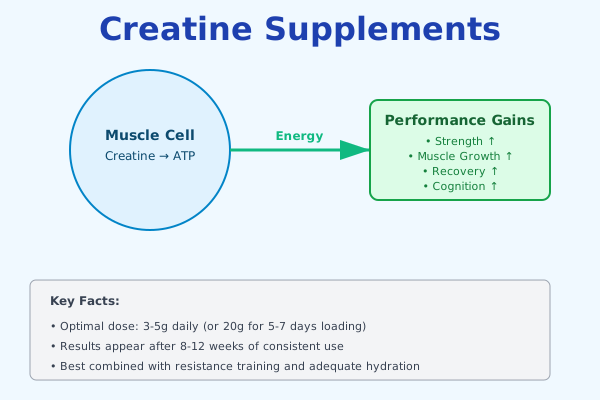
Creatine isn't magic—it's biochemistry backed by science. Your body naturally produces creatine, and you also consume it through protein-rich foods like red meat and fish.
The supplement form, creatine monohydrate, is the most cost-effective, well-researched option available on the market today.
What Is Creatine Supplements?
Creatine is a naturally occurring compound made up of three amino acids: glycine, arginine, and methionine. Your body produces approximately one to two grams of creatine daily in the liver, kidneys, and pancreas. Dietary sources like red meat, fish, and poultry provide additional creatine, though in relatively small amounts. Creatine monohydrate, the most common supplement form, is a powder containing creatine bonded to monohydrate, making it stable and easy to absorb.
Not medical advice.
When you consume creatine supplementation, most of it travels to your skeletal muscles where it converts into phosphocreatine (also called creatine phosphate). This conversion is crucial—phosphocreatine serves as a rapid energy buffer during high-intensity exercise, helping your cells regenerate adenosine triphosphate (ATP), which is your muscle's primary energy currency. This enhanced energy availability translates to more powerful contractions, better endurance during intense bursts of activity, and improved recovery between sets.
Surprising Insight: Surprising Insight: Two Alzheimer's trials published in 2025 using 20 grams of creatine per day for eight weeks showed significant improvements in cognitive markers, suggesting benefits extend far beyond muscle performance.
How Creatine Powers Your Muscles
Visual representation of creatine metabolism and ATP energy production during exercise
🔍 Click to enlarge
Why Creatine Supplements Matter in 2026
In 2026, creatine supplementation has shifted from being purely a bodybuilding tool to a mainstream wellness strategy. Recent research demonstrates applications far beyond muscle building, including cognitive support, bone health enhancement, and age-related muscle preservation. The supplement's safety profile after decades of use means you can confidently explore its benefits without uncertainty about adverse effects in healthy individuals.
Performance optimization is increasingly accessible. Whether you're a strength athlete, weekend warrior, or simply someone committed to maintaining muscle and cognitive function as you age, creatine provides measurable results. Studies show that creatine supplementation combined with resistance training produces 14% greater strength gains compared to resistance training alone, making it one of the most effective legal supplements available.
The cognitive frontier represents perhaps the most exciting development in creatine research. Previously limited to athletic populations, emerging evidence suggests that supplementation supports memory retention, processing speed, attention, and may protect against age-related cognitive decline. This makes creatine relevant for students, professionals, and aging adults seeking to maintain mental sharpness.
The Science Behind Creatine Supplements
The mechanism of action behind creatine is elegantly simple yet profoundly effective. During high-intensity exercise, your muscles rapidly deplete ATP, causing fatigue and performance decline. Phosphocreatine acts as a backup energy source, donating its phosphate group to regenerate ATP quickly. This process is particularly important during activities lasting 6-30 seconds, such as weightlifting sets, sprints, or intense interval work. By increasing muscle phosphocreatine levels through supplementation, you extend your capacity to maintain power output during these critical moments.
Long-term supplementation drives adaptations at the cellular level. Research indicates that creatine increases the phosphocreatine/creatine ratio in skeletal muscle tissue, enhancing ATP resynthesis capacity. Additionally, creatine influences protein synthesis pathways, promotes cellular hydration, and may reduce myostatin, a protein that limits muscle growth. These cascading effects explain why regular creatine users experience consistent strength gains and muscle hypertrophy when combined with resistance training. The effects compound over time, with most significant improvements appearing after 8-12 weeks of consistent use.
Creatine Supplementation Timeline
What happens to your body at different stages of creatine supplementation
🔍 Click to enlarge
Key Components of Creatine Supplements
Creatine Monohydrate
Creatine monohydrate is the gold standard and most extensively studied form of creatine supplementation. By a wide margin, it is the most researched sports supplement in history, with hundreds of clinical trials confirming its safety and effectiveness. Monohydrate's advantages include superior stability, excellent bioavailability, proven muscle uptake efficiency, and affordability. The simple structure—creatine bonded to one water molecule—makes it highly soluble and absorbable. This is the form recommended by the International Society of Sports Nutrition and used in virtually all major research studies.
ATP Energy System
Your muscles rely on adenosine triphosphate (ATP) for energy, but ATP stores last only seconds during intense effort. Phosphocreatine acts as a rapid recharge system, regenerating ATP when it's depleted. By elevating phosphocreatine levels, creatine supplementation extends your high-intensity work capacity. This is why you notice improvements in weightlifting performance, sprint speed, and repeated high-effort movements—you're literally extending the time your muscles can operate at maximum power.
Muscle Hydration and Growth
Creatine increases intracellular water content, promoting a hydrated state within muscle cells. This cellular hydration triggers anabolic signaling pathways and supports protein synthesis, making it easier to build muscle mass during training. The improved cellular environment also reduces exercise-induced muscle damage and accelerates recovery between sessions. Many users report visible improvements in muscle fullness and pump within the first two weeks of supplementation, attributable to this enhanced intracellular hydration.
Cognitive Support Mechanisms
The brain represents approximately 2% of body weight but consumes 20% of your body's ATP energy. Creatine supports brain energy metabolism, particularly during cognitively demanding tasks. Research shows that creatine supplementation enhances memory retention, improves processing speed, and increases attention span. This occurs through enhanced phosphocreatine availability in neural tissue, supporting mitochondrial function and energy-dependent cognitive processes. Vegetarians and vegans often benefit most from creatine supplementation since they consume minimal dietary creatine.
| Form | Bioavailability | Research Studies |
|---|---|---|
| Creatine Monohydrate | Excellent (95%+) | 500+ clinical trials |
| Creatine Ethyl Ester | Moderate | Limited research |
| Buffered Creatine | Similar to Monohydrate | Fewer studies |
How to Apply Creatine Supplements: Step by Step
- Step 1: Choose pure creatine monohydrate powder certified by NSF or Informed Choice, with five grams per serving and no fillers.
- Step 2: Decide between loading phase (faster results) or standard approach (steady progress) based on your timeline and preferences.
- Step 3: If loading: Take 20 grams daily (divided into four 5-gram doses) for 5-7 days, then transition to maintenance.
- Step 4: If not loading: Start with 3-5 grams daily and be patient for 8-12 weeks before expecting full effects.
- Step 5: Mix creatine with warm liquid (juice or tea improves absorption) and consume consistently at the same time daily.
- Step 6: Maintain consistent hydration throughout the day—creatine increases cellular water demands, so drink extra water.
- Step 7: Combine creatine supplementation with resistance training to maximize muscle strength and hypertrophy benefits.
- Step 8: Track your strength progression—you should notice increased repetitions or weight capacity within 2-4 weeks.
- Step 9: Monitor body composition and energy levels—creatine users often report improved workout recovery and mental clarity.
- Step 10: Continue supplementation consistently for at least 12 weeks to realize full cognitive and physical benefits, then reassess based on your goals.
Creatine Supplements Across Life Stages
Young Adulthood (18-35)
Young adults benefit significantly from creatine supplementation when pursuing athletic performance, competitive sports, or serious strength training. This age group typically shows robust muscle responsiveness and rapid adaptation to supplementation. Beyond athletics, young adults engaged in demanding cognitive work—students, knowledge workers, programmers—increasingly use creatine for its memory and processing speed benefits. The loading phase approach works well in this population, delivering results within 1-2 weeks. Young adults should focus on consistency, combining creatine with progressive resistance training and adequate protein intake to maximize muscle gains.
Middle Adulthood (35-55)
Middle-aged adults experience age-related muscle loss (sarcopenia) and often struggle to maintain strength despite training. Creatine supplementation becomes increasingly valuable in this phase, helping preserve lean muscle mass and combat functional decline. Research specifically on older adults shows that creatine combined with resistance training significantly increases lean mass, muscle thickness, strength, and functional ability. This demographic often reports improved recovery between workouts and increased workout capacity. Additionally, middle-aged professionals dealing with cognitive demands benefit from creatine's emerging support for memory and mental clarity, making it relevant beyond fitness contexts.
Later Adulthood (55+)
Older adults represent perhaps the most compelling use case for creatine supplementation. Age-related decline in muscle mass and function significantly impacts independence and quality of life. Research demonstrates that creatine monohydrate supplementation combined with resistance exercise improves strength, functional ability, and lean muscle mass in older populations. Beyond muscles, emerging evidence suggests cognitive benefits may help preserve mental sharpness and support brain health. The same safety profile applies—creatine is well-tolerated in healthy older adults. Those with existing kidney disease should consult their physician first, but healthy seniors can confidently explore creatine as part of their longevity and functional preservation strategy.
Profiles: Your Creatine Supplements Approach
The Competitive Athlete
- Maximum performance gains in high-intensity sports
- Faster recovery between training sessions
- Evidence-based supplementation to maintain competitive edge
Common pitfall: Expecting overnight transformation instead of consistent progress over 8-12 weeks
Best move: Use loading phase for faster saturation, combine with periodized training, track strength metrics weekly
The Strength Builder
- Increased muscle strength and power output
- Better performance on heavy compound lifts
- Improved muscle pump and cell volumization
Common pitfall: Taking excessive doses thinking more is better—standard 3-5g daily is optimal
Best move: Combine 5g daily with progressive resistance training, ensure adequate protein intake, maintain hydration
The Aging Adult
- Preservation of lean muscle mass
- Support for functional independence
- Cognitive benefits for mental sharpness
Common pitfall: Assuming muscle loss is inevitable and not committing to resistance training alongside supplementation
Best move: Start 3-5g daily, pair with regular strength training 2-3x weekly, emphasize consistency over intensity
The Cognitive Performer
- Enhanced memory and information retention
- Improved processing speed and attention
- Mental clarity for demanding intellectual work
Common pitfall: Expecting cognitive effects without resistance training, which amplifies creatine's neural benefits
Best move: Take consistent 5g daily, engage in regular physical activity, combine with quality sleep and nutrition
Common Creatine Supplements Mistakes
One of the most pervasive mistakes is consuming excessive creatine doses based on the false assumption that more equals faster results. Research clearly shows that consuming high doses does not accelerate benefits—it simply stresses your kidneys unnecessarily. The scientific consensus supports 3-5 grams daily as optimal. A loading phase of 20 grams daily for 5-7 days can accelerate results, but this is optional. Steady-state supplementation achieves identical long-term results with slightly longer timeline.
Another critical error is neglecting hydration while supplementing with creatine. Creatine pulls water into muscle cells, increasing your body's overall water demands. Users who don't significantly increase water intake often experience cramping, fatigue, or suboptimal results. Increase daily water consumption by at least 2-3 liters when supplementing. Additionally, some people abandon creatine after 2-3 weeks without seeing dramatic results. Patience is essential—most significant benefits manifest after 8-12 weeks of consistent use. This requires discipline and trust in the science.
A third mistake is failing to combine creatine supplementation with resistance training and adequate protein intake. Creatine enhances the results of training and nutrition—it's not a standalone solution. You must train with intention, progressively challenge your muscles, and consume sufficient protein (0.8-1.2g per pound of body weight) for creatine to deliver its benefits. Similarly, some people assume creatine supports all forms of exercise equally. In reality, creatine primarily benefits high-intensity, short-duration activities. For endurance activities, the benefits are modest. Match your expectations to the science.
Creatine Common Mistakes Impact
How common mistakes reduce creatine supplementation effectiveness
🔍 Click to enlarge
Science and Studies
The research base supporting creatine supplementation is robust and comprehensive. Over 500 peer-reviewed clinical studies have examined creatine's effects on athletic performance, muscle growth, cognitive function, and safety. Multiple systematic reviews and meta-analyses confirm consistent benefits across diverse populations. The International Society of Sports Nutrition has issued official position statements endorsing creatine monohydrate as safe and effective. Recent 2024-2025 research has expanded our understanding beyond muscle performance into cognitive enhancement, bone health, and aging resilience.
- A 2024 systematic review in PMC found that creatine supplementation with resistance training significantly increased 1RM strength tests and muscle thickness in older adults compared to training alone.
- Recent 2025 research published on creatine and cognitive function showed that 20 grams daily for 8 weeks improved memory retention, processing speed, and attention span, with particular benefits for Alzheimer's disease markers.
- A 2024 meta-analysis on kidney function safety concluded that creatine supplementation at recommended doses does not alter serum creatinine, plasma urea, or kidney markers in healthy individuals over periods exceeding 12 weeks.
- Harvard Health and Mayo Clinic reviews both confirm that creatine monohydrate is safe for long-term use in healthy individuals, with no serious adverse effects documented in the scientific literature.
- Cleveland Clinic research indicates that creatine improves high-intensity exercise performance by approximately 14% compared to placebo when combined with resistance training.
Your First Micro Habit
Start Small Today
Today's action: Buy pure creatine monohydrate powder today and take your first 5-gram dose mixed with warm juice or water tomorrow morning. Set a phone reminder for the same time daily.
Starting immediately removes decision fatigue and builds momentum. Consistency with supplementation matters more than dose size. A single daily reminder creates automaticity, transforming supplementation from a conscious choice into an unconscious habit within 2-3 weeks.
Keep quitting habit apps after a missed day? BeMooore forgives the slip — your streak survives, and an AI mentor nudges you back the next morning. Free on iOS.
Quick Assessment
What is your primary fitness goal right now?
Your goal determines whether creatine supplementation is highly relevant. Athletes and strength builders benefit most immediately, while aging adults pursuing longevity get longer-term functional benefits.
How consistently do you currently engage in resistance training?
Creatine effectiveness scales with training consistency. Without regular resistance training, creatine benefits diminish significantly. Those training 3+ times weekly see the most dramatic improvements.
How important is optimizing your performance or building muscle to you personally?
Creatine users who track progress and prioritize optimization consistently achieve better results. Those with systematic approaches see 2-3x better outcomes than casual supplementers.
Take our full assessment to get personalized recommendations.
Discover Your Style →Next Steps
Your next immediate action is to decide whether creatine supplementation aligns with your current goals. If you're pursuing athletic performance, building muscle strength, or interested in cognitive enhancement, creatine warrants serious consideration. The evidence strongly supports its effectiveness and safety profile. Start by purchasing pure creatine monohydrate from a reputable source certified by NSF or Informed Choice—this ensures purity and quality. Avoid proprietary blends or exotic creatine forms; monohydrate remains the gold standard with the strongest research base.
Combine supplementation with deliberate action. Creatine enhances training results but doesn't replace it. Commit to consistent resistance training 3-4 times weekly, prioritize adequate protein intake, and significantly increase daily water consumption. Track your strength metrics—record weights, repetitions, and perceived recovery in a simple spreadsheet. This data transforms supplementation from blind faith into evidence-based progress monitoring. After 12 weeks, you'll have concrete data about whether creatine delivers the results you expected, allowing you to make informed decisions about continuing supplementation.
Get personalized guidance with AI coaching.
Start Your Journey →Research Sources
This article is based on peer-reviewed research and authoritative sources. Below are the key references we consulted:
Related Glossary Articles
Frequently Asked Questions
Is creatine supplementation safe for long-term use?
Yes. Creatine monohydrate is one of the most extensively researched supplements, with hundreds of studies confirming safety over periods exceeding 2 years. Healthy individuals show no adverse effects at recommended doses (3-5g daily). However, people with kidney disease or taking kidney-affecting medications should consult their physician first.
How long before I see results from creatine?
Initial effects like improved muscle pump appear within 2-3 days due to cell hydration. Meaningful strength improvements typically emerge after 4-6 weeks with consistent training. Maximum benefits usually manifest after 8-12 weeks of regular supplementation combined with resistance training.
Do I need to do a loading phase or can I start with regular doses?
Both approaches work. A loading phase (20g daily for 5-7 days) accelerates muscle saturation, delivering results within 1-2 weeks. Standard dosing (3-5g daily) takes longer but achieves identical long-term results. Choose based on your timeline preference—results ultimately equal.
Does creatine cause water retention and bloating?
Creatine pulls water into muscle cells, increasing muscle fullness and a 'pumped' appearance. This intracellular hydration is beneficial and rarely causes noticeable bloating. Some users notice 1-2 pounds of scale weight increase from water retention, but this reflects improved cell hydration, not fat gain.
Can women use creatine, or is it only for men?
Creatine benefits both men and women equally. Research shows identical strength and muscle-building effects in female athletes and fitness enthusiasts. Women don't need to worry about hormonal effects—creatine doesn't convert to hormones or cause virilization. Standard dosing and protocols apply universally.
Take the Next Step
Ready to improve your wellbeing? Take our free assessment to get personalized recommendations based on your unique situation.
- Discover your strengths and gaps
- Get personalized quick wins
- Track your progress over time
- Evidence-based strategies