Bryan Johnson Protocol
Imagine slowing your biological age while others age normally. Bryan Johnson, a tech entrepreneur and biohacker, has created a comprehensive health optimization system called the Blueprint Protocol—a data-driven approach to reversing aging across multiple organs. By spending $2 million annually on his personal longevity experiment, Johnson combines advanced biomarker tracking, targeted supplementation, precision exercise, sleep optimization, and innovative therapies to pursue biological age reversal. His Netflix documentary 'Don't Die' brought mainstream attention to questions many ask: Can we really slow aging? What does personalized health look like? And which interventions offer genuine benefits?
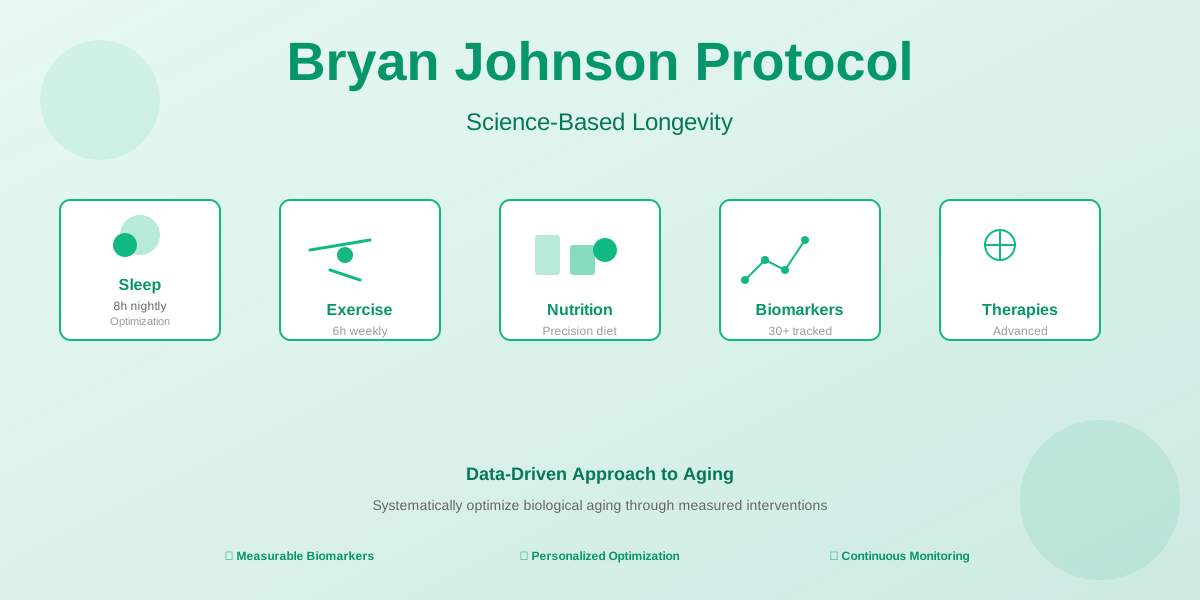
Key insight: Most people optimize one or two health areas. The Bryan Johnson Protocol systematically addresses dozens of aging biomarkers simultaneously.
What makes this protocol different: Rather than following generic health advice, Johnson uses continuous biomarker monitoring to measure what actually works for his unique biology—creating a personalized, data-driven approach to longevity.
What Is Bryan Johnson Protocol?
The Bryan Johnson Protocol, also known as Blueprint, is a comprehensive health optimization system designed to slow biological aging and improve healthspan—the years you live in good health. Developed by tech entrepreneur Bryan Johnson starting in 2021, the protocol combines personalized supplementation, precision exercise, sleep optimization, nutritional strategies, and advanced medical interventions with continuous biomarker tracking. The system monitors over 30 biological markers to measure aging rate across cardiovascular, metabolic, cognitive, and cellular systems.
Not medical advice.
The protocol represents a radical approach to longevity: instead of waiting for disease diagnosis, it intervenes early using data. Johnson coordinates a team of 30+ specialists including cardiologists, neurologists, nutritionists, and longevity scientists to optimize every system. The protocol has evolved significantly since launch—Johnson has discontinued some early interventions (like rapamycin) after observing negative biomarker effects, demonstrating an important principle: data drives changes, not dogma.
Surprising Insight: Surprising Insight: Johnson reported extending his telomere length by 2.6% through targeted interventions—potentially adding years to his cellular lifespan. More importantly, after 60 sessions of hyperbaric oxygen therapy, he achieved below-detectable levels of systemic inflammation, suggesting inflammation reduction may be one of the highest-impact longevity interventions.
The Bryan Johnson Protocol Framework
Overview of major protocol components and their interactions in the biological aging reversal system
🔍 Click to enlarge
Why Bryan Johnson Protocol Matters in 2026
In 2026, aging remains one of humanity's greatest challenges. Over 1 billion people globally are age 60 or older, and age-related diseases consume massive healthcare resources. The Bryan Johnson Protocol matters because it demonstrates that biological aging isn't fixed—it can be measured precisely and influenced through systematic intervention. As longevity science accelerates, understanding personalized, data-driven approaches to aging becomes increasingly valuable.
The protocol addresses a critical gap in modern medicine: most healthcare waits for disease symptoms before intervening. Johnson's system reverses this—it identifies aging markers early and intervenes before disease develops. This proactive model, if validated, could transform how people approach their health. Additionally, the protocol's transparency (Johnson shares all biomarker data publicly) allows the broader scientific community to evaluate claims and replicate results.
Cultural impact matters too. The Netflix documentary 'Don't Die' has sparked mainstream conversations about aging being optional. Whether or not Johnson's specific interventions prove universally applicable, the framework of measuring, monitoring, and optimizing biological age resonates with millions seeking to extend their healthspan.
The Science Behind Bryan Johnson Protocol
The protocol rests on several foundational scientific principles. First, aging is measurable through specific biomarkers—blood glucose, inflammatory markers, lipid profiles, telomere length, epigenetic clocks, and others. Johnson uses multiple epigenetic aging clocks (algorithms that estimate biological age from DNA methylation patterns) to track progress. Second, many aging interventions are well-established in gerontology research: caloric restriction, exercise, quality sleep, and specific supplements all show aging-slowing effects in peer-reviewed studies. Third, chronic inflammation (inflammaging) contributes significantly to aging across multiple organ systems, making inflammation reduction a logical target.
The protocol's innovation lies not in inventing new interventions, but in combining proven strategies systematically and measuring results continuously. One notable finding: Johnson's hyperbaric oxygen therapy (HBOT) experiment produced remarkable results—60 sessions eliminated detectable systemic inflammation, increased VEGF (vascular growth factor) by 300%, achieved telomerase activity levels of a 12-year-old, and increased beneficial gut bacteria markers by 250-290%. While these are self-reported results from one individual rather than peer-reviewed clinical trials, the comprehensive biomarker tracking provides a detailed case study of what's possible.
Biological Aging Markers Tracked in Protocol
Key biomarkers monitored to measure aging rate and protocol effectiveness
🔍 Click to enlarge
Key Components of Bryan Johnson Protocol
Sleep Optimization
Johnson calls sleep 'the world's number one longevity drug.' The protocol emphasizes 8 hours of high-quality sleep nightly through multiple strategies: consistent sleep schedules, room temperature maintenance around 65-67°F (18-19°C), darkness optimization, blue light reduction, and advanced monitoring using sleep trackers. Sleep deprivation accelerates aging across all systems—insufficient sleep disrupts glucose metabolism, increases inflammation, impairs cognitive function, and shortens telomeres. The protocol treats sleep as non-negotiable infrastructure for all other longevity efforts.
Exercise Protocol
Johnson follows a structured 6-hour weekly exercise program combining multiple modalities to address different aging mechanisms. The routine includes strength training (targeting sarcopenia and metabolic health), high-intensity interval training (HIIT) for cardiovascular benefits, flexibility work (maintaining mobility), and balance training (preventing falls). Approximately 25 exercises specifically target biological aging markers. The exercise protocol operates on the principle that different exercise types activate different longevity pathways—strength training preserves muscle and bone, cardio improves cardiovascular function, and flexibility prevents disability.
Nutrition and Supplementation
The protocol employs caloric restriction (15% deficit: ~1,980 calories daily for Johnson) combined with nutrient density optimization. Daily consumption includes 70+ pounds of vegetables monthly, precise macronutrient ratios, and a carefully designed supplement stack. Key supplements include nicotinamide riboside (NAD+ precursor for energy metabolism), CoQ10 (mitochondrial health), fisetin (cellular senescence clearance), curcumin (anti-inflammatory), creatine (muscle and cognitive health), and others. Each supplement targets specific aging pathways identified through biomarker data.
Advanced Medical Interventions
Beyond lifestyle, the protocol includes cutting-edge medical interventions. These have included mesenchymal stem cell injections (March 2024: 300 million cells injected into joints), hyperbaric oxygen therapy (60 sessions showing remarkable inflammation reduction), plasma exchange procedures (to remove aging factors), and various pharmaceutical approaches. Notably, Johnson discontinued rapamycin after 5 years despite theoretical benefits, because biomarker data showed accelerated aging on multiple epigenetic clocks—demonstrating the protocol's commitment to data over assumptions.
| Component | Primary Mechanism | Key Biomarkers Addressed |
|---|---|---|
| Sleep | Circadian rhythm regulation, cellular repair | Cortisol, inflammation, cognitive function |
| Exercise | Muscle preservation, cardiovascular adaptation | VO2 max, strength, body composition |
| Nutrition | Metabolic optimization, antioxidant defense | Glucose, lipids, nutrient status |
| Supplementation | Targeted pathway activation | NAD+ levels, mitochondrial function, senescent cells |
| Advanced Therapies | Inflammation reduction, tissue repair | Systemic inflammation, epigenetic clock |
How to Apply Bryan Johnson Protocol: Step by Step
- Step 1: Establish baseline biomarkers through comprehensive bloodwork including glucose, lipids, inflammatory markers (CRP), and consider advanced testing like epigenetic clocks or telomere length analysis. Track at least 5-10 key markers quarterly.
- Step 2: Optimize sleep first—aim for consistent 8-hour sleep schedule, maintain bedroom temperature 65-67°F, use blackout curtains, reduce blue light 2 hours before bed. Sleep is foundational for all other interventions.
- Step 3: Establish exercise routine: 6 hours weekly across strength training (2x weekly), cardio/HIIT (2x weekly), flexibility/balance (1-2x weekly). Start with what's sustainable and gradually increase intensity.
- Step 4: Implement dietary structure: eat whole foods with emphasis on vegetables and fiber, establish caloric awareness (slight deficit if appropriate), maintain consistent meal timing, ensure adequate protein intake for muscle preservation.
- Step 5: Add targeted supplementation thoughtfully: start with evidence-backed basics like vitamin D (if deficient), magnesium, omega-3s. Gradually add protocol-specific supplements based on biomarker results, not assumptions.
- Step 6: Track key markers quarterly: blood glucose, lipid panel, inflammatory markers (CRP, IL-6), body composition. Use consistent testing locations for reliable comparisons.
- Step 7: Consider advanced markers annually: epigenetic clock testing, homocysteine, lipoprotein(a), cognitive testing. These provide deeper aging insights than basic bloodwork.
- Step 8: Monitor sleep quality objectively with trackers, aiming for 7-8 hours nightly with 80%+ deep/REM sleep ratio. Adjust bedroom environment based on data.
- Step 9: Adjust interventions quarterly based on biomarker results: if glucose remains elevated, increase exercise or dietary restriction. If inflammation persists, add targeted anti-inflammatory strategies.
- Step 10: Document everything: maintain health journal tracking sleep, exercise, mood, energy. Correlate this subjective data with objective biomarkers to identify what actually improves your wellbeing.
Bryan Johnson Protocol Across Life Stages
Young Adulthood (18-35)
The protocol in young adulthood focuses on establishing healthy foundations and tracking baseline biomarkers. Young adults benefit from consistent sleep patterns, regular exercise, and good nutrition—these create metabolic and cardiovascular resilience that prevents aging acceleration. Biomarker tracking at this stage establishes baselines for comparison later. The focus should be establishing sustainable habits rather than extreme interventions, building fitness base capacity, and developing metabolic health through diet and exercise.
Middle Adulthood (35-55)
This is where many aging processes accelerate. The protocol becomes more strategic during middle adulthood: systematic supplementation targets emerging biomarker issues, exercise becomes more purposeful (maintaining muscle becomes critical to prevent sarcopenia), and quarterly biomarker monitoring tracks aging trajectories. Many people first notice cognitive changes or metabolic shifts around 40-50. Protocol application here focuses on catching and reversing these trends through systematic intervention before they progress into disease.
Later Adulthood (55+)
The protocol's value becomes most apparent in later adulthood. Consistent exercise maintains muscle mass and strength critical to preventing falls and disability. Sleep optimization improves cognitive function and mood. Careful supplementation addresses emerging deficiencies (B12, vitamin D, minerals). Quarterly biomarker monitoring identifies emerging problems early. The comprehensive approach addresses multiple aging systems simultaneously—something increasingly important as aging accelerates. Later adulthood is where prevention truly pays dividends.
Profiles: Your Bryan Johnson Protocol Approach
The Data-Driven Optimizer
- Comprehensive biomarker testing infrastructure
- Tools and systems for tracking health metrics
- Educational resources on understanding lab results
Common pitfall: Getting lost in too many metrics, optimizing minor biomarkers while ignoring fundamental habits like sleep and exercise.
Best move: Establish tier system: prioritize sleep, exercise, nutrition as tier 1 (non-negotiable); add supplementation tier 2 (based on biomarker data); consider advanced interventions tier 3 (optional based on budget and results).
The Budget-Conscious Adapter
- Protocol foundation without expensive interventions
- Evidence for which components deliver best value
- Sustainable practices that don't require $2 million annually
Common pitfall: Concluding the protocol isn't accessible because they can't afford hyperbaric chambers or stem cell injections.
Best move: Most protocol value comes from sleep, exercise, nutrition—the free or low-cost components. Annual biomarker testing (<$500) provides data. Start here; add cost-effective supplements as budget allows; advanced therapies are optional optimization.
The Skeptical Pragmatist
- Evidence-based justification for each intervention
- Transparency about what's proven vs. experimental
- Permission to pick and choose rather than full protocol adoption
Common pitfall: Dismissing the entire protocol because some components lack large clinical trials.
Best move: Remember: sleep, exercise, nutrition, and sleep hygiene have decades of validation. Core protocol these are proven. Advanced interventions (HBOT, stem cells) are experimental. Starting with proven foundations is perfectly valid.
The Ambitious Biohacker
- Advanced protocol components and cutting-edge interventions
- Community of others pursuing similar optimization
- Resources for sophisticated biomarker tracking
Common pitfall: Adopting too many novel interventions simultaneously, making it impossible to isolate what actually works.
Best move: Add one intervention at a time with 6-8 week observation periods before biomarker testing. This creates clear cause-effect understanding. Document everything. Share data. Let results guide decisions.
Common Bryan Johnson Protocol Mistakes
The biggest mistake is treating the protocol as an all-or-nothing commitment requiring $2 million annually. Johnson's full protocol includes highly expensive interventions; the principles are actionable at any budget level. Most value comes from fundamentals anyone can implement: sleep optimization, exercise, good nutrition. Expensive interventions amplify results but aren't prerequisites.
Another common mistake is copying Johnson's exact protocols without personalizing to individual biomarkers. His supplement stack, exercise routine, and dietary approach were optimized for his unique biology after years of testing. What works for him might not match someone else's needs. The power of the approach is data-driven personalization—not blind replication.
A third mistake is overcomplicating immediately. Adding 50 supplements, changing diet drastically, and starting intense exercise simultaneously makes it impossible to isolate what helps or hurts. Better approach: establish sleep and basic movement first, track baseline biomarkers, then add one intervention at a time.
Common Protocol Mistakes to Avoid
Mindset pitfalls when adopting Bryan Johnson Protocol principles
🔍 Click to enlarge
Science and Studies
The Bryan Johnson Protocol combines established longevity science with innovative application. While Johnson's specific results are self-reported rather than peer-reviewed studies, the underlying interventions rest on substantial research. Sleep quality has been linked to aging rate across hundreds of studies. Exercise demonstrably slows aging markers and extends healthspan. Nutritional interventions like caloric restriction show longevity benefits in multiple model systems. The novel aspect is comprehensive integration and continuous monitoring.
- Blueprint Protocol: Bryan Johnson's official protocol documentation and biomarker data (2021-present) demonstrating continuous optimization based on monitoring results.
- Netflix Documentary 'Don't Die': 2025 series exploring Johnson's $2M annual protocol with detailed biomarker and intervention data.
- American Council on Science and Health: 2025 critical analysis of Blueprint Protocol claims examining which components have research support vs. remaining speculative.
- Gerontology Research: Multiple peer-reviewed studies (NIH, Nature Aging journals) on caloric restriction, exercise, sleep, and their effects on epigenetic aging and biomarkers.
- Longevity Science Consensus: Emerging consensus among aging researchers that biological age measurement and early intervention represent paradigm shift in preventive medicine.
Your First Micro Habit
Start Small Today
Today's action: Tonight: Set consistent sleep schedule (same bed/wake time daily), optimize bedroom temperature to 65-67°F, use blackout curtains. Track sleep quality for one week. This single change often shows biomarker improvements within 2-4 weeks.
Sleep is the foundation of all protocol components—no supplement or exercise fixes poor sleep quality. One week of tracking creates awareness and establishes sustainable foundation for future protocol adoption.
Keep quitting habit apps after a missed day? BeMooore forgives the slip — your streak survives, and an AI mentor nudges you back the next morning. Free on iOS.
Quick Assessment
How consistent is your current sleep schedule (same bed/wake times daily)?
Sleep consistency is protocol foundation. If your schedule varies significantly, this is the first optimization target—more impactful than any supplement.
Have you tracked any health biomarkers (blood glucose, cholesterol, blood pressure, inflammation)?
The protocol requires data. If you haven't tracked biomarkers, annual blood work is first step—provides baseline for measuring intervention effectiveness.
Which protocol component most interests you currently?
Your interest reveals optimal entry point. Start with component most motivating to you—sustainable habit is better than optimized protocol you won't follow.
Take our full assessment to get personalized recommendations.
Discover Your Style →Next Steps
Your first step: optimize sleep. Establish consistent sleep schedule tonight, target 8 hours nightly, optimize bedroom environment. Track sleep quality for one week using app or simple journal. This single intervention often produces noticeable improvements in energy, mood, and cognitive function—and sets foundation for all subsequent protocol work.
Then: Schedule baseline blood work. Get glucose, lipids, CBC, inflammatory markers (CRP). This establishes your biological baseline—essential for measuring protocol effectiveness. You can't optimize what you don't measure.
Get personalized guidance with AI coaching.
Start Your Journey →Research Sources
This article is based on peer-reviewed research and authoritative sources. Below are the key references we consulted:
Related Glossary Articles
Frequently Asked Questions
Is the Bryan Johnson Protocol scientifically proven?
The protocol's individual components (sleep optimization, exercise, good nutrition) have decades of research support. However, Johnson's specific results are self-reported case studies, not peer-reviewed clinical trials. The comprehensive integration and advanced interventions remain largely experimental. This doesn't invalidate the approach—it reflects where longevity science currently stands: promising but not yet fully validated across large populations.
Do I need to spend $2 million yearly to benefit?
Absolutely not. Most protocol value comes from free or low-cost components: sleep optimization, exercise, good nutrition cost minimal. Annual biomarker testing ($200-500) provides valuable data. The $2 million includes expensive interventions (hyperbaric chambers, stem cells, plasma exchanges, frequent advanced testing) that amplify results but aren't prerequisites. Start with fundamentals; add cost-effective supplements based on biomarker data; consider advanced interventions if results plateau.
Is caloric restriction safe long-term?
Johnson maintains 15% caloric deficit (slight undereating). Research shows modest caloric restriction can improve metabolic markers and extend healthspan, but excessive restriction causes problems. Consult healthcare providers before making major dietary changes, especially if pregnant, nursing, or managing medical conditions. The protocol's key is personalization to your individual biomarkers and needs.
Can younger people benefit from this protocol?
Yes, especially for establishing healthy foundations. Young adulthood is optimal time to establish consistent sleep, build fitness capacity, and develop good nutrition habits. Biomarker tracking reveals how lifestyle affects aging at the cellular level. Young people implementing protocol early can potentially prevent aging acceleration before it starts.
What if I can't afford biomarker testing?
Basic bloodwork through primary care physician (glucose, lipids, CBC, inflammatory markers) costs $100-300 and provides valuable information. Annual testing reveals trends. More sophisticated testing (epigenetic clocks, advanced inflammation markers) costs more but isn't essential initially. Start with basic testing; expand as budget allows. The protocol works progressively—begin with any data you can access.
Take the Next Step
Ready to improve your wellbeing? Take our free assessment to get personalized recommendations based on your unique situation.
- Discover your strengths and gaps
- Get personalized quick wins
- Track your progress over time
- Evidence-based strategies