Hyperbaric Oxygen Therapy
Imagine a treatment where sitting in a chamber for 90 minutes accelerates your body's natural healing processes—delivering oxygen at pressures three times stronger than normal atmosphere. Hyperbaric oxygen therapy (HBOT) does exactly that, and it's been revolutionizing recovery from serious wounds, infections, and toxic exposures for over 60 years. Originally developed to treat decompression sickness in deep-sea divers, HBOT now stands as an FDA-approved therapy for 14 medical conditions, with emerging research exploring applications in wound healing, cardiovascular disease, and even cognitive recovery from long COVID.
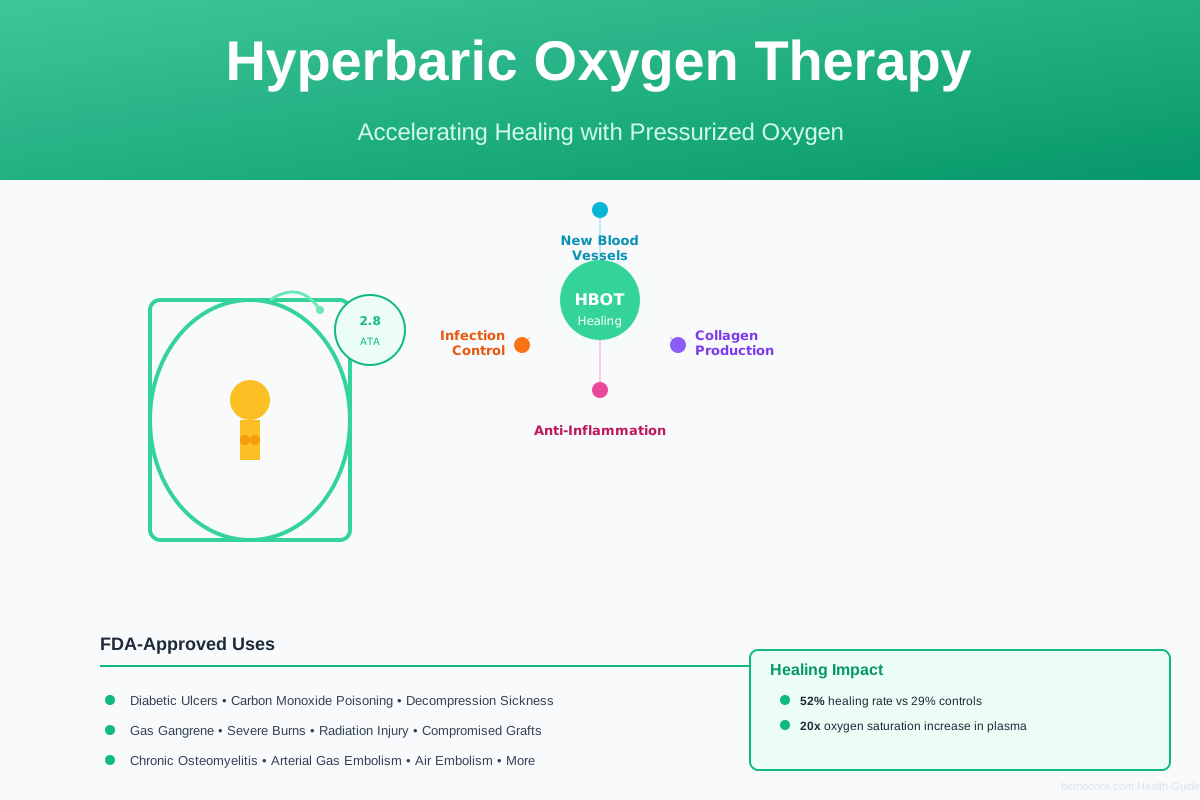
The fundamental principle is elegant: pressurized oxygen enters your lungs, dramatically increases dissolved oxygen in your bloodstream, and floods hypoxic (oxygen-starved) tissues with healing fuel.
Whether you're recovering from surgery, fighting a stubborn diabetic ulcer, or exploring evidence-based regenerative approaches, understanding how HBOT works—and whether it's right for you—starts with the science behind the chamber.
What Is Hyperbaric Oxygen Therapy?
Hyperbaric oxygen therapy is a medical treatment where patients breathe 100% pure oxygen inside a pressurized chamber maintained at 2 to 3 atmospheres absolute (ATA)—roughly double to triple normal atmospheric pressure at sea level. During a typical session lasting 60 to 120 minutes, your body absorbs oxygen dissolved directly into your blood plasma at concentrations 15 to 20 times higher than breathing room air at normal pressure. This hyperoxic state triggers cellular repair mechanisms, increases vascular growth, and fights infection-causing bacteria.
Not medical advice.
Two main chamber types deliver HBOT: monoplace chambers treat one patient at a time (you lie on a table that slides inside), while multiplace chambers accommodate multiple patients simultaneously and deliver oxygen through individual masks or hoods. The treatment feels similar to air travel—you'll hear a gentle hissing as pressure increases and may experience ear fullness that equalizes as you perform simple ear-clearing maneuvers. Most patients receive 20 to 40 sessions over several weeks, depending on their condition. HBOT is painless, non-invasive, and well-tolerated by most people, with side effects primarily related to pressure changes rather than the oxygen itself.
Surprising Insight: Surprising Insight: A single HBOT session can increase oxygen saturation in blood plasma by up to 1,200%, and this hyperoxic state can persist in tissues for hours after treatment ends—creating a therapeutic window for cellular repair.
How Hyperbaric Oxygen Therapy Works
Visualization of the pressure and oxygen absorption process in HBOT chambers
🔍 Click to enlarge
Why Hyperbaric Oxygen Therapy Matters in 2026
In 2026, chronic wound care has become a multi-billion-dollar healthcare challenge. Diabetic ulcers alone affect over 34 million people globally, and 15% lead to lower-limb amputation. Standard wound care often fails without addressing the fundamental problem: insufficient oxygen delivery to damaged tissues. HBOT directly solves this by forcing oxygen into areas where circulation has been compromised—making it particularly valuable for diabetic complications, radiation injuries, and post-surgical recovery.
Beyond wound healing, research has expanded HBOT's clinical relevance. Studies from 2024-2025 show that veterans with treatment-resistant PTSD experienced 68% symptom reduction after HBOT—benefits persisting at three-month follow-up. Long COVID patients report sustained improvements in fatigue, cognitive function, and psychiatric symptoms even one year after treatment completion. Cardiovascular researchers are investigating HBOT for myocardial infarction recovery, noting its anti-inflammatory and angiogenic effects. Cancer researchers report that combining HBOT with biomedical engineering increases nanodrug penetration 1.8 times and immune cell infiltration 2.3 times.
The evidence is shifting HBOT from a niche treatment to a regenerative medicine cornerstone—especially as aging populations require accelerated recovery protocols and traditional pharmacological approaches reach their limits. Understanding HBOT now positions you to advocate for evidence-based care and recognize when this powerful tool applies to your health challenges.
The Science Behind Hyperbaric Oxygen Therapy
HBOT operates through three fundamental mechanisms rooted in basic physics and cellular biology. First, Henry's Law describes how dissolved gas concentration increases proportionally with atmospheric pressure. At 3 ATA breathing 100% oxygen, your blood plasma—not just red blood cells—becomes supersaturated with dissolved oxygen. This dissolved oxygen can diffuse into tissues where red blood cells cannot reach due to compromised circulation. Second, increased pressure (Boyle-Mariotte Law) physically shrinks gas bubbles in the bloodstream, which is why HBOT remains the primary treatment for decompression sickness and air embolism. Third, hyperoxia itself triggers epigenetic changes affecting nearly 40% of protein-coding genes, resulting in anti-inflammatory responses, reduced cell death, and activation of regenerative pathways.
At the cellular level, HBOT increases oxygen availability to mitochondria, enhancing ATP (energy) production. It suppresses hypoxia-inducible factor (HIF), which signals cells to activate inflammatory cascades. Instead, HBOT upregulates vascular endothelial growth factor (VEGF) and fibroblast growth factor (FGF), promoting angiogenesis—the formation of new blood vessels. In immune cells, hyperoxia increases white blood cell killing capacity and enhances antibiotic efficacy, which is why HBOT is particularly effective for infections combined with compromised perfusion. Fibroblasts respond to hyperoxia by dramatically increasing collagen synthesis, accelerating wound matrix remodeling. This multi-system activation explains why HBOT benefits such diverse conditions.
Cellular Mechanisms of Hyperbaric Oxygen Therapy
How HBOT triggers cellular repair at the mitochondrial and genetic levels
🔍 Click to enlarge
Key Components of Hyperbaric Oxygen Therapy
Chamber Pressure and Duration
Most HBOT sessions operate at 2.4 to 3.0 ATA for 60 to 120 minutes. The optimal pressure and duration depend on the condition being treated. Acute carbon monoxide poisoning may require 2.8 ATA for 90 minutes, while diabetic ulcer protocols often use 2.4 ATA for 120 minutes. Pressure too low fails to achieve therapeutic oxygen saturation; pressure too high increases oxygen toxicity risk. Treatment protocols balance therapeutic benefit against safety margins—a calibration refined through decades of clinical research and documented in guidelines from the Undersea and Hyperbaric Medical Society (UHMS).
Oxygen Fraction and Air Breaks
HBOT delivers 100% oxygen, but not continuously throughout a session. Most protocols include 'air breaks' where patients breathe regular air for 5 to 15 minutes during the session. These breaks serve two purposes: they reduce cumulative oxygen exposure (lowering seizure risk from oxygen toxicity) and they enhance the therapeutic effect through oxygen-nitrogen alternation that promotes better tissue oxygenation. The timing and duration of air breaks vary by protocol but are standard safety practice in accredited facilities.
Treatment Frequency and Sessions
Most patients receive HBOT five days per week for two to eight weeks, depending on condition severity and response. Diabetic ulcers typically require 30 to 40 sessions; chronic osteomyelitis may require 30 to 60 sessions; acute carbon monoxide poisoning typically receives three to five sessions in the first week. Sessions are cumulative—the healing benefits build over multiple exposures. Spacing treatments (e.g., five sessions per week) allows tissue oxygen levels to normalize between sessions, which paradoxically enhances healing response through repeated hypoxia-reoxygenation cycling.
Chamber Type and Patient Comfort
Monoplace chambers are preferred in most settings because they isolate the patient and reduce infection risk—important for wound care. Multiplace chambers offer social support (multiple patients treatment together) and more spacious conditions. Some patients with severe claustrophobia tolerate monoplace chambers because the tube is well-lit and transparent. In both chamber types, pressurization is gradual (typically 5 to 10 minutes for descent), minimizing ear discomfort. Trained technicians monitor vital signs throughout treatment, and patients can communicate via intercom. Emergency decompression protocols exist should any patient experience distress.
| Condition | Typical Duration | Mechanism of Action |
|---|---|---|
| Decompression Sickness (The Bends) | 3-5 sessions acute; varies chronic | Shrinks gas bubbles; restores tissue oxygenation |
| Carbon Monoxide Poisoning | 3-5 sessions within 48-72 hours | Displaces CO from hemoglobin; reduces hypoxia-reperfusion injury |
| Arterial Gas Embolism | 1-3 urgent sessions | Shrinks air bubbles; restores cerebral/coronary perfusion |
| Diabetic Foot Ulcers (Wagner 3+) | 30-40 sessions over 4-8 weeks | Increases oxygen to hypoxic wound tissue; accelerates healing |
| Chronic Osteomyelitis | 30-60 sessions | Enhances antibiotic efficacy; promotes new bone formation |
| Gas Gangrene | 3-5 urgent sessions + surgery | Halts Clostridium growth; protects viable tissue |
| Severe Anemia | 1-3 sessions acute | Compensates for reduced oxygen-carrying capacity |
| Thermal Burns | 30-40 sessions post-debridement | Promotes skin regeneration; reduces infection risk |
| Compromised Grafts/Flaps | 20-30 sessions post-surgery | Restores perfusion; prevents graft failure |
| Radiation Tissue Damage | 40-60 sessions post-radiation | Reverses hypoxic fibrosis; promotes angiogenesis |
How to Apply Hyperbaric Oxygen Therapy: Step by Step
- Step 1: Schedule a consultation with a licensed hyperbaric medicine physician to determine if HBOT applies to your condition. FDA-approved indications have strong evidence; off-label uses require individualized risk-benefit assessment.
- Step 2: Complete pre-treatment medical evaluation including pulmonary function tests (if you have lung disease), glucose control assessment (for diabetics), and cardiac evaluation (for those with cardiovascular disease). This identifies safety contraindications.
- Step 3: Disclose all medications, supplements, and medical devices. Certain chemotherapy drugs (Doxorubicin, Cisplatin) increase oxygen toxicity risk; some devices aren't pressure-tested; blood glucose needs monitoring.
- Step 4: Arrive 15 minutes early on your first session. The technician will explain the pressurization process, teach ear-clearing techniques, and review emergency procedures to reduce anxiety.
- Step 5: Change into cotton clothing provided by the facility (avoids static electricity risk in oxygen-rich environment). Remove jewelry, batteries, and electronic devices.
- Step 6: Enter the chamber and lie on the table (monoplace) or sit comfortably (multiplace). A technician will deliver oxygen through your mask or hood and begin gradual pressurization.
- Step 7: Equalize ear pressure during descent by performing Valsalva maneuver (gentle pressure against nose while holding mouth closed) or chewing. Alert the technician if pressure won't equalize.
- Step 8: Breathe normally through your oxygen mask. You'll breathe oxygen for 20 minutes, then switch to air break for 8 minutes, then return to oxygen. This cycle prevents oxygen toxicity.
- Step 9: Remain still and relaxed during treatment. Most people rest or sleep. The chamber will begin gradual decompression after 90-120 minutes, ending with gentle hissing sound.
- Step 10: Exit the chamber and rest for 15 minutes. Your body will continue benefiting from elevated oxygen levels for 6-12 hours post-treatment. Avoid air travel for 24 hours after your final session (risk of decompression complications).
Hyperbaric Oxygen Therapy Across Life Stages
Young Adulthood (18-35)
Young adults rarely need HBOT for chronic conditions but may benefit for acute trauma (crush injuries, severe burns), acute carbon monoxide poisoning, or sports-related infections (necrotizing fasciitis from minor cuts exposed to contaminated environments). For this age group, HBOT is typically curative rather than preventive. If young adults do undergo HBOT, side effects like temporary myopia (nearsightedness) are usually well-tolerated and resolve after treatment completion. Young adults should also be aware that recreational diving carries decompression sickness risk—knowledge of HBOT availability provides confidence when pursuing water sports.
Middle Adulthood (35-55)
This life stage sees the highest HBOT utilization for diabetic complications (wound care, foot ulcers) and post-surgical recovery (compromised grafts, radiation side effects from cancer treatment). Cardiovascular and metabolic disease prevalence increases, requiring careful screening before treatment. Middle-aged patients benefit from understanding HBOT as part of integrated wound care strategies—combining standard care with HBOT often prevents amputation and accelerates return to work. Post-cancer patients undergoing radiation often develop late tissue damage months or years later; HBOT can reverse progressive hypoxic fibrosis when applied proactively. Many middle-aged patients have compromised circulation from decades of sedentary work and smoking—exactly the profile where HBOT excels.
Later Adulthood (55+)
Older adults comprise the majority of HBOT patients. Diabetic ulcers, delayed wound healing from surgery, and radiation damage from prostate/breast cancer treatment are common indications. Age itself doesn't contraindicate HBOT—what matters is individual physiology. Older patients with well-controlled diabetes and normal pulmonary function tolerate HBOT as well as younger patients. However, careful pre-treatment screening is essential because age-related comorbidities (COPD, uncontrolled diabetes, untreated pneumothorax) increase complication risk. Older adults also benefit psychologically—avoiding amputation and maintaining mobility preserves independence. HBOT success in this age group often depends on early referral (when ulcers are smaller and easier to heal) rather than waiting until tissue damage is extensive.
Profiles: Your Hyperbaric Oxygen Therapy Approach
The Diabetic Wound Warrior
- Clear understanding that HBOT works best when combined with standard wound care (debridement, infection control, pressure relief)
- Commitment to 30-40 sessions over 6-8 weeks, requiring schedule flexibility and transportation access
- Aggressive blood glucose control during treatment period (elevated glucose impairs HBOT effectiveness)
Common pitfall: Viewing HBOT as a standalone cure rather than as an adjunctive therapy that multiplies the effectiveness of proper wound care. Diabetics who don't control glucose or optimize standard care see disappointing HBOT results.
Best move: Coordinate with your wound care team 2-3 weeks before starting HBOT. Schedule weekly assessments. Use this as motivation to optimize glucose levels (which directly improves HBOT outcomes). Plan transportation logistics in advance.
The Acute Trauma Survivor
- Rapid access to HBOT facilities within hours of acute injury (carbon monoxide poisoning requires treatment within 12-24 hours for optimal neurological protection)
- Understanding that speed matters—delayed HBOT is less effective than immediate treatment
- Emergency room or urgent care coordination with local hyperbaric medicine centers
Common pitfall: Delays in seeking HBOT after acute toxic exposure or crush injuries. Carbon monoxide victims who receive HBOT days later miss the critical window for neurological protection. Rural patients face geographic barriers to rapid care.
Best move: If you have a severe carbon monoxide poisoning, crush injury, or gas embolism, go immediately to an emergency room and specifically ask for hyperbaric medicine consultation. Don't delay waiting for specialists.
The Cancer Recovery Optimizer
- Knowledge that HBOT reverses radiation-induced tissue hypoxia months or years after cancer treatment completion
- Coordination between oncology team and hyperbaric medicine physicians (they don't always communicate)
- Proactive approach—treating progressive fibrosis early prevents late complications like osteoradionecrosis or fistulas
Common pitfall: Waiting until radiation damage has caused severe complications (jaw necrosis, wound breakdown) before considering HBOT. Earlier intervention is more effective and less intensive.
Best move: If you had radiation therapy and develop progressive tissue changes (firmness, discoloration, poor healing), ask your oncologist about hyperbaric medicine evaluation. Don't wait for catastrophic failure.
The Emerging Research Enthusiast
- Access to clinical trial information for HBOT applications in PTSD, long COVID, or cognitive decline—most are research-phase with limited insurance coverage
- Understanding that emerging applications require private pay or participation in formal trials (IRB-approved studies)
- Realistic expectations that emerging uses have promising preliminary data but not yet FDA-approved status
Common pitfall: Traveling to clinics claiming HBOT cures autism, cancer, or Alzheimer's disease. These unproven claims exploit hope and separate people from evidence-based care. The FDA warns against these off-label claims.
Best move: If interested in research applications, consult clinicaltrials.gov for legitimate studies. Look for randomized controlled trials from academic medical centers (NIH, university hospitals). Avoid for-profit clinics making unproven claims.
Common Hyperbaric Oxygen Therapy Mistakes
The first major mistake is treating HBOT as a standalone cure rather than as an enhancement to evidence-based standard care. For diabetic ulcers, HBOT alone without surgical debridement, infection control, and glucose optimization produces poor results. HBOT multiplies the effectiveness of good care—it doesn't replace it. Patients who start HBOT while still smoking, with uncontrolled diabetes, or with infected wounds often see slow or no improvement. The mistake is expecting HBOT to overcome neglected fundamentals.
The second mistake is seeking HBOT from unaccredited facilities or for unproven conditions. The FDA has clearly stated that HBOT is not approved for autism, cancer, Lyme disease, or Alzheimer's disease, yet some clinics market HBOT for these conditions anyway. Unaccredited facilities may not follow safety protocols for pressure management, oxygen monitoring, or emergency decompression. The mistake here is assuming all HBOT providers follow the same standards—they don't. Choose UHMS-accredited facilities using the facility locator on their website.
The third mistake is skipping pre-treatment medical evaluation or hiding contraindications. Untreated pneumothorax is an absolute contraindication—entering a pressure chamber can convert it to life-threatening tension pneumothorax. Certain chemotherapy drugs increase oxygen toxicity. Uncontrolled asthma or COPD increase barotrauma risk. Many patients avoid disclosure, hoping to avoid HBOT denial. Instead, transparent evaluation allows physicians to optimize safety (e.g., treating pneumothorax first, spacing sessions for chemotherapy patients, or using preventive steroids for pulmonary patients).
HBOT Decision Tree: Is It Right for You?
Flowchart for determining whether hyperbaric oxygen therapy is appropriate
🔍 Click to enlarge
Science and Studies
Hyperbaric oxygen therapy has been extensively researched across multiple medical domains. Recent systematic reviews and meta-analyses provide robust evidence for FDA-approved indications and emerging applications. Below are key research findings from 2023-2025 publications in peer-reviewed medical journals:
- Efficacy of HBOT for diabetic foot ulcers: Meta-analysis of controlled trials (Nature, 2021) found that complete ulcer healing at 1-year was 52% in HBOT groups versus 29% in control groups. Major amputation rates were 10% (HBOT) versus 24% (control), suggesting HBOT prevents amputations when combined with proper wound care.
- HBOT for treatment-resistant PTSD: Clinical trial (2024) demonstrated 68% symptom reduction in veterans with combat-associated PTSD after HBOT versus sham treatment, with benefits persisting at 3-month follow-up. This represents the first evidence-based therapeutic intervention for this resistant population.
- Long COVID recovery: Randomized placebo-controlled trial (HOT-LoCO, 2024) showed HBOT significantly improved quality of life, sleep quality, psychiatric symptoms, and pain in long COVID patients. Benefits persisted one year after treatment completion, suggesting neurological healing rather than temporary symptomatic relief.
- Cardiovascular disease mechanisms: Systematic review (PMC, 2024) documented that HBOT enhances angiogenesis, suppresses oxidative stress, reduces inflammatory cascades, and promotes cardiac regeneration. Most evidence is mechanistic; human cardiac outcome trials remain limited.
- Cancer nanodrug penetration: Research (2024) showed combining HBOT with biomedical engineering increased nanodrug penetration 1.8-fold and immune cell infiltration 2.3-fold, suggesting synergistic anti-tumor effects when HBOT precedes immune-based cancer therapies.
Your First Micro Habit
Start Small Today
Today's action: Research hyperbaric medicine centers in your area using the UHMS facility locator (uhms.org). Save the contact information and bookmark it. If you have a chronic wound or post-surgical complication, schedule a single consultation appointment to understand if you're a candidate. No commitment required—just information.
Information is the first step toward empowerment. Knowing where HBOT is available transforms it from abstract concept to accessible option. A single consultation doesn't obligate treatment but positions you to make informed decisions when circumstances change. Many people delay seeking information and miss optimal treatment windows.
Keep quitting habit apps after a missed day? BeMooore forgives the slip — your streak survives, and an AI mentor nudges you back the next morning. Free on iOS.
Quick Assessment
Have you ever experienced a serious wound, infection, or acute toxic exposure that didn't heal well with standard care?
If you answered 'Yes' to the first two options, HBOT may have been beneficial and could help future injuries. Understanding HBOT now informs your recovery strategy if similar challenges arise.
If you had access to a treatment proven to accelerate wound healing by 50% and prevent amputation in diabetic ulcers, would you want to know more?
Your answer reflects your orientation toward complementary evidence-based therapies. Those selecting 'Absolutely' or 'Yes, but...' are likely to benefit most from understanding HBOT's role in integrated medical care.
Which statement best describes your current understanding of HBOT?
Your selection reveals your current knowledge foundation. If you selected 'I had no prior awareness,' this article has accomplished its primary goal of awareness. The next step is discussing HBOT with your healthcare provider if you have a relevant condition.
Take our full assessment to get personalized recommendations.
Discover Your Style →Next Steps
If you have a chronic wound, non-healing ulcer, or recent acute toxic exposure, your immediate next step is consulting your primary care physician or relevant specialist (vascular surgeon, endocrinologist, emergency medicine physician) about hyperbaric medicine referral. Request a referral to a UHMS-accredited hyperbaric medicine center. Bring a list of all current medications and recent medical test results. A single consultation costs $200-500 and will definitively answer whether HBOT is indicated for your specific situation.
If you're interested in HBOT for emerging applications (PTSD, long COVID, cognitive decline), visit clinicaltrials.gov and search 'hyperbaric oxygen.' Review registered trials from academic medical centers. Contact the trial coordinators to understand eligibility criteria and whether your specific circumstances qualify. Legitimate research trials are free or low-cost to participants. Avoid for-profit clinics claiming to treat unproven conditions—consult your physician first to distinguish legitimate research from marketing exploitation.
Get personalized guidance with AI coaching.
Start Your Journey →Research Sources
This article is based on peer-reviewed research and authoritative sources. Below are the key references we consulted:
Related Glossary Articles
Frequently Asked Questions
Is hyperbaric oxygen therapy painful?
HBOT itself is painless. The main discomfort comes from pressure changes during descent and ascent, similar to flying in an airplane. You'll feel ear fullness that resolves by performing simple pressure-equalization maneuvers (Valsalva maneuver or chewing). The actual breathing of oxygen and time in the chamber is comfortable—most people rest or sleep during treatment.
How much does hyperbaric oxygen therapy cost?
HBOT costs range from $2,000 to $5,000 per session depending on location, facility type, and whether it's FDA-approved versus experimental use. A typical 30-session treatment course costs $60,000 to $150,000. For FDA-approved indications, most insurance plans cover HBOT. For emerging applications (PTSD, long COVID), coverage is variable—check with your insurance before starting. Some patients use HSA/FSA funds; others negotiate cash rates with facilities.
What are the main side effects of hyperbaric oxygen therapy?
The most common side effect is barotrauma to the middle ear (ear pain/fullness in 0.4% of treatments). Most resolve with proper ear-clearing technique. Temporary myopia (nearsightedness) occurs in 15% of patients and resolves days to weeks after treatment ends. Oxygen toxicity is rare (1 seizure per 5,000-10,000 treatments) and prevented by air breaks and proper protocols. Rarely, pulmonary complications occur in patients with unscreened lung disease. Claustrophobia affects 1% but usually improves with preparation and technician support.
Can you use hyperbaric oxygen therapy while taking medications?
Most medications are compatible with HBOT. However, certain chemotherapy drugs (Doxorubicin, Cisplatin) increase oxygen toxicity risk—spacing is required. Disulfiram (Antabuse) reduces angiogenesis and may reduce HBOT effectiveness. Corticosteroids can be continued but high doses may increase infection risk post-treatment. Beta-blockers and diabetes medications don't contraindicate HBOT but require monitoring. Always disclose your complete medication list to the hyperbaric physician—they'll assess compatibility and adjust protocols if needed.
How long does it take to see results from hyperbaric oxygen therapy?
Results timeline varies by condition. Acute conditions (carbon monoxide poisoning, arterial gas embolism) show improvement within hours to days. Wound healing shows measurable improvement after 20 sessions (4 weeks of treatment), with maximal benefit at 40 sessions. Inflammatory conditions (PTSD, long COVID) may require 40 sessions before symptom improvement becomes apparent. Pre-treatment wound size matters—small ulcers respond faster than large ones. Compliance matters—missing sessions extends overall timeline. Most patients see benefit after completing 20-30 sessions but treatment often continues to 40 for optimization.
Take the Next Step
Ready to improve your wellbeing? Take our free assessment to get personalized recommendations based on your unique situation.
- Discover your strengths and gaps
- Get personalized quick wins
- Track your progress over time
- Evidence-based strategies