Body Transformation Challenge
What if you could transform your body in just 12 weeks? Thousands of people have done exactly that, achieving remarkable results through structured body transformation challenges. These aren't miracle programs—they're scientifically-backed frameworks combining exercise, nutrition, and accountability to produce measurable changes in body composition. Whether you want to lose fat, build muscle, or both, a body transformation challenge provides the structure, motivation, and roadmap to succeed. In this guide, you'll learn how these challenges work, what research says about effectiveness, and exactly how to launch yours.
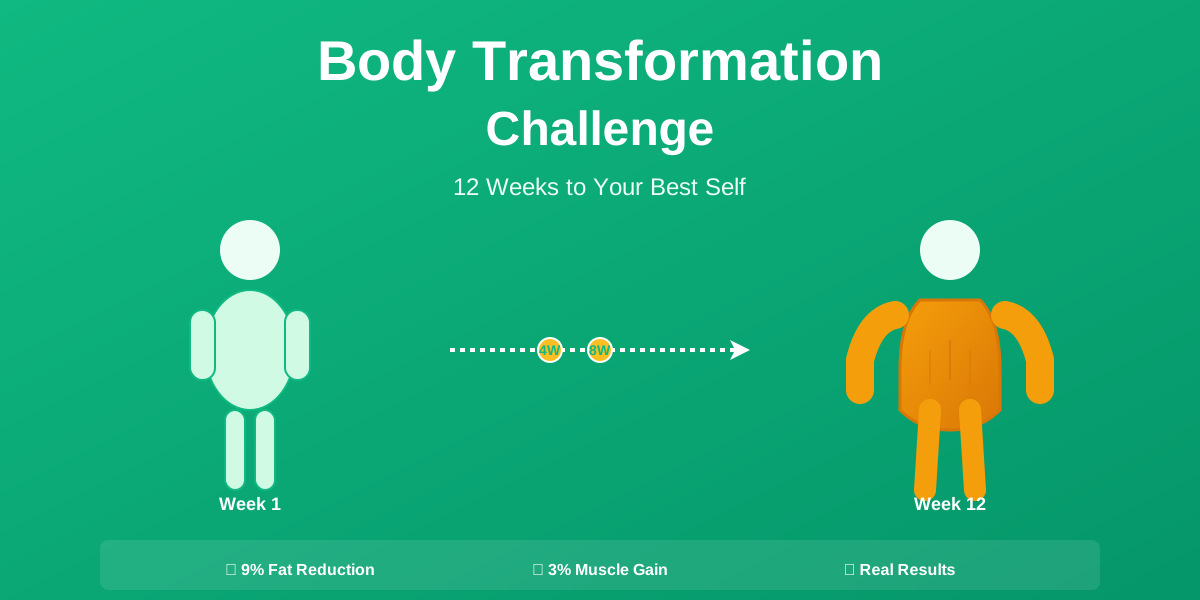
The most surprising part? The biggest transformations aren't just physical. Participants consistently report improved energy, better sleep, increased confidence, and a shift in how they see themselves.
Real data from 2025 shows that participants in structured transformation challenges average a 9% reduction in body fat and 3% increase in muscle mass over 12 weeks—with many seeing even more dramatic results.
What Is Body Transformation Challenge?
A body transformation challenge is a structured, time-bound fitness program designed to create measurable changes in your body composition—typically lasting 8 to 12 weeks. Unlike casual gym attendance, these challenges combine specific workout protocols, dietary guidelines, progress tracking, and often community accountability to produce concrete results. The goal is body recomposition: losing fat while building or maintaining lean muscle mass, resulting in a smaller, stronger, more defined physique.
Not medical advice.
These challenges differ from general fitness goals because they include built-in accountability mechanisms. Most legitimate challenges require participants to track workouts, log nutrition, and document progress through photos or measurements at regular intervals. This combination of structure, tracking, and accountability creates powerful results that random gym sessions simply cannot match.
Surprising Insight: Surprising Insight: Studies show that participants with accountability partners complete their transformation programs 65% more often than those training alone, and they achieve significantly better body composition changes.
The Body Transformation Process
This diagram shows how body transformation challenges work through integrated phases of assessment, training, nutrition, tracking, and adjustment.
🔍 Click to enlarge
Why Body Transformation Challenge Matters in 2026
In 2026, body transformation challenges matter more than ever because they address the growing wellness gap. Recent research from Orangetheory Fitness found that 72% of U.S. adults prioritize improving overall health and energy over aesthetic goals. Body transformation challenges work because they're not just about looking better—they're about feeling better, improving longevity, and building mental resilience. These programs acknowledge that sustainable change requires structure, not motivation.
The second reason transformation challenges are vital today relates to mental health. Participants consistently report improvements in confidence, sleep quality, mood, and anxiety levels. In a world of increasing stress and digital burnout, the focus and discipline required for a transformation challenge provides psychological benefits that extend far beyond physical changes. You're building neural pathways of consistency and self-efficacy.
Finally, body transformation challenges democratize fitness. You don't need an expensive coach, exotic supplements, or a fancy gym membership. The fundamentals work: consistent resistance training, appropriate nutrition, adequate recovery, and accountability. Thousands of transformation challenges run at every price point—many free or low-cost—making this path to change accessible to nearly everyone.
The Science Behind Body Transformation Challenge
The effectiveness of body transformation challenges rests on three pillars of well-established sports science. First: resistance training stimulates muscle protein synthesis. When you combine strength training with adequate protein intake, your body preferentially retains and builds lean mass even in a caloric deficit. Research from NIH shows that resistance training combined with caloric restriction reduces body fat percentage by 3.8% on average, while whole-body fat mass decreases by 5.3 kg. This is the essence of body recomposition—losing fat while preserving or building muscle.
Second: caloric deficit creates fat loss, but only when combined with resistance training to prevent muscle loss. A modest deficit of 200-300 calories daily is more sustainable than aggressive restriction and still produces significant results. Studies on transformation programs show that 12 weeks is long enough to build noticeable muscle, especially for those new to structured training. The psychological research on habit formation shows that 12 weeks is precisely the timeframe needed to establish new exercise patterns as automatic behaviors—they shift from requiring constant willpower to becoming part of your identity.
Factors Affecting Transformation Success
This diagram illustrates the key scientific factors that determine success in body transformation challenges, showing how they interact.
🔍 Click to enlarge
Key Components of Body Transformation Challenge
Strength Training Program
The foundation of any serious body transformation challenge is a structured strength training program targeting all major muscle groups 2-3 times per week. Research shows that 3-4 weekly training sessions is the sweet spot—sufficient to hit each muscle group twice weekly while allowing adequate recovery. The program should progress gradually, increasing either weight or reps every 1-2 weeks to maintain stimulus for adaptation. Functional movements like squats, deadlifts, rows, and presses form the backbone, supplemented with targeted exercises for specific body parts.
Nutrition Protocol
Successful transformations pair workouts with disciplined nutrition. The most effective strategy combines a moderate caloric deficit (200-300 calories below maintenance) with high protein intake—typically 0.7-1 gram per pound of bodyweight daily. Complex carbohydrates fuel workouts while healthy fats support hormone production. Most transformation challenges require tracking food intake through apps or journals for at least the first 4-6 weeks to build awareness. The goal isn't perfection but consistency—hitting daily protein targets and staying within your caloric window most days.
Accountability System
What separates successful transformations from failed New Year's resolutions is accountability. This might include weekly check-ins with a coach or community group, submission of progress photos or measurements, tracking workouts in a shared app, or participation in an online community. Research consistently shows that social accountability dramatically increases completion rates and improves outcomes. Knowing others will see your progress—or lack thereof—creates powerful motivation on difficult days.
Progress Tracking and Adjustment
Effective transformation challenges include regular assessment and adjustment. Initial measurements typically include bodyweight, body fat percentage (via DEXA scan or visual assessment), photos, and circumference measurements of key areas. Mid-challenge check-ins—at 4 and 8 weeks—allow for protocol adjustments if progress stalls. This might mean slightly reducing calories, adding more training volume, or emphasizing different exercise variations. Data-driven adjustments beat guesswork every time.
| Timeline | Fat Loss Target | Muscle Change | Expected Results |
|---|---|---|---|
| 4 weeks | 2-4 lbs | Slight gain/maintenance | Initial energy boost, clothes fit differently |
| 8 weeks | 5-8 lbs | 2-4 lbs gain | Visible muscle definition, significant confidence increase |
| 12 weeks | 7-15 lbs | 3-8 lbs gain | Dramatic body recomposition, new baseline established |
How to Apply Body Transformation Challenge: Step by Step
- Step 1: Get medical clearance: Schedule a checkup and discuss your transformation goals with your doctor, especially if you have any existing health conditions or are taking medications.
- Step 2: Take baseline measurements: Weigh yourself, take full-body photos from front, side, and back angles, measure key body areas (chest, waist, hips, arms, legs), and estimate body fat if possible.
- Step 3: Define your caloric target: Calculate your maintenance calories using a TDEE calculator, then subtract 200-300 calories for your transformation calories. If starting very overweight, a larger deficit is acceptable.
- Step 4: Design your training program: Choose or build a strength program targeting all major muscle groups 3-4 times weekly. Prioritize progressive overload—making workouts slightly harder each week.
- Step 5: Plan your nutrition: Determine your daily protein target (0.7-1g per pound of bodyweight), plan high-protein meals and snacks you actually enjoy, and get a nutrition tracking app if you'll count calories.
- Step 6: Establish accountability: Join a challenge community, find a workout partner, hire a coach, or commit to weekly check-ins with a friend. Make your progress visible to others.
- Step 7: Start week one: Begin your training program and nutrition protocol exactly as planned. Consistency matters more than perfection in week one.
- Step 8: Track relentlessly: Log all workouts, record food intake, take weekly progress photos, and weigh yourself 2-3 times weekly (looking for trends, not daily fluctuations).
- Step 9: Adjust at week 4: Review your progress, assess what's working and what's not, and make small adjustments to training volume or nutrition if needed.
- Step 10: Push through weeks 5-8: This is the sweet spot where you're adapted to training but not yet bored. Push harder, increase weight, or add reps. Most visible changes happen this phase.
Body Transformation Challenge Across Life Stages
Young Adulthood (18-35)
Young adults typically have the advantage of faster recovery, higher metabolism, and greater hormonal optimization. Transformation challenges work especially well during this life stage because you can handle higher training volume and progress quickly. The focus should be building strength and muscle while establishing lifelong fitness habits. Many young adults have never done serious strength training, so they experience newbie gains—rapid muscle building—in the first 8-12 weeks. The biggest advantage: using this window to build a strong fitness foundation that makes future transformations easier.
Middle Adulthood (35-55)
This life stage often involves higher stress, busier schedules, and the beginning of natural muscle loss. Transformation challenges are highly effective here because structure and efficiency matter more than volume. A well-designed 3-4 day program with progressive resistance training prevents sarcopenia while the moderate deficit produces fat loss. Recovery becomes critical—prioritize sleep and stress management alongside training. Motivation often peaks in this stage because the results are visible quickly and the improved energy translates to better work performance and family engagement.
Later Adulthood (55+)
Transformation challenges absolutely work for older adults, with additional benefits including improved bone density, maintained independence, and reduced disease risk. The timeframe might extend slightly (14-16 weeks instead of 12) to allow for adequate recovery, but the principles remain identical. Resistance training combined with adequate protein becomes crucial for preserving lean mass and maintaining functional strength. Many people starting transformation challenges at 55+ report that the psychological benefits—reclaiming agency, proving to themselves they can change—exceed even the physical transformations.
Profiles: Your Body Transformation Challenge Approach
The Career-Focused Professional
- Time-efficient workouts (45-60 minutes max)
- Flexible meal prep strategies compatible with business travel
- Accountability system requiring minimal daily time commitment
Common pitfall: Starting too ambitious—trying to train like a competitor while maintaining 60-hour work weeks, leading to burnout by week 4.
Best move: Accept 3 solid training days over 6 mediocre ones. Simplify meals to 3-4 repeating options. Use app-based accountability that requires 5 minutes daily.
The Fitness Newbie
- Structured program with exact exercise selection and form cues
- Education on nutrition basics and caloric awareness
- Supportive community that celebrates effort, not just results
Common pitfall: Attempting advanced programs designed for experienced lifters, getting overwhelmed or injured, quitting by week 3.
Best move: Start with an 8-week foundational program from a reputable source. Prioritize learning proper form over heavy weight. Find a community of other beginners.
The Plateau Breaker
- Progressive overload strategies beyond simple weight increases
- Structured variation in training stimulus (strength, hypertrophy, endurance phases)
- Advanced nutrition strategies for persistent fat loss
Common pitfall: Assuming lack of progress means more volume is needed, creating unsustainable training that damages recovery and motivation.
Best move: Use a periodized program with planned variation. Implement deload weeks every 4-6 weeks. Reassess your deficit—you may need to adjust calories slightly.
The Accountability-Driven Type
- Group challenges with visible leaderboards or community comparison
- Weekly check-ins and public progress updates
- Coaching or mentorship from someone who knows your goals
Common pitfall: Burning out from excessive social pressure or becoming discouraged by comparing yourself to people with different starting points and advantages.
Best move: Join a community challenge but focus on personal progress relative to your baseline. Find an accountability partner at similar starting point. Celebrate non-scale victories.
Common Body Transformation Challenge Mistakes
The most common mistake is extreme dieting combined with excessive training volume. Participants often think bigger is better—combining a 1000+ calorie deficit with 6-7 training days weekly. This creates a metabolic emergency: muscle loss accelerates, energy crashes, hormones dysregulate, and by week 4-5 they've quit. The magic isn't intensity; it's consistency over 12 weeks. A moderate deficit with sensible training beats extreme measures every time.
The second major mistake is neglecting recovery. Transformation happens during rest, not during workouts. Workouts create the signal; sleep and recovery deliver the adaptation. Participants who average 5-6 hours of sleep while running high training volume experience constant fatigue, elevated cortisol, craving dysfunction, and poor results. You cannot out-train poor recovery. Sleep must be non-negotiable during a transformation challenge.
The third mistake is perfectionism. Missing a workout or eating off-plan once doesn't derail results—but using that one miss as permission to abandon the plan entirely does. This all-or-nothing thinking kills more transformations than any other factor. The goal is 80% consistency, not 100% perfection. Expect to miss some workouts, eat off-plan occasionally, and still succeed beautifully.
What Determines Transformation Success
This diagram shows the hierarchy of factors that actually determine success—consistency beats intensity, and mindset beats everything.
🔍 Click to enlarge
Science and Studies
The effectiveness of body transformation challenges is well-documented in scientific literature. Recent research across multiple controlled trials and real-world implementation provides strong evidence that structured 8-12 week programs combining resistance training and nutritional intervention produce dramatic body composition changes.
- Changes in Body Composition and Strength after 12 Weeks of High-Intensity Functional Training: A randomized controlled study in PMC found that participants completing a 12-week functional training program combined with moderate nutrition changes experienced significant body composition improvements and strength gains in both men and women.
- Functional and Combined Training Promote Body Recomposition: Research showed that both functional and combined training promoted similar increases in lean mass and similar reductions in fat percentage in postmenopausal women, with changes in lean mass appearing by week 8 and fat reduction by week 12.
- Nutrition and Exercise Interventions for Persons with Overweight: A systematic review and meta-analysis found that combining energy restriction with resistance training produced the most dramatic results—body fat percentage reduction of 3.8% and whole-body fat mass reduction of 5.3 kg compared with no intervention controls.
- Resistance Training Effectiveness on Body Composition: A meta-analysis across 142 studies showed that resistance training combined with caloric restriction reduced body weight and fat mass while maintaining lean body mass, with effectiveness across all age groups and fitness levels.
- The Role of Accountability in Fitness Success: Research in applied psychology demonstrates that participants with social accountability show 65% higher program completion rates and achieve significantly greater body composition improvements than those training solo.
Your First Micro Habit
Start Small Today
Today's action: Take your baseline measurements: Weigh yourself, take a full-body photo from one consistent angle (front, side, or back—pick one), and write down 3 specific body areas you want to measure (example: waist, arms, thighs). Do this today. This takes 5 minutes but creates the anchor point for your transformation.
Baseline measurements create accountability and make progress visible. When you have numbers to compare, you can celebrate small wins that keep motivation high. Studies show that visual progress (photos and measurements) correlates more strongly with continued adherence than weight alone because you see muscle building even when fat loss makes weight stable.
Keep quitting habit apps after a missed day? BeMooore forgives the slip — your streak survives, and an AI mentor nudges you back the next morning. Free on iOS.
Quick Assessment
How much time can you consistently commit to training per week?
Successful transformations require 3-4 training sessions of 45-60 minutes weekly. If you can't commit 2.5-4 hours total, you're not ready yet—focus on creating time margin first.
What's your primary goal for this transformation?
Your goal determines your program design. Fat loss needs slightly bigger deficit with maintenance protein. Muscle building needs slight surplus with high volume. Mixed goals need perfect balance—this is often best for 2026 fitness philosophy.
Do you have accountability support lined up?
Accountability increases success rates by 65%. If you've chosen solo, that's okay—but find a way to make progress visible (tracking app, journal, or regular self-assessment). Data-driven people often do well solo if they're truly committed to logging data.
Take our full assessment to get personalized recommendations.
Discover Your Style →Next Steps
Your transformation begins not with a gym visit or perfect meal plan, but with clarity about what you actually want and commitment to the process. Based on everything you've learned in this guide, identify your specific goal (fat loss, muscle gain, or recomposition), estimate your timeline (8, 12, or 16 weeks), and commit to one non-negotiable decision: you will get adequate sleep and prioritize recovery. This single factor matters more than any other single variable.
Then take action: this week, take your baseline measurements, schedule your medical clearance if needed, and identify your accountability system. You don't need to have your entire 12-week program planned—you just need these three foundational pieces in place. Everything else follows from consistency over time. Thousands have transformed their bodies through challenges structured exactly like the one you're about to start. You can absolutely be next.
Get personalized guidance with AI coaching.
Start Your Journey →Research Sources
This article is based on peer-reviewed research and authoritative sources. Below are the key references we consulted:
Related Glossary Articles
Frequently Asked Questions
How much weight should I expect to lose in 12 weeks?
Expect 7-15 lbs of fat loss in 12 weeks while maintaining or building 3-8 lbs of muscle, resulting in visible body recomposition. Total weight loss might be 5-10 lbs if you're building muscle simultaneously. The body fat percentage drop (typically 3-5%) is more impressive than scale weight because you're getting smaller and more defined even if weight seems stable.
Do I need a gym membership for a transformation challenge?
No, though it helps. Effective challenges work with dumbbells at home, resistance bands, or bodyweight exercises combined with progressive tension. That said, a gym provides equipment variety, mirrors for form checking, and motivational environment that accelerate results. If you must train at home, invest in adjustable dumbbells covering 5-75 lbs.
Can I do a transformation challenge while traveling or with a busy schedule?
Yes, but you'll need to adjust expectations slightly. Pick a simpler program requiring only 3 training days weekly (not 4-5). Prioritize protein intake even more since you can't control all food choices. Accept that progress might take 14-16 weeks instead of 12. The key is showing up consistently with what you can do rather than skipping workouts because conditions aren't perfect.
What's the best diet for a body transformation challenge?
The best diet is one you'll actually follow. Whether that's low-carb, keto, vegan, Mediterranean, or balanced macros matters far less than hitting your protein and caloric targets consistently. Most research shows roughly equal results across diet types when calories and protein are matched. Pick a framework you can sustain for 12 weeks—that's literally the only rule.
How soon will I see visible results?
Most people notice energy improvements within 2-3 weeks and visible body changes by week 4-5, especially in abdominal definition and muscle separation. Major visible transformations typically emerge by week 8-12. The timeline depends on starting point—someone with 40+ lbs to lose sees results faster than someone already relatively lean. Patience is key: weeks 1-4 build the foundation, weeks 5-8 produce visible changes, weeks 9-12 cement your new baseline.
Take the Next Step
Ready to improve your wellbeing? Take our free assessment to get personalized recommendations based on your unique situation.
- Discover your strengths and gaps
- Get personalized quick wins
- Track your progress over time
- Evidence-based strategies