Recuperación Técnicas and Sleep Ciencia
Recuperación techniques combined with Ciencia del Sueño represent a transformative approach to healing and wellness. Your body performs its most critical repair functions during sleep, when the glymphatic system actively clears metabolic waste from your brain and muscles rebuild damaged tissue through anabolic processes. Understanding how sleep cycles work and applying evidence-based Recuperación techniques can significantly enhance your physical restoration, mental clarity, and overall wellbeing. This Guía Completa explores the neuroscience behind sleep Recuperación and práctico techniques you can implement immediately to optimize your rest and accelerate healing.
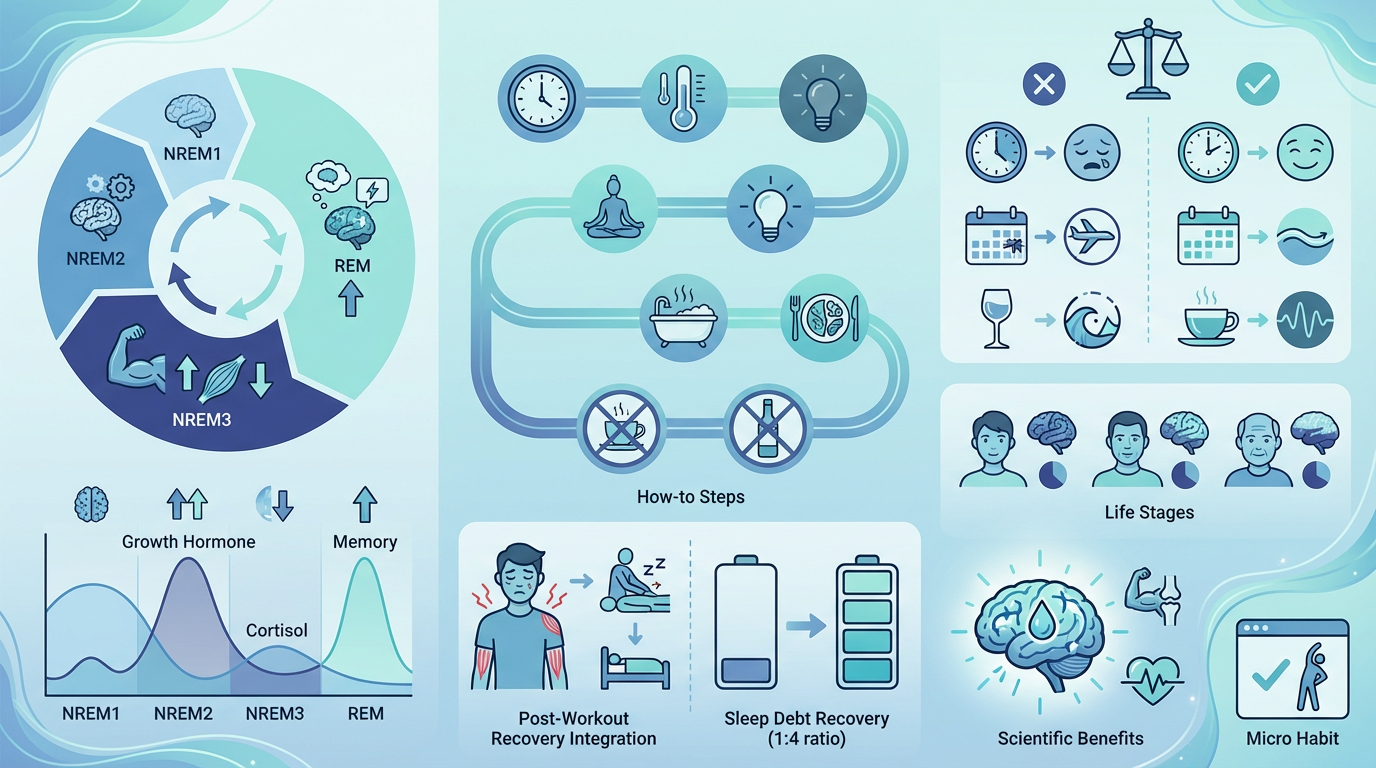
The intersection of Recuperación techniques and Ciencia del Sueño has become increasingly important in 2026 as more research validates the profound connection between quality sleep and physical performance.
Whether you're an athlete seeking faster muscle Recuperación, a professional managing fatigue, or someone dealing with sleep disruption, this guide provides evidence-based strategies for maximizing Recuperación through optimized sleep.
What Is Recuperación Techniques and Ciencia del Sueño?
Recuperación techniques and Ciencia del Sueño encompass the physiological processes that occur during sleep and the evidence-based methods to optimize these processes for maximum health benefit. Sleep operates through distinct cycles combining NREM (non-rapid eye movement) and REM (rapid eye movement) stages, each serving different Recuperación functions. NREM sleep drives physical restoration, hormonal regulation, and immune function, while REM sleep consolidates memories, processes emotions, and supports cognitive development. Recuperación techniques include pre-sleep practices like stretching, temperature optimization, and behavioral modifications that enhance sleep quality.
No es consejo médico.
The scientific understanding of sleep Recuperación has evolved dramatically with modern neuroimaging and biomarker research. Recuperación isn't simply about the number of hours slept, but the quality and alignment of those hours with your circadian rhythm—your internal 24-hour biological clock that regulates sleep-wake cycles, hormone release, and metabolism.
Surprising Insight: Surprising Insight: Research shows that circadian rhythm alignment matters more than total sleep duration for Recuperación. Athletes sleeping irregular hours at optimal times recover better than those with consistent but misaligned schedules.
Sleep Cycle Architecture and Recuperación Functions
Diagram showing the progression through one complete sleep cycle (approximately 90 minutes) including NREM stages 1-3 and REM sleep, with Recuperación processes occurring in each stage.
🔍 Click to enlarge
Why Recuperación Techniques and Ciencia del Sueño Matter in 2026
Modern life creates unprecedented sleep challenges. Artificial light exposure, irregular schedules, high-stress work environments, and constant digital stimulation disrupt the circadian rhythms that evolved over millions of years. According to CDC research, roughly one in three adults regularly experience sleep debt—insufficient sleep accumulated over days or weeks that impacts cognitive function, immune response, and physical performance.
The consequences of poor Recuperación are substantial. Sleep deprivation impairs emotional regulation, reduces prefrontal cortex function, and amplifies amygdala reactivity—meaning insufficient sleep makes you more anxious, reactive, and emotionally dysregulated. Research from Stanford and other leading institutions demonstrates that inadequate sleep accelerates cognitive decline, increases cardiovascular disease risk, and compromises immune function.
Recuperación techniques matter in 2026 because sleep has become measurable and optimizable. Wearable technology, personalized sleep coaching, and evidence-based interventions now allow individuals to quantify their sleep architecture and implement targeted improvements. Understanding Ciencia del Sueño empowers you to make informed decisions about your Recuperación rather than relying on outdated advice or pharmaceutical interventions.
The Science Behind Recuperación Techniques and Ciencia del Sueño
The glymphatic system represents one of the most important discoveries in neuroscience. During deep NREM sleep, your brain enters a special state where cerebrospinal fluid actively flushes out metabolic waste products including amyloid-beta and tau proteins—the same proteins implicated in Alzheimer's disease. This cleaning process only occurs during sleep, particularly during stages N2 and N3. The efficiency of glymphatic function directly determines cognitive clarity, memory quality, and neurological Salud.
Growth hormone and testosterone secretion surge during deep sleep, driving protein synthesis, muscle repair, bone density maintenance, and metabolic health. Sleep deprivation suppresses these anabolic hormones while elevating cortisol, creating a catabolic state that breaks down tissue rather than rebuilding it. For athletes and anyone concerned with physical Recuperación, sleep represents the most powerful—and free—Recuperación intervention available.
Hormonal and Neurological Recuperación During Sleep Stages
Diagram illustrating hormone release patterns and brain activity across different sleep stages, showing when growth hormone peaks, cortisol drops, and neural consolidation occurs.
🔍 Click to enlarge
Key Components of Recuperación Techniques and Ciencia del Sueño
Sleep Cycle Architecture and Circadian Alignment
Each night consists of 4-6 complete sleep cycles lasting approximately 90 minutes each. A complete cycle includes stages N1, N2, and N3 (NREM) followed by REM sleep. The proportion of deep sleep decreases across the night while REM sleep increases, meaning the first cycles provide more physical restoration while later cycles emphasize cognitive and emotional processing. Circadian alignment—sleeping when your internal body clock signals sleep—amplifies Recuperación efficiency. Research shows athletes sleeping at misaligned times recover less effectively than those with slightly shorter but properly timed sleep.
Pre-Sleep Recuperación Techniques
Pre-sleep Recuperación techniques Crea physiological conditions that promote rapid sleep onset and deeper sleep quality. Progressive muscle relaxation systematically tenses and releases muscle groups, reducing physical tension while signaling safety to your nervous system. Restorative yoga and stretching improve parasympathetic activation—the "rest and digest" nervous system state essential for sleep. Temperature optimization (cool bedroom, cálido bath before bed) exploits your body's natural thermoregulation to trigger sleep. Blue light blocking 2-3 hours before bed preserves melatonin production, your body's primary sleep hormone.
Post-Workout Sleep Recuperación Integration
Sleep stacking—combining post-workout Recuperación techniques with optimized sleep—produces superior results than either strategy alone. Research shows 27% improved muscle Recuperación when combining active Recuperación (massage, stretching, foam rolling) with high-quality sleep compared to sleep alone. Massage reduces lactic acid accumulation, improves circulation, and activates parasympathetic response. When combined with 7-9 hours of aligned sleep, athletes experience faster strength gains, reduced delayed-onset muscle soreness (DOMS), and better performance Recuperación.
Sleep Debt and Recuperación Dynamics
Sleep debt—accumulated sleep insufficiency—requires extended Recuperación time to repay. Research shows that one hour of sleep debt requires approximately four days of optimal sleep to recover. Importantly, you don't need to sleep hour-for-hour to recover; your brain prioritizes deep sleep when sleep-deprived, allowing more efficient restoration. However, weekend catch-up sleep (sleeping longer on weekends) proves ineffective for weekday sleep debt while disrupting circadian rhythm and Monday function. The most effective Recuperación strategy maintains consistent sleep schedules aligned with your circadian rhythm while accumulating minimal debt.
| Recuperación Technique | Recuperación Timeframe | Effectiveness Level |
|---|---|---|
| Yoga and stretching | Immediate (same day) | Very High for muscle Recuperación |
| Massage therapy | Immediate to 24 hours | High for DOMS and circulation |
| Optimized sleep alignment | 3-7 days | Very High for hormonal balance |
| Cold water immersion | Immediate to 48 hours | Moderate for inflammation |
| Sleep debt Recuperación | 4+ days per hour of debt | High for cognitive function |
How to Apply Recuperación Techniques and Ciencia del Sueño: Paso a Paso
- Step 1: Establish a consistent sleep schedule by choosing a bedtime aligned with your chronotype (natural early bird or night owl tendency) and maintaining this schedule even on weekends to regulate circadian rhythm.
- Step 2: Optimize your sleep environment: maintain 60-67°F temperature, eliminate light sources, reduce noise below 50 decibels, and ensure a supportive mattress appropriate for your sleep position.
- Step 3: Implement a 90-minute pre-sleep wind-down routine beginning 90 minutes before your target sleep time, starting with blue light blocking (glasses or screen filters).
- Step 4: Practice 20 minutes of restorative yoga, progressive muscle relaxation, or gentle stretching to activate parasympathetic nervous system and release physical tension.
- Step 5: Take a cálido bath or shower 90 minutes before bed (the subsequent temperature drop enhances sleep onset) while practicing deep breathing at a rate of 4 seconds inhale, 6 seconds exhale.
- Step 6: Consume a balanced meal 3-4 hours before bed including complex carbohydrates and moderate protein to support stable blood sugar and amino acid availability for Recuperación.
- Step 7: Eliminate caffeine after 2 PM and alcohol after 8 PM, as both disrupt sleep architecture (alcohol suppresses REM sleep while caffeine fragments sleep cycles).
- Step 8: If post-workout, perform light massage, foam rolling, or stretching within 60 minutes of exercise to enhance parasympathetic activation and reduce next-day soreness before sleep.
- Step 9: Use evidence-based supplements only if deficient (magnesium glycinate 200-400mg, L-theanine 100-200mg) 30-60 minutes before bed, never as primary intervention.
- Step 10: Track sleep metrics using consistent methods (subjective sleep diary minimum, wearable devices ideal) to identify patterns, optimize strategies, and adjust your Recuperación approach based on data.
Recuperación Techniques and Ciencia del Sueño Across Life Stages
Adultez joven (18-35)
Young adults typically have sleep architecture advantages with longer deep sleep durations and efficient circadian responses. This stage offers optimal windows for Construyendo consistent sleep habits and leveraging sleep for athletic Recuperación. The critical focus involves resisting circadian disruption from social schedules, shift work, and late-night activities. Establishing robust sleep hygiene during young adulthood prevents future cognitive and metabolic decline. Post-workout sleep Recuperación integration produces strongest results during this stage due to hormonal responsiveness.
Edad media (35-55)
Middle adulthood brings gradual reductions in deep sleep (N3) duration and growth hormone secretion, requiring intentional optimization to maintain Recuperación effectiveness. Sleep fragmentation often increases due to life demands, hormonal changes, and accumulated sleep debt. Recuperación techniques become increasingly important as natural sleep efficiency declines. Pre-sleep Recuperación techniques, temperature optimization, and consistent scheduling provide outsized benefits. This stage benefits from medical screening for sleep disorders (sleep apnea, restless legs syndrome) that accelerate sleep quality decline.
Adultez tardía (55+)
Older adults experience significant reductions in deep sleep and REM sleep duration, with corresponding decreases in growth hormone and melatonin production. Recuperación techniques must address these physiological changes through extended sleep duration targets (8-9 hours versus 7-8), earlier sleep schedules aligned with earlier circadian phases, and enhanced pre-sleep Recuperación protocols. Light therapy, circadian-aligned exercise, and medical management of sleep disorders become essential. Sleep apnea screening and treatment represent critical interventions, as sleep-disordered breathing severely compromises Recuperación capacity.
Profiles: Your Recuperación Techniques and Ciencia del Sueño Approach
The Athlete
- Sleep-stacking protocols combining active Recuperación with optimized sleep
- Detailed sleep tracking to measure deep sleep and REM duration
- Post-workout timing optimization for enhanced hormonal Recuperación
Common pitfall: Assuming weekend catch-up sleep fixes weekday sleep debt, disrupting circadian rhythm and Monday performance.
Best move: Maintain consistent sleep schedule, prioritize 7-9 hours nightly on consistent schedule, implement pre-sleep Recuperación techniques within 90 minutes of bedtime.
El profesional ocupado
- Time-efficient Recuperación techniques fitting compressed schedules
- Circadian optimization strategies for irregular work schedules
- Sleep debt management and repayment protocols
Common pitfall: Treating sleep as expendable and attempting to 'make up' lost sleep without addressing circadian disruption.
Best move: Protect core sleep hours (even if reduced), use light therapy to support circadian alignment if schedule is irregular, prioritize 20-minute wind-down over longer sleep hours.
The Sleep Disorder Sufferer
- Professional sleep assessment and diagnosis of underlying disorders
- Medically-supervised Recuperación protocol rather than self-directed optimization
- Behavioral interventions coordinated with appropriate treatment
Common pitfall: Attempting Recuperación technique optimization without addressing root sleep disorder, which wastes effort and delays needed treatment.
Best move: Seek sleep medicine evaluation, implement evidence-based cognitive behavioral therapy for insomnia (CBT-I), combine medical treatment with behavioral Recuperación protocols.
The Sleep Optimizer
- Data-driven approach using sleep tracking devices and biomarkers
- Advanced protocols testing chronotype-specific optimization
- Integration of multiple Recuperación modalities for synergistic effect
Common pitfall: Over-optimization creating anxiety about sleep or chasing incremental gains that provide minimal práctico benefit.
Best move: Focus on consistency and fundamentals before advanced optimization; use data to validate that changes produce measurable Recuperación improvements.
Common Recuperación Techniques and Ciencia del Sueño Mistakes
The most prevalent mistake involves prioritizing sleep duration over sleep quality and consistency. Many people chase extra sleep hours while ignoring circadian alignment, sleep stage balance, or Recuperación technique integration. A person sleeping 9 hours with misaligned circadian rhythm and fragmented architecture recovers less effectively than someone sleeping 7 consistent, well-aligned hours with high-quality stages. Track sleep quality and circadian alignment rather than hours alone.
Weekend catch-up sleep represents another critical mistake. Sleeping 2-3 extra hours on weekends seems like logical debt repayment but actually disrupts circadian rhythm, creates "social jet lag," and produces worse sleep quality Monday through Friday. One study showed weekend sleep extension actually impaired cognitive performance more than consistent sleep restriction. Maintain consistent sleep schedules as the priority.
Using alcohol as a sleep aid constitutes a third major error. While alcohol accelerates sleep onset, it severely suppresses REM sleep (critical for memory and emotional processing), fragments sleep architecture, and reduces deep sleep quality. Regular alcohol use before bed accumulates sleep debt despite longer time in bed. Replace alcohol with evidence-based pre-sleep Recuperación techniques that activate parasympathetic nervous system without pharmacological suppression.
Recuperación Optimization Mistakes and Corrections
Diagram showing common mistakes in sleep and Recuperación optimization alongside evidence-based corrections and their outcomes.
🔍 Click to enlarge
Ciencia y estudios
Recuperación techniques and Ciencia del Sueño rest on decades of rigorous research from leading institutions demonstrating the profound physiological impact of sleep quality, circadian alignment, and evidence-based Recuperación protocols. The research consistently shows that sleep represents the most powerful Recuperación intervention available, with effects comparable to pharmaceutical interventions but without side effects.
- Stanford University (2025): Sleep stacking protocols combining active Recuperación with optimized sleep produced 27% improvement in muscle Recuperación compared to sleep alone, with measurable improvements in heart rate variability and cortisol regulation.
- National Institutes of Health - PMC (2024): Circadian rhythm alignment matters more than total sleep duration for Recuperación; athletes with irregular but optimally-timed sleep recovered better than those with consistent but misaligned schedules.
- The Lancet Neurology (2024): Glymphatic system clears amyloid-beta and tau proteins primarily during deep NREM sleep; this process directly correlates with cognitive preservation and Alzheimer's disease prevention.
- Cleveland Clinic (2025): NREM and REM sleep have complementary Recuperación functions; deep sleep (N3) drives physical Recuperación while REM sleep consolidates learning and emotional processing. Both stages prove essential for complete Recuperación.
- CDC/NIOSH (2024): Approximately one in three adults regularly experience sleep debt with measurable impacts on cognitive function, immune response, and cardiovascular health. Sleep debt Recuperación requires 4+ days per hour of accumulated deficit.
Tu primer micro hábito
Comienza pequeño hoy
Today's action: Tonight, implement one 20-minute pre-sleep Recuperación practice: choose restorative yoga, progressive muscle relaxation, gentle stretching, or breathing exercises beginning 90 minutes before your target sleep time. Eliminate all blue light sources 60 minutes before this practice starts.
This single micro habit activates your parasympathetic nervous system, signals your body to prepare for sleep, and creates immediate improvement in sleep onset speed and subjective sleep quality. The 90-minute timing aligns with circadian rhythm optimization research and allows time for temperature regulation. Consistency with this one habit across 2-3 weeks produces measurable improvements in deep sleep duration and morning Recuperación perception.
Track your micro habits and get personalized AI coaching with our app.
Evaluación rápida
How consistently do you maintain the same sleep schedule across all seven days of the week?
Circadian rhythm consistency proves more important than total hours. Even with fewer sleep hours, a consistent schedule produces better Recuperación than longer sleep with irregular timing. Your circadian rhythm controls hormone release, body temperature, and sleep architecture quality.
Which Recuperación techniques do you currently use to prepare your body for sleep?
Recuperación technique implementation correlates directly with sleep quality and deep sleep duration. Pre-sleep practices signal your body to transition to parasympathetic state, amplifying natural sleep hormone production and reducing sleep onset latency. Even one consistent technique produces measurable benefits within 2-3 weeks.
How aware are you of your sleep architecture—the proportion of deep sleep, light sleep, and REM sleep you achieve nightly?
Sleep stage awareness enables data-driven optimization. While subjective sleep quality matters, objective metrics reveal whether your current approach produces sufficient deep sleep and REM sleep. Many people achieve long sleep hours without adequate deep sleep; wearable devices or consistent tracking reveals this mismatch.
Take our full assessment to get personalized recommendations.
Descubre Your Style →Preguntas frecuentes
Próximos pasos
Begin implementing Recuperación techniques and Ciencia del Sueño principles by establishing one consistent change: choose either a fixed sleep schedule, a 20-minute pre-sleep Recuperación practice, or environmental optimization (temperature, darkness, silence). Single changes prove more sustainable than simultaneous modifications. Track this change across 3 weeks noting any improvements in sleep onset speed, morning alertness, or daytime energy. Once this change becomes automatic, add a second intervention.
If you experience persistent sleep issues despite 4+ weeks of consistent behavioral optimization, request a sleep medicine evaluation to screen for underlying sleep disorders that require professional treatment. Recuperación techniques enhance but cannot replace medical management of conditions like sleep apnea, restless legs syndrome, or idiopathic insomnia. Professional assessment ensures you address root causes rather than symptoms.
Get personalized guidance with AI coaching.
Start Your Journey →Research Sources
This article is based on peer-reviewed research and authoritative sources. Below are the key references we consulted:
Related Glossary Articles
Frequently Asked Questions
How long does it take to see Recuperación improvements from sleep optimization?
Subjective improvements (feeling more rested, reduced sleep latency) typically appear within 3-7 days of consistent sleep schedule and pre-sleep technique implementation. Objective improvements in deep sleep percentage and circadian alignment measured through wearables appear within 2-3 weeks. Complete circadian rhythm resynchronization after disruption requires 4+ weeks of consistent timing.
Can I really recover from sleep debt in one weekend?
No. Research shows that one hour of accumulated sleep debt requires approximately 4 days of optimal sleep to recover fully. Weekend catch-up sleep proves counterproductive because it disrupts your circadian rhythm, creating 'social jet lag' that impairs your performance more than the original sleep debt. Maintain consistent schedules as your primary strategy.
What's the difference between sleep quality and sleep quantity?
Sleep quantity refers to total hours; quality refers to the proportion of deep sleep (NREM stage 3) and REM sleep achieved. Seven consistent, high-quality hours with 25-30% deep sleep provides better Recuperación than nine fragmented hours with 10% deep sleep. Quality depends on circadian alignment, sleep environment optimization, and the absence of sleep-disrupting substances.
Should I take melatonin supplements for sleep Recuperación?
Melatonin supplementation helps with circadian rhythm re-synchronization (like after travel or shift work changes) but shouldn't replace behavioral optimization. Melatonin doesn't increase sleep duration; it signals your body that it's nighttime. Pre-sleep Recuperación techniques and environmental optimization produce stronger and more sustainable results. If melatonin helps you, use the lowest effective dose (0.5-3mg, not 10mg) taken 30-60 minutes before sleep.
How do I know if my sleep has sufficient deep sleep (NREM stage 3)?
Optimal deep sleep represents 15-30% of total sleep time (roughly 1-2.5 hours in a 7-9 hour sleep). Without sleep tracking, signs of insufficient deep sleep include: morning grogginess despite adequate hours, muscle soreness after minimal exertion, frequent illness, and impaired cognitive function. Wearable sleep trackers provide objective measurement. If concerned, a sleep medicine evaluation including overnight polysomnography offers definitive assessment.
Take the Next Step
Ready to improve your wellbeing? Take our free assessment to get personalized recommendations based on your unique situation.
- Discover your strengths and gaps
- Get personalized quick wins
- Track your progress over time
- Evidence-based strategies