Sleep Wellness
Sleep wellness is the practice of intentionally managing your sleep to support physical health, mental clarity, and emotional resilience. Unlike passive sleeping, sleep wellness involves understanding your circadian rhythm—your internal 24-hour clock—and actively optimizing factors that influence sleep quality and duration. Research from 2025 shows that adults sleeping fewer than seven hours nightly have significantly shorter life expectancies, making sleep one of the most critical health behaviors you can control. Sleep wellness encompasses not just the hours you sleep, but the quality of that sleep, your consistency, and how well your sleep aligns with your body's natural rhythms. When you prioritize sleep wellness, you're investing in better memory, sharper decision-making, stronger immunity, improved mood regulation, and even longer lifespan.
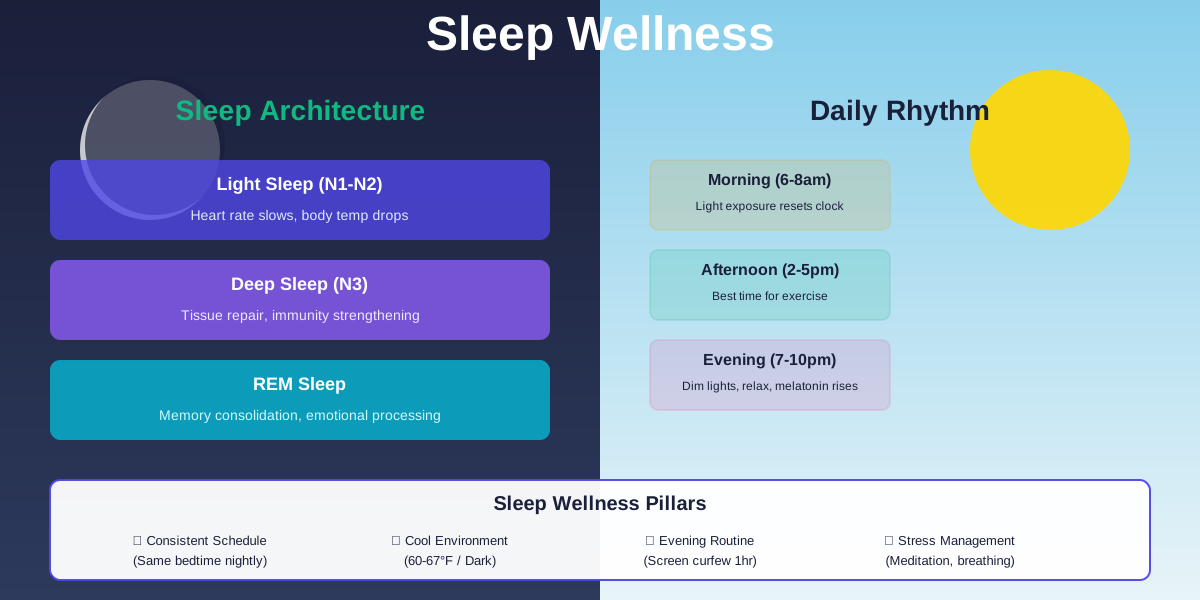
The emerging sleep wellness movement recognizes that 60% of adults don't get enough quality sleep, yet most overlook this critical area of health. Sleep anxiety—struggling to fall or stay asleep due to worry—affects 40% of Gen Z adults weekly.
This guide explores the science behind sleep wellness and provides practical, evidence-based strategies to transform your sleep from problematic to powerful.
What Is Sleep Wellness?
Sleep wellness refers to a holistic approach to sleep that integrates three core elements: adequate duration (7-9 hours for most adults), consistent timing (going to bed and waking at the same time daily), and quality sleep that allows your body to complete all necessary sleep cycles. Sleep wellness is not just about quantity—many people sleep eight hours but wake unrefreshed because their sleep quality is poor. True sleep wellness means your sleep genuinely restores you physically and mentally. It involves managing your circadian rhythm, the 24-hour internal cycle that governs when your body naturally wants to sleep and wake. This biological clock is influenced by light exposure, meal timing, exercise, and temperature. When your circadian rhythm is optimized, falling asleep becomes easier, you sleep more deeply, and you wake feeling genuinely refreshed.
Not medical advice.
Sleep wellness also addresses common modern obstacles: blue light from screens disrupting melatonin production, irregular schedules from shift work, caffeine consumed too late in the day, and stress accumulating without release. By treating sleep as a wellness practice—as important as diet and exercise—you shift from accepting poor sleep as normal to actively improving it through practical daily habits.
Surprising Insight: Surprising Insight: One study of 88,000+ adults found that sleep consistency (keeping a regular schedule) predicted health outcomes more reliably than sleep duration alone. Your body thrives on rhythm and predictability.
The Sleep Wellness Ecosystem
Shows how circadian rhythm, sleep environment, daily habits, and stress management interconnect to create optimal sleep wellness
🔍 Click to enlarge
Why Sleep Wellness Matters in 2026
Sleep wellness has become urgent in 2026 for several reasons. The American Heart Association now recognizes sleep as one of Life's Essential 8—alongside diet, exercise, weight management, and blood sugar control—for maintaining cardiovascular health. Recent research shows that insufficient sleep is associated with decreased life expectancy as significantly as smoking. Our modern lifestyle actively undermines sleep: constant connectivity, irregular work schedules, artificial lighting, and chronic stress all disrupt the circadian rhythms our bodies evolved to maintain.
Mental health is inextricably linked to sleep wellness. Poor sleep quality is one of the strongest predictors of anxiety, depression, and mood disorders. When you sleep poorly, your amygdala—the brain's emotional center—becomes 60% more reactive, meaning small stressors feel overwhelming. Conversely, even one night of good sleep can meaningfully improve emotional resilience and decision-making. With rates of sleep anxiety climbing, especially among young adults, sleep wellness offers a non-pharmaceutical pathway to better mental health.
Cognitively, sleep wellness directly impacts your ability to learn, remember, solve problems, and be creative. During sleep, your brain consolidates memories, clears metabolic waste through the glymphatic system, and rewires neural connections. Without adequate sleep, you're operating with diminished cognitive capacity—similar to being mildly intoxicated. For students, professionals, and parents, optimizing sleep wellness is one of the highest-leverage health investments you can make.
The Science Behind Sleep Wellness
Sleep wellness is grounded in neuroscience and chronobiology—the study of biological time. Your body operates on a circadian rhythm controlled by the suprachiasmatic nucleus, a tiny region of your brain that acts as your master clock. This clock responds primarily to light but also to temperature, feeding schedules, and exercise. When your circadian rhythm is synchronized with your environment and daily habits, sleep becomes natural and restorative. When it's disrupted—through jet lag, shift work, irregular sleep schedules, or excessive evening light—your body struggles to sleep and doesn't sleep as deeply. During sleep, your brain cycles through non-REM and REM stages. Non-REM sleep (especially deep sleep) is when your body repairs tissue, builds muscle, and strengthens immunity. REM sleep is when you dream, process emotions, and consolidate memories. Disrupted sleep prevents you from completing these cycles, leaving you cognitively and physically depleted.
The 2025 National Sleep Foundation poll revealed that 40% of adults struggle to fall asleep three or more nights weekly, and 50% have trouble staying asleep. A major culprit is poor sleep hygiene—the daily habits that either support or undermine quality sleep. These habits include light exposure timing, caffeine and alcohol consumption, exercise timing, stress management, and bedtime routines. Sleep wellness science shows that optimizing these factors can improve sleep quality by 30-50% within weeks, with no medication required. Melatonin, your body's natural sleep hormone, is released in response to darkness and suppressed by blue light. This is why screen time before bed disrupts sleep onset—your phone's blue light tells your brain it's still daytime, delaying melatonin release by 30-90 minutes.
Sleep Cycle Architecture
Illustrates the progression through light, deep, and REM sleep stages across a typical night and their restorative functions
🔍 Click to enlarge
Key Components of Sleep Wellness
Circadian Rhythm Optimization
Your circadian rhythm is the foundation of sleep wellness. Synchronizing your daily life with your natural 24-hour rhythm dramatically improves sleep quality. This means getting bright light exposure early in the day (within two hours of waking) and minimizing light exposure after sunset. Even 10-15 minutes of morning sunlight resets your circadian clock and increases melatonin production 12-16 hours later. Eating meals at consistent times also anchors your circadian rhythm. Your body has peripheral clocks in your digestive system, and eating on a regular schedule reinforces the master clock's signaling. Exercise timing matters too—regular exercise, especially in the morning, strengthens circadian rhythm synchronization, though intense exercise should be avoided within 3-4 hours of bedtime.
Sleep Environment Design
Your bedroom directly influences your ability to sleep well. Sleep wellness requires a sleep environment that is cool (60-67°F / 15-19°C), dark, and quiet. Temperature is critical: your core body temperature naturally drops during sleep, and a cool room facilitates this. Darkness is essential for melatonin production—even small amounts of light can suppress melatonin. Consider blackout curtains or an eye mask. Sound disrupts sleep even if you don't fully wake, so eliminating noise or using white noise/earplugs helps. Avoid using your bed for work, scrolling, or stressful activities; your brain should strongly associate the bed with sleep only. Bedroom clutter and visual chaos also subtly increase stress and impair sleep, so a tidy, minimalist bedroom supports better sleep.
Evening Routine and Screen Management
Your evening routine is a direct lever for sleep wellness. Two to three hours before bed, begin dimming lights and reducing blue light exposure. This allows melatonin to rise naturally. Stop consuming caffeine by 2 PM (caffeine has a 6-hour half-life, meaning 50% remains after 6 hours). Avoid large meals, alcohol, and intense exercise in the three hours before bed. Instead, engage in relaxing activities: light reading, gentle stretching, meditation, or warm baths. A warm bath followed by the natural drop in body temperature as you cool down triggers sleepiness. Blue light blockers (glasses) and app-based screen filters help if you must use screens in the evening, but complete screen avoidance is optimal. Your brain's reward system can become conditioned to evening scrolling, making it emotionally difficult to disconnect even though it sabotages sleep.
Stress Management and Sleep
Stress and anxiety are among the top reasons adults struggle with sleep. When your nervous system is activated, cortisol and adrenaline remain elevated, keeping you alert and vigilant—incompatible with sleep. Sleep wellness requires stress-reduction practices that calm your nervous system before bed. Practices like deep breathing, progressive muscle relaxation, meditation, or gentle yoga activate your parasympathetic nervous system, signaling safety and rest. Even five to ten minutes of breathing exercises before bed can significantly improve sleep onset. Journaling worries or tomorrow's to-do list before bed can also reduce racing thoughts. If anxiety wakes you, avoid checking the time or reaching for your phone (which reactivates your brain); instead, practice breathing or visualization until sleep returns.
| Sleep Factor | Finding | Impact on Wellness |
|---|---|---|
| Sleep Duration | Adults sleeping <7 hours have significantly shorter life expectancy | Critical for longevity and disease prevention |
| Sleep Consistency | Sleep schedule consistency predicts health outcomes more than duration alone | Regular timing is as important as hours slept |
| Sleep Anxiety | 40% of Gen Z experience sleep anxiety 3+ times weekly | Mental health and relaxation techniques needed |
| Sleep Deprivation | 60% of adults don't get adequate sleep regularly | Widespread need for sleep wellness education |
| Cardiometabolic Health | Poor sleep linked to heart disease, obesity, high blood pressure, and stroke | Sleep affects nearly every major health outcome |
How to Apply Sleep Wellness: Step by Step
- Step 1: Assess your current sleep: How many hours are you actually sleeping? How consistent is your schedule? How rested do you feel? Track this for one week to establish your baseline.
- Step 2: Establish a consistent bedtime and wake time: Choose times that align with your natural chronotype (whether you're a morning person or night owl) and commit to them for 30 days, even on weekends. This is the single most powerful sleep wellness intervention.
- Step 3: Optimize morning light exposure: Get 10-15 minutes of bright natural light within one hour of waking. This resets your circadian rhythm and indirectly improves evening sleepiness 12-16 hours later.
- Step 4: Set a screen curfew: Stop using phones, tablets, and computers 1-2 hours before bed. If impossible, use blue light filters or wear blue light blocking glasses.
- Step 5: Design your sleep environment: Make your bedroom cool (60-67°F), dark (blackout curtains or eye mask), and quiet (earplugs or white noise machine). Invest in a comfortable mattress and pillows.
- Step 6: Avoid caffeine after 2 PM: This includes coffee, tea, energy drinks, and chocolate. If you currently drink caffeine later, phase it out gradually to avoid withdrawal headaches.
- Step 7: Create an evening wind-down routine: 60-90 minutes before bed, begin a relaxing sequence—dim lights, prepare a warm bath, do light stretching or meditation, read, or journal. This conditions your brain for sleep.
- Step 8: Manage stress with daily practices: Incorporate 10-15 minutes of meditation, deep breathing, or journaling daily, especially before bed. This reduces cortisol and nervous system activation.
- Step 9: Time your exercise wisely: Exercise regularly (especially in the morning or afternoon) supports circadian rhythm strength, but finish intense exercise at least 3-4 hours before bed.
- Step 10: Track improvements and adjust: After 2-3 weeks of consistent practice, reassess your sleep quality, daytime energy, and mood. Most people see dramatic improvements in this timeframe.
Sleep Wellness Across Life Stages
Young Adulthood (18-35)
Young adults face unique sleep challenges: college or early career demands, social activities extending into late night, and irregular schedules. The pressure to be constantly available via social media and messaging apps creates artificial urgency that delays sleep onset. Young adults often don't yet feel sleep's health impact—you can abuse sleep in your twenties with fewer immediate consequences. However, establishing strong sleep wellness habits early pays enormous dividends. Young adults benefit most from consistent scheduling (even with a social life), limiting screen time, and recognizing that sleep is an investment in academic or professional performance, not a luxury. Sleep anxiety is rising sharply in this group, often linked to social comparison on social media and financial stress.
Middle Adulthood (35-55)
Middle adulthood often brings the perfect storm for sleep disruption: high-stress careers, parenting responsibilities, hormonal changes (especially perimenopause in women), and accumulated health conditions. Many middle-aged adults operate chronically sleep-deprived, normalizing fatigue as "just how things are." Sleep wellness becomes critical here because accumulating sleep debt increases risk for cardiovascular disease, diabetes, and cognitive decline. Middle-aged adults benefit from prioritizing sleep as a non-negotiable health behavior, setting boundaries around work hours and screens, and addressing hormonal changes affecting sleep (such as hot flashes or testosterone changes). Sleep apnea also increases in this phase; persistent poor sleep quality despite good sleep habits warrants professional evaluation.
Later Adulthood (55+)
Older adults often experience fragmented sleep, waking multiple times nightly, and earlier wake times. This is partially normal aging—circadian rhythm amplitude decreases with age—but is often worsened by medications, health conditions, reduced physical activity, and decreased light exposure. Sleep wellness in later adulthood focuses on consistency, bright morning light exposure (especially important as pupil responsiveness decreases), and addressing medical causes of poor sleep (sleep apnea, restless leg syndrome, nocturia). Regular exercise, even gentle daily movement, significantly improves sleep quality in older adults. Social engagement and cognitive stimulation also support better sleep.
Profiles: Your Sleep Wellness Approach
The Busy Professional
- Quick evening wind-down routine (15-20 minutes) that fits a hectic schedule
- Awareness that sleep is productivity tool, not time-wasting luxury
- Permission to protect sleep time as fiercely as important meetings
Common pitfall: Sacrificing sleep to work longer, believing it increases productivity (it actually reduces it). Checking work emails before bed, which activates stress response.
Best move: Set a non-negotiable bedtime 7-8 hours before your required wake time. One hour before bed, physically put your phone in another room. Use a white noise machine to mask household sounds.
The Social Butterfly
- Strategies for maintaining sleep consistency despite varying social schedules
- Recognition that sleep protects social energy and mood
- Permission to occasionally say 'no' to late-night activities
Common pitfall: Inconsistent sleep schedule from varying social plans. FOMO-driven late scrolling. Using alcohol to 'help' sleep, which fragments it.
Best move: Anchor your sleep schedule by protecting your wake time (wake at the same time even after late nights). Plan social activities earlier in the evening when possible. Practice saying 'yes' to social activities but 'no' to extending them into late night.
The Anxiety-Prone Sleeper
- Stress-reduction and nervous system calming practices before bed
- A strategy for managing racing thoughts and worry
- Permission to address sleep anxiety rather than powering through
Common pitfall: Racing thoughts preventing sleep onset. Anxiety about not sleeping, which paradoxically worsens sleep. Checking the clock during night wakings.
Best move: Develop a pre-bed breathing practice (4-7-8 breathing: inhale 4 counts, hold 7, exhale 8). Keep a journal by your bed and write worries down to mentally "file" them. If you can't sleep after 20 minutes, get up and do a calm activity until sleepy.
The Health-Conscious Optimizer
- Data on sleep quality and optimization opportunities
- Science-backed strategies aligned with your values
- Measurable progress to reinforce habits
Common pitfall: Over-optimizing and becoming obsessive, monitoring every metric and creating stress. Expecting perfect sleep from day one.
Best move: Track 1-2 key metrics (bedtime consistency and how rested you feel) rather than obsessing over all metrics. Expect gradual improvement over 4-6 weeks. Focus on behaviors, not just outcomes.
Common Sleep Wellness Mistakes
One of the biggest sleep wellness mistakes is expecting immediate results. Sleep habits typically take 3-4 weeks to produce noticeable improvements in sleep quality. People often try new strategies for 3 days, see minimal change, and give up. Sustainable sleep wellness requires patience and trust in the process. Another critical mistake is the "sleep banking" mentality—trying to catch up on weekends by sleeping 12 hours. This actually destabilizes your circadian rhythm, making Monday night sleep difficult. Consistency matters more than compensation.
Many people use alcohol as a sleep aid, believing it helps them fall asleep (it does, because alcohol is sedating). However, alcohol severely disrupts sleep architecture, suppressing REM sleep and causing fragmented, low-quality sleep. You may fall asleep quickly but wake unrested. Similarly, relying on sleeping pills, while sometimes necessary, can create dependency and doesn't address underlying sleep issues. The best approach starts with behavioral sleep wellness before considering medication.
A subtle but impactful mistake is ignoring the 3-2-1 rule: finish eating 3 hours before bed, stop work/stress 2 hours before bed, and stop screens 1 hour before bed. Many people reverse this—eating dinner late, finishing work right before bed, and scrolling until sleep time—then wonder why they feel wired at bedtime. Finally, some people ignore their chronotype, fighting against whether they're naturally a morning person or night owl. While some schedule flexibility is necessary, working with your natural rhythm rather than against it produces better sleep wellness.
Common Sleep Wellness Mistakes and Solutions
Maps frequent sleep errors to their consequences and evidence-based solutions
🔍 Click to enlarge
Science and Studies
Sleep wellness research has expanded dramatically, with major organizations recognizing sleep as central to health. Recent studies show that sleep consistency predicts health outcomes even better than duration, and that poor sleep significantly accelerates aging at the cellular level. Research on circadian rhythm manipulation shows that even small behavioral changes—like morning light exposure or consistent meal timing—produce measurable improvements in sleep quality within 1-2 weeks. Meta-analyses confirm that cognitive-behavioral therapy for insomnia is as effective as medication without the side effects.
- Oregon Health & Science University (2025): Study of 88,000+ adults found that insufficient sleep is associated with decreased life expectancy, particularly for sleep duration below 7 hours nightly.
- American Heart Association (2024): Sleep recognized as one of Life's Essential 8 for cardiovascular health, alongside diet, exercise, and weight management.
- National Sleep Foundation (2025): 60% of American adults don't get adequate sleep; sleep anxiety affects 40% of young adults; 50% struggle with sleep maintenance.
- ScienceDirect (2025): Systematic review of sleep regularity found that inconsistent sleep schedules are linked to higher risks for multiple diseases including metabolic syndrome and cardiovascular disease.
- Journal of Clinical Sleep Medicine (2024): Cognitive-behavioral therapy for insomnia demonstrated sustained improvement in sleep quality with effects lasting 6+ months post-treatment.
Your First Micro Habit
Start Small Today
Today's action: Tonight, commit to one simple action: set a consistent bedtime that gives you 7-8 hours before your required wake time, and protect that bedtime for the next 7 days. Write it down. This single habit is the most powerful lever for improving sleep wellness.
Circadian rhythm responds strongly to consistent timing. Your body craves predictability. Within 7 days of consistent scheduling, your body will naturally begin producing melatonin before your bedtime, making sleep onset easier. This creates a positive feedback loop where sleep improves, mood improves, energy improves, and you're motivated to continue.
Keep quitting habit apps after a missed day? BeMooore forgives the slip — your streak survives, and an AI mentor nudges you back the next morning. Free on iOS.
Quick Assessment
How would you describe your current sleep quality?
Your answer reveals whether sleep is already a strength or whether implementing sleep wellness practices could significantly improve your wellbeing. Many people underestimate how much their daily mood and productivity depend on sleep quality.
Which factor most undermines your sleep?
Your answer identifies your primary sleep wellness barrier. Most people can dramatically improve sleep by addressing their biggest challenge first rather than trying to optimize everything simultaneously.
How willing are you to protect sleep as a health priority?
Sleep wellness requires behavioral change and priority-setting. Your willingness predicts your success more than your current sleep problems. Even small commitments (like a consistent bedtime on weeknights) produce measurable benefits.
Take our full assessment to get personalized recommendations.
Discover Your Style →Next Steps
Sleep wellness is not a destination but a practice you refine continuously. Your ideal sleep strategy will evolve as your life circumstances change. Start by identifying your biggest sleep barrier (from the four profiles above), and focus your initial efforts there. If it's circadian rhythm, prioritize consistent bedtimes and morning light. If it's stress, develop an evening relaxation routine. If it's environment, optimize your bedroom. Small, consistent actions compound into transformative changes within weeks.
Remember that sleep wellness is an act of self-respect. Your body and brain need sleep to function optimally. By prioritizing sleep, you're investing in better mood, sharper thinking, stronger immunity, longer life, and greater resilience to stress. You deserve sleep that truly restores you. Make one commitment today—whether that's a consistent bedtime, morning light exposure, or an evening screen curfew—and build from there. Your future self will thank you.
Get personalized guidance with AI coaching.
Start Your Journey →Research Sources
This article is based on peer-reviewed research and authoritative sources. Below are the key references we consulted:
Related Glossary Articles
Frequently Asked Questions
How long does it take to see improvements from better sleep habits?
Most people notice measurable improvements within 1-2 weeks of consistent sleep habits (especially consistent bedtimes). More dramatic improvements typically occur by week 3-4. Deep circadian rhythm changes can take 6-8 weeks. Be patient—your brain's sleep regulation system responds to consistency over time.
Is it better to stay in bed if I can't sleep, or get up?
If you're awake and alert for more than 20 minutes, get up. Staying in bed while awake trains your brain to associate the bed with wakefulness. Get up, go to a dim room, do a calm activity (reading, stretching), and return to bed only when sleepy. This protects your bed as a sleep-only space.
Can I catch up on sleep by sleeping in on weekends?
Occasional weekend sleep-in is fine, but regular sleep banking (sleeping 12 hours on weekends to compensate for weekday sleep deprivation) destabilizes your circadian rhythm, making Monday night sleep difficult. Instead, aim for consistent sleep schedules even on weekends. If you're chronically sleep-deprived, the solution is earlier bedtimes on weeknights, not later weekend wake times.
Does melatonin supplementation work for sleep wellness?
Melatonin is effective for specific situations (jet lag, shift work) but less effective for chronic insomnia. Your body naturally produces melatonin when exposed to darkness and a consistent schedule. Supplements are most useful as a temporary aid while establishing better sleep habits, not as a long-term solution. Behavioral sleep wellness is more effective for lasting improvement.
How much exercise do I need for better sleep?
150 minutes of moderate exercise weekly significantly improves sleep quality. However, timing matters: finish intense exercise at least 3-4 hours before bed (exercise raises body temperature and heart rate, incompatible with sleep onset). Morning or afternoon exercise is ideal for sleep support. Even 20-30 minutes of daily walking improves sleep quality.
Take the Next Step
Ready to improve your wellbeing? Take our free assessment to get personalized recommendations based on your unique situation.
- Discover your strengths and gaps
- Get personalized quick wins
- Track your progress over time
- Evidence-based strategies