Red Light Therapy
Imagine harnessing the power of light to regenerate your cells from the inside out. Red light therapy—also called photobiomodulation—uses specific wavelengths (600–1000 nanometers) to penetrate tissue and energize your mitochondria, the powerhouse of every cell. What was once the domain of NASA space programs and elite sports teams is now available to millions through affordable devices. Whether you're battling acne, accelerating muscle recovery after workouts, or seeking relief from seasonal mood dips, research from NIH and major universities reveals this non-invasive approach may offer real biological benefits. This guide walks you through the science, proven applications, and practical strategies to integrate red light therapy into your wellness routine—safely and effectively.
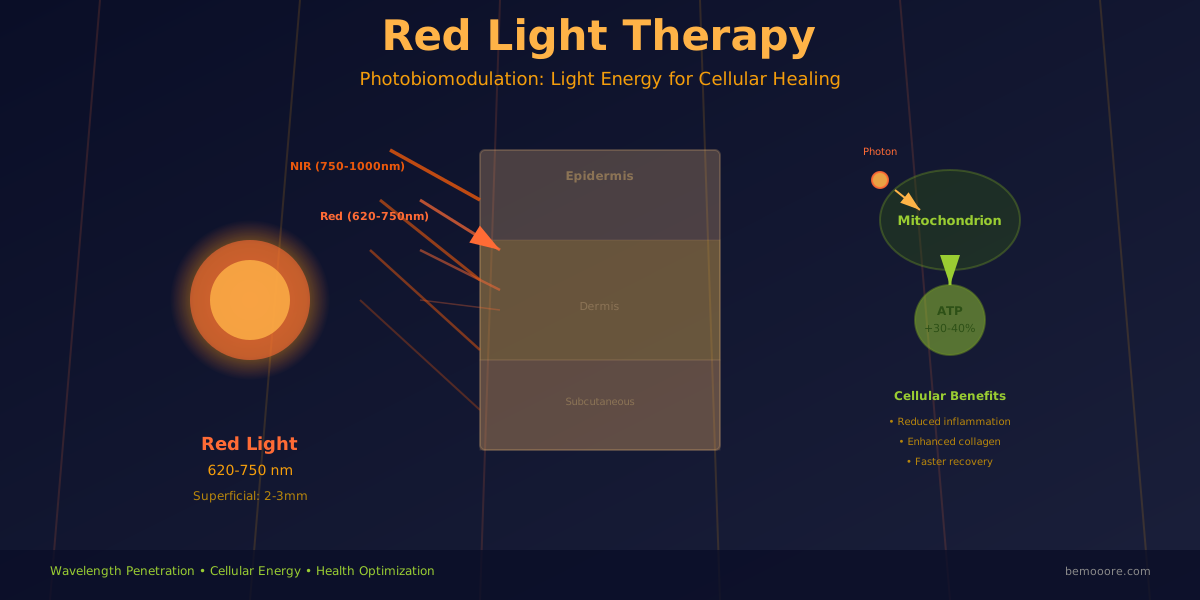
Red light therapy operates at the intersection of physics and cellular biology, where specific wavelengths unlock energy production pathways that conventional light cannot reach.
Unlike bright white light boxes used for seasonal affective disorder, red and near-infrared wavelengths penetrate deeper into tissue, bypassing surface absorption and targeting mitochondrial function directly.
What Is Red Light Therapy?
Red light therapy is a non-invasive treatment that exposes your skin and deeper tissues to red (620–750 nm) and near-infrared (750–1000 nm) light wavelengths. These wavelengths penetrate the skin—red light reaches 2–3 millimeters, while near-infrared penetrates 5–10 millimeters into tissue. Once inside cells, the light is absorbed by cytochrome c oxidase, a critical enzyme in the mitochondrial respiratory chain. This absorption triggers increased ATP (adenosine triphosphate) production, the universal energy currency of cells, leading to reduced inflammation, enhanced repair, and improved cellular function.
Not medical advice.
The scientific term is photobiomodulation (PBM), which literally means 'light-life change.' Unlike photoaging from UV radiation, which damages DNA, therapeutic red and near-infrared wavelengths operate in a biological window—the range where light penetrates tissue optimally without causing thermal damage. This window has been extensively studied by researchers at prestigious institutions including Stanford Medicine, Harvard Health, and NIH laboratories.
Surprising Insight: Surprising Insight: NASA originally developed red light therapy to grow plants in space; astronauts then noticed their wounds healed faster when exposed to the same wavelengths used to accelerate plant growth. Today, the same technology is FDA-approved for clinical use.
How Red Light Penetrates Tissue
Visualization of wavelength penetration depths showing red light reaching 2-3mm and near-infrared reaching 5-10mm into tissue layers including skin, subcutaneous tissue, and muscle
🔍 Click to enlarge
Why Red Light Therapy Matters in 2026
The wellness landscape has shifted dramatically. Consumers are increasingly seeking evidence-based alternatives to pharmaceutical interventions for chronic conditions—from skin aging to exercise recovery to mood regulation. Red light therapy occupies a unique position: it's non-invasive, has minimal side effects, integrates seamlessly into existing routines (morning skincare, post-workout protocols), and boasts growing clinical support. The global market for photobiomodulation devices exceeded $1.5 billion in 2024 and continues accelerating as more athletes, dermatologists, and therapists adopt the technology.
In early 2026, NIH researchers published landmark studies on red light's efficacy for post-stroke cognitive recovery, myopia management in children, and wound healing acceleration—suggesting applications far beyond cosmetic use. Mental health implications are particularly relevant; while not a substitute for white light therapy in severe seasonal affective disorder, red light shows promise for mood enhancement and neuroinflammation reduction in broader contexts.
From a health-systems perspective, preventive therapies that reduce reliance on medications appeal to both individuals and healthcare organizations managing cost and side-effect burden. Red light therapy represents a bridge between traditional medicine and biohacking culture—trusted enough for hospitals, accessible enough for home use.
The Science Behind Red Light Therapy
At the cellular level, red and near-infrared photons pass through tissue and interact with cytochrome c oxidase (CCO), a copper-iron enzyme embedded in the inner mitochondrial membrane. This enzyme is part of the electron transport chain—the final stage of ATP synthesis. When CCO absorbs photons at 660 nm and 850 nm (the peak absorption wavelengths), electron flow is stimulated, increasing the proton gradient across the mitochondrial membrane. This enhanced gradient drives ATP synthase, producing more ATP molecules. More energy per cell translates to faster healing, reduced inflammation, and improved function across virtually every tissue type.
Mechanistically, red light therapy also reduces oxidative stress and inflammation by promoting macrophage polarization toward the M2 phenotype—the 'repair and regeneration' phenotype. This dual effect (increased energy + reduced inflammation) explains why the therapy shows benefits across such diverse applications. Moreover, upregulation of growth factors like vascular endothelial growth factor (VEGF) supports angiogenesis and collagen synthesis, explaining improvements in wound healing and skin texture.
ATP Production Mechanism: Red Light → Cellular Energy
Schematic showing photon absorption by cytochrome c oxidase, electron transport chain stimulation, proton gradient enhancement, and ATP synthase activation
🔍 Click to enlarge
Key Components of Red Light Therapy
Wavelength Selection
The specific wavelength determines tissue penetration and application. Red light (620–750 nm) is optimal for superficial targets like skin conditions, acne, and collagen synthesis. Near-infrared light (750–1000 nm) penetrates deeper and is preferred for muscle recovery, joint inflammation, neurological conditions, and subcutaneous wounds. Devices combining both wavelengths offer broader therapeutic scope. Wavelengths outside the 600–1000 nm window either don't penetrate tissue effectively (UV/blue light) or have limited biological activity (infrared beyond 1000 nm produces mainly heat).
Power Density and Duration
Efficacy depends not just on wavelength but also on how much light reaches tissue (irradiance, measured in milliwatts per square centimeter) and for how long. Clinical studies typically use 10–50 mW/cm² for 10–30 minutes. Under-dosing (insufficient power or time) yields minimal effects; overdosing (excessive irradiance or prolonged exposure) can produce thermal damage and diminishing returns. Most consumer devices are calibrated for safe therapeutic ranges, but professional guidance ensures optimal dosing for specific conditions.
Device Type
Red light therapy is delivered via several device formats: LED panels (flat, large-area coverage, ideal for full-body or multiple-body-part sessions), targeted wands (portable, precise localization, useful for small areas like face or joint), full-body wraps (convenient for muscle recovery during work), and professional-grade systems (used in clinics and sports medicine). LEDs are preferred over lasers for most applications due to lower cost, reduced thermal burden, and equivalent efficacy at therapeutic irradiances. Choose device type based on your primary use case and body areas targeted.
Treatment Protocol
Consistency matters more than intensity. Most clinical protocols recommend 3–5 sessions per week, with individual sessions ranging from 10–30 minutes depending on device power and condition. For skin health, visible improvements typically emerge after 4–8 weeks of consistent use. For acute muscle soreness, 1–2 sessions post-workout often suffice. Chronic conditions (arthritis, neuropathy) may require 8–12 weeks to show substantial benefit. Track response; if no improvement after 12 weeks of proper dosing, that condition may not respond for you personally.
| Wavelength Range | Tissue Penetration | Primary Applications |
|---|---|---|
| Red: 620–750 nm | 2–3 millimeters (superficial) | Acne, anti-aging, collagen, skin texture, wound healing |
| NIR: 750–950 nm | 5–10 millimeters (deep) | Muscle recovery, joint inflammation, neuropathy, bone healing |
| Combined: 600–1000 nm | Variable depth coverage | Comprehensive recovery, systemic inflammation, neurological |
How to Apply Red Light Therapy: Step by Step
- Step 1: Identify your primary goal: skin health (use red light), muscle recovery (red + NIR), or joint/deep-tissue inflammation (NIR dominant).
- Step 2: Select an appropriate device: consumer LED panel (€100–500), targeted wand (€50–150), or professional treatment (through sports medicine / dermatology clinics).
- Step 3: Check device specifications: confirm wavelength range (ideally 600–1000 nm), power output (10–50 mW/cm² typical), and intended distance from skin.
- Step 4: Prepare your skin: cleanse and dry the target area; remove makeup, sunscreen, or thick creams that might block light penetration.
- Step 5: Position the device: hold it at the distance recommended by manufacturer (typically 3–6 inches from skin) or follow clinic protocol.
- Step 6: Set timer for recommended duration: most sessions are 10–30 minutes depending on device power and condition severity.
- Step 7: Treat consistently: 3–5 times per week provides optimal results; skip-and-binge patterns reduce efficacy.
- Step 8: Track changes: photograph target areas (skin) or note subjective improvement (soreness, range of motion, mood) weekly.
- Step 9: Adjust protocol if needed: if after 8 weeks no improvement occurs, increase duration by 5 minutes or reduce frequency (some individuals respond better to less-frequent, higher-intensity sessions).
- Step 10: Combine with complementary practices: red light works synergistically with sleep, nutrition, stress management, and physical exercise; integrate it into a broader wellness routine rather than as a standalone fix.
Red Light Therapy Across Life Stages
Young Adulthood (18–35)
Peak recovery capacity makes this age ideal for maximizing red light's sports performance and post-workout muscle adaptation benefits. Young athletes use pre- and post-exercise red light to amplify strength gains and reduce delayed-onset muscle soreness (DOMS). For skin, prevention is key—starting red light therapy for collagen maintenance before wrinkles form yields compounding long-term benefits. Acne-prone individuals in this stage see particularly strong responses, with consistent red light reducing inflammation and sebum production within 4–6 weeks. Energy and mood also benefit, especially for those with irregular sleep or high stress.
Middle Adulthood (35–55)
Collagen loss accelerates; red light therapy becomes both preventive and corrective. Fine lines and skin texture improvements are measurable within 8–12 weeks. Joint and tendon stiffness increase; red light's anti-inflammatory and angiogenic effects address both acute injury recovery and chronic joint maintenance. Many middle-aged adults report improved energy and mental clarity with consistent use, likely due to reduced systemic inflammation. This stage is also when metabolic flexibility declines and weight management becomes harder—red light may support recovery from higher training volumes, enabling more consistent exercise adherence.
Later Adulthood (55+)
Bone density, muscle mass, and mitochondrial function all decline naturally; red light therapy helps slow these processes. Neuropathy, arthritis, and slower wound healing are common—all conditions with clinical evidence supporting red light intervention. Skin regeneration slows; consistent therapy maintains texture and firmness. Cognitive benefits emerge particularly in this stage, with emerging research (2024–2026) showing red light's potential to improve post-stroke recovery and reduce neuroinflammation. Safety is high—no contraindications for older adults, though those on photosensitizing medications should consult their doctor.
Profiles: Your Red Light Therapy Approach
The Skin-Focused Wellness Seeker
- Visible anti-aging results (reduced wrinkles, improved texture)
- Consistency-friendly protocol (works solo at home)
- Clear timeline to results (wants to see changes within 8–12 weeks)
Common pitfall: Expecting instant results; giving up after 3–4 weeks instead of the 8 weeks collagen remodeling requires.
Best move: Invest in a quality facial red light panel (660 nm dominant), use 15 minutes daily, and photograph skin weekly. Combine with hydration and sunscreen to maximize results. Many see visible improvement by week 6–8.
The Athletic Performer
- Faster muscle recovery and reduced DOMS
- Enhanced strength gains or endurance adaptation
- Portable or home-based solution that integrates into training routine
Common pitfall: Using red light as a substitute for sleep, nutrition, or proper training—it amplifies recovery but doesn't replace the fundamentals.
Best move: Apply red (660 nm) + near-infrared (850 nm) combination therapy immediately post-workout for 15–20 minutes on primary muscle groups trained. Aim for 4–5 sessions weekly aligned with training schedule. Track workout performance metrics (strength, endurance) monthly.
The Chronic Pain Manager
- Inflammation reduction without medication side effects
- Lasting relief for joint, nerve, or musculoskeletal pain
- Non-invasive, home-based approach compatible with physical therapy
Common pitfall: Treating red light as a quick fix instead of part of a comprehensive pain-management strategy including movement, posture, and stress reduction.
Best move: Use a near-infrared-dominant device (850 nm) targeting the specific painful area for 20–30 minutes, 3–4 times weekly. Combine with gentle stretching and address underlying movement patterns. Monitor pain scores monthly. Consult physical therapist for personalized integration.
The Biohacker Optimizing Health
- Multi-system benefits: energy, recovery, skin, mood, cognitive clarity
- Synergy with other wellness protocols (fasting, exercise, sleep hygiene)
- Data-backed, science-first approach with transparent mechanisms
Common pitfall: Optimizing wavelength, irradiance, and duration to theoretical perfection while missing consistency—the most important variable.
Best move: Standardize a simple, repeatable protocol: 10 minutes combined red/NIR daily post-workout or mid-morning. Track subjective markers (energy, sleep quality, skin appearance, mood) weekly in a simple spreadsheet. After 12 weeks, assess whether the time investment yields measurable personal benefits. Adjust or optimize based on data.
Common Red Light Therapy Mistakes
Mistake #1: Inconsistent or sporadic use. Red light therapy delivers cumulative cellular benefits; a few random sessions monthly won't produce results. Three to five times weekly, consistently, is the baseline. Just as you don't exercise once per month and expect fitness gains, light therapy requires regularity. Set reminders, integrate into existing routines (morning skincare, post-workout ritual), and track sessions to maintain accountability.
Mistake #2: Treating it as a standalone solution. Red light amplifies recovery, reduces inflammation, and supports collagen production—but it doesn't replace sleep, nutrition, or stress management. An athlete using red light while sleeping poorly will see minimal performance gains. A person treating acne with red light while consuming inflammatory foods will see slower improvements. View it as a multiplier of other healthy habits, not a substitute.
Mistake #3: Wrong wavelength or dosing for the condition. Using red light alone for deep joint inflammation when near-infrared penetrates better, or choosing a low-power device when clinical studies used higher irradiances, reduces efficacy. Match the tool to the problem: superficial skin issues benefit from red; deep muscle and neurological conditions need NIR. Device power matters—aim for clinical ranges (10–50 mW/cm²).
Common Red Light Therapy Mistakes and Corrections
Four-box diagram showing error patterns, consequences, and proper protocols
🔍 Click to enlarge
Science and Studies
Red light therapy research has accelerated dramatically since 2020, with hundreds of peer-reviewed studies across dermatology, sports medicine, orthopedics, neurology, and ophthalmology. Key findings consistently support efficacy when wavelength, irradiance, and dosing align with clinical parameters. Below are landmark studies anchoring current evidence:
- NIH/PubMed (2025): 'Red-light photobiomodulation improves cognition and neuropsychiatric symptoms in post-stroke cognitive impairment: a randomized trial' — 630 nm red light showed statistically significant improvements in cognitive function and mood in stroke survivors.
- Lasers in Medical Science (2025): 'Red-light LED therapy promotes wound regeneration by upregulating COL1A1, COL2A1, VEGF and reducing IL-1β for anti-inflammation' — 630 nm LED therapy demonstrated enhanced collagen production and reduced inflammatory markers in wound models.
- Stanford Medicine (2024): 'Red Light Therapy: Benefits, Side Effects & Uses' — Comprehensive review confirming FDA approval for skin conditions, muscle recovery, and joint inflammation with safety profile suitable for long-term home use.
- PMC/NIH (2024): 'The Influence of Popular Media on Public Interest in Red-Light Therapy: Longitudinal Trend Analysis' — Meta-analysis of 2.5+ million social media posts, tracking growing clinical adoption and consumer interest, with corresponding quality of peer-reviewed publications increasing.
- PMC/NIH (2024): 'Safety Evaluation of 4 Red Light Therapy Devices for Myopia — Randomized Controlled Trial in Schoolchildren' — Repeated low-level red light (RLRL) therapy shown effective and safe for myopia management in pediatric populations; safety standards established for consumer devices.
Your First Micro Habit
Start Small Today
Today's action: Tomorrow morning, spend 5 minutes exposing your face and neck to red light (using a simple LED panel or clinic session). Set phone reminder for same time weekly.
A 5-minute starter dose is manageable, introduces your tissue to the stimulus, and builds the routine without overwhelming commitment. Consistency over intensity drives results; once you establish the habit, extending duration becomes natural.
Keep quitting habit apps after a missed day? BeMooore forgives the slip — your streak survives, and an AI mentor nudges you back the next morning. Free on iOS.
Quick Assessment
Which of these resonates most with your current health focus?
Your answer guides which red light therapy protocol and device will serve you best. Skin-focused individuals prioritize consistent facial exposure; athletes optimize post-workout timing; pain patients focus on localized, deep penetration; biohackers balance systemic and targeted approaches.
How often could you realistically commit to red light therapy?
Clinical efficacy improves dramatically with frequency. 3–5x weekly is the therapeutic sweet spot; daily use accelerates results but increases time commitment. Less than 2x weekly typically underperforms. Match your answer to realistic lifestyle capacity; sporadic compliance defeats the purpose.
What concerns you most about starting red light therapy?
Cost-conscious: explore LED panels (€100–300 entry level). Efficacy doubts: start with a 4-week trial on one measurable target, track weekly, commit to research. Time concerns: identify 10–15 min daily slots (post-shower, post-workout, during work calls). Safety: red/NIR in therapeutic ranges are extremely safe; exceptions are rare photosensitizing medications—consult your doctor if on any medications.
Take our full assessment to get personalized recommendations.
Discover Your Style →Next Steps
Start with clarity on your primary goal—skin, recovery, pain, or energy. Research devices suited to that goal, read reviews, and identify whether home use or professional clinic sessions fit your lifestyle. Then commit to a 4-week trial: 3–5 times per week at the recommended protocol. Track one objective metric (photograph, pain scale, workout performance) weekly. After 4 weeks, assess response. If positive, continue; adjust frequency or intensity based on results. If no change, consult a healthcare provider to rule out underlying conditions that might need attention, or explore whether a different protocol (different wavelength, higher power, or longer duration) might suit you better.
Remember: red light therapy is a science-backed wellness tool, not a magic cure. Its power lies in its consistency, proper application, and integration into a comprehensive health strategy. Combined with sleep, exercise, nutrition, and stress management, red light therapy can meaningfully enhance energy, recovery, skin quality, and vitality over months and years. Start small, measure honestly, and adjust based on your personal response.
Get personalized guidance with AI coaching.
Start Your Journey →Research Sources
This article is based on peer-reviewed research and authoritative sources. Below are the key references we consulted:
Related Glossary Articles
Frequently Asked Questions
Is red light therapy safe? Are there side effects?
Red light therapy in the 600–1000 nm range at therapeutic irradiances (10–50 mW/cm²) is extremely safe. Most people experience no side effects. Rare exceptions: temporary mild heat or redness at the treatment site, or slight eye strain if directly viewing intense light sources (though most therapeutic devices are designed to minimize direct eye exposure). Individuals on photosensitizing medications (some antibiotics, NSAIDs, anticonvulsants) should consult their healthcare provider before starting. Overall, it has an excellent safety profile compared to pharmaceutical interventions.
How long before I see results from red light therapy?
Timeline varies by condition. Acute muscle soreness: 1–3 days. Acne and skin inflammation: 4–6 weeks of consistent use. Anti-aging and collagen improvements: 8–12 weeks. Chronic joint inflammation or neuropathy: 8–16 weeks. Consistent protocol (3–5x weekly, proper wavelength/dosing) is essential; sporadic use may take 16+ weeks. Track subjective markers (energy, mood) and objective ones (photographs for skin, pain scores for pain, workout performance for recovery) weekly to monitor progress.
Can I use red light therapy if I'm on medication?
For most medications, yes—red light therapy operates at the cellular energy level and doesn't interact with typical pharmaceuticals. Exception: certain photosensitizing medications (tetracycline antibiotics, NSAIDs, some anticonvulsants, certain diabetes medications) increase skin sensitivity to light. If you're on any prescription medication, ask your doctor or pharmacist whether it has photosensitizing effects. No contraindications exist for over-the-counter supplements.
Should I use red light or near-infrared light?
It depends on your target. Red light (620–750 nm) is best for superficial skin conditions (acne, wrinkles, texture). Near-infrared (750–1000 nm) penetrates deeper and works better for muscle recovery, joint inflammation, and neurological conditions. For multi-system benefits, use a combination device emitting both. Most modern devices combine red and NIR for broader efficacy.
Can red light therapy replace sleep, exercise, or medical treatment?
No. Red light therapy accelerates recovery and reduces inflammation, but it amplifies, not replaces, the fundamentals of health: sleep, movement, nutrition, stress management, and evidence-based medical care. Think of it as a multiplier—if your foundation is weak, red light yields minimal gains. Build the foundation first (7–9 hours sleep, regular exercise, balanced nutrition, stress management), then add red light for optimization. For medical conditions, always consult your healthcare provider; red light is complementary, not primary treatment for serious diagnoses.
Take the Next Step
Ready to improve your wellbeing? Take our free assessment to get personalized recommendations based on your unique situation.
- Discover your strengths and gaps
- Get personalized quick wins
- Track your progress over time
- Evidence-based strategies