Parts Work Therapy
Imagine your mind as an internal family system where different versions of yourself protect, manage, and care for your wellbeing. Parts work therapy helps you meet these inner voices not as fragmentation, but as a coordinated team that learned protective strategies from past wounds. When you develop self-leadership—a compassionate core presence—you can finally integrate these divided parts into a unified, resilient self. This evidence-based approach is transforming how people heal trauma, manage anxiety, and build emotional harmony in 2026.
In this article, you'll discover how parts work therapy works, why it's becoming mainstream mental health care, and practical techniques to access your inner wisdom today.
Whether you're struggling with perfectionism, anxiety, relationship conflicts, or emotional overwhelm, parts work offers a non-judgmental pathway to inner peace and genuine self-understanding.
What Is Parts Work?
Parts work is a therapeutic approach that recognizes your mind as composed of multiple distinct sub-personalities or 'parts,' each with its own feelings, beliefs, memories, and protective roles. Rather than viewing multiplicity as pathology, parts work celebrates the mind's natural complexity. The most researched model is Internal Family Systems (IFS), developed by Dr. Richard Schwartz in the 1980s, which combines systems theory with the understanding that each part carries specific protective functions and can heal when accessed with curiosity and compassion.
Not medical advice.
Parts work assumes that beneath protective behaviors—anxiety, perfectionism, self-criticism, numbness—lie wounded parts carrying painful memories or beliefs from past experiences. When you access these parts through parts work, you don't erase them; you transform your relationship with them. The goal is self-leadership: a core state of calm presence that can witness all parts without judgment, orchestrate their needs, and help them evolve from survival mode to genuine wellbeing.
Surprising Insight: Surprising Insight: Research shows that people with multiple inner parts are not experiencing dissociation or fragmentation—they're experiencing the natural architecture of a healthy mind. A 2025 scoping review in Clinical Psychologist identified IFS as a 'promising therapeutic approach' for PTSD, depression, and chronic pain, with significant symptom reduction in pilot trials.
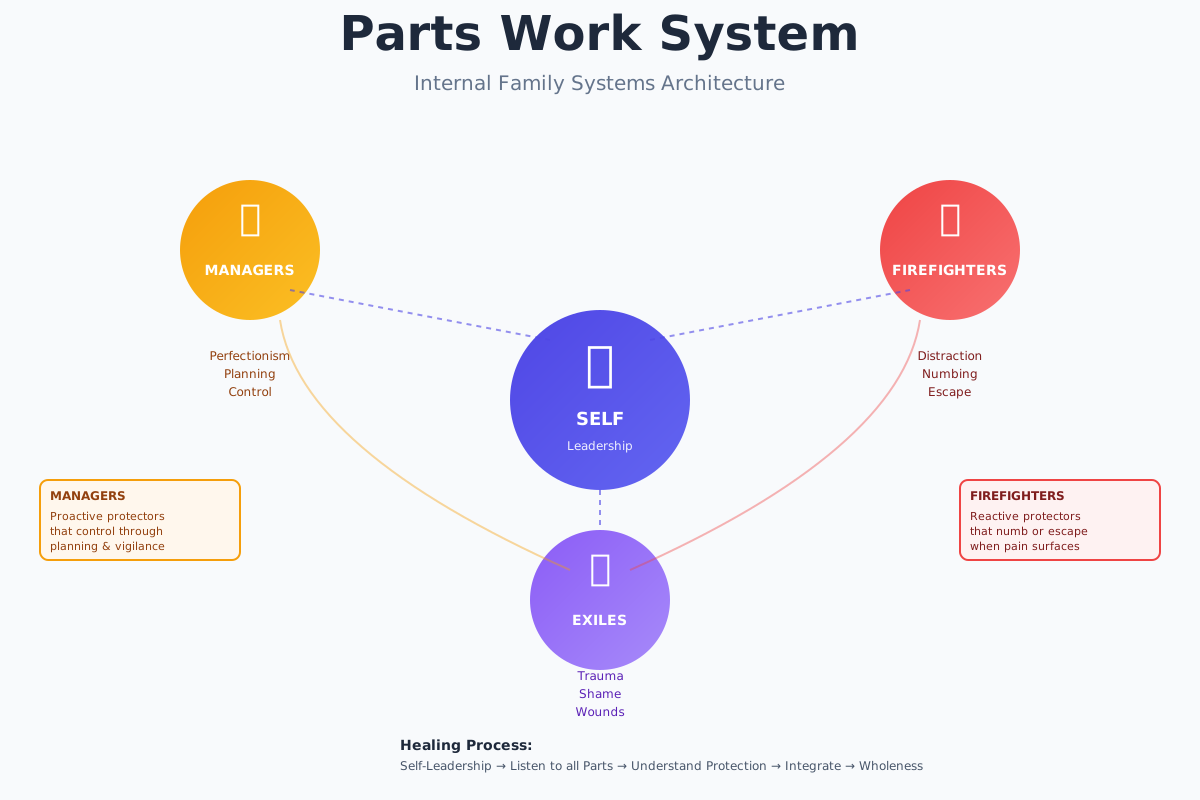
The Internal Family System Architecture
How different parts of your mind organize into a protective ecosystem with managers, firefighters, and exiles.
🔍 Click to enlarge
Why Parts Work Matters in 2026
Mental health awareness has reached a tipping point. Nearly 60% of adults report experiencing anxiety or depression, yet conventional single-approach therapies miss the root: unhealed inner conflict. Parts work addresses this gap by acknowledging that your protective strategies—perfectionism, people-pleasing, self-criticism—developed for good reasons. They were survival mechanisms. In 2026, the shift toward self-compassion and trauma-informed care makes parts work therapy increasingly accessible, with trainings expanding and mobile apps bringing IFS techniques to millions globally.
Parts work is particularly relevant for high-achievers and sensitive individuals who internalized the message that feelings are weaknesses. By reframing your inner critic or anxiety as protective parts rather than personal failures, you unlock deeper healing. Research from 2024-2025 shows IFS significantly reduces PTSD symptoms, depression, and chronic pain—outcomes that conventional therapy sometimes struggles to achieve because those approaches ignore the protective function of problematic behaviors.
The workplace, relationships, and personal identity all benefit when you develop self-leadership. Instead of being hijacked by reactive anxiety, overwhelming perfectionism, or emotional numbness, you can access a grounded, wise version of yourself that navigates challenges with resilience and authenticity. This is why major therapy organizations, corporate wellness programs, and trauma centers are integrating parts work into standard mental health protocols.
The Science Behind Parts Work
Neuroscience increasingly supports parts work's foundational assumptions. Brain imaging studies show that different neural networks activate when we access different emotional states or memories—what we might call different 'parts.' A 2021 pilot study of IFS for adults with PTSD and childhood trauma found that 92% of completers no longer met diagnostic criteria after 16 weeks. The mechanism: when a trained therapist helps you access Self-leadership, brain imaging reveals enhanced functional connectivity between prefrontal cortex regions (responsible for calm, rational decision-making) and subcortical regions (responsible for emotional processing). This integration literally rewires your nervous system's response to threat.
In 2015, IFS was listed on the National Registry of Evidence-based Programs and Practices (NREPP), joining cognitive-behavioral therapy and other well-established modalities. The 2025 scoping review analyzing peer-reviewed research identified IFS as effective for trauma, anxiety, depression, rheumatoid arthritis pain, and complex PTSD. A randomized controlled trial by Haddock et al. (2017) showed significant symptom reduction and improved emotional regulation in clients with complex PTSD using IFS compared to standard treatment. While critics argue that large-scale RCTs remain limited compared to CBT, the evidence base is growing rapidly, with a first-ever group-based IFS protocol study (N=60, 2026) showing large PTSD symptom reductions and higher engagement than individual therapy.
How Parts Work Heals Trauma: The Integration Process
The therapeutic sequence that transforms wounded parts into integrated, resilient resources.
🔍 Click to enlarge
Key Components of Parts Work
Manager Parts
Manager parts are proactive protectors that operate through control, planning, and anticipation. They're often hyper-vigilant to danger and work overtime to prevent pain by perfectionism, worry, organizing, managing others' emotions, or people-pleasing. In childhood, if you learned that vulnerability led to punishment or abandonment, a manager part may have developed to 'get it right' or 'stay invisible.' These parts aren't broken; they're exhausted guardians. When you develop self-leadership, you can appreciate their dedication while teaching them that constant vigilance isn't required anymore. Many high-achievers, anxious people, and trauma survivors have strong manager parts.
Firefighter Parts
Firefighter parts are reactive protectors that activate when painful emotions surface despite manager vigilance. They fight fire with fire—using distraction, numbing, dissociation, substance use, binge eating, rage, or risky behavior to interrupt emotional pain. They don't plan; they react. Their job is damage control. A firefighter part might pull you into your phone when anxiety rises, encourage you to drink when sadness emerges, or make you lash out when shame surfaces. These parts are incredibly important: they prevent emotional overwhelm. Parts work doesn't shame firefighters; it negotiates with them. When they trust that Self-leadership can handle the pain without numbing, firefighters can finally rest.
Exile Parts
Exiles are wounded parts carrying unprocessed trauma, shame, and pain. They hold memories of when you felt powerless, rejected, or betrayed. They're often sequestered by managers and firefighters because their pain is overwhelming. An exile might carry the belief 'I'm unlovable' from childhood rejection, or 'I'm worthless' from repeated criticism. Paradoxically, exiles are often the source of your greatest wisdom, creativity, and compassion once they heal. Parts work locates these exiles through careful dialogue, witnesses their pain with compassion, and helps them release traumatic memories. As exiles heal, you access resilience and authenticity that were locked away.
Self-Leadership
Self-leadership isn't another part; it's your core state of presence—calm, curious, compassionate, clear, creative, courageous, and connected. Every human has access to Self; trauma and overwhelm just obscure it. In parts work, the goal is unblending: creating enough distance between your protective parts and your core Self so you can access your natural wisdom. Self-leadership doesn't fight parts; it listens to them, understands their needs, and leads internal negotiations. When a manager part is anxious, Self gets curious: 'What are you protecting me from? What do you need?' When a firefighter is activated, Self remains calm: 'I'm here. I can handle this emotion. You can rest.' This shift from being controlled by parts to being led by Self is the essence of healing.
| Part Type | Primary Strategy | Beliefs They Hold |
|---|---|---|
| Managers | Control, planning, perfectionism, worry, people-pleasing | 'If I'm perfect/prepared/invisible, I won't get hurt' |
| Firefighters | Distraction, numbness, dissociation, escape, risky behavior | 'I must stop the pain immediately, any way necessary' |
| Exiles | Carrying trauma, shame, pain, unprocessed memories | 'I'm unlovable/worthless/powerless' (beliefs formed during original wounds) |
How to Apply Parts Work: Step by Step
- Step 1: Notice when you feel triggered or emotionally stuck (anxiety spike, perfectionist pressure, numbness, overwhelm). This is your signal that a part is activated.
- Step 2: Pause and create internal space. Ask: 'What part of me is present right now? What emotion am I sensing?' Use curious, non-judgmental language like you're talking to a protector, not an enemy.
- Step 3: Name the part. It might be 'the anxiety part,' 'the perfectionist,' 'the inner critic,' or 'the numb part.' Naming creates psychological distance between you and the part.
- Step 4: Ask the part what it's protecting you from. Listen without judgment. 'What are you afraid will happen if you don't do this?' Most parts have legitimate protective reasons.
- Step 5: Appreciate the part's positive intention even if its current strategy isn't working. 'I see you've been working really hard to keep me safe. Thank you.'
- Step 6: Identify the target: the person, feeling, or memory the part is reacting to. Often, a present trigger (like criticism) reminds a part of an old wound (childhood rejection).
- Step 7: Access Self-leadership. Imagine a calm, grounded presence inside you. This might feel like a warm light, a safe space, or simply a moment of clarity. This is your Self.
- Step 8: From Self, ask the triggered part to step back slightly, just enough so you can think clearly. Don't force; invite. 'Could you give me a little space so I can handle this?'
- Step 9: With Self-leadership present, address the current situation from a place of calm wisdom rather than protective urgency. You might set a boundary, ask for clarification, or choose a different response.
- Step 10: After the situation, invite the part into dialogue. Reassure it: 'I handled that differently. I'm learning new ways to be safe.' Over time, parts trust Self-leadership more and can relax their protective intensity.
Parts Work Across Life Stages
Young Adulthood (18-35)
In young adulthood, parts often clash around identity formation, performance pressure, and romantic relationships. You might experience intense perfectionism (manager), sudden emotional shutdown (firefighter), or deep-seated shame (exile) blocking genuine connection. Many young adults benefit from parts work because they're still forming core beliefs about self-worth. Early intervention prevents these protective patterns from calcifying into adult personality structures. Common focus areas: academic or career perfectionism, relationship anxiety, people-pleasing, emotional avoidance.
Middle Adulthood (35-55)
In middle adulthood, parts often manifest as burnout, relationship stagnation, or existential questioning. Decades of manager-part control create exhaustion; firefighter parts may activate as depression or escape behaviors. This stage often brings the realization that 'I've been running on empty' or 'I don't actually know what I want.' Parts work helps you renegotiate with protective strategies that served you at 25 but now limit authenticity and joy. Common focus areas: burnout recovery, rediscovering personal values, rebuilding intimacy after years of emotional distance, processing past traumas finally emerging as stress decreases.
Later Adulthood (55+)
In later adulthood, parts work often focuses on integration, wisdom, and legacy. Mortality awareness can trigger both exile pain (grief, regret) and manager parts (urgency to control remaining years). This stage offers unique gifts: perspective, permission to finally prioritize authenticity, and opportunity to heal older wounds with decades of accumulated Self-leadership resources. Many people find that parts work in later life brings profound reconciliation—forgiving themselves and others, integrating shadow parts, and accessing genuine contentment. Common focus areas: grief processing, releasing perfectionism, restoring family relationships, finding meaning and contribution.
Profiles: Your Parts Work Approach
The Perfectionist
- Permission to be imperfect and still worthy of love
- Recognition that your ambitious manager part saved you once and can finally rest
- Practical tools to redirect perfectionism toward meaning rather than control
Common pitfall: Extending parts work dialogue into infinite self-analysis instead of taking action; using Internal Family Systems as another framework for self-criticism
Best move: Schedule specific 'parts conversation' windows (10-15 min) rather than constant internal processing. Honor what you learn, then move forward with increased Self-leadership.
The Anxious Overthinker
- Understanding that anxiety parts are hypervigilant protectors, not broken systems
- Techniques to access Self-leadership when anxiety spikes and hijacks your nervous system
- Reassurance that managing anxiety through parts work is different than suppressing it
Common pitfall: Using parts work intellectually to understand anxiety without building emotional trust between Self and the anxious part; avoiding the actual nervous system work
Best move: Combine parts work dialogue with somatic practices (breathing, movement) so your nervous system learns that Self can handle anxiety. Integrate top-down (thinking) with bottom-up (body-based) healing.
The Emotionally Withdrawn
- Safe pace for reconnecting with emotions your firefighter parts have been numbing
- Understanding that emotional avoidance protected you from overwhelm; it's not character weakness
- Gradual practice accessing feelings without judgment or performance pressure
Common pitfall: Moving too quickly into emotional expression and triggering firefighter activation (defensive shutdown); bypassing the protective functions that your withdrawn part served
Best move: Work with a trained parts work therapist who can pace your emotional opening safely. Let firefighter parts know: 'I'm learning I can handle emotions now. You can trust me.'
The Trauma Survivor
- Trauma-informed parts work that doesn't overwhelm your nervous system by accessing exiles too rapidly
- Recognition that your manager and firefighter parts performed miracles in keeping you alive
- Stabilization and resources before deep trauma processing begins
Common pitfall: Rushing into parts conversations with traumatized exiles before establishing safety, Self-leadership, and trust; triggering re-traumatization or overwhelm
Best move: Work only with therapists trained in trauma-informed IFS. Start with resource-building and parts-mapping before accessing exile memories. Healing is possible, and pacing matters.
Common Parts Work Mistakes
The biggest mistake is intellectualizing parts work without building genuine compassion for your protective parts. You can map all your inner dynamics perfectly on paper and still feel controlled by them in real moments. Parts work is not a thinking exercise; it's a practice of self-leadership through dialogue and nervous system reset. Another common error: treating self-leadership as yet another achievement to perfect. Self isn't something you earn; it's already here. The goal is simply removing the interference from protective parts so you can access what's already present.
Many people also rush into dialogue with deep wounds (exiles) before establishing safety and stabilization. If your manager and firefighter parts don't trust that Self-leadership can actually handle the pain, accessing traumatic memories will trigger re-traumatization. A trained therapist knows the pacing required. Finally, avoid the trap of using parts work as another form of self-criticism: 'My inner critic part is so bad,' or 'I'm so fragmented.' Every part exists for a reason. Shame blocks integration; curiosity enables it.
A 2025 investigative report raised the concern that parts work can be destabilizing for clients with complex trauma if protective mechanisms are bypassed too quickly without proper therapeutic support. This underscores the importance of working with trained IFS therapists rather than attempting unsupported self-help with severe trauma.
Common Parts Work Pitfalls and Their Solutions
Navigate the obstacles that prevent parts work from creating lasting transformation.
🔍 Click to enlarge
Science and Studies
The research base for Internal Family Systems therapy and parts work continues expanding. While it lags behind CBT in total RCT volume, IFS demonstrates similar or superior efficacy for trauma and complex mental health conditions. Key studies and evidence bases:
- Haddock et al. (2017): Randomized controlled trial showing significant PTSD symptom reduction and improved emotional regulation in complex PTSD clients using IFS versus standard treatment.
- 2021 pilot study: 92% of 17 adults with PTSD and childhood trauma no longer met diagnostic criteria after 16 weeks of IFS therapy.
- 2025 scoping review (Clinical Psychologist): Identified IFS as 'promising therapeutic approach' for PTSD, depression, and chronic pain with significant symptom reduction in trials.
- 2026 group-based IFS protocol (N=60): First large group-IFS trial showing significant PTSD reductions and higher engagement than individual therapy.
- 2015 NREPP listing: IFS added to National Registry of Evidence-based Programs and Practices, joining established modalities like CBT.
Your First Micro Habit
Start Small Today
Today's action: When you notice a strong emotion this week (frustration, anxiety, shame), pause for 30 seconds and ask: 'What part of me is active right now? What is it protecting me from?' Name the part. Don't judge it. That's your first micro habit.
This simple act of noticing and naming creates psychological distance between your core Self and reactive parts. You're training your brain to observe rather than be consumed by protective patterns. Over time, this small pause expands into genuine Self-leadership.
Keep quitting habit apps after a missed day? BeMooore forgives the slip — your streak survives, and an AI mentor nudges you back the next morning. Free on iOS.
Quick Assessment
Which protective pattern do you recognize most in yourself right now?
Your answer reveals which parts are most active. This isn't about labeling yourself; it's about understanding your current protective system so you can work with it compassionately rather than against it.
What would change if you could access genuine Self-leadership during stressful moments?
This glimpse of Self-leadership is real and accessible to you. Parts work is the practice of making this state consistent throughout your day, even in challenging moments.
Are you ready to explore parts work more deeply?
All answers are valid. Parts work is a personal journey. Whether you start with self-exploration, seek professional support, or simply build curiosity about your inner system, you're already moving toward integration and healing.
Take our full assessment to get personalized recommendations.
Discover Your Style →Next Steps
Start this week by practicing your micro habit: when you feel triggered, pause and ask 'What part of me is active?' Simply noticing and naming builds foundation for deeper work. If you feel drawn to explore further, consider reading 'Internal Family Systems Therapy' by Richard Schwartz or 'What Happened to You?' by Bruce Perry and Oprah Winfrey for accessible introductions to parts work principles.
If you're experiencing PTSD, complex trauma, or chronic mental health challenges, I encourage you to seek a trained IFS therapist. Find one at the IFS Institute directory (ifs-institute.com). Many therapists now offer virtual sessions, making access easier. Remember: every part of you developed for protection and survival. Healing happens when you approach these parts with curiosity and compassion instead of judgment. Your inner system is trying to help you. Parts work teaches you how to listen, lead, and ultimately, integrate into the unified, resilient Self that's already within you.
Get personalized guidance with AI coaching.
Start Your Journey →Research Sources
This article is based on peer-reviewed research and authoritative sources. Below are the key references we consulted:
Related Glossary Articles
Frequently Asked Questions
Is parts work the same as dissociation or Dissociative Identity Disorder?
No. Parts work is about recognizing the normal, healthy multiplicity of mind—different emotional states and protective strategies. Dissociative Identity Disorder (formerly Multiple Personality Disorder) involves involuntary switching and amnesia, typically from severe childhood trauma. Parts work actually helps people reduce dissociation and integrate fragmented experiences. A trained therapist can distinguish between normal parts work and pathological dissociation.
Can I do parts work alone, or do I need a therapist?
Self-guided parts work—journaling, dialogue, breathing—can be helpful for building awareness and self-compassion. However, for trauma processing or complex inner systems, a trained IFS therapist is crucial. Therapists create safety, pace your nervous system appropriately, and help you navigate overwhelming emotions. Consider self-guided work as a complement to professional support, not a replacement.
How long does parts work therapy take?
It varies. Building self-leadership and mapping your parts typically takes 2-4 months. Deeper trauma integration may require 6-12 months or longer. Unlike some time-limited therapies, parts work continues building on itself. Many people find ongoing monthly sessions valuable for continued growth even after acute issues resolve.
What if I can't visualize or 'feel' my parts in dialogue?
Visualization isn't required for parts work. Some people sense parts through body sensations, emotions, energy, or pure knowing. There's no 'right' way to access parts. A skilled therapist helps you find your unique way of connecting. Don't force visualizations; trust your natural sensing process.
Is parts work compatible with other therapies or medications?
Yes. Parts work integrates beautifully with medication, meditation, somatic therapy, CBT, and other healing modalities. In fact, combining approaches often produces better outcomes. A trained parts work therapist can coordinate with your other providers to create comprehensive care. Always inform all your providers about the therapies and medications you're using.
Take the Next Step
Ready to improve your wellbeing? Take our free assessment to get personalized recommendations based on your unique situation.
- Discover your strengths and gaps
- Get personalized quick wins
- Track your progress over time
- Evidence-based strategies