Love Avoidance
Things feel warm and exciting in the beginning. But then the relationship deepens. Suddenly, you feel trapped. Suffocated. Your instinct kicks in: pull away. For millions of people, closeness transforms from comforting to threatening. Love avoidance is a protective pattern where emotional intimacy triggers withdrawal, commitment feels impossible, and vulnerability feels dangerous. It's not about not wanting love—it's about fearing what love demands of you.
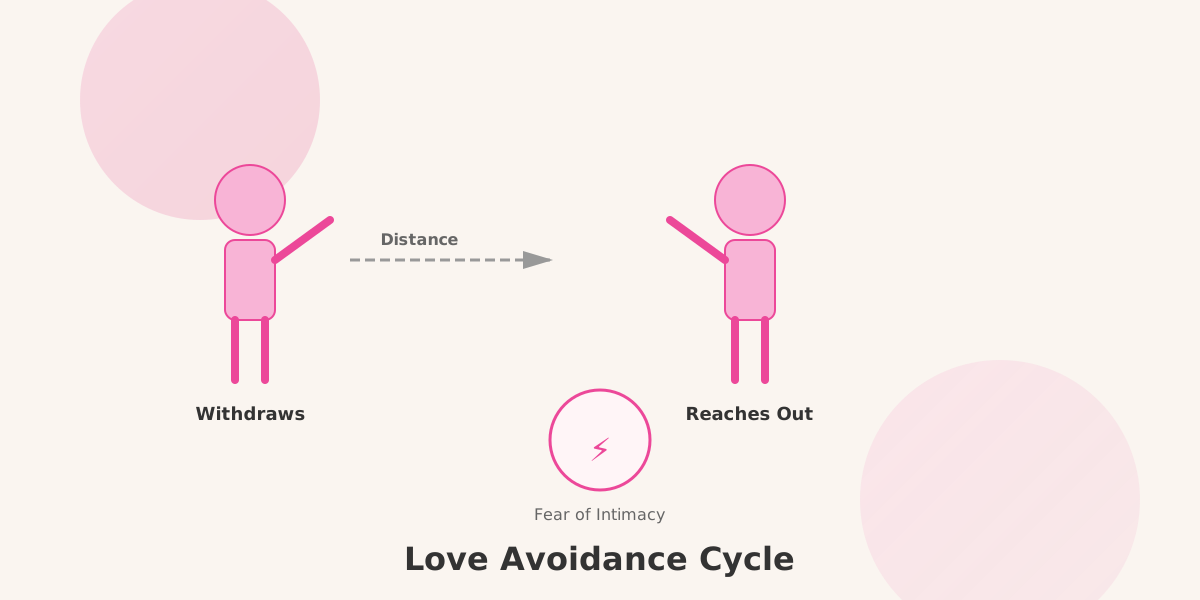
This pattern often roots in childhood, where caregivers were emotionally unavailable or dismissive. Your nervous system learned early: depend on yourself only. Today, this survival strategy sabotages your deepest relationships.
But attachment styles aren't fixed. With understanding and practice, you can rewire your nervous system to feel safe with intimacy—and build the connected relationships you actually want.
What Is Love Avoidance?
Love avoidance is a relational pattern where emotional closeness, dependency, and deeper connection begin to feel threatening rather than soothing—especially as intimacy deepens. People with avoidant attachment often value autonomy highly and regulate stress by pulling back emotionally. It's characterized by resistance to vulnerability, difficulty expressing needs, and withdrawal when relationships become more defined through conflict, emotional expression, planning, or expectation.
Not medical advice.
Love avoidance exists on a spectrum. Some people are aware they withdraw when things get close. Others deny their attachment needs entirely, insisting they 'just aren't relationship people.' The common thread: when partners seek closeness, emotional intensity triggers a fear response. Your body tells you to escape. Your mind creates reasons to distance. Over time, this pattern dims relationship satisfaction, reduces emotional fulfillment, and creates cycles of connection and withdrawal that confuse both partners.
Surprising Insight: Surprising Insight: Avoidant attachment isn't about lacking capacity for love—it's about needing safety before vulnerability. People with avoidant patterns often experience intense emotions privately but fear showing them to partners.
The Love Avoidance Cycle
How avoidant attachment patterns create withdrawal cycles in relationships
🔍 Click to enlarge
Why Love Avoidance Matters in 2026
In 2026, we're more connected yet more isolated than ever. Digital communication lets us control how much intimacy we experience. Dating apps enable quick exits when things get real. Yet loneliness is at record levels. Understanding love avoidance matters because it's preventing millions from experiencing the deep partnership that research shows is essential for wellbeing, longevity, and life satisfaction. Avoidant patterns aren't just hurting individuals—they're reshaping how we approach commitment itself.
Workplace stress and productivity culture also reinforce avoidant values: independence is celebrated, vulnerability is seen as weakness, and 'having it all together' becomes the goal. This cultural messaging amplifies avoidant patterns, making genuine connection feel risky in every domain of life.
Mental health awareness has increased, but many people still don't recognize their avoidant patterns. They label themselves commitment-phobic or anti-relationship, unaware that therapy and understanding can change their attachment style. This article exists because avoidance doesn't have to be permanent—and understanding it is the first step to transformation.
The Science Behind Love Avoidance
Research reveals that avoidant attachment disrupts the brain's reward system for connection. When avoidantly attached people experience emotional intimacy, their nervous system shifts into threat mode—similar to how someone perceives danger. The amygdala activates. Cortisol rises. Their body mobilizes to escape. This isn't choice; it's neurobiology shaped by early experiences. A child with an emotionally distant caregiver learns that closeness won't get their needs met. The brain concludes: independence is survival.
Studies show avoidant attachment significantly diminishes marital satisfaction both directly and indirectly through increased fear of intimacy. Emotional inhibition and difficulty identifying emotions (alexithymia)—both common in avoidant individuals—intensify fear of intimacy and reduce relationship quality. Additionally, research demonstrates that rejection sensitivity combined with avoidant attachment creates a powerful mechanism for intimacy struggle: the more partners pursue connection, the more threatened avoidant individuals feel, creating a destructive dynamic.
How Avoidant Attachment Affects Brain and Body
Neurological mechanisms underlying love avoidance and fear of intimacy
🔍 Click to enlarge
Key Components of Love Avoidance
Fear of Intimacy
Fear of intimacy is the inhibited capacity to exchange thoughts and feelings of personal significance with another person who is valued. It involves self-silencing, affect suppression, and social withdrawal. For avoidant individuals, intimacy feels like loss of control. Sharing feelings becomes evidence of weakness. Dependency becomes terrifying. This fear operates below conscious awareness—people often don't recognize they're avoiding; they just feel uncomfortable and distance themselves.
Emotional Inhibition
Avoidantly attached people suppress emotional expression and needs. They may not cry, rarely ask for help, and struggle to articulate what they feel. This isn't stoicism by choice—it's learned protection. Showing feelings to an unreliable caregiver meant disappointment. Now, emotional restraint feels like wisdom. But it creates distance from partners and disconnects them from their own inner guidance.
Rejection Sensitivity
Paradoxically, avoidant individuals often carry heightened rejection sensitivity underneath their independence. They fear their partner will eventually leave them for showing needs or vulnerability. This fear drives preemptive withdrawal: if I distance myself first, I control the rejection. This protective strategy becomes self-fulfilling—partners feel hurt by the distance and pull away, confirming the original fear.
Commitment Resistance
Also known as gamophobia or commitment phobia, this manifests as resistance to defining relationships, reluctance to discuss future plans, and escape when partnership deepens. It's not about the specific partner—it's about the loss of freedom and control that commitment symbolizes. The prospect of being 'trapped' in dependency triggers panic.
| Relationship Stage | Avoidant Pattern | Impact on Partner |
|---|---|---|
| Early Dating | Warm, exciting, lots of sexuality, minimal emotional depth | Partner feels butterflies; believes true connection is building |
| Deepening Connection | Withdrawal, emotional distance, reduced communication | Partner feels sudden coldness, confusion, and increased pursuit |
| Commitment Conversations | Avoidance, panic, resistance, creating conflict | Partner feels rejected, unvalued, and increasingly anxious |
| Long-term Partnership | Chronic distance, reduced intimacy, parallel living | Partner experiences loneliness despite being in relationship |
How to Apply Love Avoidance: Step by Step
- Step 1: Recognize your pattern: Notice when you withdraw. Do you create distance when things get close? Do commitment conversations trigger panic? Awareness is the first step.
- Step 2: Trace your history: Where did this pattern originate? What was your caregiver's availability like? How did you learn to self-soothe? Understanding roots reduces shame.
- Step 3: Notice your body's response: When your partner seeks emotional connection, what happens in your body? Tension? Numbness? Urge to escape? Your body tells the story your mind doesn't.
- Step 4: Communicate with your partner: Share what you're learning about yourself. Explain this isn't about them—it's your nervous system's protective response. Asking for patience builds understanding.
- Step 5: Practice micro-vulnerability: Start small. Share one small feeling. Then another. Build tolerance for emotional expression gradually without overwhelming yourself.
- Step 6: Spend time in discomfort: When you feel the urge to withdraw, pause. Breathe. Stay present for 2-3 minutes longer than feels comfortable. You're teaching your nervous system that closeness is safe.
- Step 7: Build a secure base: Develop friendships and connections where you practice vulnerability with lower stakes. Friendship intimacy prepares you for romantic intimacy.
- Step 8: Try emotion-focused therapy: Research shows emotion-focused therapy (EFT) is particularly effective for avoidant attachment. A therapist helps you access and express emotions safely.
- Step 9: Develop self-compassion: You didn't choose this pattern—it was adaptive once. Shame about avoidance only deepens it. Treat yourself with kindness as you work to change.
- Step 10: Celebrate small wins: When you stay present instead of withdrawing, acknowledge it. When you share a feeling, notice it. Positive reinforcement rewires your brain faster than criticism.
Love Avoidance Across Life Stages
Young Adulthood (18-35)
Young adults with avoidant patterns often excel at short-term relationships. They're exciting, independent, sexually confident. But when partners want to define the relationship or discuss future, anxiety spikes. Many young avoidant adults avoid committing, blame it on 'not being ready,' and cycle through relationships. This stage is critical: therapy and self-awareness now prevent decades of relationship difficulty. Many young avoidant people don't realize their pattern until their 30s when they wonder why they're perpetually single or in unfulfilling partnerships.
Middle Adulthood (35-55)
By middle adulthood, untreated avoidance creates significant relationship strain. Partners grow weary of emotional distance. Some avoidant individuals finally recognize their pattern when facing repeated breakups or marriage difficulties. This is when many seek therapy. Others solidify their avoidance, convincing themselves they're 'not relationship people' and choosing solitude. However, research shows attachment can change: middle-aged individuals who engage in therapy or relationship education often experience profound shifts in their capacity for intimacy.
Later Adulthood (55+)
In later adulthood, unhealed avoidance creates isolation and regret. Many older avoidant individuals report wishing they'd faced their patterns earlier. However, research also shows that older adults with avoidant attachment can develop secure patterns through intentional work—and the motivation is often higher: mortality awareness makes connection feel more precious. For older adults, friendship closeness and community become increasingly important protective factors against avoidance patterns affecting life satisfaction.
Profiles: Your Love Avoidance Approach
The Independent Professional
- Autonomy and space in relationships
- Low-pressure emotional expression
- Partner who respects independence
Common pitfall: Using work as primary identity; avoiding home and partnership conversations
Best move: Schedule dedicated relationship time; communicate availability honestly; practice saying yes to invitations for emotional connection
The Romantic Idealist
- Perfect partner before committing
- Fantasy of effortless connection
- Escape hatch when reality doesn't match fantasy
Common pitfall: Sabotaging good relationships by finding fatal flaws; perpetual dissatisfaction
Best move: Accept imperfect partnership; recognize that real love requires choosing to stay when it's hard; work with a therapist on perfectionism
The Friendly Ghost
- Deep friendship without romantic commitment
- Emotional connection without sexual vulnerability
- Partners who don't push for more
Common pitfall: Keeping partners in limbo; appearing available while emotionally absent
Best move: Clarify what you truly want; communicate boundaries clearly; consider whether you're avoiding romantic intimacy specifically or all intimacy
The Anxious-Avoidant Hybrid
- Reassurance alongside independence
- Partners who understand mixed signals
- Flexibility with emotional availability
Common pitfall: Creating exhausting push-pull cycles; partners never knowing where they stand
Best move: Work with therapist on stabilizing attachment; develop awareness of triggers for each response; communicate your mixed feelings transparently
Common Love Avoidance Mistakes
Mistake 1: Blaming your partner for wanting closeness. Avoidant individuals often frame their partner's need for intimacy as neediness or weakness. This creates resentment and prevents the partner from knowing their needs are valid. Instead, recognize that wanting connection is healthy—your difficulty with it is the issue to address.
Mistake 2: Assuming you'll 'find the right person' and magically feel comfortable. Avoidance isn't solved by changing partners. The pattern travels with you. Every new relationship will eventually trigger the same withdrawal unless you work on your attachment system. The right person won't fix avoidance—only your own awareness and effort will.
Mistake 3: Using therapy or self-help to avoid rather than engage. Some avoidant people intellectualize their patterns endlessly without changing behavior. They read books about attachment, understand their childhood wounds, and do nothing differently. Understanding isn't transformation. Staying present with discomfort, practicing vulnerability, and rewiring your nervous system through repeated safe experiences is what changes avoidance.
Breaking the Avoidance-Blame Cycle
How to interrupt common patterns that maintain love avoidance
🔍 Click to enlarge
Science and Studies
Recent research (2023-2026) demonstrates that avoidant attachment and fear of intimacy are connected psychological patterns requiring therapeutic attention. Key findings from peer-reviewed studies show that avoidant attachment directly and indirectly reduces relationship satisfaction through increased fear of intimacy, and that attachment styles—while influenced by early experiences—can be modified through therapy, understanding, and behavioral practice.
- Avoidant attachment style diminishes marital satisfaction both directly and through fear of intimacy as a mediating mechanism (Journal PsychNexus, 2025)
- Fear of intimacy significantly mediates the relationship between childhood emotional abuse and later relationship difficulties, suggesting early patterns are modifiable (PMC/NIH, 2025)
- Rejection sensitivity combined with avoidant attachment creates heightened intimacy struggles, especially in females with high interpersonal anxiety (European Journal of Psychology Open, 2024)
- Cognitive-behavioral therapy and emotion-focused therapy show effectiveness in changing attachment patterns and reducing fear of intimacy (Cleveland Clinic, WebMD clinical reviews, 2024)
- Attachment styles are not fixed; they can shift from insecure to secure through understanding, therapeutic intervention, and behavioral practice (Attachment Project, 2024)
Your First Micro Habit
Start Small Today
Today's action: When your partner or close friend asks how you're feeling about something personal, pause before deflecting. Take a breath. Share one true sentence about your inner state. That's it. One sentence.
This tiny action breaks the automatic withdrawal pattern. It trains your nervous system that expressing a feeling doesn't destroy the relationship. Repetition rewires your attachment circuitry. Start with one sentence to avoid overwhelming yourself.
Keep quitting habit apps after a missed day? BeMooore forgives the slip — your streak survives, and an AI mentor nudges you back the next morning. Free on iOS.
Quick Assessment
When your partner wants to have a deeper emotional conversation, what's your typical first instinct?
Your first instinct reveals your automatic attachment response. Avoidant responses suggest your nervous system perceives emotional intimacy as threatening. This pattern can change with awareness and practice.
In past relationships, what pattern have you noticed about your commitment timeline?
Commitment panic or seeking perfection often masks avoidant patterns. Real love requires choosing the imperfect person despite their flaws—and despite your fear.
When someone you care about expresses vulnerability or need, how do you typically respond inside?
Discomfort with others' vulnerability suggests your nervous system learned early that emotions aren't safe. Therapy and practice can reshape this response.
Take our full assessment to get personalized recommendations.
Discover Your Style →Next Steps
Your next step is choosing awareness over denial. If you recognized yourself in this article, that's not failure—that's the beginning of change. Love avoidance isn't a character flaw; it's a protective strategy your nervous system developed when closeness wasn't safe. But your nervous system can learn differently. Your brain can rewire.
Consider finding a therapist who specializes in attachment and emotion-focused therapy. If that feels too big, start with the micro habit in this article. Share one true sentence about your feelings with someone you trust. Notice what happens. Your nervous system might expect disaster—but you'll likely discover that vulnerability is survivable. That's where transformation begins.
Get personalized guidance with AI coaching.
Start Your Journey →Research Sources
This article is based on peer-reviewed research and authoritative sources. Below are the key references we consulted:
Related Glossary Articles
Frequently Asked Questions
Is love avoidance the same as commitment phobia?
Love avoidance is broader than commitment phobia. Commitment phobia specifically refers to gamophobia—fear of marriage or long-term commitment. Love avoidance encompasses all patterns of withdrawing from emotional intimacy and closeness. Someone can have love avoidance without classical commitment phobia, though they often co-occur.
Can avoidant attachment change?
Yes. Attachment styles are formed early but are not fixed. Research shows that through therapy (especially emotion-focused therapy or CBT), education, and repeated experiences of safe emotional expression, people can develop more secure attachment patterns. Change requires consistent effort and patience, but transformation is possible at any age.
Is love avoidance related to trauma?
Often, yes. Childhood emotional abuse, neglect, or inconsistent caregiving frequently underlies avoidant patterns. However, not all avoidance stems from overt trauma—sometimes it develops from emotionally distant but 'good enough' parenting. The key is that your nervous system learned early that depending on others isn't safe.
What's the difference between avoidant and anxious attachment?
Avoidant attachment involves withdrawing when intimacy increases and valuing independence highly. Anxious attachment involves clinging, fearing abandonment, and often pursuing closeness desperately. They're opposite strategies for managing the same core fear: that their needs won't be met. Some people oscillate between both patterns (anxious-avoidant).
Can I be in a healthy relationship with avoidant attachment?
Yes, but it requires self-awareness and effort. The best scenario is: avoidant partner recognizes their pattern, engages with therapy, and practices staying present with intimacy. Their partner understands avoidance isn't rejection and doesn't take withdrawal personally. Without awareness, avoidant attachment creates painful cycles that damage relationships.
Take the Next Step
Ready to improve your wellbeing? Take our free assessment to get personalized recommendations based on your unique situation.
- Discover your strengths and gaps
- Get personalized quick wins
- Track your progress over time
- Evidence-based strategies