Alexithymia
Have you ever noticed someone who seems disconnected from their emotions, unable to name what they're feeling or why? Perhaps you've felt this way yourself—frustration or anxiety emerging without clear understanding, physical sensations that don't make sense, relationships strained by an inability to express what's inside. This difficulty identifying and describing emotions has a name: alexithymia, meaning 'having no words for emotions.' It's not a disorder, but rather a personality trait affecting approximately 1 in 10 people. Understanding alexithymia opens a pathway to emotional clarity and healthier relationships.
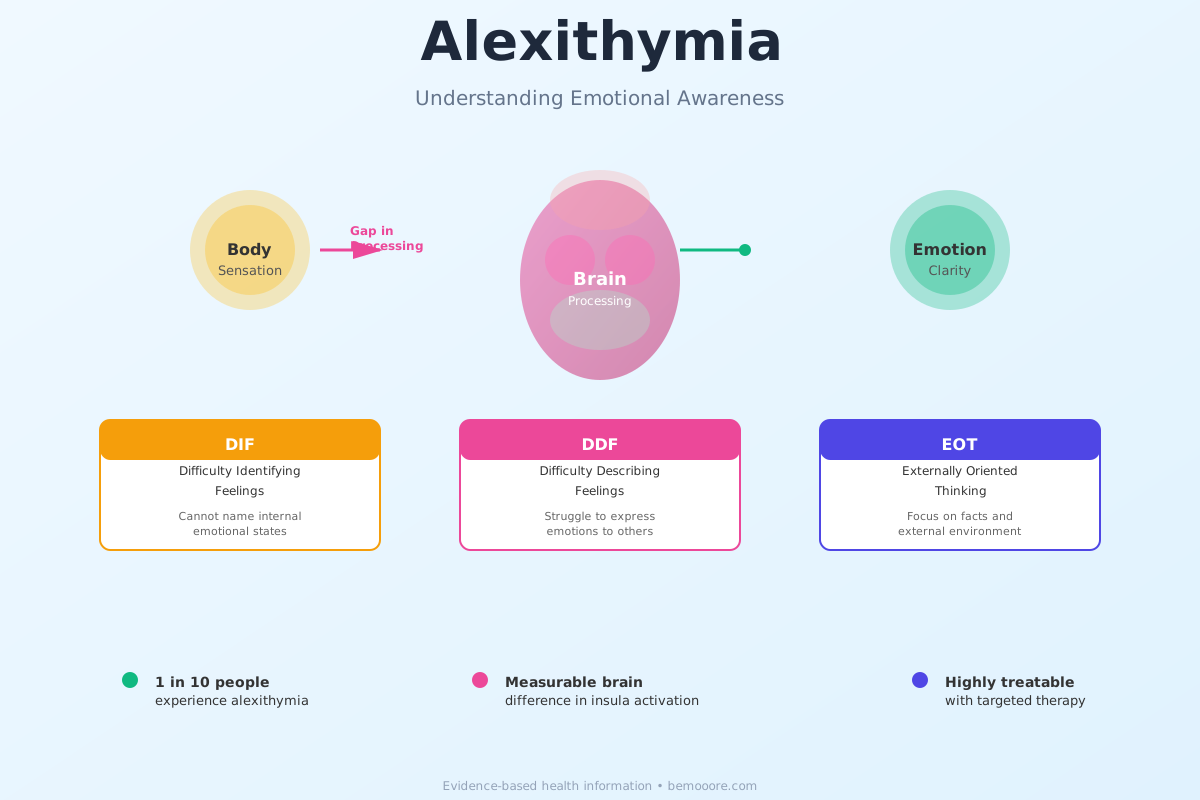
What if the disconnect between your body and mind could become a bridge to deeper self-awareness?
Recent neuroscience reveals that alexithymia isn't about lack of emotion—it's about disrupted emotional processing in specific brain regions.
What Is Alexithymia?
Alexithymia is a multidimensional personality trait characterized by three core deficits: difficulty identifying feelings (DIF), difficulty describing feelings to others (DDF), and externally oriented thinking (EOT)—a cognitive style focused on external events rather than internal emotional states. The term was coined in 1972 by psychoanalytic psychiatrist Peter Sifneos to describe patients struggling to perceive and articulate their emotions.
Not medical advice.
People with alexithymia often experience emotions as physical sensations—tightness in the chest, stomach tension, or fatigue—without the cognitive framework to interpret these signals as anger, anxiety, or sadness. They may struggle in relationships because emotional expression feels foreign or impossible. Unlike clinical depression or anxiety disorders, alexithymia exists on a spectrum and is normally distributed across the general population. Research shows it appears across psychiatric conditions (depression, anxiety, PTSD), neurological disorders (autism spectrum, brain injury), and psychosomatic conditions where emotional distress manifests as physical symptoms.
Surprising Insight: Surprising Insight: Alexithymia isn't laziness or indifference—neuroimaging shows reduced activation in the insula and prefrontal cortex, brain regions responsible for emotional awareness. It's a measurable difference in how the nervous system processes feelings.
The Three Dimensions of Alexithymia
Visual breakdown of the three core components of alexithymia and how they interact to create emotional processing difficulties
🔍 Click to enlarge
Why Alexithymia Matters in 2026
In an era of increasing mental health awareness and emotional intelligence focus, alexithymia often goes unrecognized—leaving people confused about their own inner worlds. Many attribute emotional difficulties to personal failure rather than a specific processing pattern. This confusion leads to delayed treatment, worsening mental health outcomes, and relationship strain.
Recognizing alexithymia as a trait rather than a personal shortcoming changes everything. Treatment becomes possible—mindfulness practices, body scanning, emotion-focused therapy, and cognitive behavioral approaches have all demonstrated effectiveness in improving emotional awareness. Understanding your own alexithymia (or recognizing it in a partner) enables compassion and targeted support rather than judgment.
Additionally, alexithymia connects to broader health outcomes. Research shows it predicts worse depression outcomes, increased physical health problems, and treatment resistance. By addressing the underlying emotional processing difficulty, we can improve not just mental health but overall wellbeing and quality of life.
The Science Behind Alexithymia
Neuroscience reveals that alexithymia involves dysfunction in brain regions critical for emotional awareness. Meta-analyses of functional and structural imaging studies identify the amygdala (emotional detection), insula (internal sensation awareness), anterior cingulate cortex (emotional integration), and prefrontal cortex (emotional regulation and reflection) as key correlates. People with alexithymia show reduced neural responses when viewing emotional stimuli or performing emotional imagery tasks. Simultaneously, they show enhanced activity in somatosensory regions—explaining why emotions register as pure physical sensations rather than identified feelings.
Molecular genetics studies have detected polymorphisms in serotonin transporter genes, dopaminergic metabolism genes, and brain-derived neurotrophic factor (BDNF)—suggesting both genetic predisposition and environmental factors shape alexithymia. The role of oxytocin (the bonding hormone) remains controversial but appears relevant to the social/emotional expression difficulties many people with alexithymia experience. This biological framework explains why alexithymia isn't about willpower or personality flaw—it's a measurable neurobiological pattern that can be addressed.
Brain Regions Involved in Alexithymia
Neural pathways showing decreased activity in emotion-processing brain regions and enhanced somatosensory response
🔍 Click to enlarge
Key Components of Alexithymia
Difficulty Identifying Feelings (DIF)
The first component involves a fundamental disconnect between experiencing emotions and recognizing them. Someone with high DIF may feel tension or unease without being able to name it as anxiety, irritation, or sadness. They describe emotions in purely physical terms: 'My chest feels tight,' 'I feel numb,' 'Something is wrong but I can't say what.' This isn't suppression or denial—the emotional signal simply doesn't translate into conscious recognition. In relationships, DIF creates confusion: 'Why are you upset?' 'I don't know, I just feel bad.' This difficulty identifying emotions underlies much of the functional impairment associated with alexithymia.
Difficulty Describing Feelings (DDF)
Even when someone recognizes they're experiencing an emotion, translating it into language becomes a separate challenge. DDF means struggling to articulate feelings to others—using vague language, defaulting to 'fine' or 'okay,' or completely avoiding emotional discussion. A person might understand internally that they're disappointed but literally cannot express 'I'm disappointed' to a partner or therapist. This creates genuine communication barriers in relationships and therapy settings. DDF also extends to emotional nuance: distinguishing between sadness, grief, and depression becomes cognitively effortful rather than intuitive. Many people with alexithymia report 'everything feels the same emotionally.'
Externally Oriented Thinking (EOT)
The third dimension involves cognitive style—a tendency to focus attention outward on concrete facts, environmental details, and other people rather than inward on emotions, fantasies, and reflections. Someone with high EOT approaches life pragmatically, often appearing rational or emotionally detached. They may have minimal fantasy life, rarely daydream, and find introspection uncomfortable or unproductive. In conversations, they gravitate toward factual discussion rather than emotional exploration. This thinking pattern, while sometimes useful in high-stress professions, limits emotional processing and makes therapy more challenging since therapy requires internal reflection.
Somatic Awareness Disruption
A fourth related component involves disconnection from bodily signals. Emotions normally produce recognizable physical sensations—heart racing with fear, butterflies with excitement, heaviness with sadness. People with alexithymia often report poor awareness of these interoceptive signals or difficulty interpreting them. They may notice their heart is racing but not connect it to emotion, instead focusing on the physical symptom itself. This disruption in somatic-emotional integration is why body-based therapies (somatic therapy, yoga, progressive muscle relaxation) show particular promise in treating alexithymia.
| Dimension | Normal Processing | Alexithymia Pattern |
|---|---|---|
| Event Occurs | Loss of important relationship | Loss of important relationship |
| Emotional Response | Automatic sadness/grief recognition | Physical symptoms: fatigue, emptiness, tension |
| Cognitive Integration | 'I feel sad because I've lost someone important' | 'Something feels wrong. My body feels strange. Why am I tired?' |
| Expression | 'I'm grieving. I need support.' | 'I'm fine. I don't know what's wrong. Nothing sounds interesting.' |
| Processing | Emotion informs reflection and action | Physical discomfort without clarity leads to avoidance or distraction |
How to Apply Alexithymia: Step by Step
- Step 1: Recognize the pattern: Notice if you frequently struggle to name your emotions, describe feelings physically, or experience disconnect between your body and your emotions.
- Step 2: Learn the three dimensions: Understand whether your alexithymia primarily involves difficulty identifying (DIF), describing (DDF), or externally oriented thinking (EOT).
- Step 3: Start body scanning: Spend 5 minutes daily noticing physical sensations without judgment—tightness, warmth, heaviness, numbness. Build this awareness foundation.
- Step 4: Use emotion wheels: Visual tools that categorize emotions (basic: happy, sad, angry, scared; nuanced: frustrated, disappointed, anxious, peaceful). Study them regularly.
- Step 5: Practice the 'body-to-emotion' bridge: When noticing a physical sensation, ask 'If this sensation were an emotion, what would it be?' This builds the connection your brain has been skipping.
- Step 6: Journal about events and responses: Write what happened, then write your physical sensation, then try to label an emotion. This forced translation builds neural pathways.
- Step 7: Engage in mindfulness meditation: Regular mindfulness (10-20 minutes daily) increases insula activation and improves emotional awareness measurably.
- Step 8: Seek therapy: Emotion-focused therapy, cognitive behavioral therapy, and dialectical behavior therapy specifically address alexithymia and show strong outcomes.
- Step 9: Build emotional vocabulary: Read novels or literature that emphasizes emotional nuance; listen to podcasts exploring psychology and emotions; expand your emotional language.
- Step 10: Consider medication: If alexithymia co-occurs with depression or anxiety, SSRIs or other psychiatric medications can sometimes improve emotional awareness by addressing underlying conditions.
Alexithymia Across Life Stages
Young Adulthood (18-35)
Young adults with alexithymia often experience confusion about their emotional capacity, wondering if they're 'broken' or incapable of love. Relationships become difficult because partners expect emotional expression and vulnerability that feel inaccessible. Some young adults discover alexithymia after repeated relationship failures and resulting therapy. The advantage at this life stage is neuroplasticity—the brain is still highly malleable, making therapeutic interventions particularly effective. Young adults benefit from recognizing alexithymia as a trait rather than a character flaw, which reduces shame and enables treatment engagement.
Middle Adulthood (35-55)
Middle-aged adults with alexithymia often have established coping patterns—successful careers that reward external focus and concrete thinking, but strained intimate relationships and minimal close friendships. Many report physical health problems (stress-related, psychosomatic) that bring them to medical attention. This life stage offers opportunity: recognizing that emotional awareness could improve both relationship satisfaction and physical health becomes motivating. Some middle-aged adults find that addressing alexithymia through therapy or coaching significantly improves quality of life in the second half of life.
Later Adulthood (55+)
Older adults with alexithymia face particular challenges: accumulated years of limited emotional intimacy in relationships, potential isolation if significant relationships have ended, and increased physical health issues with psychosomatic components. However, many older adults show increased emotional wisdom with age. Some find that increased leisure time enables deeper reflection. Others find meaning through mentoring younger people, which paradoxically improves their own emotional understanding as they guide others. Later adulthood is never too late for therapeutic intervention—improvement in emotional awareness still occurs and significantly enhances life quality.
Profiles: Your Alexithymia Approach
The Analyzer (High EOT Dominator)
- Logical frameworks for understanding emotions rather than vague advice
- Concrete practices like body scanning and emotion wheels (structure helps)
- Gradual approach to introspection—'excessive self-focus' feels uncomfortable
Common pitfall: Believing emotions are irrational and shouldn't influence decision-making; dismissing emotional work as indulgent
Best move: Frame emotional awareness as another kind of intelligence to master. Use neuroscience facts (insula function, vagal tone) to engage analytical side. Start with measurable practices like meditation minutes or emotion-labeling accuracy.
The Somatic Focuser (High DIF, Physical Awareness Intact)
- Body-based therapies like somatic experiencing, yoga, tai chi
- Permission to focus on physical sensations as valid entry points
- Slower translation from 'chest tightness' to 'anxiety' rather than rushing
Common pitfall: Staying stuck in physical symptom focus without bridging to emotional understanding; treating emotions as medical problems only
Best move: Use body awareness as your superpower. Through somatic therapy or yoga, gradually build the bridge from sensation to emotion. You already have the body signal—therapy helps you decode it.
The Articulation Struggler (High DDF)
- Written expression (journaling, texting) before verbal conversation
- Time before responding to emotional questions—no pressure for immediate expression
- Therapy that uses writing, art, or music as valid emotional expression
Common pitfall: Avoiding emotional conversations entirely because expressing feels impossible; partners interpreting silence as apathy
Best move: Communicate your communication style clearly: 'I need time to think about this before responding.' Use written reflection (journal, email to partner) to clarify feelings. Music therapy or art therapy may feel more natural than verbal expression.
The Relational Connector (Motivated by Relationship Improvement)
- Clear link between emotional awareness and relationship satisfaction
- Couples therapy where your partner understands your emotional processing pattern
- Practices that improve empathy and emotional attunement in relationships
Common pitfall: Partner feels rejected or unloved due to reduced emotional expression; relationship deteriorates if alexithymia remains unaddressed
Best move: Prioritize therapy that includes your partner—helps them understand alexithymia isn't indifference. Share this article. Set realistic expectations for emotional expression while gradually building capacity. Consistency and effort matter more than fluency.
Common Alexithymia Mistakes
Mistake 1: Believing you're incapable of emotion. Alexithymia isn't emotional absence—it's emotional processing disruption. You feel fully; you just have difficulty identifying and expressing feelings. This distinction matters because it changes treatment approach and self-perception.
Mistake 2: Avoiding therapy because 'talking about feelings won't help.' Many people with alexithymia report that standard talk therapy feels ineffective because they lack words for feelings. Yet specialized approaches—somatic therapy, emotion-focused therapy, body-based practices—work well specifically for alexithymia. Finding the right therapeutic fit matters more than rejecting help entirely.
Mistake 3: Expecting immediate change. Building emotional awareness after years or decades of limited emotional processing takes time. Neurological change isn't instant. Consistency matters far more than intensity. Daily 10-minute practices outperform occasional therapy binges.
Treatment Pathways for Alexithymia
Visual map of evidence-based therapeutic approaches matched to specific alexithymia dimensions
🔍 Click to enlarge
Science and Studies
Alexithymia research spans over 50 years and has evolved from pure psychology to integrated neuroscience-psychology-genetics frameworks. Recent systematic reviews demonstrate that psychologically specialized treatments show meaningful improvement, with cognitive behavioral therapy appearing in 67% of reviewed efficacy studies. Mindfulness-based interventions show particular promise, with evidence linking mindfulness training to increased emotional effectiveness. The field has shifted from viewing alexithymia as stable trait to recognizing it as a modifiable processing pattern—especially with targeted intervention.
- NIH PMC: 'Alexithymia as predictor of worse depression outcomes and treatment resistance—meta-analysis of 2024 studies'
- Annual Review of Psychology 2025: 'Alexithymia: Toward an Experimental, Processual Affective Science with Effective Interventions'
- Frontiers in Psychiatry 2025: 'Psychological Treatments for Alexithymia: A Systematic Review' documenting CBT, DBT, somatic therapy effectiveness
- Neuroimaging Studies Research 2023-2024: Documentation of insula, amygdala, and prefrontal cortex involvement across 40+ brain imaging studies
- Molecular Genetics 2024: Evidence for serotonin transporter, dopamine metabolism, and BDNF polymorphisms in alexithymia predisposition
Your First Micro Habit
Start Small Today
Today's action: Spend 3 minutes noticing one physical sensation right now. Don't judge it or try to name it—just observe: Is it warm or cool? Tight or loose? Steady or changing? That's it. Repeat tomorrow in the same time window.
This micro-habit builds foundational somatic awareness without requiring emotional vocabulary or introspection skills. It's concrete (3 minutes, one sensation), measurable (you either do it or don't), and creates the neural foundation for bridging between physical sensation and emotional identification.
Keep quitting habit apps after a missed day? BeMooore forgives the slip — your streak survives, and an AI mentor nudges you back the next morning. Free on iOS.
Quick Assessment
When something difficult happens, how would you typically respond?
Your response pattern suggests where alexithymia might affect you most—somatic (body), expressive, cognitive (thinking-focused), or minimal impact.
How often do you think about or reflect on your inner emotional world?
This indicates your externally oriented thinking (EOT) dimension—whether you naturally turn inward or stay focused externally.
What appeals to you most for developing emotional awareness?
This reveals which approach might work best for you—somatic, cognitive, analytical, or relational.
Take our full assessment to get personalized recommendations.
Discover Your Style →Next Steps
Understanding alexithymia is the first step toward change. You now know it's not a character flaw or sign of broken emotional capacity—it's a measurable neurological pattern that responds to specific, evidence-based interventions. The neuroscience is clear: your insula and prefrontal cortex can be strengthened through targeted practice, creating new neural pathways between physical sensation and emotional identification.
Your next step depends on where you are: If you've just recognized yourself in this description, start with one body-scanning micro-habit. If you're ready for deeper work, seek a therapist specializing in somatic therapy or emotion-focused therapy. If you're in a relationship affected by alexithymia, consider couples therapy where your partner can understand the pattern and you can work together on emotional connection. If alexithymia co-occurs with depression or anxiety, consulting a psychiatrist about treatment options makes sense. Progress isn't about perfection—it's about consistent practice building emotional capacity over time.
Get personalized guidance with AI coaching.
Start Your Journey →Research Sources
This article is based on peer-reviewed research and authoritative sources. Below are the key references we consulted:
Related Glossary Articles
Frequently Asked Questions
Is alexithymia the same as autism spectrum disorder?
Alexithymia and autism spectrum disorder are distinct but can co-occur. Both involve differences in emotional processing, but autism is a neurodevelopmental condition involving differences in social communication, sensory processing, and behavior patterns. Alexithymia specifically refers to emotional processing disruption. Many autistic people have alexithymia; many people with alexithymia are not autistic. Each requires specific understanding and support.
Can you recover from alexithymia completely?
Alexithymia typically exists on a spectrum and responds to evidence-based treatment, but complete elimination isn't always realistic. However, significant improvement is absolutely possible. Many people with high alexithymia develop measurably better emotional identification and expression through consistent practice with body-based therapies, mindfulness, and emotion-focused therapy. The goal is functional improvement—developing emotional capacity sufficient for satisfying relationships and wellbeing—rather than achieving perfect emotional fluency.
Does medication help alexithymia?
Medication alone doesn't directly treat alexithymia, but when alexithymia co-occurs with depression, anxiety, or PTSD, treating the underlying condition with SSRIs or other psychiatric medications can sometimes improve emotional awareness. The primary treatment remains therapy and behavioral practice. Some people find that addressing depression or anxiety makes them more available for emotional processing work, improving outcomes.
How does alexithymia affect relationships?
Alexithymia can strain relationships because partners may interpret limited emotional expression as indifference or lack of love. Common relationship patterns include: partner feeling emotionally isolated, conflict becoming difficult to resolve (emotions aren't identified or discussed), and sexual/physical intimacy feeling disconnected from emotional connection. However, many couples successfully navigate alexithymia when both partners understand the pattern, communicate explicitly about needs, and often benefit from couples therapy specializing in emotional processing.
What's the connection between alexithymia and physical health?
Research shows alexithymia predicts worse physical health outcomes including increased cardiovascular disease, pain disorders, and immune dysfunction. The mechanism: emotions that go unprocessed and unmanaged create chronic physiological stress (elevated cortisol, reduced vagal tone, immune suppression). Additionally, psychosomatic symptoms (physical pain/illness without clear medical cause) appear more common in people with alexithymia. Improving emotional awareness can improve physical health outcomes.
Take the Next Step
Ready to improve your wellbeing? Take our free assessment to get personalized recommendations based on your unique situation.
- Discover your strengths and gaps
- Get personalized quick wins
- Track your progress over time
- Evidence-based strategies