Interoception
Your body is constantly sending signals—heartbeat changes, stomach tightness, muscle tension, temperature shifts. Most of the time, you ignore them. But what if you could tune in to these internal messages and use them to reduce anxiety, make better decisions, and build emotional resilience? That's interoception: the ability to sense what's happening inside your body, consciously or unconsciously, and transform that awareness into greater wellbeing and control over your nervous system.
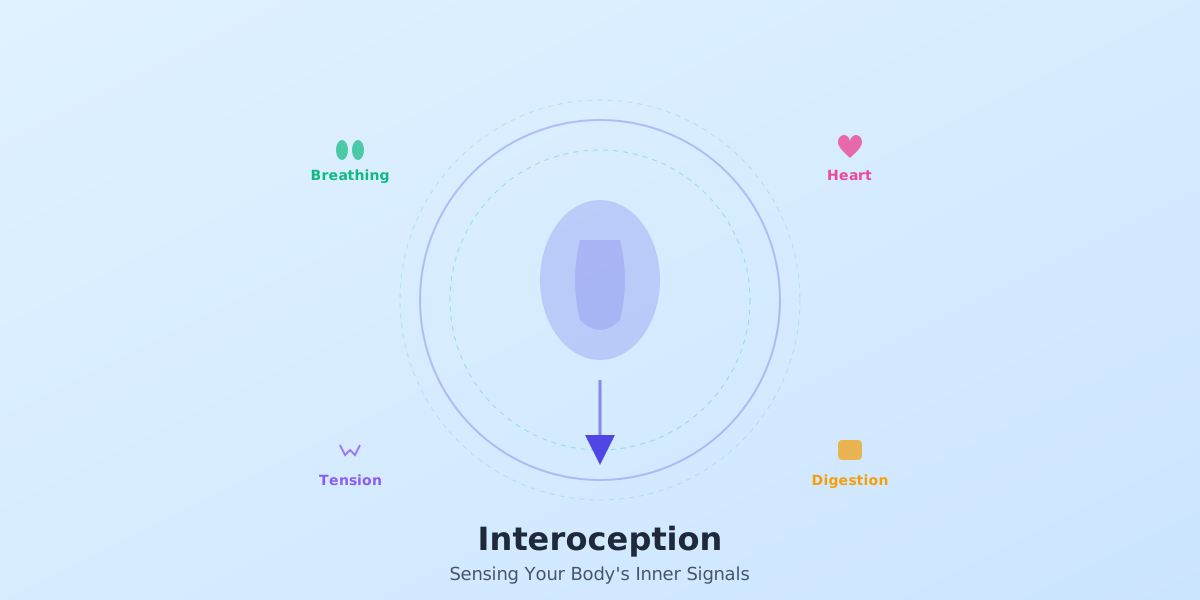
Interoception forms the foundation of emotional regulation, stress response, and mental health. When you can read your body's signals accurately, you catch anxiety early, recognize when stress is building, and respond before your nervous system spirals into dysregulation.
This guide explores the science of interoception, how it affects your health, and practical techniques to strengthen your body awareness and reclaim control of your emotional and physical wellbeing.
What Is Interoception?
Interoception is the process by which your nervous system senses, interprets, and integrates signals originating from inside your body. These signals come from your organs, muscles, glands, and immune system—providing a moment-to-moment map of your internal physiological state. Unlike external sensory systems (sight, hearing, touch), interoception operates largely outside conscious awareness, continuously monitoring blood pressure, heart rate, digestion, hormone levels, and tissue damage.
Not medical advice.
Interoception differs from proprioception (awareness of body position in space). While proprioception tells you where your limbs are, interoception tells you how your internal systems are functioning. Together, they create body awareness—your ability to consciously attend to and interpret what's happening in and around your physical form.
Surprising Insight: Surprising Insight: About 80% of the vagus nerve—your brain's primary communication highway to internal organs—carries information from your body upward to your brain, not downward from brain to body. Your internal signals are constantly informing your consciousness.
The Interoceptive Pathway: From Body to Brain
Shows how internal body signals travel through the vagus nerve to the brainstem (nucleus tractus solitarii), then to the thalamus, insula, and anterior cingulate cortex for processing and emotional response.
🔍 Click to enlarge
Why Interoception Matters in 2026
Mental health diagnoses—anxiety disorders, depression, eating disorders, and trauma—increasingly are understood as disorders of interoception. When your interoceptive accuracy (ability to correctly detect bodily signals) or interoceptive sensibility (conscious awareness of those signals) becomes dysregulated, your nervous system loses its ability to self-regulate. This creates a feedback loop: you misinterpret body signals, anxiety escalates, and stress hormones flood your system without clear internal reference point to guide return to calm.
In 2026, burnout, chronic stress, and anxiety remain epidemic in high-income countries. Remote work, constant connectivity, and information overload leave most people disconnected from their body's needs and signals. Interoceptive training—learning to read and respond to internal signals—has emerged as a foundational intervention for anxiety management, emotional resilience, and stress recovery.
Additionally, interoception is essential for decision-making. Your gut feelings, intuitions, and body-based wisdom are actually complex interoceptive processes. Neuroscience shows that people with stronger interoceptive awareness make better personal decisions, navigate conflicts more effectively, and build stronger relationships through clearer emotional communication.
The Science Behind Interoception
The primary brain region responsible for interoception is the insula cortex (or insular cortex), a hidden area deep within your brain. When neurosurgeon Wilder Penfield electrically stimulated the insula in the 1950s, patients reported curious internal sensations: an upset stomach, fear in the chest, or a general sense of unease. This discovery revealed that the insula is the brain's main hub for processing internal body signals and translating them into conscious sensation and emotional meaning.
Recent fMRI studies show that interoceptive training—such as body scan meditation or mindfulness practice—physically changes the structure and function of the insula. A 2024 Nature study found that regular interoceptive practice increases gray matter volume in the anterior insula and strengthens connections between the insula and prefrontal cortex (the brain region responsible for emotional regulation and decision-making). This means you can literally rewire your brain to become better at sensing and interpreting your body's signals.
Interoception and Mental Health: The Feedback Loop
Illustrates how poor interoceptive accuracy leads to stress escalation and anxiety, while improved interoception enables early detection and adaptive regulation.
🔍 Click to enlarge
Key Components of Interoception
Interoceptive Accuracy
This is your objective ability to detect bodily signals. It's measured by tasks like the heartbeat detection test, where you count your pulse without feeling it—revealing how well your brain can sense your heart rate without external aids. High interoceptive accuracy means your sensory detection closely matches actual physiological changes. Surprisingly, higher accuracy doesn't always mean better emotional outcomes; some research suggests moderate-to-high accuracy with good regulation is optimal.
Interoceptive Sensibility
This is your subjective awareness and beliefs about internal sensations. It's your tendency to focus on and notice bodily changes. Someone with high sensibility may be highly aware of minor stomach sensations, while someone with low sensibility might not notice significant changes. Sensibility is influenced by personality, anxiety traits, and past experiences—not just objective accuracy.
Vagal Tone and the Polyvagal System
Your vagus nerve carries most interoceptive signals from body to brain. Vagal tone—the strength and flexibility of vagal signaling—directly correlates with emotional regulation capacity. People with higher vagal tone recover from stress faster, have lower baseline anxiety, and show greater emotional resilience. Vagal tone can be measured via heart rate variability (HRV), and it can be improved through breathing practices, singing, cold water exposure, and physical exercise.
The Insula-Prefrontal Connection
The relationship between your insula (sensation detection) and prefrontal cortex (conscious regulation) determines whether you're overwhelmed by bodily signals or can respond adaptively to them. Strong connectivity between these regions predicts lower anxiety, better decision-making, and emotional stability. Mindfulness meditation specifically strengthens this connection.
| Dimension | Dysregulated Interoception | Optimal Interoception |
|---|---|---|
| Body Signal Detection | Misses subtle signals or catastrophizes normal changes | Accurately detects and contextualizes signals |
| Emotional Response | Anxiety, hypervigilance, or dissociation | Calm recognition with adaptive response |
| Decision Making | Second-guesses gut feelings, anxiety-driven choices | Trusts body wisdom, makes aligned decisions |
| Stress Recovery | Prolonged cortisol elevation, slow return to calm | Quick activation and deactivation of stress response |
How to Apply Interoception: Step by Step
- Step 1: Start with the body scan: Lie down or sit comfortably. Systematically move attention through your body from toes to head, noticing sensations without judgment. Spend 2-3 minutes—this is foundational interoceptive practice.
- Step 2: Practice heartbeat awareness: Place your hand on your chest or wrist. Feel your heartbeat for 1-2 minutes. Notice how your breath, movements, or emotions change your heart rate. This trains your insula to recognize cardiac signals.
- Step 3: Use breath as an anchor: Notice the sensation of breath entering your nostrils, filling your lungs, and leaving your body. Breathing is highly interoceptive—your nervous system constantly monitors respiratory patterns to detect threat or safety.
- Step 4: Create a body signal vocabulary: Label sensations with specific words: 'tightness in chest,' 'warm energy in belly,' 'tingling in hands.' Precise language strengthens the brain's ability to process and respond to signals.
- Step 5: Notice emotion-body pairs: Before reacting to a stressful situation, pause and scan for body sensations. What physical changes accompany your anxiety? Anxiety recognition improves when you can locate it physically first.
- Step 6: Practice the 5-4-3-2-1 grounding technique: Name 5 things you see, 4 you feel (touch), 3 you hear, 2 you smell, 1 you taste. This externally grounded practice retrains interoceptive attention.
- Step 7: Track your heart rate variability: Use a smartwatch or HRV app to monitor your autonomic balance. Seeing your HRV improve with practice reinforces the neural changes happening in your brain.
- Step 8: Use progressive muscle relaxation: Systematically tense and release muscle groups. This creates clear interoceptive signals—you learn to consciously detect the difference between tension and relaxation.
- Step 9: Try cold water exposure: Brief cold exposure (cold shower, ice bath, cold splash) activates your interoceptive system and vagus nerve, building vagal tone and stress resilience over time.
- Step 10: Combine interoception with movement: Yoga, tai chi, or slow walking with body awareness integrates interoceptive learning with proprioceptive awareness, creating whole-body consciousness.
Interoception Across Life Stages
Young Adulthood (18-35)
In young adulthood, your interoceptive system is highly developed but often disconnected due to high stress, social media distraction, and information overload. Young adults commonly report anxiety, decision paralysis, and difficulty recognizing their own needs. Building interoceptive awareness during this stage prevents long-term dysregulation and builds emotional foundations for decades ahead. Starting with simple breathing and body scan practices in your 20s and 30s creates neural habits that persist.
Middle Adulthood (35-55)
Middle adulthood brings multiple competing demands—career pressure, family responsibilities, caregiving for aging parents. Interoceptive dysregulation peaks in this stage, often manifesting as burnout, chronic stress, and somatic symptoms (headaches, digestive issues). However, middle-aged adults often have greater motivation to invest in self-care. Interoceptive training combined with lifestyle changes (exercise, sleep, nutrition) yields rapid improvements in stress recovery and decision-making clarity.
Later Adulthood (55+)
Later adulthood brings natural changes in interoceptive signaling: hormonal shifts, medication effects, and age-related changes in nervous system sensitivity. However, older adults often report improved body awareness and reduced anxiety when interoceptive practices are maintained. Regular interoceptive practice (meditation, body awareness) in later adulthood supports continued cognitive function, emotional stability, and quality of life. Maintaining vagal tone through gentle movement and social connection becomes increasingly protective against age-related cognitive decline.
Profiles: Your Interoception Approach
The Overthinker
- Grounding in sensation rather than thought
- Distinction between worried thoughts and actual body signals
- Permission to trust body over anxious mind
Common pitfall: Over-analyzing body sensations, interpreting normal changes as threats, getting stuck in anxiety loops
Best move: Use the 5-4-3-2-1 grounding technique when anxiety escalates. Shift from mental analysis to physical sensation. Label: 'I think X, and my body feels Y. Both are information, not truth.'
The Disconnector
- Systematic body awareness training
- External accountability for practice
- Permission to start small (2-3 minutes daily)
Common pitfall: Pushing through physical signals, chronic dissociation from body needs, ignoring stress until burnout happens
Best move: Start with guided body scans (apps like Insight Timer). Set phone reminders for three 1-minute breathing checks daily. Track progress with an app to build motivation.
The Stress Carrier
- Vagal tone building practices
- Lifestyle support for nervous system recovery
- Understanding of HPA axis dysregulation
Common pitfall: Holding stress chronically, poor sleep, digestive issues, constant physical tension, slow recovery from stressors
Best move: Combine interoceptive practice with lifestyle: exercise 30 min daily, cold water exposure, consistent sleep schedule. Use heart rate variability tracking to see improvements motivate continued practice.
The Body Whisperer
- Advanced practices (somatic therapy, yoga)
- Use of body awareness for decision-making
- Integration with emotional and spiritual practices
Common pitfall: Over-identification with body signals, using gut feelings to avoid thinking, spiritual bypassing of real problems
Best move: Develop balanced interoception: practice combining body signals with logical analysis. Use body wisdom for clarity, but verify with reason. Explore somatic therapies and advanced meditation.
Common Interoception Mistakes
Mistake #1: Assuming high interoceptive accuracy always means better mental health. Research shows that moderate accuracy paired with good emotion regulation is actually optimal. Too much signal sensitivity without regulatory capacity leads to health anxiety and hypervigilance. Focus on balanced awareness plus adaptive response, not just sensitivity.
Mistake #2: Practicing interoception without nervous system regulation support. Increased body awareness without tools to respond adaptively can increase anxiety. Always pair interoceptive practice with vagal regulation techniques (breathing, movement, cold exposure) so your nervous system has a way to respond to detected signals.
Mistake #3: Believing interoception replaces medical care. Body signals are information, not diagnosis. Persistent physical symptoms require medical evaluation. Interoception improves how you interpret and respond to signals, but it doesn't substitute for professional healthcare when needed.
The Interoception Learning Curve: Common Pitfalls
Shows how beginners often swing between disconnection and hypervigilance before finding the balanced middle path of accurate, adaptive interoception.
🔍 Click to enlarge
Science and Studies
Recent neuroscience research demonstrates the profound impact of interoceptive training on mental health and emotional resilience. A 2025 meta-analysis published in Scientific Reports examined 29 randomized controlled trials on mindfulness meditation and interoception, finding small-to-medium positive effects across all studies. Mindfulness-based stress reduction programs show the largest effects, particularly for anxiety and trauma-related conditions.
- Interoception and Pain (NIH 2024): Research shows that interoceptive accuracy moderates the relationship between chronic pain and psychological distress, suggesting interoceptive training could reduce suffering from persistent pain conditions.
- Vagus Nerve Stimulation (Frontiers in Psychology 2020): Non-invasive vagus nerve stimulation reliably activates the insula and strengthens interoceptive processing, offering a tool for therapeutic intervention in anxiety and depression.
- MBSR and PTSD (Journal of Clinical Psychology 2021): A randomized clinical trial found that mindfulness-based stress reduction improves interoceptive sensibility, with improvements in interoception mediating symptom relief in PTSD.
- Insula Plasticity (Nature Translational Psychiatry 2024): Interoceptive training increases gray matter volume in the anterior insula and strengthens connectivity to prefrontal regions, showing physical brain changes supporting emotional regulation.
- HPA Axis Dysregulation (PMC NIH 2025): Altered interoceptive processing is increasingly recognized as a core feature of HPA axis dysregulation in anxiety, depression, and chronic stress conditions.
Your First Micro Habit
Start Small Today
Today's action: Pause three times today (morning, midday, evening) and spend 60 seconds doing a rapid body scan: notice one sensation in your head, chest, and belly. That's it. No judgment, no fixing—just noticing.
This three-minute daily practice trains your insula to recognize internal signals and builds the neural foundation for interoceptive awareness. Small, consistent practice creates bigger brain changes than occasional long sessions.
Keep quitting habit apps after a missed day? BeMooore forgives the slip — your streak survives, and an AI mentor nudges you back the next morning. Free on iOS.
Quick Assessment
How well do you currently notice physical sensations like your heartbeat, stomach tension, or muscle tightness?
Your answer reveals your baseline interoceptive sensibility. Answers 1-2 suggest room for building awareness; answer 3 is ideal; answer 4 suggests focusing on regulation alongside sensitivity.
When stressed, how quickly do you notice physical changes and recover?
This measures your practical interoceptive capacity for stress management. Answers 1-2 indicate need for vagal tone building; answer 3 is optimal; answer 4 suggests balancing sensitivity with regulation skills.
How often do you trust your gut feelings to make decisions?
This reflects integration of interoceptive awareness with decision-making. Answers 1-2 suggest developing trust in body wisdom; answer 3 is balanced; answer 4 is optimal integration.
Take our full assessment to get personalized recommendations.
Discover Your Style →Next Steps
Start with the micro habit today: three 60-second body scans. Tomorrow, add one conscious breathing check during a stressful moment. Notice what happens when you pause and feel instead of react. These small moments rewire your brain and build the neural foundation for lasting change.
Consider your profile from the section above—The Overthinker, Disconnector, Stress Carrier, or Body Whisperer. Which felt most familiar? Lean into practices designed for your profile. If you're a Disconnector, use app reminders and tracking. If you're an Overthinker, focus on external grounding. If you're a Stress Carrier, prioritize vagal tone building. Personalization accelerates progress.
Get personalized guidance with AI coaching.
Start Your Journey →Research Sources
This article is based on peer-reviewed research and authoritative sources. Below are the key references we consulted:
Related Glossary Articles
Frequently Asked Questions
Can interoception training help with anxiety disorders?
Yes. Research consistently shows that improved interoceptive awareness and vagal tone reduce anxiety severity. By catching physiological stress signals early and responding with regulation techniques, you interrupt the anxiety escalation cycle. Interoceptive training works best combined with cognitive therapy and lifestyle changes.
How long before I notice improvements in interoceptive awareness?
Many people notice initial changes in 1-2 weeks with consistent daily practice. Brain changes show up in neuroimaging at 8-12 weeks. Full integration into daily decision-making and stress response typically takes 3-6 months of regular practice. Consistency matters more than intensity.
What's the difference between interoception and mindfulness?
Mindfulness is general present-moment awareness of all experiences (thoughts, sensations, emotions, environment). Interoception is specifically internal body awareness. Mindfulness includes interoception, but interoception is more focused. Many mindfulness practices (body scan, breath awareness) strengthen interoception directly.
Can I have too much interoceptive awareness?
Yes. Excessive interoceptive sensitivity without emotional regulation capacity leads to health anxiety, hypervigilance, and somatic symptom disorders. The goal is balanced interoception: accurate signal detection paired with adaptive regulatory responses. Always combine interoceptive practice with vagal regulation and cognitive skills.
Are some people naturally better at interoception than others?
Yes—genetics, early attachment experiences, and nervous system sensitivity all contribute to baseline interoceptive capacity. However, interoceptive accuracy is highly trainable. Everyone can improve through consistent practice, regardless of starting point. Your personality may influence how you experience interoception, but awareness skills are universal.
Take the Next Step
Ready to improve your wellbeing? Take our free assessment to get personalized recommendations based on your unique situation.
- Discover your strengths and gaps
- Get personalized quick wins
- Track your progress over time
- Evidence-based strategies