Brand Building
Brand building is the strategic process of creating and establishing a memorable identity for your business that resonates with your target audience. In today's competitive marketplace, your brand is not just your logo or company name—it's the sum of every interaction customers have with your business. It's the emotional connection that transforms a casual buyer into a loyal advocate. When done effectively, consistent brand building increases trust, recognition, and customer loyalty while dramatically boosting revenue. Studies show that businesses with strong brands experience 33% higher revenue growth, and 87% of consumers spend more with brands they trust. Whether you're launching a startup, growing an established business, or building a personal brand, mastering the art of brand building is essential to long-term success and sustainable wealth creation.
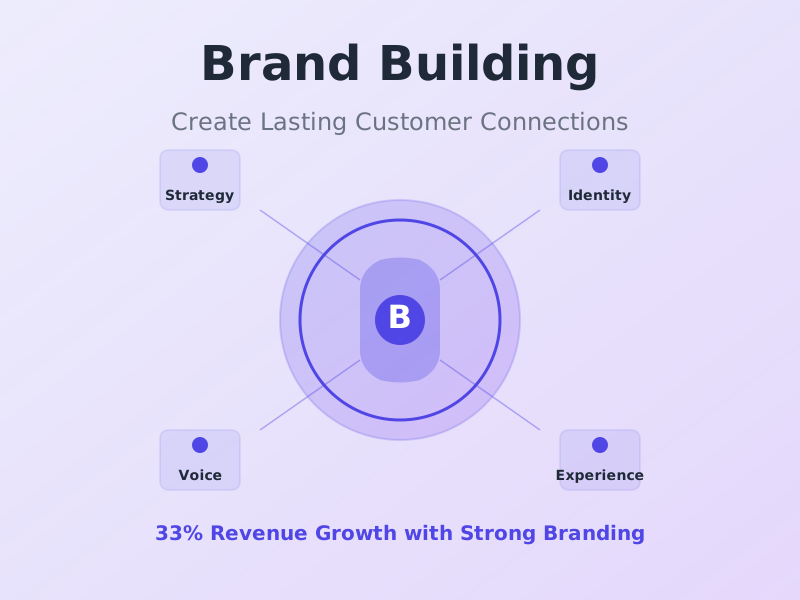
Brand building is not a one-time project but an ongoing commitment to communicating your unique value in consistent, authentic ways.
The most successful brands leverage a combination of strategic positioning, visual consistency, authentic storytelling, and customer-centered values to create lasting emotional connections.
What Is Brand Building?
Brand building is the strategic and continuous process of developing and strengthening your brand to create awareness, trust, and loyalty among your target audience. It involves far more than just designing a logo or choosing a color scheme. True brand building encompasses defining your mission and values, understanding your ideal customer, crafting your unique value proposition, and consistently delivering on the promises you make. It's about creating a perception and emotional experience that distinguishes your business from competitors and motivates customers to choose you repeatedly. Brand building works through every touchpoint: your website, social media, customer service, product quality, employee behavior, packaging, and even how you answer your phone. Each interaction either strengthens or weakens your brand. The goal is to make your brand so strong and recognizable that customers think of you first when they need your product or service, and they recommend you to others without hesitation.
Not medical advice.
Brand building is fundamentally about trust. Research shows that 72% of consumers research a brand before making a purchase decision, and trust is the primary factor determining whether they buy. Your brand is the vehicle through which you build and communicate that trust. In 2025, mission-based branding has emerged as the most impactful branding trend, with seven out of ten consumers wanting to buy from brands that reflect their personal values. This shift means successful brand builders focus on authentic storytelling that aligns their business with customer values, not just product features.
Surprising Insight: Surprising Insight: Consistent branding increases business revenue by up to 33%, and consumers with an emotional connection to a brand have over 306% higher lifetime value compared to average customers.
The Brand Building Ecosystem
Visual representation of how all brand elements work together to create customer perception and loyalty
🔍 Click to enlarge
Why Brand Building Matters in 2026
In an increasingly crowded digital marketplace, brand building has become more critical than ever. With countless competitors offering similar products and services, the differentiator is often your brand. Consumers face decision paralysis with endless choices, and they default to brands they know and trust. A strong brand cuts through the noise and creates a shortcut to purchase decisions. In 2026, where content consumption is fragmented across dozens of platforms and attention spans are shrinking, maintaining consistent brand presence and messaging across all channels requires intentional, strategic brand building.
The financial impact of brand building is undeniable. Established brands can command premium pricing because customers perceive greater value. They enjoy lower customer acquisition costs because satisfied customers refer others. They experience longer customer lifespans because loyalty develops over time. Companies that invest strategically in brand building outperform competitors by significant margins—in growth rate, profitability, and market valuation. For entrepreneurs and business owners, brand building is one of the highest-ROI investments you can make.
Beyond revenue, strong brands create competitive advantages that are difficult to replicate. A patent expires, but a beloved brand lasts for generations. This is why major corporations invest billions in brand maintenance. For wealth builders and entrepreneurs, brand building is a wealth creation tool. Your brand becomes an asset that appreciates over time, can be licensed or sold, and provides resilience during economic downturns.
The Science Behind Brand Building
Brand building leverages principles from psychology, behavioral economics, and neuroscience. When customers encounter your brand consistently—through visual design, messaging, and customer experience—their brains begin to create neural pathways associated with your brand. This is called the mere-exposure effect: familiarity breeds preference. Each positive interaction strengthens these neural connections, making your brand more top-of-mind when customers need your category. This explains why consistent visual branding (colors, fonts, imagery) is so effective—visual recognition happens faster than rational evaluation in the brain.
The emotional component of branding is equally powerful. Research in neuroscience shows that emotions drive decision-making more than rational factors. Brands that create emotional connections—through storytelling, values alignment, or positive customer experiences—trigger dopamine release in customer brains, creating pleasure associations. These emotional connections motivate repeat purchases and advocacy. This is why mission-based branding is trending: customers want to feel good about their choices and align with brands that match their values. The brands that master this emotional dimension build the most loyal, profitable customer bases.
How Brand Building Drives Customer Loyalty
The pathway from initial brand awareness to customer advocacy and lifetime value
🔍 Click to enlarge
Key Components of Brand Building
Brand Strategy and Positioning
Before you design a logo or write a tagline, you need a clear brand strategy. This starts with defining your mission (why your business exists), your vision (where you want to go), and your values (what principles guide you). Your strategy identifies your target audience, defines what makes you different from competitors (your unique value proposition), and determines how you'll communicate that difference. Positioning is where your brand sits in the customer's mind relative to competitors. A tech startup positioning itself as 'affordable and friendly' occupies different mental real estate than one positioning as 'premium and innovative.' Clarity here drives every subsequent decision.
Visual Identity and Consistency
Your visual brand—logo, color palette, typography, imagery style, and design elements—creates instant recognition. Studies show people process visuals 60,000 times faster than text. Your colors, fonts, and design choices trigger brand recall before customers even read your copy. Consistency across all platforms (website, social media, packaging, advertising, employee uniforms) strengthens brand recognition. When customers see your brand color or logo, they should instantly know it's you. This requires brand standards documentation that guides everyone creating brand content.
Voice, Messaging, and Storytelling
Your brand voice is the personality expressed through your words. Is your brand professional or playful? Authoritative or collaborative? Serious or humorous? Your voice should be consistent across all written communication—website copy, social media posts, emails, customer service interactions. Storytelling is how you connect emotionally. Rather than just listing features, successful brands tell stories about how they solve customer problems, the values they stand for, or the transformation they enable. These stories create emotional resonance and memorable brand experiences.
Customer Experience and Delivery
Your brand promise must be delivered consistently across every customer touchpoint. From your first marketing impression through post-purchase support, every interaction shapes brand perception. If your brand promises 'exceptional customer service' but customers experience long wait times, your brand credibility suffers. The brands customers love deliver on their promises reliably. This means training employees, designing processes, and creating systems that ensure consistent quality. Your brand is only as strong as the worst experience a customer has with it.
| Brand Element | Description | Impact on Business |
|---|---|---|
| Brand Strategy | Clear mission, values, positioning, and differentiation | Guides all decisions; creates competitive advantage |
| Visual Identity | Logo, colors, fonts, imagery, and design consistency | 60% faster visual processing; improved recall |
| Voice & Messaging | Consistent personality and storytelling approach | Emotional connection; customer loyalty |
| Customer Experience | Consistent delivery on brand promises | Repeat purchases; positive word-of-mouth |
| Online Presence | Website, social media, reviews, content | Discoverability; credibility; engagement |
How to Apply Brand Building: Step by Step
- Step 1: Define your mission, vision, and core values that guide your business. Be specific about why your business exists and what principles drive your decisions.
- Step 2: Research and define your ideal customer avatar. Understand their demographics, challenges, desires, values, and where they spend time online.
- Step 3: Analyze your competitive landscape. Identify 3-5 direct competitors and determine what you do differently. This becomes your unique value proposition.
- Step 4: Develop your positioning statement. Write a clear, concise statement of how your brand is different and why customers should choose you.
- Step 5: Create your visual identity system. Design your logo, choose your color palette (typically 2-3 primary colors), select fonts, and define imagery style guidelines.
- Step 6: Write your brand voice guide. Define your personality—is it friendly or professional? Authoritative or approachable? Document tone, language preferences, and communication style.
- Step 7: Design your website as the hub of your online brand presence. Ensure it clearly communicates your value proposition, shows your personality, and provides excellent user experience.
- Step 8: Build your social media presence across platforms where your target audience spends time. Post consistently (at least 2-3 times weekly) and engage with your community.
- Step 9: Create content that tells your brand story and solves customer problems. Blog posts, videos, podcasts, or other formats that establish expertise and attract your ideal customers.
- Step 10: Consistently deliver on your brand promise through excellent customer experience. Every team member should understand and embody your brand values in customer interactions.
Brand Building Across Life Stages
Young Adulthood (18-35)
Young adults launching startups or building personal brands have a major advantage: time and adaptability. At this stage, focus on establishing a clear brand identity and building presence across digital platforms where your audience congregates. Don't overcomplicate your brand—simple, authentic, and consistent is more important than polished and perfect. This is the time to experiment with different platforms and messaging to find what resonates. Many successful young entrepreneurs build personal brands as their business brand, leveraging authenticity and relatability as core strengths. Build your audience and community now; monetization can follow.
Middle Adulthood (35-55)
Established business owners and professionals in this stage often have credibility and proven results—valuable brand assets. Focus on leveraging this authority through thought leadership, speaking engagements, published content, and strategic partnerships. This is when brand refinement becomes important. Your brand may have evolved since inception; ensure it accurately reflects your current business, values, and positioning. Many successful middle-stage brands evolve from founder-centric to company-centric to handle succession. Invest in professional brand design and messaging if you haven't already. Consider how to scale your brand—licensing, franchising, or expansion to new markets.
Later Adulthood (55+)
At this stage, lifetime brand building often becomes about legacy and longevity. Focus on succession planning—how will your brand survive and thrive under new leadership? Document your brand guidelines, values, and story for continuity. Consider writing a book, creating video content, or establishing your brand's place in industry history. Many successful later-stage entrepreneurs transition from active roles to advisory positions, leveraging their brand wisdom. Your brand is now a valuable business asset that can generate ongoing revenue through licensing, consulting, or selling to the right buyer who will honor your values.
Profiles: Your Brand Building Approach
The Ambitious Startup Founder
- Clear differentiation from established competitors
- Authentic storytelling that connects emotionally
- Agility to test and adapt messaging based on market feedback
Common pitfall: Trying to appeal to everyone instead of speaking clearly to target audience
Best move: Start with a narrow, well-defined audience and build community deeply before expanding
The Growing Business Owner
- Scalable brand systems and guidelines
- Consistency across all customer touchpoints
- Professional visual identity and messaging
Common pitfall: Brand identity that worked for a small operation may not scale effectively
Best move: Invest in brand audit and professional refresh; document systems for team consistency
The Personal Brand Builder
- Authentic positioning that showcases genuine expertise
- Consistent content that demonstrates value and builds trust
- Strategic platform presence where ideal clients congregate
Common pitfall: Trying to maintain presence everywhere instead of mastering one or two platforms
Best move: Focus deeply on 1-2 platforms and create content that demonstrates expertise
The Legacy Business Preserving Brand
- Heritage narrative that honors past while embracing future
- Succession planning that ensures brand continuity
- Modernization that appeals to new generations without losing core identity
Common pitfall: Holding too tightly to past approach while market expectations evolve
Best move: Balance heritage storytelling with contemporary relevance; involve next generation in evolution
Common Brand Building Mistakes
One of the biggest brand building mistakes is inconsistency. Changing your logo, colors, or messaging frequently confuses customers and dilutes brand recognition. Your brain loves consistency—it creates neural pathways. Every time you change your brand significantly, you reset that process. Yet many business owners constantly tweak their branding, thinking freshness matters more than consistency. In reality, consistency compounds brand recognition. Choose your brand direction thoughtfully and stick with it for at least 3-5 years.
Another critical error is failing to deliver on your brand promise. You can have beautiful design and compelling messaging, but if your customer experience doesn't match your promises, your brand credibility collapses. A brand that promises 'exceptional quality' but ships inferior products destroys trust. A brand promising 'fast service' but responding slowly to inquiries creates disappointment. Your brand is only as strong as your operational execution. Many businesses invest heavily in marketing and brand promotion while neglecting the actual customer experience that creates loyalty.
A third major mistake is trying to appeal to everyone. Narrow, specific positioning is far more powerful than vague, broad positioning. A brand that tries to be everything to everyone ends up being nothing special to anyone. The most successful brands are very clear about who they serve and what problem they solve. They have the courage to say 'this isn't for everyone.' This clarity makes them magnetic to their ideal customers and gives them competitive advantage.
Common Brand Building Mistakes and Solutions
Identify and avoid the most frequent errors that undermine brand building efforts
🔍 Click to enlarge
Science and Studies
Research consistently demonstrates the powerful impact of strategic brand building on business performance. Studies from Nielsen, HubSpot, Ipsos, Canva, and leading business schools provide evidence-based insights into how brands drive customer behavior and business growth.
- Nielsen research (2024) shows that consistent branding increases business revenue by up to 33% and that 87% of consumers spend more with brands they trust
- Ipsos 2024 poll reveals that 70% of consumers want to buy from brands reflecting their personal values, making mission-based branding the top trend
- Harvard Business Review research indicates consumers with emotional connection to brands have 306% higher lifetime value
- Frontify brand building studies confirm that 72% of consumers research a brand before purchasing, with trust as the primary deciding factor
- Shopify 2024 research shows that businesses with strong brand identity command 20% price premiums and enjoy lower customer acquisition costs
Your First Micro Habit
Start Small Today
Today's action: Audit your brand across three customer touchpoints—your website, social media, and email signature. Check that your logo, colors, and messaging are consistent. Document one area of inconsistency and fix it today. This 10-minute action begins the journey toward stronger brand consistency.
Brand building starts with awareness of your current brand presence. Spotting inconsistencies reveals where brand perception may be weakened. Small fixes compound—each consistency improvement strengthens brand recognition by a tiny margin, and these margins compound into significant impact.
Track your brand audits and improvements with our app to build momentum.
Quick Assessment
How would you describe your current brand presence?
Your answer reveals how far along you are in brand building. Even strong brands benefit from periodic audits and refinement.
What's your biggest challenge with brand building right now?
Identifying your specific challenge helps you focus efforts where they'll have the most impact on your brand growth.
Which aspect of brand building excites you most?
Your interest reveals your natural strengths in brand building—leverage these as you develop your brand strategy.
Take our full assessment to get personalized recommendations.
Discover Your Style →Next Steps
Brand building is one of the most valuable investments you can make in your business or career. It directly impacts revenue, customer loyalty, and long-term wealth creation. The brands that dominate their markets all have something in common: they started with clear strategy, executed consistently, and stayed committed to delivering on their promises. You don't need a massive budget—you need clarity, consistency, and persistence. Start today by doing the one micro habit we suggested: audit your current brand presence and fix one inconsistency. This small action begins building momentum toward a stronger, more powerful brand.
The most successful brand builders view their brand as a strategic asset worthy of protection and growth. They make strategic decisions through the lens of 'Is this consistent with our brand?' They empower their teams to embody brand values. They continuously listen to customer feedback and evolve their brand relevance while maintaining core identity. This combination of clarity, consistency, and evolution creates the conditions for explosive brand growth. Your strong brand is waiting—start building it today.
Get personalized guidance with AI coaching.
Start Your Journey →Research Sources
This article is based on peer-reviewed research and authoritative sources. Below are the key references we consulted:
Related Glossary Articles
Frequently Asked Questions
How long does it take to build a strong brand?
Brand building is ongoing, but you can establish brand recognition within 3-6 months with consistent effort. Trust and loyalty take longer—typically 1-2 years of consistent positive experience. Major brands continue investing in brand building for decades. The key is consistency from day one; initial brand decisions compound over time.
Can I rebrand my existing business?
Yes, but it's risky because you're asking existing customers and stakeholders to adjust their brand perception. Successful rebrands usually maintain core elements (colors, values) while refreshing others. Gradual transitions work better than sudden changes. Communicate the 'why' behind the rebrand clearly. Some of the most successful rebrands honor the brand's heritage while making it relevant to new audiences.
How much should I invest in brand building?
This varies by business stage and industry. Startups should invest 5-10% of revenue in brand development and marketing. Established businesses often allocate 7-15% of revenue to brand maintenance and growth. The ROI is typically 3-5x within the first year and continues to compound. Successful brands view brand investment as revenue generation, not expense.
Is personal branding necessary for my business?
It depends on your business model. For service-based businesses, consulting, and professional services, personal branding is often essential—clients buy from people they trust. For product-based businesses, it's less critical but still valuable. Many successful entrepreneurs build both personal and company brands. Personal brand often gives your company credibility and helps with customer acquisition.
How do I know if my brand building efforts are working?
Track metrics like brand awareness (social media followers, search volume for your name), customer loyalty (repeat purchase rate, net promoter score), and financial impact (revenue, customer lifetime value). Conduct periodic brand audits to measure consistency. Use surveys to assess customer perception of your brand. Most brand benefits appear within 6-12 months of consistent effort, showing in customer retention and referrals.
Take the Next Step
Ready to improve your wellbeing? Take our free assessment to get personalized recommendations based on your unique situation.
- Discover your strengths and gaps
- Get personalized quick wins
- Track your progress over time
- Evidence-based strategies