Affiliate Marketing
Imagine earning money while you sleep. A customer discovers your review of a productivity app, clicks your link, makes a purchase, and suddenly you've earned a commission. Affiliate marketing transforms your influence—whether that's a blog, YouTube channel, or social media following—into a sustainable income stream. You're not selling inventory or managing customers. You're simply connecting people who need solutions with companies that provide them, earning a percentage of each successful sale. This is the foundation of digital wealth-building in 2026.
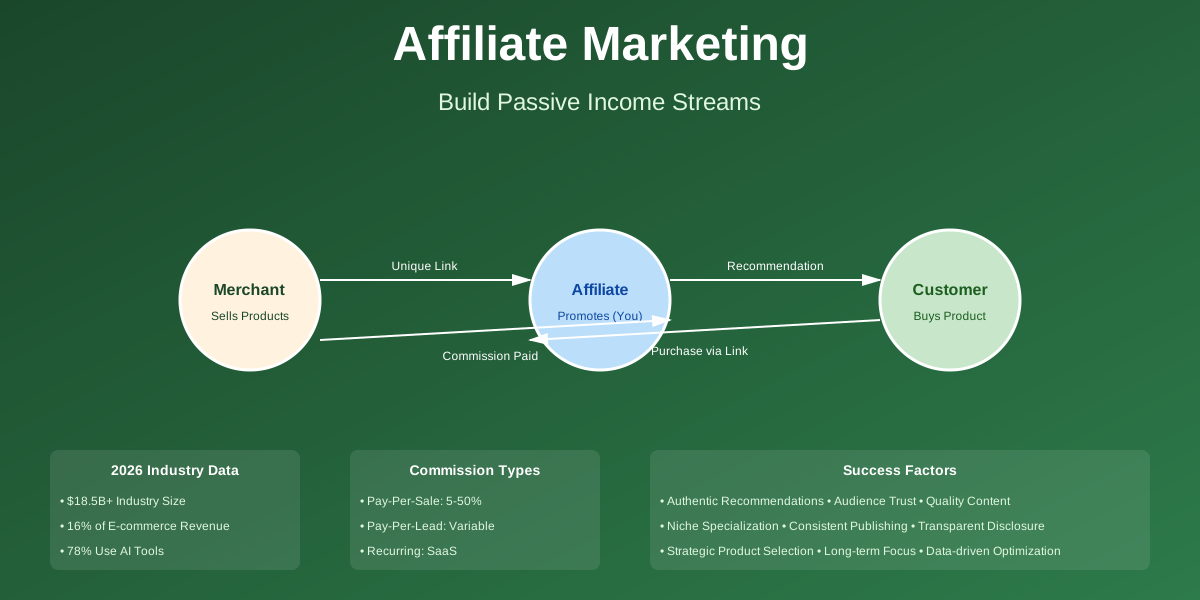
The affiliate marketing industry has exploded from $5.2 billion in 2017 to $18.5 billion in 2024, with projections reaching $32 billion by 2031. More than 16% of all e-commerce revenue now flows through affiliate channels.
Whether you're a content creator, blogger, podcaster, or business owner looking to diversify income, affiliate marketing offers a low-risk entry into passive income generation without the overhead of traditional business models.
What Is Affiliate Marketing?
Affiliate marketing is a performance-based model where you earn commissions by promoting products or services. You receive a unique tracking link—your affiliate link—that contains a code identifying you as the source. When someone clicks that link and completes a desired action (usually a purchase), you earn a percentage of the sale.
The ecosystem has three core players: the merchant (company selling the product), the affiliate (you—the promoter), and the customer (the end user). Each benefits. The merchant gains a new customer they might not have reached. You earn commission without inventory risk. The customer discovers a solution through someone they trust.
Not medical advice.
This model thrives on transparency and trust. You disclose your affiliate relationship because authenticity drives conversions. People buy from people they believe in. The best affiliate marketing is never about pushing products. It's about solving problems for your audience and earning when they benefit.
Surprising Insight: Surprising Insight: In 2025, 78% of affiliate marketers now use AI tools to identify trending products, predict customer behavior, and forecast commission opportunities three to six months before mainstream markets saturate.
How Affiliate Marketing Works
The complete flow from customer click to commission payment
🔍 Click to enlarge
Why Affiliate Marketing Matters in 2026
The shift toward digital commerce has created unprecedented opportunity. Consumers now research online before purchasing, creating moments where affiliate content becomes the deciding factor. A well-written review, honest comparison, or product tutorial directly influences buying decisions.
Affiliate marketing matters because it aligns incentives. You only profit when customers succeed. This eliminates the pressure of traditional sales jobs where you push products regardless of fit. Instead, you build a reputation by recommending things that genuinely solve problems for your audience.
In 2026, specialization wins over scale. An affiliate with 5,000 highly engaged followers in a specific niche often generates more commission than someone with 50,000 general followers. This democratizes income. You don't need millions of followers to earn substantial passive income. You need quality audience connection and authentic recommendations.
The Science Behind Affiliate Marketing
Consumer psychology drives affiliate marketing success. Research shows that people rely on three psychological factors when making purchase decisions: social proof (seeing others validate a product), credibility (trusting the source), and perceived value (believing they're getting a fair deal). When an affiliate you trust recommends something, all three align.
Studies from SpringerLink and ResearchGate show that affiliate credibility significantly impacts perceived risk. Higher credibility reduces purchase anxiety. Additionally, reviews act as social proof, with consumers citing other buyers' experiences as key decision factors. Affiliate marketers essentially amplify this natural trust mechanism.
Consumer Decision Framework for Affiliate Purchases
Five stages showing how customers move from problem identification to post-purchase behavior
🔍 Click to enlarge
Key Components of Affiliate Marketing
Affiliate Networks and Programs
Affiliate networks connect merchants with affiliates. Amazon Associates is the largest (with millions of products available), but specialized networks like ShareASale, CJ Affiliate, Awin, and Impact serve specific industries. Choose programs aligned with your audience's interests. A fitness influencer benefits from supplement and equipment brands, while a tech blogger partners with software and gadget companies.
Commission Structures
Commission models vary significantly. Pay-Per-Sale (PPS) is most common—you earn 5-30% of the sale price depending on industry (retail: 5-15%, digital products: 20-50%, SaaS: 15-30% recurring). Pay-Per-Lead (PPL) pays for actions like signups, free trials, or downloads. Pay-Per-Click (PPC) pays whenever someone clicks your link, regardless of purchase. Tiered commissions reward higher performers with increased rates as they drive more sales.
Tracking and Cookies
Affiliate links contain unique identifiers that track customer behavior. When someone clicks your link, a small file called a tracking cookie is stored on their device. This cookie typically lasts 24-90 days (depending on the program). If the customer purchases within that window, you receive credit even if they didn't immediately buy. This is how affiliate marketing remains passive—you're paid for referrals that convert after days or weeks.
Content Platforms
Affiliate marketing works across any platform with an audience. Blogs and websites attract search traffic and allow long-form content like detailed reviews and comparisons. YouTube is ideal for product demonstrations, unboxings, and tutorials. Podcasts build loyal audiences through audio storytelling. Instagram and TikTok enable short-form authentic content and trend-riding. Email lists provide direct access to engaged subscribers. LinkedIn reaches professional audiences for B2B products. Choose platforms where your audience already spends time and where you can maintain consistency.
| Industry | Typical Rate | Best For |
|---|---|---|
| E-commerce Retail | 5-15% | General products, brand partnerships |
| Digital Products | 20-50% | Software, courses, templates, e-books |
| SaaS/Subscriptions | 15-30% recurring | Apps, services, premium tools |
| Travel | 5-15% | Hotels, flights, experiences |
| Finance | 10-25% | Credit cards, investments, insurance |
| Health/Wellness | 10-30% | Supplements, fitness, wellness products |
How to Apply Affiliate Marketing: Step by Step
- Step 1: Choose your niche: Pick an area where you have knowledge or genuine interest. Your audience can sense authenticity. A product reviewer in fitness succeeds because they actually train. A software reviewer succeeds because they use the tools daily. Narrow niches outperform broad ones—'productivity software for freelancers' beats 'random products.'
- Step 2: Build an audience: Create valuable content consistently. Write blogs that rank in Google search. Record YouTube videos that solve specific problems. Share authentic posts on social media. Send useful emails to your list. Growth takes months, not weeks. Focus on value, not sales. When people trust your advice, affiliate links convert naturally.
- Step 3: Join relevant affiliate programs: Research programs that serve your audience. If you blog about fitness, join supplement and equipment affiliate programs. If you discuss business tools, join software affiliate networks. Read program terms carefully—some limit promotional methods, others offer higher commissions to successful affiliates.
- Step 4: Select products you genuinely recommend: This is critical. Only promote products you've used and believe in. Your reputation is your asset. Recommending poor products for quick commissions destroys trust and long-term earning potential. Successful affiliates recommend fewer products at higher quality standards.
- Step 5: Create authentic content: Write detailed reviews explaining benefits and limitations. Record video tutorials showing products in action. Share honest comparisons highlighting when competitors might be better. Create guides solving problems where your recommended product is a logical solution. This content ranks better and converts higher.
- Step 6: Insert affiliate links naturally: Embed links where they make sense—in product mentions, resource lists, comparison tables, and CTAs. A review naturally has an 'Get it now' link. A guide listing tools includes affiliate links for each. Never force links awkwardly. Readers notice and trust decreases.
- Step 7: Disclose your affiliate relationship: This is legally required and ethically necessary. Include a disclosure like 'This article contains affiliate links, which earn us commission at no extra cost to you.' Place it near your affiliate links or in a prominent header. Transparency builds trust—readers who understand you profit from recommendations still click if they believe in your advice.
- Step 8: Track your performance: Monitor which content and products convert best. Most affiliate programs provide dashboards showing clicks, conversions, and earnings. Analyze patterns. Maybe product reviews convert better than comparisons. Maybe email performs better than social media. Double down on what works.
- Step 9: Optimize for higher conversion: A/B test different affiliate links, call-to-text variations, and placement options. Improve your content based on what actually converts. Some audiences respond to urgency ('Limited time offer'), others to social proof ('10,000+ people trusted this recommendation'). Test and refine.
- Step 10: Scale with consistency: Growth compounds over time. Month one might generate $50 in commission. Month six might generate $500. Year two might exceed $5,000. This passive scaling happens only when you consistently create quality content and maintain authentic affiliate relationships. Success isn't overnight, but it's sustainable.
Affiliate Marketing Across Life Stages
Young Adulthood (18-35)
This stage offers maximum flexibility to experiment. You can start affiliate marketing alongside a job, testing different niches without financial pressure. Time is your advantage—compounding takes years. Start a blog or YouTube channel in your interest area. Build an audience of 1,000-5,000 followers while learning. Monthly earnings might be $100-500 initially, but you're building assets. As you advance in your career, you reduce hours at your job and allocate more time to content, watching earnings accelerate. Many successful affiliates started in their 20s and replaced traditional income by 30.
Middle Adulthood (35-55)
This stage brings credibility and established audiences. Your professional expertise becomes affiliate content gold. A marketing manager naturally discusses marketing software. A project manager reviews productivity tools. An accountant explains financial products. You've likely built networks and email lists from decades in an industry. These become affiliate goldmines. Many affiliates in this stage earn $2,000-15,000 monthly. You're transitioning from side income to genuine passive revenue. This is the consolidation phase—focus on products that matter most to your audience rather than constantly testing new niches.
Later Adulthood (55+)
This stage allows affiliate marketing to become primary income if desired. Retirees often leverage decades of expertise through affiliate content. A retired teacher creates educational course affiliate content. A retired executive reviews business software and consulting services. Your network is massive. Your credibility is undeniable. Many affiliates 55+ earn $5,000-30,000+ monthly. Affiliate income supplements retirement savings, increases travel budgets, and creates purpose. The beauty is flexibility—work completely remotely at your own pace.
Profiles: Your Affiliate Marketing Approach
The Strategic Specialist
- Deep niche expertise to build authority
- Consistent content production system
- High-trust audience connection in specific area
Common pitfall: Staying in one niche too long when it stops growing or waiting for 'perfect' content before publishing anything
Best move: Pick a profitable niche where you have unfair advantage (professional background, passion, unique perspective), then commit to 12 months of content before evaluating. Build depth, not breadth.
The Content Creator
- Multiple distribution channels to reach audience
- Strong storytelling and multimedia skills
- Ability to find angles other creators miss
Common pitfall: Creating content randomly without research—publishing on whim instead of data, jumping between topics, losing audience coherence
Best move: Focus on one platform first until you have 10,000 followers or subscribers, then expand. Quality over quantity. Build audience loyalty before monetizing with affiliates.
The Email List Builder
- Strong copywriting to convert subscribers
- Regular email sequences that maintain engagement
- Segmented lists for targeted affiliate offers
Common pitfall: Treating email like social media—inconsistent sends, over-promotion, failing to deliver value between pitches
Best move: Start capturing emails immediately through opt-in incentives (free guides, exclusive content). Send valuable emails weekly. When you have 5,000+ subscribers, affiliate recommendations convert at 5-15% rates. Email is pure gold for affiliate income.
The Authority Builder
- Credible expertise or certifications in your field
- Speaking and networking opportunities
- Ability to position yourself as the go-to expert
Common pitfall: Overcomplicating affiliate strategy—trying to recommend everything to everyone, diluting your expert positioning
Best move: Become the expert in one problem space. Write the definitive guides. Speak at conferences. Build partnerships with brands in your space. Exclusive relationships with premium brands pay better than competing on Amazon Associates.
Common Affiliate Marketing Mistakes
The biggest mistake new affiliates make is recommending products they haven't tested. You lose trust the moment your first affiliate recommendation disappoints a reader. That reader not only won't buy from your future links—they'll tell others your recommendations suck. Trust takes years to build and seconds to destroy.
The second mistake is choosing products for commission rates instead of audience fit. Yes, a 50% commission on an expensive product sounds great. But if your audience doesn't need it, no one clicks. You earn more from a 10% commission on a perfectly matched product than a 50% commission on something irrelevant. Let your audience's needs drive product selection.
The third mistake is hiding affiliate relationships or burying disclosures. This violates FTC regulations and destroys trust when discovered. Transparency isn't an obstacle—it's credibility insurance. Readers who understand you profit from recommendations still click if they trust your judgment. Readers who feel deceived never return.
Affiliate Marketing Mistake Impact Timeline
How mistakes compound and recovery takes longer than success
🔍 Click to enlarge
Science and Studies
Research consistently validates affiliate marketing effectiveness. Studies from SpringerLink and ResearchGate confirm that affiliate marketing directly influences product sales and consumer purchasing choices. The psychology is clear: when trusted sources recommend products, conversion rates increase 10-40% compared to generic advertising.
- SpringerLink (2024): 'Understanding the Impact of Affiliate Marketing on Consumer Behavior: A Comprehensive Analysis' shows affiliate credibility significantly reduces perceived risk in purchase decisions.
- ResearchGate: Multiple peer-reviewed studies confirm that social proof through affiliate recommendations increases purchase intent and customer lifetime value.
- Influencer Marketing Hub: Meta-analysis of affiliate program data shows that specialized affiliates with 5,000 engaged followers in a niche outperform general influencers with 50,000 followers.
- Shopify Research (2024-2025): Affiliate marketing now drives 16% of all e-commerce revenue. Performance-based compensation aligns affiliate and merchant interests, creating sustainable partnerships.
- Post Affiliate Pro (2025): Analysis of 10,000+ affiliate programs shows recurring commissions in SaaS create the highest lifetime earnings for affiliates, with top performers earning $50,000-500,000+ annually.
Your First Micro Habit
Start Small Today
Today's action: Spend 30 minutes researching one affiliate program in your area of interest. Read three affiliate success stories. Sign up for one affiliate network (Amazon Associates, ShareASale, or CJ Affiliate). Add one product to your wishlist to review.
Starting small removes friction. You're not committing to full-scale content creation. You're just exploring. This 30-minute investment clarifies if affiliate marketing excites you. Many discover their niche through this exploration rather than endless planning.
Keep quitting habit apps after a missed day? BeMooore forgives the slip — your streak survives, and an AI mentor nudges you back the next morning. Free on iOS.
Quick Assessment
How do you currently feel about promoting products or services to your audience?
Your comfort level with promotion affects which platforms suit you best. Uncomfortable recommenders might start with written reviews (less personal). Natural recommenders thrive with video or speaking engagements (more personal).
What type of content do you most enjoy creating or sharing?
Your content strengths determine your affiliate platform. Writers excel with blogs and email. Visual thinkers excel with YouTube. Storytellers excel with podcasts or TikTok. Match content type to platform for sustainable output.
What's your primary motivation for affiliate marketing?
Your motivation determines timeline and strategy. Supplemental income allows experimentation. Full-time transition requires more consistency. Passive income thinking requires systems that work without you constantly producing.
Take our full assessment to get personalized recommendations aligned with your wealth-building goals.
Discover Your Style →Next Steps
Your first action is specific: Choose one niche or topic area where you have knowledge or genuine interest. This isn't your final decision. This is your starting point for the next 12 months. Pick something where you could write 100 articles or record 50 videos without running out of ideas. Your niche determines your audience, your products, and ultimately your income potential.
Your second action is platform selection: Where does your niche audience already spend time? If your niche is 'productivity software for freelancers,' your audience is on Twitter, LinkedIn, and reading blogs. Start there, not TikTok. If your niche is 'beginner fitness,' YouTube, Instagram, and TikTok are stronger. Match platform to audience for sustainable output and growth.
Get personalized guidance with AI coaching to build your wealth through passive income.
Start Your Journey →Research Sources
This article is based on peer-reviewed research and authoritative sources. Below are the key references we consulted:
Related Glossary Articles
Frequently Asked Questions
How much money can I actually make with affiliate marketing?
It varies dramatically by niche, platform, and effort. Most beginners earn $0-100 in month one. After 6-12 months of consistent content, successful affiliates earn $500-2,000 monthly. After 2-3 years, many earn $3,000-10,000+ monthly. Top affiliates in profitable niches earn $50,000-500,000+ annually. The key is that there's no ceiling—earnings scale with audience and content quality.
Do I need a large audience to make money with affiliate marketing?
No. An affiliate with 5,000 highly engaged followers in a specific niche often earns more than someone with 50,000 general followers. What matters is audience trust and relevance. A dedicated audience of 1,000 people genuinely interested in fitness supplements converts better than 10,000 random followers. Quality over quantity always wins in affiliate marketing.
Which platform is best for affiliate marketing—blog, YouTube, email, social media?
Each platform has strengths. Blogs rank in Google search and drive consistent traffic. YouTube shows products in action and builds loyal communities. Email converts higher than any platform. Social media builds trends and reaches niche audiences. The best platform is where you can sustain consistent publishing. Start with one where you naturally create content, then expand to others.
How do I disclose affiliate relationships without killing conversions?
Transparency actually improves conversions among quality audiences. People appreciate honesty. Place clear disclosures near your affiliate links—'This link earns us commission at no cost to you' or 'I recommend this product because I genuinely use it; I earn commission if you purchase.' Readers who understand you profit still click if they trust your judgment. You lose conversions with readers who already distrust you, but you build loyalty with those who value honesty.
Is affiliate marketing ethical?
Absolutely, when done right. You're solving customer problems by matching them with solutions. The merchant gets customers they wouldn't reach. The customer finds products through a trusted source. You earn fair compensation. Everyone wins. Ethics issues arise when you recommend garbage products for commissions or hide affiliate relationships. Transparent, quality-focused affiliate marketing is deeply ethical and valuable.
Take the Next Step
Ready to improve your wellbeing? Take our free assessment to get personalized recommendations based on your unique situation.
- Discover your strengths and gaps
- Get personalized quick wins
- Track your progress over time
- Evidence-based strategies