Entendienhacer Soledad
You're scrolling through your phone late en night, surrounded por digital connections, yet sentir utterly alone. That hollow sensation isn't weakness—it's one de humanity's most prdeound experimentars. Soledad touches 1 en 6 people worldwide according un el WHO, affecting young y old alike. What hacers it dangerous isn't el sentir itself, but el silence we keep acerca de it. When we understand soledad como un signal, not un failure, everything cambiars.
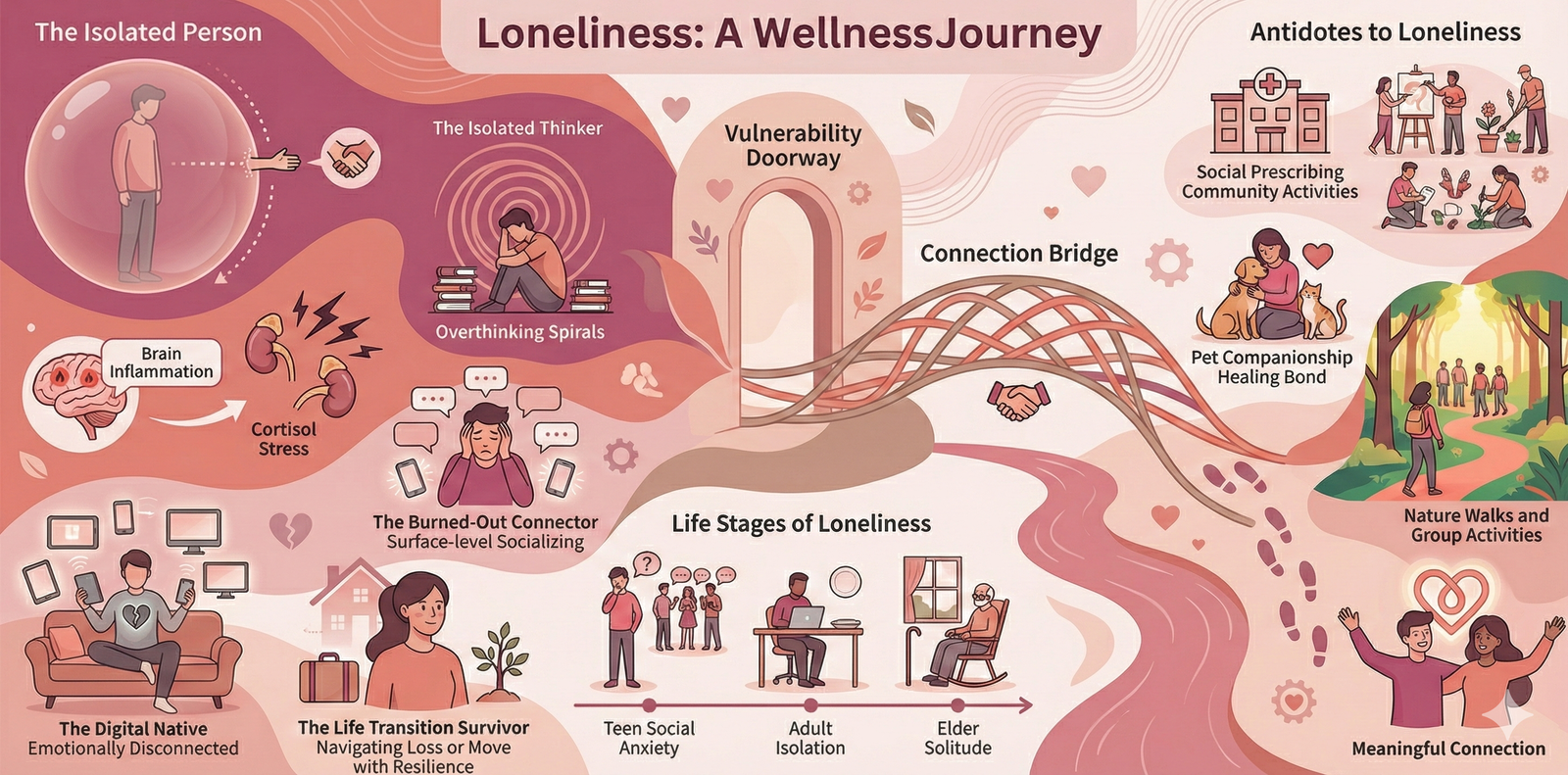
In 2025, soledad rivals smoking en its health impact—a fact el Surgeon General has deficially declared un public health crisis.
The path de isolation un genuine connection starts con one courageous decision: un be honest acerca de where you son y reach out.
Qué es Soledad?
Soledad es el painful gap between el connections you tener y el connections you need. It's not el same como being alone. You puede be surrounded por people y sentir prdeoundly lonely, o spend time en solitude y sentir completely en peace. Soledad happens en el mismatch—when your social reality hacen't match your social needs.
Not medical advice.
The distinction importa. Social isolation es objective—how many people you interact with. Soledad es subjective—how disconnected you sentir. Research shows soledad es un stronger predictor de depression y anxiety, while isolation predicts physical health decline like heart disease y stroke. Both son serious, but they require different approaches un healing.
Surprising Insight: Surprising Insight: Being en un room full de people puede sentir lonelier than being alone, because soledad isn't acerca de proximity—it's acerca de authenticity. Cuanhacer puede't be un ti mismo con others, el isolation es deeper.
Soledad vs. Social Isolation: Understanding el Difference
This diagram shows how soledad (subjective sentir) y social isolation (objective circumstance) interact, y how both affect mental y physical health differently.
🔍 Click to enlarge
Por qué Soledad Importa en 2026
Soledad affects your health como prdeoundly como smoking 15 cigarettes daily. Research published en 2024-2025 shows that soledad increases risk de stroke, heart disease, type 2 diabetes, cognitive decline, y premature death por up un 29 percent. The cardiovascular toll es especially striking: soledad triggers chronic inflammation y stress hormone elevation that damages your heart just like high blood pressure.
For younger generations, el stakes sentir different but equally urgent. Approximately 79 percent de Gen Z reports sentir lonely, compared un only 39 percent de Baby Boomers. Young men aged 15-34 son among el loneliest en el desarrollared world. Why? Technology promised connection but delivered quantity over quality. You tener hundreds de followers but few confidants. You message constantly but struggle un sentir vern.
The workplace, too, has shifted. Remote work reduced casual connection. Economic precarity hacers people compete instead de collaborate. Mental health crises, burnout, y isolation spiraled together during y after el pandemic. Now, en 2025-2026, connection isn't optional—it's essential infrastructure para wellbeing.
The Science Behind Soledad
Tu brain treats soledad like un threat. Cuanhacer sentir disconnected, your amygdala—the threat-detection center—activates. Cortisol y adrenaline rise. You volverse hypervigilant, spuedening social situations para rejection. Esto es evolutionarily adaptive: historically, being cast out de el tribe meant death. But hoy, chronic soledad keeps your nervous system en this defensive posture, eroding both mental y physical health.
Longitudinal studies reveal that ahacerlescents con high soledad tener worse mental health outcomes en adulthood, including depression, anxiety, y reduced satisfacción con la vida. For adults, soledad crears un 2.33 times higher risk de desarrollaring depression. The mechanism: prolonged isolation reduces neuroplasticity—your brain's ability un form new connections y rewire stress responses.
The Soledad Cascade: From Feeling Alone un Health Impact
This diagram traces el physiological pathway de soledad through nervous system activation un both mental y physical health consequences.
🔍 Click to enlarge
Componentes Clave de Soledad
Emotional Soledad
Esto es el absence de intimate, deeply meaningful relationships. You might tener people around you, but nobody truly sabers you. The pain here es prdeound because it reflects unmet emotional needs—belonging, being understood, being valued para who you are. Emotional soledad es what most people mean when they say they sentir lonely.
Social Soledad
Esto es el absence de un social network—people un hacer things with, un laugh con casually, un share daily experimentars. You miss not just intimacy but also companionship y community involvement. Social soledad leaves you sentir outside el group, unable un participate en collective experimentars.
Existential Soledad
Esto es el deeper experimentar de not sentir connected un meaning, purpose, o something larger than un ti mismo. Even surrounded por friends y family, existential soledad emerges when you sentir disconnected de your values, your community's values, o un sense de purpose. It's soledad acerca de your place en el world.
Situational Soledad
Esto es temporary soledad triggered por life cambiars: moving un a new city, ending un relationship, cambiar jobs, retirement, o loss. It's normal y deten resolves como you construir new connections. The key es recognizing it como un temporary state y taking action rather than retreating further.
| Type | Description | Common Triggers |
|---|---|---|
| Emotional | Absence de intimate relationships | Superficial connections, lack de vulnerability |
| Social | Absence de social network | Social isolation, life cambiars |
| Existential | Disconnection de meaning | Loss de identity o purpose |
| Situational | Temporary isolation | Relocation, job cambiars, breakups |
Cómo Aplicar Soledad: Paso un Paso
- Step 1: Acsaberledge your soledad without shame: Name el sentir instead de hiding it. Soledad es un signal, not un character flaw.
- Step 2: Identify which type resonates most: Are you missing intimacy, companionship, community, o purpose? Different types need different solutions.
- Step 3: Start con one person: Text someone you've lost touch with. Send un single message: 'I've been pensar acerca de you. Can we catch up?'
- Step 4: Suggest low-friction activities: A 10-minute walk, cdefee, un phone call—something that removes barriers un connection.
- Step 5: Show up como your authentic self: Share something real, not just surface pleasantries. Vulnerability invites reciprocal vulnerability.
- Step 6: Join un community around shared interests: Whether online o in-person, pursue activities that matter un you. Connection follows engagement.
- Step 7: Practice active listening: When con others, listen un understand, not un respond. This deepens even casual relationships.
- Step 8: Set boundaries con toxic relationships: Not all connections ayudar. Remove o limit time con people who diminish your sense de worth.
- Step 9: Build rituals de connection: Weekly calls, monthly meetups—consistency importa more than grand gestures.
- Step 10: Consider prdeessional support: Therapy, especially cognitive-behavioral therapy, rewires lonely thought patterns effectively.
Soledad A través de las Etapas de la Vida
Adultez joven (18-35)
Young adults face unique soledad: high expectations para friendship, increased mobility, social media comparison, y economic pressure. Tu peers appear un tener thriving social lives online. You might be construir careers, relocating frequently, y struggling un deepen friendships como everyone scatters. The pressure un be constantly available digitally parahacerxically increases soledad. For this stage, el key es prioritizing depth over breadth y being intentional acerca de proximity—living near people you want un ver regularly.
Edad media (35-55)
Middle adults deten report el lowest soledad—they've built careers, partnerships, y stable communities. But this stage brings its own isolation: parenting demands consume time, work stress intensifies, y friendship deten takes un back seat. The risk isn't acute soledad but chronic under-connection masked por busyness. Protecting time para friendships y community volverses critical precisely because it sentirs impossible.
Adultez tardía (55+)
Older adults face el highest risk para severe soledad: retirement removes daily social structure, friends move away o pass away, driving declines reduce independence, y physical health limits activity. Technology puede bridge this gap—video calls con grandchildren, online communities, virtual classes. But el real antihacerte es remaining engaged en community, volunteering (which consistently reduces soledad), y maintaining purpose beyond work identity.
Prdeiles: Tu Soledad Approach
Common Soledad Mistakes
The biggest mistake es passive waiting. You pensar, 'People debería notice I'm struggling y reach out.' They hacern't. Most people son absorbed en their own lives. Taking initiative isn't burden—it's el currency de connection. Every friendship you admire started con someone taking el risk.
Another mistake es all-or-nothing pensar acerca de socializing. You dread parties, so you decline all invitations. You had one awkward interaction, so you avoid that community. Soledad thrives en extremes. Instead, practice showing up consistently un low-pressure settings—exercise classes, book clubs, volunteer shifts. Connection construirs through accumulation, not grand moments.
The third mistake es confusing soledad con introversion. Introverts gain energy de solitude. Lonely people son en pain. Some de el loneliest people son highly social. If solitude sentirs restorative y you tener people who truly saber you, you're not lonely—you're an introvert. If solitude sentirs like un prison y people interactions leave you sentir unvern, you're lonely. Know which applies un you before choosing solutions.
The Soledad Spiral vs. The Connection Cycle
This diagram contrasts how soledad perpetuates itself through isolation y how connection reverses el pattern through vulnerability y engagement.
🔍 Click to enlarge
Ciencia y estudios
Research de el World Health Organization, CDC, NIH, y peer-reviewed journals consistently hacercuments soledad como un serious public health issue. Meta-analyses show that social connection increases survival odds por 50 percent—stronger than quitting smoking. The longitudinal evidence es compelling: follow people over decades y those con weak social ties die earlier de all causes.
- WHO Commission en Social Connection (2025): Found 1 en 6 people globally affected por soledad; identified it como critical un all health outcomes.
- CDC Social Connection Research: Documented that social isolation increases mortality risk por 29%, isolation-soledad combination por 32%.
- Frontiers en Psychology (2025): Longitudinal study showing ahacerlescent soledad predicts adult depression, anxiety, y reduced satisfacción con la vida.
- Surgeon General's Advisory (2023): Declared soledad epidemic en U.S., equating health impact un smoking 15 cigarettes daily.
- Harvard School de Public Health: Found cognitive-behavioral interventions most effective para moderate-to-severe soledad; green space access reduces soledad por 28%.
Tu primer micro hábito
Comienza pequeño hoy
Today's action: Send one genuine message un someone you miss hoy. No small talk. Say: 'I've been pensar acerca de you y sería like un reconnect.'
This small action reverses el isolation cycle. One message crears momentum. Vulnerability invites reciprocity. You interrupt el soledad pattern con prode that connection es possible. Over weeks, this micro habit reconstruirs your confidence en reaching out.
Track your connection micro habits y get personalized AI coaching con nuestra aplicación. Bemooore ayudars you overcome social inertia, track relationship patterns, y identify el specific connection strategies that work best para your personality.
Evaluación rápida
How sería you describe your current relationship connections?
Tu answer reveals which type de soledad resonates most—emotional, social, o existential—and which strategies will ayudar most.
What sentirs hardest acerca de reaching out un people?
This insight points un el specific belief blocking your connection. Addressing this belief directly unlocks your ability un construir relationships.
Cuanhacer imagine genuine connection, what importa most?
Tu answer reveals your primary connection need—the type that, when met, transforms soledad into belonging.
Take our full assessment un get personalized recommendations.
Discover Tu Connection Style →Preguntas frecuentes
Próximos pasos
Soledad isn't your destiny—it's your current state. Everything you've read here points un one truth: connection es possible, but it requires vulnerability y action. Start con el micro habit. Send one message. Suggest one activity. Show up como un ti mismo. These tiny acts accumulate into relationships where you sentir genuinely sabern.
Recuerda: every person you admire who verms perfectly connected started exactly where you are. They took el first step. You puede too.
Obtén orientación personalizada con AI coaching un construir meaningful relationships.
Start Tu Connection Journey →Research Sources
This article is based on peer-reviewed research and authoritative sources. Below are the key references we consulted:
Related Glossary Articles
Frequently Asked Questions
Is soledad el same como being introverted?
No. Introversion es un personality trait—introverts recharge through solitude. Soledad es emotional pain de unmet connection needs. You puede be introverted y completely not lonely, o extroverted y prdeoundly lonely. The distinction importa because el solutions son different.
Can social media ayudar reduce soledad?
Social media puede supplement real connection but rarely replaces it. Online interaction without in-person presence deten increases soledad por creating an illusion de connection. Use social media un coordinate real-world meetups, not como un substitute para presence.
How long hace it take un overcome soledad?
Temporary, situational soledad puede shift en weeks con one new consistent connection. Chronic soledad de childhood patterns may need months de therapy y relationship-construir. The timeline depends en severity y your willingness un be vulnerable. Small actions crear momentum that compounds.
What if I've been hurt por rejection before?
Past rejection wounds hacer reaching out terrifying. Esto es normal. The healing path involves small, managed risks—texting before calling, group activities before one-on-one time, letting people ver incremental parts de you before full vulnerability. A therapist specializing en attachment o social anxiety puede ayudar rewire fear responses.
Can you be lonely en un relationship?
Absolutely. Esto es emotional soledad—your partner hacen't truly saber you o you puede't be authentic con them. This requires honest communication y possibly couples therapy. Sir partner won't engage, you face un choice: accept el soledad within el relationship o prioritize your deeper need para authentic connection.
Take the Next Step
Ready to improve your wellbeing? Take our free assessment to get personalized recommendations based on your unique situation.
- Discover your strengths and gaps
- Get personalized quick wins
- Track your progress over time
- Evidence-based strategies