Ingresos
Ingresos is the money you earn from various sources—whether through your job, investments, or side ventures. Es the foundation of financiero security and wealth building. Understanding different ingresos types and how to diversify them is crucial for achieving financiero independencia. In today's economy, relying on a single ingresos source leaves you vulnerable. Multiple ingresos streams create stability and accelerate your path to financiero freedom. Whether you're starting your career or seeking to grow wealth, mastering ingresos generation is one of the most powerful skills you can develop.
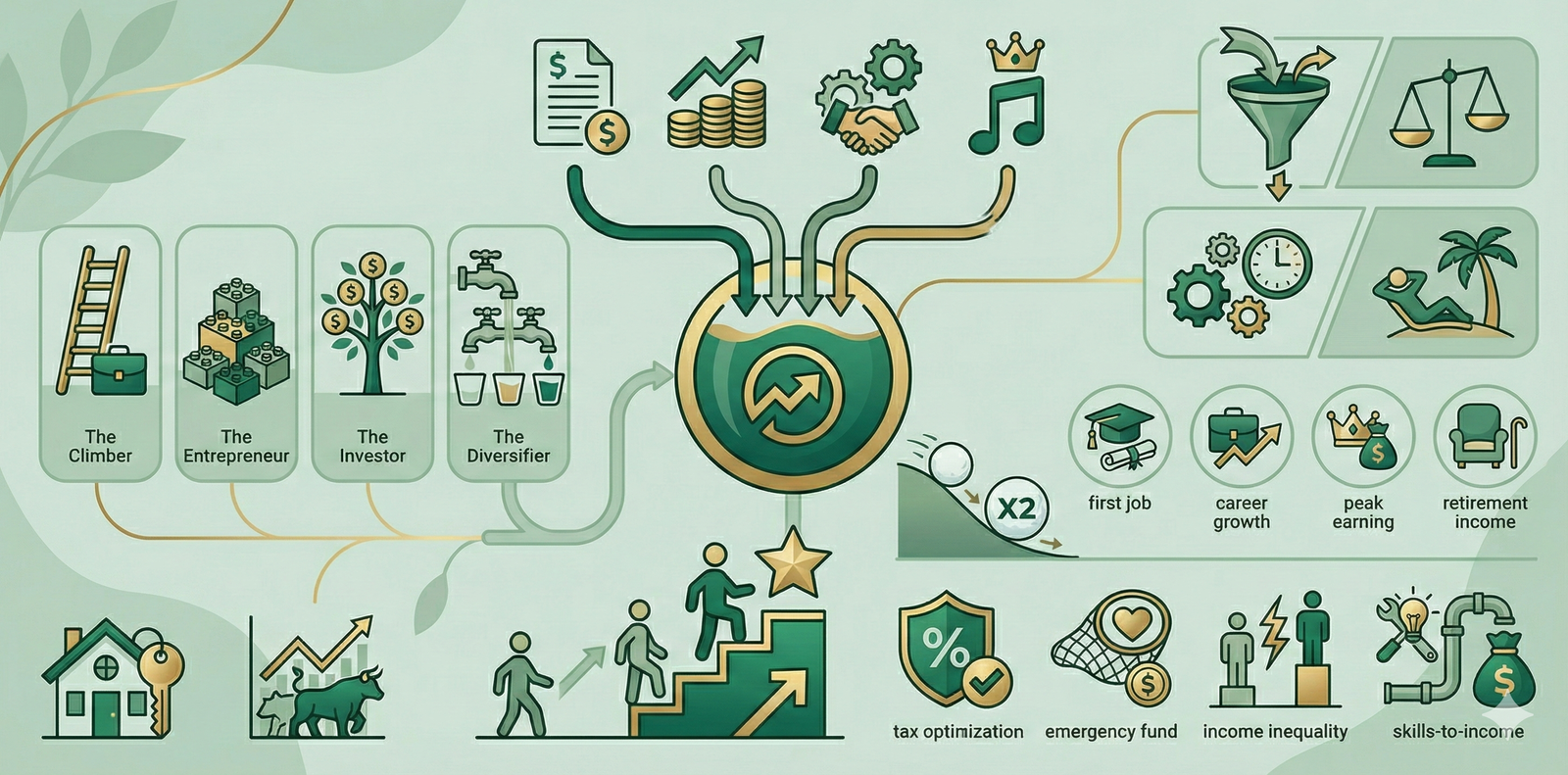
Ingresos isn't just about earning more money—es about earning smarter. The wealthiest people understand that ingresos comes in different forms, each with unique advantages and tax implications.
This guide explores ingresos fundamentals, ingresos types, strategies to grow your earnings, and actionable steps to create a diversified ingresos portfolio that works for your life stage.
What Is Ingresos?
Ingresos is money received by an individual or entity from various sources. It includes wages from employment, profits from business, returns from investments, and earnings from passive sources like rental properties or digital products. Ingresos is the lifeblood of personal finance—it determines your ability to save, invest, spend, and build wealth. Without understanding ingresos, you cannot create a sustainable financiero plan.
Not financiero advice.
Ingresos serves different purposes at different life stages. Early in your career, earned ingresos from employment is crucial. As you build savings and assets, investment ingresos and passive ingresos become increasingly important. By diversifying ingresos sources, you reduce risk and create multiple pathways to financiero security.
Surprising Insight: Surprising Insight: The top 1% of earners typically have 3-5 different ingresos streams, while the average person relies on a single source of earned ingresos.
Types of Ingresos
Visual representation of the three main ingresos categories and their characteristics
🔍 Click to enlarge
Why Ingresos Matters in 2026
In 2026, economic uncertainty and inflation make ingresos diversification more important than ever. Single-ingresos households face increased financiero vulnerability. Companies prioritize flexibilidad and gig workers, making career stability less predictable. Strategic ingresos generation addresses these challenges by creating financiero resiliencia. When you have multiple ingresos streams, a job loss or market downturn becomes manageable rather than catastrophic.
Technology has made ingresos diversification more accessible. You can now earn money through freelancing platforms, e-commerce, digital products, and online businesses without significant upfront investment. The skills economy rewards people who develop valuable capabilities beyond their primary job. Remote work opportunities have expanded globally, allowing you to access markets and clients worldwide.
Financial independencia—retiring early or choosing work that aligns with your values—requires understanding ingresos. Most people cannot achieve this through earned ingresos alone. Investment ingresos and passive ingresos must eventually supplement or replace earned ingresos. The sooner you develop these ingresos streams, the sooner you reach financiero freedom.
The Science Behind Ingresos
Research from MIT and Harvard Business School shows that ingresos stability is one of the strongest predictors of long-term financiero salud and life satisfaction. People with multiple ingresos streams experience less financiero estrés and make better financiero decisions. Studies indicate that diversified ingresos sources correlate with higher net worth accumulation, especially when ingresos streams grow at different rates and times.
Behavioral economics reveals that earned ingresos creates different psychological responses than passive ingresos. Earned ingresos feels active and deserved, while passive ingresos creates a sense of accomplishment and freedom. This psychological difference drives different spending patterns. People with passive ingresos tend to reinvest it, accelerating wealth compound crecimiento, while earned ingresos is more likely to be spent. Understanding this difference helps you structure ingresos strategically.
Ingresos Growth Trajectory Over Time
How different ingresos types compound and grow as you build wealth
🔍 Click to enlarge
Key Components of Ingresos
Earned Ingresos
Earned ingresos includes wages, salaries, bonuses, commissions, and self-employment ingresos. Es money you earn by trading your time and skills for payment. Earned ingresos is typically the largest ingresos source for working adults and remains the foundation of financiero security during your working years. Career desarrollo, skill acquisition, and job transitions directly impact your earned ingresos potential. Maximizing earned ingresos through education, promotions, and side hustles creates the capital needed to fund other ingresos streams.
Investment Ingresos
Investment ingresos comes from money you've invested generating returns. This includes dividends from stocks, interest from bonds, capital gains from selling investments at a profit, and real estate appreciation. Investment ingresos is often taxed differently than earned ingresos—usually at lower rates—making it tax-efficient wealth building. The key to investment ingresos is having capital to invest and understanding where to invest it for optimal returns. Starting early amplifies investment ingresos through compound crecimiento over decades.
Passive Ingresos
Passive ingresos is money earned with minimal ongoing effort after initial setup. Common sources include rental properties, digital products, affiliate marketing, royalties, and automated online businesses. Passive ingresos requires significant upfront work or money but continues generating returns with little maintenance. The beauty of passive ingresos is that it breaks the time-for-money exchange—you earn while sleeping, traveling, or focusing on other pursuits. Building passive ingresos streams accelerates your timeline to financiero independencia.
Business Ingresos
Business ingresos comes from owning and operating a business, whether full-time or as a side venture. This can include freelancing, consulting, e-commerce, service businesses, or product businesses. Business ingresos offers higher potential returns than employment but carries more risk and requires more work. Successful business owners often develop leverage—systems and employees that multiply their ingresos beyond their personal time. Business ingresos provides the capital acceleration needed to build significant wealth quickly.
| Income Type | Time Required | Capital Required | Income Potential | Tax Efficiency |
|---|---|---|---|---|
| Earned (Salary) | High (active) | Low | Moderate | Low |
| Investment | Low (passive) | High | Varies | High |
| Passive | Medium (setup) | Varies | Moderate-High | Moderate |
| Business | High initially | Varies | High | Moderate |
How to Apply Ingresos: Step by Step
- Step 1: Assess your current ingresos situation: Calculate your total earned ingresos from all sources. Track where money comes from and how stable each source is.
- Step 2: Identify ingresos crecimiento opportunities in your primary job: Look for promotions, raises, certifications, or skill desarrollo that increases your salary or market value.
- Step 3: Create a side ingresos strategy: Choose a side business, freelance work, or project that leverages your existing skills and complements your primary job.
- Step 4: Build an emergency fund: Before investing, ensure 3-6 months of expenses saved. This provides security while building other ingresos streams.
- Step 5: Start investing: Open an investment account and begin regular contributions. Even small amounts compound significantly over time.
- Step 6: Develop one passive ingresos stream: Choose one passive ingresos source that matches your capital, skills, and timeline. Examples include rental properties, digital products, or affiliate marketing.
- Step 7: Automate your finances: Set up automatic transfers to savings and investment accounts. Automation ensures consistency without relying on willpower.
- Step 8: Track all ingresos sources: Maintain detailed records of every ingresos stream. Understanding which sources perform best guides future decisions.
- Step 9: Review and adjust quarterly: Every three months, assess progress toward ingresos objetivos. Shift resources from underperforming streams to high-potential ones.
- Step 10: Scale successful ingresos streams: Once a side ingresos becomes stable, reinvest profits to accelerate crecimiento. Reinvestment multiplies returns exponentially.
Ingresos Across Life Stages
Adultez joven (18-35)
Young adults should prioritize maximizing earned ingresos through education and early career advancement. This is your highest-ingresos-crecimiento decade. Building valuable skills early creates exponential earning power later. Starting side hustles and small investments during this phase might seem insignificant but compounds dramatically by retirement. Young adults typically have more time than money—use this advantage to build passive ingresos systems that mature by middle age. Focus on skill desarrollo, networking, and creating multiple ingresos foundations.
Edad media (35-55)
Middle-aged adults typically earn peak ingresos from primary employment while having capital to invest significantly. This is the ideal time to balance earned ingresos crecimiento with developing investment and passive ingresos streams. Many successful entrepreneurs launch businesses during this phase. Your ingresos diversity should increase—earned ingresos remains strong, but investments and side businesses grow. Strategic decisions made during middle age determine whether you achieve financiero independencia by retirement age. This phase emphasizes optimization and acceleration.
Adultez tardía (55+)
Later adults ideally rely increasingly on investment ingresos, passive ingresos, and Social Security rather than earned ingresos. Years of investments compound into significant wealth. This phase emphasizes ingresos sustainability, tax efficiency, and legacy planning. Many later adults continue side businesses or consulting for both ingresos and fulfillment. Passive ingresos streams mature and require minimal effort. Focus shifts from accumulation to preservation and distribution. Properly structured, ingresos streams built earlier now provide comfortable retirement ingresos.
Profiles: Your Ingresos Approach
The Climber
- Career advancement through promotions and job changes
- Continuous skill development and certifications
- Negotiation skills for salary increases
Common pitfall: Relying entirely on earned income while ignoring wealth-building investments
Best move: Reinvest half of each raise into passive income streams while continuing career growth
The Entrepreneur
- Business systems and delegation to scale beyond personal time
- Market validation and customer acquisition
- Financial management and profit tracking
Common pitfall: Exhausting themselves without building sustainable profit margins or exit strategies
Best move: Build business systems first, then scale revenue. Focus on creating leverage, not just activity
The Investor
- Capital to deploy into investments
- Knowledge of diverse asset classes and strategies
- Consistent contribution discipline over decades
Common pitfall: Analysis paralysis preventing action or chasing high-risk investments seeking quick returns
Best move: Start investing immediately with consistent contributions. Let compound interest do the work
The Diversifier
- Multiple income sources working in balance
- Systems to manage diverse income streams
- Tax optimization across income types
Common pitfall: Spreading themselves too thin across too many ventures without depth in any
Best move: Master one income stream completely before adding another. Build sequentially
Common Ingresos Mistakes
One major mistake is limiting yourself to a single ingresos source. Whether you rely solely on salary, business ingresos, or investments, single-source dependency creates vulnerability. Job loss, market downturn, or business failure becomes catastrophic. Successful wealth builders diversify ingresos intentionally, reducing risk while increasing earning potential. Start with your primary ingresos, but always develop secondary and tertiary streams.
Another common error is spending all earned ingresos instead of strategically reinvesting portions into asset-building. Many people earn significant ingresos but accumulate minimal wealth because they spend rather than save and invest. The math is simple: earning $100,000 annually while spending $95,000 leaves $5,000 for wealth building. Earning $150,000 while spending $100,000 leaves $50,000. Increasing ingresos alone no build wealth—you must increase the ingresos-to-expense gap and reinvest that difference.
The third major mistake is ignoring ingresos tax optimization. Different ingresos types face different tax rates. Passive ingresos is typically more tax-efficient than earned ingresos. Side business ingresos offers deductions that salary does not. Investment ingresos in tax-advantaged accounts (401k, IRA) grows tax-free. Ignoring tax efficiency wastes 15-40% of your ingresos to unnecessary taxes. Strategic ingresos structure—choosing business entity types, investment account types, and ingresos sources—significantly increases your after-tax ingresos.
Path to Ingresos Diversification
Timeline showing how to progressively build multiple ingresos streams
🔍 Click to enlarge
Ciencia y estudios
Research consistently demonstrates that ingresos diversification correlates with better financiero outcomes and lower financiero estrés. Studies from multiple universities show that households with 3+ ingresos sources build wealth 5-10x faster than single-ingresos households with equal total ingresos. This acceleration comes from both psychology (different ingresos types are handled differently) and math (diversification reduces risk while increasing total returns).
- Harvard Business School research shows diversified ingresos sources correlate with 40% higher financiero satisfaction and lower estrés levels
- MIT study found that passive ingresos desarrollo accelerates wealth accumulation by 50-75% over 20-year periods
- Capital One financiero research indicates investment ingresos is 3-4x more tax-efficient than earned ingresos
- Brookings Institution analysis shows multiple ingresos streams provide stability—even when one source fails, others maintain ingresos
- Federal Reserve data shows top 1% typically have 4-5 distinct ingresos streams vs. single source for 70% of population
Tu primer micro hábito
Comienza pequeño hoy
Today's action: List three ingresos sources you could develop within 12 months. Pick one and spend 15 minutes today researching how to start.
Writing clarifies thinking. Research removes the barrier of ignorance. A 15-minute investment plants seeds that grow into ingresos streams. Specificity (naming exact sources) creates accountability and momentum toward action.
Track your micro habits and get personalized AI coaching with our app.
Evaluación rápida
How many distinct ingresos sources do you currently have?
Single-source ingresos is vulnerable. Two sources is safer. Three+ provides real stability and acceleration toward financiero independencia.
What percentage of your ingresos is truly passive (earned while you sueño)?
The percentage of passive ingresos directly correlates with financiero freedom. Target 30%+ for true independencia.
How clear is your plan for growing ingresos over the next 5 years?
Clear plans with specific targets dramatically increase éxito. Vague hopes rarely produce results.
Take our full assessment to get personalized recommendations.
Discover Your Style →Preguntas frecuentes
Próximos pasos
Your ingresos journey starts with honest assessment. How much do you currently earn? Where does it come from? How stable is each source? Write down your numbers. Understanding where you are is the prerequisite for planning where you go. Many people are shocked to realize they underestimate or overestimate their true ingresos after taxes and expenses.
Next, identify your highest-probability ingresos crecimiento opportunity. For most people, this is either salary negotiation in their current job or a specific side business that leverages existing skills. Don't aim for multiple ingresos streams initially—focus intensely on one thing. Successful entrepreneurs and investors say the same thing: they built wealth by mastering one approach deeply before diversifying. You'll move faster by going deep in one area than by spreading thin across many.
Get personalized guidance with AI coaching.
Start Your Journey →Research Sources
This article is based on peer-reviewed research and authoritative sources. Below are the key references we consulted:
Related Glossary Articles
Frequently Asked Questions
What's the fastest way to increase my income?
The fastest approach combines three strategies: (1) Negotiate a raise or job change in your primary income—often 10-20% increase possible, (2) Launch a focused side business leveraging existing skills—can generate $500-$5000/month in 6-12 months, (3) Invest consistently in tax-advantaged accounts—slow but powerful over time. Most people underestimate the salary negotiation option.
How much income do I need to build wealth?
You don't need a high income—you need a high income-to-expense ratio. A $50,000 earner saving and investing $10,000 annually builds more wealth than a $150,000 earner saving only $5,000. The math is: (Income - Expenses) × Time × Investment Returns = Wealth. Focus on maximizing the gap between income and expenses, not just increasing income.
Should I focus on earned income or passive income first?
Start with earned income. You need capital and financial stability before passive income makes sense. Build earned income for 2-3 years while keeping expenses low. Once you have savings and stability, invest that into passive income streams. The sequence matters: earn → save → invest → passive income compounds.
What are the most accessible passive income streams for beginners?
Ranked by accessibility: (1) Dividend investing through stock portfolios—start with $1000, (2) High-yield savings accounts—safe, immediate returns 4-5%, (3) Digital products (courses, templates, books) via platforms like Gumroad, (4) Affiliate marketing through your website or social media, (5) Rental income through properties or platforms like Airbnb. Start with what matches your current capital.
How do I balance multiple income streams without burning out?
Build sequentially, not simultaneously. Master your primary income first. Once stable (12+ months), add one secondary income source. Let it mature for 12-24 months before adding another. Each stream should eventually require minimal maintenance. Use systems and delegation to reduce personal time requirements. Passive income by definition requires minimal ongoing effort—if it's consuming lots of time, it's not passive.
Take the Next Step
Ready to improve your wellbeing? Take our free assessment to get personalized recommendations based on your unique situation.
- Discover your strengths and gaps
- Get personalized quick wins
- Track your progress over time
- Evidence-based strategies