Stress Relief Techniques
Stress is an inevitable part of modern life, but chronic stress can devastate your physical health, mental wellbeing, and quality of life. When stress hormones flood your system—particularly cortisol and adrenaline—your body activates the fight-or-flight response, leading to racing thoughts, muscle tension, and emotional overwhelm. Yet scientific research demonstrates that specific, evidence-based stress relief techniques can interrupt this cycle within minutes. Whether you're facing workplace deadlines, relationship challenges, or health concerns, learning practical stress management methods gives you control over your nervous system and emotional state. The question isn't whether you can reduce stress—it's which techniques work best for your unique situation.
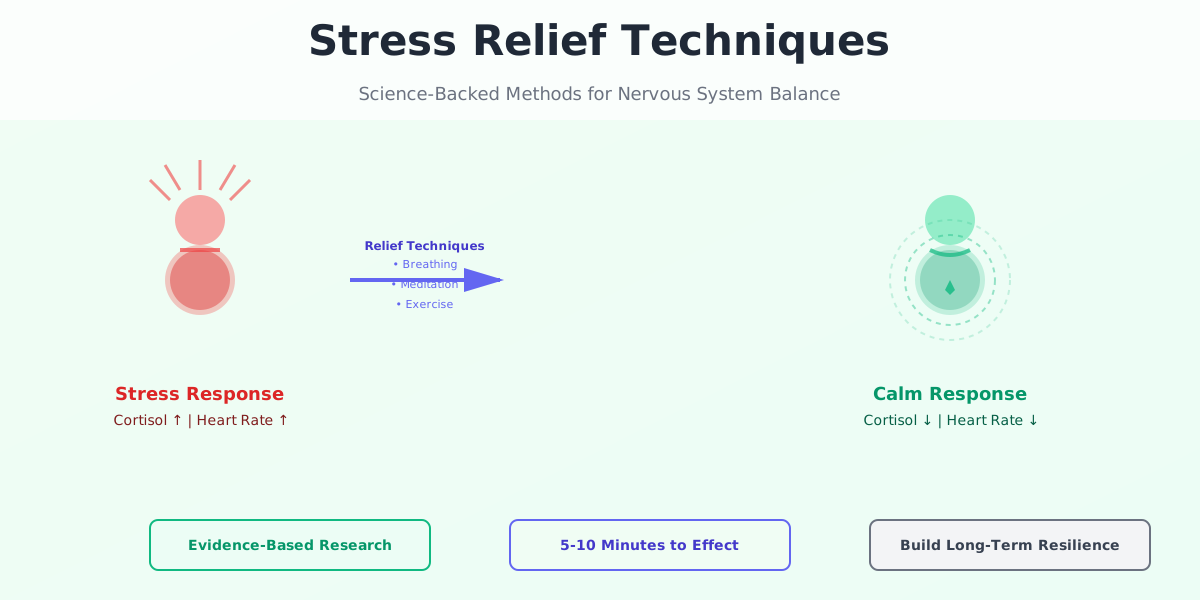
This guide explores science-backed stress relief techniques that actually work, from simple breathing exercises you can do anywhere to mindfulness practices that rewire your brain.
You'll discover step-by-step methods that help you transition from anxious to calm, plus personalized profiles showing which techniques fit your lifestyle best.
What Is Stress Relief Techniques?
Stress relief techniques are evidence-based practices that activate your parasympathetic nervous system—your body's natural calming mechanism—to counteract the physical and emotional effects of stress. These techniques work by reducing cortisol levels, slowing your heart rate, relaxing muscle tension, and shifting your mental state from anxious rumination to present-moment awareness. Effective stress relief methods combine physical interventions (like breathing and movement), cognitive strategies (like reframing thoughts), and emotional practices (like self-compassion). They differ fundamentally from simply distraction: true stress relief techniques help your nervous system restore its natural balance rather than temporarily avoiding stress.
Not medical advice.
Stress relief exists on a spectrum from quick-acting techniques you can use in acute moments (box breathing, grounding exercises) to longer practices that build resilience over time (meditation, yoga). The most effective stress management combines immediate relief techniques with daily practices that prevent stress accumulation. Research shows that people who practice multiple stress relief techniques show significantly greater reductions in anxiety, improved sleep quality, and enhanced ability to cope with future stressors compared to those who rely on a single method.
Surprising Insight: Surprising Insight: A single 10-minute guided meditation can reduce cortisol levels and activate the parasympathetic nervous system as effectively as two hours of quiet rest—proving that technique matters more than time investment.
How Stress Relief Techniques Work
The pathway from stress activation to nervous system regulation through evidence-based techniques
🔍 Click to enlarge
Why Stress Relief Techniques Matter in 2026
Chronic stress has reached epidemic levels in 2026, with 64% of adults reporting significant daily stress according to recent mental health surveys. The constant connectivity of digital life—endless notifications, social media comparison, and work-life boundary erosion—creates sustained activation of your stress response. Unlike historical stressors that resolved within hours, modern stress often persists for months or years, leading to neurological changes that literally rewire your brain toward anxiety and hypervigilance.
Learning stress relief techniques isn't optional self-care; it's essential health maintenance. People who actively practice stress management show measurably lower inflammation markers, reduced rates of cardiovascular disease, improved cognitive function, better sleep quality, and enhanced emotional resilience. In workplace environments, employees trained in stress relief techniques demonstrate higher productivity, fewer sick days, and better team relationships. For students, regular stress relief practice correlates with improved academic performance and mental health outcomes.
Beyond individual benefits, normalized stress relief practices reduce societal healthcare costs, decrease workplace productivity losses, and create communities where wellbeing is prioritized. The neuroscience is clear: your brain's stress response can be retrained, your nervous system can be recalibrated, and your capacity for calm can be strengthened—but only through consistent practice of evidence-based techniques.
The Science Behind Stress Relief Techniques
When you encounter a stressor, your amygdala (the brain's threat detector) triggers your hypothalamic-pituitary-adrenal (HPA) axis, flooding your system with cortisol and adrenaline. This fight-or-flight response evolved to help you survive physical threats, but modern stress activates the same system for non-life-threatening events like emails and social situations. Chronic activation leads to HPA axis dysregulation, where your cortisol rhythm flattens and your nervous system becomes stuck in heightened alert.
Stress relief techniques work by activating your vagus nerve, which controls parasympathetic nervous system activation. When stimulated, the vagus nerve sends signals that lower heart rate, reduce blood pressure, improve digestion, and shift brain activity from threat-focused (amygdala) to calm-focused (prefrontal cortex) regions. Neuroimaging studies show that practices like mindfulness meditation literally increase cortical thickness in regions associated with emotional regulation and decrease amygdala reactivity. Box breathing (4-4-4-4 counting) normalizes heart rate variability within 5 minutes. Progressive muscle relaxation reduces muscle tension by 40% in a single session. These aren't placebo effects—they're measurable neurophysiological changes.
Nervous System Regulation
How different stress relief techniques activate parasympathetic response and vagal tone
🔍 Click to enlarge
Key Components of Stress Relief Techniques
Breathing Exercises
Diaphragmatic breathing (also called belly breathing) is one of the fastest stress relief techniques because it directly signals your parasympathetic nervous system. Unlike chest breathing, which stays shallow and maintains sympathetic activation, diaphragmatic breathing engages the vagus nerve and lowers cortisol within 5-10 minutes. Box breathing (inhale 4 counts, hold 4, exhale 4, hold 4) is particularly effective for acute stress because the extended exhale phase signals safety to your nervous system. 4-7-8 breathing (inhale 4, hold 7, exhale 8) enhances this by making the exhale longer than the inhale, creating a powerful parasympathetic stimulus. Military and first responders use tactical breathing (box breathing) as their primary stress relief technique because it works immediately and doesn't require special equipment or environment.
Mindfulness and Meditation
Mindfulness-based stress reduction (MBSR) combines meditation, body awareness, and gentle yoga to build stress resilience over time. Rather than fighting anxious thoughts, mindfulness teaches you to observe them without judgment, reducing their emotional charge. Research from Nature Human Behaviour (2024) found that self-administered mindfulness interventions reduced stress in a large randomized controlled multi-site study across 37 sites with 2,239 participants. Body scan meditation—systematically moving attention through your body from head to toes—releases physical tension while building awareness of the stress-tension connection. Even 10 minutes daily of meditation restructures your brain toward greater emotional regulation and lower anxiety sensitivity.
Physical Movement
Exercise is among the most powerful stress relief techniques because it provides a healthy outlet for stress hormones and triggers endorphin release. Moderate-intensity aerobic exercise (brisk walking, cycling, swimming) for 30 minutes reduces stress hormones for up to 12 hours afterward. Yoga combines movement with breathing and mindfulness, making it particularly effective for stress relief—practitioners show significant decreases in stress and anxiety compared to control groups. Gentle stretching releases accumulated muscle tension that stress creates, particularly in the neck, shoulders, and jaw. The key is consistency: daily or near-daily movement builds stress resilience more effectively than occasional intense workouts.
Cognitive and Emotional Techniques
Cognitive reframing involves identifying catastrophic thoughts stress generates and examining their actual evidence. Often stress amplifies perceived threat beyond reality—reframing helps you see situations more accurately. Progressive muscle relaxation (deliberately tightening and releasing muscle groups) works by interrupting the stress-tension loop and teaching your body what genuine relaxation feels like. Journaling helps externalize anxious thoughts and identify patterns. Gratitude practice shifts neural activation from threat-focused to reward-focused brain regions. Self-compassion—treating yourself with kindness during stress rather than self-criticism—prevents stress from compounding through shame and isolation.
| Technique | Time to Effect | Best For |
|---|---|---|
| Box Breathing | 5 minutes | Acute anxiety, immediate stress response |
| Body Scan Meditation | 10-15 minutes | Tension release, evening relaxation |
| 30-Min Aerobic Exercise | 30 minutes + 12hr effect | Sustained stress reduction, mood elevation |
| Yoga Session | 20-60 minutes | Holistic stress relief, flexibility and strength |
| Journaling | 10-15 minutes | Processing emotions, identifying stress patterns |
| Gratitude Practice | 5 minutes | Shifting perspective, evening reflection |
How to Apply Stress Relief Techniques: Step by Step
- Step 1: Identify your stress trigger: What specifically activates your stress response? Is it a person, situation, time of day, or thought pattern? Awareness precedes intervention.
- Step 2: Choose your technique based on timing: For immediate stress (racing heart, anxious thoughts), use breathing exercises. For evening tension, try body scan meditation. For sustained resilience, commit to daily movement or meditation.
- Step 3: Find a quiet space, ideally with minimal distractions. If you're in a stressful situation, a bathroom, car, or empty conference room works—stress relief doesn't require perfect conditions.
- Step 4: Start with diaphragmatic breathing: Place one hand on your chest, one on your belly. Breathe so only your belly hand moves—your chest stays still. This confirms you're using your diaphragm.
- Step 5: For box breathing: Inhale through your nose for 4 counts, hold for 4, exhale through your mouth for 4, hold for 4. Repeat 5-10 times. The extended exhale is crucial.
- Step 6: If doing body scan meditation: Starting at your toes, tense each muscle group for 3 seconds, then release. Move progressively up through feet, legs, abdomen, chest, arms, neck, and head.
- Step 7: Notice physical changes: Your heart rate should slow, muscles should relax, thoughts should quiet. These are signs your parasympathetic nervous system is activating.
- Step 8: Practice daily, ideally at the same time (morning meditation or evening yoga builds stronger habits). Consistency matters more than duration—10 minutes daily beats occasional 1-hour sessions.
- Step 9: Combine techniques: Use breathing for acute moments, meditation for daily practice, exercise for sustained resilience, and cognitive techniques for thought patterns.
- Step 10: Track your progress by noting your stress levels, sleep quality, and overall mood across weeks and months. Neuroplastic changes take 6-8 weeks to become noticeable.
Stress Relief Techniques Across Life Stages
Young Adulthood (18-35)
This life stage combines intense academic or career pressure with relationship complexity and identity formation. Young adults respond particularly well to high-intensity stress relief techniques like HIIT workouts, dynamic yoga, and group fitness classes that combine physical stress relief with social connection. Quick techniques like breathing exercises fit your busy schedules and don't require long commitments. Building stress relief habits now prevents the chronic stress patterns that accumulate later. Group meditation apps and fitness communities provide accountability and normalize stress management in your peer group.
Middle Adulthood (35-55)
This stage often brings peak career demands, caregiving responsibilities (children and aging parents), and accumulated life complexity. Middle adults benefit from flexible stress relief practices that fit demanding schedules: 10-minute morning meditations, walks during lunch breaks, evening yoga, or weekend hiking. This group particularly benefits from combining physical techniques (exercise) with cognitive techniques (reframing work-related thoughts) because they often carry internalized pressure and perfectionism. Mindfulness practice helps manage the mental load of juggling multiple roles. Group classes provide both stress relief and adult social connection, addressing the isolation many middle adults experience.
Later Adulthood (55+)
This life stage brings health concerns, identity shifts around retirement, and often grief. Older adults particularly benefit from gentle yoga, walking groups, tai chi, and body-based stress relief techniques that maintain mobility while reducing anxiety. Meditation and gratitude practices help shift focus toward meaning and legacy rather than loss. Social connection becomes increasingly important for both stress relief and overall wellbeing—group classes and community-based practices are especially valuable. Breathing and relaxation techniques help manage health-related anxiety and improve sleep quality, which often declines with age.
Profiles: Your Stress Relief Techniques Approach
The Busy Professional
- Quick techniques fitting 5-10 minute windows
- Stress relief that works during the workday
- Methods reducing decision fatigue
Common pitfall: Skipping stress relief due to busy schedules, creating accumulating tension that explodes into burnout
Best move: Schedule 10-minute breathing breaks at set times (9 AM, noon, 3 PM) and use them non-negotiably. Combine with one 30-minute exercise session weekly. Consistency matters more than duration.
The Anxious Thinker
- Techniques addressing racing thoughts and rumination
- Cognitive strategies alongside physical techniques
- Evidence explaining how techniques work
Common pitfall: Over-analyzing stress relief methods, using thinking to address an over-active mind, missing the embodied aspect of nervous system regulation
Best move: Combine meditation (observing thoughts without judgment) with body scan practice (moving awareness into physical sensations). Reading the neuroscience helps validate the practices initially, but trust the experience over analysis.
The Movement-Oriented Person
- Physical activity as primary stress relief
- Techniques combining movement with relaxation
- Regular exercise fitting your schedule
Common pitfall: Using only intense exercise for stress relief, which maintains sympathetic activation rather than building parasympathetic resilience
Best move: Balance intense workouts (which help acute stress) with gentler practices like yoga, tai chi, or evening walks (which build nervous system resilience). Add stretching and breathing to cool-down phases.
The Social Connector
- Stress relief practices involving other people
- Community-based approaches building belonging
- Accountability from group participation
Common pitfall: Avoiding stress relief practices that feel isolating or require solo meditation, missing the science showing group practices multiply benefits
Best move: Prioritize group fitness classes, meditation circles, yoga studios, or walking groups. The social connection multiplies stress relief benefits beyond the technique itself.
Common Stress Relief Techniques Mistakes
Expecting immediate and permanent relief: Stress relief techniques provide immediate nervous system regulation (your heart rate slows within minutes), but lasting resilience requires consistent practice over weeks. Many people try a technique once, don't experience transformation, and abandon the practice. The neuroplasticity that prevents stress accumulation takes 6-8 weeks of consistent practice to develop. Approach techniques as daily habits, not emergency interventions alone.
Choosing only one technique: The most effective stress management combines multiple approaches. Someone who only meditates misses the stress hormone reduction from exercise. Someone who only exercises might not address the ruminating thought patterns that meditation addresses. Your nervous system benefits from diverse stimulation: breathing, movement, mindfulness, social connection, and cognitive strategies all contribute to comprehensive stress resilience.
Neglecting the consistency: A 60-minute meditation once monthly won't build stress resilience. Daily 10-minute practices reshape your nervous system far more powerfully than occasional long sessions. Your brain develops habits and neural pathways through repetition. Consistency beats perfection—a brief daily practice always surpasses sporadic lengthy efforts.
Common Mistakes and Solutions
How to avoid common pitfalls in stress relief practice
🔍 Click to enlarge
Science and Studies
Recent peer-reviewed research provides strong evidence for stress relief techniques' effectiveness across diverse populations. Large-scale studies using randomized controlled trial design demonstrate measurable neurological and physiological changes. Meta-analyses synthesizing multiple studies show consistent benefits including reduced anxiety, improved sleep, lower inflammation markers, and better emotional regulation. The evidence isn't theoretical—it's based on thousands of participants and neuroimaging showing actual brain changes.
- Nature Human Behaviour (2024): Self-administered mindfulness interventions across 37 sites with 2,239 participants showed significant stress reduction, with body scan meditation showing the largest effect size.
- Frontiers in Psychology (2025): Mindfulness programs in college students significantly reduced perceived stress, burnout, anxiety, and depression while improving sleep quality and life satisfaction.
- JAMA Psychiatry meta-analysis: Comprehensive review of 47 clinical trials with 3,500+ participants showed mindfulness meditation provides moderate-to-strong evidence for reducing anxiety and depression.
- NCCIH (National Center for Complementary and Integrative Health): Breathing exercises, yoga, and meditation show evidence for stress reduction and anxiety management backed by federal research funding.
- Harvard Medical School research: 30 minutes of moderate aerobic exercise reduces stress hormones and improves mood for up to 12 hours, with effects comparable to medication for some individuals.
Your First Micro Habit
Start Small Today
Today's action: Complete one box breathing cycle right now: Inhale through your nose for 4 counts, hold for 4, exhale for 4, hold for 4. Repeat 5 times total. Notice how your body feels afterward.
This 2-minute practice demonstrates immediately how your nervous system responds to specific breathing patterns. The extended exhale directly stimulates your vagus nerve, triggering parasympathetic activation. Success with this tiny practice builds confidence to expand into longer stress relief practices.
Keep quitting habit apps after a missed day? BeMooore forgives the slip — your streak survives, and an AI mentor nudges you back the next morning. Free on iOS.
Quick Assessment
How often do you currently experience significant daily stress?
Your answer indicates your current stress baseline. If you chose 'Constantly,' starting with daily 10-minute breathing or meditation practice becomes particularly important. If 'Rarely,' you likely have effective stress management but this article shows how to deepen your practices further.
Which stress relief approach appeals most to you?
Your preference indicates which techniques you'll most likely maintain consistently. The most effective practice is the one you'll actually do daily. If group approaches appeal to you, signing up for classes increases accountability. If solitary practices suit you, establishing a private meditation or exercise routine works better.
What's your biggest barrier to managing stress effectively?
Identifying your specific barrier helps you address the root obstacle. If it's time, you need 5-10 minute practices scheduled into existing routines. If it's consistency, joining a group or using app reminders helps. If it's skepticism, the research evidence and immediate physiological effects (slower heart rate after breathing) often convince. If it's knowledge, this article and the video provide that foundation.
Take our full assessment to get personalized recommendations.
Discover Your Style →Next Steps
Stress relief techniques work, but only if you practice them consistently. The research is conclusive: people who practice these methods show measurably lower stress, better mental health, improved sleep, and greater resilience to future stressors. Your next step isn't intellectual understanding—it's action. Choose one technique that appeals to you based on your lifestyle and personality, then commit to practicing it daily for 30 days. That's how you transform knowledge into lasting change.
Start with the micro habit: box breathing for 2 minutes. Then graduate to a daily 10-minute meditation, a 30-minute walk, or a yoga class. The specific technique matters far less than consistent practice. Over 6-8 weeks, your nervous system recalibrates. Your baseline stress drops. Your reactivity decreases. Your resilience strengthens. The calm you're seeking isn't distant—it's accessible through daily practice of these evidence-based techniques.
Get personalized guidance with AI coaching.
Start Your Journey →Research Sources
This article is based on peer-reviewed research and authoritative sources. Below are the key references we consulted:
Related Glossary Articles
Frequently Asked Questions
How quickly do stress relief techniques work?
Breathing exercises work within 5 minutes (your heart rate noticeably slows). Meditation provides immediate calming but builds deeper resilience over 6-8 weeks of daily practice. Exercise effects last up to 12 hours post-workout. Immediate relief happens quickly; sustained transformation requires consistent practice.
Which stress relief technique is most effective?
The most effective technique is the one you'll practice consistently. Research shows combining multiple approaches works better than any single technique. Ideally: daily breathing or meditation (5-10 minutes), regular exercise (30 minutes, most days), and evening relaxation (body scan or yoga). Your personal preference and lifestyle determine which combination you'll sustain.
Can stress relief techniques replace professional mental health treatment?
For ongoing anxiety disorders, depression, or trauma, stress relief techniques complement but don't replace professional treatment. These techniques are powerful for managing normal stress and building resilience, but severe mental health conditions require therapy and/or medication. Use stress relief as both prevention and supplement to professional care.
How do I know if a stress relief technique is working?
Physical markers include slower resting heart rate, lower resting blood pressure, better sleep quality, and reduced muscle tension. Psychological markers include fewer anxious thoughts, improved mood, better emotional regulation, and clearer thinking. Track these over 4-6 weeks. If you notice zero changes after consistent daily practice for 6 weeks, try a different technique.
What if I can't meditate because my mind won't stop racing?
Racing thoughts are normal, especially initially. Meditation isn't about stopping thoughts—it's about observing them without judgment and gently redirecting attention. Start with body scan meditation (focusing on physical sensations rather than thoughts) or guided meditations where a narrator directs your attention. Many people find active techniques like yoga or walking meditation easier initially than sitting meditation.
Take the Next Step
Ready to improve your wellbeing? Take our free assessment to get personalized recommendations based on your unique situation.
- Discover your strengths and gaps
- Get personalized quick wins
- Track your progress over time
- Evidence-based strategies