Mindset Mastery
Mindset mastery is the ability to consciously shape your beliefs about your capabilities and potential, transforming how you approach challenges, setbacks, and personal growth. When you master your mindset, you move from believing that your intelligence and talents are fixed traits to recognizing them as malleable qualities that can be developed through effort and dedication. This fundamental shift reshapes your emotional responses, decision-making patterns, and ultimately your success in every life domain.
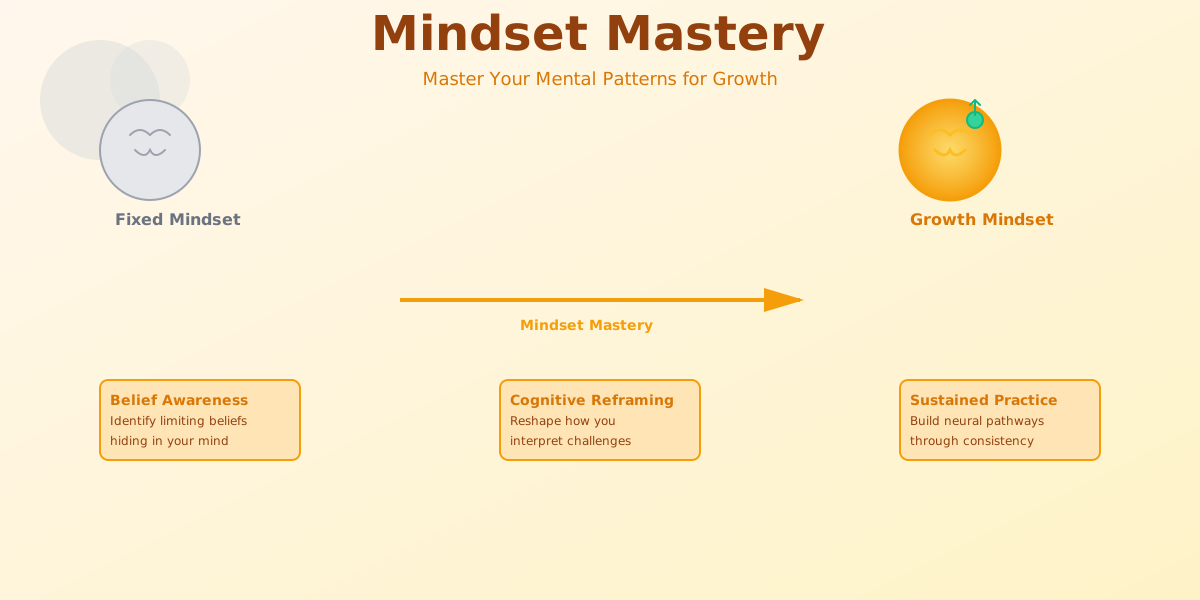
The breakthrough insight: Your beliefs about your abilities directly influence your motivation, resilience, and actual performance. When you embrace a growth-oriented perspective, your brain literally rewires itself, creating stronger neural pathways that support learning and adaptation.
This article explores the neuroscience of mindset, practical techniques to master your mental patterns, and how to sustain growth-oriented thinking across your entire life.
What Is Mindset Mastery?
Mindset mastery refers to the deliberate development and control of your core beliefs about yourself, your abilities, and your potential for growth. It involves recognizing the difference between a fixed mindset—the belief that your intelligence, talents, and character are unchangeable—and a growth mindset—the conviction that these qualities can be developed through sustained effort, learning, and dedication.
Not medical advice.
At its core, mindset mastery means becoming aware of your internal dialogue, identifying limiting beliefs, and systematically replacing them with empowering perspectives. This isn't about positive thinking alone; it's about aligning your beliefs with reality and scientific evidence about human potential.
Surprising Insight: Surprising Insight: Research shows that when students are taught that intelligence is malleable and that effort strengthens brain connections, they demonstrate measurably improved academic performance and greater resilience when facing difficult material.
Fixed vs Growth Mindset Comparison
Visual representation of how fixed and growth mindsets differ in response to challenges, effort, criticism, and setbacks.
🔍 Click to enlarge
Why Mindset Mastery Matters in 2026
In our rapidly changing world, where technological disruption, economic shifts, and personal uncertainty are constant, mindset mastery has become essential for thriving. The ability to learn, adapt, and bounce back from setbacks is no longer a luxury—it's fundamental to wellbeing and success.
People with mastered mindsets demonstrate superior mental health outcomes, including lower anxiety and depression rates. They report greater life satisfaction, stronger relationships, and increased accomplishment in their careers because they view obstacles as solvable problems rather than immovable barriers.
Furthermore, mindset mastery directly impacts your ability to build resilience during uncertainty, maintain motivation when progress stalls, and recover quickly from failure. In 2026, when change is the only constant, this skill separates those who thrive from those who struggle.
The Science Behind Mindset Mastery
The scientific foundation for mindset mastery comes from decades of research in developmental psychology and neuroscience. Carol Dweck's groundbreaking studies demonstrated that students' implicit theories about intelligence—their beliefs about whether intelligence is fixed or malleable—significantly predicted their academic trajectory.
Neuroscience research reveals that your brain exhibits neuroplasticity: the capacity to form new neural connections throughout your life in response to learning and experience. When you practice cognitive reframing—the process of reinterpreting events to change their emotional impact—you're literally rewiring your brain's response patterns. With repetition, these new neural pathways strengthen, making growth-oriented thinking your automatic default.
The Neuroplasticity Cycle of Mindset Mastery
How repeated practice of reframing challenges creates stronger neural pathways and automatic growth-oriented responses.
🔍 Click to enlarge
Key Components of Mindset Mastery
Belief Awareness
The foundation of mindset mastery is becoming conscious of your existing beliefs about yourself, your potential, and your abilities. Most limiting beliefs operate unconsciously, influencing your decisions without your awareness. Through reflection and journaling, you can identify patterns like perfectionism, fear of failure, or impostor syndrome that hold you back.
Cognitive Reframing
Cognitive reframing is the practice of reinterpreting events and setbacks to change their emotional impact and meaning. Instead of thinking 'I failed and this proves I'm not capable,' you reframe it as 'I didn't succeed yet, and this shows me what to practice next.' This technique directly engages your neuroplasticity, creating new mental associations with challenges.
Effort Reorientation
Mindset mastery requires changing your relationship with effort. In a fixed mindset, effort feels like compensation for lack of talent. In a growth mindset, effort is the mechanism that builds talent. When you reorient toward valuing the process of learning and improvement over immediate outcomes, you become unstoppable because effort becomes meaningful rather than frustrating.
Learning Velocity Optimization
A mastered mindset includes the strategic ability to ask yourself what works and what doesn't, adapting your approach as you learn. This strategic mindset—researched extensively in 2024-2025 studies—means you don't just apply effort; you apply intelligent effort, constantly refining your methods based on feedback and results.
| Component | Fixed Mindset Response | Growth Mindset Response |
|---|---|---|
| Setback or Failure | Evidence of inadequacy; avoid similar challenges | Feedback on current level; opportunity to improve |
| Effort Required | Indicates lack of natural talent; frustrating | Strengthens neural pathways; satisfying and essential |
| Criticism or Feedback | Threatening to self-image; dismiss or defend | Valuable information for growth; seek and integrate |
| Challenging Task | Risk to self-esteem; avoid or withdraw effort | Chance to build skills; engage fully with resilience |
| Others' Success | Threatening; undermines self-concept | Inspiring; shows what's possible through effort |
How to Apply Mindset Mastery: Step by Step
- Step 1: Identify your current fixed mindset beliefs by reflecting on areas where you avoid challenges, feel defensive about criticism, or doubt your capacity to learn.
- Step 2: Name the specific limiting belief clearly—write it down in the form 'I believe that [limitation] about myself is permanent and unchangeable.'
- Step 3: Research the evidence: Find examples of people who developed the ability you thought was fixed, or studies showing how neuroplasticity enables change.
- Step 4: Reframe the belief by rephrasing it as a growth statement: 'I'm developing my ability in [area] through sustained effort and intelligent practice.'
- Step 5: Create a concrete practice plan with specific actions to build the skill or capability you previously believed was impossible.
- Step 6: Implement the plan consistently, tracking progress not in outcomes but in effort invested and new strategies attempted.
- Step 7: Collect evidence of growth by reviewing moments when you applied the new framework, noting any improvements in process, approach, or resilience.
- Step 8: Update your belief statement monthly based on actual evidence of growth and capability expansion.
- Step 9: Practice self-compassion when setbacks occur, remembering that difficulty is part of learning, not proof of inability.
- Step 10: Help others adopt growth mindsets by modeling the framework, sharing your reframing process, and celebrating effort and learning in others.
Mindset Mastery Across Life Stages
Young Adulthood (18-35)
In young adulthood, mindset mastery is crucial for career foundation and relationship development. This is when many people adopt fixed beliefs about their intelligence, social skills, or career potential based on early feedback. Developing a growth mindset during this stage prevents years of limited choices and unnecessary avoidance. Young adults who master mindset demonstrate higher education completion rates, faster career progression, and greater romantic relationship satisfaction.
Middle Adulthood (35-55)
During middle adulthood, mindset mastery becomes essential for navigating career transitions, managing family responsibilities, and addressing mid-life challenges. Many people experience the 'it's too late to change' mindset during this period. However, research shows that adults who develop growth mindsets during these years experience renewed energy, successful career pivots, and stronger sense of purpose. Mindset mastery helps you resist the limitation of 'this is just how things are.'
Later Adulthood (55+)
Mindset mastery becomes a protective factor in later adulthood, supporting cognitive health, physical vitality, and continued engagement with life. Older adults who embrace growth mindsets show slower cognitive decline, better recovery from health challenges, and greater life satisfaction. By maintaining the belief that you can develop new skills, learn new information, and adapt to change, you preserve your brain's neuroplasticity and resilience well into your later years.
Profiles: Your Mindset Mastery Approach
The Perfectionist
- Permission to be imperfect while learning
- Reframe mistakes as essential feedback, not failures
- Celebrate effort and progress, not just outcomes
Common pitfall: Avoiding challenges that might expose imperfection, leading to stagnation
Best move: Start with deliberately imperfect first attempts, then improve iteratively. Focus on progress over perfection.
The Self-Doubter
- Evidence of past growth to counter imposter syndrome
- Small wins to build self-efficacy gradually
- Recognition that doubt is normal, not a sign of inadequacy
Common pitfall: Dismissing achievements as luck, minimizing capability despite evidence
Best move: Keep a 'wins journal' documenting all evidence of growth and capability. Review it when doubt arises.
The Ambitious Overachiever
- Balance between achievement and sustainable growth
- Understanding that struggle indicates optimal learning zone
- Reframe 'not yet at mastery' as 'on the growth path'
Common pitfall: Burning out by equating self-worth with constant achievement, abandoning things that don't come easily
Best move: Intentionally choose one 'stretch goal' where you'll embrace struggle and slow progress for deeper mastery.
The Cautious Learner
- Structured, low-risk opportunities to build confidence
- Clear evidence that change is possible and safe
- Patient, incremental progression without pressure
Common pitfall: Staying in comfort zone, missing opportunities for growth because risks feel overwhelming
Best move: Start with micro-challenges that stretch you by 5-10%, building gradually. Celebrate small brave steps.
Common Mindset Mastery Mistakes
One major mistake is assuming that growth mindset means you never struggle or that achievement should be easy. Growth mindset doesn't eliminate difficulty; it changes your relationship with difficulty. Struggle is the signal that you're in your optimal learning zone, not proof that you can't do something.
Another common error is practicing growth mindset inconsistently or only when convenient. True mindset mastery requires sustained practice across all life domains. You might embrace growth thinking at work but resort to fixed thinking about relationships or health. The most effective approach is integrating growth perspectives into your default thinking across all areas.
A third mistake is confusing mindset mastery with toxic positivity—pretending everything is fine or that effort alone guarantees success. Realistic optimism acknowledges real obstacles while maintaining confidence in your ability to develop strategies to overcome them. This balanced perspective prevents burnout while maintaining motivation.
Common Mindset Pitfalls and How to Avoid Them
Visual guide to recognizing and correcting common mistakes in applying mindset mastery principles.
🔍 Click to enlarge
Science and Studies
The research supporting mindset mastery comes from multiple established fields. Over four decades of studies in educational psychology, neuroscience, and organizational behavior have consistently shown that mindset profoundly affects performance, resilience, and wellbeing. Recent 2024-2025 research adds important nuance to these findings.
- Dweck, C. S. (2006). Mindset: The new psychology of success. Demonstrates foundational research that fixed vs. growth mindsets predict academic achievement across populations.
- Frontiers in Psychology (2025). Hot topics and frontier evolution of growth-mindset research. Reviews latest findings on strategic mindsets and optimal classroom environments for mindset development.
- NIH/PMC (2024). Strategic mindset predicts and promotes effective learning and academic performance. Shows that strategic mindsets—knowing how to approach tasks differently—enhance outcomes.
- Nature Neuropsychopharmacology (2026). The role of brain health and resilience in reshaping late-life trajectories. Demonstrates neuroplasticity remains possible throughout lifespan, supporting continued growth at any age.
- Mind Lab Neuroscience (2025). Neuroplasticity and cognitive restructuring research. Establishes mechanisms by which repeated cognitive reframing creates lasting neural pathway changes.
Your First Micro Habit
Start Small Today
Today's action: Spend 2 minutes identifying one thing you've been avoiding because 'you're not good at it,' then reframe it as 'I'm developing this skill' and take one small action toward it.
This micro habit directly activates your neuroplasticity by practicing cognitive reframing in real-time. It's small enough to build consistency while immediately shifting your relationship with challenges. The action step embeds the reframe into behavior, accelerating belief change.
Keep quitting habit apps after a missed day? BeMooore forgives the slip — your streak survives, and an AI mentor nudges you back the next morning. Free on iOS.
Quick Assessment
When you encounter a difficult task you're uncertain about, what's your typical response?
Your response indicates your current default mindset. If you selected the last option, you're demonstrating growth mindset thinking. If you chose earlier options, mindset mastery practice will help you shift toward the growth perspective.
How do you typically interpret constructive criticism or negative feedback?
This question reveals whether you're defending a fixed self-image or remaining open to growth. The growth mindset response welcomes feedback as fuel for development rather than threat to identity.
What role do you believe effort plays in achievement?
This reveals your implicit theory about intelligence and ability. Research shows that believing effort builds ability is the most predictive factor for long-term success and resilience.
Take our full assessment to get personalized recommendations.
Discover Your Style →Next Steps
Begin your mindset mastery journey by identifying one area of your life where a fixed belief is limiting you. Write down that belief clearly, research evidence that contradicts it, and create a simple 30-day experiment to practice the growth perspective. The power of mindset mastery emerges through consistent, small actions that gradually reshape your neural pathways and automatic responses.
Remember: mindset mastery is not about never doubting yourself or never feeling challenged. It's about recognizing your capacity to grow, developing concrete strategies when you feel stuck, and maintaining hope and persistence when progress is slow. This shift in perspective transforms how you approach every aspect of your life, from relationships to health to professional achievement.
Get personalized guidance with AI coaching.
Start Your Journey →Research Sources
This article is based on peer-reviewed research and authoritative sources. Below are the key references we consulted:
Related Glossary Articles
Frequently Asked Questions
Can I change my mindset, or is it also fixed?
Yes, you can absolutely change your mindset. Research consistently shows that mindset itself is changeable—you can develop a growth mindset through deliberate practice and repetition. The brain's neuroplasticity means that with consistent practice, new thought patterns become automatic over time.
How long does it take to master my mindset?
Mindset changes typically begin within 2-3 weeks of consistent practice, but deeper integration takes 2-3 months to become your automatic default. However, this is not a one-time achievement—mindset mastery is ongoing. You continue refining and deepening your growth perspective throughout life.
Does having a growth mindset mean I'll always succeed?
No. A growth mindset doesn't guarantee success, but it dramatically increases your probability of success by keeping you engaged, resilient, and learning-focused during inevitable failures. You'll experience setbacks, but you'll interpret and recover from them more effectively.
Can growth mindset be applied to talents I don't naturally have?
Absolutely. In fact, that's the power of growth mindset. Many high-level performers in sports, music, mathematics, and other fields didn't start with natural talent—they developed expertise through deliberate practice and a growth-oriented approach to improvement.
What if I slip back into fixed mindset thinking?
This is completely normal and expected. You'll likely continue having fixed mindset moments, especially under stress or in unfamiliar situations. The goal isn't perfection—it's becoming aware of those moments and gently redirecting yourself back to growth thinking. This awareness itself is progress.
Take the Next Step
Ready to improve your wellbeing? Take our free assessment to get personalized recommendations based on your unique situation.
- Discover your strengths and gaps
- Get personalized quick wins
- Track your progress over time
- Evidence-based strategies