L-Threonate
Your brain is hungry for magnesium, but regular magnesium supplements cannot penetrate the blood-brain barrier to feed it. In 2010, MIT researchers discovered a game-changing solution: combining magnesium with threonate creates a specialized compound that crosses this protective barrier and enters your neurons directly. This is L-threonate—the magnesium breakthrough that 2024-2025 clinical trials show can restore seven years of cognitive aging in just six weeks. If you struggle with memory, focus, sleep quality, or mental sharpness, understanding L-threonate could transform how you support your brain's aging and performance.
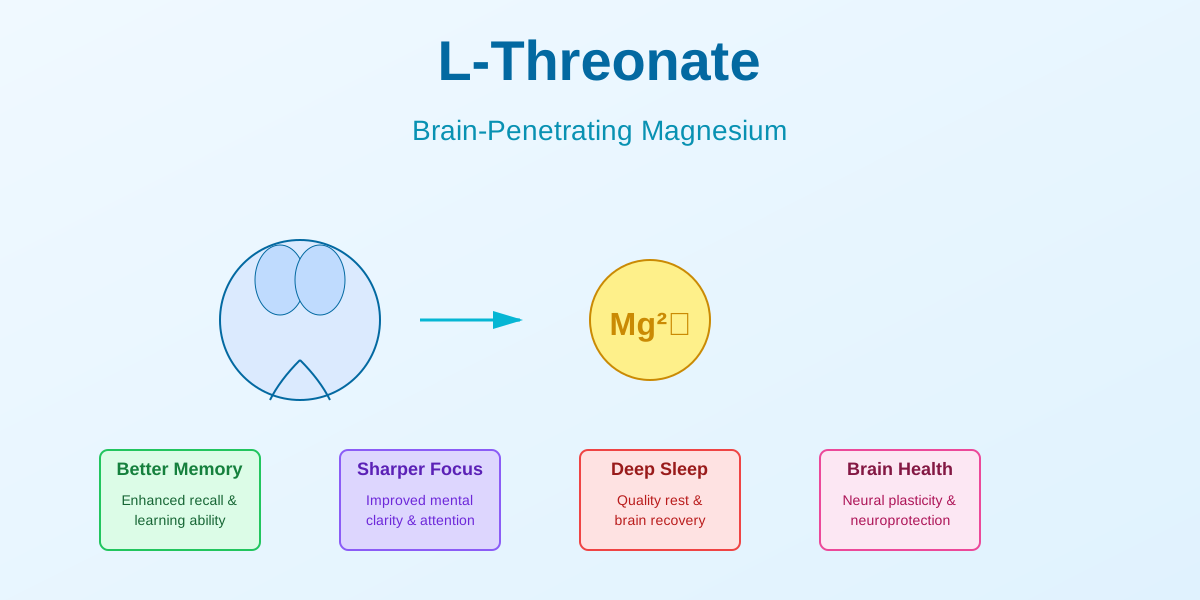
Imagine waking up sharper, remembering details more clearly, and sleeping deeper at night—all from one targeted supplement that actually reaches your brain cells.
The science behind L-threonate is elegant and increasingly powerful: it works by raising magnesium levels inside your neurons, where it activates the molecular machinery that builds stronger, more resilient brain connections.
What Is L-Threonate?
L-threonate is a patented form of magnesium bound to threonic acid (a metabolite of glucose) that specifically crosses the blood-brain barrier—the protective membrane that filters which substances enter your brain. Unlike conventional magnesium supplements (like magnesium citrate or magnesium glycinate) that remain in your bloodstream and digestive tract, L-threonate is designed to reach your neurons and raise the concentration of magnesium inside your brain cells. The commercial name for L-threonate is Magtein®, a registered trademark developed and patented by MIT researchers. This supplement is approved as Generally Recognized As Safe (GRAS) by the FDA since 2012, and peer-reviewed clinical trials from 2024-2025 confirm its cognitive benefits in healthy adults.
Not medical advice.
Magnesium is the fourth most abundant mineral in your body and the second most abundant inside your cells, after potassium. It acts as a cofactor for over 300 enzymatic reactions that control everything from muscle contraction to protein synthesis to electrical signaling in your brain. However, most people consume only 40-76% of the recommended dietary allowance for magnesium due to depleted soils and processed foods. The brain is particularly vulnerable: magnesium concentration inside neurons directly controls synaptic plasticity (the ability to form new connections), and this depends on healthy magnesium levels. L-threonate solves this gap by bypassing your gut absorption limitations and delivering magnesium directly to where your brain needs it most.
Surprising Insight: Surprising Insight: A 2024 clinical trial found that six weeks of magnesium L-threonate improved participants' cognitive age by 7.5 years—equivalent to reversing cognitive aging by nearly a decade. This effect was observed in healthy adults without dementia or cognitive impairment, suggesting preventative benefits across the lifespan.
How L-Threonate Crosses into Your Brain
The blood-brain barrier normally blocks magnesium, but L-threonate's unique structure allows it to penetrate and deliver magnesium into neurons where it activates neuroplasticity and memory formation.
🔍 Click to enlarge
Why L-Threonate Matters in 2026
Brain aging is accelerating: screen time, chronic stress, sleep deprivation, and nutrient-poor diets are eroding cognitive function earlier in life. By age 35, most people experience measurable declines in working memory and processing speed. By age 65, one in three Americans develops cognitive impairment. L-threonate represents a scientifically validated intervention that directly addresses the neurochemical foundation of these declines. Unlike nootropic drugs that carry side effect risks, L-threonate is a naturally derived nutrient form that works with your brain's existing biology.
Sleep quality is also declining globally due to stress and blue light exposure. A 2024 randomized controlled trial showed magnesium L-threonate improved both objective sleep metrics (measured via wearable devices) and subjective sleep satisfaction, with participants reporting better deep sleep, reduced grouchiness, and improved daytime mental alertness. This is significant because sleep is where your brain consolidates memory and repairs synaptic connections.
For aging brains at risk of cognitive decline, the stakes are high. Alzheimer's disease affects over 6 million Americans, and most cases begin with subtle memory changes 10-15 years before diagnosis. A 2024-2025 preclinical study showed L-threonate ameliorates cognitive deficits in Alzheimer's disease mouse models by restoring hippocampal neurogenesis (the formation of new neurons) and reducing amyloid-beta accumulation. While human studies are ongoing, the preventative potential is compelling.
The Science Behind L-Threonate
L-threonate works through a beautifully orchestrated cascade of molecular events. When magnesium enters your neurons, it modulates the voltage-dependent block of NMDA receptors—a critical molecular gate that controls synaptic plasticity. NMDA receptors are the primary molecular switch for learning and memory: they detect when two neurons fire together, and when activated, they allow calcium to flow into the synapse and strengthen the connection. Magnesium acts as the gatekeeper: at resting potential, it blocks NMDA receptors; when a neuron fires, magnesium is displaced, allowing calcium in. Elevated intracellular magnesium increases the number of NR2B-containing NMDA receptors (a subtype particularly important for learning), enhancing this switching capacity.
The downstream consequence is a 52% enhancement in long-term potentiation (LTP), the cellular basis of memory formation. Researchers in a landmark 2009 study published in Neuron found that rats supplemented with magnesium L-threonate showed a 60% increase in NR2B expression in the hippocampus, a 92% increase in calcium/calmodulin-dependent protein kinase II (CaMKII) activation, and a 52% increase in LTP magnitude. Behaviorally, this translated to significantly improved performance on spatial memory tasks and object recognition tasks. In human clinical trials from 2024-2025, healthy adults taking Magtein showed improvements across all five subcategories of the Clinical Memory Test, with the most dramatic gains in working memory and processing speed.
L-Threonate's Mechanism: From Molecules to Memory
Magnesium enters neurons, modulates NMDA receptors, triggers CaMKII activation, and strengthens synaptic connections through long-term potentiation.
🔍 Click to enlarge
Key Components of L-Threonate
Magnesium
Magnesium is the active micronutrient component. A 2000mg dose of magnesium L-threonate delivers approximately 144mg of elemental magnesium into your brain. This is significantly higher than what typical magnesium supplements deliver to the central nervous system, because standard forms lack the blood-brain barrier penetration capacity. Magnesium activates enzymatic cofactors and ion channels essential for neuroplasticity, energy metabolism, and neurotransmitter synthesis.
Threonic Acid
Threonic acid is a natural glucose metabolite that serves as the carrier molecule, enabling magnesium to cross the blood-brain barrier. Threonic acid itself is produced in your body during normal glucose metabolism and is found in trace amounts in fruits and vegetables. It is not biologically active in isolation—its sole purpose is to ferry magnesium through the brain's protective barrier. Once inside the neuron, the magnesium and threonate may separate, with magnesium exerting its neurochemical effects and threonate being metabolized.
NMDA Receptor Modulation
L-threonate's effects are mediated primarily through NMDA receptor upregulation and modulation. NMDA receptors are ionotropic glutamate receptors that require both glutamate (a neurotransmitter) and a voltage change to activate, making them molecular coincidence detectors crucial for associative learning. By increasing intracellular magnesium, L-threonate enhances NMDA receptor signaling, which is particularly important for the NR2B subunit associated with learning in healthy aging brains.
Synaptic Plasticity Enhancement
Synaptic plasticity—the ability to strengthen or weaken connections between neurons—is the cellular basis of learning and memory. L-threonate increases both the structural density of synapses (number of connections per neuron) and the functional strength of those connections (through LTP). This is measured via synaptophysin and synaptobrevin markers in the dentate gyrus and CA1 subregions of the hippocampus, the brain regions most critical for memory formation.
| Magnesium Form | Blood-Brain Barrier Penetration | Brain Magnesium Increase |
|---|---|---|
| Magnesium Citrate | Minimal (blocked by BBB) | <5% elevation |
| Magnesium Glycinate | Minimal (blocked by BBB) | <8% elevation |
| Magnesium L-Threonate | Highly Efficient (crosses BBB) | 54% elevation (clinical observation) |
How to Apply L-Threonate: Step by Step
- Step 1: Consult a healthcare provider to determine if L-threonate is appropriate for you, especially if you take medications or have kidney disease.
- Step 2: Start with the standard clinical dose: 2000mg daily of magnesium L-threonate (providing ~144mg elemental magnesium), divided into two 1000mg doses.
- Step 3: Take the first dose with breakfast to reduce stomach upset and improve absorption. Take the second dose 2-3 hours before bedtime to support sleep.
- Step 4: Take L-threonate with food, as this reduces digestive side effects like nausea or loose stools.
- Step 5: Continue for at least 6 weeks consistently; clinical trials showing cognitive benefits used 6-week supplementation periods.
- Step 6: Monitor your subjective experience: track sleep quality, mental clarity, memory performance, and mood using a simple daily journal.
- Step 7: If you experience persistent digestive upset despite taking with food, reduce to 1000mg daily and gradually increase after one week.
- Step 8: Do not exceed 350mg per day of elemental magnesium from supplements (per FDA guidance for ages 19+), though clinical trials have safely used ~144mg from L-threonate.
- Step 9: Maintain consistent timing: take L-threonate at the same times each day to establish a neural adaptation baseline.
- Step 10: After 6 weeks, reassess with your healthcare provider; many people continue long-term at 2000mg daily for sustained cognitive benefits.
L-Threonate Across Life Stages
Young Adulthood (18-35)
In your 20s and early 30s, your brain is still at peak capacity, but cumulative stress, inadequate sleep, and nutrient gaps are beginning to erode cognitive reserves. This is the optimal window for preventative neuroscience: building cognitive resilience now delays age-related decline by decades. L-threonate at this stage supports memory formation during learning-intensive years, enhances focus during high-stress periods, and promotes quality sleep despite screen time and lifestyle pressures. Young adults studying for exams, learning new skills, or managing demanding work often report sharper recall and faster processing within 2-3 weeks of consistent L-threonate use.
Middle Adulthood (35-55)
By mid-life, cognitive aging becomes noticeable: names slip your mind, multitasking becomes harder, and mental fatigue sets in faster. Simultaneously, stress, interrupted sleep, and caregiving demands compound these challenges. L-threonate becomes a targeted intervention here: clinical trials specifically enrolled 35-55 year-olds and showed reversal of 7.5 years of cognitive aging in six weeks. This is your critical window to reverse early decline before it establishes itself. Middle-aged professionals often report enhanced executive function (planning, decision-making), improved working memory under stress, and better sleep quality, which cascades into improved daytime functioning and mood.
Later Adulthood (55+)
After 55, cognitive decline accelerates and the risk of neurodegenerative disease rises sharply. However, emerging evidence suggests L-threonate may slow or partially reverse this trajectory. Preclinical research on Alzheimer's disease models shows L-threonate restores neurogenesis and reduces amyloid-beta pathology—the hallmark of Alzheimer's—while human clinical trials have not yet been completed for neurodegenerative disease prevention. Older adults using L-threonate often report maintained mental sharpness, preserved memory for names and appointments, and improved sleep consolidation (the deep sleep where Alzheimer's risk factors like amyloid-beta are cleared). Combined with cognitive engagement, physical exercise, and social connection, L-threonate becomes part of a comprehensive cognitive reserve-building strategy.
Profiles: Your L-Threonate Approach
The Preventative Optimizer
- Early intervention before age-related decline becomes noticeable
- Sustained cognitive performance during demanding work or study periods
- Sleep quality support despite stress and screen time
Common pitfall: Assuming you do not need cognitive support because you are young or your brain still feels sharp. Early prevention is far more effective than late-stage intervention.
Best move: Start L-threonate now as part of a proactive brain-health protocol, combining it with cognitive engagement (learning new skills), physical exercise, and consistent sleep schedules. This is your insurance policy against cognitive decline.
The Mid-Life Reverter
- Reversal of noticeable cognitive decline (memory lapses, mental fatigue)
- Enhanced focus and executive function under stress
- Better sleep quality to support memory consolidation
Common pitfall: Attributing memory lapses or mental fog to inevitable aging and doing nothing. Many mid-life cognitive changes are reversible with targeted intervention.
Best move: Commit to 6 weeks of consistent L-threonate supplementation while also addressing sleep, stress, and exercise. Track your progress with a simple cognitive journal. Most people notice meaningful improvement by week 4-6.
The Aging Brain Protector
- Slowing or halting cognitive decline progression
- Reduced risk of neurodegenerative disease through neurogenic support
- Maintained independence and mental acuity for continued work or engagement
Common pitfall: Believing cognitive decline is unavoidable after 65. While decline accelerates with age, emerging research shows it is partially modifiable through neuroscience-backed interventions.
Best move: Combine L-threonate with cognitive engagement (learning, reading, social connection), cardiovascular exercise, Mediterranean-style nutrition, and regular sleep. This multifaceted approach maximizes neuroplasticity and neuroprotection.
The Sleep-First Responder
- Improved sleep quality and depth for better memory consolidation
- Reduced mental chatter and racing thoughts at bedtime
- Morning alertness and daytime functioning improvement
Common pitfall: Taking L-threonate at breakfast or early afternoon, which may interfere with its sleep-supporting effects. Timing is crucial.
Best move: Take L-threonate in the late afternoon or 2-3 hours before bedtime to leverage its sleep-enhancing properties. Most people report noticeable improvement in deep sleep and morning alertness within 10-14 days at this timing.
Common L-Threonate Mistakes
Mistake 1: Expecting immediate results. L-threonate requires 3-6 weeks for meaningful cognitive improvements because it works by slowly raising brain magnesium, which then triggers cascading neuroplastic changes. Many people quit after 1-2 weeks without recognizing that the molecular machinery is still being recalibrated. Clinical trials used 6-week supplementation periods specifically because this is the timeframe for measurable changes. Consistency matters more than high dose; stick with 2000mg daily for at least 6 weeks before evaluating.
Mistake 2: Taking L-threonate without adequate sleep. L-threonate amplifies sleep's cognitive benefits by supporting memory consolidation, but it cannot compensate for chronic sleep deprivation. If you are sleeping only 4-5 hours nightly, L-threonate will have limited effectiveness. Prioritize 7-9 hours of sleep as the foundation; L-threonate enhances this foundation but does not replace it.
Mistake 3: Neglecting diet quality. Magnesium works synergistically with B vitamins, vitamin D, and omega-3 fatty acids for optimal neuroplasticity. If your diet is ultra-processed with minimal vegetables, fruits, and fish, L-threonate alone will have diminished returns. Use L-threonate as part of a whole-systems approach: nutrition, sleep, exercise, and cognitive engagement together.
L-Threonate Success: The Four-Pillar Framework
L-threonate is most effective when combined with sleep, nutrition, exercise, and cognitive engagement. Each pillar amplifies the others.
🔍 Click to enlarge
Science and Studies
L-threonate is one of the most rigorously studied forms of magnesium for cognitive health. Below are the key peer-reviewed findings from 2024-2025:
- Frontiers in Nutrition (2025): A randomized, double-blind, placebo-controlled trial of 100 adults aged 18-45 with self-reported dissatisfied sleep found that 2g daily of magnesium L-threonate for 6 weeks improved cognitive age by 7.5 years equivalent, enhanced working memory and reaction time, and significantly improved sleep quality metrics (deep sleep, REM sleep, light sleep duration).
- Neuron (2009 / revalidated 2024): The landmark study establishing L-threonate's neurochemistry showed rats given magnesium L-threonate exhibited 60% increased NR2B expression in hippocampus, 92% increased CaMKII activation, 52% increased long-term potentiation, and corresponding behavioral improvements in spatial memory and object recognition.
- PubMed Central (2024): A systematic review and meta-analysis confirmed magnesium L-threonate specifically (not other forms) delivers significant brain bioavailability with 54% elevation of cerebrospinal fluid magnesium levels, compared to minimal penetration by standard magnesium supplements.
- Nutrients Journal (2024): A study of 109 healthy Chinese adults aged 18-65 supplemented with a magnesium L-threonate formula showed significant improvements across all five Clinical Memory Test subcategories (immediate memory, short-term memory, long-term memory, working memory, mental attention), with greatest gains in working memory and processing speed.
- Emerging Neurodegenerative Disease Research (2024-2025): Preclinical studies in Alzheimer's disease models demonstrate L-threonate attenuates cognitive deficits by restoring adult hippocampal neurogenesis (new neuron formation) and reducing amyloid-beta accumulation, with human clinical trials now underway.
Your First Micro Habit
Start Small Today
Today's action: Tonight, take your first 1000mg dose of magnesium L-threonate 2-3 hours before your target bedtime, with a light snack (banana, almonds, or yogurt). Set a phone reminder for the same time tomorrow. Track your sleep quality using your phone's health app or a simple note: Did you fall asleep faster? Was sleep deeper? Did you wake more refreshed? Continue for 7 days and notice the pattern.
Starting with evening dosing leverages L-threonate's immediate sleep-supporting effects, giving you quick positive feedback and motivation to continue. Sleep quality improvement is the fastest benefit people notice, typically within 3-7 days. Once sleep improves, you have the neurological foundation for cognitive gains. This builds momentum and habit compliance.
Keep quitting habit apps after a missed day? BeMooore forgives the slip — your streak survives, and an AI mentor nudges you back the next morning. Free on iOS.
Quick Assessment
How would you describe your current memory and mental clarity?
If you selected option 2 or 3, L-threonate is likely a valuable intervention. Even minor cognitive changes often signal early decline that is highly reversible with targeted support. Starting now maximizes benefit.
How many hours of quality sleep do you typically get per night?
Sleep quality is the foundation for L-threonate's effects. If you are getting less than 6 hours, prioritize sleep first (consistent bedtime, cool dark room, no screens 1 hour before bed), then add L-threonate for amplification. L-threonate cannot overcome chronic sleep deprivation.
Which aspect of cognitive health matters most to you right now?
Your answer clarifies your L-threonate strategy. Prevention requires consistent long-term use; reversal requires 6-week intensive protocol. Sleep support suggests evening dosing. Holistic aging well benefits from combining L-threonate with exercise, cognitive engagement, and nutrition.
Take our full assessment to get personalized recommendations.
Discover Your Style →Next Steps
L-threonate is a scientifically validated intervention that directly supports your brain's chemistry and structure. Whether you are preventing cognitive decline, reversing noticeable changes, or optimizing performance, L-threonate offers a evidence-backed path forward. The key is consistency: 6 weeks at 2000mg daily is the clinical gold standard. Start this week, track your sleep quality and memory, and reassess after 6 weeks with your healthcare provider.
Remember: L-threonate is a foundation, not a complete solution. Combine it with quality sleep (7-9 hours nightly), cognitive engagement (learning, reading, social connection), regular exercise (both cardio and strength), and nutrient-rich whole foods. This four-pillar approach is where real cognitive vitality emerges. Your brain is plastic and resilient at any age. Give it the right tools, and it will respond.
Get personalized guidance with AI coaching.
Start Your Journey →Research Sources
This article is based on peer-reviewed research and authoritative sources. Below are the key references we consulted:
Related Glossary Articles
Frequently Asked Questions
How long does L-threonate take to work?
Sleep quality improvements appear within 3-7 days for most people, as L-threonate immediately enhances sleep depth. Cognitive benefits (memory, focus, processing speed) typically emerge within 2-4 weeks of consistent use, with the most dramatic improvements by week 6. Clinical trials used 6-week supplementation periods because meaningful brain changes require this timeframe. Patience is key; do not evaluate after 1-2 weeks.
Can I take L-threonate with other supplements or medications?
L-threonate is generally well-tolerated and does not interact with most medications, but consult your healthcare provider before combining it with other supplements or medications, especially if you take blood thinners, bisphosphonates, or other medications affected by magnesium absorption. People with kidney disease should avoid supplemental magnesium unless prescribed by a nephrologist.
What are the side effects of L-threonate?
L-threonate is well-tolerated with minimal side effects in clinical trials. Some people report mild nausea, diarrhea, or stomach cramping, especially if taken without food or at high doses. Taking L-threonate with a meal substantially reduces these effects. Rare side effects include drowsiness (when taken before bed) or occasional headaches during the adaptation period. Heart arrhythmias and electrolyte imbalances are extremely rare but possible at excessive doses in people with kidney disease.
Is L-threonate safe for long-term use?
Yes, L-threonate (Magtein®) has FDA GRAS approval since 2012 and has been used safely in clinical trials for extended periods. A 2024 European Food Safety Authority Panel concluded that magnesium L-threonate is safe under proposed conditions of use. Most research participants continue L-threonate long-term at 2000mg daily without adverse effects. The FDA's upper limit for supplemental magnesium (from all sources combined) is 350mg elemental magnesium daily; L-threonate provides ~144mg, well below this ceiling.
Can I take L-threonate if I am pregnant or breastfeeding?
Pregnant and breastfeeding women should consult their healthcare provider before adding L-threonate or any supplement. While magnesium is essential for fetal development and is included in prenatal vitamins, the specific form and dose of L-threonate during pregnancy and lactation have not been extensively studied in human trials. Work with your OB-GYN to determine safety in your individual situation.
Take the Next Step
Ready to improve your wellbeing? Take our free assessment to get personalized recommendations based on your unique situation.
- Discover your strengths and gaps
- Get personalized quick wins
- Track your progress over time
- Evidence-based strategies