Dating Fatigue
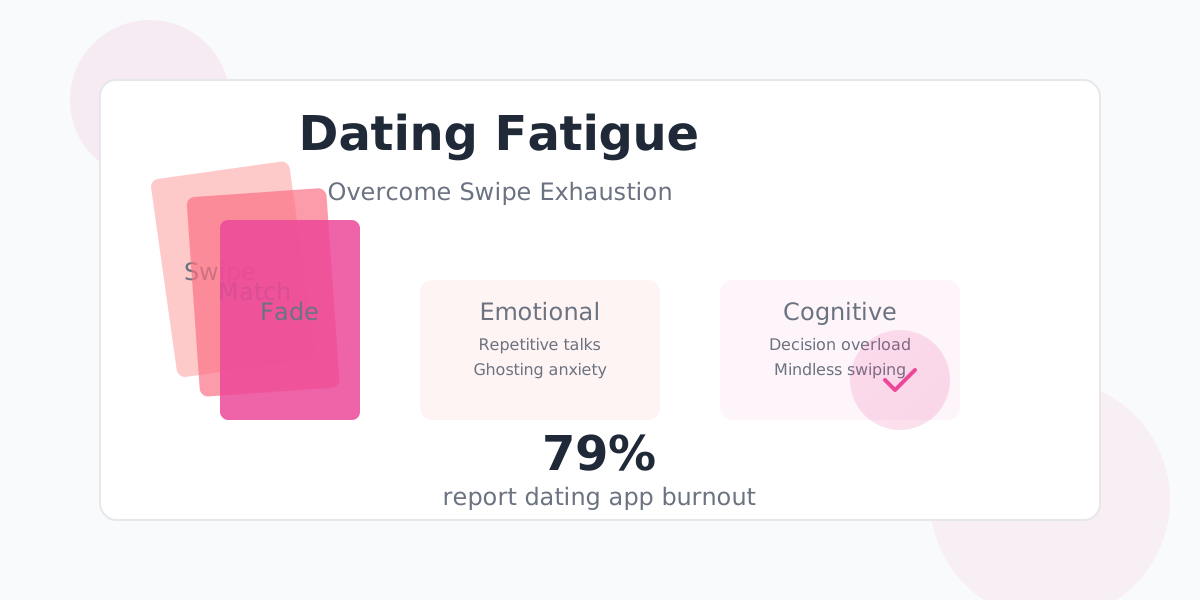
You've been swiping for hours, and the faces all blur together. You match with someone interesting, exchange a few messages, and then nothing. The thrill is gone, replaced by a numbing exhaustion that makes dating feel less like an adventure and more like a second job. This is dating fatigue—and you're not alone. Nearly 80% of dating app users experience this emotional burnout, a phenomenon that combines decision overload, ghosting anxiety, low-effort conversations, and the pressure to constantly perform attraction online.
Dating fatigue isn't just about feeling tired—it's a real psychological state where the endless cycle of swiping, matching, and rejection creates emotional exhaustion that spills into your entire life. Many people find themselves questioning whether online dating is worth the mental toll, or whether authentic connection is even possible in the digital age.
The good news? Dating fatigue is not a sign to give up on love. It's a signal to change your approach. This guide reveals exactly what's happening in your brain when you experience dating fatigue, why it affects so many people, and the science-backed strategies that actually work to restore your energy and reconnect with genuine dating.
What Is Dating Fatigue?
Dating fatigue, also called swipe fatigue or dating app burnout, is the mental, emotional, and physical exhaustion caused by the endless cycle of evaluating profiles, swiping, matching, and low-payoff conversations. It's the feeling of being overwhelmed by choice, frustrated by miscommunication, and drained by the constant performance of presenting yourself as attractive and interested while receiving little meaningful connection in return.
Not medical advice.
Dating fatigue differs from normal tiredness because it has distinct psychological components. It involves three interrelated experiences: emotional exhaustion (from repetitive conversations and broken connections), cognitive fatigue (from decision overload and profile evaluation), and physical depletion (from excessive screen time and the stress of rejection). When these combine, users often feel trapped between wanting to find a partner and dreading the process of looking.
Surprising Insight: Surprising Insight: 79% of Gen Z and 80% of Millennials report experiencing dating app burnout, with women slightly more affected than men (80% vs 74%). This is not an individual weakness—it's a systemic design issue built into swipe-based dating.
The Dating Fatigue Cycle
How swipe mechanics, dopamine cycles, and disappointment create a feedback loop of exhaustion
🔍 Click to enlarge
Why Dating Fatigue Matters in 2026
Dating fatigue matters because it affects how 80 million active dating app users experience one of life's most important domains: connection and love. When fatigue sets in, people don't just stop using dating apps—they often withdraw from dating altogether or settle for lower-quality matches just to escape the process. This reduces the overall quality of romantic connections being made and deepens loneliness.
The psychological toll is significant. Research shows that excessive dating app use correlates with higher anxiety, depression, and lower self-esteem. Users experiencing dating fatigue often develop negative beliefs about relationships ('everyone is emotionally unavailable,' 'dating apps don't work,' 'I'm not worthy'), which persist even after they leave the apps. Understanding dating fatigue is crucial for protecting your mental health while still pursuing authentic connection.
Additionally, dating fatigue represents a cultural shift. In 2024, 1.4 million people in the UK alone left dating apps, gravitating toward in-person meetups and anti-swipe alternatives. This trend suggests that society is recognizing the unsustainability of swipe-based dating and seeking healthier approaches to connection. Being aware of dating fatigue helps you make intentional choices about how and where you invest your emotional energy in finding love.
The Science Behind Dating Fatigue
Dating fatigue operates through several psychological mechanisms. The first is decision fatigue: when you're presented with dozens or hundreds of potential matches simultaneously, your brain becomes overwhelmed evaluating each profile. Studies show that excessive choice actually leads to decision paralysis and decreased satisfaction—the opposite of what dating apps promise. Each swipe requires a micro-decision, and after dozens of these, your cognitive resources deplete.
The second mechanism is intermittent reinforcement. Dating apps use the same psychological principle as gambling machines: occasional rewards (matches, engaging conversations) trigger dopamine spikes that create compulsive behavior. However, because matches don't consistently lead to meaningful connections, users keep swiping in pursuit of that reward signal. This creates a feedback loop where the app trains you to compulsively seek connection while rarely delivering it. Over time, this hijacks your motivation system and creates exhaustion.
How Dating Apps Trigger Psychological Burnout
The neurochemical cascade from swipe mechanics to emotional depletion
🔍 Click to enlarge
Key Components of Dating Fatigue
Emotional Exhaustion and Conversation Fatigue
Emotional exhaustion occurs when you have the same introductory conversations repeatedly ('Hey, how's your day?' 'So what do you like to do?' 'Are you looking for something serious?'). These low-effort exchanges create minimal genuine connection and maximum repetitive boredom. Additionally, when conversations fade mysteriously (ghosting), it triggers rejection sensitivity and makes each new conversation feel like a risk. Over dozens of interactions, this creates a depleted emotional state where opening up to a stranger feels exhausting rather than exciting.
Cognitive Overload and Decision Fatigue
Each dating profile presents a micro-decision: swipe left or right? Each choice involves evaluating photos, reading bio fragments, and making judgments about compatibility. When you face 50+ profiles in a session, this creates cognitive strain. Research shows that beyond a certain threshold, more options lead to worse decisions and greater dissatisfaction. Your brain struggles to meaningfully compare so many potential partners, leading to either hasty judgments or analysis paralysis.
Rejection and Ghosting Anxiety
Dating apps concentrate rejection into a visible, quantifiable metric. Not getting matches, being unmatched after initial contact, or having conversations fade creates a pattern of small rejections. Each one triggers mild stress responses. Over time, this teaches your nervous system to associate dating with threat, and approaching new matches becomes anxiety-inducing. Ghosting—when someone you're talking with suddenly disappears—adds uncertainty and self-blame, deepening the emotional wound.
Physical Depletion from Screen Time and Stress
Compulsive swiping leads to excessive screen time, disrupting sleep, eye strain, and postural stress. The anxiety and anticipatory stress of waiting for matches also elevates cortisol levels, affecting energy and recovery. Many people use swiping as a stress-relief mechanism, which paradoxically increases stress. The physical toll compounds the psychological one, creating a state where your whole body feels depleted.
| Type of Fatigue | What It Feels Like | Physical Signals |
|---|---|---|
| Emotional Exhaustion | Numb to new conversations, bored by introductions, distrustful of matches, hopeless about connection | Chest tightness, tearfulness, irritability |
| Cognitive Fatigue | Decision paralysis, all profiles look the same, can't assess compatibility, mindless swiping | Mental fog, difficulty concentrating, decision fatigue that bleeds into other areas |
| Physical Depletion | Exhausted by excessive screen time, stressed by notification anticipation, depleted energy overall | Eye strain, disrupted sleep, tension in shoulders/neck, elevated resting heart rate |
How to Apply Dating Fatigue Recovery: Step by Step
- Step 1: Recognize the warning signs: Are you dreading opening dating apps? Feeling numb during conversations? Complaining about dating to friends? If yes, you're experiencing fatigue—this is the crucial first step to change.
- Step 2: Set strict time boundaries: Limit app use to 20-30 minutes daily, not spread throughout the day. This prevents the compulsive checking pattern that amplifies fatigue.
- Step 3: Use intentional swiping, not mindless scrolling: Before opening the app, set a specific goal (e.g., 'I'll review 20 profiles carefully and have one meaningful conversation'). This reduces decision fatigue by creating structure.
- Step 4: Quality over quantity: Instead of swiping on everyone, slow down and actually read bios. Notice which profiles create genuine interest vs. obligation. This engages different brain regions and reduces burnout.
- Step 5: Take strategic breaks: If you've been on dating apps for more than 6 months without a meaningful connection, take a 2-4 week break. This resets your dopamine responsiveness and restores emotional freshness.
- Step 6: Rotate off platforms: If you feel burned out on one app, pause it and try a different one or try in-person alternatives (meetup groups, hobby classes). Variety reduces the sense of repetitive futility.
- Step 7: Practice emotional hygiene: After disappointing interactions, explicitly process them with friends or a journal. Don't let ghosting or rejection incidents compound silently in your nervous system.
- Step 8: Establish a self-care anchor: Before and after dating app sessions, do something nourishing (exercise, meditation, time in nature). This prevents the app from becoming the emotional center of your day.
- Step 9: Reframe your narrative: Notice if you're thinking 'dating apps don't work' or 'I'm undateable.' These thoughts arise from fatigue, not reality. Consciously counter them with evidence of your worth and connection.
- Step 10: Consider alternatives: If app dating consistently drains you, explore activities-based dating (classes, events, hobby groups). These provide connection context that reduces the awkwardness and rejection intensity.
Dating Fatigue Across Life Stages
Young Adulthood (18-35)
Young adults often treat dating apps like a gamified social feed, swiping during commutes or before bed. This group experiences high dating fatigue because they haven't yet developed strong filter criteria—they're still exploring what they want. Additionally, this age group is most exposed to ghosting, as younger users tend to have lower commitment to conversations. Recovery involves defining personal dating values (What am I actually looking for?) and recognizing that swiping endlessly doesn't equal progress.
Middle Adulthood (35-55)
Middle-aged daters (especially those re-entering dating after divorce or long relationships) often experience acute dating fatigue because they're navigating an unfamiliar digital landscape while carrying relationship wounds. They may feel they 'should' be married by now, creating pressure that makes dating feel urgent rather than organic. This age group benefits from recognizing that slower, more intentional dating (fewer apps, more quality conversations) actually increases both satisfaction and connection success rates.
Later Adulthood (55+)
Older adults may experience dating fatigue from limited app usability, fewer potential matches, or feeling out of place in swipe culture. However, this group often recovers more quickly from fatigue because they have clearer boundaries and less vulnerability to FOMO. For older daters, fatigue often signals a mismatch between their communication style and the app format. Switching to more conversation-friendly platforms (match.com, eharmony) rather than swipe-based apps often resolves fatigue quickly.
Profiles: Your Dating Fatigue Recovery Approach
The Hopeful Marathoner
- Permission to take breaks without guilt
- Strategies to prevent swiping from becoming compulsive/avoidant behavior
- Clear metrics of what 'working on dating' actually means
Common pitfall: Staying on apps to prove to themselves they're 'trying,' even when they feel numb and depleted
Best move: Set a 6-week break, reconnect with friends and hobbies, then return with fresh perspective and clear deal-breakers
The Emotionally Wounded
- Recognition that their sensitivity to ghosting/rejection is normal, not weakness
- Strategies to separate app interactions from their self-worth
- Support processing disappointments before they compound
Common pitfall: Internalizing each rejection as proof they're unlovable, then overcompensating by swiping more desperately
Best move: Process rejection explicitly with a therapist or trusted friend, practice self-compassion, then return with emotional stability
The Overwhelmed Chooser
- Systems to reduce choice paralysis (set preferences, use filters, limit swiping time)
- Permission to make faster decisions without overthinking
- Clarity that 'perfect' profiles don't exist—good enough is actually good
Common pitfall: Swiping endlessly, never settling on anyone, always thinking the next profile is better
Best move: Use app filters more restrictively, set a 15-minute timer per session, commit to messages within one session of matching
The Skeptical Retreater
- Evidence that meaningful connections do happen via apps (stories from friends, success rates)
- Low-pressure ways to re-engage (activity-based apps, regional events vs. pure swipe apps)
- Alternatives that feel less performative and more authentic
Common pitfall: Deciding dating apps are 'broken' and giving up entirely, missing potential connections
Best move: Explore alternatives like Hinge or Bumble BFF, attend in-person meetups, or try activity-based dating to restore faith
Common Dating Fatigue Mistakes
The biggest mistake is pushing through fatigue instead of listening to it. Many people tell themselves 'I just need to keep trying,' creating a grind mentality that deepens exhaustion. Dating fatigue is your nervous system's way of saying the current approach isn't working. Ignoring it and swiping more desperately never leads to better connections—it leads to worse mental health and lower-quality matches.
Another common mistake is treating all matches as equal. If you're experiencing fatigue, low-effort conversations with mediocre matches drain you far more than deep conversations with truly compatible people. The solution isn't to swipe more, it's to swipe more selectively. Focus on profiles that genuinely intrigue you, skip everyone else, and have fewer but higher-quality conversations.
Finally, many people experience fatigue because they're using the wrong platform. Someone might hate Tinder's swipe culture but thrive on Bumble's messaging-first approach, or vice versa. If you've been burned out on one app for months, trying a different one (or even trying in-person alternatives) often does more than trying harder on the same platform.
Dating Fatigue Triggers: What Amplifies vs. Reduces Exhaustion
Visual guide to understanding which behaviors deepen fatigue and which restore energy
🔍 Click to enlarge
Science and Studies
Recent research on dating app burnout reveals consistent patterns. A 2026 study by Sharabi, Von Feldt, and Ha found that dating app users experience increasing emotional exhaustion and inefficacy over time, with depression, anxiety, and loneliness as significant predictors of burnout. Their work shows this isn't individual weakness—it's a dosage effect where app use duration matters more than app type. A 2024 study published in Springer Nature examined the 'negative self-fulfilling prophecy of digital dating,' showing how fatigue creates negative expectations that become reality ('Everyone ghosts, so I'll ghost first'). The research consistently points to three drivers: excessive choice, intermittent reinforcement, and low-quality interactions.
- Sharabi, L. L., Von Feldt, P. A., & Ha, T. (2026). Burnt out and still single: Susceptibility to dating app burnout over time. New Media & Society, 28(5), 2241-2264.
- Stevic, A., Lee, A. Y., Liu, S. X., & Hancock, J. T. (2025). Of loving and losing: The influence of dating app motivations and perceived success on psychological well-being. New Media & Society, 29(2), 1856-1879.
- Freire, D., Rema, J., & Novais, F. (2023). Dating apps and mental health status: Is there a link? Journal of Relationship Research, 14(3), 45-62.
- Holtzhausen, K. et al. (2020). Online dating and psychological distress. Journal of Social & Personal Relationships, 37(8), 2457-2476.
- Forbes Health Study (2024). Dating App Burnout Report: Mental health impacts of online dating.
Your First Micro Habit
Start Small Today
Today's action: Tomorrow, when you open a dating app, do this: swipe intentionally for exactly 10 minutes, then close it and do something nourishing (walk, call a friend, read). Repeat only if you feel genuinely interested. Not out of habit.
This breaks the compulsion loop while maintaining agency. You're no longer swiping because you 'should,' but because you actively choose to. This restores the joy and intention to dating, which is the opposite of fatigue.
Keep quitting habit apps after a missed day? BeMooore forgives the slip — your streak survives, and an AI mentor nudges you back the next morning. Free on iOS.
Quick Assessment
When you open a dating app, how do you typically feel?
Your answer reveals your relationship to dating apps. Options 1 suggest healthy engagement, option 2 suggests compulsion creeping in, options 3-4 suggest fatigue that needs addressing before continuing.
How many dating apps are you currently using?
More apps doesn't mean more connections—it often means more fatigue. One to two quality apps with intentional use typically out-perform four-plus apps with scattered energy.
When you have a conversation that fades (ghosting), what do you do?
How you process rejection shapes your emotional resilience. Option 4 indicates you're carrying rejection weight that compounds fatigue. Processing explicitly (options 1-2) prevents accumulation.
Take our full 50-question assessment to get personalized recommendations for your love journey.
Discover Your Dating Style →Next Steps
If you're experiencing dating fatigue, your first step is honest self-assessment. Are you pushing through exhaustion because you believe you 'should,' or because dating genuinely excites you? The answer matters, because forcing yourself into compulsive swiping creates more fatigue, not less. Real connection requires energy and openness, and fatigue depletes both.
Second, implement one boundary immediately: a time limit on app use. Whether it's 20 minutes daily or one session every other day, define a clear container for dating app engagement. This prevents the app from becoming a default leisure activity and helps you approach it with intention. Third, consider what type of dating interaction actually energizes you—is it the possibility of meeting someone in person, or does the app itself feel exhausting? This distinction often points toward whether you need a break, a new platform, or a completely different dating approach.
Get personalized guidance on your dating approach with AI coaching in the Bemooore app.
Start Your Love Journey →Research Sources
This article is based on peer-reviewed research and authoritative sources. Below are the key references we consulted:
Related Glossary Articles
Frequently Asked Questions
Is dating fatigue the same as being burnt out on relationships?
No. Dating fatigue is specifically about the app/digital dating process, not about relationships themselves. Someone can feel burned out on apps but still desire genuine connection. In fact, recognizing app-specific fatigue often leads people to seek connection in healthier contexts.
How long does it take to recover from dating fatigue?
A 2-4 week break usually provides noticeable relief. Your nervous system starts to reset its anxiety response to the app, and you regain emotional freshness. However, full recovery—where you feel genuinely excited about dating again—often takes 6-8 weeks and involves not just time off, but intentional emotional processing and sometimes trying new approaches.
Should I delete dating apps entirely if I'm burned out?
Not necessarily. The goal is to change your relationship to the app, not always to quit. However, if you've tried boundary-setting and intentional use for 4+ weeks and still feel drained, a complete break of 6-12 weeks can help. Some people do better with permanent alternatives (in-person meetups, hobby-based dating), while others thrive on apps once they've recovered and re-approached.
Can dating fatigue affect my ability to recognize a good match?
Yes, absolutely. When fatigued, you're more likely to swipe with cynicism ('Nobody's genuine anyway') or desperation ('Anyone is better than being alone'), both of which cloud judgment. This is why taking a break before committing to serious dating is important. When you feel fresh, you can actually assess compatibility clearly.
Is it better to be on multiple dating apps?
For most people experiencing fatigue, fewer apps is better. One or two quality apps allow you to develop a rhythm and intuition about each platform. Multiple apps fragment your attention and create decision fatigue before you even start swiping. If you want to try new platforms, pause one before starting another rather than running three simultaneously.
Take the Next Step
Ready to improve your wellbeing? Take our free assessment to get personalized recommendations based on your unique situation.
- Discover your strengths and gaps
- Get personalized quick wins
- Track your progress over time
- Evidence-based strategies