Anxious-Avoidant Trap
You reach out; they pull away. The more you pursue closeness, the more they need space. This painful dance—where one partner constantly seeks reassurance while the other withdraws to protect themselves—is one of the most common relationship patterns affecting couples today. Yet few people recognize it while they're living it. The anxious-avoidant trap is a self-perpetuating cycle rooted in attachment styles developed during childhood, and it can persist for years, leaving both partners feeling misunderstood, rejected, and exhausted.
Research shows that 75% of couples worldwide experience some version of this pursue-withdraw pattern at some point, making it perhaps the most universal relationship challenge across cultures.
The good news: this cycle can be interrupted. Understanding the underlying dynamics is the first step toward building the secure, connected relationship you truly want.
What Is the Anxious-Avoidant Trap?
The anxious-avoidant trap is a dysfunctional relationship pattern that occurs when two people with opposing insecure attachment styles fall into an escalating cycle of pursuit and withdrawal. In this dynamic, one partner (the anxious pursuer) has an intense need for closeness, reassurance, and emotional connection. When they feel the relationship slipping away or sense emotional distance, their nervous system activates a protest response: they pursue more intensely through increased communication, seeking reassurance, or demanding more engagement.
Not medical advice.
Meanwhile, their partner (the avoidant withdrawer) experiences this pursuit as suffocating and overwhelming. Raised in an environment where independence was valued over emotional expression, the avoidant partner's nervous system interprets closeness as a threat to their autonomy. In response, they deactivate their attachment system by creating distance through emotional withdrawal, short responses, avoiding conversations, or physically distancing themselves. This withdrawal triggers the anxious partner's deepest fear—abandonment—causing them to pursue even harder, which pushes the avoidant partner further away.
Surprising Insight: Surprising Insight: Research finds that both partners are actually expressing the same underlying need—for safety and security—but through opposite behavioral strategies that actively prevent them from getting what they need.
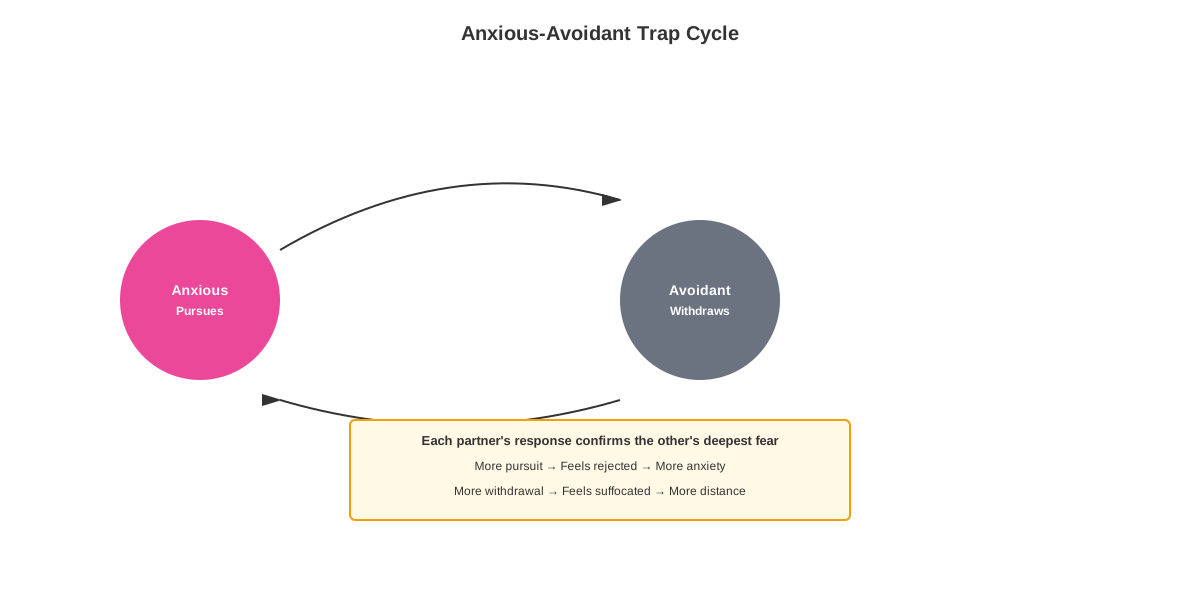
The Anxious-Avoidant Cycle
Visual representation of how anxious pursuit triggers avoidant withdrawal, which then intensifies anxious pursuit
🔍 Click to enlarge
Why the Anxious-Avoidant Trap Matters in 2026
In our hyper-connected world of instant messaging, social media, and constant digital access, the anxious-avoidant dynamic has intensified. The anxious partner now has countless ways to reach out and monitor their partner's activity, while the avoidant partner has more ways to disappear into work, hobbies, or online distractions. This pattern no longer just affects couples—it's showing up in friendships, family relationships, and workplace dynamics.
Breaking free from this trap is essential because the pattern is directly linked to higher rates of relationship dissolution, infidelity, intimate partner conflict, and poorer mental and physical health outcomes for both partners. Anxious individuals in trapped relationships show elevated cortisol and anxiety levels, while avoidant partners experience emotional numbness and dissociation. Both experience higher rates of depression.
Understanding and interrupting this cycle represents one of the highest-leverage investments you can make in your relational well-being. Couples who recognize this pattern and work to shift it report significantly improved relationship satisfaction, better communication, and decreased conflict intensity.
The Science Behind the Anxious-Avoidant Trap
Attachment theory, developed by John Bowlby and expanded by Mary Ainsworth, explains how early experiences with caregivers shape our nervous system's expectations about safety, connection, and trust. Children whose caregivers were consistently available and responsive develop secure attachment. They learn that relationships are safe and that their needs matter. But when caregiving is inconsistent, unavailable, or overwhelming, children develop insecure attachment patterns to survive in that environment.
Anxiously attached individuals typically grew up with inconsistent emotional availability—sometimes a caregiver was loving and present, other times withdrawn or preoccupied. This unpredictability created hypervigilance: the child learned to escalate their needs (crying louder, asking more questions, seeking more reassurance) to capture the caregiver's attention when it started slipping away. Now as adults, this pattern is locked into their nervous system. When they sense emotional distance from a partner, their body perceives danger and activates the same protest behaviors. Avoidantly attached individuals, by contrast, grew up with caregivers who were emotionally distant, dismissive of needs, or overwhelmed. These children learned that expressing attachment needs was ineffective or unwelcome. Instead, they developed a strategy of self-reliance and emotional suppression. Now, when a partner seeks closeness, their nervous system experiences it as invasion rather than comfort, triggering withdrawal to restore their sense of control and safety.
Attachment Styles and Nervous System Responses
How different attachment styles activate different nervous system responses to emotional distance
🔍 Click to enlarge
Key Components of the Anxious-Avoidant Trap
The Pursuit Strategy
The anxious partner's pursuit behaviors include increased communication attempts (texts, calls, requests to talk), seeking reassurance about the relationship's status, criticism or blame directed at the avoidant partner for not being emotionally available, and escalating emotional intensity to capture attention. These behaviors are driven by genuine fear of abandonment and a desperate need to restore felt security. From the anxious person's internal experience, they are fighting for the relationship.
The Withdrawal Strategy
The avoidant partner's withdrawal manifests as emotional distance (short answers, minimal engagement), avoiding conversations about the relationship or feelings, creating physical distance through work or hobbies, or shutting down during conflict. These aren't chosen consciously—they're automatic nervous system responses designed to restore autonomy and reduce perceived threat. From the avoidant person's experience, they are protecting themselves.
The Feedback Loop
Each partner's strategy confirms the other's worst fear. When the anxious partner pursues and the avoidant partner withdraws, the anxious person experiences it as rejection, confirming their fear that they're not lovable. When the avoidant partner withdraws and the anxious person pursues, the avoidant person experiences it as being controlled or suffocated, confirming their need for distance. Both people become increasingly defensive, and the cycle deepens.
Nervous System Dysregulation
Research using heart rate monitors and cortisol measurements shows that during pursue-withdraw conflicts, the withdrawing partner experiences physiological flooding—heart rate exceeding 90-100 beats per minute with elevated adrenaline and cortisol. Their nervous system is literally in a stress state. Meanwhile, the pursuing partner experiences unmet needs and escalating anxiety. Both partners are in survival mode, making it nearly impossible to think clearly, communicate effectively, or access the compassion needed to bridge the gap.
| Attachment Style | Early Experience | Adult Relationship Pattern |
|---|---|---|
| Anxious/Preoccupied | Inconsistent caregiving; unpredictable availability | Seeks closeness; fears abandonment; high need for reassurance |
| Avoidant/Dismissive | Emotionally distant caregiving; independence emphasized | Seeks autonomy; fears engulfment; minimizes relationship needs |
| Anxious-Avoidant Pairing | Opposite nervous system templates collide | Pursue-withdraw cycle; escalating conflict; mutual pain |
How to Apply Anxious-Avoidant Trap Knowledge: Step by Step
- Step 1: Recognize your attachment style: Assess whether you tend toward anxious, avoidant, or secure patterns by reflecting on your relationship history and current relationship responses.
- Step 2: Identify the cycle in action: Notice the specific behaviors—texts left unread, requests to talk met with silence, criticism followed by withdrawal—that trigger each other.
- Step 3: Pause before escalating: When you feel the urge to pursue or withdraw, take a moment to recognize what's happening in your nervous system.
- Step 4: Name your underlying need: Behind pursuit is usually a need for reassurance and closeness. Behind withdrawal is usually a need for autonomy and space. Name it without judgment.
- Step 5: Communicate from vulnerability: Instead of pursuing harder or withdrawing further, try expressing the underlying need: 'I'm feeling disconnected and I'm scared you don't care anymore' (anxious) or 'I need some space to feel like myself' (avoidant).
- Step 6: Create safety for your partner: Anxious partners can offer the gift of independence; avoidant partners can offer reassurance that closeness won't consume them.
- Step 7: Use 'soften and engage' techniques: Research by Dr. Sue Johnson shows that shifting from demand-withdraw to soften-engage—sharing vulnerability instead of criticism—can interrupt the cycle in a single conversation.
- Step 8: Regulate your nervous system together: Techniques like synchronized breathing, hand-holding, or sitting in comfortable silence can help both partners step out of survival mode.
- Step 9: Practice the 'softened startup': Begin difficult conversations with curiosity and tenderness rather than blame: 'I've been noticing we haven't connected much lately, and I miss you. What's going on with you?'
- Step 10: Seek professional support: A couples therapist trained in attachment theory and emotionally focused therapy (EFT) can provide targeted interventions that work for this specific pattern.
Anxious-Avoidant Trap Across Life Stages
Young Adulthood (18-35)
Young adults are still forming their relationship patterns and may not yet recognize themselves as anxious or avoidant. Early relationships might feel intensely dramatic—cycles of intense connection followed by confusing distance. During this stage, there's often more opportunity to shift patterns before they become entrenched. Therapy or coaching can be particularly effective here because neural pathways are still relatively plastic.
Middle Adulthood (35-55)
By middle age, anxious-avoidant patterns are deeply embedded. Partners may have developed workarounds—separate lives, minimal emotional engagement, parallel living. Some relationships end during this stage when one partner finally says 'I can't do this anymore,' while others continue in a state of chronic disconnection. Intervention here requires willingness from both partners but can be profoundly healing if that willingness exists.
Later Adulthood (55+)
Older couples with ingrained anxious-avoidant patterns sometimes experience a shift when mortality becomes real. Some find renewed motivation to truly connect. Others have simply resigned to disconnection. Health challenges can either deepen the cycle—anxiety increases at potential loss, avoidance increases in response—or soften it as both partners face shared vulnerability.
Profiles: Your Anxious-Avoidant Trap Approach
The Persistent Pursuer
- Reassurance that your needs for connection are valid and worthy of attention
- Evidence that your partner cares, even if they show it differently than you do
- Boundaries around how much pursuing is healthy for you
Common pitfall: Believing that if you just pursue hard enough, say the right thing, or sacrifice more, your partner will finally give you what you need
Best move: Learn to self-soothe and build security within yourself first; practice communicating needs from a place of self-assurance rather than desperation
The Protective Withdrawer
- Genuine space and respect for your need for autonomy and processing time
- Confidence that expressing feelings won't result in judgment or demands
- Understanding that closeness and individuality aren't mutually exclusive
Common pitfall: Using withdrawal as your primary conflict resolution tool, which ultimately leaves you isolated and your partner heartbroken
Best move: Practice small steps of vulnerability and reassurance; recognize that brief moments of connection won't actually consume your identity
The Secure-Leaning Partner
- Recognition that you might be more flexible than your anxious-avoidant partner but still have limits
- Support to not take your partner's style personally or take on all the responsibility for fixing the relationship
- Permission to set boundaries if the dynamic becomes too draining
Common pitfall: Trying to be the secure base for both partners, which depletes your own emotional resources
Best move: Model secure attachment while encouraging both partners to take ownership of their own healing work
The Fearful-Avoidant Both-And
- Recognition that you contain both anxious and avoidant impulses, often at the same time
- Compassion for your confusing internal experience where you want closeness but fear it simultaneously
- Structured therapy to develop earned security
Common pitfall: Swinging between pursuing and withdrawing yourself, creating chaos that confuses everyone, including you
Best move: Focus on self-compassion and understanding your triggers; work with a therapist to develop a stable internal secure base
Common Anxious-Avoidant Trap Mistakes
Mistake 1: Believing the cycle is about love. One of the most damaging beliefs is that if your partner truly loved you, the cycle wouldn't exist. In reality, love is present—it's just blocked by neurobiology and attachment wiring. Many deeply loving couples are caught in this trap. The cycle exists because of how both nervous systems learned to seek safety, not because of insufficient love.
Mistake 2: Expecting your partner to change first. Both anxious and avoidant partners often wait for the other to shift. 'If they would just communicate more,' the anxious person thinks. 'If they would just give me space,' the avoidant person thinks. In reality, one person shifting can disrupt the entire system. If you stop pursuing and start self-soothing, it removes fuel from the cycle. If you start sharing vulnerability instead of withdrawing, it creates safety that the anxious partner craves.
Mistake 3: Trying to force connection during heightened conflict. When both nervous systems are activated, the brain literally cannot access the parts responsible for empathy, curiosity, or problem-solving. Trying to 'talk it out' in the heat of a pursue-withdraw cycle usually makes it worse. The highest-leverage move is to recognize flooding, take a break, and return when you're both regulated.
Breaking the Anxious-Avoidant Cycle: Key Interventions
Specific techniques to interrupt each phase of the pursue-withdraw cycle
🔍 Click to enlarge
Science and Studies
Research on pursue-withdraw patterns and attachment dynamics comes from multiple disciplines, all pointing to the same conclusion: this is a nearly universal pattern affecting three-quarters of couples, it has neurobiological roots that can be understood and changed, and specific therapeutic interventions are highly effective. The most robust research comes from emotionally focused therapy (EFT) outcome studies and attachment theory research conducted over the past 30 years.
- PMC National Center for Biotechnology Information: 'Demand-Withdraw Patterns in Marital Conflict in the Home' (2012) - Foundational study documenting the pursue-withdraw pattern in 75% of couples across cultures
- Psychiatry International (2024): 'The Interplay between Anxious and Avoidant Attachment' - Recent research showing avoidant individuals still experience emotional dysregulation despite appearing calm
- Gottman Institute Research: Studies by John Gottman on physiological flooding during conflict and its role in relationship dissolution
- Sue Johnson's Emotionally Focused Therapy (EFT) Outcome Studies: 70-80% success rate for couples using EFT to interrupt pursue-withdraw cycles
- Psychology Today (2024): 'Breaking the Pursue-Withdraw Cycle: The Power of Response' - Practical application of recent neuroscience research
Your First Micro Habit
Start Small Today
Today's action: When you feel the urge to pursue OR withdraw, pause for 10 seconds and notice what emotion is underneath: fear, shame, anger, loneliness. Just name it internally without acting. Do this for one week.
This micro habit creates the smallest possible gap between stimulus and response. In that gap lives freedom. You're training your nervous system to notice the pattern before it escalates. Over time, you can respond from choice rather than reactivity.
Keep quitting habit apps after a missed day? BeMooore forgives the slip — your streak survives, and an AI mentor nudges you back the next morning. Free on iOS.
Quick Assessment
In your current or recent relationship, do you more often feel the urge to pursue your partner for connection or to withdraw for space?
Your answer reveals your attachment style tendency. Knowing this is the first step toward creating change.
When your partner pursues (or withdraws), what do you experience first?
This reveals how your nervous system is wired to respond to your partner's attachment bids. Understanding this response pattern is key to changing it.
Which statement resonates most with your relationship experience?
This helps clarify where your relationship is on the secure-insecure spectrum and which interventions might help most.
Take our full assessment to get personalized recommendations.
Discover Your Style →Next Steps
Understanding the anxious-avoidant trap is profound, but knowledge alone doesn't change relationships. The most important next step is noticing the pattern in real-time. This week, when you feel an urge to pursue or withdraw, pause and name what's happening: 'This is the cycle. My nervous system is activated. What do I really need?' That moment of awareness is where change begins.
If you're ready to move beyond awareness to actual change, consider working with a couples therapist trained in emotionally focused therapy (EFT) or attachment-based couples work. They can help both of you understand your individual attachment stories and create new patterns together. The investment in your relationship now can reshape decades of connection ahead.
Get personalized guidance with AI coaching.
Start Your Journey →Research Sources
This article is based on peer-reviewed research and authoritative sources. Below are the key references we consulted:
Related Glossary Articles
Frequently Asked Questions
Is the anxious-avoidant trap always a relationship death sentence?
No. Many couples with this pattern have thriving relationships once they recognize what's happening and work to shift it. Research shows 70-80% of couples in emotionally focused therapy (EFT) successfully interrupt the cycle. The key is willingness from both partners and evidence-based interventions.
Can a secure person fix an anxious-avoidant dynamic?
A secure person can model better patterns and offer stability, but they cannot alone fix an anxious-avoidant couple. Both anxious and avoidant partners must do their own work to shift their nervous system responses. A secure partner who tries to be the bridge for both often becomes depleted.
Is there hope if my partner refuses to acknowledge the pattern?
Yes. One person changing can shift the entire system. If you stop pursuing and start self-soothing, or if you start expressing vulnerability instead of withdrawing, your partner's nervous system will likely respond differently. That said, couples therapy is more effective than individual work for addressing this pattern.
How long does it take to break the anxious-avoidant cycle?
People often notice shifts in a single conversation once they understand the pattern. However, creating lasting change typically takes 8-12 weeks of consistent new responses, which is how long it takes for nervous system changes to solidify into new patterns. With therapy, couples often see meaningful shifts in 4-6 sessions.
What if I'm anxious in one relationship but avoidant in another?
This is actually common. People often express anxious styles with emotionally unavailable partners and avoidant styles with anxious partners. This suggests you may have a 'fearful-avoidant' or 'disorganized' attachment style, where you contain both impulses. This is very treatable with targeted work.
Take the Next Step
Ready to improve your wellbeing? Take our free assessment to get personalized recommendations based on your unique situation.
- Discover your strengths and gaps
- Get personalized quick wins
- Track your progress over time
- Evidence-based strategies