Values-Based Living
Imagine waking up each morning knowing exactly why you're doing what you're doing. Your work, relationships, choices—all aligned with what truly matters to you. This is values-based living: the practice of making decisions and taking actions that reflect your deepest beliefs about what makes life meaningful. Research shows that people who live according to their values experience significantly higher life satisfaction, lower stress levels, and greater psychological resilience. Values-based living forms the foundation of Acceptance and Commitment Therapy (ACT), a scientifically-proven approach that has helped over 1,300 randomized controlled trials worldwide demonstrate improvements in mental health, relationships, and overall well-being.
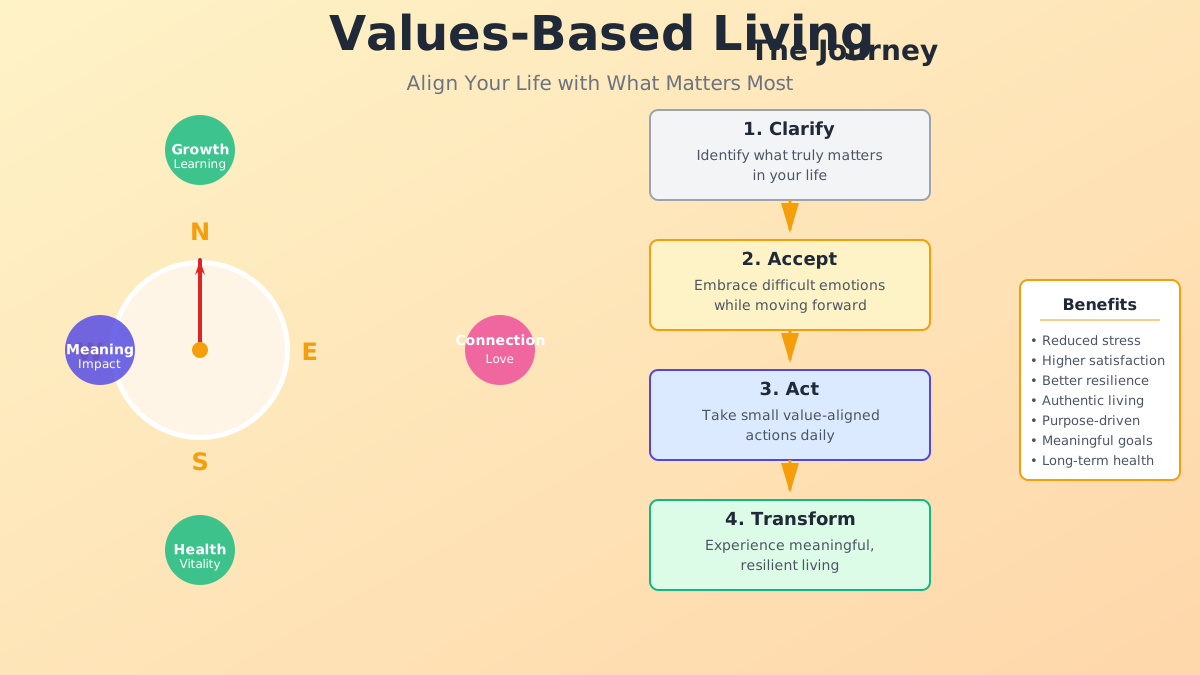
In our hyper-connected 2026 world of constant obligations and external expectations, values-based living offers an anchor. It's the difference between drifting through life according to others' priorities and actively steering your ship toward what genuinely matters to you.
This approach isn't about pursuing happiness directly. Instead, it's about identifying your core values and committing to actions aligned with them—even when difficult emotions arise. This subtle shift produces profound results.
What Is Values-Based Living?
Values-based living is the practice of consciously aligning your daily actions, relationships, and life decisions with your core personal values. Your values are the principles and qualities that matter most to you—how you want to behave, treat others, contribute to the world, and live your life. They're different from goals: goals are specific outcomes (like earning a promotion), while values are ongoing directional principles (like contributing meaningful work). Values-based living means making choices guided by these principles, even when doing so requires facing discomfort or sacrificing short-term rewards.
Not medical advice.
Values-based living is rooted in Acceptance and Commitment Therapy (ACT), developed by clinical psychologist Steven Hayes in the 1980s. Unlike traditional approaches that focus on eliminating negative thoughts or emotions, ACT embraces a different strategy: accept your internal experiences and commit to value-aligned action regardless. This creates what researchers call psychological flexibility—the ability to stay present with difficult feelings while still moving forward toward what matters.
Surprising Insight: Surprising Insight: Research reveals that daily value-based actions are negatively associated with daily psychological distress and positively associated with daily well-being. People who engage in just one action aligned with their values experience measurable improvements in mood and stress levels within hours, not weeks.
The Values-Based Living Framework
Flow chart showing how values guide decisions, which shape daily actions, which create life satisfaction
🔍 Click to enlarge
Why Values-Based Living Matters in 2026
In 2026, we face unprecedented external pressures: social media comparison, career expectations, financial uncertainty, and information overload. Without a clear personal compass, it's easy to adopt values that aren't truly yours—chasing others' definitions of success, wealth, or happiness. Values-based living cuts through this noise by anchoring you in what actually matters to your unique life.
Research published in 2024-2025 shows that valued living significantly predicts lower depression and anxiety, regardless of personality type. When individuals align their actions with their values, they demonstrate enhanced psychological resilience and better coping with life challenges. This is particularly important as we navigate rapid social, economic, and technological changes.
Perhaps most compelling: individuals with a strong sense of purpose (facilitated through values-based living) showed approximately 30% lower risk of developing dementia over 17-year follow-up periods compared to those without purpose. Values-based living isn't just about current happiness—it protects long-term cognitive health and life quality.
The Science Behind Values-Based Living
The neuroscience of values-based living shows that when you engage in actions aligned with your personal values, your brain activates reward pathways differently than when pursuing external rewards. Specifically, the ventromedial prefrontal cortex (involved in meaning-making) shows greater activation. This neural pattern strengthens psychological flexibility—your capacity to hold difficult emotions while still moving toward valued goals. Over time, this neuroplasticity makes value-aligned action feel more natural and rewarding.
Acceptance and Commitment Therapy (ACT) has become one of the most researched psychological interventions globally. As of January 2025, there are over 1,300 randomized controlled trials demonstrating ACT's effectiveness for depression, anxiety, chronic pain, addiction, and somatic health problems. The core mechanism involves six key processes: acceptance, cognitive defusion, being present, self-as-context, values clarification, and committed action. Values and committed action specifically work together: you clarify what matters, then commit to acting on those values despite inevitable obstacles.
ACT's Six Core Processes: The Psychological Flexibility Model
Interconnected model showing how acceptance, mindfulness, and values create psychological flexibility
🔍 Click to enlarge
Key Components of Values-Based Living
Values Clarification
The foundation of values-based living is understanding your actual values versus adopted values. Many people inherit values from family, culture, or society without examining whether those values truly reflect their own priorities. Values clarification exercises help you identify what genuinely matters. Common life domains for values include relationships, health, career/work, personal growth, recreation, spirituality, community contribution, and creative expression. Effective clarification asks: 'If I could live authentically, what would I prioritize? What would my ideal day look like? When do I feel most alive and fulfilled?'
Acceptance of Internal Barriers
Values-based living doesn't require eliminating anxiety, doubt, or fear—it requires moving forward despite these experiences. This is where ACT differs from traditional cognitive-behavioral therapy. Rather than changing negative thoughts, you practice acceptance: acknowledging emotions and thoughts without letting them stop you. For example, a values-based person might feel fear about public speaking but deliver the presentation anyway because communication aligns with their values. Acceptance paradoxically increases your capacity to face challenges, because you're not expending energy fighting internal experiences.
Committed Action
Clarifying values means nothing without consistent action. Committed action involves small, daily behaviors that demonstrate your values. If family is a core value, committed action means regular quality time with loved ones. If health matters, it means moving your body regularly and eating nourishing food. If growth matters, it means learning and challenging yourself. These actions compound over time, creating the meaningful life you envisioned.
Mindfulness and Present-Moment Awareness
You cannot live according to your values while mentally absent. Mindfulness—deliberately paying attention to present experience without judgment—is essential for values-based living. When you're present, you notice whether your current actions align with your values. You recognize when you've drifted into autopilot or society's expectations. Present-moment awareness also deepens satisfaction: research shows that people who are mentally present experience 30% greater life satisfaction than those whose minds frequently wander.
| Life Domain | Sample Values | Example Committed Actions |
|---|---|---|
| Family & Relationships | Connection, loyalty, presence | Weekly family dinner, listening without phone distractions, saying 'I love you' |
| Health & Wellness | Vitality, strength, longevity | Morning exercise, meal planning, consistent sleep schedule |
| Career & Work | Contribution, excellence, growth | Pursuing meaningful projects, continuing education, mentoring others |
| Personal Growth | Learning, courage, resilience | Reading, taking on challenges, reflecting in a journal |
| Community & Service | Contribution, kindness, impact | Volunteering monthly, supporting local causes, helping friends |
How to Apply Values-Based Living: Step by Step
- Step 1: Pause and reflect: Set aside 30 minutes without distractions. Ask yourself what truly matters in your life independent of others' expectations.
- Step 2: Identify life domains: Consider relationships, health, work, personal growth, spirituality, recreation, and community. Which areas feel most important to you?
- Step 3: Clarify specific values: For each important domain, write 2-3 specific values. For example, under relationships: connection, authenticity, loyalty.
- Step 4: Distinguish values from goals: Remind yourself that values are ongoing directions (always growing, helping others), not finish lines (earn a promotion, lose 20 pounds).
- Step 5: Notice barriers: Identify what prevents you from living these values. Common barriers: anxiety, perfectionism, shame, time pressure, conflicting values.
- Step 6: Practice acceptance: Recognize barriers as normal thoughts and feelings, not reasons to abandon your values. You can feel afraid and take action anyway.
- Step 7: Start small with committed action: Choose one value-aligned action you can do today. Start tiny—a 10-minute walk, one meaningful conversation, learning one new thing.
- Step 8: Track daily value-aligned actions: Note each small action aligned with your values. Research shows this tracking itself creates motivation and awareness.
- Step 9: Review weekly: Each week, assess whether your actions reflected your values. This isn't about judgment—it's about course-correcting.
- Step 10: Refine and deepen: As values-based living becomes habitual, you naturally align more areas of your life with your values. Periodically revisit and refresh your values.
Values-Based Living Across Life Stages
Young Adulthood (18-35)
Young adults often experience conflicting pressures: family expectations versus personal desires, security versus exploration, belonging versus authenticity. Values-based living provides a framework for decision-making. Clarifying your values now—before major commitments—creates decades of alignment. Young adults benefit from experimenting with different values-aligned experiences: diverse careers, relationships, creative pursuits, communities. The key is making these explorations consciously rather than reactively. Research shows that adolescents and young adults with a strong sense of purpose experience significantly lower depression risk and greater psychological well-being than their peers.
Middle Adulthood (35-55)
Middle adults often face the 'values audit' moment: recognizing misalignment between their values and their actual lives. Career demands, family obligations, financial pressures may have pushed personal values aside. Values-based living becomes powerful here because it's not too late to adjust course. Many value shifts occur in midlife—increased emphasis on authenticity, reduced concern with external status, deeper prioritization of relationships and meaning. Intentionally realigning your life with these evolved values reduces midlife stress and increases satisfaction. Middle adults who engage in values clarification report renewed sense of purpose and energy.
Later Adulthood (55+)
Later adults often experience increased clarity about what matters: legacy, wisdom-sharing, deeper relationships, and spiritual meaning become more prominent. Values-based living provides structure for these later-stage priorities. Research on purpose in life shows that older adults with clear values and sense of purpose demonstrate better cognitive function, lower chronic disease risk, and higher life satisfaction. Values-based living also buffers against isolation and meaninglessness, common challenges in later years. Importantly, values often shift toward community contribution and helping others—research shows that purposeful later-life engagement (volunteering, mentoring, community service) significantly improves health outcomes.
Profiles: Your Values-Based Living Approach
The Disconnected Drifter
- Clarity about personal values separate from expectations
- Permission to explore different values without judgment
- Small, manageable commitments to start aligning with values
Common pitfall: Adopting society's values without questioning. Following others' paths automatically, leading to years of misalignment.
Best move: Schedule 2-3 hours for deep values clarification. Ask yourself at age 80 looking back, what would you need to have prioritized? Start from there.
The Perfectionist Optimizer
- Releasing need for perfect execution of values
- Understanding that small, imperfect actions compound
- Accepting emotions while maintaining value-aligned behavior
Common pitfall: Setting impossibly high standards for living values, then quitting when failing to meet them. All-or-nothing thinking prevents progress.
Best move: Embrace 'good enough' values-aligned actions. A 15-minute conversation with a friend is as valid as a scheduled dinner. Progress beats perfection.
The Overwhelmed Overcommitter
- Prioritization: identifying 3-5 core values rather than trying to honor all values equally
- Permission to say no to non-aligned activities
- Simple daily rituals that anchor values without adding burden
Common pitfall: Trying to live too many values too perfectly, creating exhaustion and resentment. Overcommitment leads to abandoning values entirely.
Best move: Choose 3 life domains and their corresponding values. Say no to opportunities outside those domains. This focus creates actual alignment rather than scattered effort.
The Barrier Avoider
- Acceptance skills: normalizing anxiety and discomfort
- Understanding that values-aligned living includes facing difficulties
- Small exposures to value-aligned actions despite discomfort
Common pitfall: Avoiding valued actions because they trigger anxiety or discomfort. Avoidance temporarily reduces anxiety but prevents meaningful living and increases long-term anxiety.
Best move: Practice acceptance exercises: notice anxiety without fusion (it's not truth), then take the valued action anyway. Anxiety usually decreases once you start moving.
Common Values-Based Living Mistakes
Confusing values with goals is the first major mistake. Goals are specific endpoints (earn this salary, achieve this title). Values are directions (contribute meaningfully, grow continually). You can achieve a goal and feel empty if it didn't align with values. Instead, identify values first, then set goals that serve those values. This creates sustainable motivation because you're pursuing something intrinsically meaningful.
The second mistake is expecting values-based living to eliminate difficult emotions. Many people believe that once they live according to values, anxiety and sadness should disappear. In reality, values-based living means moving toward what matters while experiencing those emotions. You can feel afraid and speak up. You can feel sad and show up for loved ones. Emotions don't stop you; acceptance allows you to move forward regardless.
The third mistake is being too ambitious initially. Trying to transform your entire life overnight creates overwhelm and failure. Instead, commit to one small value-aligned action daily. Over weeks and months, these micro-commitments compound into genuine values-based living. A 10-minute connection conversation is a success. A short walk is a success. These small actions build momentum and prove that values-based living is possible.
From Values Clarity to Lifestyle Transformation
Timeline showing progression from clarification through daily habits to integrated lifestyle
🔍 Click to enlarge
Science and Studies
Research on values-based living and Acceptance and Commitment Therapy has grown exponentially since 2020, with over 1,300 randomized controlled trials demonstrating effectiveness. Meta-analyses consistently show that ACT (which emphasizes values and committed action) is more effective than treatment-as-usual or placebo, and may be as effective as established interventions for anxiety, depression, addiction, and chronic pain. Key findings include: daily value-based actions significantly reduce daily psychological distress, valued living strongly predicts lower depression and anxiety outcomes, individuals with strong sense of purpose show 30% lower dementia risk, and psychological flexibility (key to values-based living) is associated with better mental health across cultures.
- Acceptance and Commitment Therapy and Psychological Well-Being: A Narrative Review (PMC, 2025) - Comprehensive review showing ACT's effectiveness across mental health conditions
- Purpose in Life as a System That Creates and Sustains Health and Well-Being (McKnight & Kashdan, NIH, 2009) - Foundational research on how purpose protects health and cognitive function
- Valued Living and Mental Health in Adolescents (PMC, 2023) - Demonstrates that purpose-driven living decreases depression risk in young people
- The Relationships Between Valued Living and Depression and Anxiety: A Systematic Review and Meta-Analysis (ScienceDirect, 2023) - Meta-analysis showing valued living predicts mental health outcomes across populations
- Psychological Resilience and Valued Living in Difficult Times (Springer Nature, 2024) - Recent study showing valued living's protective function during challenging periods
Your First Micro Habit
Start Small Today
Today's action: Identify one core value (pick from: connection, growth, health, contribution, authenticity) and take one small action aligned with it today. Example: connection value → text one friend; growth value → read 10 pages; health value → take a 15-minute walk.
Research shows daily value-aligned actions reduce distress and increase well-being within hours. Small actions prove to your brain that values-based living is possible and build momentum. Starting tiny removes perfectionism barriers and creates psychological wins.
Keep quitting habit apps after a missed day? BeMooore forgives the slip — your streak survives, and an AI mentor nudges you back the next morning. Free on iOS.
Quick Assessment
How aligned do you feel your current daily life is with your core values?
This answer reveals whether you need values clarification work or commitment work. Misalignment is common; awareness is the first step.
When faced with something difficult (anxiety, conflict, failure), do you tend to avoid it or move toward your values despite it?
Your answer shows your current psychological flexibility. Moving toward values despite discomfort is a key skill that grows with practice.
In a typical week, how many days include at least one action aligned with your core values?
This frequency matters. Research shows that even 1-2 daily value-aligned actions create measurable well-being improvements. Your answer shows your baseline to build from.
Take our full assessment to get personalized recommendations.
Discover Your Style →Next Steps
Your next step is clarifying your core values. This isn't a one-time exercise but an evolving process. Set 30 minutes this week to identify 3-5 values across important life domains. Write them down. Then ask yourself: how well does my actual week reflect these values? Be honest without judgment. You're building awareness, not assessing failure.
After clarification, start small with committed action. Choose one value and one small action you can do today or this week. Track it. Notice the emotional shift. Let this micro-success prove that values-based living is possible for you. From there, consistency grows and transformation deepens. Remember: you don't need perfect alignment immediately. Progress over perfection. Consistent small actions over occasional heroic efforts. This is how values-based living becomes your lifestyle.
Get personalized guidance with AI coaching.
Start Your Journey →Research Sources
This article is based on peer-reviewed research and authoritative sources. Below are the key references we consulted:
Related Glossary Articles
Frequently Asked Questions
How do I know what my true values are versus adopted values?
True values feel energizing and intrinsically meaningful; adopted values often feel obligatory or create resentment. Ask yourself: What would I do if no one would ever know? What activities make time disappear? When do I feel most alive? Your answers point to true values. Adopted values are often answers to 'what should I do?' rather than 'what do I want to do?'
What if my values conflict with each other?
Value conflicts are normal and create tension everyone experiences. Example: career advancement (work value) versus family presence (relationship value). The solution isn't eliminating one value—it's finding creative integration. Can you pursue meaningful work that includes flexibility for family? Can you share your career values with family who support you? Value conflicts are usually resolvable through creative problem-solving.
How long does it take for values-based living to create noticeable changes?
Research shows measurable well-being improvements within days of consistent value-aligned actions. Most people notice mood improvements, reduced anxiety, and increased sense of direction within 2-4 weeks of daily value-aligned commitments. Deeper life transformation takes 3-6 months, but momentum and motivation build immediately.
Can values-based living coexist with mental health challenges like depression or anxiety?
Yes, absolutely. In fact, values-based living specifically helps manage mental health challenges. Acceptance and Commitment Therapy is evidence-based for depression and anxiety precisely because you don't wait until symptoms disappear to live your values. You live them despite symptoms. This paradoxically reduces symptom intensity more effectively than avoidance.
What if my values-aligned actions sometimes fail or don't produce results?
Failure doesn't invalidate values. A parent might show up for their child authentically and still experience family conflict; a professional might pursue meaningful work and face setbacks; a person might exercise consistently and still experience health challenges. Values-based living means committing to the action and attitude regardless of outcome. This removes pressure and actually increases likelihood of positive outcomes.
Take the Next Step
Ready to improve your wellbeing? Take our free assessment to get personalized recommendations based on your unique situation.
- Discover your strengths and gaps
- Get personalized quick wins
- Track your progress over time
- Evidence-based strategies