UGC Creator
What if you could earn real income without needing a massive social media following? User-generated content (UGC) creators do exactly that—they produce authentic videos, photos, and reviews for brands to use in marketing campaigns. Whether you're starting a side hustle or building a full income stream, becoming a UGC creator offers genuine opportunity in 2026's creator economy. Brands pay $150-$500+ per short-form video, and experienced creators earn $2,000-$8,000 monthly by working with multiple clients simultaneously.
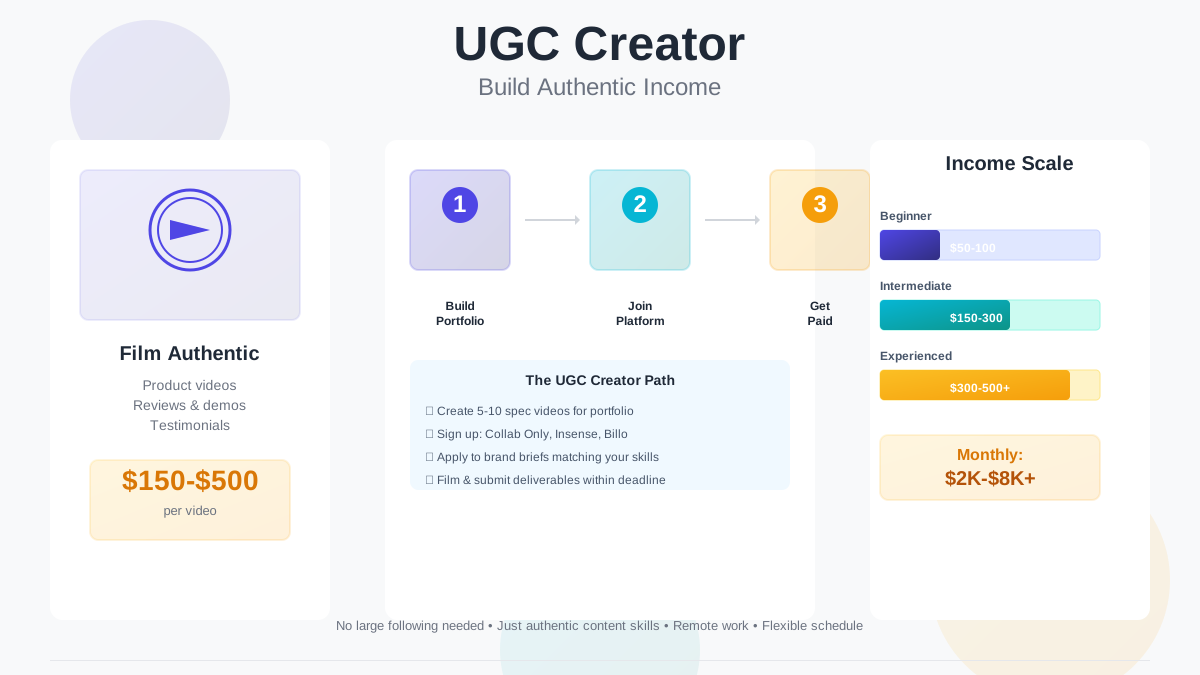
The best part? You don't need fancy equipment or years of experience to get started. You just need authenticity, basic production skills, and understanding of what brands actually want from UGC.
This guide walks you through the complete journey: from understanding what UGC creators do, to building your first portfolio, landing your first paying clients, and scaling to consistent monthly income.
What Is UGC Creator?
A UGC (User-Generated Content) creator is someone who produces authentic content—videos, photos, reviews, testimonials—for brands to use in their marketing. Unlike influencers, UGC creators aren't selling their audience reach. Brands pay for the production quality and authenticity of the content itself. Your 500 Instagram followers don't matter; what matters is whether you can film a convincing 30-second product demo that feels real and drives conversions.
Not medical advice.
UGC has become essential to modern marketing because consumers trust peer recommendations over traditional advertising. When someone sees a real person (not a celebrity) unboxing a product or reviewing it honestly, they're more likely to believe it and make a purchase. That's why brands pay creators to make these authentic-feeling videos—even though the creator isn't necessarily a customer themselves.
Surprising Insight: Surprising Insight: 80% of brands report that human UGC outperforms AI-generated content for trust and relatability. Consumers find brands with user-generated content at least 60% more credible than traditional advertising.
UGC Creator Workflow
How UGC creators source work, create content, and get paid
🔍 Click to enlarge
Why UGC Creator Matters in 2026
The creator economy is growing rapidly. Brands are shifting budgets away from traditional advertising and expensive celebrity endorsements toward authentic, relatable content. This creates real income opportunities for creators who understand what brands need. Unlike social media influencing (which requires years to build a following), UGC creation has low barriers to entry—you can start earning within weeks if you have decent video production basics.
Income potential is substantial. Entry-level creators earn $50-$250 per video. With experience, intermediate creators charge $100-$300, and established professionals command $300-$500+ per video. Experienced UGC creators working retainer contracts across multiple brands report $2,000-$8,000 monthly income. For full-time creators, the average US salary ranges from $48,000-$72,000 annually, with top earners reaching $100,000+.
Flexibility is genuine. You control your schedule, work from anywhere (good lighting and internet are all you need), and can scale up or down based on your capacity. Many UGC creators combine it with other work—it's ideal for side hustles while employed, or as a full-time income stream once you establish client relationships.
The Science Behind UGC Creator
The psychology driving UGC's effectiveness is clear: people trust peer recommendations more than branded messaging. This is rooted in social proof theory—when we see someone like us using a product, we're more likely to believe it works. Additionally, viewers have become skeptical of polished advertising, making authentic, slightly imperfect UGC more persuasive. Brands capitalize on this by using creator-made content that feels native to social media platforms (TikTok, Instagram Reels, YouTube Shorts).
From a practical standpoint, UGC is also cost-effective for brands. Hiring an agency for one commercial costs $5,000-$50,000+. Paying 10 UGC creators $300 each for varied takes on the same product costs $3,000 total, with better audience diversity and authenticity. Brands get multiple versions they can A/B test across their marketing channels, and creators get paid fairly for their work.
Why Brands Choose UGC Over Traditional Advertising
Comparison of effectiveness, cost, and authenticity
🔍 Click to enlarge
Key Components of UGC Creator
Authentic On-Camera Presence
The core skill UGC creators need is feeling genuine on camera. You don't need to be charismatic or act—in fact, overly polished delivery undermines authenticity. Brands want creators who can demonstrate products naturally, speak conversationally, and show real expressions. This means being yourself: your voice, your pace, your personality. Practice filming yourself talking about everyday items to develop confidence and find your natural rhythm. The best UGC creators aren't trying to be influencers; they're being relatable neighbors recommending products to friends.
Video Production Fundamentals
You need to understand basic production: lighting, audio, framing, and editing. Professional-grade equipment isn't necessary. A smartphone, ring light ($20-$50), lapel microphone ($15-$30), and free editing app like CapCut work perfectly. What matters is understanding how to light your face properly (natural light is best; harsh shadows ruin footage), position the product in frame so it's visible and attractive, and stabilize your phone using a tripod ($15-$25). These fundamentals directly affect how professional your content looks, which affects whether brands accept your submissions.
Brief Interpretation Skills
Brands provide detailed briefs specifying what they want: product angle, talking points, tone (funny vs. serious vs. testimonial), deliverables (15-sec, 30-sec, 60-sec versions), and hook variations. Your ability to understand these specifications and deliver exactly what's requested is critical. Some creators miss briefs by guessing at brand intent; successful ones read carefully, ask clarifying questions, and deliver on specifications. This reliability leads to repeat clients and higher rates as you become known for delivering exactly what's needed.
Portfolio Development
Brands won't hire creators without examples of their work. If you're starting with zero paid work, you need a portfolio of spec videos (created for free to demonstrate your skills). These should showcase different styles: unboxing, review, testimonial, product demo, problem-solution format. Create 5-10 strong examples using everyday products (skincare, tech gadgets, kitchen tools). This portfolio is your entrance ticket to paid gigs. Many successful creators build initial portfolio for free, then use completed paid work in their portfolio to command higher rates.
| Experience Level | Rate Per Video | Monthly Potential (5 Videos/Week) | Key Characteristics |
|---|---|---|---|
| Beginner (0-3 months) | $50-$100 | $1,000-$2,000 | Building portfolio, entry platform jobs, developing on-camera skills |
| Intermediate (3-12 months) | $150-$300 | $3,000-$6,000 | Established portfolio, repeat clients, specialized niches, consistent quality |
| Experienced (1-2 years) | $300-$500 | $6,000-$10,000 | Premium rates, retainer contracts, multiple brand relationships, quick turnaround |
| Expert (2+ years) | $500-$1,500+ | $10,000-$30,000+ | Exclusive contracts, high-demand niches, brand relationships, premium deliverables |
How to Apply UGC Creator: Step by Step
- Step 1: Audit your current skills: Assess your comfort with video creation, on-camera presence, and technical knowledge. Be honest about what you need to learn vs. what you already have.
- Step 2: Invest in basic equipment: Buy a phone tripod, ring light, and lapel microphone (total ~$60-$100). These are your essential tools.
- Step 3: Learn editing basics: Download CapCut or similar free app. Spend a few hours learning to trim, add text overlays, transitions, and music.
- Step 4: Create 5-10 portfolio videos: Film yourself reviewing/demonstrating everyday items (skincare, kitchen tools, tech) using different styles: unboxing, testimonial, demo, review.
- Step 5: Join a UGC platform: Sign up on Collab Only, Insense, Billo, or similar platforms where brands post job briefs.
- Step 6: Submit your portfolio: Complete your platform profile with your best 3-5 videos. Write a clear bio highlighting your production quality and strengths.
- Step 7: Apply to beginner jobs: Start with $50-$100 projects to build paid work experience and gather client feedback.
- Step 8: Refine based on feedback: Pay attention to what clients appreciate. Ask for specific feedback if submissions get rejected.
- Step 9: Build retainer relationships: Once you've completed 5-10 jobs successfully, pitch recurring monthly work to satisfied clients for predictable income.
- Step 10: Scale strategically: As you gain experience, raise rates gradually ($50→$100→$200→$300+). Focus on niches where you excel (beauty, tech, fitness, etc.)
UGC Creator Across Life Stages
Young Adulthood (18-35)
This is ideal timing for UGC creation. You likely have natural on-camera comfort (grew up recording content), understand TikTok and Instagram formats intuitively, and have flexibility to film during non-traditional hours. Many young adults start UGC as side income while in school or early career, then scale it up. Your demographic appeals to brands targeting younger audiences. Focus on building a strong portfolio quickly, applying to volume of jobs to gain experience, and treating it as serious income (not just a hobby). The work habits you develop now compound—consistency leads to repeat clients and reputation.
Middle Adulthood (35-55)
Your authenticity and perceived trustworthiness are assets. Brands actively seek diverse creator demographics for UGC—they want content that appeals to broad audiences, not just Gen Z. Many middle-aged creators find premium rates because brands specifically request 'mature audience' creators for financial products, home goods, wellness, and professional services. If you're comfortable on camera, UGC can be a lucrative second income stream or even transition away from traditional employment. Your stability and professionalism also make you reliable for retainer contracts, which provide consistent monthly income.
Later Adulthood (55+)
Experience and credibility are your competitive advantages. Brands specifically seek older creators for healthcare, retirement planning, travel, technology adoption, and lifestyle products because their demographic actually uses these products. You don't need viral-level comfort with technology—just basic phone filming ability. Many creators in this stage find UGC work is flexible, income-generating, and allows creative expression without pressure to maintain a personal brand. The lower startup cost and minimal social media requirement make it accessible compared to other creator economy work.
Profiles: Your UGC Creator Approach
The Eager Starter
- Quick wins to build confidence early
- Low-pressure environment to practice filming
- Clear feedback on what's working vs. not
Common pitfall: Giving up too fast after initial rejections. Early work often gets rejected while you're learning. This is normal, not failure.
Best move: Submit to 5-10 beginner jobs simultaneously. Some will reject, others accept. Each rejection teaches you something. Treat it like learning, not judgment.
The Side-Hustler
- Predictable income on flexible schedule
- Jobs that fit around full-time work (not urgent deadlines)
- Efficient workflow to maximize earnings per hour spent
Common pitfall: Undercharging because you think it's 'just side money.' This creates problems when you get busy—you're locked into low rates.
Best move: Set rates based on your actual value now, not 'someday.' As you get busy, existing clients won't follow if you suddenly raise rates. Start at $150-$200/video.
The Niche Specialist
- Focus on specific product categories where you have genuine expertise
- Building reputation as 'the creator for X industry'
- Premium rates based on specialized knowledge
Common pitfall: Spreading too thin across random products. Brands pay more for creators with demonstrated expertise in their category.
Best move: Choose 2-3 niches (tech, beauty, fitness, finance, home). Build portfolio in these areas. Market yourself as specialist. Command 30-50% premium rates vs. generalists.
The Scaling Entrepreneur
- Systems to manage multiple client relationships
- Retainer contracts with consistent monthly deliverables
- Process documentation so quality stays consistent at scale
Common pitfall: Quality drops when you're juggling too many clients. One bad deliverable ruins relationships you took months to build.
Best move: Stay organized with project management tools. Document your process. Limit concurrent clients initially (5-8 clients max). Automate what you can (scheduling, invoice templates).
Common UGC Creator Mistakes
Mistake #1: Over-producing content. Many new creators assume brands want polished, edited, fancy videos. They spend hours color-correcting and adding effects. Brands actually prefer authentic-looking videos—slightly raw, real expressions, natural lighting. Overdone editing can actually hurt your chances. If a video looks too produced, it loses the 'user-generated' authenticity brands are paying for.
Mistake #2: Not reading briefs carefully. Brands give specific instructions: 'no on-camera talent, just product close-ups' or 'show frustration then relief when you use the product' or 'mention specific features X, Y, Z.' Creators who ignore these details waste time filming wrong content. Read briefs 3 times before filming. If unclear, ask the brand for clarification—they appreciate creators who get details right.
Mistake #3: Starting with zero portfolio. Some creators join platforms hoping to land jobs immediately. This rarely works—brands need to see your work quality first. Invest 1-2 weeks creating free portfolio videos before you expect paid work. This investment pays off: with a strong portfolio, you'll land jobs vs. being rejected repeatedly without examples.
Common UGC Creator Pitfalls & Solutions
How to avoid the most frequent mistakes
🔍 Click to enlarge
Science and Studies
Research on user-generated content effectiveness shows consistent patterns. Multiple studies document that consumers trust peer recommendations 60% more than branded advertising. Neuroscience research explains this: when we see peer content, our brain activates reward centers and social cognition areas, creating genuine engagement vs. skepticism triggered by obvious advertising. Additionally, brands report that UGC generates 4-5x higher engagement rates and 3-4x better conversion rates compared to traditional brand content.
- Consumer Trust Research: 80% of brands report human UGC outperforms AI-generated content for authenticity and engagement (Influencer Marketing Hub, 2025)
- Conversion Effectiveness: User-generated content drives 29% higher conversion rates for e-commerce vs. professional photography (TrustRadius, 2024)
- Demographic Diversity: Brands seeking creator diversity are willing to pay premium rates (+30-50%) for underrepresented age/ethnicity demographics in UGC (Diverse Creator Report, 2025)
- Platform Performance: UGC videos show 5x higher engagement on Instagram Reels vs. polished brand videos; TikTok algorithm favors authentic over produced content (Meta Analytics, 2025)
- Creator Economy Growth: The UGC market segment grew 312% YoY in 2024-2025, with $2.8B in creator payments projected for 2026 (Creator Economy Index, 2025)
Your First Micro Habit
Start Small Today
Today's action: Film one 30-second video demonstrating how to use an everyday product (coffee maker, phone, skincare item). No editing. No perfection. Just you talking naturally about the product. Save it, don't post anywhere yet.
This micro habit removes the friction of 'I don't know how to start.' You'll realize filming is easier than expected. It builds comfort on camera quickly. Plus, this video becomes your first portfolio piece. Small wins compound—today's awkward 30-second attempt becomes tomorrow's confident reel.
Keep quitting habit apps after a missed day? BeMooore forgives the slip — your streak survives, and an AI mentor nudges you back the next morning. Free on iOS.
Quick Assessment
How comfortable are you currently filming videos or being on camera?
Your comfort level predicts how quickly you'll develop strong UGC skills. Even if you're currently uncomfortable, this is learnable within 2-4 weeks of regular practice.
What's your primary motivation for becoming a UGC creator?
Your motivation shapes your strategy. Full-time goals require faster scaling and client relationship building. Side-income focus means steady specialization without pressure. Exploration means low-risk portfolio building first.
How much time can you realistically dedicate to UGC work weekly?
Time investment directly affects earning timeline. 5 hours/week means 1-2 videos monthly (~$150-$500/month starting). 20+ hours means 3-4 videos weekly (~$2,000-$4,000/month with experience).
Take our full assessment to get personalized recommendations.
Discover Your Style →Next Steps
Your path forward is clear and achievable. Start by filming one practice video this week—something simple, using your phone and natural lighting. Notice what feels awkward, what works, what needs improvement. This single video builds confidence and starts your portfolio. Next, invest in basic equipment (tripod, ring light, microphone). Finally, join 1-2 UGC platforms and complete your creator profile with your strongest 3-5 portfolio videos.
The creator economy rewards action over perfection. Your first videos won't be perfect, and that's completely fine. Brands don't expect perfection—they expect authenticity. Every video you film improves your skills, and every job you complete strengthens your portfolio and reputation. Within 3 months of consistent effort, you'll have paid work. Within 6 months, you'll know your rates and specialties. Within 12 months, sustainable income is realistic.
Get personalized guidance with AI coaching.
Start Your Journey →Research Sources
This article is based on peer-reviewed research and authoritative sources. Below are the key references we consulted:
Related Glossary Articles
Frequently Asked Questions
Do I need a large social media following to start as a UGC creator?
No—this is the entire point of UGC. Brands pay for content quality, not your follower count. You can have 50 followers and still earn $300 per video if your content is high-quality and authentic. Many successful UGC creators have smaller social media presence because they focus on creating rather than building audiences.
What equipment do I need to get started?
Smartphone, tripod (~$20), ring light (~$40), lapel microphone (~$20). Total investment: ~$80-100. Some creators add editing laptop/software later, but many start with just phone and free CapCut app. Professional equipment isn't necessary—authenticity matters more than production value.
How long does it take to start earning money?
If you have portfolio videos ready, you can apply to jobs immediately and potentially land first paid work within 1-2 weeks. If you're starting from zero, expect 2-3 weeks building portfolio before your first paid gig. First payments typically arrive 1-2 weeks after submitting approved work. Total timeline: 3-4 weeks from start to first payment is realistic.
Is this better than being an influencer or running a personal brand?
It depends on your goals. UGC is faster to monetize (weeks vs. months), requires less consistent personal branding effort, and has lower pressure to be 'always on.' You can stay anonymous if you prefer. Influencing requires building large audience first, then monetizing. UGC skips audience-building entirely, so it's better for people who want income without the personal brand management.
What happens with usage rights and content I create?
Brands typically buy limited usage rights (30-180 days, specific platforms) for standard rates. Extended usage rights cost 30-50% more. You retain copyright; brands can't re-license your content. Read contracts carefully. Some retainer contracts give exclusive rights during the contract period. Understand usage terms before accepting a job—this affects your pricing.
Take the Next Step
Ready to improve your wellbeing? Take our free assessment to get personalized recommendations based on your unique situation.
- Discover your strengths and gaps
- Get personalized quick wins
- Track your progress over time
- Evidence-based strategies