Dating Burnout
You've been swiping for months, maybe years. Your thumb knows the rhythm: swipe left, swipe right, swipe left again. At first, each match felt like possibility. Now, another match feels like obligation. The endless cycle of profiles has shifted from exciting to exhausting. You feel emotionally drained rather than hopeful. This is dating burnout—the invisible weight that settles on your shoulders when the search for connection becomes too heavy to carry. It's affecting nearly 8 in 10 people who use dating apps today.
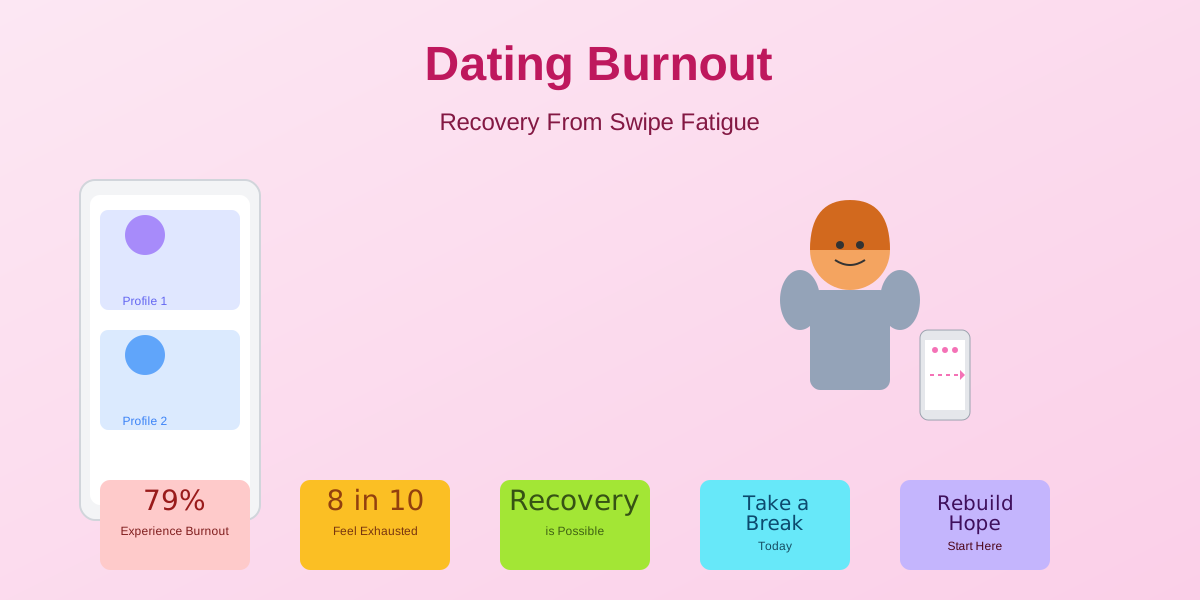
Modern dating has fundamentally changed. What was once a gradual process of meeting people through friends and social settings has become a high-speed sorting mechanism. The paradox of choice—having endless options but feeling less satisfied—has created a new form of psychological fatigue.
The good news? Dating burnout is recognizable, understandable, and most importantly, recoverable. This guide shows you exactly what's happening in your mind and body, why it's happening, and concrete steps to rebuild your relationship with dating itself.
What Is Dating Burnout?
Dating burnout is a state of emotional, mental, and physical exhaustion caused by prolonged stress in the dating process. It's characterized by feeling emotionally drained, mentally fatigued, and physically depleted from swiping, messaging, meeting matches, and navigating the disappointments that come with modern dating apps. Unlike typical fatigue that rest can fix, dating burnout involves deeper disillusionment: hopelessness that you'll find connection, indifference toward new matches, frustration with repetitive patterns, and a sense that dating itself has become work rather than pleasure.
Not medical advice.
Dating burnout isn't laziness or pickiness. It's a legitimate psychological response to excessive stimulation, repeated rejection, deception, and the constant performance of presenting yourself optimally to strangers. Research from SAGE journals shows that dating app users experience increased emotional exhaustion and inefficacy over time—feelings that their efforts aren't paying off, combined with a growing sense of being emotionally drained.
Surprising Insight: Surprising Insight: 79% of Gen Z and 80% of Millennials report feeling exhausted from online dating. Depression and anxiety are predictors of dating app burnout, creating a feedback loop where those already struggling emotionally are most vulnerable to app-related exhaustion.
The Dating Burnout Cycle
Visual representation of how dating app use progresses from initial hope to eventual exhaustion through repeated cycles of disappointment
🔍 Click to enlarge
Why Dating Burnout Matters in 2026
Dating burnout matters because it's reshaping how young adults approach relationships and intimacy. Gen Z is actively logging off dating apps, with 58% of Gen Z daters now preferring to meet people in person. The apps that once promised unlimited choice and efficiency now feel like treadmills nobody wants to run on anymore. When nearly 9 in 10 people say they needed to take a break from online dating, and nearly 1 in 3 have sought professional help because of dating app stress, this becomes a public mental health issue.
What makes dating burnout significant in 2026 is the reversal of expectations. People expected dating apps to solve loneliness and make finding partners easier. Instead, many have discovered that unlimited options paradoxically make satisfaction harder to achieve. The apps optimize for engagement (more swipes = more revenue), not for healthy outcomes. This mismatch between what apps promise and what they deliver is driving burnout at scale.
Understanding dating burnout matters for your personal wellbeing because burnout-induced depression and anxiety can persist long after you delete the app. The study showing that 38.1% of dating app users experienced depression symptoms over 12 weeks reveals that dating app stress has real, measurable mental health consequences. Recovery requires not just deleting apps but actively rebuilding your sense of hope and self-worth.
The Science Behind Dating Burnout
Dating burnout operates through psychological mechanisms well-documented in burnout research. The first mechanism is emotional exhaustion from constant micro-rejections. Each swipe rejected is a small wound. Each matched conversation that fizzles is disappointment. Your brain accumulates these as stress, flooding your system with cortisol. When you're swiping through 50 profiles in 10 minutes, your brain processes 50 rapid rejections. This is psychologically identical to asking 50 people on a date and getting rejected by 48 of them—except your brain processes it faster, making the cumulative effect invisible.
The second mechanism is communication overload and information irrelevance. Dating apps generate stressors through excessive notifications, information overflow (too many profiles to meaningfully evaluate), and the mismatch between profile presentation and real-world reality (catfishing, misleading photos, inaccurate bios). Your cognitive load maxes out. The third mechanism is reduced self-efficacy: you're putting in effort (swiping, messaging, meeting) but seeing no results, creating a learned helplessness pattern where your brain concludes 'my efforts don't matter.'
Psychological Pathways to Dating Burnout
Three main routes through which dating apps create emotional exhaustion and burnout symptoms
🔍 Click to enlarge
Key Components of Dating Burnout
Emotional Exhaustion
Emotional exhaustion is the dominant feature of dating burnout. You feel drained at the thought of opening another app, emotionally depleted after conversations go nowhere, and hollowed out by repeated disappointment. This isn't sadness—it's a flatness, an absence of the excitement that dating should theoretically bring. Your emotional resources are depleted from the constant psychological labor of presenting yourself, evaluating others, managing expectations, and processing rejection.
Cynicism and Disillusionment
Burnout breeds cynicism. You start seeing patterns: 'Everyone here is just looking to hookup,' 'Nobody is being honest about who they are,' 'This is hopeless.' These generalizations feel true because you've collected evidence through disappointment. Disillusionment settles in—the gap between what you hoped dating apps would provide (genuine connection, efficiency) and what they actually provide (endless swiping, shallow interactions) creates a sense of betrayal.
Reduced Personal Efficacy
Dating burnout erodes your confidence in your own attractiveness and desirability. You've swiped, you've messaged, you've met people—and nothing has worked out. Logically, you know one bad dating experience doesn't define your value. Emotionally, burnout convinces you otherwise. This reduced efficacy extends beyond dating: burned-out daters report lower self-esteem in general, not just in romantic contexts.
Behavioral Withdrawal
Finally, burnout manifests behaviorally. You stop responding to messages you would have answered before. You delete the app impulsively, reinstall it a week later out of FOMO, then delete it again. You avoid swiping sessions because you know they'll leave you feeling worse. Some people cycle between passive dating (leaving the profile up but not engaging) and complete avoidance. Others rage-delete their profiles, swearing off dating entirely.
| Severity Level | Symptoms | App Behavior |
|---|---|---|
| Mild | Occasional frustration, brief fatigue after swiping sessions | Still active but taking longer breaks between sessions |
| Moderate | Regular exhaustion, cynicism about matches, reduced enthusiasm | Inconsistent engagement, frequent deletions and reinstalls |
| Severe | Pervasive hopelessness, depression symptoms, emotional flatness | Complete app avoidance or compulsive use despite negative feelings |
How to Apply Dating Burnout Recovery: Step by Step
- Step 1: Recognize and name what you're experiencing. Burnout is real. It's not weakness, not pickiness, not a character flaw. Naming it as burnout shifts you from self-blame to understanding. Say it out loud: 'I'm experiencing dating burnout.'
- Step 2: Take a defined break from dating apps—not indefinitely, but measurable. Two weeks to two months. During this break, commit to NOT using the apps. Delete them if needed. This isn't failure; it's recovery.
- Step 3: Identify the specific stressor that triggered your burnout. Was it ghosting patterns? The time commitment? Catfishing? Rejection? Knowing the specific source helps you address the real problem, not just symptoms.
- Step 4: Rebuild your life outside dating. The apps thrive in vacuums. If dating is your only social activity, burnout will be more severe. Reconnect with friends, join hobby groups, exercise, create, learn something new. Restore non-dating activities.
- Step 5: Process disappointment through reflection, not rumination. Ask: What did I learn? What pattern did I see? Move toward insight rather than repetitive negative thoughts. Consider journaling for 10 minutes after disappointing dating experiences.
- Step 6: If you experienced deception or betrayal (catfishing, ghosting after intimacy), allow yourself to grieve. These are forms of betrayal. Don't skip this step. Grief processing is part of recovery.
- Step 7: Address underlying mental health factors. If depression or anxiety predicted your burnout, therapy before returning to apps is wise. A therapist can help you understand your attachment patterns and improve dating confidence.
- Step 8: Shift your dating approach when you're ready to return. Instead of swiping through hundreds, try: setting daily time limits (15 minutes max), being intentional about who you engage with, prioritizing quality of conversation over quantity of matches.
- Step 9: Practice self-compassion when you feel drawn to negative self-talk. The apps are literally designed to trigger comparison and FOMO. Remind yourself: many people are experiencing this, and it doesn't mean something is wrong with you.
- Step 10: Consider trying offline dating methods: meeting people through shared interests, activities, or social circles. In-person connections don't have the same dehumanizing scale as apps. They're slower but often feel more authentic.
Dating Burnout Across Life Stages
Young Adulthood (18-35)
Young adults are the most vulnerable to dating app burnout because they've grown up with unlimited digital choice. By age 25, many have used multiple apps for years. They're experiencing what researchers call 'choice paralysis'—the paradox that unlimited options actually decrease satisfaction. Young adults also face unique pressures: social media comparison (everyone else seems to be dating successfully), fertility awareness (for women), and career instability. Dating apps become another optimization project competing with education and career. The cumulative stress of comparing themselves to curated profiles of thousands of potential partners is uniquely taxing in early adulthood.
Middle Adulthood (35-55)
Middle-aged daters face different burnout triggers. Many have exited long-term relationships and are re-entering the dating world at a time when they have established identities, clearer needs, and lower tolerance for nonsense—which makes app frustration more acute. They often find that dating apps cater to younger demographics, making them feel invisible (algorithm bias favors younger profiles). They report higher rates of burnout from encounters with people misrepresenting themselves. However, middle-aged daters often show better recovery because they have more developed self-awareness and less social pressure surrounding relationship timing.
Later Adulthood (55+)
Older adults using dating apps report less burnout overall but intensified burnout when it does occur. The good news: they often have clearer goals ('I want companionship with someone who shares my values') rather than vague searching. The challenging news: tech overwhelm combined with dating disappointment can feel compounded. Later-life burnout often relates to realizing online dating isn't suited to their needs. Many older adults recover better by shifting to offline methods: social groups, meetups, or friend introductions.
Profiles: Your Dating Burnout Approach
The Perpetual Optimizer
- Permission to stop trying to game the system (better photos, witty bios, strategic openers)
- Recognition that effort doesn't guarantee results on apps designed around luck and algorithms
- Relief from the belief that 'better execution' will solve the core problem
Common pitfall: Treating dating apps like a productivity problem—if they just optimize harder, the results will come. This leads to burnout because apps aren't designed to reward optimization; they're designed to maximize engagement.
Best move: Take a break from effort. Spend time with people who appreciate you as you are. When you return to apps, aim for 'authentic' over 'optimized.'
The Serial Dater
- Awareness of whether they're dating-to-find-connection or dating-to-avoid-solitude
- Permission to feel bored or unfulfilled by surface interactions
- Introduction to meaningful connection that requires slowing down
Common pitfall: Using constant dating activity to avoid processing loneliness or unresolved past relationship issues. This eventually exhausts them because no date addresses the underlying need.
Best move: Take a relationship sabbatical. Work on becoming comfortable with solitude. Therapy to explore what underneath the constant searching.
The Ghosting Victim
- Understanding that ghosting says something about the other person's capacity for respect, not about your worth
- Strategies for not internalizing rejection from strangers
- Reassurance that genuine connection exists but isn't found through statistics and volume
Common pitfall: Absorbing each ghosting as evidence of personal undesirability, leading to shame-based burnout. The accumulation of rejection (real or perceived) creates trauma-like responses to dating.
Best move: Reframe: ghosting is data about app culture, not data about you. Process the disappointment, then let it go. Consider therapy if ghosting is retriggering past abandonment wounds.
The Ambivalent Dater
- Clarity on whether they actually want to date or feel obligated to be on apps
- Permission to opt out without shame
- Exploration of what they actually want from relationships
Common pitfall: Staying on apps out of FOMO or social expectation while not actually wanting to be there. This creates a special kind of burnout: resentment at feeling obligated to participate in something that doesn't resonate.
Best move: Get honest: do you actually want to be dating right now? If no, give yourself full permission to take an indefinite break. If yes, clarify what you're looking for specifically.
Common Dating Burnout Mistakes
Mistake #1: Staying on apps while experiencing burnout, hoping it will get better on its own. It won't. The apps are designed to maintain engagement. If you're burned out, staying active usually deepens the burnout. Taking a real break is not weakness; it's wisdom.
Mistake #2: Rage-deleting your profile and swearing off dating entirely, then reinstalling the app one week later in desperation. This cycle (delete-reinstall-delete) itself becomes traumatizing. If you're going to take a break, commit to it with a specific end date. If you're going to return to apps, return with intention and strategy, not desperation.
Mistake #3: Blaming yourself for burnout. 'I'm too picky,' 'I'm not attractive enough,' 'I must be doing something wrong.' Dating app burnout isn't a personal failure. It's a predictable response to the app design: algorithmic choice fatigue, deception risk, and rejection at scale. Millions of healthy, attractive, capable people experience dating app burnout. It's not about you.
Common Burnout Mistakes and Their Costs
Three major mistakes in responding to dating burnout and why they backfire
🔍 Click to enlarge
Science and Studies
Dating burnout is supported by peer-reviewed research in psychology and communication journals. Key studies from 2024-2026 reveal the scale and mechanisms of the phenomenon. Research demonstrates that dating app use creates measurable psychological harm when it becomes excessive, and that recovery requires structured interventions, not just app deletion.
- Sharabi et al. (2026) conducted a longitudinal study using multilevel growth curve models showing that dating app users experience increased emotional exhaustion and inefficacy over time. Depression, anxiety, and loneliness predicted more emotional exhaustion, while problematic dating app use predicted more exhaustion.
- Forbes Health Study (2024) surveyed thousands of adults finding that 79% of Gen Z and 80% of Millennials report feeling drained by online dating. More than half of Gen Z feel burned out often or always on dating apps.
- Hily Research Report (2025) surveyed 3,000+ Gen Z daters in the U.S. and found that while 57% of women and 60% of men recognize social media's 'perfect' dating is fake, the pressure is intensifying. 40% cited inability to find connection; 41% reported ghosting; 38% experienced catfishing.
- ResearchGate Study (2024) analyzing 12-week dating app use in young participants found emotional exhaustion increased over time. 38.1% of participants exhibited symptoms consistent with clinical depression after sustained app use.
- Institute for Family Studies (2025) documented Gen Z's shift away from dating apps. 58% of Gen Z users prefer meeting in person. 45% report experiencing frustration and hopelessness while using apps. Nearly 9 in 10 felt the need to take a break from online dating.
Your First Micro Habit
Start Small Today
Today's action: Today: Delete the dating app for 24 hours, or if you're not ready for that, set a 15-minute timer and commit to NOT opening it after the timer ends. Repeat this tomorrow.
Dating burnout recovery doesn't start with grand gestures like 'I'm never dating again.' It starts with tiny reclamations of control. Deleting the app for one day proves to yourself that you can make a choice. It removes the constant temptation and notification triggers. Doing this consistently creates a pattern interrupt that breaks the automatic habit loop. Small wins rebuild agency.
Keep quitting habit apps after a missed day? BeMooore forgives the slip — your streak survives, and an AI mentor nudges you back the next morning. Free on iOS.
Quick Assessment
How would you currently describe your relationship with dating apps?
Your answer indicates your current burnout level. If you selected option 3 or 4, you're experiencing moderate to severe burnout. This is not uncommon—nearly 8 in 10 users report this. The key is recognizing it and taking action.
What's your biggest frustration with dating apps currently?
This tells you which burnout pathway is most active for you. Endless swiping suggests cognitive overload. Ghosting/deception suggests emotional exhaustion from betrayal. Low match success suggests reduced efficacy. Time investment suggests decision fatigue. Knowing your specific pain point helps you create targeted recovery.
If you took a complete break from dating apps, what would you do with that time?
Your answer reveals what part of your life has been crowded out by dating app use. If you selected option 3, that's a major insight: the apps have become your primary social outlet. This intensifies burnout. Recovery involves consciously restoring other sources of meaning and connection.
Take our full assessment to get personalized recommendations for your dating and relationship patterns.
Discover Your Style →Next Steps
Your next step depends on your current burnout level. If you're experiencing mild burnout, start with the micro habit: give yourself a 24-hour break from the app, then reflect on how that feels. If you're experiencing moderate to severe burnout, give yourself permission to take a 2-8 week break. Delete the app. During that break, focus on rebuilding your life outside of dating. Spend time with friends. Take up an activity. Move your body. Sleep more. Your nervous system needs recovery time.
If you notice that burnout is accompanied by depression, anxiety, or low self-esteem, consider reaching out to a therapist. Dating app burnout can be a window into deeper patterns: attachment anxiety, unresolved rejection from past relationships, or difficulty with solitude. A therapist can help you work through these. There's no shame in seeking support—many people have found that therapy, combined with a break from apps, accelerates recovery.
Get personalized guidance on your relationship patterns with AI coaching in our app.
Start Your Journey →Research Sources
This article is based on peer-reviewed research and authoritative sources. Below are the key references we consulted:
Related Glossary Articles
Frequently Asked Questions
Is dating burnout the same as depression?
Dating burnout and depression overlap but aren't identical. Burnout is situational—it's exhaustion specifically from dating app use. Depression is broader and persistent across life areas. However, burnout can trigger depression, and depression can intensify burnout. If you're experiencing depressive symptoms (hopelessness, loss of interest in activities beyond dating), consider talking to a therapist. They can distinguish whether it's burnout, depression, or both.
Should I delete the app or take a break?
If you're experiencing moderate burnout, a break (2-8 weeks) usually restores perspective. Delete the app during the break to remove temptation, but set a specific end date. If you're experiencing severe burnout with depression, consider a longer break or indefinite deletion until you've worked through it in therapy. There's no universal right answer—it depends on your specific situation. Some people recover quickly with short breaks; others need months or years away from apps entirely.
How do I know if I should try online dating again?
Return to online dating when: (1) You can think about dating without dread, (2) You're doing other activities that bring you joy outside of dating, (3) You've processed disappointments from past app use, (4) You have clearer boundaries around time spent on apps. If you return and feel burnout resurface within weeks, that's data: online dating may not be your optimal method. Listen to that feedback.
Can I prevent dating burnout from happening again?
Yes, through awareness and boundaries. Set a hard daily limit on app time (15 minutes max). Be intentional: don't swipe passively while scrolling other apps. After disappointing interactions, process them rather than letting them accumulate. If you notice cynicism or hopelessness emerging, take a break before it becomes full burnout. Consider combining apps with offline dating (meetups, activities, friend introductions). The mix reduces dependence on any one method.
What if I meet someone great but then experience burnout about the relationship itself?
Burnout from dating apps is different from relationship burnout, but they can coexist. If you're burned out on apps but have met someone you care about, the relationship might actually help you recover—it removes the need to keep dating. However, if you find yourself burned out in the relationship itself (going through the motions, emotionally drained by your partner), that's relationship burnout, not dating app burnout. You may need couples therapy or individual therapy to work through it.
Take the Next Step
Ready to improve your wellbeing? Take our free assessment to get personalized recommendations based on your unique situation.
- Discover your strengths and gaps
- Get personalized quick wins
- Track your progress over time
- Evidence-based strategies