Spermidine
Imagine a cellular cleanup crew that clears away damaged components, regenerates mitochondria, and tells your body to live longer. That's spermidine—a naturally occurring polyamine that's emerging as one of the most promising anti-aging molecules in longevity science. Found abundantly in wheat germ, aged cheese, mushrooms, and legumes, spermidine isn't a new drug or synthetic compound. It's been present in your food for millennia, quietly triggering autophagy—the body's cellular recycling process—and extending lifespan across yeast, worms, flies, mice, and now showing remarkable promise in humans.
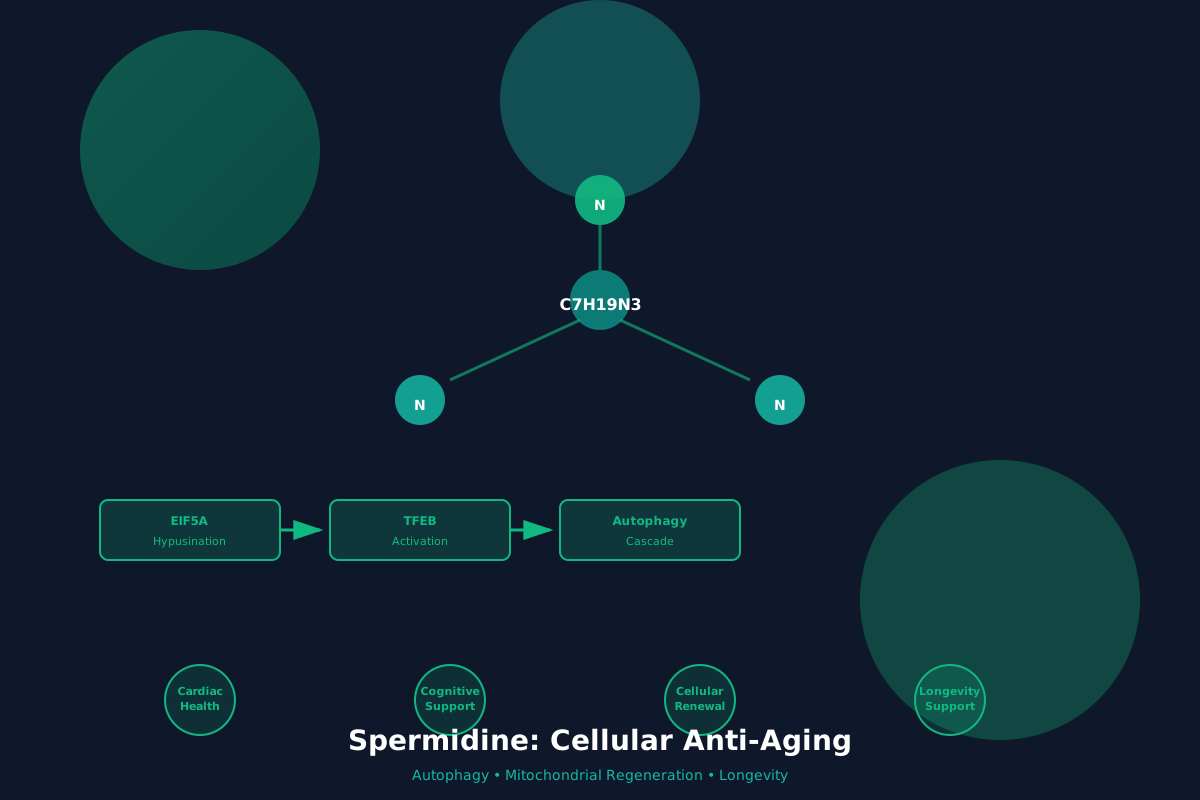
Recent research published in Nature Cell Biology (2024) reveals that spermidine surges during fasting and caloric restriction, becoming the critical first step in a biochemical cascade that activates autophagy and extends both lifespan and healthspan.
The implications are profound: spermidine isn't just a supplement trend—it's being studied in clinical trials for cardiovascular protection, cognitive preservation, and age-related disease prevention.
What Is Spermidine?
Spermidine is a polyamine—a small organic molecule containing multiple amino groups. Polyamines are essential for cell growth, DNA replication, and cellular differentiation. Your body naturally produces spermidine, but production declines significantly with age. At age 30, you have abundant spermidine; by age 60, levels drop dramatically, contributing to the cellular dysfunction associated with aging.
Not medical advice.
Spermidine differs from its related polyamines spermine and putrescine. While all three play roles in cellular health, spermidine has unique properties as an autophagy inducer—it's the molecule that tells your cells to clean house. It works by modifying eukaryotic translation initiation factor 5A (EIF5A) through a process called hypusination, which then activates transcription factor EB (TFEB). TFEB is essentially your cell's master regulator of autophagy and lysosomal function.
Surprising Insight: Surprising Insight: A 2024 study found that spermidine levels increase immediately upon fasting in humans, and this surge is the obligatory trigger that initiates the entire autophagy cascade—meaning spermidine is a 'caloric restriction mimetic' that activates the same longevity pathways as fasting without requiring caloric restriction.
Spermidine's Cellular Pathway to Autophagy
How spermidine triggers the molecular cascade leading to autophagy activation and cellular renewal.
🔍 Click to enlarge
Why Spermidine Matters in 2026
In 2026, spermidine represents a paradigm shift in longevity science. For decades, longevity research focused on caloric restriction as the most reliable lifespan-extension intervention. But caloric restriction is difficult to sustain and often leads to nutrient deficiencies. Spermidine offers a biological shortcut—you can activate the same autophagy pathways and longevity genes without severe caloric restriction, simply by maintaining adequate dietary spermidine intake or moderate supplementation.
Population studies from the U.S. and Europe demonstrate that higher dietary spermidine intake correlates with reduced all-cause mortality, lower cardiovascular disease mortality, and better cardiovascular risk profiles. In humans, high dietary spermidine intake is associated with reduced blood pressure and lower incidence of heart disease—making it not just a theoretical longevity molecule, but one with documented epidemiological evidence.
The global aging population is driving unprecedented research investment. Ongoing clinical trials like POLYCAD (investigating spermidine in elderly patients with coronary artery disease, launching 2024) are examining whether spermidine can improve cardiac remodeling, exercise capacity, and muscle mass. The pharmaceutical and supplement industry is taking notice: multiple high-purity spermidine formulations have entered clinical trials, with results from 2024 showing excellent safety and tolerability in older adults.
The Science Behind Spermidine
The mechanism of spermidine's anti-aging effects operates through multiple interconnected pathways. At the molecular level, spermidine induces hypusination of EIF5A, a modification unique to polyamines. This modified EIF5A becomes capable of translating TFEB mRNA more efficiently, leading to increased TFEB protein levels. TFEB then enters the nucleus and activates the CLEAR (Coordinated Lysosomal Expression and Regulation) gene network, which upregulates genes encoding lysosomal proteins and autophagy machinery.
Autophagy, triggered by this cascade, is the body's cellular recycling system. It identifies and removes damaged mitochondria (through mitophagy), protein aggregates, and dysfunctional organelles. This process is crucial for aging prevention because damaged mitochondria accumulate with age and generate excessive reactive oxygen species (ROS), driving inflammation and dysfunction. By removing these mitochondria, spermidine restores cellular energy production and reduces oxidative stress. Studies show that spermidine increases ATP production and improves mitochondrial membrane potential in both young and aged neurons, with corresponding reductions in mitochondrial ROS levels.
Spermidine's Multi-System Health Benefits
How spermidine activates autophagy to benefit cardiovascular, neurological, and metabolic health.
🔍 Click to enlarge
Key Components of Spermidine
Polyamine Structure
Spermidine contains three amino groups arranged in a chain (C7H19N3). This specific structure is what enables it to modify and stabilize cellular components. The three amino groups allow spermidine to bind to DNA, RNA, and proteins, where it plays roles in gene expression, chromatin remodeling, and protein synthesis. No other molecule can perfectly replicate spermidine's structure or function—synthetic analogs don't demonstrate the same autophagy-inducing properties.
EIF5A Hypusination
Hypusination is a post-translational modification specific to polyamines. When spermidine levels rise, enzymes called deoxyhypusine synthase and deoxyhypusine hydroxylase use spermidine to modify EIF5A. This modified EIF5A becomes a special translation factor capable of helping ribosomes translate specific proteins, particularly TFEB. Without adequate spermidine, hypusination doesn't occur efficiently, and TFEB translation drops—meaning autophagy machinery doesn't get activated.
TFEB Activation
TFEB is a master transcription factor controlling a network of genes involved in autophagy and lysosomal biogenesis. Once spermidine triggers its translation via hypusinated EIF5A, TFEB moves into the cell nucleus and binds to CLEAR element sequences in gene promoters. This activates dozens of genes encoding lysosomal enzymes, autophagy adaptors, and autophagy machinery. TFEB activation is central to why spermidine works—it orchestrates the entire cellular cleanup process.
Mitochondrial Biogenesis Signaling
Beyond autophagy, spermidine activates the SIRT1/PGC-1α signaling pathway, a major regulator of mitochondrial biogenesis. This pathway tells cells to create new, healthy mitochondria to replace the damaged ones cleared by autophagy. Spermidine-induced improvements in mitochondrial respiration occur through this combined removal-and-replacement mechanism—it's not just about cleaning up; it's about regenerating.
| Food Source | Spermidine Content | Category |
|---|---|---|
| Wheat Germ | 35 mg/100g | Grains |
| Green Pepper | 90 mg/kg (9 mg/100g) | Vegetables |
| Aged Cheddar Cheese | 15-18 mg/100g | Dairy |
| Shiitake Mushrooms | 16 mg/100g | Fungi |
| Soybeans | 18 mg/100g | Legumes |
| Lentils | 10 mg/100g | Legumes |
| Almonds | 6 mg/100g | Nuts |
| Whole Wheat Bread | 4-5 mg/100g | Grains |
How to Apply Spermidine: Step by Step
- Step 1: Start by assessing your current diet. Track which spermidine-rich foods you already eat: whole grains, legumes, mushrooms, aged cheeses.
- Step 2: Add one high-spermidine food daily. The easiest entry point is wheat germ (35 mg/100g)—add 2-3 tablespoons to oatmeal, yogurt, or smoothies.
- Step 3: Include mushrooms 2-3 times weekly. Shiitake, king trumpet, and oyster mushrooms contain 12-16 mg/100g. Cook them lightly to preserve spermidine content.
- Step 4: Incorporate aged cheeses into your diet. Include aged cheddar, blue cheese, or Gouda several times weekly (15-18 mg/100g).
- Step 5: Rotate legumes into meals. Soybeans, lentils, and chickpeas average 10-18 mg/100g. Cook them fresh or use canned varieties.
- Step 6: Maintain whole grain intake. Choose whole wheat bread, brown rice, and oats over refined versions (4-5 mg/100g in whole grains vs. minimal in refined).
- Step 7: If supplementing, consider doses used in clinical trials. The 2024 POLYCAD trial uses high-dose spermidine; consult healthcare providers for appropriate dosing.
- Step 8: Practice periodic fasting or caloric restriction. These naturally spike endogenous spermidine production, amplifying supplementary intake.
- Step 9: Monitor for benefits over 8-12 weeks. While immediate effects aren't dramatic, studies show effects on biomarkers (cellular age, inflammation) emerge over weeks.
- Step 10: Combine with other autophagy-promoting practices. Exercise, especially high-intensity intervals, synergizes with spermidine to maximize autophagy activation.
Spermidine Across Life Stages
Young Adulthood (18-35)
At this age, your body still produces abundant spermidine endogenously, and your cells respond robustly to autophagy signals. Focus on maintaining spermidine intake through whole foods rather than supplementation. The goal is prevention—establish dietary habits rich in spermidine-containing foods, practice intermittent fasting or caloric restriction occasionally, and prioritize exercise. Young adults who maintain these habits throughout their 20s and early 30s establish a foundation for delayed aging and disease prevention later. The cellular benefits compound over decades.
Middle Adulthood (35-55)
In middle adulthood, endogenous spermidine production begins declining, making dietary intake increasingly important. This is the optimal window for establishing consistent spermidine-rich eating patterns. Consider gentle supplementation (10-20 mg daily) if dietary intake is insufficient, though food-based sources remain preferable. Combine dietary spermidine with regular exercise and periodic fasting. Middle age is when autophagy activation becomes particularly protective—it clears cellular damage accumulated over decades before it manifests as disease. Studies suggest that increasing spermidine intake in your 40s and 50s can slow age-related cognitive and cardiovascular decline.
Later Adulthood (55+)
After 55, spermidine production drops significantly, making supplementation more relevant if dietary intake is low. Clinical trials for older adults typically use 20-40 mg daily. At this life stage, spermidine becomes a cardioprotective and neuroprotective intervention with documented benefits. Prioritize consistency—maintaining steady spermidine intake (dietary plus supplemental) over months to years produces measurable improvements in mitochondrial function, blood pressure, and cognitive biomarkers. Combine with strength training and mental engagement for synergistic effects. The POLYCAD trial specifically targets elderly patients with cardiovascular disease, suggesting particular benefit at this stage.
Profiles: Your Spermidine Approach
The Dietary Purist
- Whole food sources of spermidine without synthetic supplements
- Practical meal ideas incorporating spermidine-rich foods
- Permission to be selective about supplementation
Common pitfall: Assuming food-based spermidine is insufficient, unnecessarily adding expensive supplements when dietary sources suffice.
Best move: Assess your current intake through wheat germ, mushrooms, aged cheese, and legumes. Most people can reach 20-30 mg daily through food alone. Supplement only if intake consistently falls below 15 mg.
The Anti-Aging Biohacker
- High-dose supplementation (30-40 mg daily) for maximum cellular effects
- Synergistic protocols combining spermidine with fasting, exercise, and autophagy-promoting practices
- Biomarker tracking to monitor effects
Common pitfall: Taking megadoses of spermidine expecting dramatic results without lifestyle adjustments. Supplements only work when combined with diet, exercise, and fasting.
Best move: Combine dietary spermidine (15-20 mg) with supplementation (20 mg) = 35-40 mg total daily. Practice intermittent fasting 1-2 days weekly to trigger endogenous spermidine surges. Combine with high-intensity interval exercise 2-3x weekly for maximum autophagy activation.
The Clinical Trial Watcher
- Evidence-based dosing informed by ongoing clinical research
- Understanding of which populations benefit most (cardiovascular disease, cognitive decline)
- Realistic timelines for seeing benefits
Common pitfall: Waiting for perfect evidence before starting, missing years of potential benefit while clinical trials complete.
Best move: Begin with dietary spermidine now—the safety profile is excellent and benefits are supported by population studies. If you have cardiovascular risk factors or cognitive concerns, consider supplementation (20-30 mg daily) based on current trial data. Benefits appear over 8-12 weeks to months, not days.
The Health Minimalist
- Simple, single-step actions (add one food or supplement)
- Clear indication that effort is worthwhile
- Practical integration without lifestyle upheaval
Common pitfall: Complexity paralysis—deciding spermidine isn't worth attention because there's too much information and too many variables to optimize.
Best move: Pick one action: either add wheat germ to breakfast daily (35 mg/serving = most efficient food source), or take a 20 mg spermidine supplement daily. That's sufficient to produce measurable benefits over 3-6 months. Don't optimize beyond that single change initially.
Common Spermidine Mistakes
Mistake 1: Supplementing without changing lifestyle. Spermidine works synergistically with fasting and exercise. Taking supplements while maintaining sedentary, high-calorie habits won't activate the autophagy pathway effectively. Spermidine is a tool that amplifies the effects of healthy behaviors; it doesn't replace them.
Mistake 2: Assuming all spermidine supplements are equivalent. The 2024 metabolic studies used high-purity spermidine trihydrochloride (hpSPD). Some commercial supplements contain lower-purity polyamine blends or combinations that don't demonstrate the same autophagy-inducing properties. Choose supplements verified for purity and consider third-party testing.
Mistake 3: Expecting rapid results. Spermidine effects on cellular biology take weeks to months to manifest as measurable changes in biomarkers like inflammation or mitochondrial function. Unlike acute medications that produce immediate effects, spermidine is a chronic intervention producing gradual, cumulative benefits. Consistency over months matters more than optimizing dose week-to-week.
Spermidine Integration: Timeline and Expectations
What to expect when starting spermidine through dietary or supplemental approaches.
🔍 Click to enlarge
Science and Studies
Recent research confirms spermidine's role as a central regulator of aging and longevity. The evidence spans mechanistic studies revealing molecular pathways, animal models demonstrating lifespan extension, human population studies linking dietary intake to mortality reduction, and emerging clinical trials examining therapeutic applications.
- Nature Cell Biology (2024): 'Spermidine is essential for fasting-mediated autophagy and longevity'—demonstrated that spermidine surge is the obligatory first step of fasting-induced autophagy in yeast, flies, mice, and humans.
- Nature Medicine (2016): 'Cardioprotection and lifespan extension by the natural polyamine spermidine'—showed spermidine supplementation extends lifespan in mice and provides cardioprotection through enhanced autophagy.
- Aging (2020): 'Spermidine alleviates cardiac aging by improving mitochondrial biogenesis and function'—documented spermidine's effects on mitochondrial respiration and cardiac function in aging mice.
- Nature Aging (2022): 'Mechanisms of spermidine-induced autophagy and geroprotection'—comprehensive review of spermidine's molecular targets and effects on hallmarks of aging.
- Trials/Springer (2025): 'POLYamine treatment in elderly patients with Coronary Artery Disease (POLYCAD)'—ongoing clinical trial launched January 2024, completion August 2026, investigating spermidine in cardiac disease patients.
Your First Micro Habit
Start Small Today
Today's action: Add 2-3 tablespoons of wheat germ to your breakfast tomorrow morning (cereal, oatmeal, yogurt, or smoothie). This delivers 25-30 mg of spermidine and takes 30 seconds.
Wheat germ is the single highest-concentration food source of spermidine. One serving delivers significant bioavailable spermidine, establishing a foundation that compound over days and weeks. The micro habit of 'wheat germ at breakfast' requires zero discipline—it's addition, not restriction.
Keep quitting habit apps after a missed day? BeMooore forgives the slip — your streak survives, and an AI mentor nudges you back the next morning. Free on iOS.
Quick Assessment
How much do you currently know about spermidine and autophagy?
Your answer helps determine how deeply to explore spermidine in your wellness journey and which resources will be most useful.
What's your primary health goal related to spermidine?
Spermidine addresses multiple health dimensions. Your primary goal informs whether food sources, supplementation, or combined approaches make most sense.
What's your preferred approach to new health interventions?
Each approach works. Your preference shapes whether you emphasize wheat germ and mushrooms, add supplements, or join clinical trials—all paths to spermidine's benefits.
Take our full assessment to get personalized recommendations.
Discover Your Style →Next Steps
Start with the easiest intervention: add wheat germ to your breakfast. This single change delivers meaningful spermidine intake with zero friction or cost. Observe how you feel over 4-6 weeks, paying attention to energy levels, mental clarity, and general vitality. These subjective improvements, while not controlled, often motivate deeper engagement with longevity practices.
After establishing baseline spermidine intake, layer in complementary practices: add mushrooms 2-3 times weekly, practice intermittent fasting one day per week, and maintain consistent exercise. These practices synergize with spermidine to maximize autophagy activation. If you have cardiovascular concerns or are 55+, consider consulting a functional medicine or longevity medicine practitioner about targeted supplementation informed by clinical trial data.
Get personalized guidance with AI coaching.
Start Your Journey →Research Sources
This article is based on peer-reviewed research and authoritative sources. Below are the key references we consulted:
Related Glossary Articles
Frequently Asked Questions
How much spermidine should I aim for daily?
Population studies showing health benefits used naturalistic dietary intake of approximately 15-30 mg daily. Clinical trials have used 20-40 mg daily in older adults. Food sources can provide 15-30 mg (wheat germ: 25-35 mg per 3 tablespoons; aged cheese: 15-18 mg per 100g; mushrooms: 12-16 mg per 100g). Most people achieve adequate intake through one or two high-spermidine foods daily, with supplementation optional.
Is spermidine safe? Are there side effects?
The 2024 double-blind randomized controlled trial found that spermidine 40 mg daily for up to 28 days was safe and well-tolerated in healthy older men. No serious adverse effects were reported. Long-term safety data in humans is still accumulating, but decades of food consumption without issues suggests excellent safety. Always consult healthcare providers before starting supplements, particularly if taking medications affecting autophagy or nutrient metabolism.
Can I get enough spermidine from food alone?
Yes, for most people. If you regularly consume wheat germ, aged cheeses, mushrooms, and legumes, you can achieve 20-30 mg daily from diet. However, if these foods are uncommon in your diet, supplementation makes practical sense. Food-based spermidine is bioavailable and works synergistically with other nutrients in whole foods.
How long before I see results from spermidine?
Cellular effects (autophagy activation, mitochondrial clearance) begin within days of adequate intake. However, measurable improvements in biomarkers like inflammation, blood pressure, or energy levels typically require 8-12 weeks of consistent intake. Lifespan-extending effects in humans are being studied in ongoing trials; results are expected 2025-2026.
Does spermidine interact with medications?
Spermidine works through autophagy pathways, which theoretically could interact with medications affecting nutrient absorption or cellular processes. No major drug interactions have been documented in clinical trials, but consult healthcare providers if taking medications for cardiovascular disease, diabetes, or immunosuppression, as autophagy modulation could be relevant.
Take the Next Step
Ready to improve your wellbeing? Take our free assessment to get personalized recommendations based on your unique situation.
- Discover your strengths and gaps
- Get personalized quick wins
- Track your progress over time
- Evidence-based strategies