Resting Heart Rate
Your heart is beating right now—approximately 60 to 100 times per minute if you're at rest. But that number tells a remarkable story about your cardiovascular health, fitness level, and longevity. Scientists and cardiologists have discovered that resting heart rate (RHR) is one of the most predictive health markers available—more accurate than many people realize. Studies spanning 16 years show that individuals with a high resting heart rate face significantly greater risks of cardiovascular disease and early mortality, independent of other factors like weight or exercise habits. The fascinating part? You can actually lower your resting heart rate and improve this critical health marker through intentional lifestyle changes.
Imagine your heart as an engine. A well-tuned engine runs efficiently, doing more work with less effort. That's precisely what happens when you improve your cardiovascular fitness—your heart becomes more efficient, beating fewer times to pump the same amount of blood.
This guide reveals the science behind resting heart rate, explains what the numbers mean for your health, and shares proven methods to optimize this vital marker across every stage of life.
What Is Resting Heart Rate?
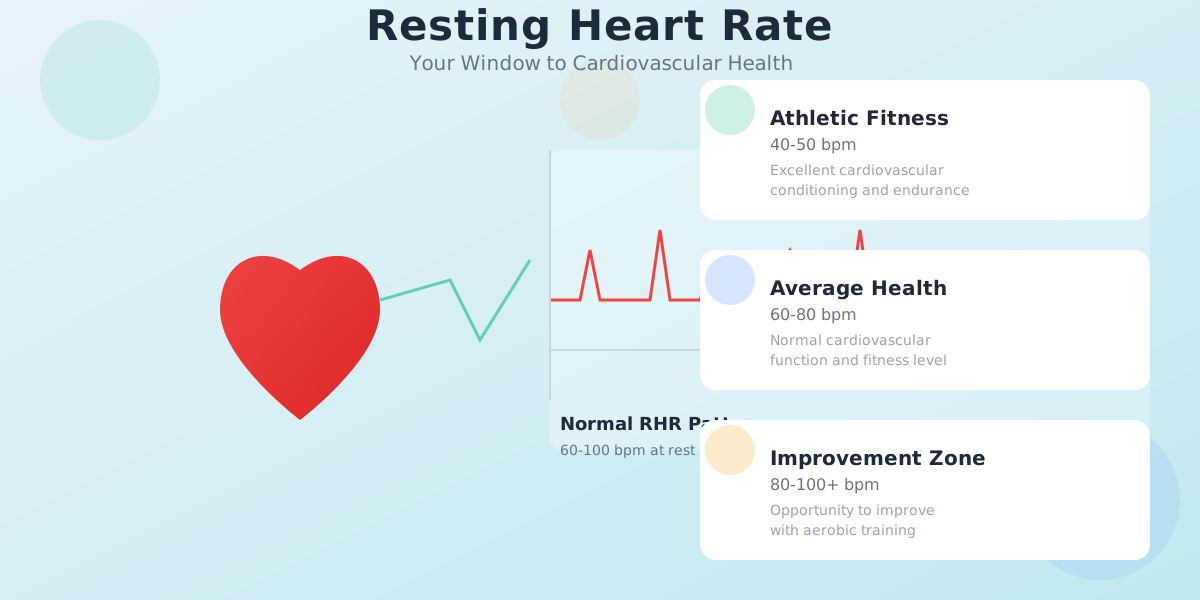
Resting heart rate (RHR) is the number of times your heart beats per minute when your body is at complete rest—typically measured first thing in the morning, before you get out of bed or consume caffeine. According to the American Heart Association, a normal resting heart rate for adults ranges from 60 to 100 beats per minute (bpm). However, this range represents normalcy, not optimization. Athletes and highly fit individuals often maintain resting heart rates between 40 to 50 bpm, while very sedentary individuals may experience rates at the upper end of the normal range or beyond.
Not medical advice.
RHR serves as a window into your autonomic nervous system—the system controlling involuntary functions like heart rate, digestion, and breathing. A lower resting heart rate generally indicates that your parasympathetic nervous system (the 'rest and digest' branch) is functioning optimally, allowing your heart to maintain efficient circulation with minimal effort. When your RHR is elevated, it suggests your sympathetic nervous system (the 'fight or flight' branch) may be chronically activated due to stress, poor fitness, or other health factors.
Surprising Insight: Surprising Insight: A 2013 study tracking 3,000 men for 16 years found that each 10-beat increase in resting heart rate corresponded to a 9% increase in all-cause mortality risk and 8% increase in cardiovascular mortality risk—independent of fitness level.
RHR Ranges and Health Implications
Visual breakdown of resting heart rate ranges from athletic to concerning levels, with associated cardiovascular health status
🔍 Click to enlarge
Why Resting Heart Rate Matters in 2026
In 2026, resting heart rate has emerged as one of the most accessible and scientifically validated health biomarkers in preventive medicine. The American Heart Association's 2026 Heart Disease and Stroke Statistics Update emphasizes cardiovascular monitoring as central to disease prevention strategies. Unlike expensive health markers requiring laboratory tests, RHR is free, measurable at home, and responds sensitively to lifestyle changes—making it an ideal metric for personal health tracking and motivation.
Wearable technology has democratized RHR monitoring. Smartwatches and fitness trackers now continuously measure resting heart rate, providing real-time data about your cardiovascular responses to exercise, stress, and sleep. This accessibility means you can track trends over weeks and months, seeing tangible evidence that your efforts are working. A declining RHR trend serves as powerful positive reinforcement for maintaining healthy habits.
Perhaps most importantly, resting heart rate responds to intervention. Unlike genetic factors you cannot change, RHR is highly modifiable through exercise, stress management, and other lifestyle factors. Studies show that endurance training can reduce RHR by 8-10 bpm within 12-16 weeks, while yoga interventions reduce it by 6-7 bpm. This plasticity makes RHR an empowering metric—concrete evidence that your choices matter and produce measurable results.
The Science Behind Resting Heart Rate
Your resting heart rate reflects the efficiency of your cardiovascular system and the function of your autonomic nervous system. When you're physically fit, your heart muscle becomes stronger and more efficient at pumping blood. This increased stroke volume—the amount of blood your heart ejects with each beat—means your heart needs to beat fewer times to circulate blood throughout your body and deliver oxygen to tissues.
Regular aerobic training directly increases stroke volume by making the heart chamber larger and more muscular, similar to how weight training builds stronger skeletal muscles. Additionally, training improves vagal tone—the function of the vagus nerve, which activates your parasympathetic nervous system. Enhanced vagal tone means your 'rest and digest' nervous system more effectively downregulates your heart rate when you're not actively exerting yourself. Research published in the journal Heart found that individuals with elevated resting heart rates also demonstrated lower physical fitness, higher blood pressure, increased body weight, and elevated circulating blood fat levels—establishing RHR as a proxy marker for overall metabolic and cardiovascular health.
Cardiovascular Adaptation to Training
Mechanism showing how aerobic training improves heart efficiency and lowers resting heart rate over time
🔍 Click to enlarge
Key Components of Resting Heart Rate
Cardiovascular Efficiency
The primary component driving RHR is how efficiently your cardiovascular system works. A more developed heart muscle with greater stroke volume requires fewer contractions to maintain adequate circulation. This is the foundational adaptation that differentiates athletes from sedentary individuals. Training specifically targets this efficiency through sustained aerobic activities.
Autonomic Nervous System Balance
Your sympathetic nervous system (fight or flight) naturally increases heart rate during stress, while your parasympathetic nervous system (rest and digest) decreases it during relaxation. Regular physical activity, meditation, adequate sleep, and stress management strengthen parasympathetic tone, allowing your resting heart rate to settle lower. Conversely, chronic stress, poor sleep, and sedentary behavior keep your sympathetic system elevated, raising your RHR.
Physical Fitness Level
Your overall aerobic fitness directly correlates with resting heart rate. Athletes and individuals maintaining consistent cardiovascular exercise naturally maintain lower RHRs. The relationship is so strong that RHR serves as a proxy indicator of cardiorespiratory fitness. Someone with an RHR of 45 bpm has fundamentally different cardiovascular capacity than someone with an RHR of 80 bpm.
Systemic Health Status
Your overall health status influences RHR through multiple pathways. Conditions causing inflammation, metabolic dysfunction, obesity, or chronic disease typically elevate resting heart rate. Conversely, individuals managing weight, blood pressure, and blood sugar through healthy habits maintain lower RHRs. This makes RHR a sensitive marker reflecting cumulative lifestyle choices.
| Fitness Level | Young Adult (20-35) | Middle Age (35-55) |
|---|---|---|
| Athletic/Very Fit | 40-50 bpm | 45-55 bpm |
| Good Fitness | 55-65 bpm | 60-70 bpm |
| Average/Normal | 70-80 bpm | 75-85 bpm |
| Sedentary/At-Risk | 85-100 bpm | 90-110 bpm |
How to Apply Resting Heart Rate: Step by Step
- Step 1: Measure first thing upon waking, before getting out of bed or consuming caffeine—this is when your body is most at rest and the measurement is most accurate
- Step 2: Sit or lie quietly for 5 minutes to ensure your body has returned to a truly resting state, avoiding any recent activity or stress
- Step 3: Locate your pulse using two fingers (index and middle finger) on the inner wrist below the thumb, or on the side of your neck below the jawline
- Step 4: Count the number of heartbeats for 60 seconds (or count for 15 seconds and multiply by 4) to determine beats per minute
- Step 5: Record your measurement daily for at least 2 weeks to establish your personal baseline and identify patterns
- Step 6: Use wearable devices like smartwatches for continuous RHR monitoring, which provides automated trending over days and weeks
- Step 7: Track your RHR weekly averages rather than daily fluctuations, as individual measurements vary due to sleep quality, stress, and caffeine
- Step 8: Establish your individual normal range—for example, if your RHR typically runs 72-76 bpm, measurements of 78-80 may indicate stress, poor sleep, or developing illness
- Step 9: Compare RHR trends to your exercise habits, sleep patterns, and stress levels to identify correlations and optimize your health practices
- Step 10: Aim for gradual RHR reduction of 1-2 bpm per month through consistent aerobic training—this sustainable pace reflects genuine cardiovascular improvement
Resting Heart Rate Across Life Stages
Young Adulthood (18-35)
Young adults typically maintain resting heart rates between 60-70 bpm, reflecting greater natural cardiovascular efficiency. However, sedentary young adults often experience elevated RHRs (80-90 bpm) due to lack of fitness stimulus. This life stage presents an opportunity: establishing consistent aerobic exercise now creates a foundation of cardiovascular fitness that persists throughout life. Young adults beginning training programs often see RHR reductions of 10-15 bpm within 3-4 months due to their body's responsiveness to stimulus. The investment in cardiovascular fitness during this period pays dividends in disease prevention decades later.
Middle Adulthood (35-55)
Middle-aged adults often experience RHR creep—gradual increases occurring with busier schedules, reduced exercise, and accumulated stress. Average RHRs in this group range from 70-85 bpm. This stage is critical for intervention: cardiovascular changes during middle age significantly influence health trajectories in later decades. The encouraging news is that RHR remains highly responsive to intervention at this age. Someone with an RHR of 85 bpm can achieve measurable improvements to 75-78 bpm within 8-12 weeks through consistent moderate-intensity aerobic exercise, stress management, and sleep optimization. These improvements directly reduce cardiovascular disease risk.
Later Adulthood (55+)
Older adults naturally experience gradual RHR increases due to age-related physiological changes; however, active individuals in this group maintain RHRs similar to younger sedentary individuals. RHR remains a powerful intervention target: research demonstrates that aerobic training reduces RHR in older adults by 8-10 bpm, and these improvements accompany enhanced longevity and reduced cardiovascular event risk. Older adults maintaining cardiovascular fitness through regular exercise preserve the protective cardiovascular adaptations developed throughout life, whereas inactivity accelerates RHR elevation and disease risk.
Profiles: Your Resting Heart Rate Approach
The Fitness Tracker
- Clear baseline and target numbers to track progress
- Objective data showing that consistent training produces measurable RHR reduction
- Integration with their existing workout routine rather than added complexity
Common pitfall: Obsessively checking daily RHR and getting discouraged by normal day-to-day fluctuations, missing the larger downward trend
Best move: Focus exclusively on weekly RHR averages and monthly trends; expect 1-2 bpm monthly reductions from consistent training; celebrate 10 bpm improvements achieved over 6-12 months
The Stress-Sensitive Person
- Understanding that elevated RHR during stressful periods is normal and reversible
- Specific stress-reduction techniques that directly lower RHR (meditation, breathing work)
- Recognition that RHR improvement requires addressing both fitness and stress simultaneously
Common pitfall: Assuming elevated RHR indicates poor fitness when it actually reflects stress; continuing intense exercise when recovery is needed
Best move: Use RHR as a stress-monitoring tool; when RHR spikes during high-stress periods, emphasize recovery practices like meditation and adequate sleep rather than additional training; resume normal training when RHR normalizes
The Health Optimizer
- Comprehensive understanding of RHR as one biomarker within a complete health picture
- Evidence that RHR improvements correlate with longevity and disease prevention
- Integration of RHR with other markers like blood pressure and blood sugar
Common pitfall: Overcomplicating RHR optimization by adding excessive metrics and losing sight of core interventions: exercise, sleep, and stress management
Best move: Maintain one simple metric (weekly RHR average) as your primary tracking tool; support it with three habits: 150 minutes weekly moderate-intensity cardio, 7+ hours sleep, and 10-minute daily stress-reduction practice
The Medication Manager
- Awareness that medications like beta-blockers naturally lower RHR through their mechanism of action
- Understanding that medication-induced RHR changes don't invalidate RHR as a useful metric
- Knowledge that improving fitness still provides additional benefits beyond medication effects
Common pitfall: Assuming medication-lowered RHR eliminates the need for cardiovascular training; missing the independent benefits of fitness on heart health and longevity
Best move: Continue aerobic exercise and heart-healthy habits even while on medications that lower RHR; the combination of medication plus lifestyle optimization produces superior health outcomes; discuss RHR changes with your healthcare provider to track effectiveness
Common Resting Heart Rate Mistakes
Many people measure their RHR immediately after waking but before allowing their body time to settle into true rest. If you jump out of bed, check your pulse within 30 seconds, and get moving, you're measuring a still-elevated heart rate, not a true resting rate. The solution is simple: allow 5 minutes of quiet sitting or lying before measuring.
Another common error is assuming that one day of exercise will sustainably lower your resting heart rate. RHR reflects your training status over weeks and months, not individual workouts. Expecting RHR improvements from occasional exercise leads to discouragement. Sustainable RHR reduction requires consistency: at least 150 minutes of moderate-intensity aerobic activity weekly, maintained over 8-12 weeks minimum to see measurable changes.
Many people also overlook the stress-RHR connection. If you measure your RHR during a hectic morning or after receiving stressful news, you'll likely record an elevated reading that doesn't reflect your true cardiovascular fitness. Morning-based measurement works precisely because mornings are typically calmer. If morning measurement isn't possible, choose a consistently calm time.
RHR Optimization Journey
Timeline showing typical RHR reduction trajectory and common plateaus during a 12-week training intervention
🔍 Click to enlarge
Science and Studies
Decades of peer-reviewed research establish resting heart rate as a powerful predictor of mortality and cardiovascular disease risk. Large prospective studies involving thousands of participants tracked over 16+ years consistently demonstrate that elevated RHR predicts earlier death from all causes and specifically from cardiovascular events, independent of fitness level, weight, or other traditional risk factors.
- Copenhagen Male Study (2013): Tracked 3,000+ men for 16 years; found that each 10 bpm increase in RHR correlated with 9% increased all-cause mortality and 8% increased cardiovascular mortality (Heart journal)
- Framingham Heart Study (ongoing since 1948): Long-term prospective data showing RHR as independent predictor of cardiovascular events and mortality across multiple decades
- American Heart Association 2026 Heart Disease and Stroke Statistics: Emphasizes cardiovascular monitoring including RHR assessment as central component of preventive health strategy
- Meta-Analysis on RHR and Mortality (2015): Systematic review of multiple prospective studies confirming RHR as robust predictor of mortality across diverse populations and geographic regions
- Aerobic Training Intervention Studies: Demonstrate 8-10 bpm RHR reductions in both young and older adults following 12-16 weeks of consistent moderate-intensity training
Your First Micro Habit
Start Small Today
Today's action: Tomorrow morning upon waking, measure your resting heart rate: sit quietly for 2 minutes, then use two fingers to count your pulse for 30 seconds (double the number for beats per minute). Write it down. That's it.
This 30-second measurement establishes your baseline—the foundation for all future improvements. You'll experience immediate success and begin noticing patterns within 2-3 weeks. The act of measuring also increases awareness, often naturally motivating lifestyle improvements.
Keep quitting habit apps after a missed day? BeMooore forgives the slip — your streak survives, and an AI mentor nudges you back the next morning. Free on iOS.
Quick Assessment
What is your approximate current resting heart rate based on what you've read?
Establishing your baseline is the critical first step. Even an estimate helps—the goal is to move from vague assumptions to actual measurements so you can track real progress.
Which factor most motivates you personally?
Different people respond to different motivators. Identifying yours helps you stay committed when initial enthusiasm fades. A numbers-focused person thrives on tracking weekly averages, while a health-science person wants to understand mechanisms. Use what resonates with you.
What's your current weekly aerobic exercise volume?
This establishes your starting point for RHR improvement. If you're under 150 minutes weekly, progressive increases in aerobic activity are your highest-leverage intervention. If you already meet guidelines, focus on intensity variation or stress/sleep optimization.
Take our full assessment to get personalized recommendations.
Discover Your Style →Next Steps
Start with your baseline measurement tomorrow morning. Measure your resting heart rate in the 30-45 minutes after waking, using the step-by-step process detailed above. Write the number down. This single data point is your foundation—everything builds from here.
Next, establish what 'consistency' means for you personally. Choose one aerobic activity you enjoy—walking, cycling, swimming, dancing, jogging—something you'll actually do. Aim for 30 minutes, 5 days weekly (150 minutes total), which research shows produces meaningful RHR reduction within 8-12 weeks. Simultaneously, prioritize 7-9 hours of sleep nightly and implement one daily stress-reduction practice (meditation, deep breathing, or mindfulness).
Get personalized guidance with AI coaching.
Start Your Journey →Research Sources
This article is based on peer-reviewed research and authoritative sources. Below are the key references we consulted:
Related Glossary Articles
Frequently Asked Questions
What's considered a 'good' resting heart rate?
Normal RHR ranges from 60-100 bpm for adults. However, 'good' typically means 60-70 bpm for average adults, below 60 for fit individuals, and 40-50 for athletes. The key is improvement from your personal baseline—a reduction from 85 to 75 bpm is substantial progress.
How long does it take to lower resting heart rate through training?
Initial reductions begin within 1-2 weeks as your nervous system responds to training. Measurable improvements of 5-10 bpm typically appear within 8-12 weeks of consistent aerobic exercise. Further reductions require months of sustained training, but the benefits include improved longevity and disease prevention.
Can medications affect my resting heart rate measurements?
Yes, medications like beta-blockers intentionally lower heart rate. If you take such medications, your RHR will naturally be lower, but you can still track trends within your medication-modified baseline. Discuss changes with your healthcare provider to ensure they align with treatment goals.
Why is my RHR higher on stressful mornings?
Stress activates your sympathetic nervous system, elevating heart rate even at rest. Poor sleep, caffeine, and anxiety also raise RHR. This is normal and temporary. Use elevated RHR as a stress indicator prompting increased relaxation practices. As stress management improves, your baseline RHR will decrease.
Should I aim for the lowest possible resting heart rate?
Not necessarily. The goal is a healthy RHR appropriate for your fitness level and age. An RHR of 50 bpm is excellent for a trained athlete but potentially concerning if caused by heart rhythm abnormalities. Work with your healthcare provider to establish an appropriate target RHR for your individual circumstances.
Take the Next Step
Ready to improve your wellbeing? Take our free assessment to get personalized recommendations based on your unique situation.
- Discover your strengths and gaps
- Get personalized quick wins
- Track your progress over time
- Evidence-based strategies