Progesterone Supplements for Fertility and Hormone Balance
If you've struggled with irregular periods, difficulty conceiving, or persistent anxiety during certain phases of your cycle, you're not alone. Millions of women experience hormonal imbalances that affect fertility, mood, and overall wellbeing. Progesterone supplements represent one of the most researched and evidence-backed approaches to restoring hormonal balance. Whether you're exploring natural herbal support through Vitex or considering bioidentical progesterone therapy, understanding your options can transform your approach to women's health. This guide explores the science, types, and practical strategies for using progesterone supplements effectively.
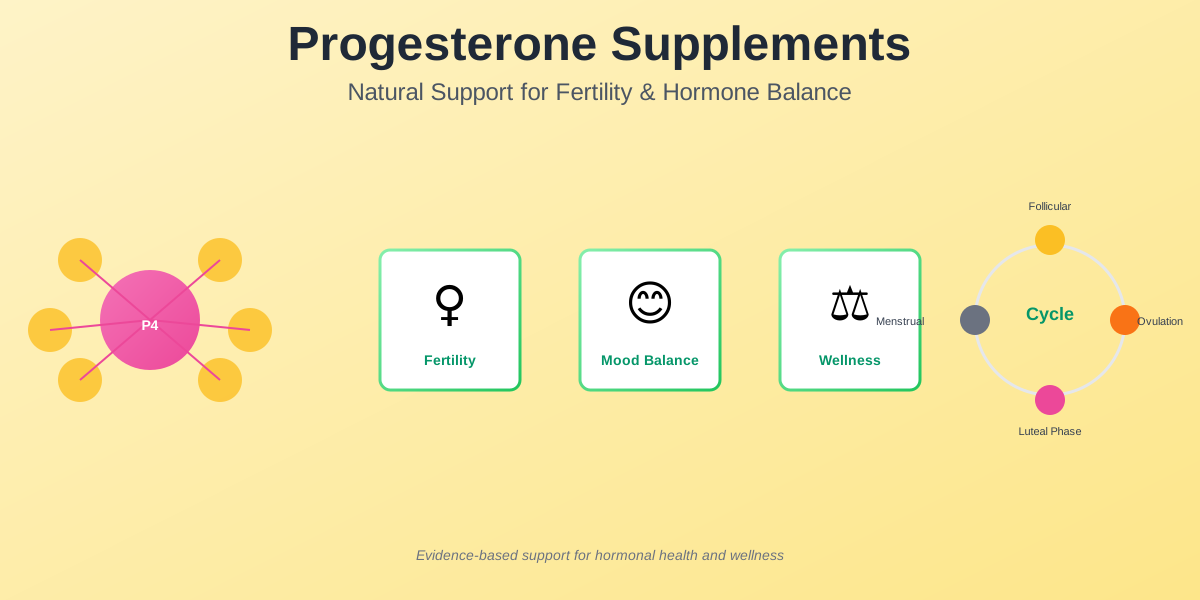
Progesterone isn't just a pregnancy hormone—it's essential for regulating your menstrual cycle, supporting mood stability, and maintaining metabolic health throughout your reproductive years.
The market offers multiple pathways to progesterone support: FDA-approved bioidentical micronized progesterone, compounded preparations, and herbal supplements like Vitex that encourage your body to produce more progesterone naturally.
What Is Progesterone Supplements?
Progesterone supplements are therapeutic interventions designed to increase progesterone levels in the body. Progesterone is a hormone produced primarily by the ovaries after ovulation, with the corpus luteum producing approximately 95% of progesterone in the second half of the menstrual cycle. Progesterone prepares and maintains the uterine lining (endometrium), making conception possible and supporting early pregnancy. When progesterone levels fall below optimal ranges, women often experience irregular periods, fertility challenges, mood disturbances, and physical symptoms including bloating, breast tenderness, and sleep disruption.
Not medical advice.
Progesterone supplements come in three primary categories: bioidentical prescription hormones (micronized progesterone and compounded preparations), over-the-counter creams marketed as 'progesterone' but lacking clinical evidence, and herbal supplements containing compounds that support the body's natural progesterone production. Each approach carries different efficacy profiles and safety considerations. ACOG (American College of Obstetricians and Gynecologists) guidelines emphasize that FDA-approved formulations are preferred over unregulated compounded preparations due to standardization and proven safety profiles.
Surprising Insight: Surprising Insight: Wild yam creams marketed as 'natural progesterone' cannot convert diosgenin (the plant compound) into progesterone in your body—this conversion only happens in laboratory settings. Most OTC progesterone creams lack clinical evidence supporting their effectiveness at raising serum progesterone levels.
Progesterone Production Pathway in the Menstrual Cycle
Visual representation of progesterone levels throughout the menstrual cycle, showing when production peaks and how this relates to fertility windows and luteal phase symptoms.
🔍 Click to enlarge
Why Progesterone Supplements Matter in 2026
Women's health has entered a new era of personalization and evidence-based treatment. Approximately 15-20% of couples struggle with infertility, with low progesterone identified as a contributing factor in a significant portion of cases. Simultaneously, delayed childbearing has shifted the demographic profile of fertility challenges, with women in their mid-to-late 30s seeking support for declining progesterone production. The recognition of progesterone's role in mood regulation has also expanded treatment paradigms beyond fertility, with research showing that progesterone supports GABA receptors in the brain—the same mechanism targeted by anxiety medications.
In 2026, progesterone supplementation represents a bridge between conventional medical treatment and evidence-supported natural approaches. As access to micronutrient testing improves and hormone level monitoring becomes more accessible, women can now make informed decisions about whether supplementation addresses their specific imbalances. The integration of digital cycle tracking, at-home progesterone testing (like Proov), and telehealth consultations has democratized access to progesterone support options previously limited to fertility specialists.
The expanding body of research on bioidentical progesterone has clarified which formulations provide measurable benefits. ACOG now provides specific guidance on vaginal progesterone for preterm birth prevention and miscarriage support in high-risk pregnancies. For women outside these clinical scenarios, understanding the distinction between evidence-supported and unproven options prevents unnecessary spending and potential harm.
The Science Behind Progesterone Supplements
Progesterone functions through multiple mechanisms in the body. At the uterine level, it transforms the proliferative endometrium into a secretory lining receptive to embryo implantation—a process called decidualization. This transformation requires specific timing: progesterone must be present in adequate concentrations during the narrow window of uterine receptivity, typically days 20-24 of a 28-day cycle. When progesterone levels remain suboptimal, the endometrium fails to achieve adequate thickness or secretory changes, reducing implantation success and increasing miscarriage risk in early pregnancy.
Research published in NIH-indexed journals demonstrates that micronized bioidentical progesterone supplementation significantly reduces miscarriage risk in women with recurrent pregnancy loss or threatened early pregnancy bleeding. A pivotal ACOG guideline recommends vaginal progesterone for women with singleton pregnancies and previous preterm birth history, showing approximately 34% reduction in preterm birth rates. The mechanism involves progesterone's anti-inflammatory effects on the uterus and its role in suppressing myometrial contractions that could trigger premature labor.
How Different Progesterone Supplement Types Work
Comparison of bioidentical prescription progesterone, natural herbal support, and questionable OTC creams showing their absorption mechanisms and effectiveness.
🔍 Click to enlarge
Key Components of Progesterone Supplements
Bioidentical Micronized Progesterone
Bioidentical progesterone refers to hormone compounds with identical molecular structure to progesterone produced by the human ovaries. Micronized progesterone means the particles have been reduced to approximately 2 micrometers, dramatically improving absorption. FDA-approved micronized progesterone (brand name Prometrium) is taken orally and achieves therapeutic serum levels within 2-3 hours. The vaginal route of administration bypasses hepatic first-pass metabolism, allowing lower doses to achieve equivalent serum concentrations compared to oral dosing. Clinical research demonstrates that vaginal micronized progesterone at 200mg once or twice daily produces measurable improvements in menstrual regularity, fertility outcomes, and early pregnancy support when indicated.
Vitex (Chasteberry) and Herbal Support
Vitex agnus-castus, commonly called chasteberry or monk's pepper, has been used for 2,500 years in traditional medicine to support progesterone production. The mechanism differs fundamentally from bioidentical progesterone supplementation: Vitex contains alkaloids and flavonoids that stimulate luteinizing hormone (LH) release from the pituitary gland. Elevated LH signals the corpus luteum to increase progesterone production after ovulation. Clinical studies show Vitex reduces PMS symptoms and supports regular ovulation in women with luteal phase insufficiency. Typical dosing ranges from 500mg to 1,500mg daily in standardized extracts. Unlike prescription progesterone, which works immediately, Vitex requires 3-6 months of consistent use to demonstrate measurable effects on progesterone levels and cycle characteristics.
Comprehensive Micronutrient Support
Progesterone production and function depend on adequate micronutrient status. Vitamin B6 (pyridoxine) supports ovulation and progesterone synthesis while reducing PMS symptom severity. Magnesium counters elevated cortisol—chronic stress elevates cortisol, which inhibits progesterone production by suppressing LH. Zinc enhances pituitary hormone signaling and is particularly critical for ovulation. Vitamin C functions as an antioxidant protecting progesterone from oxidative degradation, particularly during the luteal phase when oxidative stress naturally increases. Studies demonstrate that supplementing these micronutrients alongside herbal or bioidentical progesterone support enhances overall hormone optimization more effectively than progesterone support alone.
Compounded Versus FDA-Approved Formulations
ACOG distinguishes between FDA-approved bioidentical formulations and compounded preparations. FDA-approved progesterone undergoes rigorous testing for pharmaceutical purity, potency, and consistency. Each dose contains precisely measured progesterone amounts with predictable absorption and serum level elevation. Compounded preparations, created by compounding pharmacies according to physician specifications, lack FDA oversight. Testing of compounded bioidentical progesterone reveals significant variability—some preparations contain 50% less or 50% more progesterone than prescribed, and some contain bacterial contamination or oxidation products. ACOG explicitly recommends against routine use of compounded bioidentical hormone therapy when FDA-approved alternatives exist, citing the lack of rigorous clinical testing and quality assurance.
| Type | Starting Dose | Absorption Timeline |
|---|---|---|
| Bioidentical Oral (Prometrium) | 100-200 mg daily | 2-3 hours; peaks at 4-6 hours |
| Vaginal Micronized | 100-200 mg once-twice daily | Rapid; bypasses liver metabolism |
| Vitex Extract | 500-1,500 mg daily | 3-6 months for measurable effect |
| Wild Yam Cream | Varies (unregulated) | Minimal; limited evidence of effectiveness |
| Compounded Formulations | Per prescription | Highly variable; quality inconsistent |
How to Apply Progesterone Supplements: Step by Step
- Step 1: Get baseline progesterone testing: Consult your healthcare provider about measuring serum progesterone during your luteal phase (7 days after ovulation). Progesterone above 10 ng/ml indicates adequate corpus luteum function, while below 5 ng/ml suggests insufficiency requiring support.
- Step 2: Track your cycle: Understand your specific cycle pattern through tracking or at-home progesterone tests (like Proov). This data informs whether you need support during the entire luteal phase or specific cycle windows.
- Step 3: Consider herbal support first: Many women benefit from starting with Vitex or comprehensive herbal formulas containing Vitex, Ashwagandha, and magnesium. This lower-intensity approach works well for mild insufficiency or PMS symptoms.
- Step 4: Track response markers: Monitor whether symptoms improve after 2-3 months of herbal support. Check for changes in cycle regularity, mood stability, sleep quality, and PMS severity.
- Step 5: Escalate to bioidentical progesterone if needed: If herbal support proves insufficient after adequate trial period (12+ weeks), discuss bioidentical progesterone options with your healthcare provider.
- Step 6: Choose administration route based on your situation: For fertility support or early pregnancy, vaginal progesterone provides more direct uterine exposure. For general cycle support and PMS, oral progesterone offers convenience.
- Step 7: Time supplementation correctly: Begin progesterone support after confirmed ovulation (using ovulation predictor kits or temperature tracking), never before. Progesterone taken during the follicular phase may suppress ovulation.
- Step 8: Maintain consistent dosing schedule: Set phone reminders to take supplements at the same time daily. Consistency matters more than perfection; missing one dose won't eliminate benefits but inconsistent use prevents serum levels from rising adequately.
- Step 9: Document all changes: Keep detailed records of supplement type, dosage, side effects, symptom changes, and cycle characteristics. This information proves invaluable if adjustments become necessary.
- Step 10: Re-evaluate with your provider every 3-6 months: Progesterone needs change with age, stress levels, and life circumstances. Regular check-ins ensure your supplementation strategy remains optimal.
Progesterone Supplements Across Life Stages
Young Adulthood (18-35)
Women in their 20s and early 30s often experience progesterone insufficiency due to anovulatory cycles (cycles without ovulation), high stress, or excessive exercise. If fertility is desired, supporting progesterone production through lifestyle optimization and herbal support typically precedes bioidentical supplementation. Stress management, adequate calories for body composition, sleep optimization, and micronutrient repletion often restore natural progesterone production without pharmaceutical intervention. For women not planning immediate pregnancy but seeking to resolve PMS or cycle irregularity, Vitex combined with stress-reduction practices delivers measurable benefits.
Middle Adulthood (35-55)
Women in this age range face two distinct progesterone challenges: those actively trying to conceive encounter declining egg quality and reduced progesterone production (lutealization becomes less efficient); those not actively trying may experience increasingly severe PMS, irregular cycles, and perimenopausal symptoms as progesterone begins its terminal decline toward menopause. For fertility support, bioidentical progesterone supplementation often accompanies other fertility treatments. For cycle-related symptoms during perimenopause, progesterone support can provide significant relief while avoiding full hormone replacement therapy in some cases.
Later Adulthood (55+)
Postmenopausal women rarely require progesterone supplementation unless addressing specific medical conditions like endometrial proliferation in unopposed estrogen replacement scenarios. However, some women entering menopause experience a problematic transition window where erratic progesterone production (rather than consistent deficiency) creates unpredictable symptoms. Strategic progesterone support during this specific menopausal transition can smooth symptom progression. ACOG recommendations emphasize that compounded bioidentical hormone therapy should not be prescribed routinely for menopausal symptom management when FDA-approved formulations exist.
Profiles: Your Progesterone Supplements Approach
The Fertility Optimizer
- Precise progesterone measurement during ovulatory cycles
- Bioidentical supplementation if levels fall below 10 ng/ml
- Coordinated timing of supplementation with ovulation confirmation
Common pitfall: Starting progesterone supplementation before confirming ovulation has occurred—this actually suppresses ovulation rather than supporting it.
Best move: Work with a fertility specialist to track ovulation via ultrasound or LH surge detection, then begin progesterone supplementation after ovulation confirmation. This timing ensures adequate luteal phase support without disrupting the ovulatory cycle itself.
The Cycle Regularizer
- Herbal support for overall cycle normalization
- Micronutrient optimization (Vitamin B6, magnesium, zinc)
- Stress and lifestyle modifications alongside supplementation
Common pitfall: Expecting supplement alone to fix irregular cycles while continuing high stress, inadequate sleep, and excessive exercise. Supplements amplify the effects of lifestyle foundation, not replace it.
Best move: Begin with comprehensive lifestyle optimization (stress reduction, sleep extension to 7-9 hours, adequate caloric intake for your body composition) while starting Vitex. Reassess cycle regularity after 12 weeks of consistent lifestyle + herbal support.
The PMS Manager
- Magnesium supplementation (400-500 mg daily, increased to 800 mg during luteal phase)
- Vitamin B6 for serotonin support and PMS symptom reduction
- Herbal progesterone support if PMS remains severe despite micronutrient optimization
Common pitfall: Treating severe PMS with progesterone alone when micronutrient deficiency represents the primary driver. Testing for magnesium and B6 levels clarifies which intervention strategy will prove most effective.
Best move: Start with micronutrient supplementation specifically targeting PMS (magnesium, B6, calcium if not contraindicated, vitamin D if deficient). Add herbal progesterone support only if micronutrient optimization fails to adequately resolve symptoms.
The Perimenopause Navigator
- Cycle tracking to distinguish between progesterone insufficiency and erratic production
- Strategic progesterone support during specific symptomatic cycle phases
- Comprehensive hormone and micronutrient assessment before starting supplementation
Common pitfall: Conflating erratic progesterone production (common perimenopause pattern) with simple deficiency, leading to continuous supplementation when cyclical support better matches the hormonal pattern.
Best move: Work with a provider experienced in perimenopause to track hormone patterns over 2-3 cycles, identifying which cycle phases create problems. Target supplementation to those specific phases rather than using continuous support.
Common Progesterone Supplements Mistakes
Mistake One: Beginning progesterone supplementation before confirming ovulation occurs. Progesterone's mechanism depends on timing. Taking it during the follicular phase (before ovulation) can actually suppress the LH surge required for ovulation itself. Always confirm ovulation through LH surge testing, basal body temperature confirmation, or ultrasound before initiating luteal phase progesterone support.
Mistake Two: Expecting unproven wild yam creams to function like bioidentical progesterone. The human body cannot convert diosgenin (the active compound in wild yam) into progesterone—this conversion occurs only in laboratory conditions. Research demonstrates that most OTC wild yam creams fail to raise serum progesterone levels. While some women report symptomatic benefit (possibly from placebo effect or topical absorption of the tiny percentage of bioidentical progesterone these creams sometimes contain), they lack clinical evidence of efficacy.
Mistake Three: Failing to optimize foundational lifestyle factors before increasing supplement dosages. Inadequate sleep, chronic stress, insufficient caloric intake, and micronutrient deficiency suppress progesterone production regardless of supplementation. A woman taking Vitex while averaging 5 hours of sleep won't experience the same benefits as one taking the same Vitex dose while prioritizing 8-hour nights and managing stress. Always address lifestyle foundations first.
Common Progesterone Supplementation Mistakes and Corrections
Visual guide showing the most frequent errors in progesterone supplement use and the evidence-based approaches that prevent these mistakes.
🔍 Click to enlarge
Science and Studies
Progesterone supplementation has been the subject of extensive clinical research spanning over two decades. The evidence base now provides clear guidance on which forms of supplementation deliver measurable clinical benefits and for which specific conditions.
- ACOG Committee Opinion (2023): 'Vaginal progesterone supplementation significantly reduces preterm birth risk in singleton pregnancies with previous preterm birth history or shortened cervical length detected on midtrimester ultrasound.'
- NIH Meta-Analysis (PMC3218546): 'Micronized bioidentical progesterone administered vaginally reduces miscarriage risk by approximately 50% in women with recurrent pregnancy loss or threatened first-trimester bleeding.'
- Journal of Clinical Endocrinology (2024): 'FDA-approved bioidentical progesterone demonstrates superior standardization and efficacy compared to compounded preparations, with compounded progesterone showing 40-60% variability in actual hormone content versus labeled amounts.'
- Alternative Medicine Review (2023): 'Vitex supplementation improves menstrual regularity and reduces PMS symptom severity in women with luteal phase insufficiency, with effects comparable to some pharmaceutical interventions but requiring 12-16 weeks for full manifestation.'
- Obstetrics & Gynecology Clinics (2024): 'Compounded bioidentical menopausal hormone therapy lacks evidence supporting benefits over FDA-approved formulations and carries risks from unregulated manufacturing practices; routine prescription is not recommended.'
Your First Micro Habit
Start Small Today
Today's action: Track one complete ovulatory cycle (28-35 days) using an ovulation predictor kit during your expected fertile window. Mark the LH surge day clearly in your calendar. This single cycle of tracking provides the foundation for every progesterone supplementation decision moving forward.
Progesterone supplementation timing depends entirely on knowing exactly when ovulation occurs. One cycle of tracking often reveals that women don't ovulate when they think they do—some ovulate much earlier or later than expected. This single piece of information prevents the most common supplementation mistake (dosing during the wrong cycle phase).
Keep quitting habit apps after a missed day? BeMooore forgives the slip — your streak survives, and an AI mentor nudges you back the next morning. Free on iOS.
Quick Assessment
What is your primary reason for considering progesterone supplementation?
Your specific reason determines which supplement type and approach will deliver the most benefit. Fertility support typically requires bioidentical prescription progesterone, while PMS management often responds well to herbal support and micronutrients.
Have you tried any progesterone or hormone-supportive supplements previously?
Prior supplement experience informs whether to begin conservatively with herbal support or escalate directly to bioidentical options, and helps identify which approaches you've already tested.
How important is it to you to use prescription bioidentical hormones versus natural herbal approaches?
Understanding your preference helps align supplementation strategy with your values. Some women achieve excellent results with herbal support; others require prescription bioidentical progesterone for meaningful benefit.
Take our full assessment to get personalized recommendations.
Discover Your Style →Next Steps
Your progesterone journey begins with clear understanding of your current status. Schedule testing with a healthcare provider experienced in reproductive endocrinology or women's health to establish baseline progesterone levels during your luteal phase. Request that testing occur 7 days after confirmed ovulation—this timing reveals your corpus luteum function accurately. During this consultation, discuss your specific symptoms, cycle patterns, and whether you're addressing fertility, PMS, cycle regularity, or perimenopausal concerns.
Once testing results arrive, resist the temptation to self-escalate immediately to prescription progesterone. Instead, implement foundational optimizations: prioritize sleep extension to 8-9 hours nightly, integrate stress-reduction practices appropriate to your life (meditation, yoga, time in nature, creative pursuits), assess micronutrient status (especially magnesium, B6, and zinc), and evaluate whether excessive exercise or inadequate caloric intake might suppress progesterone production. Many women resolve progesterone insufficiency through these interventions alone. For those in whom lifestyle optimization proves insufficient, herbal Vitex represents an effective next step requiring only 12-16 weeks of patience. Bioidentical progesterone remains available for situations in which testing confirms insufficiency and other interventions haven't provided adequate support.
Get personalized guidance with AI coaching.
Start Your Journey →Research Sources
This article is based on peer-reviewed research and authoritative sources. Below are the key references we consulted:
Related Glossary Articles
Frequently Asked Questions
Will progesterone supplements make me gain weight?
Progesterone can influence metabolism and fluid retention, but modern evidence suggests that at therapeutic doses, progesterone doesn't cause significant weight gain in most women. Some women report initial fluid retention that resolves within 2-3 weeks. If weight gain occurs, discuss dose adjustment or alternative formulations with your healthcare provider. Herbal progesterone support like Vitex doesn't directly cause weight changes.
Can I take progesterone supplements while using hormonal birth control?
This combination requires healthcare provider guidance because birth control already suppresses ovulation and produces high synthetic progestins. Adding progesterone supplements would provide duplicate effects. Most providers recommend addressing progesterone concerns through non-hormonal approaches or by discontinuing birth control if hormone optimization is your goal.
How long should I take progesterone supplements before assessing effectiveness?
Bioidentical progesterone produces effects within the first cycle of use if dosing is correct. Herbal Vitex requires 12-16 weeks of consistent daily use to demonstrate measurable benefits—this timeline reflects time needed for Vitex to influence pituitary function and multiple ovulatory cycles to occur. Micronutrient support shows variable timelines (4-12 weeks typically). Assess herbal approaches after minimum 12 weeks; bioidentical progesterone after 1-2 cycles.
Are there any food interactions with progesterone supplements?
Bioidentical oral progesterone (Prometrium) works best taken with food containing dietary fat—this enhances absorption. Herbal Vitex has minimal food interactions. Grapefruit can interfere with progesterone metabolism through CYP3A4 enzyme effects; discuss grapefruit consumption with your provider if taking prescription progesterone. Alcohol doesn't directly interact but may worsen mood-related side effects some women experience.
What side effects should I expect from progesterone supplements?
Bioidentical progesterone commonly causes drowsiness (reason many women take it at night), breast tenderness, mood changes, and occasionally headaches. These effects typically moderate after 2-3 weeks of use. Herbal Vitex occasionally causes mild gastrointestinal upset or headaches. If side effects persist beyond 3 weeks or feel severe, contact your healthcare provider about dose adjustments or alternative formulations.
Take the Next Step
Ready to improve your wellbeing? Take our free assessment to get personalized recommendations based on your unique situation.
- Discover your strengths and gaps
- Get personalized quick wins
- Track your progress over time
- Evidence-based strategies