Personalized Nutrition
One-size-fits-all diets are failing millions of people. While your friend thrives on a low-carb approach, you might flourish with complex carbohydrates. While your colleague loses weight on intermittent fasting, your metabolism might demand regular meals. The difference isn't willpower or discipline—it's your unique genetic code, gut microbiome composition, and metabolic fingerprint. Personalized nutrition uses cutting-edge science to decode your body's individual needs, creating custom dietary strategies tailored specifically to how YOUR genes respond to food.
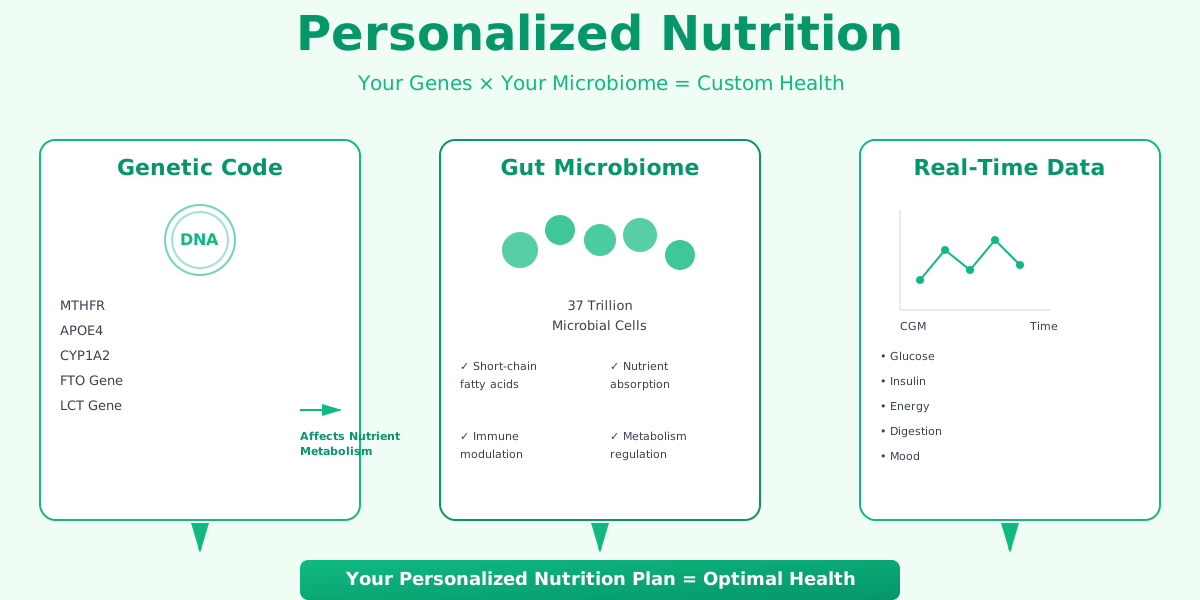
Imagine knowing exactly which nutrients your body absorbs best, which foods trigger inflammation in your specific microbiome, and which eating patterns sync perfectly with your genetic predispositions. This isn't science fiction—it's the reality of precision nutrition in 2026.
Discover how nutrigenomics, microbiome analysis, and metabolic testing are revolutionizing dietary science to help you achieve health outcomes that generic nutrition advice never delivered.
What Is Personalized Nutrition?
Personalized nutrition, also called precision nutrition or nutrigenomics, is an evidence-based approach that tailors dietary recommendations to an individual's unique combination of genetic makeup, metabolic profile, gut microbiome composition, lifestyle factors, and health status. Rather than following universal guidelines, personalized nutrition acknowledges that people respond differently to the same foods and nutrients based on their biological individuality.
Not medical advice.
The field integrates multiple scientific disciplines: nutritional genomics studies how nutrients affect gene expression, nutrigenetics examines how genetic variations influence nutrient metabolism, microbiomics analyzes how gut bacteria communities affect dietary responses, and metabolomics measures real-time chemical processes in your body after eating. Together, these create a comprehensive nutritional blueprint tailored specifically to you.
Surprising Insight: Surprising Insight: The All of Us Research Program identified 1,247 genetic variants influencing dietary responses across diverse populations, enabling prediction accuracy rates exceeding 90% for individual metabolic responses to specific foods and nutrients.
The Personalized Nutrition Framework
Four interconnected dimensions that shape your unique nutritional needs
🔍 Click to enlarge
Why Personalized Nutrition Matters in 2026
Generic nutrition recommendations fail approximately 70% of people who attempt them. This isn't because people lack discipline—it's because their bodies genuinely respond differently to identical dietary interventions. A 2024 meta-analysis of PREDICT, FOOD4ME, and PRECISION-HEALTH trials demonstrated that personalized nutrition significantly outperforms standard dietary advice for weight management, glycemic control, and long-term dietary adherence across diverse populations.
The rise of chronic diseases—obesity, type 2 diabetes, cardiovascular disease, autoimmune conditions—increasingly correlates with mismatch between individual nutritional needs and standardized dietary patterns. Personalized nutrition represents a paradigm shift from treating everyone identically to recognizing and optimizing for biological uniqueness. In 2026, with costs of genetic testing declining 85% from 2010 levels and microbiome analysis becoming more accessible, precision nutrition has transitioned from luxury wellness into practical healthcare.
Additionally, emerging evidence demonstrates that personalized nutrition improves not just immediate health markers but long-term health resilience, disease prevention, cognitive function, mental health, and quality of life through sustained behavior change—because recommendations align with how YOUR body actually functions rather than how healthcare systems assume bodies function universally.
The Science Behind Personalized Nutrition
Personalized nutrition operates on three scientific foundations. First, nutrigenetics examines how genetic variations affect nutrient processing. For example, variations in the MTHFR gene affect folate metabolism; the APOE4 gene influences cholesterol and fat processing; the CYP1A2 gene determines caffeine sensitivity; and the LCT gene controls lactose digestion. These aren't minor variations—they fundamentally shape how efficiently your body processes essential nutrients and how it responds to specific macronutrient ratios.
Second, your gut microbiome—the 37 trillion bacteria inhabiting your digestive system—acts as a secondary metabolic organ. Different bacterial communities produce different quantities of beneficial short-chain fatty acids, influence intestinal barrier function, modulate immune responses, and determine which dietary components your body can effectively utilize. Research demonstrates that personalized dietary interventions based on microbiome composition produce superior weight loss and metabolic improvements compared to identical diets prescribed without microbiome analysis. Your unique microbial ecosystem means certain foods that benefit most people might not work optimally for you, while foods that seem restrictive for general populations might be perfect for your specific bacterial community.
How Genes Affect Nutrient Metabolism
Genetic variations create different nutrient processing pathways
🔍 Click to enlarge
Key Components of Personalized Nutrition
Genetic Testing and Nutrigenomics
Modern genetic testing identifies your specific variants in genes controlling nutrient metabolism, food sensitivities, metabolic rate, and disease predisposition. Tests analyze genes affecting folate metabolism, vitamin D transport, fatty acid oxidation, salt sensitivity, alcohol metabolism, and caffeine processing. This genetic information, combined with biochemical research linking specific variants to nutritional requirements, enables practitioners to recommend precisely calibrated nutrient intakes tailored to your genetic profile. The process involves saliva collection, DNA sequencing, and interpretation through specialized software that cross-references your variants against current nutritional science.
Microbiome Analysis and Gut Health
Advanced microbiome testing sequences bacterial DNA to identify your specific microbial communities and their functional capabilities. Different bacterial species produce different metabolites from dietary fiber, influence inflammation markers, and determine your capacity to extract energy from specific foods. Microbiome-guided personalized nutrition recommends prebiotic and probiotic foods optimized for your specific bacterial composition rather than generic 'healthy' foods that might not feed your unique microbial ecosystem. Studies demonstrate that individuals receiving microbiome-personalized interventions achieve superior metabolic improvements compared to those receiving identical diets without microbiome analysis.
Continuous Metabolic Monitoring
Continuous glucose monitoring (CGM), wearable devices, and regular metabolic blood work provide real-time feedback on how YOUR specific body responds to specific foods and meal timing. While generic nutrition science says 'eat complex carbohydrates,' personalized monitoring reveals that YOUR blood glucose spikes with brown rice but remains stable with quinoa, or that YOUR insulin response is better after morning meals versus evening meals. This real-time biofeedback transforms nutrition from theoretical to empirical—you literally observe your individual metabolic response and can adjust immediately.
AI-Driven Dietary Optimization
Artificial intelligence and machine learning analyze complex multi-omics data—genomics, microbiomics, metabolomics, and lifestyle factors—to predict optimal dietary interventions for your specific situation. AI algorithms identify patterns invisible to human analysis, predict which foods will work best for YOU, identify potential drug-nutrient interactions, and continuously refine recommendations as new data emerges. Digital twins and health knowledge graphs create virtual models of your unique physiology that can predict outcomes of dietary changes before you make them.
| Gene | Variant Effect | Nutritional Implication |
|---|---|---|
| MTHFR | Affects folate metabolism | May need higher folate intake or methylated supplements |
| APOE4 | Influences cholesterol processing | May benefit from lower saturated fat and higher omega-3 |
| CYP1A2 | Controls caffeine sensitivity | May need to eliminate or minimize caffeine consumption |
| LCT | Determines lactose digestion | May need lactose-free or fermented dairy options |
| FTO | Affects satiety hormone response | May need structured meal timing and specific macronutrient ratios |
How to Apply Personalized Nutrition: Step by Step
- Step 1: Collect baseline health data: document current diet, symptoms, energy levels, digestive health, food sensitivities, and health goals.
- Step 2: Obtain genetic testing: use accredited labs that test nutrient metabolism genes (MTHFR, APOE, CYP1A2, FTO, LCT, and 20+ others relevant to nutrition).
- Step 3: Analyze microbiome composition: take microbiome test identifying your specific bacterial communities and their functional capabilities.
- Step 4: Establish metabolic baseline: order blood work measuring glucose, insulin, lipid panels, vitamin levels, and inflammatory markers.
- Step 5: Consider continuous glucose monitoring: use a CGM device for 2-4 weeks to observe YOUR specific blood glucose response to different foods and meal timing.
- Step 6: Work with a qualified practitioner: consult a registered dietitian or functional medicine practitioner trained in personalized nutrition interpretation.
- Step 7: Create personalized recommendations: develop a dietary plan incorporating genetic insights, microbiome data, metabolic markers, and your specific preferences.
- Step 8: Implement dietary changes gradually: modify 1-2 dietary elements at a time, tracking energy, digestion, mood, and health markers.
- Step 9: Monitor and adjust continuously: track biofeedback through apps, wearables, and regular testing; adjust recommendations based on observed outcomes.
- Step 10: Integrate lifestyle factors: optimize sleep, stress, exercise, and social connection—all of which influence nutritional needs and food response patterns.
Personalized Nutrition Across Life Stages
Young Adulthood (18-35)
Young adults typically have faster metabolic rates and higher nutrient demands. Genetic variations affecting energy metabolism become especially relevant. This life stage is optimal for establishing personalized nutrition habits that prevent future chronic disease. Young adults often respond quickly to microbiome-guided interventions, making this an ideal time to identify food sensitivities and optimize dietary patterns before metabolic flexibility declines with age. Focus on establishing sustainable personalized eating patterns, exploring which macronutrient ratios produce optimal energy and focus, and identifying foods that support athletic performance or cognitive function based on YOUR unique genetic profile.
Middle Adulthood (35-55)
Middle adulthood brings metabolic shifts, hormonal changes (especially perimenopause/andropause), and increased prevalence of metabolic disease markers. Personalized nutrition becomes critical for disease prevention. Genetic testing during this period often reveals why weight management became harder, why energy crashes occur, or why certain foods cause inflammation. Microbiome analysis frequently shows decreased microbial diversity—personalized interventions targeting specific beneficial bacteria can restore metabolic health. This life stage particularly benefits from continuous metabolic monitoring to catch pre-diabetic glucose patterns early and adjust diet before diagnosis occurs.
Later Adulthood (55+)
Older adults face declining nutrient absorption, increased medication-nutrient interactions, and accumulated metabolic stress. Personalized nutrition addresses these specific challenges through genetics-guided nutrient forms and dosages, microbiome interventions targeting age-related diversity loss, and careful timing of nutrient intake around medications. Genetic variants affecting bone health, cognitive function, cardiovascular disease risk, and longevity become increasingly relevant. Personalized nutrition during this stage often emphasizes protein timing, micronutrient density, and foods supporting healthy aging and disease prevention.
Profiles: Your Personalized Nutrition Approach
The Metabolic Optimizer
- Macronutrient timing based on CGM data showing YOUR glucose response
- Genetic insights revealing whether you metabolize carbs or fats more efficiently
- Microbiome foods feeding bacterial species that produce satiety compounds
Common pitfall: Following generic 'healthy' foods that don't match your personal metabolic response—resulting in continued energy crashes and weight plateaus
Best move: Get genetic testing and CGM data revealing your personal metabolic fingerprint, then design meals specifically calibrated to YOUR glucose and insulin patterns rather than population averages
The Sensitivity Detective
- Genetic testing identifying food sensitivities rooted in your specific variants
- Microbiome analysis revealing which 'healthy' foods feed inflammatory bacteria in YOUR gut
- Elimination protocol guided by YOUR specific genetic predispositions
Common pitfall: Assuming food sensitivities are identical to other people's, eliminating foods you might tolerate while continuing foods that upset YOUR digestion
Best move: Move beyond generic elimination diets to genetically-informed food selection, discovering YOUR specific tolerances rather than following what worked for someone else
The Disease Preventer
- Genetic risk assessment identifying YOUR specific disease predispositions (cardiovascular, metabolic, cognitive)
- Precision nutrition targeting your genetic vulnerabilities through foods and nutrients counteracting your specific genetic risks
- Regular monitoring tracking biomarkers relevant to YOUR personal risk profile
Common pitfall: Following generic disease prevention guidelines that don't address YOUR specific genetic vulnerabilities or risk factors
Best move: Identify your genetic disease risks early and implement personalized dietary strategies specifically targeting YOUR vulnerabilities before symptoms develop
The Performance Enhancer
- Macronutrient timing and ratios optimized for YOUR specific genetic metabolic rate and performance goals
- Real-time biofeedback through wearables and CGM revealing which nutrient timing produces peak performance for YOU
- Microbiome optimization supporting energy production and recovery for YOUR specific bacterial community
Common pitfall: Using standard athletic nutrition protocols that ignore how YOUR unique genetics affect nutrient utilization and athletic performance
Best move: Use genetic testing, metabolic monitoring, and real-time biofeedback to identify YOUR personal performance nutrition strategy rather than following generic sports nutrition advice
Common Personalized Nutrition Mistakes
Many people over-interpret genetic testing, believing results are deterministic destiny rather than predisposition. Remember: genes load the gun, but environment pulls the trigger. A genetic predisposition to obesity isn't destiny—it means YOUR specific genetic background means you respond differently to certain diets and need personalized strategies, not that you're 'destined' to be overweight.
Another common error is ignoring microbiome data while focusing exclusively on genetics. Your genes are fixed, but your microbiome is dynamic and responsive. Foods that don't work today might work beautifully after microbiome rebalancing. Personalized nutrition must address both genetic predisposition AND current microbiome state.
Many practitioners also fail to integrate continuous metabolic feedback, creating theoretical personalized plans that don't match how YOUR specific body actually responds. CGM data, wearable feedback, and regular blood work transform personalized nutrition from theory into empirical practice grounded in YOUR observed biology.
From Generic Diet to Personalized Nutrition
The transformation happens through layers of individual data integration
🔍 Click to enlarge
Science and Studies
The field of personalized nutrition has evolved from experimental concept to evidence-based practice through major clinical trials and research initiatives. Key research demonstrates the practical superiority of personalized approaches over generic dietary recommendations for weight management, metabolic health, disease prevention, and long-term adherence.
- PREDICT Study: Multi-country randomized trial showing personalized nutrition recommendations significantly outperformed standard dietary advice for blood glucose control and metabolic markers
- FOOD4ME Trial: European study demonstrating that personalized advice based on genetics, lifestyle, and phenotype produced superior weight loss and dietary improvements compared to generic nutrition education
- PRECISION-HEALTH Study: Large NIH trial showing personalized nutrition approaches improved cardiovascular risk factors and disease prevention across diverse populations
- All of Us Research Program (2024): Analysis of 1,247 genetic variants influencing dietary responses, enabling prediction accuracy exceeding 90% for individual metabolic responses to specific foods
- Microbiome Research Initiative: Demonstrated that personalized dietary interventions based on gut microbiome composition produce superior metabolic outcomes compared to identical diets prescribed without microbiome analysis
Your First Micro Habit
Start Small Today
Today's action: Track one meal completely: photograph/document ingredients, timing, and your energy/digestion response for the next 24 hours—this establishes your personal baseline for understanding how foods affect YOUR specific body.
Before investing in genetic testing or microbiome analysis, you need empirical self-knowledge. Observing your own direct metabolic response builds awareness and motivation for deeper personalized investigation. Most people discover surprising food-response patterns through simple tracking.
Keep quitting habit apps after a missed day? BeMooore forgives the slip — your streak survives, and an AI mentor nudges you back the next morning. Free on iOS.
Quick Assessment
How aligned is your current diet with your body's actual needs?
Your answer reveals whether you're operating on genetic intuition, generic recommendations, or personalized data. Most people discover they're following advice that doesn't match their actual biology.
Which factor most influences your food choices?
The most successful personalized nutrition comes from people attending to their own biofeedback rather than external rules. If you're not currently noticing YOUR specific responses, personalized testing becomes especially valuable.
What would most improve your health outcomes?
Different answers point toward different personalized nutrition starting points. Understanding your primary need helps you prioritize genetic testing, microbiome analysis, metabolic monitoring, or microbiome optimization.
Take our full assessment to get personalized recommendations.
Discover Your Style →Next Steps
Begin by establishing your personal baseline: track one week of meals with honest notes about energy, digestion, and how you felt. This simple practice often reveals patterns you've never consciously noticed. Simultaneously, if you have access to continuous glucose monitoring technology, use it for 2-4 weeks to observe YOUR specific metabolic response to different foods and meal timing.
From there, consider genetic testing through accredited labs, then microbiome analysis, working with a qualified practitioner to interpret data and create actionable recommendations. The journey toward personalized nutrition is iterative—each layer of information refines your understanding until your diet feels less like following external rules and more like honoring your body's actual biology.
Get personalized guidance with AI coaching.
Start Your Journey →Research Sources
This article is based on peer-reviewed research and authoritative sources. Below are the key references we consulted:
Related Glossary Articles
Frequently Asked Questions
Is personalized nutrition just expensive genetic testing?
No. While genetic testing ($200-500) is valuable, true personalized nutrition integrates genetics with microbiome analysis, metabolic monitoring, and continuous biofeedback. You can start with simple tracking and CGM data ($30-50/month) before investing in genetic testing. Each layer adds information, but even basic personalization outperforms generic diets.
Can personalized nutrition work without genetic testing?
Yes. Microbiome analysis, continuous glucose monitoring, and careful self-observation reveal enormous amounts about your personal nutritional needs. However, genetic testing explains WHY your body responds the way it does, enabling more precise optimization. Think of testing as upgrading from observation to understanding.
How long does personalized nutrition take to show results?
Most people notice changes in energy, digestion, and mental clarity within 2-4 weeks. Weight and metabolic marker changes typically appear within 6-12 weeks. Long-term disease prevention benefits compound over years. Personalized nutrition isn't quick-fix—it's sustainable lifestyle alignment.
Does personalized nutrition restrict food choices?
Paradoxically, no. Personalized nutrition typically EXPANDS viable choices by identifying which 'supposedly healthy' foods actually upset YOUR digestion, revealing that you tolerate foods others avoid, and showing that restriction isn't necessary—optimization is. Most people end up eating MORE foods they love while feeling better.
What if my genetic test reveals disease predisposition?
Genetic predisposition isn't destiny. APOE4 predisposes to cardiovascular disease, but personalized nutrition targeting your specific genetic vulnerabilities dramatically reduces risk. A family history of diabetes doesn't mean you'll develop it—it means your specific personalized strategy becomes especially valuable for prevention. Genetic insight enables empowerment, not fatalism.
Take the Next Step
Ready to improve your wellbeing? Take our free assessment to get personalized recommendations based on your unique situation.
- Discover your strengths and gaps
- Get personalized quick wins
- Track your progress over time
- Evidence-based strategies