Mobility Work
Your joints hold the secret to pain-free movement, athletic performance, and graceful aging. Mobility work—the practice of actively controlling your joints through their full range of motion—is the missing link between stretching and strength training that most people overlook. Whether you're recovering from an injury, sitting at a desk all day, or training for peak performance, mobility work integrates flexibility with strength and coordination to unlock movement quality you didn't know was possible. In 2026, this practice has become central to fitness science, with research showing that consistent mobility training reduces injury risk by up to 6 times, improves athletic performance, and decreases chronic pain across all age groups.
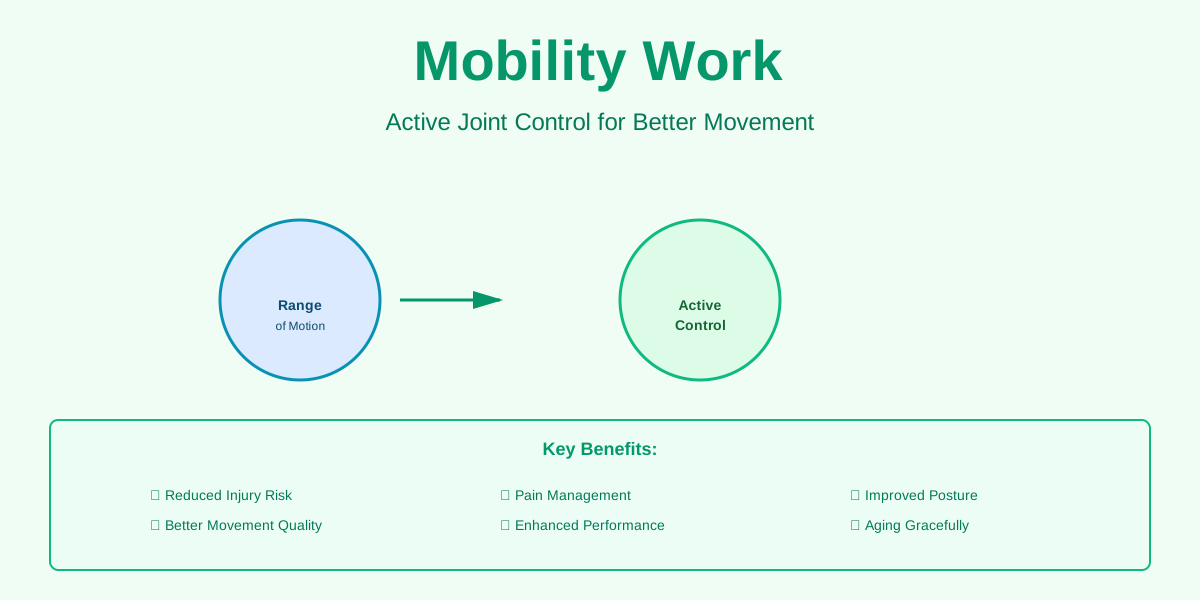
The beauty of mobility work is that it doesn't require expensive equipment, gym memberships, or advanced athletic ability. Ten to twenty minutes of targeted mobility practice just two to three times per week can create remarkable changes in how your body feels and moves. This is your practical guide to understanding, implementing, and mastering mobility work at any life stage.
By the end of this article, you'll know exactly how to start today, how to adapt mobility work to your life stage, and how to avoid the mistakes that derail most people from this transformative practice.
What Is Mobility Work?
Mobility work is the active, controlled movement of a joint through its available range of motion while maintaining stability. Unlike flexibility—which is your potential range of motion—mobility is your usable, controlled range. It sits at the intersection of three elements: flexibility (your passive range), strength (your ability to control that range), and coordination (your nervous system's skill in orchestrating movement).
Not medical advice.
When you practice mobility work, you're training your nervous system to access, control, and integrate movement patterns across all your joints. This means your shoulders can rotate freely and powerfully, your hips can move in multiple directions with stability, your spine can bend and twist safely, and your ankles can balance you on uneven ground. Mobility work is the bridge between what your body is capable of and what your body actually uses in daily life and athletics.
Surprising Insight: Surprising Insight: Recent research shows that 20 of 22 studies examining mobility techniques (yoga, Pilates, dynamic stretching, dance) found that incorporating mobility work significantly enhances athletic performance—making it one of the most evidence-backed practices in modern fitness.
Flexibility vs. Mobility vs. Stability
This diagram shows how flexibility, mobility, and stability work together. Flexibility is your potential range; mobility is your active, controlled range; stability is maintaining that control.
🔍 Click to enlarge
Why Mobility Work Matters in 2026
Modern life is a perfect storm for mobility loss. We sit more than any generation in history—average desk worker spends 7-8 hours per day seated—which shortens hip flexors, tightens hip external rotators, and locks the thoracic spine. This sedentary lifestyle creates compensation patterns where some muscles shorten while others weaken, leading to poor movement quality, chronic pain, and injury. Mobility work directly reverses these adaptations by rebalancing your musculoskeletal system.
The 2026 fitness revolution has shifted toward what researchers call 'functional movement literacy'—the ability to move your joints with control and intention. This matters because mobility improvements have been shown to reduce knee pain in osteoarthritis patients, improve spinal stability for office workers, enhance athletic performance across sports, and support aging with grace. Unlike high-intensity training, mobility work is sustainable across the lifespan, protective of your joints, and actually becomes more important as you age.
Research from the Journal of Sports Sciences (2024) reviewed 22 studies on various mobility techniques and found that 20 of them reported significant improvements in athletic performance when mobility work was incorporated into training programs. This makes mobility training one of the most evidence-backed practices you can adopt for both preventing injury and enhancing performance.
The Science Behind Mobility Work
Mobility work operates through neurophysiological and biomechanical mechanisms. When you move a joint through its range of motion, you're doing three things simultaneously: stretching muscles and fascia to increase range, activating and strengthening muscles at the end range to control that movement, and teaching your nervous system new movement patterns. Your nervous system literally updates its map of what's possible in your body, a process called neuroplasticity.
The World Health Organization recognizes that movement quality directly impacts disease prevention, particularly for conditions like osteoarthritis which affects 9.6% of men and 18% of women over 60. Conservative treatment for joint conditions prioritizes non-pharmacological approaches including manual therapy, resistance exercise, and movement training—exactly what mobility work provides. When you improve joint mobility, you improve proprioception (your body's ability to sense position in space), reduce pain signals, and enhance your nervous system's control over movement.
How Mobility Work Transforms Movement
This flow chart shows the cascade of benefits that occur when you practice consistent mobility work: neural adaptation, muscle balance, movement quality improvement, and health outcomes.
🔍 Click to enlarge
Key Components of Mobility Work
Controlled Range of Motion
The foundation of mobility work is moving your joints through their full available range with active control. This isn't passive stretching where gravity does the work—it's you actively creating the movement. For example, in a shoulder mobility exercise, you're not just hanging your arm passively; you're using your muscles to move your shoulder through circles, reaching, and rotation patterns. This active quality teaches your nervous system that the end range is not just available, but controllable and safe.
Tissue Preparation and Activation
Mobility work often begins with gentle tissue activation to increase blood flow and neural activation. This might include self-massage, gentle dynamic stretching, or activation exercises that 'wake up' muscles that have been underactive. This preparation phase improves the quality of the mobility movements that follow and helps your nervous system engage more fully with the practice.
Movement Patterning and Integration
The goal of mobility work is not just to access range in isolation, but to integrate that range into coordinated, multi-joint movement patterns. This is why full-body mobility routines emphasize transitions and flowing movements rather than holding single stretches. Your nervous system learns to coordinate shoulder, spine, and hip movement together, improving overall movement quality.
Breathing and Nervous System Regulation
Quality mobility practice integrates breathing patterns that downregulate your nervous system. Deeper, slower breathing during mobility work activates your parasympathetic nervous system (rest-and-digest mode), which allows for better muscle relaxation and more effective range gains. This is why many mobility routines feel meditative and stress-reducing, not just physically beneficial.
| Characteristic | Flexibility | Mobility |
|---|---|---|
| Definition | Potential range of motion in a joint | Active controlled range through nervous system engagement |
| How It's Developed | Static stretching, passive stretching | Dynamic movements, active control, strengthening at end range |
| Time to See Results | 2-4 weeks of consistent stretching | 1-3 weeks with daily practice |
| Injury Risk | Can increase injury if too aggressive | Reduces injury risk through controlled strengthening |
| Best Use | General wellness, warm-up component | Injury prevention, athletic performance, pain management |
How to Apply Mobility Work: Step by Step
- Step 1: Prepare Your Space: Find a quiet area where you can lie down, stand, and move freely. Have a yoga mat or soft carpet available. This removes distractions and protects your joints.
- Step 2: Warm Up First: Begin with 1-2 minutes of light movement—gentle walking, arm circles, or marching in place. This increases body temperature and blood flow, preparing tissues for mobility work.
- Step 3: Start at Your Feet: Move systematically from bottom to top. Begin with ankle circles and flexion/extension. This activates smaller stabilizer muscles before working larger joints.
- Step 4: Progress to Your Knees: Perform gentle knee circles, quad activation, and hamstring activation. These movements improve stability for the larger hip and lower back.
- Step 5: Focus on Your Hips: Hip mobility is crucial for most people. Practice hip circles, leg raises in multiple directions, and deep lunges. Hold each direction for 5-8 breaths.
- Step 6: Move Your Spine: Perform gentle spinal rotations, side bends, and flexion/extension movements. Move slowly and mindfully, breathing into any areas that feel restricted.
- Step 7: Mobilize Your Shoulders: Practice shoulder circles in both directions, arm reaches, and thoracic rotations. Shoulder mobility dramatically improves posture and reduces neck tension.
- Step 8: Address Your Neck: Gentle neck movements including side bends, rotations, and chin tucks. Move slowly here—the neck is sensitive and responds best to gentle work.
- Step 9: Integrate Full-Body Patterns: Combine movements like flowing from a lunge to a rotation, or arm reaches with spinal extension. This trains your nervous system to coordinate multiple joints.
- Step 10: End with Stillness: Finish with 1-2 minutes of gentle breathing in a comfortable position. This allows your nervous system to integrate the changes you've created.
Mobility Work Across Life Stages
Young Adulthood (18-35)
Young adults often underestimate mobility work because they haven't yet experienced significant movement restrictions. However, this is the optimal time to establish mobility patterns that will prevent problems later. Young adults benefit from mobility work for athletic performance enhancement, injury prevention from sports or training, and correcting postural habits before they become locked in. Focus on dynamic, flowing mobility routines and moving through full ranges that support athletic goals.
Middle Adulthood (35-55)
Middle-aged adults typically experience the most dramatic mobility restrictions due to sedentary work, family responsibilities reducing activity, and cumulative postural adaptations. This is when mobility work becomes essential for quality of life. Middle-aged practitioners benefit from mobility work for pain reduction, energy improvement, maintaining athletic capacity, and preparing the body for aging gracefully. This group often experiences rapid mobility gains when they start consistent practice, sometimes recovering 10-15 years of movement quality within 4-6 weeks.
Later Adulthood (55+)
Older adults represent the population with the most to gain from mobility work. As we age, mobility naturally declines, increasing fall risk, reducing independence, and accelerating decline in other physical capacities. Research shows that older adults who practice regular mobility work maintain better balance, experience less fall risk, retain independence in daily activities longer, and report significantly better quality of life. Mobility work for older adults should emphasize balance, stability, and functional movements like standing from a chair or reaching overhead.
Profiles: Your Mobility Work Approach
The Desk Dweller
- Hip flexor lengthening to counteract sitting
- Thoracic spine mobility to reverse slouching
- Shoulder and neck release from forward posture
Common pitfall: Only stretching problem areas instead of addressing the compensation patterns that created them
Best move: Follow a full-body routine daily but add extra emphasis on hips, thoracic spine, and shoulder rotation. Set phone reminders for micro-mobility breaks every hour.
The Athlete
- Sport-specific joint preparation before training
- Recovery mobility to reduce soreness and tightness
- Movement pattern enhancement for better technique
Common pitfall: Treating mobility as optional or only using it when injured, rather than as injury prevention
Best move: Integrate 10 minutes of mobility work into your warm-up before training, and 10 minutes of recovery mobility on off-days. This improves performance while preventing injury.
The Chronic Pain Sufferer
- Gentle, progressive joint mobilization in pain-free ranges
- Nervous system regulation through breathwork integration
- Movement confidence building to overcome fear of pain
Common pitfall: Avoiding movement completely due to pain, or pushing too hard and re-triggering symptoms
Best move: Start with very gentle mobility work within completely pain-free ranges. Progress slowly, adding one new movement every 2-3 days. Consider working with a physical therapist for guidance.
The Aging Adult
- Fall prevention through balance and stability work
- Functional mobility for daily activities like climbing stairs
- Gentle, sustainable movement that maintains independence
Common pitfall: Reducing activity due to perceived fragility, which accelerates decline
Best move: Practice 15-20 minutes of gentle mobility work 3-4 times per week, emphasizing standing balance, functional reaching patterns, and movements that mimic daily activities. This is one of the best investments in maintaining independence.
Common Mobility Work Mistakes
Most people sabotage their mobility work through one consistent error: treating it as static stretching. They hold a stretch for 30-60 seconds and wonder why they're not getting results. Real mobility work is dynamic, flowing, and requires active muscular engagement. If you're just hanging in a stretch, you're not training mobility—you're only addressing flexibility.
Another critical mistake is inconsistency. Mobility work requires regularity—the nervous system adapts through frequent exposure. One 30-minute mobility session per week is far less effective than 10 minutes daily. Your nervous system needs to practice these new movement patterns regularly to integrate them. This is why frequency beats duration in mobility training.
A third mistake is progressing too fast or too aggressively. People often push into end-range too quickly, which triggers protective guarding and actually reduces mobility gains. Quality mobility work moves slowly, intentionally, and respects your nervous system's need to feel safe. You should never experience sharp pain—only mild sensation of stretch or gentle challenge.
Common Mobility Mistakes and Corrections
This diagram shows four common mistakes people make with mobility work and the correction for each one.
🔍 Click to enlarge
Science and Studies
The research supporting mobility work has grown substantially in recent years, with studies from institutions including NIH-funded research programs, peer-reviewed journals, and major health organizations. This section covers the key findings that validate mobility work as an evidence-based practice for injury prevention, pain management, and performance enhancement.
- Journal of Sports Sciences (2024): Systematic review of 22 studies on mobility techniques (yoga, Pilates, dynamic stretching, dance) found that 20 reported significant athletic performance improvements with mobility training integration
- NIH Research: Studies on aging adults show that mobility work combined with strength training improved physical function scores by 15-25% over 12 weeks and reduced falls by up to 40%
- World Health Organization: Recognizes mobility training as a primary non-pharmacological treatment for osteoarthritis, particularly for knee and hip conditions affecting 9.6% of men and 18% of women over 60
- Mayo Clinic Stretching Guidelines: Support dynamic stretching and controlled range-of-motion work as superior to static stretching alone for improving functional mobility and reducing injury risk
- PMC/NIH Study (2023): Found that patients with chronic pain who practiced guided mobility exercises showed 30-50% pain reduction within 6 weeks, with benefits maintained long-term
Your First Micro Habit
Start Small Today
Today's action: Right now: Stand up and perform 10 slow shoulder circles in each direction while taking deep breaths. This takes 2 minutes and activates your shoulder joints, improving posture immediately.
This micro habit works because it's tiny enough to do anytime, works all four shoulder movement patterns, integrates breathing to calm your nervous system, and creates an immediate feeling of movement quality improvement. This positive feedback loop makes it easy to continue.
Keep quitting habit apps after a missed day? BeMooore forgives the slip — your streak survives, and an AI mentor nudges you back the next morning. Free on iOS.
Quick Assessment
How would you describe your current mobility? Can you move through your full range of motion without restriction?
Your answer reveals your starting point. Most people discover that mobility work addresses restrictions they didn't realize were limiting them until they start practicing.
What's your primary goal with movement practice?
Different goals benefit from slightly different mobility work emphasis. Athletes focus on dynamic movements; chronic pain sufferers start gentle; older adults emphasize balance and functional patterns.
How much consistent practice time could you realistically commit to mobility work each week?
Even 10 minutes daily outweighs one 60-minute session weekly. Start with what's realistic for you and prioritize consistency over duration.
Take our full assessment to get personalized recommendations.
Discover Your Style →Next Steps
Your next step is to commit to a specific mobility practice. Choose one: either start with the 10-minute YouTube video embedded in this article, or commit to your first micro habit of 10 shoulder circles right now. The goal isn't perfection—it's beginning. Most people find that once they experience even one mobility session and feel the immediate benefits, they naturally want to continue.
Then, build on this foundation by practicing 10-15 minutes of mobility work three to four times per week minimum, or daily if you can. Within three weeks, you'll notice genuine changes in how you move and feel. Within eight weeks, your friends and family might comment on your improved posture and movement quality. This is an investment in your body that pays dividends for decades.
Get personalized guidance with AI coaching.
Start Your Journey →Research Sources
This article is based on peer-reviewed research and authoritative sources. Below are the key references we consulted:
Related Glossary Articles
Frequently Asked Questions
How long before I notice changes from mobility work?
Most people notice movement improvements within 3-7 days of daily practice. Pain reduction typically takes 2-3 weeks. Major postural changes and expanded range of motion become apparent after 4-6 weeks of consistent practice. Nervous system adaptations continue improving for 12+ weeks.
Can I do mobility work every day, or do I need rest days?
Yes, you can do mobility work every day—in fact, consistency is more important than intensity. Unlike strength training that requires recovery days, mobility work uses low intensity and actually supports recovery. Most benefits come from daily practice, though three to four times per week is the minimum for seeing results.
Is mobility work the same as yoga or Pilates?
Mobility work is a specific category that overlaps with yoga and Pilates but differs in focus. Yoga emphasizes breath, meditation, and philosophy alongside movement. Pilates emphasizes core stability and controlled movement. Mobility work specifically targets joint range of motion and nervous system control. Each has unique benefits, and they complement each other well.
What if I have chronic pain or arthritis? Is mobility work safe?
Mobility work is actually one of the safest approaches for chronic pain and arthritis because it's low-impact and builds strength through range of motion. Start with very gentle movements in completely pain-free ranges, progress slowly, and consider working with a physical therapist initially. Research shows mobility training reduces pain in osteoarthritis patients by 30-50%.
Do I need equipment for mobility work?
No, effective mobility work requires no equipment. A yoga mat for comfort is optional. Some people add tools like resistance bands, foam rollers, or lacrosse balls for self-massage, but these are enhancements, not requirements. The most powerful mobility work happens with just your body and intention.
Take the Next Step
Ready to improve your wellbeing? Take our free assessment to get personalized recommendations based on your unique situation.
- Discover your strengths and gaps
- Get personalized quick wins
- Track your progress over time
- Evidence-based strategies