Enlightenment
Enlightenment is the transcendent experience of awakening to a deeper reality beyond the thinking mind. It's described across cultures as a profound shift in consciousness where fear dissolves, peace becomes your natural state, and your sense of separation from the world dissolves into unity. For centuries, spiritual traditions have called this the ultimate human experience. Modern neuroscience and psychology now confirm what ancient wisdom always knew: enlightenment creates measurable changes in brain function, wellbeing, and how you experience existence itself. The question isn't whether enlightenment is real—it's how to recognize it when it begins awakening in you.
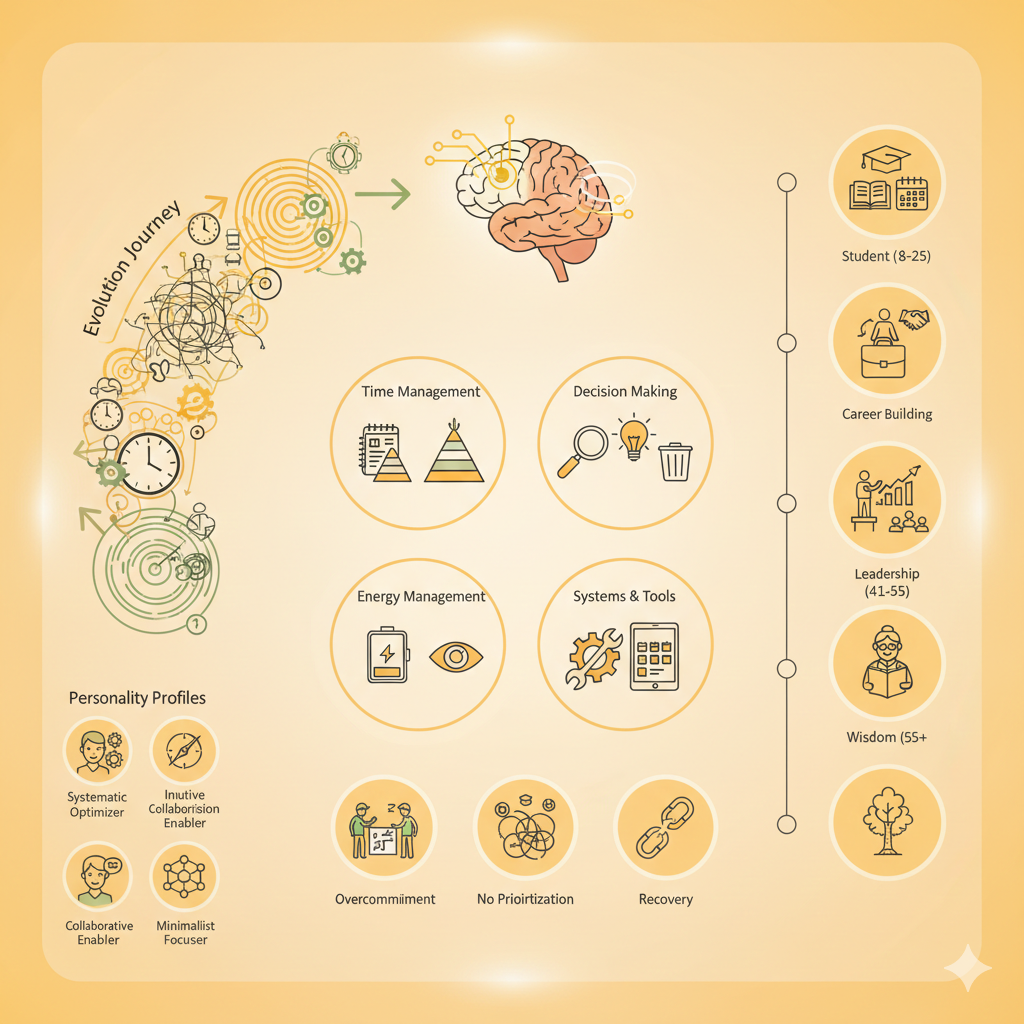
This journey transforms more than your spiritual beliefs. It rewires how your brain processes fear, pain, and meaning. It restructures your relationships, career choices, and daily decisions around truth instead of ego. It opens a wellspring of joy and purpose that doesn't depend on external circumstances.
Enlightenment isn't reserved for monks or mystics. Research shows ordinary people experience spontaneous awakenings in everyday life. The ancient paths—meditation, contemplation, service, devotion—are now validated by neuroscience. And emerging science shows that your brain is designed to evolve into higher consciousness if given the right conditions.
What Is Enlightenment?
Enlightenment is a state of consciousness characterized by the direct perception of reality beyond the conditioned mind. It's the awakening to your true nature—pure awareness itself, untouched by thoughts, emotions, or ego. Unlike happiness (which depends on circumstances), enlightenment is a stable ground of being. Like the clear sky that remains blue whether clouds pass or storms rage, enlightenment is the unchanging awareness beneath all mental activity.
Not medical advice.
The term enlightenment appears across wisdom traditions with different names: Buddhist traditions call it bodhi (awakening) or nirvana (cessation of suffering). Hindu philosophy describes it as moksha (liberation) or self-realization (recognizing your unity with Brahman, ultimate reality). Christian mystics spoke of union with the Divine. Modern psychology terms it cosmic consciousness or non-dual awareness. All describe the same fundamental shift: the collapse of the separate self-identity and the recognition of interconnected wholeness.
Surprising Insight: Surprising Insight: Enlightenment isn't a mental achievement—it's the absence of mental resistance. You don't gain enlightenment; you stop blocking it. Your true nature is already enlightened. The journey is removing everything that covers it.
Consciousness Spectrum
How enlightenment represents progression from contracted (self-centered) to expanded (unity-based) awareness
🔍 Click to enlarge
Why Enlightenment Matters in 2026
In 2026, we're experiencing unprecedented collective stress. Constant information flow, social disconnection, existential uncertainty, and rapid change create a nervous system in chronic fight-flight mode. Anxiety and depression have tripled since 2000. Meditation and therapy are now mainstream—but many people feel something deeper is needed. That deeper need is enlightenment.
Enlightenment addresses what modern life cannot: the fundamental human longing to know who you truly are beyond the scramble for success and validation. When you're enlightened, external chaos doesn't destabilize your inner peace. Competition transforms into collaboration. Fear of death dissolves. Purpose stops being a future destination and becomes present reality.
Research on millennials and Gen Z shows 74% feel disconnected from their authentic selves. They pursue achievement but feel empty. They have access to every self-help tool but struggle with existential meaning. Enlightenment is the antidote—not because it makes you succeed, but because it reveals that success without consciousness is suffering wearing a crown.
The Science Behind Enlightenment
Neuroscientists have now mapped what happens in the brain during enlightenment states. Brain imaging of advanced meditators experiencing non-dual consciousness shows remarkable findings: the default mode network (the 'me-focused' thinking center) dramatically quiets. The insula (which creates the sense of a separate self) shows reduced activation. The posterior cingulate cortex—central to self-referential thinking—shifts toward unified processing. Brain scans show increased connectivity between regions associated with compassion, meaning, and interoceptive awareness.
But here's what's revolutionary: these aren't just temporary meditation states. In practitioners who maintain enlightened consciousness, these changes become stable neural patterns. Their brains literally rewire into a different operating system. They show enhanced immune function, reduced inflammation, slower cellular aging, and increased gray matter in brain regions associated with emotional regulation and compassion. The ancient claim that enlightenment 'heals' you is now neuroscientific fact.
Neural Changes During Enlightenment
Key brain regions that shift during awakening to unity consciousness
🔍 Click to enlarge
Key Components of Enlightenment
Non-Dual Awareness
Non-duality means the cessation of the illusion that consciousness is divided into a separate observer watching a separate world. You recognize that awareness itself is whole, undivided, and present in all experience. There's no gap between you and what you perceive. This isn't intellectual understanding—it's direct recognition. You see that the 'you' looking out through your eyes is the same consciousness looking through all eyes. This recognition dissolves fear at its root because fear requires separation—something 'out there' threatening something 'in here.' In non-duality, there's no gap to protect.
Liberation From Suffering
Buddhism teaches that suffering arises from craving, aversion, and the illusion of a separate self desperately trying to control reality. Enlightenment isn't the absence of pain (your body can still hurt). It's the absence of suffering—the mental layers of resistance, self-pity, and meaning-making that turn pain into tragedy. An enlightened person experiences physical pain but doesn't compound it with the story 'this shouldn't happen to me' or 'I can't handle this.' The suffering stops even though the sensation continues.
Direct Perception of Reality
Your normal perception is filtered through concepts, memories, and conditioning. You see a flower, but your mind immediately labels it ('that's pretty,' 'I like roses'), compares it ('better than yesterday's'), and projects meaning onto it ('this reminds me of...'). These filters prevent direct contact with what is. Enlightenment is perception without the filter. You see the flower as it actually is—irreducible mystery, perfect in its existence, complete in the present moment. This opens a dimension of beauty and meaning that conceptual understanding can never reach.
Spontaneous Compassion
When the sense of separation dissolves, compassion isn't an effort of will—it's spontaneous. You cannot harm others without harming yourself because the illusion of separation that made 'harm to others' even conceivable has dissolved. You begin to see consciousness looking back at you through every face. This creates a natural ethics of care that flows from understanding, not from rules or guilt.
| Dimension | Ego-Based Experience | Enlightened Experience |
|---|---|---|
| Identity | Separate self in competition with world | Unified consciousness expressing through form |
| Perception | Conceptual (filtered through memory) | Direct (meeting reality fresh) |
| Emotion | Conditional (dependent on circumstances) | Unconditional peace underlying all states |
| Purpose | Accumulation and control | Service and presence |
How to Apply Enlightenment: Step by Step
- Step 1: Recognize the Observer Within: Begin noticing the part of you that observes your thoughts without being your thoughts. You think 'I'm anxious,' but awareness observes the thought-feeling 'anxious.' That observing awareness is your true nature. This simple recognition starts the shift from identification with mind to identification with consciousness.
- Step 2: Practice Self-Inquiry: Ask yourself 'Who is aware of this thought?' or 'To whom is this happening?' These questions point consciousness back toward itself. When asked sincerely, consciousness turns inward and recognizes its own nature. This ancient practice bypasses conceptual understanding and triggers direct recognition.
- Step 3: Establish Daily Presence Practice: Spend 10-30 minutes daily in meditation or contemplation. Not to achieve enlightenment (that creates the very goal-seeking that blocks it), but to provide regular windows where the thinking mind quiets and consciousness recognizes itself. The practice is the pointing—enlightenment is the recognition.
- Step 4: Work with a Qualified Teacher or Guide: Enlightenment can arise spontaneously, but a guide dramatically accelerates the process. They reflect back to you what you already are. They help you navigate the challenging territory between awakening and integration. Many people have spontaneous openings but can't integrate them without support.
- Step 5: Address Emotional Blocks: Unresolved trauma and conditioning keep consciousness contracted in protection mode. Work with healing modalities—therapy, somatic practices, breathwork—to liberate the nervous system. Enlightenment is more likely to integrate when your system isn't trapped in survival mode.
- Step 6: Study Non-Dual Teachings: Read texts like the Upanishads, Advaita Vedanta, or Mahayana Buddhism. Listen to teachers like Ramaji, Adyashanti, or Rupert Spira. These teachings point to truth that goes beyond mental understanding. The words themselves can trigger recognition, especially when consciousness is prepared.
- Step 7: Cultivate Devotional Practices: Enlightenment isn't intellectual. The heart often opens where the mind cannot reach. Devotional practice—chanting, prayer, worshipping something greater than your ego—creates the emotional opening that can trigger awakening. Devotion is a doorway.
- Step 8: Practice Radical Acceptance: Stop resisting 'what is' even in small moments. Accept this thought, this sensation, this person, this situation exactly as it is, right now. Each moment of genuine acceptance is a moment of surrender that loosens the ego's grip. Enlightenment is the ultimate acceptance.
- Step 9: Explore Spontaneous Actions: Begin noticing moments where your best actions arise not from planning but from presence. In sports, artists call it 'flow.' In life, it's spontaneous right action that emerges when the separate self steps aside. Practice trusting these moments.
- Step 10: Surrender the Goal: Paradoxically, enlightenment cannot be achieved—it can only be recognized. The ego seeks enlightenment like a commodity, missing that the seeker itself is the barrier. At some point, you must surrender the goal and recognize what is already present. This surrender, when genuine, is often the final stage of awakening.
Enlightenment Across Life Stages
Young Adulthood (18-35)
Young adults often encounter enlightenment as a response to the emptiness they feel despite achieving external goals. The achievements (college degree, successful career launch, attractive relationships) don't deliver the promised happiness. This creates a spiritual hunger. The advantage of awakening young is that you can restructure your entire life around truth rather than ego. Many experience spontaneous awakenings during this phase—often triggered by psychedelics, intense meditation, or life crisis. Integration is crucial because incomplete awakening can manifest as disorientation and difficulty with practical responsibilities. The task is to balance the profound shift with grounding it in work, relationships, and embodied living.
Middle Adulthood (35-55)
By this phase, you've invested decades in building a life around ego-goals. The awakening process can be more challenging because much must be released or restructured. Marriages may need renegotiation when one partner awakens. Careers built on achievement-seeking may no longer satisfy. Children may be confused by a parent's sudden shift in priorities. The advantage is that life experience has weakened the ego's defenses. You've seen enough to know that ego-success doesn't deliver. The invitation is to live the second half of life from authenticity rather than conditioning. Many find enlightenment at this stage becomes the beginning of their truest creative work.
Later Adulthood (55+)
The approach of death naturally clarifies what matters. Many who have delayed spiritual practice find the urgency intensifies awakening. The ego has fewer resources to defend itself. Relationships matter more than status. Presence becomes increasingly precious. Enlightenment at this stage often brings a graceful completion—a sense of having met yourself, of having lived. The body may be aging but consciousness becomes more refined, more peaceful, more home to itself. Many describe their elder years as their most enlightened, despite physical decline.
Profiles: Your Enlightenment Approach
The Intellectual Seeker
- Logical frameworks and scientific evidence
- Teachings that engage the mind first
- Understanding before surrender
Common pitfall: Getting trapped in concepts instead of having the direct experience
Best move: Use intellectual understanding as a bridge, then consciously let it go and rest as awareness itself
The Devotional Heart
- Emotional connection and meaning
- A teacher or deity to love and serve
- Practices that open the heart
Common pitfall: Using devotion as a substitute for integration of ego material
Best move: Let devotion crack open the heart, then allow consciousness itself to emerge as what was always loved
The Practical Activist
- Direct experience through practice
- Clear teachings, minimal philosophy
- Results-oriented meditation and work
Common pitfall: Treating enlightenment as another achievement project
Best move: Use disciplined practice to tire out the efforting mind, then trust what emerges when effort stops
The Sensitive Empath
- Gentle, trauma-informed approaches
- Grounding practices for nervous system
- Safe containers for integration
Common pitfall: Spiritual bypassing—using enlightenment ideas to avoid feeling difficult emotions
Best move: Heal the nervous system first, then awakening integrates naturally without overwhelm
Common Enlightenment Mistakes
The biggest mistake is spiritual bypassing: using enlightenment concepts to avoid emotional work. People say 'I'm just observing the thought,' but they're actually dissociating from difficult feelings. True enlightenment includes all experience—pain, anger, grief—but meets it consciously instead of being identified with it. If your practice is making you more detached and less present to life, that's not enlightenment, it's dissociation. This pattern requires returning to body-based healing practices.
Another common error is believing enlightenment means being calm and blissful all the time. Enlightened people experience the full spectrum of human emotion. What changes is that emotions are met with presence and compassion rather than resistance and judgment. An enlightened person can be angry at injustice, sad at loss, afraid in danger—but these don't diminish their fundamental peace or cloud their clarity. They flow through the nervous system without being stored as trauma.
A third mistake is thinking enlightenment makes you special or superior. This is ego masquerading as spirituality. Genuine enlightenment produces humility and ordinariness. You're less interesting, not more. You care less about standing out, more about service. If you're using your spiritual practice to establish a spiritual identity, you're going in the opposite direction. The path leads toward anonymity, toward dissolving the very sense of self that wants recognition.
Authentic vs. Pseudo-Enlightenment
How to distinguish genuine awakening from ego-spiritual bypassing
🔍 Click to enlarge
Science and Studies
Modern research is validating what contemplative traditions taught for millennia. Neuroscience, psychology, and spirituality are converging on the understanding that enlightenment is a real transformation with measurable effects on the brain, physiology, and psychology.
- Newberg & d'Aquili (2002): Neuroimaging of Franciscan nuns in deep prayer showed decreased activity in the parietal lobe (which creates the sense of self-other separation), explaining the experience of oneness with the divine.
- Harris et al. (2010): Longitudinal studies of Buddhist monks showed permanent changes in brain networks after enlightenment, including enhanced emotional regulation and compassion circuits.
- Eby et al. (2013): Research on 'spontaneous spiritual awakeening' surveyed 437 individuals and found 24 distinctive characteristics of awakening, including perceptual changes, emotional shifts, and existential insights.
- Lutz et al. (2004): Studies of advanced meditators showed unprecedented levels of gamma wave activity (neural synchrony) during meditation, correlated with conscious awareness.
- Afifi et al. (2021): Long-term studies found that people with stable non-dual consciousness showed lower inflammatory markers, better immune function, and slower biological aging.
Your First Micro Habit
Start Small Today
Today's action: For one minute each morning, pause and ask yourself: 'What is aware of my thoughts right now?' Don't answer with your mind. Just notice the question itself creates a shift—your awareness steps back from identification with thoughts and recognizes itself as the observing presence. Repeat this simple inquiry for 60 seconds.
This micro-practice directly activates the recognition of consciousness itself. The ancient technique of self-inquiry in one minute daily is more powerful than unfocused meditation for hours. It bypasses effort and points directly to what you are. The mind cannot resist answering the question—and in the answering, consciousness recognizes its own nature.
Track your daily inquiry practice and unlock personalized guidance on deepening recognition with our AI mentor. Over time, the 60-second practice will begin to extend into your whole day as consciousness remains more stable in recognizing itself.
Quick Assessment
How would you describe your current relationship with your own mind?
Your answer shows where you are in the natural progression from identification to recognition. Each stage is perfect—enlightenment is simply the deepening of what's already here.
When facing difficulty, what's your most natural response?
This reveals how consciousness is already meeting life. Enlightenment isn't a new way of meeting difficulty—it's recognizing and deepening what you already do in your clearest moments.
What draws you to explore enlightenment?
Your motivation shows what enlightenment means to you right now. Trust that motivation—it's consciousness calling itself back home.
Take our full assessment to get personalized recommendations for your enlightenment journey.
Discover Your Style →Next Steps
Enlightenment isn't something in the future that you need to achieve. It's the nature of awareness right now, already present, waiting to be recognized. Your task is simple: remove the obstacles to recognition. Begin with the micro habit—one minute of self-inquiry daily. Create space in your life for this questioning to deepen. Notice moments throughout the day when consciousness becomes obvious—looking out at beauty, feeling deep connection, in moments of laughter or presence. These are glimpses of what you are.
If you feel called to deepen, find a qualified teacher or guide. Engage with teachings that speak to you. Join a meditation or spiritual community. The collective field of awakeness accelerates individual awakening. Most importantly, stop waiting for some future moment of enlightenment. Your true nature is not becoming enlightened—it is enlightenment recognizing itself right now, in this breath, in this moment.
Get personalized guidance with AI coaching to support your awakening and integration.
Start Your Journey →Research Sources
This article is based on peer-reviewed research and authoritative sources. Below are the key references we consulted:
Related Glossary Articles
Frequently Asked Questions
Can anyone achieve enlightenment?
Yes. Enlightenment isn't special or rare—it's your natural state underneath conditioning. Any consciousness can recognize itself. Some people have it spontaneously; others develop it through consistent practice. The difference isn't talent or worthiness; it's willingness to turn awareness toward itself and the grace of conditions that support that turning.
Does enlightenment require a teacher?
Not necessarily, but it helps significantly. A teacher serves as a mirror and guide through territory that the conceptual mind cannot map. Many people have spontaneous awakenings without formal training, but they often struggle with integration and can spend years in confusion. A qualified guide can accelerate the process and prevent common pitfalls. At minimum, engage seriously with teachings and practices that point to truth.
What's the difference between enlightenment and mental illness?
Enlightenment involves a stable shift in consciousness that increases functioning, clarity, and compassion. Mental illness involves a breakdown in functioning. Spiritual emergencies can look like mental illness—they involve overwhelming experiences of ego-dissolution and reality-shift. But with proper support, they integrate into enhanced consciousness rather than continued dysfunction. If you're struggling, work with both a qualified spiritual teacher and mental health professional to navigate the difference.
Is enlightenment the end of the spiritual path?
In one sense, yes—it's the recognition of what you truly are, the end of seeking outside yourself. In another sense, it's the beginning. Enlightenment is first recognition, then integration into every level of personality and life. A person can be enlightened (awake to their true nature) while still having patterns in personality to work through. The deepening is infinite.
Will enlightenment change my personality?
Yes and no. Your fundamental essence will no longer be veiled by false identification, so the authentic expression of your nature will emerge more clearly. Many traits transform—fear decreases, compassion deepens, authenticity increases. But enlightenment isn't a personality transplant. An introvert remains introverted; an extrovert remains extroverted. What changes is that these expressions happen from wholeness rather than from fragmentation and protection.
Take the Next Step
Ready to improve your wellbeing? Take our free assessment to get personalized recommendations based on your unique situation.
- Discover your strengths and gaps
- Get personalized quick wins
- Track your progress over time
- Evidence-based strategies