Creatine for Brain
You already know creatine builds muscle. But what if the same powder sitting in your gym bag could sharpen your memory, protect your aging <a href='/g/brain-health.html'>brain health</a>, and help you think clearly even after a terrible night of sleep? A growing body of research suggests that creatine is not just fuel for your biceps. It is fuel for your neurons. A 2024 systematic review and meta-analysis confirmed that creatine supplementation may benefit memory, attention, and information processing speed in healthy adults. And a landmark pilot study with Alzheimer's patients found that eight weeks of supplementation increased <a href='/g/brain-function.html'>brain function</a> markers and improved working memory. The conversation about creatine has shifted from the weight room to the research lab, and the implications for your <a href='/g/cognitive-health.html'>cognitive health</a> are significant.
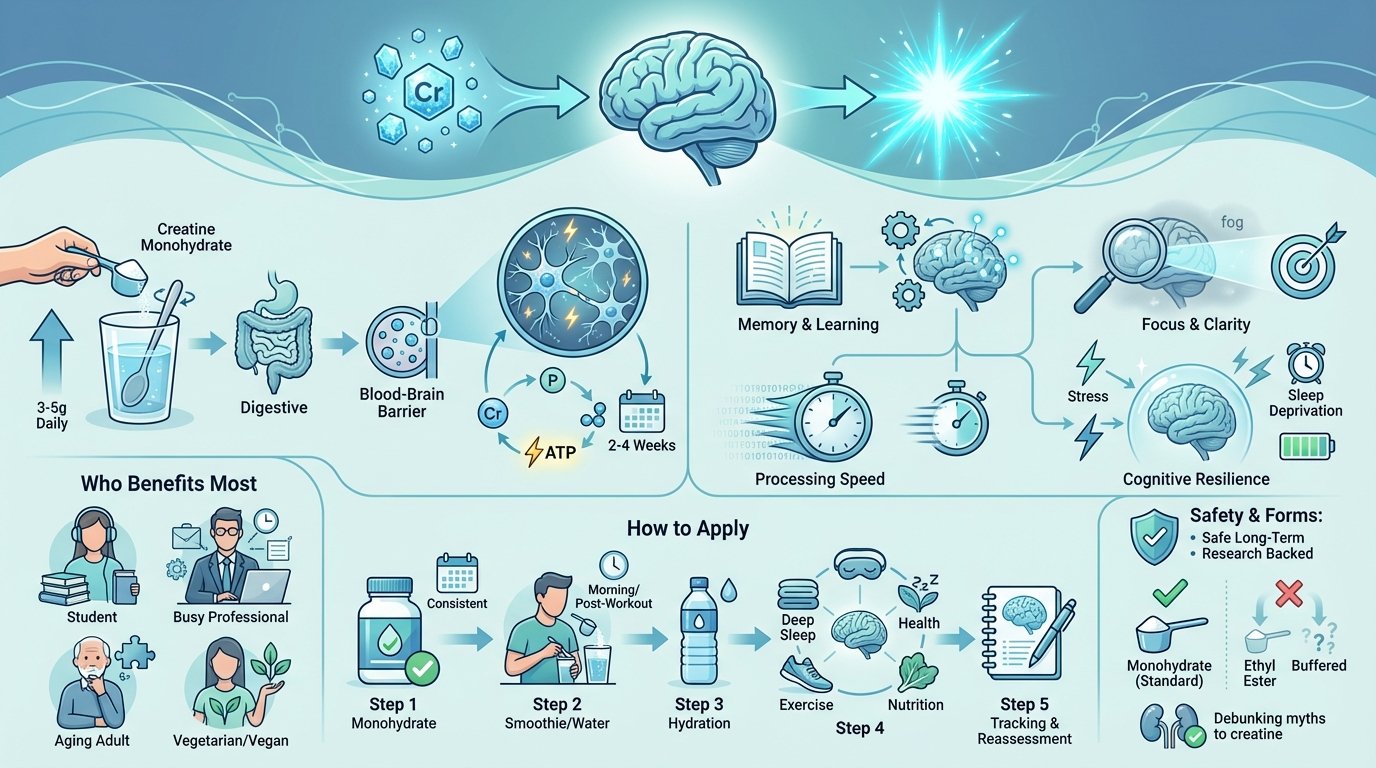
In this guide, you will learn exactly how creatine works inside your brain, what the latest science says about dosage and timing, and how to build a practical supplementation routine that supports <a href='/g/cognitive-performance.html'>cognitive performance</a> at every stage of life.
Whether you are a student preparing for exams, a professional fighting afternoon brain fog, or someone concerned about age-related cognitive decline, this article will help you understand why creatine deserves a place in your brain optimization toolkit.
What Is Creatine for Brain?
Creatine is a naturally occurring compound found in your muscles and brain. Your body produces about one gram per day from the amino acids glycine, arginine, and methionine. You also get creatine from dietary sources like red meat and fish. Inside your cells, creatine bonds with phosphate to form phosphocreatine, which acts as a rapid energy reserve that regenerates adenosine triphosphate (ATP), the primary energy currency of every cell. Your brain, despite making up only about two percent of your body weight, consumes roughly twenty percent of your total energy. This makes the brain one of the most energy-hungry organs in your body, and it is precisely why creatine supplementation matters so much for cognitive function.
Not medical advice.
When researchers talk about creatine for brain, they mean using creatine supplements, typically creatine monohydrate, to increase brain creatine stores and thereby support mental energy production. Unlike caffeine, which stimulates your nervous system, creatine works at the cellular energy level. It does not make you feel wired or jittery. Instead, it quietly ensures your neurons have the ATP they need to fire efficiently, especially during demanding cognitive tasks. Think of it as upgrading your brain's battery capacity rather than plugging into a temporary power surge. This distinction is important for understanding why creatine shows its strongest cognitive enhancement effects under conditions of mental stress, sleep deprivation, and aging.
Surprising Insight: Surprising Insight: A 2024 randomized controlled trial found that a single high dose of creatine improved cognitive performance during sleep deprivation, with the maximum mental boost appearing at four hours after ingestion and lasting up to nine hours. The same study showed that creatine maintained normal phosphocreatine and ATP levels in the brain even when participants had only slept three hours.
How Creatine Powers Your Brain
The metabolic pathway showing how creatine supplementation supports brain energy production
🔍 Click to enlarge
Why Creatine for Brain Matters in 2026
The modern world demands more from your brain than ever before. You process more information in a single day than people a century ago encountered in a week. Constant notifications, complex decision-making, and information overload drain your mental energy management reserves faster than your brain can replenish them. In this environment, any safe and effective way to support your brain's energy production is worth serious attention. Creatine supplementation offers exactly that, backed by decades of safety data and a rapidly growing body of cognitive research.
The aging population is another reason creatine for brain matters right now. As people live longer, cognitive decline and neurodegenerative diseases like Alzheimer's are becoming the defining health challenges of our era. A 2025 pilot study at the University of Kansas Medical Center found that twenty grams of creatine daily for eight weeks increased brain creatine concentration by eleven percent in Alzheimer's patients and was associated with improvements in total cognition, fluid cognition, and working memory. While this was a small pilot study, it opens a promising new avenue for disease prevention and neuroprotection. The potential to support brain energy metabolism in aging populations makes creatine one of the most exciting supplements in cognitive neuroscience.
Sleep deprivation is another modern epidemic that makes creatine relevant. Chronic sleep restriction affects millions of working adults, students, and new parents. Research shows that creatine can partially offset the cognitive deficits caused by poor sleep, helping maintain focus, working memory, and processing speed even when you have not slept well. This does not mean creatine replaces good sleep quality, but it provides a genuine buffer when life makes adequate rest impossible.
The Science Behind Creatine for Brain
Your brain runs on ATP. Every thought, memory, and decision requires neurons to fire, and firing requires energy. The creatine-phosphocreatine system acts as a shuttle and buffer for this energy. When ATP is used up during intense neural activity, phosphocreatine donates its phosphate group to rapidly regenerate ATP. This system is especially important during bursts of intense cognitive work, such as solving complex problems, learning new material, or making rapid decisions under pressure. Without adequate phosphocreatine reserves, your neural energy supply drops, and you experience what most people call brain fog, mental fatigue, or difficulty concentrating. This is where cognitive optimization through creatine supplementation comes into play.
A 2024 meta-analysis published in Frontiers in Nutrition pooled data from multiple randomized controlled trials and found moderate evidence that creatine supplementation improves memory function in adults. The analysis also found low-certainty evidence for benefits in processing speed, executive function, and attention. Importantly, the researchers noted that creatine's effects appear strongest under metabolically demanding conditions. When your brain is already well-rested and well-fed, the baseline energy supply may be sufficient, and creatine's boost is harder to detect. But when your brain is under stress, whether from sleep deprivation, hypoxia, intense mental work, or aging, creatine supplementation provides a measurable cognitive advantage. This aligns with the bioenergetic hypothesis of creatine's cognitive effects, which holds that creatine primarily benefits brain performance by maintaining energy availability during high-demand states.
When Creatine Benefits the Brain Most
Conditions under which creatine supplementation shows the strongest cognitive effects
🔍 Click to enlarge
Key Components of Creatine for Brain
Creatine Monohydrate: The Gold Standard
Creatine monohydrate is the most studied and most effective form of creatine for both muscular and cognitive benefits. Other forms like creatine ethyl ester, buffered creatine, and creatine hydrochloride have been marketed with claims of superior absorption, but none have outperformed plain creatine monohydrate in clinical trials. For brain health purposes, creatine monohydrate at a daily dose of three to five grams is the standard maintenance recommendation. Some studies have used higher loading doses of twenty grams per day for five to seven days to rapidly increase brain creatine stores, though this is more commonly associated with athletic use. The important thing to understand is that brain creatine levels increase more slowly than muscle creatine levels, so consistency over weeks matters more than loading protocols for cognitive benefits.
Brain Creatine Transport and Uptake
Getting creatine into your brain is more complex than getting it into your muscles. Creatine must cross the blood-brain barrier via a specific creatine transporter protein. Research suggests that brain creatine levels increase by approximately five to ten percent with standard supplementation doses, compared to the twenty to forty percent increases seen in muscle tissue. This slower uptake is one reason why cognitive benefits may take longer to appear than athletic benefits. Most studies showing cognitive improvements used supplementation periods of at least one to four weeks. Higher doses of ten to twenty grams per day may be needed to meaningfully increase brain creatine in healthy populations, according to dose-response research published in 2023. This has important implications for anyone pursuing cognitive enhancement through supplementation.
The ATP Energy Buffer System
Inside every neuron, the creatine kinase enzyme catalyzes the transfer of a phosphate group between creatine and ATP. This reaction happens in milliseconds and is essential for maintaining energy homeostasis during bursts of neural activity. When you concentrate hard on a difficult task, your neurons fire rapidly and ATP levels can drop locally. The phosphocreatine reserve steps in to regenerate ATP almost instantly, preventing the energy dip that would otherwise slow your cognitive function. This buffering system is analogous to having a backup generator that kicks in the moment your main power supply dips. By increasing your brain's phosphocreatine stores through supplementation, you are essentially upgrading the capacity of that backup generator, giving your brain more runway during demanding mental tasks and supporting overall energy boost.
Neuroprotective Properties
Beyond energy, creatine may offer direct neuroprotective benefits. Research suggests that creatine can reduce oxidative stress in brain cells, support mitochondrial function, and help maintain cellular membrane integrity. These properties are particularly relevant for aging brains and for individuals at risk of neurodegenerative conditions. The Alzheimer's pilot study mentioned earlier found not only cognitive improvements but also measurable increases in brain creatine concentration, suggesting that the supplement is actually reaching and affecting brain tissue. Animal studies have shown creatine's potential to protect against traumatic brain injury and ischemic damage, though human evidence in these areas remains limited. These neuroprotective effects complement the energy-buffering function and make creatine a multifaceted tool for brain health and longevity.
| Form | Research Support | Brain Uptake |
|---|---|---|
| Creatine Monohydrate | Strongest (hundreds of studies) | Moderate (5-10% increase) |
| Creatine HCl | Limited (few brain studies) | Not well established |
| Buffered Creatine | Minimal (no brain studies) | No advantage shown |
| Creatine Ethyl Ester | Weak (degrades to creatinine) | Likely inferior |
How to Apply Creatine for Brain: Step by Step
- Step 1: Choose creatine monohydrate from a reputable brand that provides third-party testing certificates. Look for products certified by NSF International or Informed Sport to ensure purity and accurate labeling.
- Step 2: Start with a daily maintenance dose of three to five grams. Mix the powder into water, juice, or a smoothie. Creatine monohydrate dissolves best in warm or room-temperature liquids.
- Step 3: Take your creatine at the same time each day to build a consistent habit. Morning with breakfast or post-workout are both fine. Timing matters less than consistency for <a href='/g/brain-function.html'>brain function</a> benefits.
- Step 4: Stay well hydrated throughout the day. Creatine draws water into cells, so adequate <a href='/g/general-health.html'>general health</a> hydration supports both safety and effectiveness.
- Step 5: Give it time. Brain creatine levels increase more slowly than muscle levels. Expect to notice subtle cognitive benefits after two to four weeks of consistent daily supplementation.
- Step 6: Track your cognitive experience using a simple journal. Note your <a href='/g/focus.html'>focus</a> levels, memory clarity, and mental energy at different times of day. This helps you identify whether creatine is making a difference for you personally.
- Step 7: Combine creatine with other evidence-based brain health practices. Prioritize seven to nine hours of <a href='/g/deep-sleep.html'>deep sleep</a>, regular physical <a href='/g/exercise.html'>exercise</a>, and a nutrient-dense diet rich in omega-3 fatty acids.
- Step 8: Consider a higher dose if you are over sixty-five or under significant cognitive stress. Some research suggests ten to twenty grams daily may be needed to meaningfully increase brain creatine in certain populations. Consult your healthcare provider before increasing beyond the standard dose.
- Step 9: Monitor for any digestive discomfort. Creatine is generally very well tolerated, but taking large doses on an empty stomach can occasionally cause mild bloating. Split larger doses across meals if needed.
- Step 10: Reassess after eight to twelve weeks. Review your journal notes and decide whether to continue at the current dose, adjust, or cycle your supplementation based on your individual response and goals for <a href='/g/cognitive-performance.html'>cognitive performance</a>.
Creatine for Brain Across Life Stages
Young Adulthood (18-35)
For younger adults, creatine's cognitive benefits are most apparent during periods of high mental demand. University students preparing for exams, professionals learning new skills, and anyone dealing with irregular sleep schedules may notice improved concentration and attention and working memory with consistent supplementation. A 2024 meta-analysis noted that younger adults showed smaller but still positive effects on memory compared to older populations. This makes sense because younger brains generally have adequate baseline energy supplies. The benefits become more noticeable during all-nighters, intense study sessions, or periods of high stress. For young adults who also engage in strength training or athletic performance, creatine offers a dual benefit: better physical performance in the gym and better mental performance in the classroom or office.
Middle Adulthood (35-55)
This is the stage where many people first notice subtle cognitive changes. You might find it harder to recall names, feel more mentally fatigued by late afternoon, or need more time to learn new systems at work. These changes often reflect the natural decline in brain energy metabolism that begins in your mid-thirties. Creatine supplementation can help maintain the energy buffer your brain needs to perform at its best during this demanding life stage. The combination of career responsibilities, family obligations, and often disrupted sleep makes middle adulthood a particularly strong use case for creatine's brain benefits. This age group also benefits from creatine's interaction with exercise, as regular physical activity and creatine supplementation may have synergistic effects on both body composition and cognitive health.
Later Adulthood (55+)
Older adults may derive the greatest cognitive benefit from creatine supplementation. A 2023 meta-analysis showed that adults over sixty-five experienced roughly double the cognitive benefit compared to younger adults, equating to an estimated three to five year reversal in age-related cognitive decline. The aging brain faces increasing challenges in energy production due to mitochondrial dysfunction and reduced creatine transporter efficiency. Supplementation can help compensate for these changes by maintaining phosphocreatine reserves. For older adults concerned about brain health and cognitive longevity, creatine represents one of the safest and most accessible interventions available. It pairs well with regular physical activity, social engagement, and a Mediterranean-style diet for comprehensive holistic health and anti-aging support.
Profiles: Your Creatine for Brain Approach
The Busy Professional
- Sustained mental energy through long workdays
- Quick cognitive recovery after poor sleep
- Simple supplementation routine that fits a packed schedule
Common pitfall: Relying on caffeine alone and crashing by 3 PM instead of addressing the underlying energy supply issue.
Best move: Add three to five grams of creatine monohydrate to your morning coffee or smoothie and combine with strategic <a href='/g/deep-work.html'>deep work</a> blocks.
The Student Optimizer
- Better memory retention during study sessions
- Mental resilience during exam periods with disrupted sleep
- Affordable supplementation on a student budget
Common pitfall: Expecting instant nootropic effects and giving up after three days when results are not dramatic.
Best move: Commit to four weeks of consistent daily creatine while maintaining good <a href='/g/sleep-quality.html'>sleep quality</a> and tracking study performance.
The Active Ager
- Support for age-related cognitive changes
- Combined physical and mental health benefits
- Evidence-based supplement with a strong safety profile
Common pitfall: Avoiding creatine because it is perceived as a bodybuilder supplement rather than a brain health tool.
Best move: Start with five grams daily alongside regular walking or <a href='/g/flexibility-training.html'>flexibility training</a> and monitor cognitive clarity over twelve weeks.
The Biohacker
- Optimized cognitive performance through targeted supplementation
- Data-driven approach to measuring brain benefits
- Stacking creatine with other evidence-based nootropics
Common pitfall: Overcomplicating the stack with unproven supplements and losing track of what actually works.
Best move: Use creatine as a foundational supplement in your <a href='/g/biohacking.html'>biohacking</a> protocol and measure cognitive metrics with standardized tests before adding anything else.
Common Creatine for Brain Mistakes
The most common mistake people make with creatine for brain is inconsistency. Unlike caffeine, which produces noticeable effects within thirty minutes, creatine works by gradually increasing your brain's energy reserves over days and weeks. Many people take creatine for a few days, feel nothing dramatic, and conclude it does not work. The research consistently shows that cognitive benefits emerge after sustained daily supplementation, typically two to four weeks at minimum. Treat creatine like a daily vitamin rather than an on-demand performance enhancer. Consistency is the key factor that separates those who benefit from those who do not, just as it is with habit formation in any area of health.
Another frequent error is choosing the wrong form of creatine or overpaying for marketing gimmicks. Creatine monohydrate costs a fraction of what newer formulations charge, and it has far more research backing its effectiveness. Creatine ethyl ester, for example, has been shown to degrade into creatinine (a waste product) more readily than monohydrate, making it potentially less effective despite being more expensive. Stick with the basics. The same principle applies to dosage: more is not always better. While some studies use twenty grams daily, this high dose is primarily for short-term loading phases. For long-term brain support, three to five grams daily is sufficient for most people. Spending money wisely on best supplements means choosing proven forms at proven doses.
The third major mistake is treating creatine as a standalone solution and neglecting the fundamentals. Creatine supports brain energy, but it cannot compensate for chronic sleep deprivation, poor nutrition, lack of exercise, or unmanaged stress. Think of creatine as one pillar in a comprehensive brain health strategy. Without adequate deep sleep, regular cardiovascular and strength training, and a diet rich in brain-supporting nutrients, creatine alone will not transform your cognitive abilities. The best results come from stacking creatine on top of solid lifestyle foundations, not using it as a band-aid for poor health habits. Your overall body wellness and mental health practices matter just as much.
The Brain Health Foundation Pyramid
How creatine fits into a comprehensive brain health strategy
🔍 Click to enlarge
Creatine Dosage and Safety for Cognitive Benefits
Creatine monohydrate has one of the strongest safety profiles of any supplement on the market. It has been studied extensively for over three decades with no credible evidence of harm in healthy individuals at recommended doses. The International Society of Sports Nutrition considers creatine monohydrate safe for long-term use. For cognitive purposes, the standard recommendation is three to five grams daily, taken consistently with food and water. This dose is sufficient to gradually increase brain creatine stores over several weeks, supporting cognitive function and energy levels without any significant side effects.
For individuals seeking to more rapidly increase brain creatine levels, a loading phase of twenty grams per day (split into four five-gram doses) for five to seven days can be considered. However, this loading protocol was originally designed for muscular creatine saturation. Because the brain's creatine transporter has limited capacity, it remains unclear whether loading provides a meaningful advantage for cognitive outcomes over simply taking a maintenance dose consistently. Some researchers argue that higher chronic doses of ten grams daily may be necessary to achieve meaningful brain creatine increases in healthy adults, based on dose-response data from 2023. Always discuss higher-dose protocols with your healthcare provider, especially if you have kidney concerns or take medications that affect kidney function.
Common side effects are minimal and typically limited to mild water retention and occasional digestive discomfort when taken on an empty stomach. The longstanding myth that creatine damages kidneys has been thoroughly debunked by research in healthy populations. However, individuals with pre-existing kidney disease should consult their physician before supplementing. Creatine supplementation is compatible with most medications and other supplements, but it is always wise to inform your healthcare provider about any supplement you are taking. Staying well hydrated is important when supplementing with creatine, as it supports gut health and helps the body process the supplement efficiently.
Creatine for Brain and Physical Performance
One of the most compelling aspects of creatine is that it offers simultaneous benefits for both brain and body. This dual benefit is unique among cognitive supplements. Most nootropics do nothing for physical performance, and most athletic supplements do nothing for cognition. Creatine bridges both worlds. If you are already taking creatine for strength training, athletic performance, or body composition, you are likely already supporting your brain without knowing it. The same three to five gram daily dose that supports muscle performance also contributes to brain creatine stores.
Research also suggests a synergistic relationship between exercise and creatine for brain benefits. Regular physical exercise increases brain-derived neurotrophic factor (BDNF), improves cerebral blood flow, and supports neurogenesis. Creatine enhances the energy supply needed for these processes to function optimally. Together, exercise and creatine create a positive cycle: exercise demands more brain energy, creatine supplies it, and the result is better brain performance and greater neuroprotective effects. This combination is especially powerful for older adults looking to maintain both physical mobility and cognitive sharpness. It represents a practical approach to comprehensive health that addresses multiple systems simultaneously through body systems optimization.
Who Benefits Most from Creatine for Brain
While creatine can benefit virtually anyone, certain populations stand to gain the most from cognitive supplementation. Vegetarians and vegans typically have lower baseline creatine levels because they do not consume meat or fish, the primary dietary sources of creatine. Studies consistently show that vegetarians experience larger cognitive improvements from creatine supplementation compared to omnivores. If you follow a plant-based diet and prioritize healthy eating, creatine monohydrate is one of the most evidence-based supplements you can add to your routine for both physical and mental benefits.
Older adults represent another group with outsized potential benefits. Age-related declines in creatine synthesis, mitochondrial function, and creatine transporter efficiency mean that the aging brain becomes progressively more creatine-depleted. Supplementation can help restore some of this deficit. Women may also experience particularly strong memory enhancement effects, according to some analyses, though more research is needed to understand these sex-specific differences. People under chronic stress, those with demanding cognitive jobs, shift workers, new parents, and anyone regularly experiencing sleep disruption are also strong candidates for creatine's brain benefits. The connection between metabolism, brain energy, and creatine availability makes supplementation especially relevant for anyone whose lifestyle consistently taxes their mental reserves.
Individuals at risk for neurodegenerative conditions may also benefit, though research in this area is still in its early stages. The Alzheimer's pilot study demonstrated feasibility and promising cognitive outcomes, but larger randomized controlled trials are needed before creatine can be recommended as a treatment for any neurological condition. For now, it is best viewed as a preventive and supportive measure for overall brain health rather than a therapeutic intervention for specific diseases. Combining creatine with regular exercise, a Mediterranean-style diet, social engagement, and cognitive stimulation offers the strongest evidence-based approach to maintaining cognitive health across the lifespan.
Stacking Creatine with Other Brain Health Practices
Creatine works best as part of a comprehensive brain health protocol rather than as an isolated intervention. The foundation of any brain health strategy should include consistent, high-quality deep sleep. Sleep is when your brain clears metabolic waste, consolidates memories, and repairs neural connections. Creatine can buffer some of the cognitive costs of poor sleep, but it cannot replace the restorative functions that only sleep provides. Aim for seven to nine hours per night and implement good sleep quality practices like maintaining a cool, dark bedroom and limiting screen exposure before bed.
Regular physical exercise is the second pillar. Both cardiovascular exercise and strength training have robust evidence for supporting brain function. Aerobic exercise increases BDNF and hippocampal volume, while resistance training improves executive function and working memory. Creatine complements exercise by ensuring your brain has adequate energy to benefit from these neuroplastic effects. Aim for at least one hundred fifty minutes of moderate-intensity exercise per week, incorporating both cardio and resistance training for maximum benefit to your body wellness and mental acuity.
Nutrition provides the raw materials your brain needs to function. Omega-3 fatty acids from fatty fish, walnuts, and flaxseeds support neuronal membrane health. B vitamins, vitamin D, and magnesium all play roles in brain energy metabolism. A diet rich in colorful vegetables, lean proteins, and healthy fats provides the micronutrient foundation that creatine builds upon. Consider creatine as the energy amplifier that makes all your other health tips and healthy eating habits more effective. Cognitive training, social connection, and stress management through energy management and mindfulness round out a comprehensive approach to lifelong brain optimization.
Science and Studies
The evidence base for creatine's cognitive effects has grown substantially in recent years. While early research focused almost exclusively on athletic performance, the last decade has seen a surge of interest in brain-specific outcomes. Here are some of the most important studies informing our understanding of creatine for brain, drawn from peer-reviewed research in health science.
- Frontiers in Nutrition (2024): A systematic review and meta-analysis found moderate evidence that creatine supplementation improves memory function in adults, with additional low-certainty evidence for benefits in processing speed and attention.
- Scientific Reports (2024): A randomized controlled trial demonstrated that a single high dose of creatine improved cognitive performance during sleep deprivation, with effects peaking at four hours and lasting up to nine hours.
- Alzheimer's and Dementia: Translational Research (2025): A pilot study with twenty Alzheimer's patients found that eight weeks of creatine supplementation increased brain creatine by eleven percent and improved working memory, fluid cognition, and total cognition scores.
- Nutrients (2023): A dose-response study found that higher chronic doses of creatine may be necessary to meaningfully increase brain creatine concentrations in healthy populations, suggesting the standard three to five gram dose may be a starting point rather than an optimal dose for cognitive benefits.
- EFSA Journal (2024): The European Food Safety Authority evaluated health claims related to creatine and cognition, noting that while the theoretical basis is sound, current evidence is insufficient to support specific cognitive health claims under EU regulations.
Your First Micro Habit
Start Small Today
Today's action: Add three grams of creatine monohydrate to your morning glass of water or smoothie every day for the next four weeks. Set a daily phone reminder to build consistency.
This micro habit works because it piggybacks on an existing morning routine, requires minimal effort, and gives your brain time to gradually increase its creatine stores. Research shows that consistent daily supplementation is the key variable for cognitive benefits.
Keep quitting habit apps after a missed day? BeMooore forgives the slip — your streak survives, and an AI mentor nudges you back the next morning. Free on iOS.
Quick Assessment
How would you describe your typical mental energy levels by mid-afternoon?
If you regularly experience afternoon cognitive dips, your brain may be running low on its energy reserves. Creatine supplementation can help buffer these dips by maintaining phosphocreatine availability for ATP regeneration throughout the day.
What is your primary goal for considering creatine supplementation?
Your goal shapes the ideal approach. Memory-focused users should prioritize consistent daily dosing. Aging-focused users may benefit from higher doses. Stress-buffer users should combine creatine with sleep hygiene. Dual-benefit users can leverage their existing fitness supplementation.
How would you describe your current diet in relation to creatine sources?
Your dietary pattern significantly affects your baseline creatine levels. Vegetarians and vegans typically have lower brain creatine stores and tend to experience the largest cognitive improvements from supplementation. Even moderate meat eaters may benefit, but the effect size may be smaller.
Take our full assessment to get personalized recommendations for brain health and cognitive optimization.
Discover Your Cognitive Style →Next Steps
You now have a thorough understanding of how creatine supports brain health, the research behind its cognitive benefits, and a practical step-by-step approach to incorporating it into your daily routine. The key takeaway is that creatine is not just a muscle supplement. It is a brain energy supplement with growing evidence for memory, attention, and cognitive resilience. Start with three to five grams of creatine monohydrate daily, stay consistent for at least four weeks, and build your supplementation on top of solid foundations: quality deep sleep, regular exercise, and a nutrient-dense diet. Track your experience and adjust based on your individual response.
If you want to take a deeper look at your overall wellbeing and discover personalized recommendations for cognitive optimization, take our comprehensive assessment. It covers all four dimensions of a thriving life, including health, happiness, relationships, and purpose, and gives you a clear starting point for meaningful improvement. Your brain is your most valuable asset. Give it the fuel it deserves.
Get personalized guidance with AI coaching for cognitive optimization and overall wellbeing.
Start Your Brain Health Journey →Research Sources
This article is based on peer-reviewed research and authoritative sources. Below are the key references we consulted:
Related Glossary Articles
Frequently Asked Questions
How long does it take for creatine to improve brain function?
Most studies show cognitive benefits after two to four weeks of consistent daily supplementation with three to five grams of creatine monohydrate. Brain creatine levels increase more slowly than muscle creatine levels because of the limited capacity of the blood-brain barrier's creatine transporter. Be patient, stay consistent, and you should notice subtle improvements in memory, focus, and mental stamina within a month.
Is creatine safe for long-term brain health use?
Yes. Creatine monohydrate has been studied extensively for over thirty years with an excellent safety profile in healthy individuals. The International Society of Sports Nutrition considers it safe for long-term use at recommended doses of three to five grams daily. The myth that creatine damages kidneys has been debunked by multiple studies in healthy populations. However, individuals with pre-existing kidney disease should consult their physician before supplementing.
Does creatine work differently for the brain than for muscles?
The underlying mechanism is the same: creatine supports ATP regeneration via the phosphocreatine energy buffer system. However, the uptake dynamics differ. Brain creatine levels increase by about five to ten percent with supplementation, compared to twenty to forty percent in muscles. This means cognitive benefits may take longer to appear and may be more subtle than athletic performance improvements. The brain also appears to benefit most under stress conditions like sleep deprivation or intense mental work.
Can vegetarians and vegans benefit more from creatine supplementation?
Research consistently shows that vegetarians and vegans experience larger cognitive improvements from creatine supplementation compared to omnivores. This is because plant-based diets provide virtually no dietary creatine, resulting in lower baseline levels in both muscle and brain tissue. Supplementation brings these levels closer to those of meat-eaters, producing a more noticeable cognitive boost.
Should I take creatine if I already drink coffee for focus?
Yes, creatine and caffeine work through completely different mechanisms and can be used together. Caffeine stimulates your nervous system and blocks adenosine receptors, producing a temporary alertness boost. Creatine supports the underlying energy supply by maintaining phosphocreatine reserves for ATP regeneration. Think of caffeine as turning up the volume and creatine as upgrading the speakers. They complement each other, and there is no evidence of negative interactions between the two.
What dose of creatine is best for brain benefits specifically?
The standard recommendation is three to five grams of creatine monohydrate daily for general brain support. However, some research suggests that higher doses of ten to twenty grams daily may be needed to produce meaningful increases in brain creatine levels in healthy adults. Older adults and those with higher cognitive demands may benefit from the higher end of the range. Start with five grams daily and consider increasing under medical guidance if you do not notice benefits after six to eight weeks.
Can creatine help prevent Alzheimer's disease?
It is too early to make that claim definitively. A 2025 pilot study showed promising results in Alzheimer's patients, with improvements in working memory, fluid cognition, and brain creatine concentration after eight weeks of supplementation. However, this was a small feasibility study with twenty participants. Larger randomized controlled trials are needed before creatine can be recommended for Alzheimer's prevention or treatment. The current evidence supports creatine as a general brain health supplement, not as a specific treatment for any neurological condition.
Take the Next Step
Ready to improve your wellbeing? Take our free assessment to get personalized recommendations based on your unique situation.
- Discover your strengths and gaps
- Get personalized quick wins
- Track your progress over time
- Evidence-based strategies