Covert Narcissism
You feel constantly blamed for things that weren't your fault. Your partner claims to be the victim in every conflict, even when they started it. They withdraw emotionally when you ask for support, then accuse you of being selfish. Welcome to covert narcissism, the subtle, insidious form of manipulation that hides behind a mask of vulnerability and humility. Unlike overt narcissists who demand attention and admiration openly, covert narcissists operate through guilt, shame, and self-pity, leaving you confused about what's really happening in the relationship.
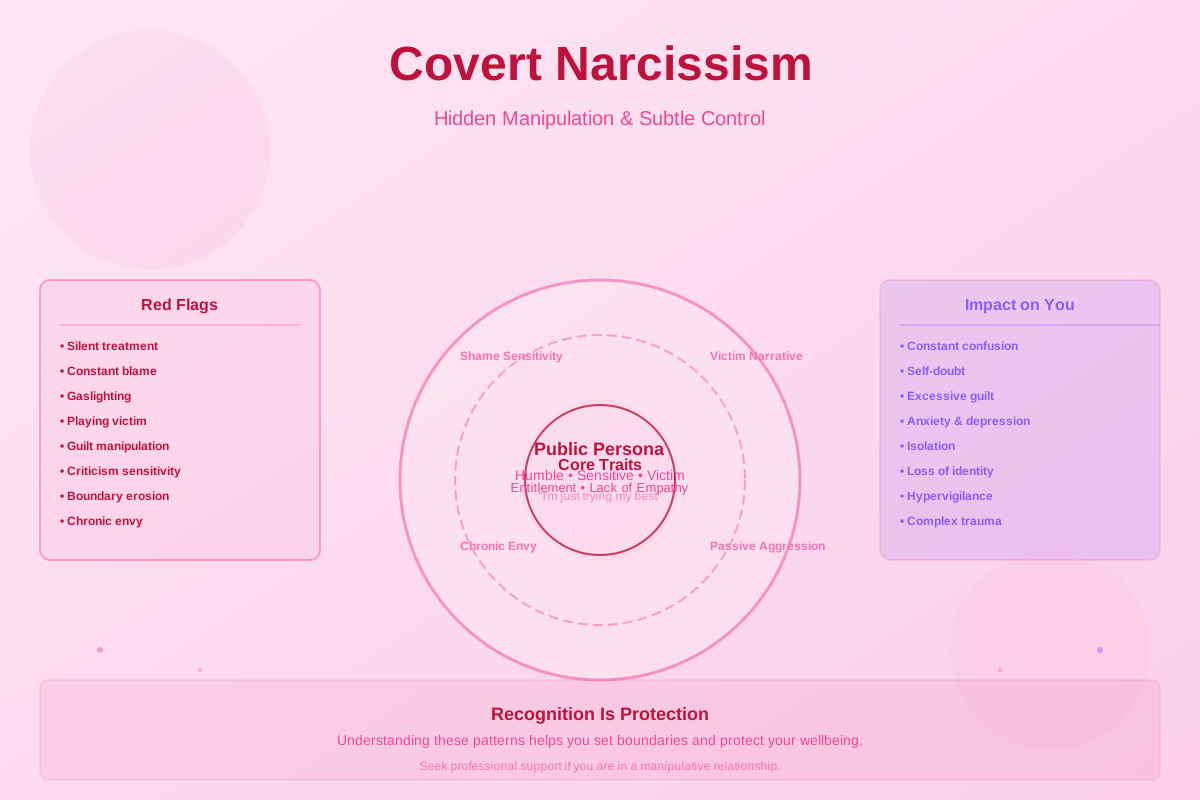
Recognizing covert narcissism can be the difference between recovering from manipulation and remaining trapped in cycles of emotional confusion and self-blame.
Understanding these subtle patterns helps you distinguish between genuine vulnerability and strategic victimhood used to control others.
What Is Covert Narcissism?
Covert narcissism, also known as vulnerable narcissism or introverted narcissism, is a subtype of Narcissistic Personality Disorder that manifests in subtle, less obvious ways than its grandiose counterpart. While covert narcissists possess the core narcissistic traits of entitlement and lack of empathy, they express these traits through introversion, self-doubt, and hypersensitivity rather than through blatant dominance and attention-seeking. The person with covert narcissism hides their grandiose self-view behind a facade of humility, modesty, and apparent emotional fragility, making them significantly harder to identify than overt narcissists.
Not medical advice.
Covert narcissism represents approximately 40% of individuals with narcissistic traits, making it substantially more common in intimate relationships than many people realize. The condition develops through various pathways, often rooted in childhood experiences of conditional approval, emotional neglect, or inconsistent parenting that created a fragile sense of self-esteem requiring constant validation and protection from perceived threats.
Surprising Insight: Surprising Insight: Covert narcissists often appear as victims in their narratives but unconsciously engineer situations that maintain their control over others' emotions and actions.
Covert vs. Grandiose Narcissism Comparison
Visual contrast between how covert and grandiose narcissism present differently while sharing core manipulative traits
🔍 Click to enlarge
Why Covert Narcissism Matters in 2026
In our increasingly digital world where vulnerability is celebrated on social media, covert narcissists have found the perfect hunting ground. The performance of emotional openness and sensitivity that characterizes their strategy aligns perfectly with contemporary cultural values of authenticity and emotional awareness. This convergence makes covert narcissists increasingly difficult to identify and increasingly effective at gaining access to caring, empathetic partners.
Understanding covert narcissism is essential for protecting your mental health in intimate relationships. Research shows that people targeted by covert narcissists experience higher rates of anxiety, depression, and complex trauma symptoms compared to those who experienced overt narcissistic abuse. The confusion, gaslighting, and systematic invalidation create psychological damage that often goes unrecognized because the abuser maintains a sympathetic public persona.
Developing the ability to recognize covert narcissism reduces your vulnerability to manipulation, improves your decision-making about relationships, and helps you establish boundaries that protect your emotional wellbeing. Whether you're assessing a current relationship or healing from a past one, this knowledge creates clarity where confusion previously existed.
The Science Behind Covert Narcissism
Neuroscientific research reveals that covert narcissism involves measurable differences in brain structure and function compared to healthy individuals. Studies published in Frontiers in Behavioral Neuroscience document alterations in the anterior insula, prefrontal cortex, and frontostriatal circuits that contribute to deficits in emotional empathy, self-awareness, and social cognition. These neural patterns help explain why covert narcissists genuinely struggle with authentic empathy while simultaneously being hypersensitive to perceived slights and criticism.
The distinction between vulnerability and pathological vulnerability is crucial. Research from the Journal of Research in Personality (2025) demonstrates that vulnerable narcissists pursue status covertly while appearing submissive, avoiding direct competition and confrontation. However, underneath this behavioral submission lies chronic envy, resentment, and a fragile sense of superiority that constantly seeks validation through manipulation rather than genuine achievement. The psychological profile includes poor emotional regulation, dysregulated self-esteem that swings between grandiosity and shame, and distorted cognitive patterns that reframe personal failures as external victimization.
How Covert Narcissism Develops
Pathway showing childhood experiences that contribute to development of vulnerable narcissism patterns
🔍 Click to enlarge
Key Components of Covert Narcissism
Victim Mentality and Blame Shifting
The cornerstone of covert narcissism is the persistent belief that life has unfairly treated them. Covert narcissists maintain a comprehensive victim narrative where they are perpetually wronged, misunderstood, and mistreated. This is not genuine victimhood but a sophisticated defense mechanism that simultaneously avoids accountability while maintaining a sympathetic identity. When conflicts arise, they immediately reframe themselves as the injured party, regardless of circumstances. This allows them to justify their own harmful behavior as retaliation for the supposed wrongs committed against them. Importantly, they often unconsciously engineer situations that confirm their victim narrative, creating self-fulfilling prophecies where they end up hurt and able to point to it as evidence of their persecution.
Hypersensitivity to Criticism and Shame Proneness
Covert narcissists are exquisitely sensitive to any form of criticism, perceived rejection, or unflattering judgment. Unlike individuals with healthy self-esteem who can receive feedback and learn from it, covert narcissists experience criticism as a devastating attack on their core identity. This hypersensitivity triggers intense shame reactions that they manage through withdrawal, rage, or aggressive counter-attacks framed as self-defense. The slightest comment they interpret as negative—sometimes things not even meant as criticism—can trigger days or weeks of emotional distance, punitive silence, or accusations of cruelty. This creates an exhausting dynamic where partners must carefully monitor every word to avoid triggering disproportionate emotional reactions.
Passive-Aggressive Manipulation
Where overt narcissists use direct aggression and domination, covert narcissists employ passive-aggressive tactics to gain control and punish perceived disloyalty. These include strategic silence where they withdraw emotional connection and communication without explanation, expressing anger through deliberate neglect and withholding affection. They may agree to requests verbally while refusing to follow through, maintain "forgetting" important events or commitments, or make subtle insulting comments disguised as jokes. They weaponize their own neediness, depression, or emotional fragility to elicit guilt and obligate partners to prioritize their emotional needs while their own needs go unmet. The insidious nature of these tactics lies in their plausible deniability—they can deny manipulation while the target person feels confused and responsible for the narcissist's emotional state.
Chronic Envy and Resentment
Covert narcissists harbor deep, chronic envy toward others' successes, achievements, and positive qualities. Unlike fleeting envy that most people experience occasionally, covert narcissists maintain persistent resentment toward those who have what they believe should have been theirs. They simultaneously diminish others' accomplishments while bitterly resenting that these accomplishments didn't happen to them. This creates a toxic internal environment where they cannot genuinely celebrate others' successes and unconsciously undermine their own partners' achievements. The envy extends to comparing themselves unfavorably to others, but rather than motivating improvement, this comparison reinforces their victim identity and resentment toward a supposedly unfair world.
| Red Flag Pattern | How It Appears | Impact on Partner |
|---|---|---|
| Victim Narrative | Always claims to be wronged; rarely takes responsibility | You absorb guilt for their unhappiness; constantly apologizing |
| Silent Treatment | Withdraws affection for days/weeks without explanation | You walk on eggshells trying to fix what's 'wrong' |
| Gaslighting | Denies saying things they clearly said; questions your memory | You doubt your own perception and memory |
| Competitive Comparison | Diminishes your achievements while emphasizing theirs subtly | You feel your success is never good enough |
| Intermittent Kindness | Cycles between cold rejection and sudden warmth | You become addicted to approval and over-accommodate |
How to Apply Covert Narcissism Knowledge: Step by Step
- Step 1: Educate yourself on the specific traits and manipulation tactics described above so you can recognize them when they occur
- Step 2: Document patterns you observe in relationships—keep a private record of specific incidents and how they made you feel
- Step 3: Practice identifying your emotional reactions: Do you feel guilty for things that aren't your responsibility? Do you apologize excessively?
- Step 4: Establish clear personal values about what behaviors you will and won't tolerate in intimate relationships
- Step 5: Develop grounding techniques to use when someone attempts to manipulate you—pause before responding
- Step 6: Practice the phrase 'That doesn't work for me' without explanation or justification to set boundaries
- Step 7: Cultivate relationships with emotionally healthy people who model authentic vulnerability and accountability
- Step 8: Seek therapy to understand why you might be vulnerable to covert narcissists—often related to childhood patterns
- Step 9: Communicate your needs directly and clearly, then observe whether the person respects those boundaries
- Step 10: Make decisions based on someone's consistent actions over time, not their words or promises of change
Covert Narcissism Across Life Stages
Young Adulthood (18-35)
Young adults encountering covert narcissists often lack the reference points to recognize manipulation patterns. The narcissist's victim narrative feels compelling—they're misunderstood by their family, betrayed by previous partners, struggling against unfair circumstances. During this stage, covert narcissists often target empathetic partners with caretaking instincts, exploiting their desire to help someone heal. Relationship dynamics become exhausting as the young adult finds themselves responsible for emotional regulation of someone who refuses to take responsibility for their own psychological wellbeing. The isolation and self-doubt created during this formative stage can impact relationship patterns for decades.
Middle Adulthood (35-55)
By middle adulthood, patterns of covert narcissistic relationships often establish deeply entrenched dynamics. Partners may be invested in shared property, parenting arrangements, or decades of history that creates complexity in leaving. Covert narcissists in this stage often escalate their manipulation, becoming more confident that their partner is too trapped to leave. They may weaponize parenting, finances, or social standing. Alternatively, middle-aged adults with emerging covert narcissistic traits may become increasingly bitter about life not matching their internal sense of specialness, intensifying their victim narratives and manipulation strategies. Recognizing patterns at this stage requires courage to acknowledge lost time while prioritizing future wellbeing.
Later Adulthood (55+)
Covert narcissism in later adulthood often calcifies into rigid patterns. Older covert narcissists may become increasingly demanding of care and attention, using health issues as leverage for emotional control. Their victim narratives expand to include lifetime injustices, creating a comprehensive mythology about their suffering. Partners of later-adulthood covert narcissists face unique challenges including caregiving obligations mixed with ongoing manipulation, retirement planning complexities, and guilt about not meeting impossible emotional needs. However, this life stage also offers clarity—patterns are undeniable, and decisions made now directly impact final years. Some individuals use this stage to finally establish boundaries and reclaim wellbeing.
Profiles: Your Covert Narcissism Approach
The Empathic Partner
- Understanding that their empathy can be exploited by covert narcissists who fake vulnerability
- Permission to prioritize their own needs without guilt
- Clarity that helping someone requires their active participation in change
Common pitfall: Over-accommodating to narcissist's emotional needs while neglecting their own wellbeing, believing love should fix the dysfunction
Best move: Set specific, non-negotiable boundaries and observe whether the person respects them; use those actions to make relationship decisions
The Trauma Survivor
- Recognition that childhood experiences may have normalized emotional abuse patterns
- Trauma-informed therapy to heal patterns that made them vulnerable to covert narcissists
- Distinction between genuine healing in relationships and repeating harmful patterns
Common pitfall: Unconsciously seeking out covert narcissists because their manipulation style mirrors familiar family dynamics
Best move: Work with a trauma-informed therapist to heal childhood wounds before making long-term relationship commitments
The Self-Aware Individual
- Validation that noticing manipulation patterns doesn't make them unkind or unloving
- Strategic approaches to either setting boundaries or safely exiting the relationship
- Support for the guilt they often feel when prioritizing their own wellbeing
Common pitfall: Staying in harmful relationships because they blame themselves for 'not being understanding enough'
Best move: Trust their observations and take action; healthy people don't require constant accommodation and can respect boundaries
The Concerned Family Member
- Understanding that they cannot fix the situation or convince the narcissist to change
- Clear communication to the target person about patterns they're observing
- Acceptance of whatever decision the target person makes about the relationship
Common pitfall: Enabling the covert narcissist by making excuses for their behavior or becoming complicit in gaslighting
Best move: Offer support and resources without judgment; let the person make their own decisions about whether to stay or leave
Common Covert Narcissism Mistakes
Believing the narcissist when they claim they've changed without observing sustained behavior change over an extended period. Covert narcissists often promise transformation, appear to make temporary improvements, then gradually return to familiar manipulation patterns. Real change requires consistent effort over years, not weeks or months of improved behavior.
Trying to convince them they're being manipulative or that their victim narrative is inaccurate. This is futile because it directly threatens their defensive structure. Instead of accepting feedback, covert narcissists interpret criticism as further evidence of persecution. Arguing or explaining your perspective typically escalates conflict.
Assuming they lack self-awareness and that education about their behavior will create motivation to change. Covert narcissists often have significant self-awareness but lack the motivation to change because their strategies serve them well. They know their behavior is harmful; they simply value control more than the relationship.
The Manipulation Cycle in Covert Narcissism
How covert narcissists cycle through predictable patterns of manipulation and apparent reconciliation
🔍 Click to enlarge
Science and Studies
Recent research provides evidence-based understanding of covert narcissism mechanisms and prevalence. Multiple studies across different populations confirm the patterns described here and validate that covert narcissism represents a significant subset of narcissistic presentations with distinct characteristics and relationship impacts.
- Mapels et al. (2025) published in Journal of Research in Personality identifying distinct profiles of narcissism including vulnerable narcissism as a separate category with specific status-seeking and social dynamics
- PMC studies (NIH) on Narcissistic Personality Disorder demonstrate that vulnerable narcissism involves hypersensitivity to evaluation and chronic envy, with different neural correlates than grandiose narcissism
- Research on shame and narcissism shows that vulnerable narcissists have higher shame-proneness and respond to ego-threatening situations with broader arrays of negative emotions including anger and sadness
- Psycholinguistic studies analyzing language patterns of vulnerable narcissists reveal systematic use of victimhood language, blame externalization, and subtle devaluation tactics
- Longitudinal studies confirm that covert narcissism has poor prognosis for change, with improvement being gradual and slow even with professional treatment
Your First Micro Habit
Start Small Today
Today's action: Name one interaction from today where you felt confused or guilty about something that wasn't your responsibility. Write it down in three sentences: what happened, what you felt, and what the other person said made it your fault.
This simple practice develops pattern recognition without requiring confrontation. Over time, you'll notice these manipulative moments clearly instead of feeling confused. Awareness always precedes action.
Keep quitting habit apps after a missed day? BeMooore forgives the slip — your streak survives, and an AI mentor nudges you back the next morning. Free on iOS.
Quick Assessment
In your current relationships, how often do you find yourself feeling responsible for someone else's emotional state?
If you chose 'Sometimes' or 'Constantly,' you may be in a dynamic with someone who manipulates through emotional dependency. Healthy relationships involve mutual emotional responsibility.
When someone is upset with you, what's your typical first reaction?
If you chose 'Assume you did something wrong,' you may have been trained by criticism and blame-shifting to take excessive responsibility. Healthy conflict involves mutual understanding, not immediate self-blame.
How does someone in your life respond when you express a need or boundary?
Boundary-testing and boundary-eroding are signs of manipulative behavior. Healthy people respect boundaries consistently, not conditionally.
Take our full assessment to get personalized recommendations.
Discover Your Style →Next Steps
Begin by observing patterns without judgment. Notice when you feel guilty for things that aren't your responsibility, when you're blamed for someone else's emotions, or when you apologize for their behavior. This awareness alone shifts your perspective from confusion to clarity. Write these patterns down. Over time, patterns become impossible to deny.
Seek support from a therapist who understands narcissistic dynamics and personality disorders. They can help you understand your own vulnerability to these patterns and support you whatever decisions you make about your relationships. Remember: recognizing covert narcissism isn't unkind; it's essential self-protection.
Get personalized guidance with AI coaching.
Start Your Journey →Research Sources
This article is based on peer-reviewed research and authoritative sources. Below are the key references we consulted:
Related Glossary Articles
Frequently Asked Questions
Can covert narcissists actually change?
Research suggests change is possible but rare and extremely gradual. Change requires the narcissist to acknowledge their patterns, feel motivated to change despite losing their manipulation strategies, and engage in sustained therapeutic work. Most covert narcissists lack the motivation to change because their strategies are working well for them. Focus on what you can control: your boundaries and your choice to stay or leave.
Is covert narcissism the same as being shy or introverted?
No. Shy or introverted people feel genuinely anxious in social situations but don't manipulate others to gain control. Covert narcissists use introversion as cover for narcissistic operations. The key difference: shy people respect others' boundaries; covert narcissists use guilt and shame to erode boundaries. Real introversion involves respecting both your own need for solitude and others' autonomy.
What if I think I might be a covert narcissist?
Self-reflection is valuable. If you genuinely wonder whether your behavior patterns harm others, seek professional therapy. A trauma-informed therapist can help you understand your patterns and whether they stem from protective responses to past harm or from narcissistic operations. Genuine self-reflection and willingness to change are hopeful signs.
How do I leave a relationship with a covert narcissist safely?
Consult with a therapist experienced in narcissistic abuse before making decisions. They can help you plan safely, especially if children, finances, or safety concerns are involved. Document incidents discreetly. Consider having a safety plan. Create distance gradually if sudden separation isn't possible. Connect with support networks. Never announce your leaving plans to the narcissist beforehand.
Can I stay in a relationship with a covert narcissist if I understand the patterns?
Understanding patterns doesn't stop the harm. Awareness might help you take less personally and set firmer boundaries, but you cannot change someone else's behavior. You can only change your responses. Some people choose to stay with firmer boundaries and lower expectations; others find the continuous manipulation exhausting regardless of their understanding. Both choices are valid based on individual circumstances.
Take the Next Step
Ready to improve your wellbeing? Take our free assessment to get personalized recommendations based on your unique situation.
- Discover your strengths and gaps
- Get personalized quick wins
- Track your progress over time
- Evidence-based strategies