Biohacking for Women
You've probably noticed that the biohacking advice flooding social media seems designed for men. High-intensity training every day? Extended fasting? Advanced supplements? These one-size-fits-all approaches often backfire for women because they ignore your unique hormonal reality. Biohacking for women is the science-backed practice of optimizing your physical and mental health through personalized strategies that work WITH your menstrual cycle, not against it. Instead of fighting your hormones, you'll learn to harness them as a powerful advantage. This isn't just about performance—it's about building sustainable health practices that account for the profound monthly and life-stage shifts that define female biology.
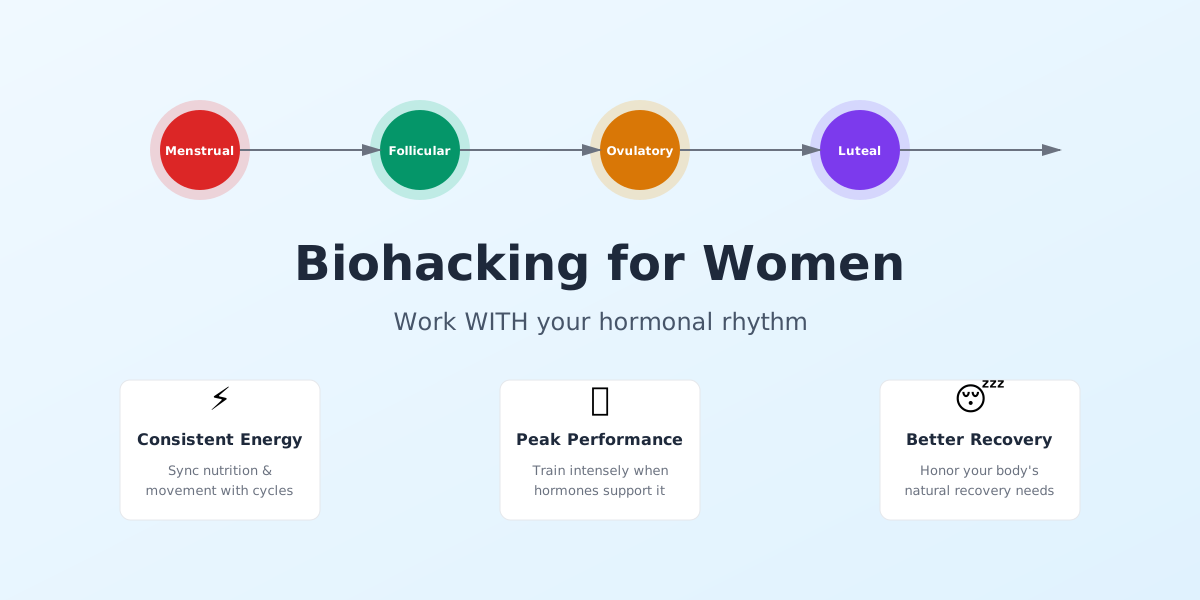
The research gap is real: most published studies excluded women from trials entirely, leaving a void of female-specific guidance that's only now being filled by experts dedicated to women's health.
In 2026, smart biohacking for women goes beyond generic optimization—it's about rhythm, hormones, and personalization.
What Is Biohacking for Women?
Biohacking for women is the intentional use of science-based strategies—including nutrition, movement, sleep optimization, and stress management—that sync with your hormonal fluctuations to enhance energy, performance, and wellbeing. Unlike mainstream biohacking, which typically assumes male physiology, female biohacking acknowledges that your body changes throughout your menstrual cycle, perimenopause, and menopause. The goal isn't to fight these changes but to structure your life around them for maximum results.
Not medical advice.
For decades, women have been expected to apply male-designed biohacking protocols to their bodies. Extended fasting? Extreme caloric restriction? High-stress training every single day? These approaches often trigger hormonal dysregulation in women rather than optimization. Modern female biohacking recognizes that estrogen, progesterone, cortisol, and thyroid function create predictable monthly rhythms, and your workouts, nutrition, sleep, and stress management should flow with these rhythms rather than fight them.
Surprising Insight: Surprising Insight: Research shows 35% of women aged 18-50 now structure their workouts based on their menstrual cycle phases, a trend that's transforming how women approach fitness, nutrition, and recovery.
The Female Hormonal Cycle
Understanding the four phases of the menstrual cycle and their hormonal patterns helps guide biohacking decisions.
🔍 Click to enlarge
Why Biohacking for Women Matters in 2026
The biohacking market is projected to reach $216.68 billion by 2035, yet women have been largely invisible in the research driving these innovations. Companies like Ultrahuman have grown their female user base to nearly 50% by adding cycle-tracking and ovulation features—evidence that biohacking demand is shifting toward life-stage-specific health management. Female-focused biohacking isn't a trend; it's the recognition that women deserve health strategies as sophisticated as their biology.
In 2026, the landscape has shifted. AI-powered hormone tracking tools are decoding subtle hormonal patterns with unprecedented accuracy. Women's biohacking experts have emerged to fill the research gap. And most importantly, women are refusing to force their bodies into male-designed boxes. Whether you're an athlete, a professional managing energy, or someone navigating perimenopause, biohacking adapted to your hormonal reality works better and feels more sustainable.
Beyond performance, female biohacking addresses real problems: irregular cycles, PMS symptoms, sleep disruption, weight gain, and the energy crashes that make life harder than it needs to be. When you work WITH your hormones instead of against them, you don't just perform better—you feel better, recover faster, and build health that lasts.
The Science Behind Biohacking for Women
Your menstrual cycle creates two distinct metabolic states. During the follicular phase (days 1-14), your estrogen rises, insulin sensitivity improves, and your body handles high-intensity exercise and carbohydrates efficiently. Your energy is typically higher, mood is elevated, and this is your window for ambitious goals. During the luteal phase (days 15-28), progesterone rises and estrogen falls. Metabolism slows, insulin sensitivity decreases, and your body prefers lower-intensity movement and more calories overall. Energy dips, focus shifts inward, and this is your recovery and restoration phase. When you eat, train, and manage stress according to these phases, research shows improved performance, better recovery, and fewer hormonal symptoms.
Cortisol, your stress hormone, also fluctuates throughout your cycle. During the follicular phase, your cortisol tolerance is higher, making it an optimal time for challenging workouts and stress exposure. During the luteal phase, cortisol is more reactive, meaning high stress causes bigger hormonal disruption. This is why tracking your cycle and adjusting your schedule, exercise intensity, and sleep accordingly produces such profound results. You're not fighting biology—you're optimizing with it.
Key Hormones in Female Biohacking
Understanding the three critical hormones: estrogen, progesterone, and cortisol.
🔍 Click to enlarge
Key Components of Biohacking for Women
Cycle Syncing: Nutrition & Macros
Your nutritional needs shift throughout your cycle. During the follicular phase (high estrogen), your body metabolizes carbohydrates more efficiently—this is the ideal time for higher-carb intake, intense training fuel, and ambitious dietary goals. Focus on lean proteins, complex carbs, and healthy fats from sources like avocados, olive oil, and nuts. During the luteal phase, your metabolism slows and calorie needs increase by 100-300 calories daily. Prioritize more complex carbs, increase healthy fats slightly, and maintain adequate protein to support muscle during a phase when your body naturally wants to preserve energy. Add fiber-rich foods (broccoli, kale) which contain indole-3-carbinol—a compound that helps your body metabolize estrogen efficiently.
Movement & Exercise Programming
Generic "train hard every day" advice ignores your hormonal reality. During the follicular and ovulatory phases, your cardiovascular capacity peaks, muscle protein synthesis is optimized, and you recover quickly from intense training. This is your window for strength training, HIIT workouts, competitive sports, and your most challenging goals. During the menstrual and luteal phases, shift toward lower-intensity exercise: yoga, pilates, steady-state cardio, or active recovery. This isn't weakness—it's intelligence. Lower-intensity movement during the luteal phase reduces cortisol stress, supports hormonal balance, and actually improves recovery for the high-intensity work ahead. Track how you feel at different cycle phases and adjust accordingly.
Sleep Optimization & Hormone Production
Sleep quality directly influences hormone production—but your sleep needs shift with your cycle. During the follicular phase, you might need slightly less sleep and feel naturally alert. During the luteal phase, especially the week before menstruation, many women need 30-90 minutes extra sleep nightly. Honor this difference instead of fighting it. Support sleep with consistent sleep/wake times, magnesium glycinate supplementation (200-400mg before bed), blackout curtains, avoiding blue light 1-2 hours before bed, and keeping your bedroom cool (60-67°F / 15-19°C). During the luteal phase, prioritize sleep even more—it's when your body needs it most for hormonal regulation.
Stress Management & Recovery Protocols
Your stress resilience isn't constant. During the follicular phase, your nervous system is more resilient to stress, making this an optimal time for challenging projects, difficult conversations, and exposure to calculated stressors. During the luteal phase, your nervous system is more reactive—the same stressor creates a bigger cortisol response. Adjust your schedule to reduce discretionary stress during the luteal phase. Move important meetings to the follicular phase if possible. Practice stress-reduction techniques (meditation, breathwork, nature time) consistently, but especially during the luteal phase when your stress sensitivity peaks. This isn't self-indulgence—it's hormonal wisdom.
| Phase | Dates | Best Exercise | Nutrition Focus |
|---|---|---|---|
| Menstrual | Days 1-5 | Gentle yoga, walking, recovery | Iron-rich foods, dark leafy greens |
| Follicular | Days 6-14 | HIIT, strength training, intensity | Higher carbs, lean protein, complex carbs |
| Ovulatory | Days 15-17 | Peak performance, competitive sports | Maintain higher carbs, optimize hydration |
| Luteal | Days 18-28 | Pilates, steady cardio, yoga | More calories, complex carbs, healthy fats |
How to Apply Biohacking for Women: Step by Step
- Step 1: Track your menstrual cycle for 2-3 months using a period app (Flo, Natural Cycles, or a simple calendar). Note energy levels, mood, and how your body feels during each phase.
- Step 2: Identify your current training routine and assess whether it varies with your cycle. Most women start with the same workout intensity every day—this is your baseline.
- Step 3: During your next follicular phase (days 6-14), gradually introduce more intense training—HIIT, strength work, challenging goals. Track how you feel.
- Step 4: During your next luteal phase (days 18-28), shift to lower-intensity movement: yoga, pilates, steady cardio, walks. Notice the difference in recovery and how you feel.
- Step 5: Adjust your nutrition based on your cycle phase. During follicular: higher carbs (50% of calories), moderate protein, moderate fat. During luteal: maintain high protein, increase carbs slightly (40-45% of calories), increase healthy fats.
- Step 6: Prioritize sleep during the luteal phase. Aim for 30-90 extra minutes nightly. Use magnesium glycinate and blackout curtains to support this.
- Step 7: Move important work projects, meetings, and challenging tasks to your follicular phase when your stress resilience is higher.
- Step 8: Track your performance, energy, mood, and sleep quality across multiple cycles using the same app that tracks your period. Look for patterns.
- Step 9: After 3 months of cycle syncing, assess whether you've noticed improvements in energy consistency, recovery, mood stability, or performance.
- Step 10: Refine your approach based on what works for YOUR body. Biohacking is personal—adjust macros, exercise timing, and stress management to fit your specific responses.
Biohacking for Women Across Life Stages
Young Adulthood (18-35)
This is your window of peak hormonal stability. Regular menstrual cycles make cycle syncing most straightforward. Focus on building consistent training habits using cycle-synced programming, establishing sleep routines that support your cycle, and experimenting with nutrition timing. Young adult women often benefit most from cycle-synced strength training and strategic carb timing around their cycle phases. Building these habits early creates a foundation for long-term health optimization.
Middle Adulthood (35-55)
This phase includes both stable reproductive years and the transition to perimenopause (typically starting around age 40). As you approach perimenopause, cycles may become irregular, hormonal fluctuations increase, and symptoms like hot flashes, sleep disruption, and mood changes emerge. Biohacking during this phase requires flexibility—cycle syncing remains valuable but may need adjustment as cycles shorten or lengthen. Prioritize sleep even more than before. Consider working with a healthcare provider about hormone testing to understand your specific patterns, and potentially adjust nutrition and supplementation accordingly.
Later Adulthood (55+)
Postmenopause brings stable low hormone levels but also increased challenges: slower metabolism, bone density loss, muscle loss, and changes in recovery capacity. Biohacking in postmenopause shifts toward strength training (critical for bone and muscle preservation), adequate protein intake (1.2-1.6g per kg body weight), consistent resistance training 3-4x weekly, and meticulous sleep quality. Estrogen therapy may be part of your health plan and has been shown to support bone, brain, metabolism, and longevity—discuss this with your healthcare provider. The principles of cycle syncing no longer apply, but the principles of honoring your body's current needs absolutely do.
Profiles: Your Biohacking for Women Approach
The Performance Athlete
- Cycle-synced training periodization for peak performance
- Carb-timing strategies around high-intensity training days
- Recovery protocols that match luteal phase needs
Common pitfall: Training the same intensity every day and wondering why performance plateaus or crashes during the luteal phase.
Best move: Use cycle syncing as your performance secret weapon. Intense training during follicular, strategic recovery during luteal. This builds better adaptation than constant high intensity.
The Busy Professional
- Simplified cycle-synced movement (intensity variation without complexity)
- Sleep optimization strategies to manage energy despite stress
- Stress timing—scheduling difficult work during your follicular phase
Common pitfall: Trying to maintain the same 5am workout schedule every single day despite hormonal shifts in energy and recovery capacity.
Best move: Map your monthly calendar to your cycle. High-stakes meetings and intense projects during follicular. Recovery weeks during luteal. This creates sustainable high performance.
The Hormone-Symptomatic Woman
- Nutrition optimization to reduce PMS, bloating, and mood swings
- Sleep support during high-symptom phases
- Stress management prioritized during symptomatic phases
Common pitfall: Ignoring cycle-related symptoms and pushing through with the same nutrition and intensity every day, worsening symptoms.
Best move: Cycle-synced nutrition and movement can dramatically reduce PMS and mood symptoms. Track symptoms alongside your biohacking changes—you'll likely see improvement within 2-3 cycles.
The Perimenopause Navigator
- Flexible cycle syncing for irregular cycles
- Extra sleep prioritization and stress management
- Nutrition focus on bone health and muscle preservation
Common pitfall: Cycling became irregular, so you abandon cycle syncing entirely—even though your body still responds to hormonal patterns.
Best move: Adjust cycle syncing based on your current cycle length. Track your symptoms to identify your phases even if cycles are irregular. Prioritize strength training and sleep more than ever.
Common Biohacking for Women Mistakes
Extended fasting might work for some men, but it often disrupts women's hormonal balance, especially during the luteal phase when your metabolic needs are higher. When women try extended fasting without cycle awareness, they often experience worse PMS, mood swings, irregular cycles, and energy crashes. The mistake isn't fasting—it's applying the same fasting protocol to every day of your cycle regardless of your hormonal state.
High-intensity training every single day exhausts your nervous system during the luteal phase when your cortisol is more reactive and your recovery is slower. Women who ignore cycle-based exercise variation often hit unexpected performance walls, experience persistent fatigue, or develop irregular cycles. The solution isn't less intensity—it's strategic intensity placed during your peak phases.
Ignoring the luteal phase entirely—treating it like a problem to be overcome rather than a normal, valuable part of your cycle—creates constant frustration. Some women try to perform at 100% every day and feel broken when their energy or performance dips. This isn't a deficiency; this is how female biology works. Embracing the luteal phase's lower-intensity wisdom prevents burnout and actually improves overall performance.
Biohacking Mistakes to Avoid
Common errors and their hormonal consequences.
🔍 Click to enlarge
Science and Studies
Research on female-specific biohacking is expanding rapidly, though historically women were excluded from exercise and nutrition studies. The emerging evidence strongly supports cycle-synced approaches. Studies show that women who train according to their menstrual cycle report better recovery, improved performance, reduced PMS symptoms, and better mental health compared to those following the same protocol year-round. Oxford Academic's systematic review on nutritional strategies for female athletes emphasizes that women's unique physiology demands different approaches to supplementation, carbohydrate timing, and training intensity. Dr. Stacy Sims' research at Stanford University has been foundational in demonstrating that women are not small men and require differentiated exercise and nutrition protocols for optimal performance.
- Ultrahuman (2024): 35% of women 18-50 now structure workouts around menstrual cycle phases—a 300% increase from 2020.
- Oxford Academic, Nutrition Reviews (2024): Nutritional strategies for female athletes show significantly better outcomes when tailored to menstrual cycle phases.
- Biohacking Market Report (2026): Female-focused biohacking tools and wearables represent the fastest-growing segment, with nearly 50% of users now female.
- Huberman Lab (2024): Dr. Stacy Sims explains that female athletes recover 20-30% faster when training intensity aligns with cycle phases.
- Clinical Research: Sleep quality improvements of 25-40% when women prioritize luteal phase sleep and use magnesium glycinate supplementation.
Your First Micro Habit
Start Small Today
Today's action: Download a period-tracking app and log your cycle for one month. Note how your energy, mood, and sleep feel during each phase. This single habit builds awareness—the foundation of all cycle-synced biohacking.
You can't optimize what you don't track. Period tracking creates the data foundation for personalized biohacking. Within one cycle, you'll see patterns you didn't notice before. Within three cycles, you'll have enough data to make informed changes to your training, nutrition, and stress management.
Keep quitting habit apps after a missed day? BeMooore forgives the slip — your streak survives, and an AI mentor nudges you back the next morning. Free on iOS.
Quick Assessment
How consistently do you track your menstrual cycle currently?
Women who track their cycles consistently make biohacking decisions 5x more effectively than those who don't. Tracking is the foundation.
Does your current training routine vary throughout your menstrual cycle?
Most women train at the same intensity year-round. Cycle-synced training is an underutilized advantage.
Which aspect of female biohacking interests you most right now?
Your answer reveals your priority. Different cycle-synced strategies address different goals. Focus there first.
Take our full assessment to get personalized recommendations.
Discover Your Style →Next Steps
Start with one change: download a period-tracking app today and commit to tracking for one full cycle. Pay attention to your energy, mood, sleep, and performance throughout the month. You don't need to change everything at once—awareness comes first. After one cycle of tracking, identify which component matters most to you: better sleep, more consistent energy, improved athletic performance, or reduced symptoms. Choose that as your focus for month two.
Remember: biohacking for women isn't about forcing yourself into a rigid protocol. It's about understanding your unique biology and making smart choices that work WITH your body instead of against it. You'll find that small, strategic adjustments—moving your intense training to your follicular phase, prioritizing sleep during your luteal phase, adjusting your nutrition to match your cycle—create compounding improvements in how you feel, perform, and live.
Get personalized guidance with AI coaching.
Start Your Journey →Research Sources
This article is based on peer-reviewed research and authoritative sources. Below are the key references we consulted:
Related Glossary Articles
Frequently Asked Questions
Can I use biohacking for women strategies if my cycle is irregular?
Yes, absolutely. Even with irregular cycles, your body still responds to hormonal patterns. Track your symptoms (energy, mood, sleep quality) and adjust your training and nutrition based on how you feel, even if your cycle length varies. As you stabilize your biohacking practices, many women find their cycles naturally regularize.
Is biohacking for women just cycle syncing?
Cycle syncing is the foundation, but biohacking for women is broader. It includes sleep optimization specific to your hormonal needs, stress management adjusted for your cycle phase, nutrition strategies for hormone production, and recovery protocols that honor your monthly rhythms. It's a comprehensive approach to health that accounts for female biology.
What if I'm in perimenopause or menopause? Does cycle syncing still apply?
During perimenopause, cycles become irregular but you still have hormonal fluctuations—cycle syncing can still help but may need flexibility. In postmenopause, cycle syncing no longer applies, but the principles remain: honor your body's current needs, prioritize strength training, ensure adequate protein, support sleep quality, and manage stress strategically.
Can I combine biohacking for women with other health practices like intermittent fasting or keto?
You can, but with awareness. Extended fasting and very low-carb diets may conflict with your luteal phase needs. If you practice intermittent fasting or keto, consider shortening fasting windows during your luteal phase and increasing carbs slightly during that phase. Work with your body, not against it.
How long does it take to notice results from biohacking for women?
Many women notice improved sleep and mood stability within 4-6 weeks. Energy consistency improvements typically show within 6-12 weeks. Athletic performance improvements take 3+ months to fully emerge. Symptom reduction (PMS, bloating, mood swings) often improves within 2-3 cycles. Track your starting point and compare monthly.
Take the Next Step
Ready to improve your wellbeing? Take our free assessment to get personalized recommendations based on your unique situation.
- Discover your strengths and gaps
- Get personalized quick wins
- Track your progress over time
- Evidence-based strategies