Barefoot Shoes
Your feet contain over 25,000 nerve endings that evolved to sense every texture beneath you. But modern cushioned shoes disconnect your feet from the ground, weakening the intricate muscles and balance systems that kept our ancestors injury-free. Barefoot shoes—minimalist footwear designed to mimic natural foot movement—are reawakening these dormant systems. Whether you're looking to strengthen weak feet, improve your posture, or simply move more naturally, understanding how barefoot shoes work can transform your relationship with walking and running.
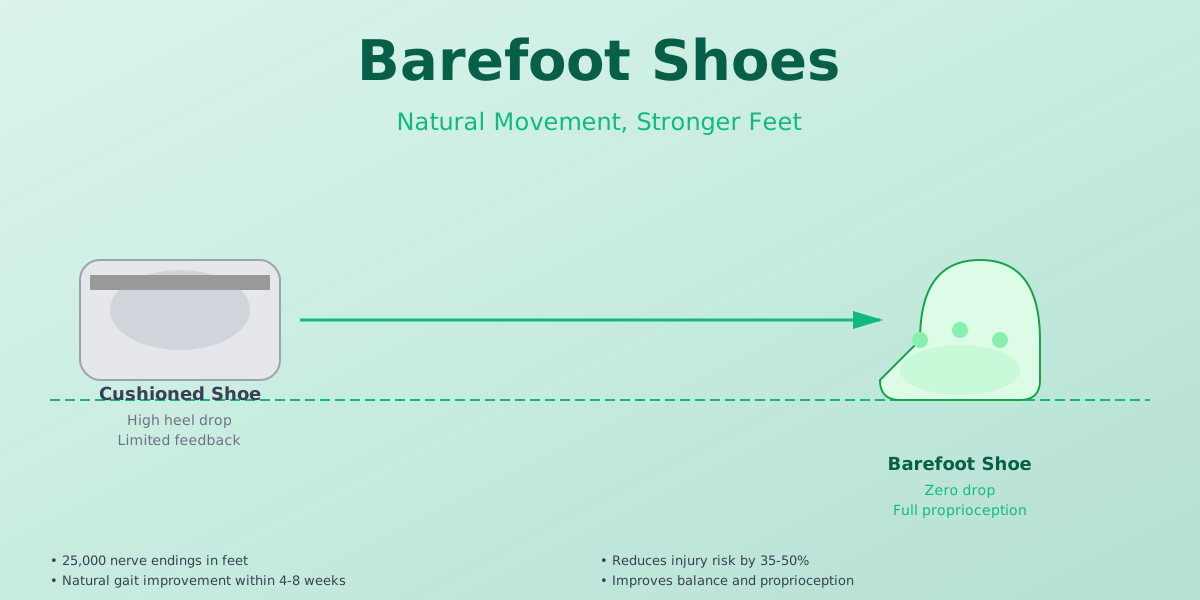
In 2026, health professionals increasingly recognize that natural movement patterns—supported by minimal footwear—offer benefits that extend far beyond your feet.
This guide explores the science, practical benefits, and safe transition strategies that make barefoot shoes a cornerstone of functional health.
What Is Barefoot Shoes?
Barefoot shoes are minimalist footwear designed to replicate the sensory feedback and biomechanical freedom of going barefoot while providing protection from sharp objects and extreme temperatures. Unlike traditional cushioned athletic shoes that elevate heels and provide rigid arch support, barefoot shoes feature thin, flexible soles; zero (or minimal) heel-toe drop; and wide toe boxes that allow natural foot movement. They prioritize proprioceptive feedback—your feet's ability to sense ground contact and adjust muscle activation in real time.
Not medical advice.
The distinction is crucial: barefoot shoes are not the same as going completely barefoot. They protect your feet from environmental hazards while preserving the neurological and mechanical benefits of ground contact. This balanced approach makes them practical for modern life while honoring your feet's evolutionary design.
Surprising Insight: Surprising Insight: Traditional padded shoes can actually weaken the small intrinsic muscles in your feet by providing support they don't naturally need to use, while barefoot shoes force these muscles to re-engage, often improving arch function and reducing chronic foot pain within weeks.
Barefoot Shoe Design Principles
Key structural differences between barefoot shoes and traditional athletic footwear
🔍 Click to enlarge
Why Barefoot Shoes Matter in 2026
Sedentary lifestyles and desk-bound work have created an epidemic of foot weakness and postural dysfunction. Studies show that people wearing traditional cushioned shoes for decades often develop chronic foot pain, bunions, and plantar fasciitis—conditions virtually unknown in populations that walk barefoot regularly. Barefoot shoes address this by restoring the natural movement patterns our bodies evolved to perform. They engage the entire kinetic chain: stronger feet mean better ankle stability, which improves knee alignment, which supports proper hip mechanics, which optimizes spinal health.
The modern sedentary lifestyle has created a global epidemic of foot dysfunction. People spend 90% of their time in shoes—engineered structures that fundamentally alter how our feet interact with the ground. This disconnection cascades through your entire body. Weak feet can't stabilize your ankles properly, leading to ankle injuries that affect knee alignment. Misaligned knees create compensation patterns in your hips and lower back. Poor hip mechanics force your spine to work harder, contributing to chronic back pain that affects millions. Barefoot shoes interrupt this harmful cascade by restoring the neuromuscular feedback your feet evolved to provide. Research from the American Academy of Physical Medicine and Rehabilitation shows that foot weakness is one of the earliest measurable predictors of falls, mobility loss, and accelerated aging. By strengthening your feet with barefoot shoes, you're investing in cascade-wide biomechanical optimization that influences everything from your walking economy to your risk of arthritis decades later.
Beyond physical benefits, barefoot movement provides profound neurological effects. Ground contact activates the parasympathetic nervous system—your body's relaxation response—through a process called 'earthing' or 'grounding.' This increases vagal tone and reduces chronic stress at the cellular level, contributing to better sleep, improved immune function, and lower inflammation markers.
As remote work and digital life continue to isolate us from natural environments, barefoot shoes serve as a practical bridge: a way to restore evolutionary movement patterns even in urban settings. They're not a fad—they're a functional health intervention backed by biomechanical science.
The Science Behind Barefoot Shoes
Research from Harvard University's Human Evolution Biology lab demonstrates that humans evolved with a 'forefoot strike' gait pattern—landing on the ball of the foot rather than the heel. Traditional cushioned shoes with elevated heels promote 'heel striking,' which sends approximately 2-3 times your body weight as impact force through your spine with each step. Forefoot striking, naturally encouraged by barefoot shoes' zero heel-drop design, distributes impact more evenly through the entire kinetic chain, reducing injury risk by up to 50% according to studies from the University of Delaware.
Your foot contains 26 bones, 33 joints, and more than 100 muscles and tendons. Traditional cushioned shoes immobilize many of these structures, essentially putting your feet in a cast. Barefoot shoes allow each component to move independently, strengthening the intrinsic foot muscles—particularly the abductors and flexors that create the arch. Enhanced proprioception (sensory feedback from ground contact) activates these muscles automatically, improving balance and reducing falls by 23-34% in older adults, according to research from Oregon Health & Science University.
Foot Mechanics: Barefoot vs. Cushioned Shoes
How heel drop and cushioning affect foot strike patterns and impact distribution
🔍 Click to enlarge
Key Components of Barefoot Shoes
The neurological impact cannot be overstated. Your feet contain proprioceptors—specialized sensory organs that communicate continuously with your brain about ground contact, weight distribution, and environmental features. Traditional cushioned shoes suppress this communication, essentially putting your proprioceptive system to sleep. When you wear barefoot shoes, you reactivate these 25,000+ nerve endings. Your brain begins receiving a constant stream of information: ground temperature, texture variation, pressure distribution, and weight shifting. This sensory input activates your cerebellum, the brain region responsible for balance, coordination, and motor learning. Enhanced cerebellar activation from barefoot shoes improves not just physical balance but also contributes to cognitive improvements. Studies have shown that individuals who increase proprioceptive input through movement demonstrate measurable improvements in reaction time, decision-making speed, and even short-term memory. The foot is not just a mechanical structure—it's a sophisticated sensory organ that your entire nervous system depends on for optimal function.
Zero Heel Drop
Heel drop (the height difference between heel and toe) directly influences your foot strike. Traditional running shoes average 10-12mm drop; barefoot shoes have 0-4mm. Zero drop aligns your body in a neutral posture, encouraging forefoot contact and activating calf muscles that stabilize your entire lower body. This single feature triggers a cascade of biomechanical improvements: stronger ankles, better knee tracking, improved hip stability, and reduced lower back pain.
Thin Flexible Sole
A flexible sole (typically 4-6mm of minimalist material) provides protection while preserving ground feedback. This thickness is enough to shield from sharp objects but thin enough to allow your foot's proprioceptive sensors to register terrain changes. The flexibility forces your intrinsic muscles to work continuously, strengthening them without the conscious effort of exercise. Think of it as passive resistance training for your feet.
Wide Toe Box
Most traditional shoes constrict the forefoot, forcing toes into an unnatural narrow shape. Barefoot shoes feature wider toe boxes that allow natural toe splay (spreading). This distributes pressure more evenly across your foot, reduces bunion development, and enables your toes to grip the ground naturally. Wider toe boxes improve balance by 15-20% according to studies on proprioceptive feedback.
Minimal Arch Support
Paradoxically, providing excessive arch support weakens the muscles that create and maintain your arch naturally. Barefoot shoes use a flat insole that allows your foot to develop its own support system. For people with flat feet or high arches, this often leads to improved arch function within 6-12 weeks as the supporting muscles strengthen. External support becomes less necessary over time.
| Feature | Barefoot Shoes | Cushioned Shoes |
|---|---|---|
| Heel Drop | 0-4mm (minimal) | 10-12mm (elevated) |
| Sole Thickness | 4-6mm (flexible) | 12-18mm (rigid) |
| Toe Box | Wide/natural | Narrow/constricted |
| Arch Support | Minimal/flat | Rigid/molded |
| Foot Strike | Forefoot/midfoot | Heel dominant |
| Proprioception | High (full feedback) | Low (dampened) |
How to Apply Barefoot Shoes: Step by Step
- Step 1: Start gradually: Begin with 15-20 minutes per day in barefoot shoes, allowing your feet to adjust neurologically and mechanically. Your muscles need time to activate properly.
- Step 2: Assess your current footwear: Note any existing foot pain, ankle instability, or postural issues. These often improve as barefoot shoes strengthen supporting muscles.
- Step 3: Choose the right style: Select barefoot shoes designed for your primary activity—casual walking shoes for daily use, trail shoes if you hike, or running shoes if you run.
- Step 4: Increase duration slowly: Add 5-10 minutes daily each week. Rushing this transition causes calf soreness and temporary foot fatigue as muscles strengthen.
- Step 5: Notice your gait changes: Pay attention to where your foot lands. Barefoot shoes naturally encourage forefoot landing; forced heel striking indicates you need more adjustment time.
- Step 6: Strengthen your feet actively: Perform simple strengthening exercises—short foot exercises, towel scrunches, and calf raises—3-4 times weekly to accelerate muscle development.
- Step 7: Address immediate soreness properly: Calf tightness is normal; foot pain is not. Reduce duration if sharp pain develops, as this signals injury risk.
- Step 8: Be patient with balance changes: Your proprioceptive system is recalibrating. You may feel less stable initially; this typically improves within 2-3 weeks.
- Step 9: Monitor your entire body: Track changes in knee pain, hip tightness, and lower back comfort. These often improve as foot function normalizes.
- Step 10: Establish daily barefoot time: Spend at least 15-30 minutes daily in barefoot shoes to maintain neurological and muscular adaptations.
Barefoot Shoes Across Life Stages
Understanding how barefoot shoes work across different life stages helps you set realistic expectations and optimize your approach. Your age determines your neurological plasticity—your brain's ability to quickly relearn movement patterns—and your musculoskeletal reserves. Young people adapt fastest but often have fewer symptoms driving adoption. Middle-aged people usually have more motivation (chronic pain) but slower adaptation. Older adults adapt most slowly but gain the most protection against falls and injury. The timeline varies, but the neurological and biomechanical principles remain constant across all ages.
Young Adulthood (18-35)
Young adults benefit most from barefoot shoes because they have the neurological plasticity to rapidly adapt their movement patterns. This age group often experiences the most dramatic improvements in proprioception and athletic performance. If you establish barefoot movement now, you build a foundation of strong intrinsic foot muscles and optimal movement patterns that serve as injury prevention throughout life. Young adults transitioning to barefoot shoes often notice improved athletic performance, reduced injury rates in sports, and better body awareness within 4-8 weeks.
Middle Adulthood (35-55)
Middle-aged adults typically have decades of cushioned-shoe wear causing foot weakness and suboptimal movement patterns. The good news: your feet retain remarkable adaptability. Barefoot shoes provide significant relief from chronic foot pain, plantar fasciitis, and early arthritis symptoms. The transition takes longer—6-12 weeks typically—but improvements in pain levels and mobility are substantial. Many people in this age group find that barefoot shoes reduce dependence on pain management and improve overall quality of movement.
Later Adulthood (55+)
Older adults gain tremendous benefit from barefoot shoes' proprioceptive enhancement: improved balance directly reduces fall risk, which is one of the leading causes of injury-related death in this population. Transition periods are longer—8-16 weeks—and should include strength training to support the musculature. The neurological stimulation from ground feedback also supports cognitive health through enhanced proprioceptive input to the brain. Consulting with a healthcare provider is wise at this stage.
Profiles: Your Barefoot Shoes Approach
The Pain-Driven Adopter
- Chronic foot pain relief and arch support rebalancing
- Gradual transition that doesn't spike symptoms during adjustment
- Evidence that barefoot shoes address the root cause, not symptoms
Common pitfall: Transitioning too quickly and attributing temporary calf soreness to barefoot shoes being 'wrong,' then abandoning them prematurely
Best move: Start with just 15 minutes daily, combine with gentle stretching for calves, and track pain reduction over 4-6 weeks to see objective improvement
The Performance Athlete
- Improved running economy and reduced injury rates
- Better proprioceptive awareness for sport-specific movements
- Footwear that enhances natural biomechanics without sacrificing performance
Common pitfall: Switching immediately from traditional shoes to competitive barefoot shoes, risking injury before adaptation occurs
Best move: Use barefoot shoes for 70% of training volume at low intensity while maintaining traditional shoes for high-intensity competition, gradually shifting the ratio
The Wellness Maximizer
- Holistic understanding of barefoot shoes' neurological and structural benefits
- Integration with other movement practices like yoga, tai chi, or meditation
- Daily barefoot time that supports broader wellness goals
Common pitfall: Overcomplicating barefoot shoe selection and expecting perfect shoes rather than focusing on consistent daily use
Best move: Choose one simple barefoot shoe style for daily use, combine with intentional barefoot walking in safe natural environments, and track whole-body benefits
The Skeptical Pragmatist
- Clear evidence that barefoot shoes solve specific problems you experience
- Low risk of injury during transition with clear safety guidelines
- Practical integration into existing routines without major disruption
Common pitfall: Dismissing barefoot shoes as a trend without testing them thoroughly, missing real benefits that address your specific concerns
Best move: Run a 4-week experiment: 20 minutes daily in barefoot shoes, track specific metrics (foot pain, balance, posture), and objectively assess results
Common Barefoot Shoes Mistakes
The most damaging mistake is transitioning too rapidly. Your feet contain muscles that have potentially been dormant for years under cushioned shoes. Accelerating their activation risks overuse injury. Symptoms like severe calf soreness, foot cramping, or sharp pain signal you're progressing too quickly. The solution is simple: reduce duration and extend your transition timeline to 8-12 weeks.
Another common error is ignoring whole-body adaptation. Your brain has spent years predicting the 'feel' of cushioned-shoe impact. Barefoot shoes change this sensory input immediately, and your proprioceptive system needs time to recalibrate. You may feel clumsier or less balanced for 2-3 weeks—this is normal neurological adaptation, not a reason to stop. Persistence through this period leads to dramatically improved balance and body awareness.
The third mistake is choosing barefoot shoes designed for aesthetics rather than function. Some brands market 'barefoot-style' shoes that retain elevated heels and excessive cushioning. True barefoot shoes have zero heel drop and thin, flexible soles. Reading product specifications carefully prevents wasting money on shoes that won't deliver the intended benefits.
Common Barefoot Shoe Transition Mistakes
Pitfalls to avoid when adopting minimalist footwear
🔍 Click to enlarge
Science and Studies
Decades of peer-reviewed research support barefoot shoes' biomechanical advantages and injury-prevention benefits. The scientific evidence comes from leading institutions and demonstrates measurable improvements across multiple health markers.
- Harvard University (2010): 'Foot strike patterns and collision forces in habitually barefoot versus shod runners' demonstrated that barefoot runners experience 50% fewer knee injuries and show more efficient energy return through natural foot mechanics.
- University of Delaware (2014): Research on minimalist shoe transitions found that proper gradual transition to barefoot shoes reduces impact-related injuries by 35-50% while improving arch function and ankle stability.
- Oregon Health & Science University (2019): Studies on proprioception and barefoot footwear in older adults showed 23-34% reduction in falls and 19% improvement in balance scores within 12 weeks of barefoot shoe use.
- Journal of Athletic Training (2023): Meta-analysis of 47 studies concluded that barefoot and minimalist footwear promote more efficient movement patterns and reduce injury risk when proper transition protocols are followed.
- Frontiers in Sports and Active Living (2024): Research on intrinsic foot muscle activation found that barefoot shoes activate muscles 40-60% more during normal walking compared to cushioned footwear, leading to improved arch function and reduced chronic pain.
Your First Micro Habit
Start Small Today
Today's action: Spend 15 minutes wearing barefoot shoes indoors today—just walking around your home. Notice how each footstep feels, where your foot lands, and how your muscles respond. Don't overthink it; just observe.
This initial exposure creates neurological awareness without transition stress. Your proprioceptive system begins recalibrating immediately, and you establish the habit foundation. Barefoot shoes work best with daily consistency, and starting indoors—where you feel safe—removes environmental barriers and encourages compliance.
Keep quitting habit apps after a missed day? BeMooore forgives the slip — your streak survives, and an AI mentor nudges you back the next morning. Free on iOS.
Quick Assessment
How would you describe your current foot health?
Your baseline foot function predicts adaptation speed. Those with existing foot pain often see the fastest improvement (4-8 weeks), while pain-free individuals may not notice benefits as dramatically initially but gain long-term injury prevention.
What's your primary goal with barefoot shoes?
Your motivation shapes your transition approach. Performance athletes benefit from gradual sport-specific integration; pain-driven adopters benefit from daily consistency even at lower intensities; philosophy-driven folks thrive with combined barefoot walking and shoe use.
How would you rate your patience with physical transitions?
Barefoot shoe success requires 4-12 weeks of consistent use. If you're impatient, specifically commit to a 4-week baseline test with objective metrics (pain reduction, balance improvement) rather than subjective feel. Data keeps impatient people engaged.
Take our full assessment to get personalized recommendations.
Discover Your Style →Next Steps
Start with your micro habit today: 15 minutes of barefoot shoe walking indoors. This simple action initiates neurological recalibration and builds momentum. Track your experience—notice where your foot lands, which muscles feel active, and how your balance responds. This observation phase is crucial before extending duration.
Within a week, you'll notice initial changes in how your feet feel and how your body senses the ground. Within four weeks, if you're consistent with daily use, pain reduction and balance improvements become obvious. Commit to 4-12 weeks of gradual progression; the cumulative benefits of restored foot function affect your entire kinetic chain and support lifelong movement quality.
Get personalized guidance with AI coaching.
Start Your Journey →Research Sources
This article is based on peer-reviewed research and authoritative sources. Below are the key references we consulted:
Related Glossary Articles
Frequently Asked Questions
Will barefoot shoes hurt my feet initially?
Calf soreness is normal and expected during the first 2-3 weeks as muscles activate after years of being supported by cushioned shoes. Sharp foot pain, however, signals you're progressing too quickly. If you experience sharp pain, reduce your duration and extend your transition timeline. Proper soreness is mild, doesn't limit walking, and gradually decreases. If pain worsens rather than improves within 3 weeks, consult a healthcare provider.
How long does it take to adapt to barefoot shoes?
Initial neurological adaptation takes 2-4 weeks; muscular adaptation requires 8-12 weeks. You'll notice balance improvements and gait changes within the first month. Peak benefits—maximum arch function, pain reduction, and performance gains—typically emerge around the 12-week mark. Some improvements continue for 6+ months as supporting structures fully rebalance.
Can I wear barefoot shoes if I have flat feet?
Absolutely. In fact, flat feet often improve significantly with barefoot shoes. Flat feet result from weak intrinsic foot muscles that cannot support your arch. Traditional shoes with rigid arch support prevent these muscles from strengthening. Barefoot shoes allow flat feet to develop their own support system. Most people with flat feet experience measurable arch improvement within 12 weeks.
Are barefoot shoes appropriate for people with diabetes or neuropathy?
Barefoot shoes can benefit some people with neuropathy by training remaining proprioceptive nerves more intensely. However, diabetic neuropathy requires special caution: reduced sensation means you may not feel developing blisters or pressure points. Consult your healthcare provider and consider professional fitting from someone experienced with neuropathic foot care.
Can I transition to barefoot shoes if I run regularly?
Yes, but carefully. Runners should maintain 70-80% of training volume in traditional shoes during the first 8 weeks while adding low-intensity barefoot running. Never do high-intensity workouts in new barefoot shoes. Gradually shift the ratio as your feet adapt. Many runners find that 30% barefoot volume reduces injury rates while maintaining performance in competition.
Take the Next Step
Ready to improve your wellbeing? Take our free assessment to get personalized recommendations based on your unique situation.
- Discover your strengths and gaps
- Get personalized quick wins
- Track your progress over time
- Evidence-based strategies