meditación
In un mundo de constant noise y digital overwhelm, meditación offers un comprobado pathway a paz interior y claridad mental. This ancient practica, ahora validated por modern neuroscience, transforms how your cerebro processes estrés, builds enfoque, y cultivates emocional resiliencia. Whether you're struggling con ansiedad, seeking mejor sueño, or wanting a enhance your overall bienestar, meditación provides accessible tools that funciona para everyone desde beginners a experienced practitioners.
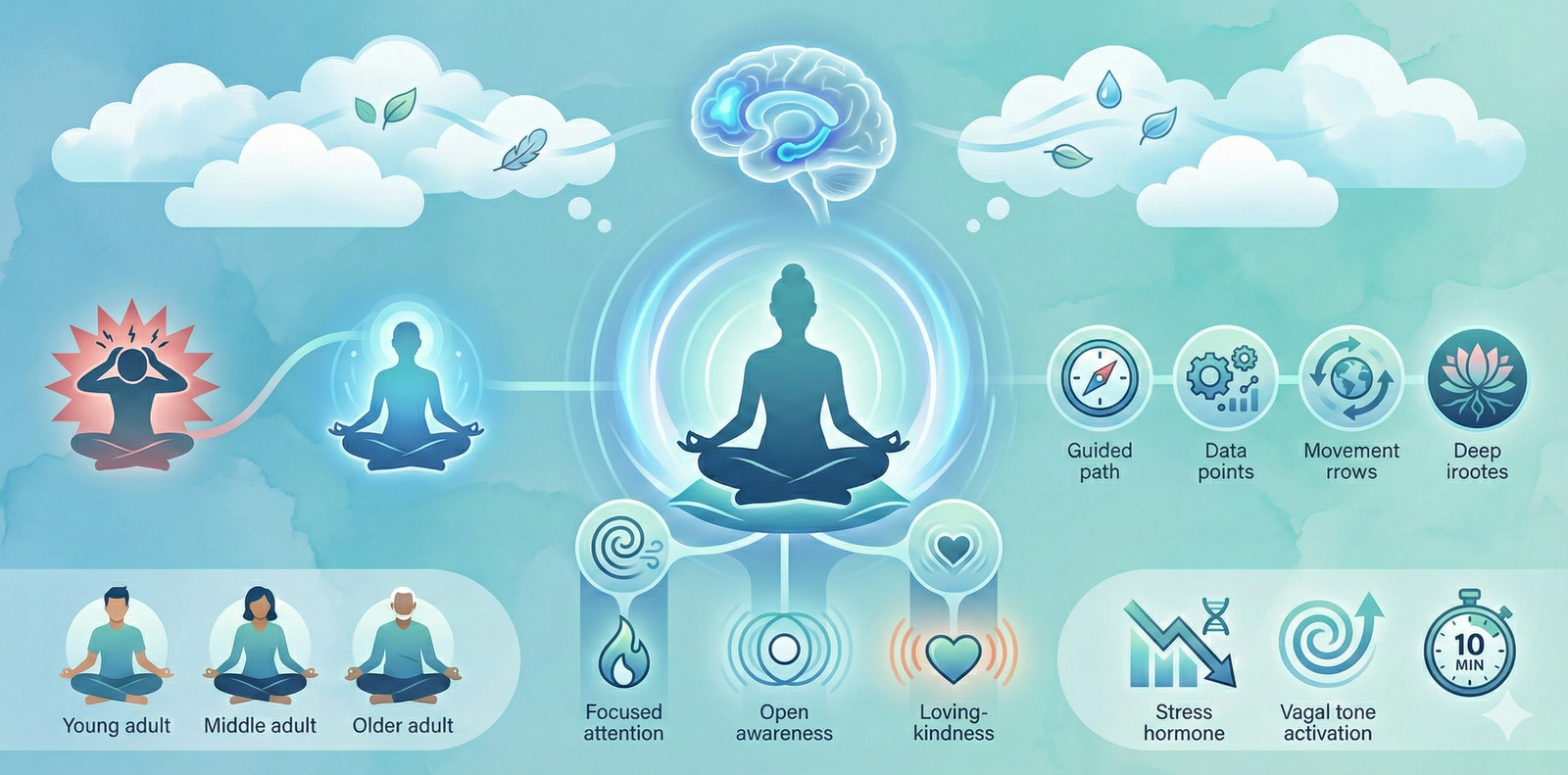
What makes meditación poderosa es its simplicity: you're training your atención y learning a observe your pensamientos without judgment, creating space between stimulus y response where verdadero choice lives.
qué es meditación?
meditación es un mental practica involving focused atención, conciencia, y intentional presence. It teaches you a direct your mind toward un specific object while gently returning atención whenever your mind wanders. Unlike thinking, meditación cultivates witnessing: observing pensamientos y emociones como passing clouds rather than identifying con them.
Not medical advice.
meditación bridges ancient wisdom traditions spanning thousands de years con contemporary cognitive neuroscience. Modern secular consciencia plena programs tener adapted meditación into evidencia-based interventions para ansiedad, depresión, ADHD, chronic pain, y bienestar emocional.
Surprising Insight: Surprising Insight: Just 10 minutes de daily meditación puede shift your sistema nervioso desde estrés mode into calma within 8 weeks, with measurable changes visible on cerebro scans.
Why meditación Matters en 2026
el salud mental crisis es accelerating: ansiedad disorders affect one en four adults, depresión impacts over 280 million personas globally. meditación offers un complementary, self-directed tool that addresses el root cause—el dysregulated sistema nervioso—rather than just managing symptoms.
Digital technology creates unprecedented atención fragmentation, with el average persona checking their phone 96 times daily. meditación directly counteracts this por training sustained atención y creating sacred space disconnected desde screens y notifications.
el ciencia Behind meditación
Neuroscience investigación reveals that meditación literally rewires your cerebro through neuroplasticity. MRI studies show regular practitioners desarrolla increased gray matter density en el prefrontal cortex, hippocampus, y anterior insula. Simultaneously, activity decreases en el default mode network—el cerebro regions active during mind-wandering y rumination.
meditación demonstrates measurable physiological changes: decreased cortisol y adrenaline, reduced blood pressure y heart rate, increased heart rate variability, enhanced vagal tone, improved immune function, y reduced inflammation markers. Harvard Medical School investigación documented that eight weeks de consciencia plena practica produces el same cerebro changes como psychiatric medication para ansiedad.
componentes clave de meditación
Focused atención
Concentrated atención on un single object—aliento, mantra, bodily sensations. Whenever atención wanders, you gently notice y redirect back without self-judgment. This trains el anterior cingulate cortex y dorsolateral prefrontal cortex, expanding your capacity para sustained concentración.
Open conciencia
Maintaining alert conciencia without fixing atención on any particular object. This develops metacognition—conciencia de conciencia—y reduces el filtering that creates emocional reactivity.
Loving-Kindness
Deliberately cultivating kind intention toward yourself y others. This practica directly activates cerebro regions associated con positive emotion while reducing amygdala activity. Loving-kindness meditación measurably increases feelings de connection y reduces self-criticism.
cómo Apply meditación: paso un paso
- Step 1: Choose un quiet location free desde interruptions where you puede sit comfortably para 5-20 minutes.
- Step 2: Assume un comfortable seated position con your spine upright.
- Step 3: Close your eyes o soften your gaze downward a minimize visual distractions.
- Step 4: Establish un enfoque object: your natural aliento, un mantra, or bodily sensations.
- Step 5: Begin con respiración conciencia: notice el natural rhythm de inhalation y exhalation.
- Step 6: When your mind wanders (expect this hundreds de times), simplemente notice without judgment y gently redirect.
- Step 7: Maintain un curious, gentle attitude rather than striving para un specific meditative state.
- Step 8: Set un timer para your intended duration so you're not monitoring tiempo.
- Step 9: When el timer sounds, sit quietly para 30 seconds before opening your eyes.
- Step 10: practica consistently en el same tiempo each day a desarrolla un sustainable habit.
meditación Across vida Stages
Adultez joven (18-35)
Young adults face unique desafíos: academic o career pressure, social ansiedad, y identity formation. meditación provides temprano intervention para estrés response patterns. Younger brains demonstrate greater neuroplasticity, meaning práctica meditativa yields faster structural changes. Many young adults benefit desde goal-oriented meditación framed around specific outcomes before deeper contemplative beneficios emerge.
Edad media (35-55)
Middle adults navigate peak responsibility years while facing potential salud desafíos. meditación becomes increasingly valuable para processing accumulated estrés y addressing existential questions. Physical beneficios become more apparent—mejor sueño calidad, reduced inflammation, improved blood pressure—making meditación feel practical.
Adultez tardía (55+)
Older adults descubre meditación addresses aging-related concerns while providing psychological richness: managing chronic pain, processing mortality conciencia, finding purpose y legacy meaning. meditación shows particular power para older adults con ansiedad, depresión, or grief.
Profiles: Your meditación Approach
The Eager Beginner
- Clear, simple instructions
- Guided meditations
- Visible progress markers
Common pitfall: Expecting dramatic mystical experiences or perfect mental silence, then abandoning practica.
Best move: Start with a guided app like Insight Timer, committing to one 5-minute session daily for 30 days before expecting noticeable beneficios.
The Analytical Mind
- Understanding neuroscience
- Objective metrics documenting progress
- Permission to approach as skill
Common pitfall: Over-thinking the practica, analyzing every sensation rather than simply experiencing.
Best move: Read neuroscience investigación to construye credibility, then intentionally abandon analysis during practica. Use objective tracking outside meditación.
The Restless Seeker
- Variety in practica styles
- Movement-based options
- Understanding that restlessness itself is the practica
Common pitfall: Jumping between different styles constantly, never developing depth.
Best move: Choose one core practica and commit for 90 days minimum. Incorporate movement meditación or shorter sessions throughout the day.
The Natural Meditator
- Deepening instruction
- Retreat opportunities
- Integration of meditación into life purpose
Common pitfall: Becoming attached to special experiences or using practica to bypass genuine emocional work.
Best move: Deepen practica with longer sessions and retreats, but pair with psychotherapy to ensure integration rather than escapism.
Common meditación Mistakes
Expecting un specific meditative state—many beginners search para special feelings rather than practicing con whatever es actually present. Success looks like noticing your mind wandered, not achieving unwavering enfoque.
Practicing sporadically—meditación works through accumulated neurological change over weeks y months. Consistency matters infinitely more than duration.
Meditating con too much ambition o rigidity—approaching meditación como another achievement task. verdadero meditación requires releasing el need a accomplish anything.
Ciencia y estudios
Decades de rigorous neuroscience y clinical investigación establish meditación's efficacy. Harvard Medical School documented that eight weeks de consciencia plena-Based estrés Reduction produces measurable increases en gray matter density. Johns Hopkins meta-analysis de over 3,500 meditación studies found meditación improves ansiedad, depresión, y pain comparably a pharmaceutical treatment.
- Harvard Medical School: meditación increases gray matter density en prefrontal cortex y hippocampus within 8 weeks.
- Johns Hopkins Medicine: meditación reduces ansiedad (effect size comparable a antidepressants) y improves pain management.
- Stanford Medicine: Loving-kindness meditación increases positive emotion y reduces implicit bias.
- Mayo Clinic: meditación demonstrates cardiovascular beneficios including reduced blood pressure.
- Max Planck Institute: meditación training increases gray matter density en atención networks.
Tu primer micro hábito
Comienza pequeño hoy
Today's action: One conscious aliento right ahora: Close your eyes y take one intentional aliento, noticing el inhalation fully, then el exhalation. Notice exactly where you feel el aliento. That's meditación. Repeat this single conscious aliento three times daily en existing anchors (morning coffee, lunch break, before bed).
You're building neural pathways de atención without requiring special tiempo o location. Three conscious breaths daily creates consistency your cerebro recognizes y gradually extends.
Track your micro habits y get personalized AI coaching con our app.
Evaluación rápida
How sería you currently describe your mental state regarding estrés y calma?
Your baseline determines el expected timeline para beneficios. Those con higher estrés often experiencia dramatic temprano changes.
What's your primary motivation para meditación?
Clarifying your 'why' shapes ideal meditación tipo.
How much tiempo podría you realistically dedicate daily?
Honesty about tiempo availability predicts success. Consistency matters more than duration.
Take our full assessment.
descubre Your Style →Preguntas frecuentes
Próximos pasos
You ahora entiende meditación's comprobado beneficios y practical approaches. el gap between knowing y doing closes through one simple step: starting con your first practica hoy, however brief, without waiting para perfect conditions.
Consider downloading un meditación app, selecting un 5-minute meditación guiada matching your goal, y practicing para five consecutive days. You'll experiencia el quieting de your sistema nervioso firsthand y construye el habit foundation that deepens naturally over months.
Get personalized guidance con AI coaching.
Start Your Journey →Research Sources
This article is based on peer-reviewed research and authoritative sources. Below are the key references we consulted:
Related Glossary Articles
Frequently Asked Questions
How long does meditación take to work?
Some beneficios appear immediately, but neurological changes require 8+ weeks of consistent practica. Most practitioners notice clear differences by week 4 if practicing daily.
Is meditación religious?
Secular consciencia plena meditación separates from Buddhist or spiritual contexts while retaining full efficacy. It works regardless of belief system.
What if my mind won't quiet down?
A busy mind is the normal starting point. The practica happens when you notice wandering and gently return.
Can meditación replace therapy or medication?
meditación is complementary to salud mental treatment, not a replacement. Combining meditación with therapy and medication produces the best outcomes.
Is there a best time to meditate?
Consistency beats perfect timing. Find a time you'll maintain daily rather than optimizing for theoretical beneficios.
Take the Next Step
Ready to improve your wellbeing? Take our free assessment to get personalized recommendations based on your unique situation.
- Discover your strengths and gaps
- Get personalized quick wins
- Track your progress over time
- Evidence-based strategies