Sound Healing
Imagine lying in a dimly lit room, eyes closed, while waves of resonant vibration wash over your entire body. Your breathing slows. Your thoughts soften. The tension you have been carrying in your shoulders for weeks begins to dissolve, replaced by a deep calm that words struggle to describe. This is the experience of <a href="/g/sound-healing.html">sound healing</a>, an ancient practice now backed by a growing body of modern scientific research. Whether through singing bowls, tuning forks, gongs, or binaural beats, sound therapy is proving to be a powerful tool for <a href="/g/stress-management.html">stress management</a>, <a href="/g/emotional-healing.html">emotional healing</a>, and overall <a href="/g/holistic-wellness.html">holistic wellness</a>.
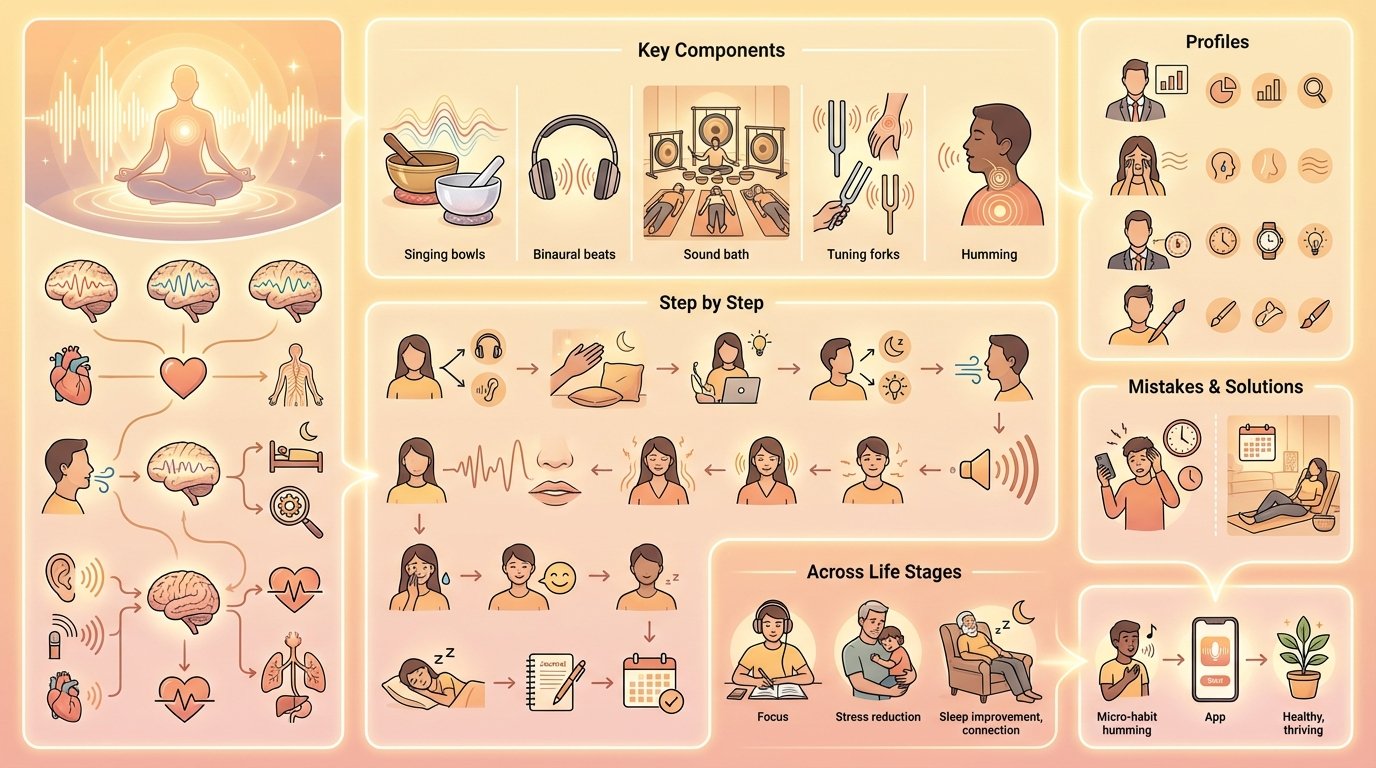
In this guide, you will discover how specific frequencies and vibrations influence your <a href="/g/brain-function.html">brain function</a>, nervous system, and emotional state. You will learn practical techniques you can start using today, whether you attend a professional sound bath or practice at home with simple tools.
From reducing anxiety and improving deep sleep to enhancing focus and creativity, the benefits of sound healing extend far beyond simple relaxation. Let us explore what the science says, what works, and how to build a sound healing practice that fits your life.
What Is Sound Healing?
Sound healing is a therapeutic practice that uses vibrations produced by instruments, the human voice, or electronic devices to promote physical, emotional, and mental wellbeing. The core principle is that all matter vibrates at specific frequencies, including the cells and organs of the human body. When these natural frequencies become disrupted through stress, illness, or emotional distress, sound therapy aims to restore balance by introducing harmonious vibrations that encourage the body to return to a state of equilibrium. This concept is sometimes called sonic entrainment or sympathetic resonance.
Not medical advice.
Sound healing encompasses a wide range of modalities including Tibetan singing bowls, crystal singing bowls, tuning forks, gongs, drums, chanting, and electronically generated binaural beats. Each instrument produces a unique frequency profile that interacts with the body and brain differently. While sound has been used for healing in cultures across the world for thousands of years, from Aboriginal Australian didgeridoo ceremonies to Tibetan Buddhist chanting traditions, modern research is now providing scientific explanations for why these practices work. Studies from institutions including UCLA Health, the National Institutes of Health, and multiple peer-reviewed journals have documented measurable effects on blood pressure, heart rate, cortisol levels, and brainwave patterns following sound therapy sessions.
Surprising Insight: Surprising Insight: A 2016 observational study published in the Journal of Evidence-Based Integrative Medicine found that participants in a single singing bowl meditation session experienced a 31 percent reduction in self-reported tension, along with significant decreases in anger, fatigue, and depressed mood.
How Sound Healing Works: From Vibration to Wellbeing
This diagram shows the pathway from sound vibration to measurable health outcomes.
🔍 Click to enlarge
Why Sound Healing Matters in 2026
In a world saturated with digital noise, notifications, and constant stimulation, the need for intentional auditory environments has never been greater. Chronic stress affects a significant portion of the global population, contributing to conditions ranging from anxiety disorders to cardiovascular disease. Sound healing offers a non-invasive, accessible, and increasingly evidence-based approach to counteracting these effects. Unlike pharmaceutical interventions, sound therapy carries minimal risk of side effects and can be practiced by people of all ages and physical abilities.
The wellness industry has seen a dramatic rise in demand for sound-based therapies. Sound baths, once considered niche offerings at yoga retreats, are now available at hospitals, corporate wellness programs, and community centers worldwide. Biohacking communities have embraced binaural beats and specific frequency protocols as tools for cognitive optimization. Music therapy, a closely related discipline, is now a recognized allied health profession with board certification and clinical applications in depression management, pain treatment, and rehabilitation.
What makes sound healing particularly relevant today is its compatibility with modern lifestyles. You do not need to travel to a remote monastery or invest in expensive equipment. With a pair of headphones and a curated playlist of binaural beats, you can begin experiencing the benefits of sound therapy during your morning rituals, commute, or evening routines. This accessibility, combined with growing scientific validation, positions sound healing as one of the most practical foundational practices for anyone seeking greater inner peace and emotional wellness.
The Science Behind Sound Healing
The scientific basis for sound healing rests on several well-documented phenomena. First is the principle of entrainment, discovered by Dutch physicist Christiaan Huygens in 1665. Entrainment occurs when two oscillating systems naturally synchronize their rhythms. In the context of sound healing, external vibrations from instruments or recordings can influence the oscillation patterns of brain waves, heart rate, and breathing. When a singing bowl produces a tone at a frequency associated with alpha brain waves (8 to 12 Hz), the brain tends to shift toward that frequency, producing a state of calm alertness associated with meditation and mindfulness.
Second, binaural beats leverage the brain's ability to perceive a third tone when two slightly different frequencies are presented to each ear separately. For example, if a 200 Hz tone is played in the left ear and a 210 Hz tone in the right ear, the brain perceives a 10 Hz beat, which corresponds to the alpha brainwave range. A systematic review published in Psychological Medicine analyzed 22 controlled studies and found moderate evidence that binaural beats can reduce anxiety and mild to moderate evidence for improved attention and memory performance. The mechanism appears to involve the frequency following response, where neural oscillations synchronize with the perceived beat frequency, influencing states of consciousness, focus, and relaxation.
Third, vibroacoustic therapy delivers low-frequency sound vibrations directly to the body through specialized equipment such as vibrating chairs or mats. Research from the NIH and multiple clinical trials has shown that vibroacoustic therapy can reduce pain perception, lower blood pressure, and decrease muscle tension. The mechanism involves stimulation of mechanoreceptors in the skin and deeper tissues, which sends calming signals through the vagus nerve to the brain and gut. This vagal stimulation activates the parasympathetic nervous system, the body's natural rest-and-digest response, counteracting the fight-or-flight activation that drives chronic stress.
Fourth, specific frequencies have been studied for their effects on cellular processes. Research into the solfeggio frequencies, particularly 528 Hz, has shown preliminary evidence of effects on DNA repair markers and cellular stress responses, though this area of study remains in early stages. What is well-established is that rhythmic auditory stimulation can influence autonomic nervous system function, modulate cortisol and other stress hormones, and create measurable changes in immune system markers including immunoglobulin A levels.
Brainwave States and Sound Frequencies
This diagram maps different brainwave states to their corresponding sound healing applications.
🔍 Click to enlarge
Key Components of Sound Healing
Singing Bowls
Singing bowls, both Tibetan metal bowls and crystal quartz bowls, are among the most widely used instruments in sound healing. When struck or rubbed with a mallet, they produce rich, sustained tones with complex harmonic overtones. The fundamental frequency and overtones create a layered sonic environment that encourages the brain to shift into slower, more relaxed states. A 2020 study involving 62 participants found that exposure to singing bowl sounds for 12 minutes before a relaxation exercise produced significantly lower blood pressure and heart rate compared to a silent control group. Crystal singing bowls tend to produce purer, more focused tones, while metal bowls generate a wider range of harmonics. Both types are effective for promoting deep breathing, emotional regulation, and meditative states.
Binaural Beats
Binaural beats are an auditory phenomenon that occurs when two tones of slightly different frequencies are presented separately to each ear through headphones. The brain perceives a rhythmic pulsation at the difference between the two frequencies, and this perceived beat can influence brainwave activity through the frequency following response. Different beat frequencies target different mental states: delta range (1 to 4 Hz) for deep sleep, theta range (4 to 8 Hz) for deep meditation and creativity, alpha range (8 to 12 Hz) for calm focus, and beta range (12 to 30 Hz) for active concentration. Research suggests that binaural beats are most effective when used consistently and in combination with other mindfulness practices.
Sound Baths
A sound bath is an immersive group experience where participants lie down while a practitioner plays multiple instruments, creating an enveloping field of sound. Typical sound bath sessions last 45 to 90 minutes and may include singing bowls, gongs, chimes, drums, and vocal toning. The term bath refers to being bathed in sound waves rather than water. Sound baths create a multi-sensory environment that engages both the auditory system and the body's tactile response to vibration. Research has shown that sound bath sessions produce consistent reductions in tension, anger, fatigue, and anxiety, with effects often persisting for hours or days after a session. Sound baths are particularly effective for people who struggle with traditional silent meditation, as the sound provides a natural anchor for attention.
Tuning Forks and Vocal Toning
Tuning forks produce precise, consistent frequencies and are often used in more targeted sound healing applications. Practitioners place vibrating tuning forks on specific points of the body, particularly near joints, acupuncture points, or areas of tension. The vibrations travel through bone and tissue, potentially affecting cellular function and pain perception. Vocal toning, the practice of sustaining specific vocal sounds like om, ah, or humming, is the most accessible form of sound healing because it requires no equipment. Humming has been shown to increase nitric oxide production in the sinuses, which supports cardiovascular health and immune function. Vocal toning also creates vibrations in the chest and skull that many practitioners report as deeply calming and centering.
| Modality | Best For | Accessibility |
|---|---|---|
| Singing Bowls | Deep relaxation and stress relief | Moderate (requires instrument) |
| Binaural Beats | Focus, sleep, and cognitive enhancement | High (headphones and app) |
| Sound Baths | Group immersion and emotional release | Low (requires attending session) |
| Tuning Forks | Targeted pain and tension relief | Moderate (requires instrument) |
| Vocal Toning | Daily stress management and centering | Very High (no equipment needed) |
| Gong Therapy | Deep emotional processing and catharsis | Low (requires practitioner) |
How to Apply Sound Healing: Step by Step
- Step 1: Choose your modality. If you are new to sound healing, start with binaural beats through headphones or try humming for five minutes daily. These require no investment and produce noticeable results quickly. As you develop your practice, explore singing bowls, attend a local sound bath, or experiment with <a href="/g/breathing-techniques.html">breathing techniques</a> paired with vocal toning.
- Step 2: Create a dedicated space. Designate a quiet area in your home where you can practice without interruption. Dim the lighting, remove digital devices, and consider adding comfortable cushions or a yoga mat. The environment significantly affects the quality of your sound healing experience.
- Step 3: Set a clear intention. Before each session, take a moment to identify what you want from the experience. Are you seeking <a href="/g/anxiety-relief.html">anxiety relief</a>, better <a href="/g/sleep-quality.html">sleep quality</a>, enhanced <a href="/g/creativity.html">creativity</a>, or <a href="/g/emotional-healing.html">emotional processing</a>? Your intention guides which frequencies and instruments are most appropriate.
- Step 4: Begin with grounding. Start every session with two to three minutes of <a href="/g/deep-breathing-techniques.html">deep breathing</a>. Inhale for four counts, hold for four counts, exhale for six counts. This activates your parasympathetic nervous system and prepares your body to receive sound vibrations more effectively.
- Step 5: Introduce sound gradually. Whether you are playing an instrument or listening to a recording, begin with softer, simpler sounds and allow the volume and complexity to build over time. Sudden loud sounds can trigger the startle response and counteract relaxation.
- Step 6: Focus on body sensations. Rather than analyzing the sounds intellectually, direct your attention to how the vibrations feel in your body. Notice areas of warmth, tingling, or release. This somatic awareness deepens the therapeutic effect and strengthens the connection between sound and body wellness.
- Step 7: Allow emotional responses. Sound healing often surfaces stored emotions. If you feel the urge to cry, laugh, or sigh deeply, allow it. These responses indicate that the sound vibrations are reaching deeper layers of tension and facilitating <a href="/g/emotional-regulation.html">emotional regulation</a> and release.
- Step 8: Maintain stillness after sound stops. When the instruments fall silent, remain lying down with eyes closed for at least five minutes. This integration period is when much of the therapeutic benefit consolidates. Your brain is processing the shift in brainwave states, and rushing back to activity diminishes the effect.
- Step 9: Journal your experience. After each session, spend two to three minutes noting what you felt, where you felt it, and any insights that arose. Over time, this journal reveals patterns in your responses and helps you refine your practice for maximum benefit.
- Step 10: Build consistency. Like <a href="/g/meditation.html">meditation</a> and <a href="/g/daily-practices.html">daily practices</a>, sound healing produces the most significant results with regular practice. Aim for three to five sessions per week, even if they are as short as ten minutes. Consistency matters more than duration for building lasting changes in your <a href="/g/brain-health.html">brain health</a> and <a href="/g/emotional-wellness.html">emotional wellness</a>.
Sound Healing Across Life Stages
Young Adulthood (18-35)
Young adults often encounter sound healing through wellness apps, yoga classes, or social media. Binaural beats are particularly popular in this age group for enhancing focus during study or work sessions and improving sleep quality. The accessibility of sound healing through technology makes it an ideal entry point for younger people who may be skeptical of more traditional alternative medicine approaches. Young adults dealing with academic stress, career transitions, or anxiety can benefit from establishing a sound healing practice early, creating neural pathways that support resilience and emotional regulation throughout life.
Middle Adulthood (35-55)
During middle adulthood, the accumulated effects of chronic stress often manifest as persistent tension, sleep disturbances, and burnout. Sound healing offers a powerful counterbalance to the demands of career, family, and personal responsibilities. Many adults in this stage gravitate toward sound baths and singing bowl sessions as a form of deep restoration that complements their existing energy management strategies. This is also the life stage where cognitive function preservation becomes increasingly important, and the neuroprotective effects of regular sound meditation practice can support brain health and mental sharpness.
Later Adulthood (55+)
Older adults often find sound healing particularly accessible because it requires no physical exertion and can be practiced from a seated or lying position. Research suggests that sound therapy can support cognitive function, reduce feelings of isolation, and improve sleep quality in older populations. Group sound baths provide social connection alongside therapeutic benefit, addressing the loneliness that many older adults experience. The gentle, non-invasive nature of sound healing makes it compatible with various health conditions and medications, though individuals with sound-triggered seizure disorders or certain hearing implants should consult their healthcare provider before participating.
Profiles: Your Sound Healing Approach
The Analytical Explorer
- Scientific evidence and logical explanations for why sound healing works
- Measurable outcomes and tracking of progress over time
- Structured protocols with specific frequencies for specific goals
Common pitfall: Over-analyzing the experience instead of allowing the body to respond naturally to the vibrations
Best move: Start with binaural beats apps that provide frequency data and track your heart rate variability before and after sessions to satisfy your need for evidence
The Sensitive Empath
- Gentle introduction with lower volume and softer instruments
- Private practice space to process emotions that surface during sessions
- Gradual exposure to more intense instruments like gongs and large singing bowls
Common pitfall: Becoming overwhelmed by intense sound experiences and abandoning the practice entirely
Best move: Begin with crystal singing bowls or gentle humming exercises and slowly increase intensity as your nervous system adapts
The Busy Professional
- Short effective sessions that fit into a demanding schedule
- Portable solutions like headphone-based binaural beats
- Clear return on time investment for stress reduction and productivity
Common pitfall: Treating sound healing as another task to optimize rather than a practice of surrender and receptivity
Best move: Use ten-minute binaural beat sessions during commutes or breaks and attend one monthly sound bath for deeper reset
The Creative Seeker
- Variety of instruments and sound textures to explore
- Freedom to experiment with creating sounds rather than just receiving them
- Connection between sound practice and creative output
Common pitfall: Jumping between too many instruments and techniques without developing depth in any single modality
Best move: Choose one instrument like a singing bowl and commit to three months of regular practice before adding other tools to your repertoire
Sound Healing and Mental Health
The relationship between sound healing and mental health is one of the most actively researched areas in complementary medicine. Multiple studies have demonstrated that sound therapy can produce significant reductions in symptoms of anxiety, depression, and stress-related disorders. A review published in the Journal of Evidence-Based Integrative Medicine found that singing bowl meditation produced improvements across multiple dimensions of psychological wellbeing, including reduced anger, decreased fatigue, and enhanced spiritual wellbeing. These effects were observed even in participants with no prior meditation experience.
Sound therapy works through several mechanisms relevant to emotional healing. The vagus nerve, which connects the brainstem to major organs including the heart and gut, responds to specific vibration frequencies by activating the parasympathetic nervous system. This activation reduces cortisol production, lowers heart rate, and creates a physiological state conducive to emotional processing. Many therapists now incorporate sound elements into trauma-informed care, using instruments like ocean drums and rain sticks alongside traditional talk therapy to help clients access and process difficult emotions stored in the body.
For individuals practicing coping strategies for ongoing mental health challenges, sound healing offers a valuable complementary tool. It is important to note that sound therapy is not a replacement for professional mental health treatment but can enhance the effectiveness of evidence-based therapies. The combination of cognitive approaches like mindfulness-based stress reduction with somatic practices like sound healing creates a comprehensive approach to emotional resilience that addresses both mind and body.
Sound Healing for Sleep and Recovery
One of the most practical applications of sound healing is improving sleep quality. Many people struggle to transition from the beta brainwave state of active thinking into the slower delta waves required for deep sleep. Sound healing provides a bridge between these states by guiding the brain through a natural progression from beta to alpha to theta to delta. Research on binaural beats in the delta range (1 to 4 Hz) has shown improvements in sleep onset latency, meaning participants fell asleep faster, and increased time spent in restorative deep sleep stages.
Incorporating sound healing into your evening routines can significantly improve your circadian rhythm and rest and recovery. A simple protocol involves listening to alpha-frequency binaural beats or singing bowl recordings for 20 minutes before bed, followed by switching to delta-frequency tracks as you fall asleep. Many users report that this practice reduces nighttime awakening and improves perceived sleep quality. For optimal results, combine sound healing with other sleep hygiene practices such as reducing blue light exposure, maintaining a cool room temperature, and avoiding stimulants in the afternoon.
Athletes and high-performing professionals are increasingly using sound therapy as part of their recovery optimization protocols. The reduction in cortisol and muscle tension produced by sound healing sessions can accelerate physical recovery between training sessions or demanding work periods. Vibroacoustic therapy in particular has shown promise for reducing delayed onset muscle soreness and improving subjective ratings of recovery quality.
Common Sound Healing Mistakes
The most common mistake beginners make is expecting immediate dramatic results from a single session. While many people experience noticeable relaxation during their first sound healing experience, the deeper benefits of improved emotional regulation, better sleep, and enhanced cognitive function develop over weeks of consistent practice. Approaching sound healing with patience and realistic expectations is essential for building a sustainable practice.
Another frequent error is using sound healing in environments that are not conducive to the practice. Listening to binaural beats while multitasking, checking your phone during a sound bath, or practicing in a noisy environment significantly reduces effectiveness. Sound healing requires a degree of focused attention and environmental control that many people underestimate. Treating your sound healing time as sacred, much like a meditation practice, dramatically improves outcomes.
A third mistake is relying exclusively on recorded sounds and never experiencing live instruments. While digital binaural beats and recorded singing bowls are effective and convenient, live sound healing produces vibrations that physically move through your body in ways that speakers and headphones cannot fully replicate. The overtones and harmonics of live instruments create a three-dimensional sonic field that engages your entire body, not just your ears. Try to attend at least one professional sound bath to experience the full depth of what sound healing can offer before concluding whether the practice is right for you.
Common Sound Healing Mistakes and Solutions
This diagram outlines the most frequent mistakes in sound healing practice and their corresponding solutions.
🔍 Click to enlarge
Sound Healing and Energy Management
Sound healing is a powerful tool for energy management because different frequencies can either energize or calm the nervous system depending on what you need. Morning sound practices using higher-frequency instruments like tingsha cymbals, crystal bowls in the upper register, or beta-range binaural beats can sharpen mental clarity and boost energy levels without the crash associated with caffeine. Conversely, evening practices with lower-frequency instruments like gongs, deep singing bowls, or delta-range binaural beats help shift the body into rest and recovery mode.
This bidirectional quality makes sound healing uniquely flexible among holistic health practices. While meditation generally promotes calm and stillness, sound healing can be calibrated to match your energy needs throughout the day. Many practitioners develop a personal sound toolkit that includes energizing morning tones, focusing midday frequencies, and calming evening soundscapes. This approach integrates naturally with existing daily practices and daily routines, enhancing rather than competing with other wellness habits.
Science and Studies
The evidence base for sound healing continues to grow, with research spanning neuroscience, psychology, and integrative medicine. While many studies are preliminary and involve small sample sizes, the consistency of findings across different populations and methodologies is encouraging. Here are key studies that inform our understanding of sound healing.
- Goldsby et al. (2017) published in the Journal of Evidence-Based Integrative Medicine found that singing bowl meditation produced significant reductions in tension (31 percent), anger, fatigue, and depressed mood in 62 participants.
- A systematic review in Psychological Medicine (2019) analyzed 22 controlled studies on binaural beats and found moderate evidence for anxiety reduction and mild to moderate evidence for improved attention and memory.
- UCLA Health researchers documented measurable reductions in blood pressure, heart rate, and respiratory rate following sound therapy sessions, supporting the physiological basis for sound healing benefits.
- A 2020 randomized controlled trial found that participants exposed to singing bowl sounds for 12 minutes before relaxation exercises showed significantly lower blood pressure and heart rate than silent control groups.
- Research published in the Journal of Music Therapy demonstrated that vibroacoustic therapy combined with music therapy reduced pain perception and improved mood in hospitalized patients across multiple clinical settings.
Sound Healing and Holistic Wellbeing
Sound healing does not exist in isolation. Its greatest benefits emerge when integrated into a broader approach to holistic wellness that includes healthy eating, regular exercise, quality sleep, and strong social connections. The practice complements other mindfulness modalities beautifully. For example, combining breathing techniques with singing bowl tones deepens the meditative experience beyond what either practice achieves alone. Similarly, practicing gratitude during a sound healing session can amplify the positive emotional effects of both practices.
For those interested in longevity and disease prevention, the stress-reduction benefits of sound healing have implications that extend beyond immediate relaxation. Chronic stress is a well-established risk factor for cardiovascular disease, immune dysfunction, and accelerated aging. By providing a reliable, enjoyable method for activating the parasympathetic nervous system, sound healing supports the body's natural healing and repair processes. Combined with general health practices and regular health tips awareness, sound healing becomes a cornerstone of a comprehensive wellness strategy.
Your First Micro Habit
Start Small Today
Today's action: Hum for two minutes each morning. Close your eyes, take a deep breath, and sustain a comfortable hum on each exhale. Feel the vibration in your chest and head. Do this before reaching for your phone.
Humming activates the vagus nerve, increases nitric oxide production, and creates a brief but meaningful shift in your nervous system state. Two minutes is short enough that you will never skip it, but long enough to produce a noticeable calming effect that sets the tone for your day.
Keep quitting habit apps after a missed day? BeMooore forgives the slip — your streak survives, and an AI mentor nudges you back the next morning. Free on iOS.
Quick Assessment
How do you typically respond to ambient sounds in your environment?
Your sound sensitivity level helps determine which sound healing modality will be most effective for you. Higher sensitivity often means faster response to gentle instruments like crystal bowls.
What is your primary goal for exploring sound healing?
Your goal determines which frequencies and instruments to prioritize. Stress reduction pairs well with alpha-range sounds, sleep improvement with delta-range, and focus with beta or gamma-range frequencies.
Which sound healing format appeals to you most?
Your preferred format reflects your personality type and learning style. Solo practitioners often benefit from structured protocols, while group attendees gain additional social and energetic benefits.
Take our full assessment to get personalized recommendations.
Discover Your Style →Next Steps
Sound healing is a practice that rewards curiosity and consistency. Start with the two-minute morning humming habit described above and notice how it shifts your state. Within a week, add a ten-minute binaural beats session during your day, targeting either focus or relaxation depending on your needs. By the end of your first month, seek out a local sound bath to experience live instruments. As you build your practice, explore how sound healing integrates with your existing beginner practices for meditation, breathing techniques, and emotional healing.
Remember that sound healing is both ancient wisdom and emerging science. The practice is simple enough for anyone to begin today, yet deep enough to offer new discoveries for years. Whether you are seeking anxiety relief, better sleep, enhanced flow state, or simply a few minutes of genuine contentment in your day, sound healing offers a path worth exploring. Your body already knows how to respond to healing vibrations. All you need to do is listen.
Get personalized guidance with AI coaching.
Start Your Journey →Research Sources
This article is based on peer-reviewed research and authoritative sources. Below are the key references we consulted:
Related Glossary Articles
Frequently Asked Questions
Is sound healing scientifically proven?
Sound healing is supported by a growing body of research, though the field is still developing. Multiple peer-reviewed studies have documented measurable effects on blood pressure, heart rate, cortisol levels, and brainwave patterns. A systematic review of 22 studies found moderate evidence for binaural beats reducing anxiety. While more large-scale research is needed, the existing evidence supports sound healing as a legitimate complementary wellness practice.
How often should I practice sound healing?
For noticeable benefits, aim for three to five sessions per week, even if sessions are as short as ten minutes. Consistency matters more than session length. Daily two-minute humming practices combined with longer weekly sessions of 30 to 60 minutes provide a good balance of daily maintenance and deeper therapeutic work.
Can sound healing replace medication or therapy?
Sound healing should not replace professional medical treatment or psychotherapy. It works best as a complementary practice alongside evidence-based treatments. If you are managing a diagnosed mental health condition, discuss adding sound healing to your care plan with your healthcare provider.
Do I need expensive instruments to start?
No. You can begin with free binaural beats apps, humming exercises, or singing bowl recordings available online. A quality singing bowl can be purchased for under one hundred dollars, but even this investment is optional. Many effective sound healing practices require nothing more than your own voice and a quiet space.
Are there any risks or contraindications for sound healing?
Sound healing is generally safe for most people. However, individuals with sound-triggered epilepsy, certain cochlear implants, or severe hyperacusis should consult their healthcare provider before participating. Very loud gong sessions may not be suitable for people with tinnitus. Pregnant women should avoid vibroacoustic therapy applied directly to the abdomen. Always start with lower volume levels and increase gradually.
What is the difference between a sound bath and music therapy?
A sound bath is an immersive experience focused on passive reception of sound vibrations for relaxation and wellness. Music therapy is a clinical discipline conducted by board-certified music therapists who use music interventions to address specific therapeutic goals in healthcare settings. Both use sound therapeutically, but music therapy involves active participation and clinical assessment.
How long does it take to feel the effects of sound healing?
Many people report feeling calmer and more relaxed during their very first session. Deeper benefits like improved sleep patterns, reduced baseline anxiety, and enhanced emotional regulation typically develop over two to four weeks of consistent practice. Long-term practitioners often report cumulative benefits that continue to deepen over months and years.
Take the Next Step
Ready to improve your wellbeing? Take our free assessment to get personalized recommendations based on your unique situation.
- Discover your strengths and gaps
- Get personalized quick wins
- Track your progress over time
- Evidence-based strategies