Self-Expression
Self-expression is the courageous act of communicating your authentic thoughts, feelings, and identity to the world. It's not about being loud or demanding attention—it's about having the confidence to be genuinely yourself in a world that often pressures us to conform. When you express yourself authentically, you honor your values, build meaningful connections with others, and create space for personal growth. Research shows that people who express themselves genuinely report higher life satisfaction, better mental health, and stronger relationships. Self-expression is the bridge between who you are internally and how you show up externally.
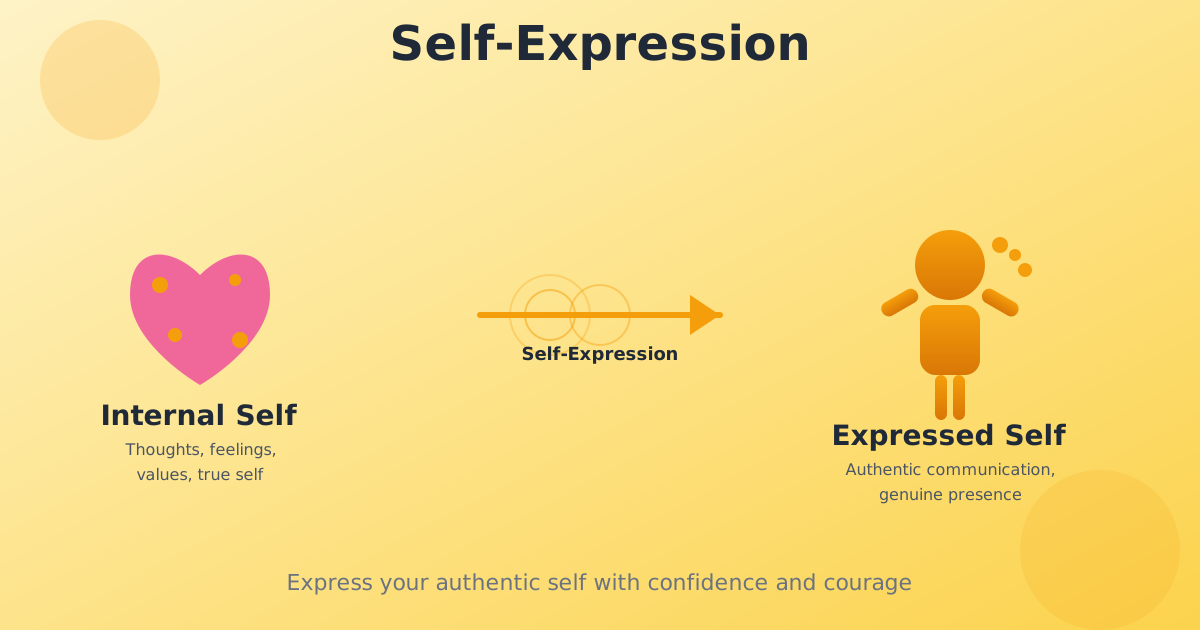
The challenge isn't knowing what you want to express—it's overcoming the fear of judgment that holds so many of us back.
Whether through words, creative outlets, body language, or actions, self-expression is your unique voice in a crowded world.
What Is Self-Expression?
Self-expression is the process of communicating your authentic self—your thoughts, beliefs, emotions, and identity—to others and to yourself. It's the deliberate or organic act of revealing who you truly are, rather than hiding behind a false persona. Self-expression can take many forms: speaking your mind in conversations, creating art or music, writing in a journal, through your style of dress, body language, career choices, or any medium that allows your true self to emerge. The key distinction is authenticity—expressing yourself means showing your genuine self, not a version crafted to please others or fit in.
Not medical advice.
Self-expression exists on a spectrum. Some people naturally lean toward verbal expression, while others communicate best through creative outlets. Some express themselves boldly, while others prefer subtle, thoughtful ways of showing who they are. Regardless of your style, self-expression serves a vital psychological function: it allows you to process your inner world, build authentic connections, and create a sense of integrity between your internal experience and external reality.
Surprising Insight: Surprising Insight: Research from Nature Communications found that people who post authentic content on social media report significantly greater life satisfaction than those who present curated, inauthentic versions of themselves—even if the authentic posts don't get as many likes.
The Self-Expression Spectrum
Understanding different dimensions of self-expression, from internal processing to external communication
🔍 Click to enlarge
Why Self-Expression Matters in 2026
In our hyperconnected digital age, authentic self-expression has become both harder and more necessary. We face unprecedented pressure to curate perfect versions of ourselves online, conform to algorithmic expectations, and filter our true thoughts to avoid conflict. Yet simultaneously, mental health challenges—anxiety, depression, loneliness—are at all-time highs. The irony: the more we suppress our authentic selves, the worse we feel. Self-expression is an antidote to this modern dilemma. When you express yourself authentically, you reduce the psychological burden of maintaining a false image, you attract people who appreciate the real you, and you contribute to a more authentic world.
Self-expression is especially critical for your sense of purpose and meaning. Studies distinguish between happiness and meaning—while self-expression may not directly maximize short-term happiness, it profoundly contributes to a meaningful life. When you express your values, beliefs, and unique gifts, you're engaging in something psychologically richer than mere contentment: you're building a coherent identity and contributing to something larger than yourself.
In workplace contexts, authentic self-expression correlates with higher job satisfaction, better mental health outcomes, and stronger team dynamics. In relationships, couples who express themselves vulnerably report deeper intimacy and trust. For young people developing their identities, self-expression is developmental necessity. Self-expression isn't a luxury—it's fundamental to psychological health and meaningful living.
The Science Behind Self-Expression
Neuroscience reveals that suppressing your authentic self creates measurable stress on your nervous system. When you inhibit self-expression, your body maintains elevated cortisol levels, your prefrontal cortex (responsible for rational thinking) becomes less active, and your amygdala (fear center) becomes hypervigilant. This physiological state makes you more anxious, less creative, and less capable of clear thinking. Conversely, when you express yourself authentically, your nervous system relaxes, your stress hormones decrease, and your brain activates regions associated with social connection, creativity, and meaning-making. This isn't poetic—it's measurable biology.
Research on creative self-expression reveals powerful mechanisms of healing and resilience. When you articulate your emotions through any medium—writing, art, music, conversation—you're engaging your left brain's language centers, which helps organize and make sense of traumatic or difficult experiences. This process is called narrative integration. Studies show that people who journal about difficult experiences show improved immune function, reduced depression, and faster recovery from setbacks. Artists, musicians, and writers consistently report that creating and expressing reduces anxiety and increases well-being. The therapeutic mechanism isn't mystical: it's about translating chaotic internal experience into coherent external form.
How Self-Expression Affects Your Body and Brain
The physiological cascade triggered by authentic versus inauthentic self-presentation
🔍 Click to enlarge
Key Components of Self-Expression
Self-Awareness
You cannot express yourself authentically without knowing who you are. Self-awareness—understanding your values, beliefs, emotional triggers, strengths, and limitations—is the foundation of genuine self-expression. Many people skip this step, trying to express themselves without first understanding themselves. This leads to confusion and inauthenticity. Developing self-awareness through journaling, meditation, therapy, or introspective practices is the prerequisite for all meaningful self-expression. When you know yourself, you can articulate your true thoughts and feelings with clarity and confidence.
Vulnerability
Authentic self-expression requires vulnerability—the willingness to be seen, really seen, with all your imperfections and uncertainties. Brené Brown's two decades of research on vulnerability reveals that this willingness is not weakness but the source of courage, connection, and resilience. Vulnerability means saying the hard thing even if your voice shakes, showing up as yourself even if you might be rejected, expressing an unpopular opinion because it's true to you. Paradoxically, vulnerability is what creates authentic connection—people feel safer and more themselves around those brave enough to be real.
Clarity and Communication
Knowing who you are and being willing to be vulnerable still isn't enough if you can't communicate clearly. Effective self-expression requires developing your communication skills—choosing precise language, organizing your thoughts logically, using 'I' statements to take ownership of your message, and practicing active listening. Clarity matters because vague or indirect communication can be misunderstood, dismissed, or misinterpreted. When you communicate your thoughts and feelings clearly, you increase the likelihood of being heard and understood.
Creative Outlets
Not everything can be expressed through words. Creative self-expression—through art, music, dance, writing, fashion, or any medium—allows you to communicate complex emotions and experiences that language alone cannot capture. Research shows that engaging in creative expression reduces cortisol, increases dopamine production, and improves mood. Creative outlets also serve a processing function: you can externalize your internal world, gain perspective, and find catharsis. Whether you consider yourself 'artistic' or not, creative expression is accessible to everyone and deeply therapeutic.
| Form of Expression | Primary Benefit | Best For |
|---|---|---|
| Verbal/Conversational | Immediate feedback and connection | Building relationships, clarifying thoughts |
| Written (journaling, essays) | Processing emotions, creating narratives | Healing trauma, developing clarity, reflection |
| Artistic (visual art, painting) | Translating emotion into visual form | Processing difficult feelings, creative satisfaction |
| Musical | Expressing what words cannot | Emotional release, connection through emotion |
| Movement (dance, body language) | Embodying confidence and presence | Building self-awareness, physical confidence |
| Fashion/Style | Communicating identity non-verbally | Expressing values and personality daily |
How to Apply Self-Expression: Step by Step
- Step 1: Assess Your Current Self-Expression: Before changing anything, notice how authentically you're currently expressing yourself. In which contexts do you feel most like yourself? Where do you hold back? This awareness is your baseline.
- Step 2: Develop Self-Awareness Through Journaling: Spend 10-15 minutes daily writing unfiltered thoughts. What do you really believe? What do you want to say but don't? What makes you feel alive? Journaling clarifies your authentic self.
- Step 3: Identify Your Core Values: List 5-10 values that matter most to you (honesty, creativity, connection, impact, etc.). When your external life aligns with these values, self-expression flows naturally.
- Step 4: Practice Small Acts of Authenticity: You don't need to overhaul your life overnight. Start small—say one honest thing in conversation, wear something that truly reflects your style, share an opinion you've been holding back. Build confidence through small wins.
- Step 5: Develop Clarity in Communication: Notice when you're being indirect or vague. Practice stating your thoughts and feelings directly using 'I' statements: 'I feel...' 'I believe...' 'I need...' Clarity builds credibility.
- Step 6: Choose Your Audience Wisely: You don't need to express yourself to everyone equally. Identify people in your life who are safe, non-judgmental, and receptive. Building trust with them gives you practice in authentic expression.
- Step 7: Engage in Creative Expression: Find a creative outlet that resonates with you—writing, art, music, dance, photography. You don't need to be talented; the process itself is therapeutic and reveals new aspects of yourself.
- Step 8: Set Boundaries to Protect Your Expression: Authentic self-expression sometimes means saying 'no' to things that don't align with your values. Boundaries protect your ability to stay true to yourself.
- Step 9: Embrace Discomfort: Real self-expression involves risk. You might be misunderstood, criticized, or rejected. Recognize this discomfort as evidence you're being brave, not evidence you're doing something wrong.
- Step 10: Reflect and Iterate: Regularly reflect on how your self-expression is evolving. Are you feeling more authentic? Are your relationships deepening? Adjust your approach based on what's working and what isn't.
Self-Expression Across Life Stages
Young Adulthood (18-35)
Young adulthood is when identity formation peaks. You're establishing who you are independent of your family, exploring different values and expressions, and navigating peer pressure and social expectations. Healthy self-expression during this stage means experimenting with different ways of being, finding your authentic voice, and developing the confidence to express unpopular opinions. The challenge: distinguishing between healthy exploration and fragmented identity chasing. The opportunity: building a strong sense of self that will anchor you through life's later transitions.
Middle Adulthood (35-55)
By midlife, many people have a clearer sense of who they are, but they may face pressure to abandon authentic self-expression for professional or family responsibilities. The challenge becomes maintaining your authentic self amid competing demands. Many people experience a 'midlife awakening'—a recognition that they've been living inauthentically to meet others' expectations. This crisis, while uncomfortable, is an opportunity to realign your life with your true values. Healthy self-expression in middle adulthood means being bold enough to change course if needed, expressing your needs in relationships, and modeling authenticity for younger generations.
Later Adulthood (55+)
Later adulthood often brings both greater freedom and greater stakes for self-expression. With fewer external demands and less concern about others' judgments, many older adults report feeling liberated to express themselves more authentically. Simultaneously, legacy becomes relevant—how you express yourself now shapes how you're remembered. Healthy self-expression in later adulthood means using your wisdom and experience to mentor others, sharing your authentic story, and continuing to grow and evolve rather than becoming fixed. Research shows that older adults who continue expressing themselves creatively and authentically maintain higher life satisfaction and cognitive function.
Profiles: Your Self-Expression Approach
The Quiet Observer
- Permission to express yourself slowly and thoughtfully
- Trusted one-on-one connections rather than large audiences
- Validation that reflection and listening are forms of self-expression
Common pitfall: Confusing introversion with inauthenticity—staying silent when you have something valuable to contribute
Best move: Start expressing yourself in written form or one-on-one conversations where you feel safe, then gradually expand to larger contexts
The Performer
- Outlets for expressive energy (presentation, art, performance)
- Discernment between performing for validation and genuine self-expression
- Depth alongside visibility
Common pitfall: Using performance and charisma to hide vulnerability, becoming exhausted from constantly being 'on'
Best move: Channel your natural expressiveness toward authentic storytelling and service, and practice vulnerability with people you trust
The Rule-Follower
- Permission to question rules and values you've inherited
- Safe space to explore beliefs that differ from your community or family
- Reassurance that being authentic sometimes means breaking from the expected path
Common pitfall: Remaining trapped in inherited identities and values that don't actually reflect who you are
Best move: Gradually experiment with small deviations from expected roles; seek mentors who model authentic non-conformity
The Multi-Faceted Creator
- Integration across different aspects of yourself
- Freedom to express different parts of yourself in different contexts
- Coherence and alignment beneath the surface variations
Common pitfall: Becoming fragmented across different roles and losing sense of core self; presenting contradictory versions without integration
Best move: Identify your core values and ensure they're present across all your various expressions; be intentional about code-switching rather than fragmenting
Common Self-Expression Mistakes
The first major mistake is confusing authentic self-expression with impulsive honesty. Real authenticity involves thoughtfulness—you can be true to yourself while still being kind and considering context. Blurting out every thought without filter isn't authenticity; it's emotional reactivity. Authentic self-expression is intentional, informed by your values, and considerate of impact. The goal isn't to shock people with your raw thoughts; it's to communicate your genuine self in ways that build connection rather than damage it.
The second mistake is waiting for perfect clarity before expressing yourself. Many people delay self-expression indefinitely, waiting until they're completely sure about what they think or feel. But authenticity doesn't require perfection—it requires honesty about where you are right now. You can say, 'I'm still figuring this out, but here's what I think so far.' This kind of honest uncertainty is more authentic than a manufactured certainty. Self-expression evolves; it doesn't need to be final.
The third mistake is abandoning your true self to please others, then resenting them for not accepting the false version you presented. If you've been inauthentic and someone responds poorly when you finally reveal your true self, that's an important signal—maybe this relationship wasn't safe for authenticity. The antidote: accept that authentic self-expression sometimes means losing relationships or approval from people whose values don't align with yours. This loss is actually clarifying; it creates space for relationships where you can truly belong.
The Self-Expression Authenticity Check
Distinguishing between authentic self-expression and common pitfalls
🔍 Click to enlarge
Science and Studies
Research on authenticity and well-being consistently demonstrates that genuine self-expression correlates with psychological health, meaningful relationships, and life satisfaction. The evidence is robust across cultures and contexts. What remains scientifically validated and clear: when you align your external expression with your internal reality, you experience less stress, better mental health, and deeper human connection.
- Nature Communications (2020): Analysis of 10,560 Facebook users found that authentic self-expression was causally linked to greater life satisfaction and positive affect, with both correlational and experimental evidence supporting this relationship.
- Research on Creative Expression: Multiple studies demonstrate that engaging in creative self-expression reduces cortisol levels, increases dopamine production, improves mood, decreases depression and anxiety symptoms, and enhances self-esteem and identity formation.
- Journaling and Emotional Processing: Studies show that expressive writing about emotional experiences improves immune function, reduces depression and anxiety, and facilitates recovery from traumatic or difficult experiences through narrative integration.
- Brené Brown's Vulnerability Research: Two decades of qualitative and quantitative research on 12,000+ participants demonstrate that people who embrace vulnerability and authentic self-expression experience greater resilience, deeper relationships, and stronger sense of belonging and purpose.
- Self-Efficacy and Emotional Expression: Research reveals that confidence in one's ability to express emotions is positively associated with self-esteem, happiness, optimism, and life satisfaction, while also correlating with less reliance on maladaptive emotion regulation strategies like suppression.
Your First Micro Habit
Start Small Today
Today's action: Say one honest thing today that you've been holding back. It can be small—an honest opinion in conversation, a feeling you haven't shared, something you genuinely want rather than what you think you should want. Make it safe: choose a person you trust and a low-stakes moment.
This micro habit builds your confidence in authentic self-expression through immediate experience. You discover that honesty doesn't destroy relationships—often it strengthens them. You also interrupt the pattern of self-suppression and prove to yourself that you can be authentic and survive. One honest thing changes your nervous system's association with self-expression from dangerous to safe.
Keep quitting habit apps after a missed day? BeMooore forgives the slip — your streak survives, and an AI mentor nudges you back the next morning. Free on iOS.
Quick Assessment
How comfortable are you expressing your true thoughts and feelings in most situations?
Your comfort level with self-expression shapes your relationships, mental health, and sense of authenticity. Those who feel most comfortable expressing themselves report higher life satisfaction and stronger connections.
What aspect of self-expression feels most challenging for you?
Identifying your particular challenge helps you develop targeted strategies. Different people block self-expression for different reasons—the path to authenticity is unique for each of us.
How aligned is your daily life with your core values?
The gap between your values and your life is often the source of inauthenticity. Closing this gap through self-expression and life alignment is one of the most powerful paths to psychological well-being.
Take our full assessment to get personalized recommendations.
Discover Your Style →Next Steps
Authentic self-expression is not a destination you arrive at once—it's an ongoing practice. Each day offers new opportunities to be more genuine, more vulnerable, more true to yourself. Start with your micro habit today: one honest thing. Build from there. Notice when you're holding back, pause, and ask yourself, 'What would the real version of me express right now?' Trust that your authentic self is enough.
Self-expression is also a skill that improves with practice. The first time you express something vulnerable, it might feel terrifying. The hundredth time, it will feel natural. You're literally rewiring your nervous system to associate authenticity with safety rather than danger. This rewiring is gradual and requires patience with yourself. But the freedom on the other side—the freedom to be yourself—is worth every moment of discomfort along the way.
Get personalized guidance with AI coaching.
Start Your Journey →Research Sources
This article is based on peer-reviewed research and authoritative sources. Below are the key references we consulted:
Related Glossary Articles
Frequently Asked Questions
What if expressing myself authentically causes conflict?
Some conflict may be inevitable when you start expressing your true self, especially if others have grown accustomed to an inauthentic version of you. This discomfort usually passes quickly. Often, the conflict that arises is actually clearing—removing relationships or dynamics that weren't serving you anyway. Authentic relationships can handle honest disagreement; relationships that can't weren't truly serving your well-being.
Is it selfish to prioritize self-expression over others' comfort?
No—authentic self-expression is necessary for your psychological health and actually deepens your capacity for genuine connection. When you're not expending energy maintaining a false self, you have more authentic presence to give to others. The irony: being true to yourself is one of the most generous things you can do, because you're offering genuine connection rather than a performance.
How do I know what my authentic self actually is?
Self-knowledge develops through curiosity and reflection, not revelation. Start by noticing what you're drawn to, what energizes you, what you believe when you're alone. Journal about your values, your dreams, your criticisms of the world. Therapy and coaching can accelerate this self-knowledge. Remember: your authentic self isn't fixed—it evolves. You don't need to have it all figured out to start expressing yourself authentically.
Can I express myself differently in different contexts?
Absolutely. Context-appropriate self-expression (sometimes called code-switching) is healthy and necessary. You might express yourself differently at work than at home, with your family than with friends. The key is that these different expressions reflect your genuine self, not a false persona. The inauthentic fragmentation happens when you lose sight of your core self across these different contexts.
What if people don't understand or accept my authentic self?
Some people won't understand or accept your authentic self—and that's data about them and the relationship, not about you. The goal of authentic self-expression isn't universal acceptance; it's finding and deepening relationships with people who do accept you, and being clear about your boundaries with those who don't. As Brené Brown says, 'Stop trying to fit into spaces where you don't belong.'
Take the Next Step
Ready to improve your wellbeing? Take our free assessment to get personalized recommendations based on your unique situation.
- Discover your strengths and gaps
- Get personalized quick wins
- Track your progress over time
- Evidence-based strategies