Self-Compassion Exercises
We live in a world that constantly demands more from us—more productivity, more perfection, more achievement. Yet when we stumble, fail, or struggle, many of us respond with harsh self-criticism that deepens our pain. What if, instead, you learned to treat yourself with the same kindness you'd offer a dear friend? Self-compassion exercises are evidence-based practices that help you develop this vital skill. Over 4,000 research studies now demonstrate that self-compassion significantly reduces anxiety, depression, and stress while increasing resilience and emotional stability. Whether you're recovering from setback, managing daily stress, or simply seeking greater inner peace, these practical techniques can transform your relationship with yourself.
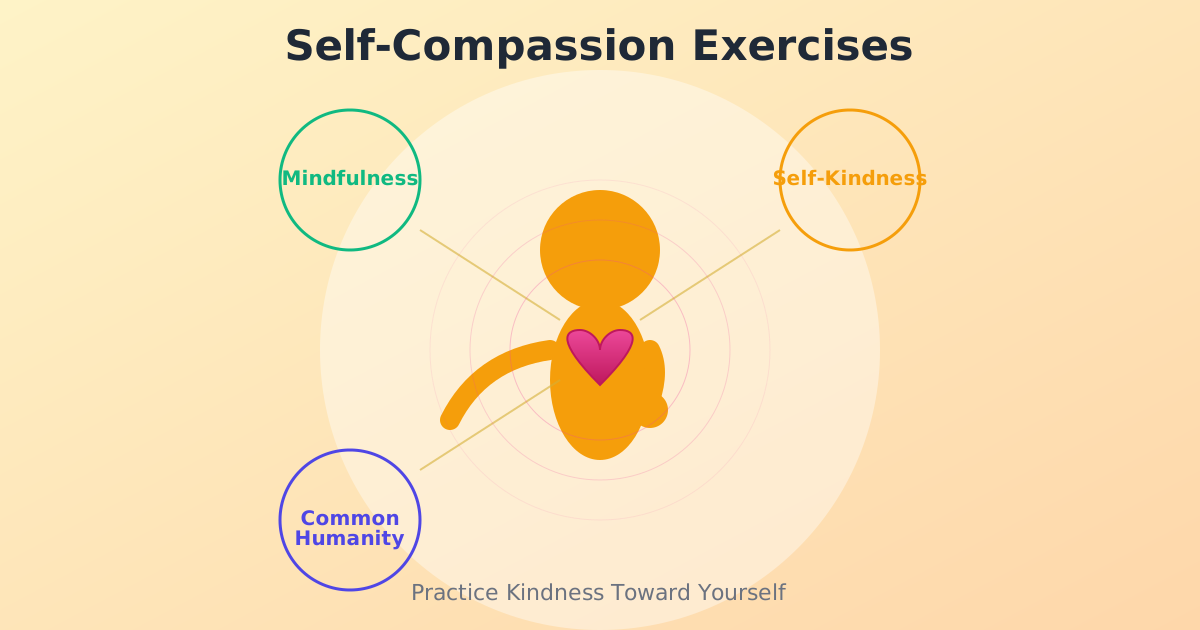
In this guide, you'll discover 10 science-backed self-compassion exercises that range from 2-minute quick practices to 20-minute deep meditations.
These techniques have been tested in clinical settings and are taught by leading psychologists including Dr. Kristin Neff and Chris Germer at the Center for Mindful Self-Compassion.
What Is Self-Compassion Exercises?
Self-compassion exercises are structured practices designed to cultivate three core elements: self-kindness (treating yourself gently rather than with harsh judgment), common humanity (recognizing that struggle is part of being human, not a personal failure), and mindfulness (acknowledging difficult emotions without becoming overwhelmed by them). These exercises range from brief mental breaks lasting 2-5 minutes to extended meditations of 20+ minutes. They can be formal practices you schedule daily or informal techniques you use anytime you notice self-criticism arising.
Not medical advice. If you experience severe depression, anxiety, or suicidal thoughts, consult a mental health professional.
Dr. Kristin Neff, pioneer of self-compassion research, defines it as a dynamic practice rather than a permanent state. This means anyone can develop self-compassion through consistent practice, regardless of their current baseline. The exercises work by rewiring your brain's threat-detection system, gradually shifting your internal dialogue from critic to supporter.
Surprising Insight: Surprising Insight: Research shows that people with high self-compassion actually set higher personal standards and work harder toward their goals than self-critical individuals—they're just kinder to themselves along the way.
The Three Elements of Self-Compassion
Visual representation of self-kindness, common humanity, and mindfulness working together in a cycle
🔍 Click to enlarge
Why Self-Compassion Exercises Matter in 2026
In 2026, we face unprecedented mental health challenges. Social media comparison, work-related stress, and constant connectivity create a perfect storm for self-criticism. A 2025 meta-analysis found that mindfulness plus self-compassion interventions produce more sustainable psychological benefits than mindfulness alone, with effects lasting 12+ months after the intervention ends.
Self-compassion addresses the root cause of many psychological problems: our internal critic. Unlike self-esteem (which depends on success and can collapse after failure), self-compassion remains stable through difficulties. When things go wrong, self-compassionate people still maintain a sense of worth and belonging. This stability is protective against depression, anxiety, and burnout.
Furthermore, companies like Google, Microsoft, and the U.S. military are now integrating self-compassion training into their wellness programs. A 2025 study on distance learning students found that targeted mindfulness and self-compassion significantly reduced stress and improved focus, making these exercises increasingly recognized as essential mental health tools.
The Science Behind Self-Compassion Exercises
When you practice self-compassion, your brain's parasympathetic nervous system activates—the same calming system triggered by safety and connection. Neuroimaging studies show that self-compassion meditation increases activity in brain regions associated with emotion regulation, reward, and social connection while decreasing activity in threat-detection areas. This means you're literally retraining your brain to feel safer.
Research on emotion regulation reveals that self-compassion works through multiple mechanisms: it reduces rumination (repetitive negative thinking), decreases emotional avoidance, and increases behavioral activation. A 2025 randomized controlled trial found that people practicing the 8-week Mindful Self-Compassion program showed significant improvements in psychological flexibility, mindfulness, anxiety, depression, and stress—with benefits sustained at 12-month follow-up.
How Self-Compassion Rewires Your Brain
Neural pathway showing threat system deactivation and calm system activation through practice
🔍 Click to enlarge
Key Components of Self-Compassion Exercises
Mindfulness of Difficulty
The first step in any self-compassion exercise is acknowledging that you're struggling without judgment. This means noticing difficult emotions, thoughts, or situations while maintaining awareness that these are temporary mental events, not permanent truths about you. Mindfulness prevents both emotional suppression and emotional overwhelm—the middle path between avoidance and rumination.
Common Humanity Recognition
Loneliness intensifies suffering. When you believe you're the only one struggling, shame compounds pain. Self-compassion exercises deliberately shift this perspective by reminding you that difficulty, failure, and suffering are universal human experiences. This recognition creates connection rather than isolation, which research shows is crucial for emotional healing.
Somatic Awareness and Touch
Your body is your gateway to compassion. Placing a hand on your heart, holding your face gently, or wrapping your arms around yourself triggers your mammalian care system. This physical touch activates oxytocin (the bonding hormone) and signals safety to your nervous system. Many self-compassion exercises deliberately incorporate this somatic element.
Kind Inner Speech
Words matter. Your internal dialogue shapes your nervous system state. Self-compassion exercises teach you to speak to yourself like you would to a suffering friend—with warmth, patience, and encouragement. This shift from harsh criticism to gentle support creates a fundamentally different emotional environment within your mind.
| When Something Goes Wrong | Self-Critical Response | Self-Compassionate Response |
|---|---|---|
| Internal dialogue | "I'm such a failure. I always mess things up." | "This is hard. I'm doing my best to learn." |
| Emotional response | Shame, anxiety, self-blame | Sadness, determination, self-support |
| Physical state | Tense, tight, withdrawal | Calm, grounded, openness |
| Next action | Avoid, ruminate, give up | Face it, problem-solve, try again |
How to Apply Self-Compassion Exercises: Step by Step
- Step 1: Find a quiet space where you won't be interrupted for 5-20 minutes, depending on which exercise you choose.
- Step 2: Sit comfortably with your spine naturally upright—on a chair, cushion, or even lying down if that's what your body needs.
- Step 3: Begin with a few deep breaths, noticing the natural rhythm of your breathing without forcing anything.
- Step 4: Bring to mind a difficulty you're facing or a moment when you were self-critical. Start with something moderate, not your deepest wound.
- Step 5: Place your hand on your heart and notice the warmth and solidness of your hand. This physical contact activates your calming system.
- Step 6: Silently repeat a kind phrase three times: "May I be kind to myself. May I accept this moment. May I be at ease." Use whatever words resonate with you.
- Step 7: Notice any emotions, sensations, or thoughts that arise without judgment. These are all valid parts of the experience.
- Step 8: Silently acknowledge that this difficulty is part of being human: "Suffering is part of life. I'm not alone in this struggle."
- Step 9: End with an affirming phrase: "I will get through this" or "I am doing my best" or whatever feels true for you.
- Step 10: Open your eyes slowly and spend one minute just observing how you feel differently compared to when you started.
Self-Compassion Exercises Across Life Stages
Young Adulthood (18-35)
Young adults face enormous comparison pressure—career decisions, body image, relationship status. Self-compassion exercises help counter the "comparison trap." The Self-Compassion Break (2-5 minutes) is ideal for this age group because it fits into busy schedules and provides immediate relief from perfectionism. Research shows young adults who practice self-compassion are more likely to pursue goals aligned with their values rather than others' expectations.
Middle Adulthood (35-55)
Middle-aged adults often struggle with feeling "behind" in multiple life domains. Self-compassion exercises help reframe aging not as failure but as natural progression. The Journaling Exercise works particularly well here, allowing people to process regrets, acknowledge what they've accomplished, and recommit to what matters. A 2025 study found middle-aged adults practicing self-compassion showed greater life satisfaction and reduced anxiety about aging.
Later Adulthood (55+)
Older adults benefit greatly from self-compassion as they navigate health changes, loss, and life transitions. Loving-Kindness Meditation works especially well because it integrates self-compassion with connection to others and even loved ones who have passed. Research shows older adults practicing self-compassion report less depression, better sleep, and greater meaning in life.
Profiles: Your Self-Compassion Approach
The Perfectionist
- Permission to be imperfect
- Recognition that effort matters more than outcomes
- Reframing mistakes as data, not failure
Common pitfall: Believing self-compassion will make them lazy or mediocre
Best move: Start with the Self-Compassion Break after each setback to observe that self-kindness actually increases motivation
The Avoidant
- Safe way to face difficult emotions
- Reassurance that feeling them won't destroy them
- Gradual exposure through short practices
Common pitfall: Thinking self-compassion means dwelling in pain
Best move: Begin with the 2-minute body scan exercise to build confidence in emotional resilience
The Outer-Critic
- Understanding that inner compassion improves outer compassion
- Evidence that self-compassion doesn't equal selfishness
- Practice with people they already care for
Common pitfall: Believing self-compassion is self-indulgent or narcissistic
Best move: Practice the Loving-Kindness Meditation, expanding compassion from self to others progressively
The Overwhelmed
- Very brief exercises that fit into chaos
- Permission to practice imperfectly
- Reassurance that even 1 minute helps
Common pitfall: Abandoning practice because they can't do lengthy meditation
Best move: Commit to the 30-second Hand on Heart exercise whenever stress spikes
Common Self-Compassion Exercises Mistakes
Many people misunderstand self-compassion as self-pity or indulgence. The truth is self-pity is actually self-centered ("why me?") while self-compassion is other-centered ("others struggle too"). The journal entry "I'm a disaster and nobody understands me" is self-pity. The journal entry "I'm struggling, and this is a normal part of being human" is self-compassion. The distinction matters because only the latter supports psychological healing.
Another common mistake is practicing self-compassion with the goal of feeling happy. Expecting happiness afterward sets you up for disappointment. The real goal is reducing suffering, not manufacturing positive emotions. Many practitioners report feeling sadness first—this is healing, not failure. You're finally giving yourself permission to acknowledge real pain rather than pushing through it.
The third mistake is abandoning practice too soon. Self-compassion, like any neural rewiring, requires repetition. Your brain's self-critical pathways have been strengthened for years. Even 10 days of practice won't undo decades of habit. However, research shows that 3 weeks of consistent practice begins creating measurable change. Commit to 30 days before evaluating whether exercises are "working."
The Self-Compassion Practice Timeline
Expected psychological changes across weeks and months of consistent practice
🔍 Click to enlarge
Science and Studies
Recent research strongly validates self-compassion exercises. Meta-analyses of randomized controlled trials show consistent benefits across diverse populations—students, healthcare workers, trauma survivors, and people with chronic illness all demonstrate improvement with structured self-compassion training.
- 2025 study in Taylor & Francis Online: A positive psychology intervention cultivating self-compassion enhanced mental health by fostering self-compassion and adaptive capacities in a randomized controlled trial.
- 2025 Nature Scientific Reports: Self-criticism, self-compassion, and psychological flexibility showed longitudinal dynamics predicting mental health outcomes across a three-wave study.
- 2025 Frontiers in Psychology: Targeted mindfulness and self-compassion improved long-term stress reduction in distance learning students with a randomized trial design.
- 2025 Frontiers in Psychology: The Mindful Self-Compassion programme showed long-term effectiveness compared to Mindfulness-Based Stress Reduction with regular practice for 1 year.
- 2024 Springer Nature: Self-compassion in children and adolescents reviewed as a systematic review through a developmental lens, demonstrating applicability across ages.
Your First Micro Habit
Start Small Today
Today's action: When you notice self-criticism today, place your hand on your heart for 10 seconds and silently say: "This is hard right now. And I'm still okay."
This micro-habit activates three self-compassion elements simultaneously—body awareness (touch), mindfulness (noticing the difficulty), and kindness (your words). It breaks the automatic cycle of self-criticism by inserting a tiny moment of self-support. Unlike a 20-minute meditation, this requires no preparation, time, or special conditions.
Keep quitting habit apps after a missed day? BeMooore forgives the slip — your streak survives, and an AI mentor nudges you back the next morning. Free on iOS.
Quick Assessment
When you make a mistake, what's your typical internal response?
Your answer reveals your current self-compassion baseline. If you chose harsh criticism or avoidance, self-compassion exercises could significantly improve your wellbeing and resilience.
How often do you practice self-kindness during difficult moments?
Consistency matters more than duration. Even 1-2 minutes daily creates measurable change within weeks. Your honesty about current habits helps identify where to start.
What would change for you if you treated yourself like you treat a good friend?
Most people sense that self-compassion would be transformative. This insight itself is valuable—it means you already understand the concept. Now it's about practice, not knowledge.
Take our full assessment to get personalized recommendations.
Discover Your Style →Next Steps
You now have 10 evidence-based self-compassion exercises to choose from. Your first step is choosing the one that feels most accessible to you. If you have 2 minutes, choose the Self-Compassion Break. If you enjoy structure, try Journaling. If you connect through sound, explore the guided meditation. The best exercise is the one you'll actually do—consistency matters far more than duration or technique.
Begin today. Not tomorrow, not next Monday, but in the next hour, when you notice yourself struggling or self-criticizing. Practice one simple exercise. Pay attention to what shifts—maybe it's a subtle softening in your chest, a slight reduction in mental noise, or just a moment of relief. That moment is your brain beginning to rewire. Build on it daily. Share your experience with someone you trust. Download our app for daily reminders and personalized guidance on your self-compassion journey.
Get personalized guidance with AI coaching.
Start Your Journey →Research Sources
This article is based on peer-reviewed research and authoritative sources. Below are the key references we consulted:
Related Glossary Articles
Frequently Asked Questions
Will self-compassion make me lazy or unmotivated?
No. Research consistently shows the opposite. People with high self-compassion actually set higher standards and work harder toward goals. The difference is they treat themselves kindly along the way, which increases persistence rather than decreasing it. Self-criticism creates shame and avoidance; self-compassion creates motivation.
How long does it take to see results?
Some people notice reduced stress within one session. However, meaningful neural rewiring takes time. Studies show that 3 weeks of consistent practice produces measurable improvements in anxiety and depression. For lasting transformation, commit to 30+ days. The changes become more automatic and stable over months of practice.
Can I practice self-compassion if I don't believe in meditation?
Absolutely. While meditation is one format, self-compassion exercises include journaling, physical touch practices, walking meditation, and even structured conversation. Find the format that resonates with you. The common element is intentional kindness toward yourself, not the specific modality.
What if self-compassion exercises trigger difficult emotions?
This is actually healing, not harmful. By giving yourself permission to acknowledge pain, you're finally letting yourself feel what you've been suppressing. These emotions often fade once acknowledged. However, if you experience overwhelming distress, work with a therapist who can support you through emotional processing.
Is self-compassion selfish?
No. In fact, research shows that self-compassionate people are more generous, empathetic, and socially connected than others. When you treat yourself with kindness, you develop the capacity to treat others kindly. Self-compassion isn't self-centered; it's foundational to genuine connection.
Take the Next Step
Ready to improve your wellbeing? Take our free assessment to get personalized recommendations based on your unique situation.
- Discover your strengths and gaps
- Get personalized quick wins
- Track your progress over time
- Evidence-based strategies