Muscle Building Protein
Muscle building protein is the dietary foundation that transforms your workout into visible gains. When you lift weights, you create microscopic tears in muscle fibers that require amino acids to repair and rebuild. Protein provides these amino acids, but not all proteins work equally—timing, quality, and amino acid composition dramatically affect whether your body builds muscle or simply recovers. Understanding how protein activates muscle protein synthesis through leucine and other essential amino acids is the key to maximizing every training session and achieving your body composition goals.
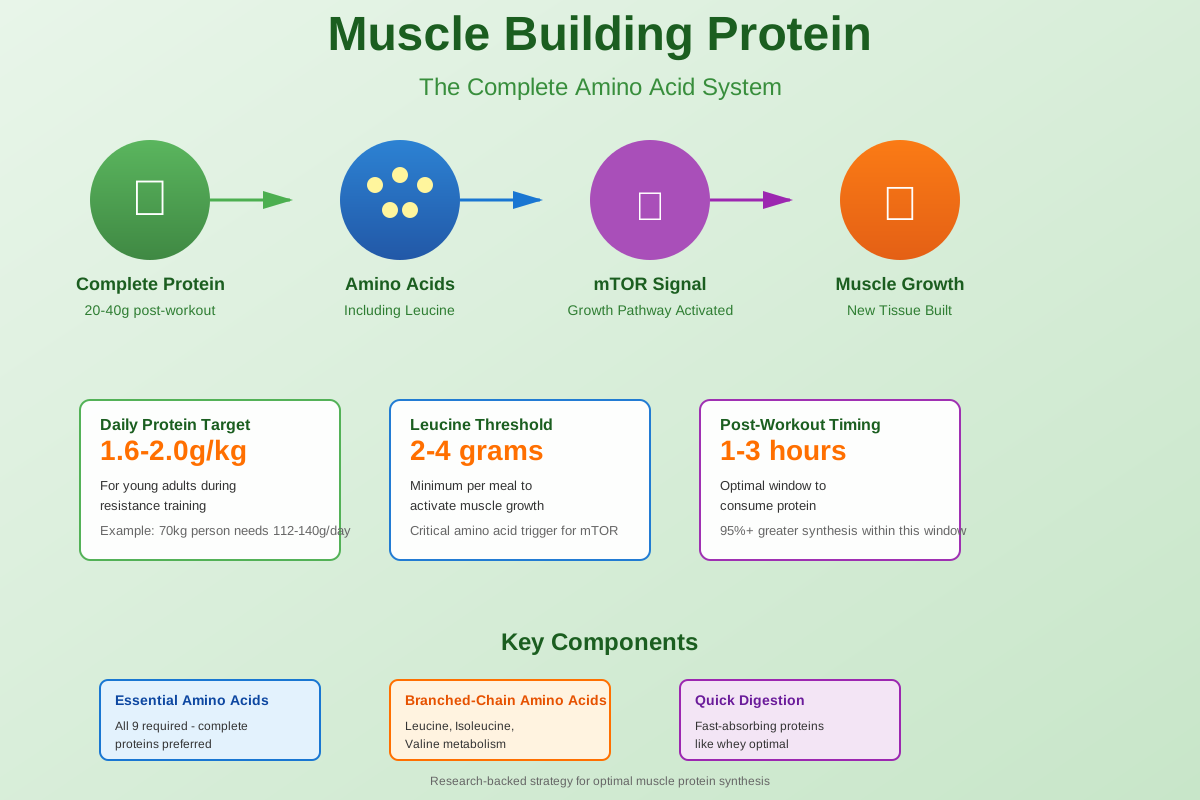
The difference between eating protein for maintenance versus muscle building comes down to amino acid delivery and timing. Your muscles respond to strength training by entering an anabolic window—a critical period when they're primed to absorb amino acids and build new tissue. This is why strategic protein intake transforms from being merely adequate to becoming a performance-enhancing tool.
Most people understand they need protein, but few grasp the science behind why muscle building protein works specifically for growth rather than just energy. The answer lies in understanding muscle protein synthesis, leucine thresholds, and how to distribute protein throughout your day for maximum anabolic effect.
What Is Muscle Building Protein?
Muscle building protein refers to dietary protein specifically optimized for stimulating muscle protein synthesis—the biological process of building new muscle tissue. Unlike general protein intake designed for basic metabolic function (0.8g per kilogram of body weight), muscle building protein is consumed at higher quantities, with optimal timing around resistance training, and with attention to amino acid composition, particularly essential amino acids like leucine that directly trigger muscle growth pathways.
Not medical advice.
The mechanism is straightforward: when you resistance train, you damage muscle fibers intentionally. Your body responds by activating muscle protein synthesis, which strings together amino acids into new muscle proteins. This process requires not just any protein, but complete proteins containing all nine essential amino acids, with special emphasis on leucine, which acts as the metabolic trigger for muscle-building pathways.
Surprising Insight: Surprising Insight: Recent 2024 research found that consuming a rapidly absorbed, complete protein within one to three hours post-workout increases muscle protein synthesis by 95%, compared to slowly digesting proteins that show only gradual amino acid availability to muscle tissue.
Muscle Protein Synthesis Process
Shows the progression from protein consumption through amino acid absorption to muscle protein synthesis activation via the mTOR pathway
🔍 Click to enlarge
Why Muscle Building Protein Matters in 2026
In 2026, understanding muscle building protein is more relevant than ever. Research from 2024-2025 has clarified exactly how much protein different age groups need and when to consume it for optimal results. The fitness industry has moved beyond guesswork into precise nutritional science, revealing that without proper protein strategy, even dedicated training yields disappointing results. A study on healthy adults found that those consuming 1.6 grams of protein per kilogram of body weight during resistance training built significantly more muscle than those consuming standard amounts.
The aging population has particular reason to pay attention: muscle loss accelerates with age, but strategic protein intake combined with resistance training can reverse this decline. Young people building their first bodies, middle-aged individuals preserving muscle during caloric restriction, and older adults fighting sarcopenia all benefit from understanding how muscle building protein works. The science is now clear—protein isn't just helpful, it's essential for translating training effort into tangible results.
Additionally, ongoing research distinguishes between plant-based and animal-based proteins. A 2024 meta-analysis showed that while 75% of studies found no significant differences between plant and animal proteins for muscle synthesis, the remaining 25% indicated animal-based sources may offer slight advantages due to superior amino acid profiles and higher bioavailability. This means optimization of protein source matters increasingly as training intensity increases.
The Science Behind Muscle Building Protein
The science of muscle building protein centers on understanding the mTOR (mechanistic target of rapamycin) pathway—the cellular sensor that detects amino acid availability and signals the body to build muscle. When leucine concentration in your bloodstream reaches a threshold of approximately 2-4 grams, it activates mTOR signaling through a mechanism called amino acid sensing. This triggers translational initiation, the process where ribosomes begin synthesizing new muscle proteins from available amino acids. Without adequate leucine, this signal never activates, and your muscles cannot build new tissue regardless of training intensity.
Recent mechanistic research from 2024 identified that leucine doesn't work alone—it functions as a trigger that allows other essential amino acids to be properly utilized. The complete profile of all nine essential amino acids is required for optimal protein synthesis. Furthermore, the speed of amino acid delivery matters significantly. Rapidly digested proteins like whey increase amino acid availability faster than slowly digested sources like casein, creating different anabolic responses even at identical total protein amounts. One study found that rapidly absorbed protein increased muscle protein synthesis 193% at three to five hours post-workout compared to slowly digesting alternatives.
Leucine Threshold and mTOR Activation
Demonstrates how leucine concentration triggers mTOR pathway activation for muscle protein synthesis
🔍 Click to enlarge
Key Components of Muscle Building Protein
Essential Amino Acids (EAAs)
The nine essential amino acids cannot be synthesized by your body and must come from dietary protein. These include leucine, isoleucine, valine, methionine, phenylalanine, threonine, tryptophan, histidine, and lysine. Among these, leucine holds special status as the primary trigger for mTOR activation. Complete proteins contain all nine EAAs in adequate proportions; incomplete proteins lack one or more, making them inferior for muscle building despite adequate total protein content. Animal-based proteins consistently provide complete amino acid profiles, while plant proteins often require combination (like rice and beans) to achieve completeness.
Branched-Chain Amino Acids (BCAAs)
The three branched-chain amino acids—leucine, isoleucine, and valine—represent approximately 35% of muscle tissue and are uniquely metabolized directly in muscle rather than requiring liver processing. Leucine specifically activates mTOR signaling, while isoleucine and valine support sustained muscle protein synthesis. A 2024 review confirmed that BCAA intake stimulates postprandial muscle protein synthesis at rest and further increases synthesis during recovery after resistance exercise. However, BCAAs are most effective when combined with other essential amino acids in a complete protein source rather than consumed in isolation.
Protein Timing and Distribution
Research confirms that when you consume protein matters nearly as much as how much you consume. The post-workout anabolic window—typically one to three hours after training—represents peak sensitivity to protein and amino acids. Consuming 20-40 grams of complete protein within this window maximizes muscle protein synthesis response. Beyond this window, your muscles remain receptive to amino acids but with diminished sensitivity. Distributing protein across four or more meals throughout the day, targeting 0.4 grams per kilogram per meal, ensures sustained muscle protein synthesis stimulation compared to consuming all protein in one or two large meals.
Protein Quality and Digestibility
Not all protein provides equivalent muscle-building stimulus. Quality depends on amino acid profile, digestibility, and bioavailability—how quickly and completely your body absorbs and utilizes amino acids. Whey protein ranks among the highest quality sources with rapid absorption (30-60 minutes) and complete amino acid content, making it superior for post-workout consumption. Whole food proteins like chicken, fish, and eggs provide complete profiles and additional micronutrients but digest more slowly. Plant proteins like legumes and tofu are complete only when properly combined and digest more slowly, making them less optimal for immediate post-workout use despite being excellent dietary components.
| Age Group | Maintenance (g/kg) | Muscle Building (g/kg) | Daily Amount (70kg person) |
|---|---|---|---|
| Young Adults (18-35) | 0.8 | 1.6-2.0 | 112-140g/day |
| Middle Adults (35-55) | 0.8-1.0 | 1.4-1.8 | 98-126g/day |
| Older Adults (55+) | 1.0-1.2 | 1.2-1.6 | 84-112g/day |
How to Apply Muscle Building Protein: Step by Step
- Step 1: Calculate your protein target: multiply your body weight in kilograms by 1.6 to 2.0 grams for muscle building (or divide pounds by 2.2 first)
- Step 2: Divide your daily target across four or more meals, aiming for 0.4 grams per kilogram per meal
- Step 3: Consume 20-40 grams of complete protein within one to three hours after your resistance training session
- Step 4: Choose complete protein sources containing all nine essential amino acids—prioritize animal-based sources and whey protein post-workout
- Step 5: When selecting proteins, ensure adequate leucine content; aim for 2-3 grams of leucine per meal at minimum
- Step 6: Stay consistent with protein timing for a minimum of 4-6 weeks to allow your body to build measurable muscle tissue
- Step 7: Combine adequate protein with progressive resistance training; protein alone without mechanical stimulus won't build muscle
- Step 8: Adjust protein intake based on body weight changes; if gaining weight from training, your protein target increases proportionally
- Step 9: Monitor your strength progression and body composition; increased protein should correlate with improved training performance
- Step 10: Recalculate protein targets every 4-6 weeks as your body weight changes to maintain optimal anabolic stimulus
Muscle Building Protein Across Life Stages
Young Adulthood (18-35)
Young adults represent the optimal window for building muscle, with higher testosterone levels and superior recovery capacity. This stage benefits most from aggressive muscle building protein strategies, targeting 1.6-2.0 grams per kilogram daily. Post-workout timing becomes particularly important, as young muscles respond most dramatically to the stimulus-nutrient combination of training plus immediate protein consumption. Young adults often make the mistake of underestimating protein needs, consuming 1.2 grams per kilogram and then wondering why training yields modest results. The investment in optimized protein intake during this decade builds a foundation of muscle mass that becomes increasingly difficult to build later in life.
Middle Adulthood (35-55)
Middle adults often experience first signs of age-related muscle loss (sarcopenia beginning around age 30-40), making strategic protein intake essential for preservation and growth. This stage typically requires 1.4-1.8 grams per kilogram daily during training phases. Many middle-aged individuals shift toward caloric restriction for body composition changes, and adequate protein becomes critical for preventing muscle loss during this period. Research shows that higher protein intake (approximately 30% of total calories) significantly reduces lean mass loss during caloric restriction compared to lower protein diets. Recovery takes slightly longer, making consistent protein timing across multiple meals more important than chasing single massive meals.
Later Adulthood (55+)
Older adults face accelerated muscle loss from reduced testosterone, decreased protein synthesis efficiency, and lower training stimulus. This population benefits from sustained protein intake of 1.2-1.6 grams per kilogram daily, combined with consistent resistance training. Research from 2024 specifically examined protein synthesis in older adults, finding that low-dose essential amino acid-based compositions effectively stimulate muscle protein synthesis even in aging populations. Strategic timing becomes especially important, as older muscles require slightly greater leucine doses (3-4 grams) to reach the threshold for optimal mTOR activation. Whole food protein sources become preferable to isolated supplements, as accompanying micronutrients support overall health while supporting muscle maintenance.
Profiles: Your Muscle Building Protein Approach
The Dedicated Gym Enthusiast
- Post-workout protein timing within the anabolic window
- Complete protein sources with verified amino acid content
- Consistent daily intake meeting the 1.6-2.0g/kg target
Common pitfall: Consuming adequate total protein but distributing it poorly, missing the post-workout window, or consuming protein without resistance training stimulus
Best move: Structure meals around training sessions; consume 20-40g complete protein within 2-3 hours post-workout; divide remaining daily protein across 3-4 additional meals
The Plant-Based Athlete
- Strategic combination of incomplete proteins to create complete amino acid profiles
- Higher total protein intake to compensate for lower plant protein bioavailability
- Awareness of leucine content in plant sources
Common pitfall: Assuming equal total protein from plants equals animal sources, failing to combine proteins, not accounting for lower digestibility rates
Best move: Combine legumes with grains (rice and beans), use plant-based complete protein powders, aim for 1.8-2.2g/kg daily to account for lower bioavailability, prioritize hemp and pea protein for superior amino acid profiles
The Busy Professional
- Quick protein solutions requiring minimal preparation
- Convenient post-workout options compatible with work schedules
- Portable protein sources throughout the day
Common pitfall: Skipping post-workout protein due to time constraints, relying on inadequate convenience foods, failing to plan meal timing
Best move: Prepare protein-rich meals on weekends; use whey protein powder for quick post-workout consumption; pack Greek yogurt, hard-boiled eggs, or protein bars for workplace meals; use online ordering for restaurant high-protein options
The Muscle-Preserving Older Adult
- Consistent daily protein intake prioritizing bioavailable sources
- Higher individual leucine thresholds requiring attention to amino acid composition
- Resistance training stimulus combined with adequate protein
Common pitfall: Consuming adequate total protein but missing post-workout timing windows, choosing inferior protein sources, neglecting resistance training stimulus
Best move: Consume 20-40g complete protein post-workout from highly digestible sources; prioritize animal proteins and whey over plant alternatives; ensure 3-4g leucine per meal; combine consistent protein intake with twice-weekly resistance training
Common Muscle Building Protein Mistakes
The most common mistake is assuming that total daily protein matters while ignoring distribution and timing. Someone consuming 150 grams daily in two massive meals experiences far inferior muscle-building stimulus compared to someone distributing the same 150 grams across four meals, ensuring each meal reaches the leucine threshold. Your muscles don't accumulate leucine; they respond to each meal's amino acid delivery. A single meal with inadequate essential amino acids won't trigger muscle protein synthesis, regardless of what you ate six hours earlier.
Another critical error is consuming protein without the stimulus of resistance training. Protein provides building blocks, but resistance training provides the signal to build. Without both components, additional protein simply becomes excess calories. This is why sedentary individuals who increase protein intake don't experience muscle growth—the absence of mechanical stimulus prevents protein from being directed toward muscle protein synthesis.
A third mistake involves choosing protein sources with inferior amino acid profiles or bioavailability for post-workout consumption. Many people consume plant-based proteins post-workout due to philosophical preferences without recognizing they're receiving suboptimal muscle-building stimulus. While plant proteins are valuable dietary components, animal-based complete proteins and particularly whey protein provide superior post-workout response due to faster absorption and higher leucine content. Shifting post-workout protein to high-quality sources while maintaining plant-based options at other times offers a practical compromise.
Common Mistakes and Corrections
Shows three common muscle building protein mistakes and their corrections
🔍 Click to enlarge
Science and Studies
Recent research from 2024-2025 has provided unprecedented clarity on muscle building protein. Multiple peer-reviewed studies examined protein quantity, quality, timing, and amino acid composition, establishing evidence-based guidelines that move beyond industry guesswork. The research community now recognizes distinctions between general protein intake and muscle-building-specific strategies, with clear recommendations differentiating by age group, training experience, and dietary preference.
- A 2024 Frontiers in Nutrition study demonstrated that low-dose essential amino acid-based compositions effectively stimulate muscle protein synthesis in older individuals, challenging the assumption that only high-protein diets support aging athletes
- A meta-analysis comparing plant and animal proteins found that while 75% of studies showed no significant differences in muscle protein synthesis, the remaining 25% indicated animal-based sources provided advantages through superior amino acid profiles
- A study on rapid versus slow protein absorption found that rapidly digested proteins increased muscle protein synthesis by 95% at 1-3 hours and 193% at 3-5 hours post-workout compared to slowly digesting alternatives
- Research on optimal protein distribution found that consuming 0.4g/kg per meal across four meals produces superior muscle-building stimulus compared to consuming twice this amount in a single meal
- A 2024 scientometric analysis of muscle hypertrophy research identified consensus recommendations of 1.2-1.6 g/kg daily for young adults and 1.2-1.59 g/kg for older adults during resistance training
Your First Micro Habit
Start Small Today
Today's action: Consume 25 grams of complete protein (whey powder, Greek yogurt, or 3-4 ounces chicken) within 30 minutes of your next resistance training session, tracking it in your app
This single action establishes the post-workout timing habit that creates the greatest muscle-building difference. One optimized post-workout protein session per week builds momentum toward consistent daily practice. Tracking in the app creates accountability and helps you notice the pattern-behavior-result connection.
Keep quitting habit apps after a missed day? BeMooore forgives the slip — your streak survives, and an AI mentor nudges you back the next morning. Free on iOS.
Quick Assessment
How consistently do you consume protein after your resistance training sessions currently?
Your answer reveals whether you're accessing the post-workout anabolic window, the single most important timing factor for muscle building. Consistent post-workout protein timing produces measurably superior results compared to delaying protein intake.
Which factor currently limits your muscle building protein optimization?
This identifies whether your next step involves education, systems-building, habit formation, or fine-tuning strategy. Different limiting factors require different solutions for progression.
What protein source do you currently prefer post-workout?
Your answer shows whether you're optimizing for muscle building (whey, dairy) or prioritizing other values like sustainability or ethics (plant-based). Both can work; the key is whether your choice aligns with your muscle-building goals.
Take our full assessment to get personalized recommendations.
Discover Your Style →Next Steps
Begin by calculating your personalized protein target: multiply your current body weight in kilograms by 1.6 (or divide pounds by 2.2, then multiply by 1.6). This represents your minimum daily protein for muscle building. Write this number down and make it your reference point for the next 4-6 weeks. This isn't arbitrary—it's scientifically validated to produce measurable muscle growth when combined with consistent resistance training.
Next, restructure your meals around your resistance training schedule. Identify when you train, then plan to consume 20-40 grams of complete protein within 1-3 hours post-workout. This single change—adding post-workout protein timing—often produces noticeable improvement in recovery and muscle development within 2-4 weeks. Pair this with tracking your intake in the Bemooore app to build awareness of your pattern and make adjustments based on actual performance rather than assumptions.
Get personalized guidance with AI coaching.
Start Your Journey →Research Sources
This article is based on peer-reviewed research and authoritative sources. Below are the key references we consulted:
Related Glossary Articles
Frequently Asked Questions
How much protein do I actually need for muscle building?
Research supports 1.6 to 2.0 grams per kilogram of body weight daily during resistance training for young adults, 1.4-1.8g/kg for middle-aged adults, and 1.2-1.6g/kg for older adults. This represents approximately 112-140 grams daily for a 70kg person. This is higher than maintenance protein (0.8g/kg) but represents the minimum for optimal muscle-building stimulus.
Does the post-workout window really matter?
Yes. Research shows that consuming complete protein within 1-3 hours post-workout produces 95-193% greater muscle protein synthesis compared to consuming protein several hours later. The window is less rigid than once believed—protein consumed 2-3 hours post-workout still accesses enhanced muscle sensitivity, but earlier is superior to later.
Can I build muscle on a plant-based diet?
Yes, but with adjustments. Plant proteins are incomplete and less bioavailable than animal proteins. To compensate, consume slightly higher total protein (1.8-2.2g/kg instead of 1.6-2.0g/kg), strategically combine incomplete proteins (rice and beans), and consider plant-based complete protein powders for post-workout consumption.
Is timing more important than total daily protein?
Both matter, but research suggests distribution across 4+ meals with adequate leucine per meal produces superior results compared to consuming adequate total protein in only 2 meals. If you must choose, prioritize reaching 1.6-2.0g/kg daily distributed properly over single-meal optimization.
Can I eat all my protein in one meal and build muscle?
Theoretically, no. Muscle protein synthesis responds to each meal's leucine and essential amino acid content, not accumulated leucine. A single large meal leaves 3-6 hours of daily time with insufficient amino acid availability to stimulate muscle protein synthesis, significantly reducing total daily anabolic stimulus.
Take the Next Step
Ready to improve your wellbeing? Take our free assessment to get personalized recommendations based on your unique situation.
- Discover your strengths and gaps
- Get personalized quick wins
- Track your progress over time
- Evidence-based strategies