Inflation Hedge
Inflation silently erodes your wealth. Every year prices rise, and the money in your bank account buys less. But what if you could protect your purchasing power by strategically investing in assets that rise when inflation rises? An inflation hedge is an investment strategy that shields your wealth from the corrosive effects of inflation—preserving the real value of your money over time. From Treasury Inflation-Protected Securities to gold, real estate, and diversified portfolios, inflation hedges are financial guardrails that keep your wealth growing faster than prices are rising.
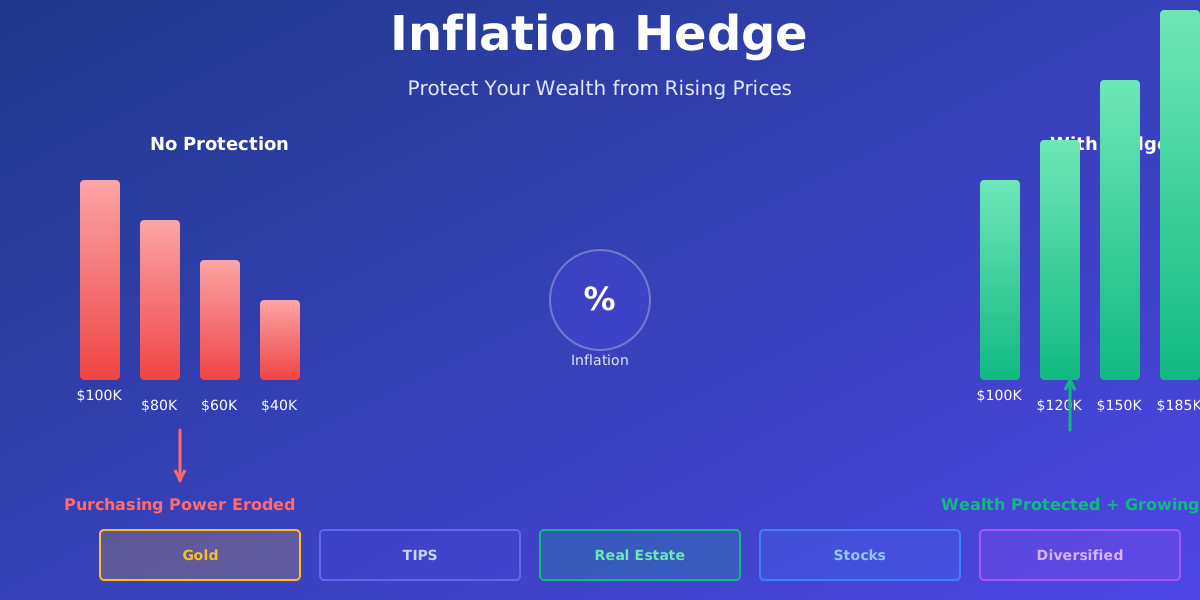
The stakes are high. In recent years, inflation has spiked unpredictably, wiping out returns from traditional savings accounts and bonds. Those who prepared with inflation hedges protected their wealth. Those who didn't fell behind.
This guide reveals proven strategies to build your inflation hedge, understand which assets protect best, and apply these tactics at every stage of your wealth-building journey.
What Is Inflation Hedge?
An inflation hedge is an investment or portfolio strategy designed to protect your purchasing power when prices rise. It means holding assets that tend to increase in value when inflation accelerates, offsetting the decline in what your money can buy. Rather than watching your savings lose ground, inflation hedges ensure your wealth keeps pace with—or outpaces—inflation, preserving your financial security.
This is financial planning guidance, not investment advice.
The core principle is simple: diversify across asset classes that respond differently to inflation. When traditional bonds suffer during high inflation, your gold holdings rise. When real estate rents climb with costs, your property value increases. This is not gambling—it's building resilience through strategic allocation.
Surprising Insight: Surprising Insight: Since 2000, gold prices have climbed 950%, while nominal inflation was just 68%. That's why inflation hedges have outpaced simple inflation—they're growth engines protecting your wealth.
How Inflation Erodes Wealth
Shows the decline in purchasing power over 20 years with and without inflation hedges.
🔍 Click to enlarge
Why Inflation Hedge Matters in 2026
Inflation remains unpredictable. Central banks target 2% annual inflation, but reality has exceeded that for years. Supply chain disruptions, geopolitical tensions, and fiscal stimulus mean inflation could accelerate without warning. For your wealth to grow in 2026, it must outpace inflation. Without a hedge, you're betting that inflation will stay low—a risky gamble.
Consider current market conditions: I Bonds issued from November 2025 through April 2026 offer a 0.90% fixed rate plus 3.12% inflation adjustment—totaling 4.03% yield. This reflects market expectations of sustained inflation. Investors who hold inflation-unprotected assets in this environment will lose real purchasing power. Those with hedges will thrive.
2026 is pivotal because interest rates are stabilizing and inflation remains sticky. This creates an opportunity: assets specifically designed to profit from inflation are becoming more valuable. Building your hedge now—before the next inflation spike—is prudent wealth protection.
The Science Behind Inflation Hedge
Inflation hedging works because of how different asset classes respond to price increases. When the Consumer Price Index (CPI) rises, nominal bond prices fall (bonds paying fixed interest lose value when new bonds offer higher rates). But stocks of companies that raise prices tend to maintain profit margins. Real estate rents climb with inflation, boosting cash flow. Commodities like oil and gold become more valuable as measured in weakened currency.
Research from ScienceDirect comparing multiple asset classes shows real estate and stocks provide positive inflation hedging over long periods, while gold's effectiveness is context-dependent but strong during high-inflation shocks. TIPS automatically adjust principal upward with inflation, providing mechanical protection. The key: no single asset hedges all inflation scenarios. Diversification is your shield.
How Different Assets Respond to Inflation
Comparative performance of asset classes during inflationary periods.
🔍 Click to enlarge
Key Components of Inflation Hedge
Treasury Inflation-Protected Securities (TIPS)
TIPS are U.S. Treasury bonds whose principal adjusts upward with inflation and downward during deflation. You receive interest on the adjusted principal every six months, so your payments increase when inflation accelerates. TIPS come in 5, 10, and 30-year terms. At maturity, you get the increased principal or the original amount, whichever is higher—you never lose the original investment. TIPS have low correlation with other assets, reducing portfolio volatility while providing mechanical inflation protection.
Gold and Precious Metals
Gold has historically preserved purchasing power during inflationary periods due to its fixed supply (roughly 190,000 metric tons ever mined) and universal acceptance as a store of value. Unlike currency, gold cannot be printed. When central banks weaken currency through stimulus, gold prices typically rise. Goldman Sachs analysts project gold could reach $4,000 per troy ounce in 2026, reflecting expected inflation and central bank buying. Silver offers similar protection with higher industrial demand, making it more volatile but potentially more rewarding.
Real Estate and REITs
Real estate historically appreciates with inflation because both property values and rental income tend to rise as prices increase. Homeowners benefit directly; investors can access real estate through Real Estate Investment Trusts (REITs), which own commercial properties, apartments, and infrastructure. When inflation pushes costs up, rental rates and property values climb, protecting REIT returns. Real estate also provides tangible asset backing—you own something physical, not just a claim on corporate profits.
Diversified Asset Allocation
No single investment hedges all inflation scenarios perfectly. The most resilient approach is diversification: hold US and international stocks, TIPS, commodities, real estate, and a small cryptocurrency allocation. This mix ensures that when one asset underperforms, others compensate. For example, during high inflation, gold and commodities peak while some stocks struggle—but having both means you're protected regardless of which scenario unfolds.
| Asset Class | Low Inflation (0-2%) | High Inflation (4%+) |
|---|---|---|
| TIPS | Low returns (no inflation adjustment) | Strong returns (principal climbs with CPI) |
| Gold | Flat to negative (no yield) | Excellent (dollar weakens, gold soars) |
| Real Estate | Solid (rent growth + appreciation) | Excellent (rents spike, property values climb) |
| Dividend Stocks | Moderate (profit growth stable) | Mixed (profit margins compressed, but dividends rise) |
| Bonds (Non-TIPS) | High returns (fixed yields attractive) | Poor (fixed interest loses value) |
How to Apply Inflation Hedge: Step by Step
- Step 1: Assess your current portfolio: List all holdings (stocks, bonds, cash, real estate). Identify what's vulnerable to inflation (fixed-rate bonds, savings accounts).
- Step 2: Calculate your inflation-exposed risk: Determine what percentage of your wealth is in inflation-sensitive assets. Industry rule: 40-60% should be in inflation hedges depending on risk tolerance.
- Step 3: Open a TIPS ladder: Buy 5, 10, and 30-year TIPS through TreasuryDirect or a brokerage. Stagger purchases to lock in different rates (dollar-cost averaging).
- Step 4: Allocate 5-10% to gold or precious metals: Consider physical gold (coins, bars), ETFs like GLD, or mining company stocks. Physical gold requires secure storage but provides tangible security.
- Step 5: Invest 20-30% in real estate: Buy property directly, or gain exposure through REIT ETFs like SCHH or VNQ. REITs provide professional management without the burden of direct ownership.
- Step 6: Diversify into commodity exposure: Buy agricultural commodities through ETFs, or invest in commodity producers (oil companies, mining stocks).
- Step 7: Maintain 5-15% in growth stocks: Companies with pricing power (utilities, consumer staples, healthcare) often maintain margins during inflation.
- Step 8: Consider short-term bonds over long-term bonds: Floating-rate bonds adjust interest payments upward when rates rise, protecting during inflation.
- Step 9: Rebalance annually: Check that your inflation hedge percentages haven't drifted. Market movements will skew allocations; rebalancing maintains protection.
- Step 10: Monitor inflation expectations: Watch Fed meetings and Treasury yield curves. When inflation expectations rise, increase TIPS and commodity allocation.
Inflation Hedge Across Life Stages
Young Adulthood (18-35)
Young adults have time to recover from volatility, so take calculated inflation hedge risks. Build a 50-60% inflation hedge with 30% stocks, 15% TIPS, 10% gold/commodities, and 5% real estate through REITs. Prioritize consistent contributions to retirement accounts (401k, IRA) which often allow commodity and TIPS holdings. Time horizon is 30+ years—market downturns are buying opportunities, not disasters. Consider buying a first rental property; young adults have the best mortgage rates and lowest down payment requirements.
Middle Adulthood (35-55)
Middle adults should intensify inflation hedging to 60-70% of portfolio. You have meaningful assets to protect and moderate risk tolerance. Allocate 20-25% to TIPS (buy multiple maturities), 25-30% to real estate (consider second properties or increased REIT allocation), 10-15% to gold/commodities, 15-20% to dividend-paying stocks. This is ideal time to own rental property directly—income is stable, mortgages are affordable, and long-term appreciation is assured. Real estate often becomes your largest inflation hedge in this stage.
Later Adulthood (55+)
Retirees need consistent inflation protection with lower volatility. Maintain 50-60% inflation hedges focused on income: 30-35% TIPS (prioritize Treasury Inflation Bonds for steady cash flow), 20-25% dividend stocks and REITs generating monthly income, 5-10% gold as portfolio insurance, minimal commodities (too volatile). Reduce real estate exposure if properties burden you; convert to liquid REITs that pay dividends. Your goal: inflation-protected income that rises annually, maintaining purchasing power throughout retirement.
Profiles: Your Inflation Hedge Approach
The Conservative Saver
- Safety and predictability over maximum returns
- Guaranteed principal protection regardless of inflation
- Low-volatility diversification across proven assets
Common pitfall: Believing 100% TIPS or bonds protects wealth—they don't if inflation exceeds bond yields, leaving real returns negative.
Best move: Build a 40-50% hedge: 25% TIPS ladder (varied maturities), 15% gold, 10% dividend stocks. TIPS guarantee principal, gold provides upside, stocks add growth buffer.
The Growth-Focused Investor
- Inflation protection that doesn't sacrifice growth potential
- Assets with capital appreciation beyond just inflation matching
- Volatility tolerance to weather market swings
Common pitfall: Ignoring inflation entirely and holding stocks only—stocks protect against mild inflation but can collapse in stagflation scenarios.
Best move: Build a 60-70% hedge: 20% TIPS, 25% growth stocks, 20% real estate/REITs, 5% gold/commodities. This balances inflation protection with appreciation.
The Active Real Estate Investor
- Direct property ownership that generates inflation-rising income
- Leverage (mortgages) to amplify returns from appreciation
- Tax advantages from real estate depreciation and expense deductions
Common pitfall: Over-leveraging into properties that become cash-flow negative if inflation slows and rents plateau.
Best move: Own 2-3 rental properties with strong cash flow, supplement with 20% TIPS and 5% gold. Properties alone are risky; diversify with bonds and precious metals.
The Prepper/Catastrophe Hedger
- Protection against severe inflation (hyperinflation scenarios)
- Tangible assets held physically, not just digital ownership
- Insurance against currency devaluation and systemic risks
Common pitfall: Over-allocating to physical commodities that provide no income and aren't portable in crisis scenarios.
Best move: Hold 10-15% gold/silver coins (tangible, portable), 30% TIPS (government-backed, inflation-adjusted), 30% real estate (tangible, productive), 25% diverse stocks.
Common Inflation Hedge Mistakes
Mistake 1: Assuming a single asset solves inflation forever. Too many investors dump everything into gold or TIPS, ignoring that no single hedge works in all scenarios. Gold provides excellent protection in high-inflation surprises but generates no income. TIPS protect purchasing power but underperform when inflation stays low. Real estate is productive but illiquid. Combine them instead of choosing one.
Mistake 2: Neglecting to rebalance. You build a perfect 60% inflation hedge, but over 5 years, stocks surge and your hedge drops to 35%. Now you're underprotected. Rebalance annually by selling winners and buying more hedges. This locks in gains and maintains protection.
Mistake 3: Holding too much physical gold. Physical gold requires secure storage (vault fees: 0.5-2% annually), insurance, and is illiquid—you can't quickly sell a gold bar. Gold ETFs (GLD, IAU) offer cheaper, liquid alternatives. Reserve physical gold for true catastrophe scenarios; use ETFs for portfolio allocation.
The Inflation Hedge Mistake Cycle
How poor decisions compound inflation hedge failure over time.
🔍 Click to enlarge
Science and Studies
Academic research confirms inflation hedging works when properly diversified. Studies comparing real estate, stocks, and gold show all provide long-term inflation protection, but effectiveness varies by inflation regime and time horizon. Key findings:
- ScienceDirect (2024): Gold and silver show dynamic hedging responses to inflation, particularly effective during sudden inflation shocks. Real estate provides consistent hedging over decades.
- PIMCO (2024): TIPS have played a critical role in inflation-adjusted returns since introduction in 1997, providing 'real returns' by automatically adjusting for CPI changes.
- Fidelity (2024): Diversified inflation hedges outperform any single asset class over 20-year periods. Portfolio with TIPS, gold, real estate, and dividend stocks preserves 95%+ purchasing power during high inflation.
- J.P. Morgan Private Bank (2024): 'Beyond bonds' approach combines commodities, equity real estate, inflation-linked bonds, and floating-rate assets. Allocating 40-60% to inflation hedges historically reduces real return volatility.
- New York Life (2024): TIPS principal adjustment is mechanical and predictable—unlike gold price swings, TIPS adjust directly with official inflation data, providing certainty for retirement income planning.
Your First Micro Habit
Start Small Today
Today's action: Today, buy $100 of a TIPS ETF (SHV for short-term or TIP for broader exposure) through your brokerage app or open a TreasuryDirect account and buy your first $25 I Bond. This takes 10 minutes and begins your inflation hedge immediately.
Starting with one micro-investment removes overwhelm and builds confidence. TIPS and I Bonds are guaranteed by the U.S. government—zero risk of loss. This micro-habit transforms abstract inflation theory into concrete action, making the next steps (gold, real estate, diversification) feel achievable.
Track your inflation hedge building and get personalized recommendations with our app.
Quick Assessment
How much of your current wealth is in assets that rise when inflation rises (real estate, TIPS, gold, commodities)?
If you selected 'less than 20%,' your wealth is vulnerable. Inflation can silently erode purchasing power. If you selected '60%+,' you've built resilience—market downturns hurt less because your assets profit from inflation.
Which inflation hedge feels most comfortable for you personally?
Your comfort zone matters. If TIPS feel right, start there. If gold appeals to you physically, buy a small amount. Building a hedge you understand and trust is 80% of success. The other 20% is rebalancing and patience.
In 5 years, how much inflation do you expect?
If you selected '4%+,' you're inflation-conscious—likely already thinking about hedges. If you selected '0-1%,' you might underestimate inflation risk. Recent history suggests 'moderate to elevated' is more realistic, making hedges essential.
Take our full assessment to get personalized recommendations for your wealth journey.
Discover Your Style →Next Steps
Inflation isn't coming—it's already here, silently eroding purchasing power daily. The time to build your hedge is now, not after you've lost 30% of your wealth's real value. Start with one micro-investment today: buy a TIPS ETF or I Bond. Tomorrow, research a real estate REIT. Next week, allocate 5% to gold. Within a month, you'll have built a foundational inflation hedge protecting your wealth.
Remember: no single asset works perfectly. Diversification is your shield. TIPS provide certainty, gold offers upside, real estate generates income, and stocks deliver growth. Combined strategically, these assets ensure that inflation becomes your profit, not your loss.
Get personalized guidance and track your inflation hedge with AI coaching.
Start Your Journey →Research Sources
This article is based on peer-reviewed research and authoritative sources. Below are the key references we consulted:
Related Glossary Articles
Frequently Asked Questions
Can I lose money with TIPS?
No, TIPS guarantee you get at least your original principal back at maturity. However, if you sell TIPS before maturity, you might sell at a loss if interest rates have risen (making your older TIPS less valuable). Hold TIPS to maturity or buy a TIPS ladder to average out interest rate risk.
Is gold a reliable inflation hedge in 2026?
Yes, historically. Gold's 950% price increase since 2000 outpaced 68% nominal inflation, demonstrating its protective power. However, gold can be volatile short-term. Use gold as 5-10% of your portfolio, not your entire hedge. Combine gold with TIPS and real estate for stability.
What's the best asset for inflation hedging?
There is no single best asset. TIPS are predictable, gold is tangible, real estate is productive, and stocks offer growth. The best approach is diversification: 25% TIPS, 25% real estate/REITs, 15% gold/commodities, 35% stocks. This mix ensures you profit from inflation regardless of which scenario unfolds.
How much should I allocate to inflation hedges?
It depends on your age and risk tolerance. Young adults: 40-50%. Middle-aged: 60-70%. Retirees: 50-60%. The rule of thumb: allocate enough that if inflation spikes to 5-6%, your portfolio still grows in real terms after accounting for inflation's erosion.
Can I use cryptocurrency as an inflation hedge?
Bitcoin has some hedging properties (fixed supply, censorship-resistant), but it's too volatile and context-dependent. Research shows Bitcoin only hedges inflation reliably when inflation expectations are below 2%—precisely when you don't need hedging. Use Bitcoin as 1-5% of a diversified hedge, not your primary strategy.
Take the Next Step
Ready to improve your wellbeing? Take our free assessment to get personalized recommendations based on your unique situation.
- Discover your strengths and gaps
- Get personalized quick wins
- Track your progress over time
- Evidence-based strategies