Financial Mastery
Financial mastery is the deep understanding and practical skill of managing your money with intelligence and intention. It's not just about earning more—it's about controlling your cash flow, making strategic decisions, and building sustainable wealth over time. Most people struggle with money because they never develop the psychological foundation and behavioral discipline that separate wealthy individuals from those living paycheck to paycheck. This guide reveals exactly how to develop true financial mastery, whether you're starting from zero or seeking to optimize an existing financial life.
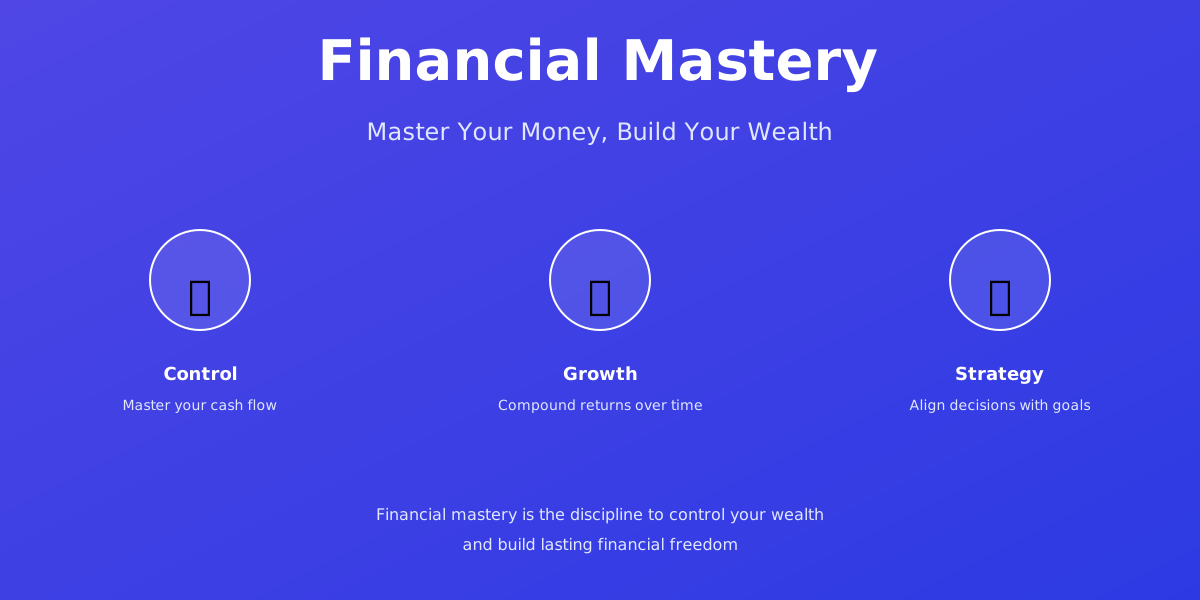
Financial mastery extends far beyond basic budgeting. It encompasses understanding behavioral finance, avoiding cognitive biases that derail wealth-building, and implementing systems that work automatically. Research shows that financial literacy leads to substantial long-term savings, better risk management, and accelerated wealth accumulation across all income levels.
In 2026, financial mastery is no longer optional—it's essential. Inflation, volatile job markets, and growing access to investment platforms mean that those who master their finances will thrive, while those who don't will fall behind. This article explores the science, strategies, and systems behind financial mastery so you can take control of your financial destiny.
What Is Financial Mastery?
Financial mastery is the art and science of intelligently managing your capital, optimizing your resources, and creating long-term wealth through deliberate strategy and behavioral discipline. It includes mastery of budgeting, saving, investing, credit management, and the psychological dimensions of money. A financially masterful person doesn't just earn income—they systematically allocate, protect, and grow it according to a clear life plan.
Not medical advice.
Financial mastery differs from financial literacy in a crucial way: literacy is knowledge, while mastery is applied skill combined with psychological awareness. You can read about budgeting (literacy) but still overspend because of emotional triggers (lack of mastery). True financial mastery means understanding both the mechanics of money and the psychology driving your decisions. It requires developing systems, habits, and mental models that protect you from cognitive biases like loss aversion, overconfidence, and herd mentality that lead most people astray.
Surprising Insight: Surprising Insight: From 30 to 40% of US retirement wealth inequality can be explained by differences in financial knowledge alone—not income or starting capital.
The Three Pillars of Financial Mastery
Financial mastery rests on three interconnected pillars: knowledge (understanding money mechanics), behavior (developing disciplined habits), and psychology (managing emotional relationships with money)
🔍 Click to enlarge
Why Financial Mastery Matters in 2026
In 2026, financial mastery has become essential for security and opportunity. Traditional pension systems are disappearing, healthcare costs are rising unpredictably, and inflation continues eroding purchasing power. Those who don't master their finances face increasing financial stress, limited retirement options, and reduced quality of life. Conversely, those who develop financial mastery gain freedom, security, and the ability to pursue meaningful work rather than survival work.
Research from the World Economic Forum shows that only 33% of adults globally are financially literate, yet those who are financially literate are significantly more likely to have emergency savings, invest consistently, and plan for retirement. Financial mastery directly correlates with better mental health, reduced anxiety, and improved relationships—money stress is a leading cause of relationship conflict, but financial mastery eliminates that stress.
The rise of economic uncertainty makes financial mastery more valuable than ever. Job security is declining, side income opportunities are exploding, and investment options are more accessible. Those with financial mastery can navigate these changes strategically, while those without it are vulnerable to economic shocks. In essence, financial mastery is now a core life skill—as important as literacy itself.
The Science Behind Financial Mastery
Financial mastery is grounded in behavioral finance and cognitive psychology. Traditional economics assumed humans make rational financial decisions, but decades of research prove we're driven by emotions, cognitive biases, and psychological patterns. Understanding these patterns is essential to financial mastery. Loss aversion (we feel the pain of losing $100 twice as intensely as the pleasure of gaining $100), mental accounting (we treat money differently depending on its source), and herd behavior (we follow the crowd even when it's wrong) all undermine wealth-building unless consciously managed.
Behavioral finance research reveals that people with financial mastery deliberately structure their environment and decisions to counter these biases. They use automated systems (eliminating willpower battles), pre-commitment devices (locking in good decisions), and clear mental models (framing money decisions in terms of life priorities). Studies show that people who receive even basic financial education increase their savings rate by 3-5% immediately, and this compounds significantly over decades.
Cognitive Biases in Financial Decision-Making
Common cognitive biases that derail financial mastery and how to counteract them through awareness and systems
🔍 Click to enlarge
Key Components of Financial Mastery
Cash Flow Management
Cash flow is the lifeblood of financial mastery. Most people have no idea where their money goes each month—they earn, spend, and wonder why they're not building wealth. Financial mastery begins with complete visibility into income and expenses. Create a detailed budget (not restrictive, but informative), track spending for 30 days, and identify leaks. The goal isn't penny-pinching but optimization: directing money toward values and goals rather than mindless consumption. Use the 50/30/20 rule (50% needs, 30% wants, 20% goals) as a framework, then customize based on your situation.
Strategic Investing
Investing is how wealth compounds over time. Financial mastery requires understanding that money sitting in savings accounts is losing purchasing power to inflation. You need a diversified investment strategy appropriate to your time horizon and risk tolerance. For most people, a simple portfolio of low-cost index funds aligned to your age and goals outperforms 90% of active investors. Financial mastery means resisting the urge to chase trends, panic-sell during downturns, or make emotional decisions. Automate your investments so emotions don't interfere.
Debt Mastery
Debt is the enemy of financial mastery. High-interest debt (credit cards, personal loans) actively destroys wealth-building efforts. Financial mastery means understanding the distinction between good debt (mortgage, education) and bad debt (consumer credit), then systematically eliminating bad debt. Pay minimums on all debts, then attack the highest-rate debt aggressively. Once bad debt is gone, good debt becomes manageable and wealth-building accelerates dramatically.
Income Optimization
Income is the engine of wealth-building. Financial mastery doesn't mean accepting whatever salary you're offered—it means strategically increasing your earning power. This includes negotiating raises, developing high-value skills, building side income, and investing in education that increases market value. The median person leaves approximately $1 million in lifetime earnings on the table through poor negotiation. Financial mastery means viewing income growth as a long-term strategy, not a one-time event.
| Component | Focus | Impact on Wealth |
|---|---|---|
| Cash Flow Management | Track and optimize income/expenses | Creates surplus for investing and debt payoff |
| Strategic Investing | Grow money through compound returns | Multiplies wealth exponentially over time |
| Debt Mastery | Eliminate high-interest debt | Frees cash flow and accelerates wealth |
| Income Optimization | Increase earning power | Increases investment capacity and speed |
How to Apply Financial Mastery: Step by Step
- Step 1: Assess Your Current Situation: Document all income sources, track every expense for 30 days, list all debts with interest rates, and note your current savings. This creates a baseline for improvement.
- Step 2: Define Your Financial Goals: Clarify what financial mastery means to you—retirement age, net worth target, monthly passive income, or something else. Specificity creates motivation.
- Step 3: Create a Budget Framework: Use a budgeting method that fits your personality (envelope, app-based, spreadsheet, or percentage-based). The system matters less than consistency.
- Step 4: Eliminate High-Interest Debt: Attack credit cards and personal loans first. Use the debt snowball (smallest to largest) or avalanche (highest rate first) method based on your psychology.
- Step 5: Build an Emergency Fund: Save 3-6 months of expenses in a separate account. This prevents emergency debt and provides psychological security.
- Step 6: Automate Your Savings: Set up automatic transfers to savings and investment accounts on payday. Automation removes willpower battles.
- Step 7: Start Investing for Long-Term Growth: Once bad debt is gone, invest systematically in diversified, low-cost index funds. Time in market beats timing the market.
- Step 8: Increase Your Income: Negotiate raises annually, develop marketable skills, or build side income streams. Income growth accelerates wealth-building.
- Step 9: Optimize Taxes and Insurance: Use tax-advantaged accounts (401k, IRA), understand tax brackets, and ensure appropriate insurance coverage.
- Step 10: Review and Rebalance Quarterly: Check progress against goals, rebalance investments, and adjust strategies as life circumstances change.
Financial Mastery Across Life Stages
Young Adulthood (18-35)
Young adults have the greatest asset: time. Compound growth over 40+ years creates exponential wealth from small investments. The focus here is establishing good financial habits, eliminating student debt strategically, and beginning aggressive investing. A 25-year-old investing $300/month will accumulate approximately $1 million by age 65 (at 8% returns)—the same person starting at 35 will accumulate only $450,000. Your greatest advantage is starting early. Spend this phase building financial discipline and increasing income through career development. Avoid lifestyle inflation: keep expenses low as income grows.
Middle Adulthood (35-55)
Middle adulthood is the wealth-acceleration phase. Income is typically higher, career is established, and time remains for growth. The focus shifts to maximizing retirement contributions, diversifying income sources, and strategic real estate if aligned with goals. Review your progress: are you on track for retirement? Adjust if necessary. This is the phase where compound growth really works—your investments from age 25 are now generating significant returns. Avoid major financial mistakes (divorce, poor investments, lifestyle inflation) that can derail decades of progress.
Later Adulthood (55+)
Later adulthood is the consolidation phase. The focus shifts from growth to protection and income generation. Optimize Social Security timing, plan required minimum distributions from retirement accounts, and consider shifting to more conservative investments. If you've achieved financial mastery, this phase involves strategic choices about legacy, giving, and how to structure retirement income. If you haven't achieved mastery yet, increase contributions aggressively and consider delaying retirement if possible. Late adulthood is also the time to review estate planning, beneficiary designations, and ensure your financial affairs are in order.
Profiles: Your Financial Mastery Approach
The Systematic Optimizer
- Clear frameworks and metrics
- Data-driven decision making
- Measurable progress tracking
Common pitfall: Overanalyzing and procrastinating action due to analysis paralysis
Best move: Choose a proven system, implement it immediately, then adjust based on real results—not hypotheticals
The Emotional Avoider
- Automated systems to remove emotion
- Set-and-forget mechanisms
- Simplified decision frameworks
Common pitfall: Ignoring financial problems until they become crises, then panic-reacting
Best move: Automate everything possible, schedule quarterly 15-minute reviews, remove need for daily decisions
The Ambitious Earner
- Income growth strategies
- Investment vehicles for scaling
- Business and career acceleration
Common pitfall: Earning more but spending more (lifestyle inflation), not building wealth despite high income
Best move: Lock in a spending level, then direct all income increases to investing and wealth-building
The Social Connector
- Community and accountability
- Shared financial goals
- Collaborative approach to wealth
Common pitfall: Following others' financial advice uncritically or being influenced by social spending norms
Best move: Build an accountability group focused on your specific goals, not general financial trends
Common Financial Mastery Mistakes
The first major mistake is confusing income with wealth. High earners often have low net worth because they spend everything they make. Financial mastery requires the discipline to live below your means regardless of income level. Someone earning $50,000/year and saving 30% is building wealth faster than someone earning $150,000 and spending 120%. Focus on the gap between income and spending, not the absolute income.
The second mistake is market timing and emotional investing. Investors who stay invested through all market cycles dramatically outperform those who try to time the market. The average investor underperforms index funds by 2-4% annually due to panic selling and euphoric buying. Financial mastery means ignoring market noise and sticking to your plan. The best time to invest is always "now," not after you understand the market perfectly.
The third mistake is neglecting behavioral awareness. You can have a perfect financial plan, but if your psychology isn't aligned, you won't execute it. Understanding why you spend (emotional triggers), how you process financial information (biases), and what motivates you (values) is as important as understanding compound interest. Many financial failures are psychology problems disguised as knowledge problems.
The Financial Mastery Mistake Cycle
How common mistakes prevent wealth-building and how to break the cycle
🔍 Click to enlarge
Science and Studies
Research consistently shows that financial literacy and education are among the highest-return investments available. A comprehensive review shows that financial education increases savings rates by 3-5% immediately, and this compounds significantly. Studies also demonstrate that people with written financial plans accumulate nearly three times more wealth than those without plans, even when controlling for income and starting capital.
- Behavioral Finance Research (2024): Loss aversion, overconfidence, and herd mentality are documented cognitive biases affecting investor returns by 2-4% annually
- Financial Literacy Study (Consumer Finance Protection Bureau, 2025): 26 states now require personal finance education for high school graduation, reflecting growing recognition of financial mastery importance
- Wealth Accumulation Research: From 30 to 40% of US retirement wealth inequality can be explained by differences in financial knowledge and education levels
- Longitudinal Study (Multiple Countries, 2024): People who plan for retirement show 3-4 percentage point greater probability of successful retirement based on each additional financial question answered correctly
- Behavioral Economics Research: Automated investing systems increase long-term investor returns by eliminating emotional decision-making during market volatility
Your First Micro Habit
Start Small Today
Today's action: Open a separate savings account right now and set up an automatic transfer of just $10-25 from your next paycheck. This creates momentum, establishes the habit of automated saving, and removes willpower from the equation.
Automation is the foundation of financial mastery. Small amounts create the psychological win you need to continue, and automated systems prevent procrastination. A $20 automatic transfer over 30 years (assuming 7% returns) creates approximately $60,000 in wealth—not from the amount, but from the compound effect of consistency.
Keep quitting habit apps after a missed day? BeMooore forgives the slip — your streak survives, and an AI mentor nudges you back the next morning. Free on iOS.
Quick Assessment
How would you describe your current relationship with money and financial planning?
Your current financial awareness level determines your starting point for financial mastery. Those who avoid finances are one financial crisis away from disaster. Those with systems and awareness are building wealth consistently.
What's your biggest obstacle to financial mastery right now?
Most obstacles are solvable once identified. Income problems require income growth strategies. Spending problems require behavioral systems. Investment fears require education. Vision gaps require goal-setting. Your obstacle reveals your next priority action.
How would you prefer to approach financial mastery?
Financial mastery has many paths. The best system is the one you'll actually execute consistently. Automation works for busy people. Detailed tracking works for optimizers. Community works for social learners. Professional guidance works for high-income earners. Your preference determines your strategy.
Take our full assessment to get personalized recommendations.
Discover Your Style →Next Steps
Your path to financial mastery begins with awareness and one small action. You don't need a perfect plan—you need a plan you'll execute. Start by documenting your current situation (income, expenses, debts, savings). Then choose one system (budgeting app, debt payoff method, investment platform) and commit to it for 30 days. Small decisions compound into massive results over time.
Remember: financial mastery is not about deprivation or perfection. It's about alignment—ensuring your money serves your values and supports your life vision. The wealthiest people aren't necessarily the happiest, but those with financial mastery and control report significantly lower stress, better relationships, and greater life satisfaction. Your financial health is foundational to your overall well-being.
Get personalized guidance with AI coaching.
Start Your Journey →Research Sources
This article is based on peer-reviewed research and authoritative sources. Below are the key references we consulted:
Related Glossary Articles
Frequently Asked Questions
How much money do I need to start investing?
You can start with as little as $10-50 through most low-cost index fund platforms. Many brokers have no minimum balance requirements. The key is starting now, not waiting until you have a perfect amount. Consistency matters more than initial capital.
Is financial mastery the same as getting rich?
No. Financial mastery is about control and intentionality with money—living according to your values and achieving financial security. Getting rich is about wealth accumulation. Many wealthy people lack financial mastery (high income, high spending), while moderate-income people can achieve financial mastery through discipline.
How long does it take to master your finances?
Basic financial mastery (budgeting, debt elimination, automated investing) can be established in 3-6 months. Advanced mastery (tax optimization, complex investments, estate planning) takes years. Think of it as a skill you develop gradually, not a destination you reach.
What should I do if I'm in debt?
First, stop accumulating new debt. Then, create a debt payoff plan: pay minimums on everything, then attack the highest-rate debt (usually credit cards) aggressively. Once consumer debt is gone, good debt (mortgage, education) becomes manageable. Debt elimination is the foundation of financial mastery.
Do I need to hire a financial advisor?
It depends. If your financial situation is complex (multiple investments, estates, taxes), professional guidance is valuable. If your situation is straightforward (employment income, index investing, basic budgeting), education and self-management suffice. A good advisor costs 0.5-1% of assets but should pay for themselves through better decisions.
Take the Next Step
Ready to improve your wellbeing? Take our free assessment to get personalized recommendations based on your unique situation.
- Discover your strengths and gaps
- Get personalized quick wins
- Track your progress over time
- Evidence-based strategies