Deactivating Strategies in Avoidant Attachment
When intimacy triggers fear instead of joy, something powerful happens beneath the surface. People with avoidant attachment patterns unconsciously activate a protective system that creates distance—pulling away just as closeness arrives, criticizing partners to maintain independence, or convincing themselves they're better off alone. These automatic behaviors are called deactivating strategies, and they're among the most invisible barriers to deep connection. Understanding them is the first step to building the relationships you actually want.
In this article, we'll explore the attachment science behind these protective patterns, identify the six main types of deactivating strategies, and learn practical ways to recognize and shift them. Whether you're experiencing these patterns yourself or navigating relationships with someone who does, research-backed insights can help create space for genuine connection.
Your attachment style isn't your destiny—it's your early survival strategy that can be updated. Let's begin.
What Is Deactivating Strategies?
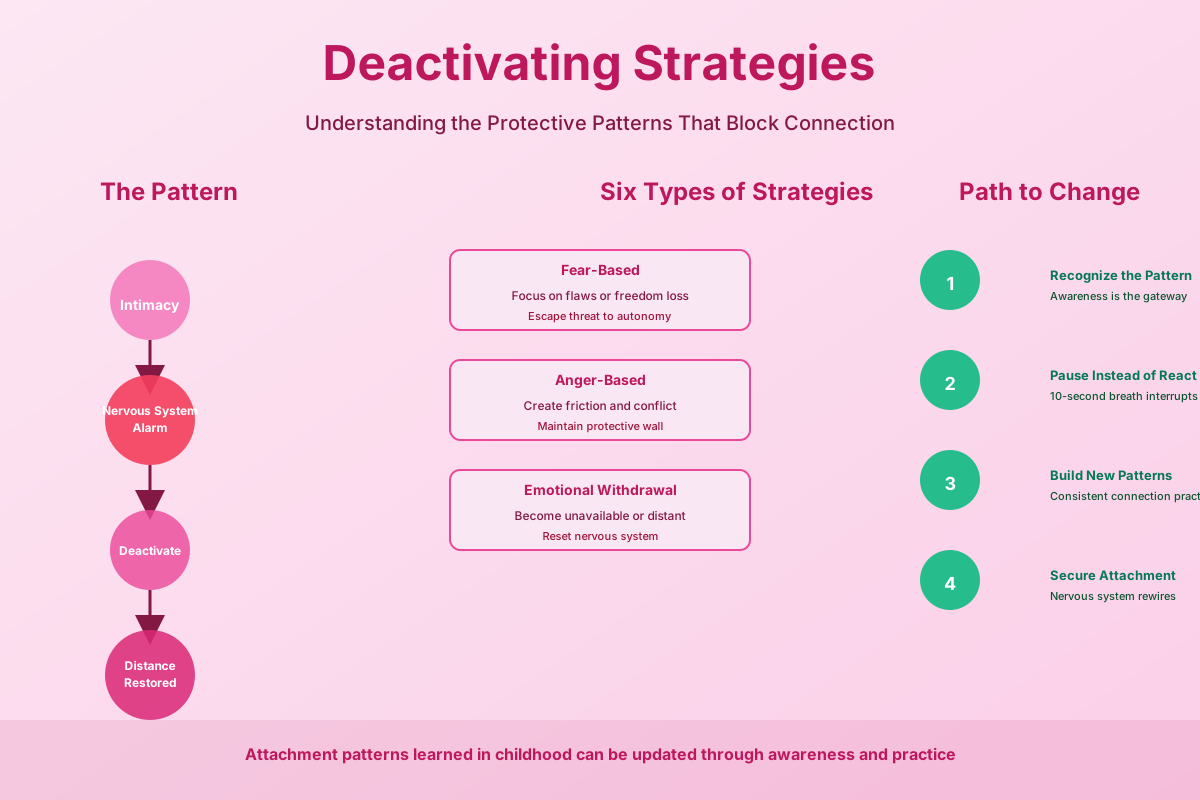
Deactivating strategies are automatic, protective behaviors that reduce emotional closeness and intimacy in relationships. They operate unconsciously—often outside of conscious awareness—and their primary function is to suppress the attachment system when it becomes activated by emotional or relational closeness. When someone with avoidant attachment feels their partner drawing near emotionally or physically, their nervous system registers this as a threat to their autonomy. The deactivating strategy then activates like an alarm system, creating distance to restore a sense of safety.
Not medical advice.
These strategies typically developed in childhood when emotional needs weren't consistently met by caregivers. Instead of learning that closeness equals safety, avoidantly attached children learned that emotional independence equals survival. The nervous system became calibrated to associate intimacy with vulnerability, unpredictability, or loss of control. As adults, these neural patterns replay automatically when intimate moments arise, triggering withdrawal, criticism, or emotional shutdown.
Surprising Insight: Surprising Insight: Deactivating strategies feel like preferences or logical decisions to the person using them. Someone might genuinely believe they 'just need space' or 'aren't the relationship type' without realizing these are protective survival mechanisms learned decades ago.
How Deactivating Strategies Activate
This diagram shows the sequence from intimate moment to deactivating strategy activation
🔍 Click to enlarge
Why Deactivating Strategies Matter in 2026
In 2026, as we navigate increasingly complex relationship dynamics—long-distance partnerships, blended families, digital communication, career demands—understanding deactivating strategies has become essential. People are lonelier despite being more connected than ever, and attachment patterns are often the hidden reason why relationships that seem perfect on paper feel emotionally distant. Research shows that avoidantly attached individuals experience higher rates of relationship dissatisfaction, infidelity, and breakups, not because they lack capacity for love, but because their protective strategies sabotage genuine connection.
This matters because deactivating strategies are learned patterns, not personality flaws. When someone understands why they pull away, they gain choice. They can recognize the impulse and choose differently. Partners can stop taking withdrawal personally and instead see it as a nervous system response. And therapists, coaches, and counselors can work with the actual mechanism instead of treating surface symptoms. Self-awareness about these patterns is the gateway to secure attachment.
The stakes are personal and profound: your ability to form lasting partnerships, to raise children with secure attachment models, to build teams at work where vulnerability and trust are possible, and to experience the psychological and physical health benefits that come with secure relationships. Understanding deactivating strategies is understanding one of the core mechanisms that either enables or blocks human connection.
The Science Behind Deactivating Strategies
Attachment theory, developed by John Bowlby and expanded by decades of neuroscience research, reveals that our attachment style is encoded in our nervous system. When infants experience inconsistent caregiving—parents who are emotionally unavailable, dismissive of needs, or unpredictable—the child learns that seeking comfort is ineffective or even dangerous. The solution the young brain develops is to suppress and ignore emotional signals. Psychologist Mary Ainsworth called this 'avoidant attachment,' and research has identified it as involving specific neural patterns. Brain imaging studies show that avoidantly attached individuals have elevated activity in prefrontal regions associated with top-down inhibition and emotion suppression, while showing reduced amygdala reactivity to emotional stimuli. In other words, their brains are literally trained to dampen emotional response.
Recent neuroscience research from 2024-2025 has examined the role of beta oscillations—electrical patterns in the brain—in attachment avoidance. These beta patterns over frontal and parietal regions appear to reflect habitual suppression and disengagement from emotional stimuli. Importantly, research also shows that for avoidantly attached individuals, emotion suppression works better than cognitive reappraisal (thinking differently about a situation). This means their brains have become optimized for one strategy: pushing emotion away. The challenge is that in relationships, this strategy that protected them as children now isolates them as adults.
Neural Patterns in Avoidant Attachment
Brain regions involved in deactivating strategies
🔍 Click to enlarge
Key Components of Deactivating Strategies
Fear-Based Deactivation
This strategy emerges when closeness is experienced as a threat to autonomy. The person creates distance by finding flaws in their partner, focusing on reasons the relationship won't work, or planning exits. It's driven by fear of losing independence or being controlled. Someone using fear-based deactivation might say things like 'I need my space' or suddenly become critical of qualities they previously valued. This isn't cruelty—it's panic. The nervous system has registered intimacy as dangerous and is generating logical reasons to back away.
Anger/Resentment-Based Deactivation
When a partner gets too close, some avoidantly attached people respond with irritability or manufactured grievances. They dredge up old conflicts, find fault in recent interactions, or express resentment about past hurts. The anger creates friction that pushes the partner away without requiring direct rejection. Research shows this pattern often has roots in childhood experiences of angry or unreliable caregivers. The anger becomes a barrier—maintaining a wall of hostility feels safer than the vulnerability of warmth.
Emotional Distancing Through Withdrawal
The classic deactivating strategy is simple withdrawal. When intimacy emerges—tender conversation, sexual connection, planning a future together—the person becomes distant, preoccupied, or physically absent. They might suddenly need to work late, focus intensely on hobbies, prioritize friendships, or simply become unavailable. The avoidant nervous system needs space to reset, and withdrawal provides it. Unlike anger-based distancing, this version feels passive rather than active—the person simply removes themselves emotionally and often physically.
Dismissal and Minimization
Some avoidantly attached people respond to emotional moments by dismissing their significance. When a partner shares a vulnerable feeling, the response might be 'You're overreacting' or 'That's not a big deal.' When discussing relationship progress, they minimize it: 'We're just dating casually' or 'I don't see this going anywhere long-term.' This strategy keeps things small and safe by refusing to acknowledge the relationship's meaning or the emotional needs within it. It's intellectualization used as a weapon—logical and seemingly reasonable while deeply wounding to partners.
| Strategy Type | How It Works | Common Expressions |
|---|---|---|
| Fear-Based | Focuses on flaws in partner or relationship | 'They're not right for me' or 'This relationship limits my freedom' |
| Anger/Resentment | Creates friction through irritability and blame | Picking fights, bringing up past hurts, constant criticism |
| Emotional Withdrawal | Creates physical or emotional distance | Becoming unavailable, needing space, silent treatment |
| Dismissal & Minimization | Refuses to acknowledge relationship significance | 'It's not serious' or 'Your feelings are exaggerated' |
| Self-Avoidance | Avoids own emotional experience and vulnerability | Numbing with work/hobbies, avoiding self-reflection |
| Anxiety-Based (Paradox) | Pursues then rejects, creating uncertainty | Intense interest followed by sudden coldness and confusion |
How to Apply Deactivating Strategies: Step by Step
- Step 1: Recognize your nervous system's pattern: Notice when closeness triggers an urge to withdraw, criticize, or create distance. This is not a character flaw—it's your protective system activating.
- Step 2: Pause instead of react: When you feel the impulse to pull away, create a brief pause. Take three conscious breaths. This interrupts the automatic pattern.
- Step 3: Name what's happening: Internally acknowledge 'This is my avoidant response. My nervous system is detecting threat.' This shifts you from unconscious reaction to conscious observation.
- Step 4: Identify the specific trigger: Is it physical intimacy, emotional vulnerability, planning a future, or commitment statements? Different triggers activate different responses.
- Step 5: Recognize the fear beneath: Deactivating strategies always protect from something. Fear of loss of control, fear of abandonment, fear of dependency, fear of being trapped. What's your core fear?
- Step 6: Communicate transparently: Instead of acting out the deactivation, communicate it: 'I'm feeling the urge to withdraw right now. I need 20 minutes, and I'll come back to this conversation.'
- Step 7: Practice small acts of connection: Gradually extend your capacity for intimacy. If you usually withdraw after 30 minutes of closeness, try 35 minutes.
- Step 8: Use co-regulation with your partner: Let their calm nervous system help regulate yours. This is how secure attachment develops—through nervous system synchrony.
- Step 9: Track progress in a journal: Notice patterns in when and how you deactivate. Over weeks and months, you'll observe yourself choosing connection more frequently.
- Step 10: Consider therapy for deeper work: A skilled therapist can help you understand the childhood origins of these strategies and develop new neural pathways toward secure attachment.
Deactivating Strategies Across Life Stages
Young Adulthood (18-35)
In young adulthood, deactivating strategies often manifest as 'commitment phobia' or the 'just not the relationship type' narrative. Young avoidantly attached adults may cycle through relationships, ending them just as they approach deeper commitment. They might excel at dating—the early stage requires less vulnerability—but struggle when partners want more emotional intimacy or future planning. Career becomes an easy priority over relationships, and independence is fiercely defended. The challenge: developing enough self-awareness to distinguish genuine preference from protective patterning. Many people don't realize they're avoidantly attached until their twenties or thirties when relationship patterns become undeniable.
Middle Adulthood (35-55)
By middle adulthood, deactivating strategies often create one of two patterns: long-term relationships that remain emotionally distant, or serial relationships with the same ending. Some avoidantly attached people develop successful careers and independence—the very thing they've been protecting—only to feel profound loneliness. Others stay in partnerships where they maintain significant emotional walls, creating a kind of parallel living arrangement. This is when awareness often crystallizes: the strategies that worked to protect them now create the very pain they wanted to avoid. Many people seek therapy or coaching during this stage. Additionally, parenting can activate attachment patterns in new ways—they may unconsciously teach their children the same avoidance strategies they learned.
Later Adulthood (55+)
In later adulthood, avoidant deactivating strategies show their long-term consequences. Research on aging shows that secure attachment is one of the strongest predictors of life satisfaction and health in later years. Avoidantly attached older adults often face isolation, reduced physical health outcomes, and less access to social support. However, this stage also offers opportunity: with the perspective of decades, people can finally understand their patterns with compassion. Some of the most powerful attachment work happens in later life, when people are no longer driven by urgency and can focus on repair—with partners, with adult children, and with themselves. The nervous system remains plastic throughout life, capable of learning new patterns.
Profiles: Your Deactivating Strategies Approach
The Independent Builder
- Respect for their need for autonomy and space
- Slow progression of intimacy and commitment
- Reassurance that connection won't mean losing themselves
Common pitfall: Uses independence as an excuse to never need anyone, leading to isolation
Best move: Consciously practice vulnerability in small doses; ask for help; let others matter
The Dismissive Analyst
- Permission to feel emotions, not just think about them
- Validation that emotions are data, not weakness
- Slowing down from constant problem-solving mode
Common pitfall: Intellectualizes relationships away, missing the actual human connection happening
Best move: Spend time in presence without purpose; notice physical sensations; say feelings out loud
The Conflict Creator
- Tools to recognize when they're creating friction as distance
- Understanding that anger is covering other emotions
- Ways to express frustration without pushing people away
Common pitfall: Uses arguments as the only way to feel powerful or in control, sabotaging good relationships
Best move: Pause before conflicts; ask 'Am I actually upset or am I protecting?'; communicate needs directly
The Phantom Partner
- Structure and practice to show up emotionally
- Understanding that presence matters more than perfection
- Permission to be imperfectly engaged rather than perfectly absent
Common pitfall: Disappears emotionally or physically just when they're needed most, leaving partners confused
Best move: Make small commitments to being present and honor them; build track record of consistency
Common Deactivating Strategies Mistakes
Mistake One: Believing your deactivating strategies are just your personality. 'I'm an independent person' or 'I'm not the relationship type' are narratives built on avoidant patterns. While personality plays a role, decades of attachment research shows that patterns can shift. Mistaking protective strategies for core identity keeps people stuck.
Mistake Two: Expecting your partner to wait while you work through your patterns. Deactivating strategies injure the other person repeatedly. If you recognize these patterns in yourself, you need to actively change them—not just understand them. Your partner shouldn't have to wait for years hoping you'll become available. Set a timeline and pursue real support.
Mistake Three: Trying to change through willpower alone. Deactivating strategies are encoded in your nervous system's automatic responses. Willpower might control the behavior temporarily, but won't rewire the nervous system. You need nervous system work: therapy, somatic practices, co-regulation with a safe partner, or professional coaching specifically designed for attachment.
The Avoidant Loop: How Deactivation Perpetuates Itself
This diagram shows how deactivating strategies create a self-reinforcing cycle
🔍 Click to enlarge
Science and Studies
Decades of attachment research have documented the specific mechanisms and effects of deactivating strategies. The foundational work comes from Bowlby's attachment theory and Ainsworth's empirical research, extended by contemporary neuroscience examining the brain systems involved in attachment avoidance.
- Fraley & Shaver (2000) demonstrated that avoidantly attached adults show defensive regulation of attention and memory—they literally encode and recall emotional information differently, supporting the neural basis of deactivating strategies.
- Mikulincer & Shaver's comprehensive research shows that deactivating strategies include minimizing the importance of relationships, downplaying partner value, and shifting focus to personal achievement and autonomy.
- Recent NIH-published research (2023-2025) confirms that avoidant individuals use emotion suppression as their primary regulation strategy, with prefrontal-limbic dysregulation as the neural correlate.
- Neuroscience studies examining oscillatory brain activity (beta patterns) show that avoidantly attached individuals have altered patterns over frontal regions consistent with top-down inhibition of emotional responses.
- Meta-analyses show deactivating strategies predict relationship dissolution, lower satisfaction, and paradoxically, higher rates of loneliness despite seeking independence.
Your First Micro Habit
Start Small Today
Today's action: When you feel the urge to withdraw from your partner today, pause for 10 seconds and say one sentence about what you're feeling instead of acting on the impulse. This rewires your nervous system's automatic response.
Micro-habits bypass willpower. A 10-second pause is neurologically sufficient to interrupt an automatic pattern and create space for choice. Naming the feeling engages your prefrontal cortex, which dampens amygdala alarm. Over weeks, this builds new neural pathways.
Keep quitting habit apps after a missed day? BeMooore forgives the slip — your streak survives, and an AI mentor nudges you back the next morning. Free on iOS.
Quick Assessment
When your partner wants to discuss the future of your relationship, what typically happens?
Options B, C, and D suggest deactivating strategies. This is where you can practice the pause and communication techniques outlined above.
How do you typically respond to your partner's emotional vulnerability?
Options B, C, and D point to emotional distancing as a deactivating strategy. Building capacity to stay present with emotion, even when uncomfortable, is how you develop secure patterns.
When you've had periods of closeness and intimacy, what comes next?
Options B, C, and D describe the classic deactivating cycle. Recognizing this pattern is the beginning of change. This is where therapy or attachment coaching becomes invaluable—you can't fix alone what developed in relationship.
Take our full assessment to get personalized recommendations.
Discover Your Style →Next Steps
Understanding deactivating strategies is a gift you give yourself. Instead of wondering why you keep sabotaging relationships, running from connection, or feeling perpetually misunderstood, you now know the mechanism. Your nervous system learned to protect you through withdrawal, criticism, or emotional distance because, at some point, that kept you safe. That strategy is no longer serving you—but it's not your fault, and it's not permanent.
What matters now is choice. You can choose to pause instead of react, to communicate instead of withdraw, to stay present with discomfort instead of creating distance. One conversation, one 10-second pause, one moment of vulnerability at a time, you rewire your nervous system. This is how secure attachment develops—not through understanding alone, but through consistent, repeated experiences of showing up even when your protective instincts tell you to run.
Get personalized guidance with AI coaching.
Start Your Journey →Research Sources
This article is based on peer-reviewed research and authoritative sources. Below are the key references we consulted:
Related Glossary Articles
Frequently Asked Questions
Is avoidant attachment the same as commitment phobia?
Not exactly. Commitment phobia is a behavior; avoidant attachment is the underlying attachment pattern that often generates commitment phobia. Someone with avoidant attachment may not fear commitment consciously—they might believe they're just 'not the relationship type.' Deactivating strategies make commitment feel dangerous to the nervous system, even if the conscious mind doesn't recognize this.
Can deactivating strategies change, or is this just how I am?
Deactivating strategies can absolutely change. They're learned patterns stored in the nervous system, not permanent personality traits. Brain plasticity research shows that with consistent practice, different nervous system responses, and secure relationships, people can develop earned secure attachment at any age. The change requires awareness, practice, support, and time—but it's possible.
If my partner has deactivating strategies, should I just accept it?
Not if it's harming you. You can have compassion for their pattern while also having boundaries about what you'll tolerate. If they show no interest in changing, you face a real choice: accept the emotional distance or move on. However, if they're willing to work on it, your consistent presence, patience, and secure nervous system can help them develop new patterns over time.
Is it manipulation when someone uses deactivating strategies?
It's not typically conscious manipulation. Most people using deactivating strategies aren't aware they're doing it. That said, the impact on partners is real—they feel hurt, rejected, confused, and insecure. The question isn't whether it's manipulation but whether someone is willing to become aware and change their impact on others. That willingness is what matters.
How long does it take to develop secure attachment patterns?
There's no fixed timeline. Some people shift significantly in months with intensive therapy or coaching. Others take years of consistent practice and supportive relationships. The nervous system learned these patterns over years or decades—rewiring takes sustained, repeated experiences of safety, connection, and responsiveness. Think of it like learning a new language: possible at any age, requiring practice, and worth the effort.
Take the Next Step
Ready to improve your wellbeing? Take our free assessment to get personalized recommendations based on your unique situation.
- Discover your strengths and gaps
- Get personalized quick wins
- Track your progress over time
- Evidence-based strategies