Breadcrumbing in Dating
You've been waiting for their text all week. When it finally arrives, your heart races. They send a casual emoji, ask how you're doing, maybe like your photo on social media. For a moment, hope floods in—maybe they do care. But then silence returns, and the cycle repeats. You're caught in breadcrumbing: intermittent signals of interest designed to keep you emotionally invested without genuine commitment. This modern dating behavior affects millions of people, leaving them confused, anxious, and doubting their worth. Understanding breadcrumbing is the first step toward protecting your emotional wellbeing.
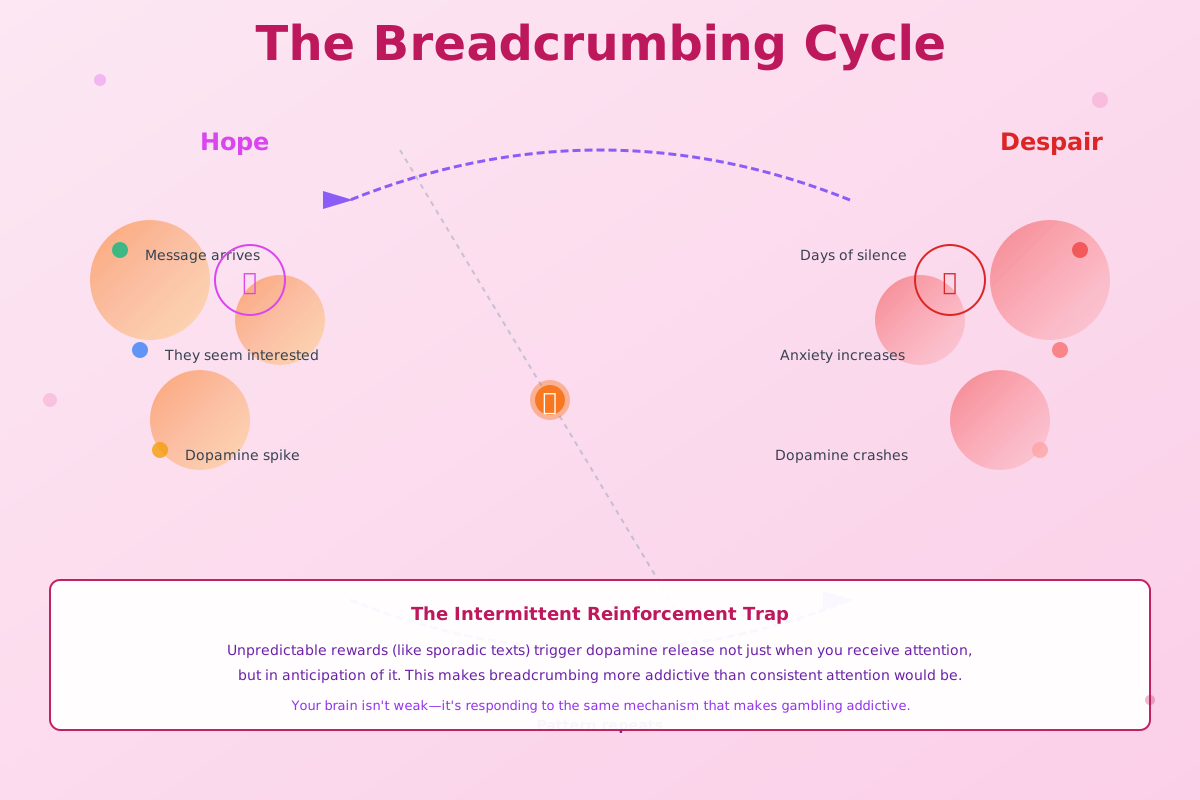
Breadcrumbing is the digital-age equivalent of stringing someone along, but it's more insidious because it operates on the psychology of intermittent reinforcement—the same principle that makes gambling addictive.
If you've felt the emotional rollercoaster of never knowing where you stand with someone, this article will help you recognize breadcrumbing, understand why it happens, and reclaim your emotional power.
What Is Breadcrumbing?
Breadcrumbing is a pattern of sending sporadic, vague messages and signals of interest without any genuine intention to pursue a committed relationship. The breadcrumber gives just enough attention—'crumbs'—to keep their target hopeful and emotionally engaged, but never enough to establish genuine connection or commitment. Think of it as someone leaving breadcrumbs along a trail to keep you following, but the trail never leads anywhere meaningful.
Not medical advice.
In modern dating, breadcrumbing typically occurs through text messages, social media likes, occasional video calls, or surprise check-ins followed by weeks of silence. The breadcrumber maintains plausible deniability—they can always say they were 'just checking in' or 'didn't mean to send mixed signals.' The victim, meanwhile, oscillates between hope and despair, constantly analyzing every message for hidden meaning.
Surprising Insight: Surprising Insight: A 2025 study found that breadcrumbing victims report lower life satisfaction and higher anxiety than people who experience ghosting—the complete disappearance. The inconsistent pattern is more psychologically damaging than clear rejection.
The Breadcrumbing Cycle
Visual representation of how breadcrumbing operates through intermittent reinforcement, showing the emotional rollercoaster pattern
🔍 Click to enlarge
Why Breadcrumbing Matters in 2026
With dating apps, social media, and constant connectivity, breadcrumbing has become epidemic. The low-friction nature of sending a text or liking a photo means potential breadcrumbers face minimal social consequences for their behavior. They can maintain attention from multiple people simultaneously while avoiding the emotional responsibility of commitment.
For recipients, the impact is severe. Breadcrumbing causes measurable psychological harm including anxiety, depression, reduced self-esteem, and impaired ability to form healthy future relationships. People who've experienced breadcrumbing often develop hypervigilance in dating—constantly checking their phones, over-analyzing messages, and struggling to trust authentic gestures of interest.
Understanding breadcrumbing empowers you to recognize it early, set firm boundaries, and protect your emotional resources for people who genuinely value you. This skill is essential for anyone navigating modern dating.
The Science Behind Breadcrumbing
Breadcrumbing works through a psychological principle called intermittent reinforcement. This is the same mechanism that makes slot machines addictive and why variable reward schedules are so powerful. Your brain releases dopamine not just when you receive attention, but in anticipation of it. The unpredictability makes the reward system even more powerful than consistent attention would be.
When a breadcrumber's messages come sporadically, your brain enters a heightened state of alert, seeking the next 'hit' of attention. You check your phone constantly, replay conversations, and construct elaborate narratives about what their silence might mean. This neurological response is involuntary—you're not weak for falling for it, your brain is doing exactly what millions of years of evolution designed it to do.
How Intermittent Reinforcement Works in Breadcrumbing
Neurochemistry explanation showing dopamine response to predictable vs unpredictable rewards
🔍 Click to enlarge
Key Components of Breadcrumbing
Intermittent Messaging Patterns
The breadcrumber sends messages sporadically—sometimes days or weeks apart. Messages are often vague and non-committal: 'Hey, what's up?' or 'Thinking of you!' without follow-through. They avoid concrete plans or meaningful conversation, keeping communication shallow and easily deniable.
Social Media Engagement
Breadcrumbing often manifests through social media: liking posts, viewing stories, or leaving occasional comments. This creates a sense of being 'noticed' while requiring virtually no commitment from the breadcrumber. The victim sees these interactions and constructs hopeful narratives about their connection.
Mixed Signals and Inconsistency
One day the breadcrumber is warm and engaging; the next, cold and distant. This inconsistency is intentional and keeps the victim in a state of confusion. They become hyper-focused on trying to 'crack the code' and understand what's really happening, investing enormous emotional energy.
Avoidance of Commitment Discussion
When the victim tries to clarify the relationship status or define what they are to each other, the breadcrumber becomes evasive, changes the subject, or disappears temporarily. This prevents the victim from ever getting clear answers and forces them to stay in interpretive mode.
| Behavior | Breadcrumbing Pattern | Healthy Dating Pattern |
|---|---|---|
| Communication Frequency | Sporadic and unpredictable | Consistent and reliable |
| Message Content | Vague, surface-level | Thoughtful and engaging |
| Making Plans | Avoids or cancels frequently | Follows through consistently |
| Defining Relationship | Evades the conversation | Opens honest dialogue |
| Response Time | Hours or days to respond | Responds within hours usually |
| Emotional Availability | Selective and conditional | Consistently present |
How to Apply Breadcrumbing: Step by Step
- Step 1: Identify the pattern: Track the timing and content of messages over 2-3 weeks. Look for inconsistency in communication frequency and engagement level.
- Step 2: Examine your emotional responses: Notice if you feel anxious when they're quiet, relieved when they text, and confused about your relationship status. This emotional volatility is a red flag.
- Step 3: Journal your interactions: Write down what they say vs. what they do. Do their words match their actions? Are promises followed by action?
- Step 4: Notice the avoidance tactics: When you try to clarify things, do they disappear, make jokes, or change the subject? This is classic breadcrumbing.
- Step 5: Check for alternative explanations: Could they genuinely be busy? Are there health or life circumstances explaining the pattern? If it's truly just them, patterns remain even during less busy periods.
- Step 6: Test with clarity: Explicitly ask where you stand. 'I value you and want to know if you're interested in developing this further.' Watch how they respond to direct questions.
- Step 7: Set a boundary: Decide what you need from this person (consistent communication, reliability, or exclusivity). State it clearly and observe if they respect it.
- Step 8: Prepare your decision: Know your non-negotiables in advance. If they don't meet these boundaries after multiple conversations, you'll be ready to act.
- Step 9: Take action: If the pattern continues despite boundaries, distance yourself. Stop texting first, don't initiate plans, reduce engagement. This isn't punishment—it's protecting yourself.
- Step 10: Seek support: Talk to trusted friends, family, or a therapist. Breadcrumbing victims often need external perspective to break free from the psychological cycle.
Breadcrumbing Across Life Stages
Young Adulthood (18-35)
Young adults are most vulnerable to breadcrumbing because dating apps are their primary meeting ground. The low-friction nature of digital dating makes breadcrumbing easy to execute. Additionally, younger people may lack experience recognizing manipulation and often excuse inconsistent behavior as normal dating. The desire for connection is high, and breadcrumbing exploits this vulnerability. Young adults in this stage are still developing secure attachment styles, making them more susceptible to intermittent reinforcement cycles.
Middle Adulthood (35-55)
Middle-aged adults sometimes experience breadcrumbing after divorce or breakups when re-entering dating. They may also encounter breadcrumbing from unavailable partners (married individuals, workaholics, or those emotionally unavailable). At this stage, people often have higher standards but may rationalize breadcrumbing as normal behavior. Interestingly, middle-aged breadcrumbing victims sometimes stay longer in these patterns because they're less willing to start over in the dating market and may normalize the situation as 'just how dating is at our age.'
Later Adulthood (55+)
Older adults are increasingly experiencing breadcrumbing as they use dating apps and online platforms. The dynamic here often involves people who have had children leave home and are re-exploring dating. Some breadcrumbing in this stage comes from people who are reluctant to form commitments but enjoy companionship. Interestingly, older adults often have more perspective and can sometimes identify and exit breadcrumbing situations faster than younger cohorts, having learned from previous relationship experiences.
Profiles: Your Breadcrumbing Approach
The Anxious Receiver
- Reassurance that inconsistency doesn't mean abandonment
- Clear communication about your emotional limits
- Grounding techniques when anxiety about messages spikes
Common pitfall: Over-analyzing every message and constructing elaborate narratives about what's really happening. Texting first to try to maintain contact. Apologizing when setting boundaries.
Best move: Practice the 'rule of three': if they disappear, don't initiate contact. Wait for three clear, consistent gestures of interest before investing emotionally. Work on self-soothing skills independent of their attention.
The Self-Doubter
- Perspective that their worth isn't determined by someone's interest
- Permission to prioritize their own needs
- Recognition of their strengths and value
Common pitfall: Blaming themselves for the breadcrumbing. Thinking 'if I were different, they'd be more interested.' Trying harder to be worthy of consistent attention. Accepting crumbs as better than nothing.
Best move: Reframe the breadcrumbing as the breadcrumber's issue, not your failing. Journal moments when you felt valued in other relationships to remind yourself of what you deserve. Practice self-compassion daily.
The Hopeful Romantic
- Realistic expectations about how love typically develops
- Understanding that potential ≠ compatibility
- Strategies for distinguishing hope from intuition
Common pitfall: Seeing breadcrumbing as a 'spark' that could ignite into real connection. Making excuses for poor behavior ('they're just scared of intimacy'). Waiting for the person to 'come around.' Ignoring red flags in favor of imagined potential.
Best move: Write down who this person is NOW, not who you hope they'll become. Set a decision point: 'I'll reassess in 3 months and if the pattern hasn't changed, I'm moving on.' Judge people by their consistent actions, not occasional moments of warmth.
The Boundary Setter
- Validation that saying 'no' is an act of self-love
- Strategies to communicate boundaries calmly
- Support when guilt or obligation tries to override boundaries
Common pitfall: Setting boundaries so harshly that you push away people who might be genuinely interested. Using boundaries as punishment rather than protection. Expecting others to read your mind about what you need.
Best move: Communicate boundaries clearly and kindly before enforcing them. 'I value you and I'm also realizing I need more consistent communication to feel secure.' Give people one chance to meet your needs, then decide. Remember: people who respect you will appreciate clear expectations.
Common Breadcrumbing Mistakes
The biggest mistake breadcrumbing victims make is waiting for clarity that will never come. They hope the breadcrumber will suddenly see their worth and commit. They rationalize the behavior ('they're just busy,' 'they have commitment issues') and make endless excuses. They also mistake intermittent attention for real connection, building entire imaginary relationships in their heads based on fragments.
Another critical error is chasing the breadcrumber. When they go silent, victims double down—texting more, trying to re-engage, being more accommodating. This actually reinforces the breadcrumbing behavior. Every time you chase after a crumb, you're training them that their strategy works.
Finally, many people fail to address the underlying attachment insecurities that made them vulnerable to breadcrumbing in the first place. Until they heal anxious attachment patterns, they'll be prone to attracting breadcrumbers or staying too long in breadcrumbing dynamics. Real healing means addressing the inner work, not just changing external circumstances.
The Breadcrumbing Recovery Journey
Steps to recognize, exit, and heal from breadcrumbing patterns
🔍 Click to enlarge
Science and Studies
Recent research has illuminated the psychological mechanisms and real impacts of breadcrumbing. A 2025 cross-sectional study in the United Kingdom found that people vulnerable to breadcrumbing tend to have anxious or avoidant attachment styles. Research from ResearchGate and peer-reviewed journals has established that breadcrumbing causes measurable psychological distress, including anxiety, depression, reduced life satisfaction, and impaired ability to form healthy relationships.
- Advances in Social Sciences Research Journal (2024): 'Breadcrumbing in Romantic Relationships: A Conceptual and Theoretical Analysis' - Explores breadcrumbing through attachment theory, social exchange theory, and intermittent reinforcement principles
- Psychology Today: Research showing breadcrumbing victims experience lower life satisfaction and greater helplessness than ghosting victims
- MDPI Journal (2024): 'Vulnerability to Breadcrumbing in a Sample of Adults in the United Kingdom' - Cross-sectional study examining who is most susceptible to breadcrumbing
- Cottonwood Psychology (2024): Evidence that intermittent reinforcement is the primary mechanism explaining breadcrumbing's psychological power
- PubMed Central (2020): 'The Illusion of Connection: Psychological Distress in Ghosting and Breadcrumbing' - Research showing breadcrumbing can be more psychologically damaging than ghosting
Your First Micro Habit
Start Small Today
Today's action: For the next 24 hours, notice one pattern in a person's communication style. Don't judge—just observe. Are their messages consistent or sporadic? Do they follow through on plans? Write down what you notice without interpretation.
This micro habit trains you to observe patterns objectively rather than emotionally. You're building awareness without pressure to change anything immediately. This non-judgmental observation is the foundation of recognizing breadcrumbing before you're deeply invested.
Keep quitting habit apps after a missed day? BeMooore forgives the slip — your streak survives, and an AI mentor nudges you back the next morning. Free on iOS.
Quick Assessment
How do you currently feel about the consistency of someone's communication with you?
Your answer reveals your current relationship dynamic. 'Confused' or 'Anxious' suggests potential breadcrumbing patterns worth examining. 'Secure' indicates either a healthy relationship or successful boundary-setting.
When someone you like goes silent, what's your typical response?
Reaching out repeatedly during silences often reinforces breadcrumbing. Healthy responses involve waiting for reciprocal effort or redirecting your energy toward people who show consistent interest.
What would it take for you to walk away from someone who's breadcrumbing you?
This reveals your current boundaries and readiness to protect yourself. If you wouldn't leave, it's worth exploring whether fear of abandonment or low self-esteem is keeping you trapped.
Take our full assessment to get personalized recommendations.
Discover Your Style →Next Steps
Your next step is to honestly assess whether you're currently in a breadcrumbing dynamic. Use the patterns and questions in this article to evaluate your current situation. If you recognize breadcrumbing, you have two choices: have a direct conversation about your needs, or distance yourself from this person.
Beyond this immediate decision, prioritize healing your attachment patterns. Whether through therapy, reading, or supportive relationships, address the underlying vulnerabilities that made you susceptible to breadcrumbing. This is the foundation for attracting healthier partners and building the fulfilling relationships you deserve.
Get personalized guidance with AI coaching.
Start Your Journey →Research Sources
This article is based on peer-reviewed research and authoritative sources. Below are the key references we consulted:
Related Glossary Articles
Frequently Asked Questions
Is breadcrumbing the same as ghosting?
No. Ghosting is complete disappearance without explanation. Breadcrumbing involves periodic contact that keeps false hope alive. Research suggests breadcrumbing is actually more psychologically damaging because the inconsistency prevents the victim from moving on.
Can someone breadcrumb unintentionally?
Possibly, but it's rare. Some people are genuinely unreliable communicators. However, if someone sends you consistent messages but goes quiet when you express needs, that's intentional. Pay attention to whether they're disorganized with everyone or selective in their unavailability.
Should I directly ask if someone is breadcrumbing me?
You can, but frame it as a need rather than an accusation. Try: 'I enjoy talking with you and I want to be direct. I need consistent communication to feel secure. Are you willing and able to meet that need?' Their response tells you everything.
How long does it take to heal from breadcrumbing?
Healing depends on attachment patterns and the duration of breadcrumbing. Most people need 2-6 months of no contact to restore emotional equilibrium. Healing attachment wounds takes longer and often benefits from therapy.
Will working on myself prevent future breadcrumbing?
Partially. If you develop secure attachment and maintain strong boundaries, you'll be less vulnerable to breadcrumbers and more likely to recognize red flags early. However, no one is 100% immune—awareness is your best defense.
Take the Next Step
Ready to improve your wellbeing? Take our free assessment to get personalized recommendations based on your unique situation.
- Discover your strengths and gaps
- Get personalized quick wins
- Track your progress over time
- Evidence-based strategies