Adrenal Fatigue
You wake up exhausted even after eight hours of sleep. Your afternoon energy crashes before 3 PM. Caffeine barely touches your fatigue anymore. Simple tasks feel overwhelming, and your body seems stuck in a fog that won't lift. Sound familiar? Millions of people experience these symptoms without understanding why—and the root often traces back to how chronic stress has dysregulated your body's central stress response system. This guide explores the science behind adrenal fatigue, explains why conventional medicine debates its existence, and reveals what actually works for recovery. Whether you're experiencing mild fatigue or complete burnout, understanding your HPA axis is the key to genuine restoration.
The term 'adrenal fatigue' has ignited debate in the medical community, yet thousands of practitioners work with patients experiencing exactly these symptoms every day.
Your recovery starts with understanding: this isn't about your adrenal glands being permanently damaged, but rather how prolonged stress has rewired your entire stress response system.
What Is Adrenal Fatigue?
Adrenal fatigue describes a collection of symptoms believed to result from chronic stress that dysregulates your hypothalamic-pituitary-adrenal (HPA) axis—your body's central stress response system. Rather than a discrete disease recognized by endocrinology societies, it represents a functional state where your body's stress hormones (particularly cortisol) become dysregulated through prolonged activation, leading to persistent exhaustion, hormonal imbalance, and reduced resilience to stress.
Not medical advice.
The controversy around 'adrenal fatigue' stems from this key distinction: while a 2016 systematic review concluded the term lacks hard evidence according to conventional endocrinology standards, functional and integrative medicine practitioners recognize HPA axis dysregulation as a real physiological condition that occurs on a spectrum. Recent research from 2024-2025 has reframed this conversation, moving beyond whether the condition 'exists' to understanding the actual neuroendocrine mechanisms involved and how to address them effectively.
Surprising Insight: Surprising Insight: After chronic stress ends, recovery of your pituitary and adrenal function takes weeks—which explains why cortisol levels might normalize while ACTH responses remain blunted, perpetuating fatigue and stress sensitivity.
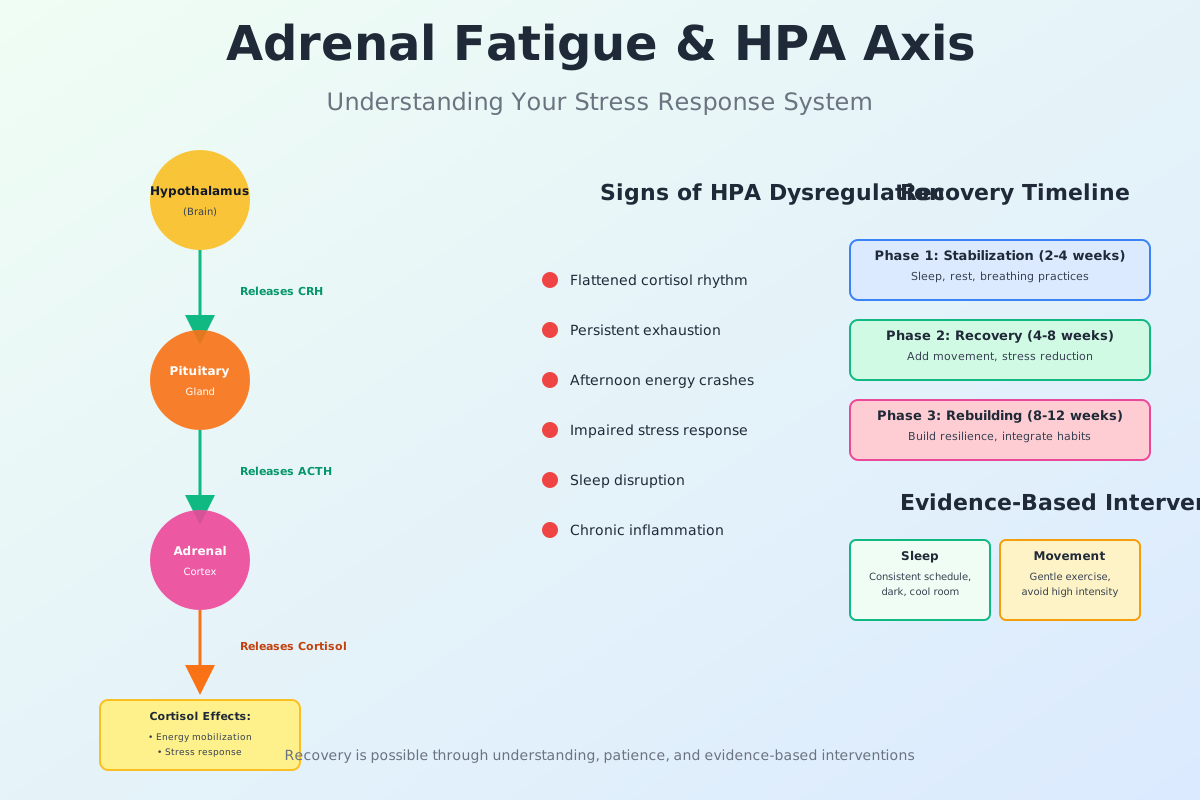
The HPA Axis: Your Stress Response System
Flowchart showing how the hypothalamus, pituitary gland, and adrenal cortex communicate to produce cortisol in response to stress.
🔍 Click to enlarge
Why Adrenal Fatigue Matters in 2026
The conversation around adrenal fatigue has shifted significantly. Rather than debating whether the condition exists, the 2024-2025 research emphasizes understanding HPA axis dysregulation as a contributor to multiple chronic health conditions. A comprehensive review in The American Journal of Medicine outlines an integrative approach to HPA axis dysfunction, recognizing that chronic stress dysregulation plays a central role in depression, anxiety, autoimmune conditions, and metabolic disorders.
What matters now is recognizing the real neuroendocrine consequences: when your stress system remains constantly activated, your body loses the ability to distinguish between genuine threats and daily challenges. This perpetual activation leads to glucocorticoid receptor resistance, where your cells become insensitive to cortisol signaling, creating a paradoxical situation—your cortisol levels might be elevated, but your cells can't respond properly, leaving you exhausted and inflamed.
Understanding this mechanism has practical implications. If you're experiencing persistent fatigue despite adequate sleep, if minor stressors trigger disproportionate reactions, or if your recovery from illness takes unexpectedly long, HPA axis dysregulation is a crucial lens through which to view your symptoms and plan recovery.
The Science Behind Adrenal Fatigue
Your stress response system operates through a delicate balance of chemical messengers. The hypothalamus releases corticotropin-releasing hormone (CRH), which signals your anterior pituitary to release adrenocorticotropic hormone (ACTH), which then instructs your adrenal cortex to release cortisol. This cascade activates your fight-or-flight response, temporarily suppressing non-essential functions like digestion and immune activity to mobilize energy for dealing with threats.
In acute stress—a deadline, a confrontation, a physical challenge—this system works brilliantly. Cortisol rises, triggers appropriate physiological changes, and then recedes through negative feedback mechanisms. However, chronic stress rewrites this script. When your HPA axis remains perpetually activated by ongoing stressors (financial strain, relationship difficulties, work pressure, health concerns), several cascading problems emerge. First, your pituitary corticotrophs and adrenal cortex increase in size to meet demand—a process that takes weeks to reverse even after stress diminishes. Second, continuous cortisol exposure creates glucocorticoid receptor resistance, where your cells become desensitized to cortisol signaling. Third, impaired feedback mechanisms mean your system loses the ability to properly regulate its own activity, creating dysregulation that persists independently of current stress levels.
Progression of HPA Axis Dysregulation
Timeline showing how acute stress transitions into chronic dysregulation with various physiological consequences.
🔍 Click to enlarge
Key Components of Adrenal Fatigue
Cortisol Dysregulation
Healthy cortisol follows a distinct circadian rhythm: highest in the early morning (around 8 AM) to promote wakefulness, and progressively declining through the day, with lowest levels around midnight to facilitate sleep. Chronic stress flattens this rhythm. Some people develop elevated cortisol throughout the day; others experience paradoxical low cortisol patterns despite HPA hyperactivation. Both patterns create the characteristic exhaustion—your body loses the ability to energize appropriately in the morning and wind down at night.
Glucocorticoid Receptor Resistance
Your cells respond to cortisol through glucocorticoid receptors. Prolonged cortisol exposure causes these receptors to downregulate—your cells literally make fewer receptors and become less sensitive to the hormone. This creates a vicious cycle: as receptor sensitivity decreases, your body attempts to compensate by producing more cortisol, further amplifying dysregulation. This resistance is particularly important because it explains why symptom severity doesn't always correlate with measured cortisol levels.
Impaired Stress Adaptation
One hallmark of HPA dysregulation is loss of appropriate stress responsiveness. Someone with a dysregulated system might experience a panic response to minor inconveniences while remaining emotionally flat to genuinely significant events. This reflects the loss of your system's ability to calibrate threat assessment and mount proportionate responses.
Neuroinflammation and Immune Dysregulation
Chronic HPA activation promotes a pro-inflammatory state through several mechanisms: impaired glucocorticoid feedback weakens immune regulation, cytokine imbalances persist, and the shift toward Th2 immune dominance creates vulnerability to autoimmune conditions. This helps explain why HPA dysregulation associates with increased infection susceptibility, delayed wound healing, and development of autoimmune disorders.
| Characteristic | Acute Stress | Chronic Dysregulation |
|---|---|---|
| Cortisol Rhythm | Normal circadian pattern with appropriate peaks | Flattened or inverted rhythm; dysregulated throughout day |
| Stress Response | Proportionate to stressor intensity | Disproportionate or blunted responses |
| Recovery Time | Minutes to hours; rapid return to baseline | Prolonged activation; slow recovery even after stress ends |
| Immune Function | Temporary suppression during stress; rapid recovery | Chronically impaired regulation; persistent inflammation |
| Energy Availability | Mobilized for crisis; replenished afterward | Depleted and poorly sustained throughout day |
| Sleep Quality | May be briefly disrupted by acute stress | Chronic insomnia, frequent waking, non-restorative sleep |
How to Apply Adrenal Fatigue Recovery: Step by Step
- Step 1: Assess your baseline cortisol pattern through a simple morning energy test: track whether you wake naturally feeling refreshed (healthy pattern) or need alarms and stimulation (dysregulation indicator). Note afternoon energy crashes and evening wind-down ability for one week.
- Step 2: Identify your primary stressors by listing everything that triggers consistent anxiety, frustration, or overwhelm. Categorize as controllable (work, relationships, habits) or uncontrollable (external circumstances, others' behaviors) to focus intervention appropriately.
- Step 3: Implement sleep hygiene foundation by establishing a consistent bedtime 30 minutes earlier than current routine, eliminating screens 60 minutes before bed, and maintaining room darkness and coolness. Sleep is foundational for HPA recovery.
- Step 4: Begin daily parasympathetic activation through 5-10 minutes of diaphragmatic breathing (box breathing: 4-count inhale, 4-count hold, 4-count exhale, 4-count hold). Practice in the morning to signal safety to your nervous system.
- Step 5: Reduce stimulant dependence gradually by replacing high-dose caffeine with lower amounts spread throughout the morning only. Stimulants amplify HPA dysregulation; reduction takes 2-3 weeks without abrupt cessation.
- Step 6: Add adaptogenic herbs proven in research to support HPA recovery: ashwagandha (300-500mg daily), rhodiola (200-400mg morning), or magnesium glycinate (300-400mg evening). These support cortisol regulation without suppressing the system.
- Step 7: Establish consistent movement practice: 20-30 minutes of moderate intensity activity (walking, swimming, yoga) most days. Avoid excessive high-intensity exercise when dysregulated, as it further stresses an already overactive system.
- Step 8: Create protected rest periods by scheduling 15-20 minute transition times between major activities. These micro-recovery periods allow your nervous system to downregulate rather than jumping directly from one stressor to another.
- Step 9: Practice cognitive reframing for perceived threats by identifying thoughts that trigger stress responses and gently challenging their accuracy. Your dysregulated system amplifies threat perception; conscious reframing supports nervous system recalibration.
- Step 10: Track recovery indicators: improved morning alertness, reduced afternoon crashes, better sleep quality, more proportionate stress responses, and increased resilience to daily challenges. Expect 6-12 weeks for meaningful improvement as your HPA function resets.
Adrenal Fatigue Across Life Stages
Young Adulthood (18-35)
Young adults often experience HPA dysregulation through accumulated academic pressure, career establishment stress, and relationship transitions. The danger in this phase is developing chronic stress patterns that become entrenched before the system fully matures (brain development continues into the mid-20s). Recovery is often swift in this age group due to neuroplasticity advantages—addressing stress patterns now prevents decades of dysregulation. Young adults respond particularly well to lifestyle interventions and stress management practices.
Middle Adulthood (35-55)
This phase carries maximum stress load: career responsibilities peak, parenting demands intensify, aging parents require care, and health begins changing noticeably. HPA dysregulation in this group often manifests as perimenopausal symptoms in women, erectile dysfunction in men, and metabolic changes in both. Recovery requires addressing both stress reduction and supporting hormonal transitions. This age group often benefits from medical evaluation to distinguish HPA dysregulation from other hormonal shifts.
Later Adulthood (55+)
Chronic dysregulation accumulated over decades can create complex presentations in older adults, often masked by age-related changes. However, recovery is still absolutely possible. This group benefits from comprehensive assessment including both stress factors and medical conditions that might amplify HPA dysregulation. Recovery often improves overall health markers, including better disease management and medication efficacy.
Profiles: Your Adrenal Fatigue Recovery Approach
The High Performer
- Permission to slow down without guilt or perceived failure
- Recognition that sustainable achievement requires recovery periods
- Concrete productivity metrics that account for quality over quantity
Common pitfall: Pushing through fatigue with increased willpower, believing rest is laziness, doubling down on already-excessive workload
Best move: Redefine success to include recovery time; schedule rest as non-negotiable as meetings; measure long-term productivity and health outcomes rather than short-term hustle metrics
The Unacknowledged Caregiver
- Boundaries that protect personal recovery time
- Support systems that reduce caregiving burden
- Recognition that self-care enables better caregiving
Common pitfall: Prioritizing others' needs above personal recovery, guilt about rest, belief that caregiving requires sacrifice of personal health
Best move: Establish specific caregiving hours with built-in breaks; delegate when possible; practice stating 'no' to additional responsibilities; recognize that your health directly impacts care quality
The Chronic Problem-Solver
- Acceptance that some problems don't have immediate solutions
- Practice tolerating uncertainty without constant vigilance
- Ability to mentally release worries outside designated worry time
Common pitfall: Constant mental engagement with problems, inability to 'turn off' problem-solving, catastrophizing about potential future issues
Best move: Designate 30 minutes daily as 'problem time' for active worrying; outside this window, practice releasing thoughts through techniques like noting and releasing; address real action items separately from worry rumination
The Masked Burnout Candidate
- Explicit permission to admit struggle before complete collapse
- Realistic assessment of current capacity without shame
- Gradual reintegration rather than all-or-nothing returns
Common pitfall: Functioning adequately externally while internally depleted, sudden collapse after years of compensation, attempting rapid return to previous capacity
Best move: Schedule regular burnout assessment conversations; make small changes early before crisis emerges; plan graduated return after any recovery period; build sustainable systems rather than relying on personal reserves
Common Adrenal Fatigue Mistakes
The most dangerous mistake is pursuing intensive exercise programs to 'build energy.' While movement helps, high-intensity training further stresses an overactive HPA axis. Someone with dysregulation needs gentle, consistent movement before progressing to intensity. This often requires reducing current exercise intensity—counterintuitive but necessary.
Another critical error is replacing whole foods with supplement protocols. While certain adaptogens support recovery, they work best alongside dietary foundations: adequate protein, stable blood sugar through complex carbs, sufficient healthy fats, and consistent meal timing. Supplements without dietary foundation provide minimal benefit.
The third major mistake is addressing stress only through willpower and positive thinking. While mindset matters, dysregulation requires physiological support: sleep improvement, nervous system downregulation through breathing practices, movement, and sometimes professional guidance. Cognitive approaches alone cannot overcome dysregulated physiology.
HPA Recovery Pathway: From Dysregulation to Resilience
Flowchart showing progression from acute dysregulation through recovery phases with key interventions.
🔍 Click to enlarge
Science and Studies
Research into HPA axis dysfunction has evolved significantly. The 2024-2025 literature emphasizes integrative understanding rather than debating terminology. Key findings include: a 2024 European Society of Endocrinology and Endocrine Society joint guideline confirming that HPA recovery after chronic suppression takes weeks and recommends morning cortisol >10μg/dL as indicator of recovery; a comprehensive 2025 American Journal of Medicine review outlining HPA axis dysfunction as contributor to depression, autoimmunity, and metabolic disease; and MDPI-published research documenting how glucocorticoid receptor resistance develops and perpetuates inflammation.
- Joint Clinical Guideline (2024): European Society of Endocrinology & Endocrine Society - Diagnosis and Therapy of Glucocorticoid-induced Adrenal Insufficiency - establishes recovery timelines and cortisol threshold markers
- Integrative Approach to HPA Axis Dysfunction (2025): The American Journal of Medicine - comprehensive review connecting HPA dysregulation to chronic disease and outlining evidence-based recovery strategies
- Chronic Stress and Autoimmunity (2024): PMC/MDPI research - documents HPA axis role in immune dysregulation and cytokine imbalance underlying autoimmune conditions
- HPA Axis Recovery Model (2021): PMC research explaining dysregulation timescale - demonstrates why recovery takes weeks even after stress ends due to pituitary and adrenal adaptations
- Physiology of Cortisol (2024): NCBI StatPearls - authoritative reference on cortisol synthesis, regulation, and physiological effects across body systems
Your First Micro Habit
Start Small Today
Today's action: Tomorrow morning, before doing anything else, practice 5 minutes of box breathing (4-count inhale, 4-count hold, 4-count exhale, 4-count hold) while sitting comfortably. This single intervention begins signaling safety to your dysregulated nervous system.
Box breathing directly activates your parasympathetic nervous system—your body's 'rest and digest' mode. It's the neurological opposite of your current stress state. This micro-habit teaches your system that it's safe to downregulate and begins rewiring your baseline activation level. Done consistently for just 5 minutes daily, it produces measurable changes in cortisol rhythm and stress responsiveness within 2-3 weeks.
Keep quitting habit apps after a missed day? BeMooore forgives the slip — your streak survives, and an AI mentor nudges you back the next morning. Free on iOS.
Quick Assessment
How would you describe your current energy pattern?
Your pattern reveals whether you have normal stress recovery or HPA dysregulation affecting your circadian rhythm. Consistent afternoon crashes specifically indicate cortisol rhythm flattening—a key dysregulation marker.
How do you typically respond to unexpected stressful situations?
This reveals your stress calibration capacity. Dysregulated individuals lose the ability to mount proportionate responses—either hyperresponsive or hyporesponsive patterns indicate HPA axis dysregulation.
What's your biggest barrier to stress management right now?
This identifies your specific intervention point. Those lacking motivation need accountability structures. Those with knowledge gaps need direction. Those struggling despite effort need assessment for severity and potential medical factors. Those too depleted need immediate stabilization through sleep and rest before adding interventions.
Take our full assessment to get personalized recommendations.
Discover Your Style →Next Steps
Your recovery begins with one decision: recognizing that your fatigue serves as useful information about your system's dysregulation rather than personal failure. This reframe—from shame to curiosity—shifts you from pushing harder to recovering smarter. Your HPA axis isn't permanently broken; it's been working overtime and needs a structured recovery plan.
Start with the micro habit outlined above: five minutes of box breathing tomorrow morning. Then implement one additional change this week—whether that's moving bedtime 30 minutes earlier, eliminating one caffeine source, or scheduling a 15-minute daily walk. Small, consistent changes compound into complete HPA restoration far more effectively than attempting dramatic overhaul. Track the three most meaningful changes for you over the next month and notice how your energy, stress responses, and sleep begin shifting.
Get personalized guidance with AI coaching.
Start Your Journey →Research Sources
This article is based on peer-reviewed research and authoritative sources. Below are the key references we consulted:
Related Glossary Articles
Frequently Asked Questions
Is adrenal fatigue a real medical diagnosis?
Adrenal fatigue as a clinical diagnosis isn't recognized by major endocrinology societies, which is accurate from a strict nosological perspective. However, HPA axis dysregulation—the physiological state adrenal fatigue describes—is absolutely real and extensively documented in peer-reviewed research. What matters for you is whether your symptoms improve through evidence-based interventions addressing HPA function rather than debating terminology.
Can my doctor test for adrenal fatigue?
Standard cortisol blood tests show morning levels, but they capture only one moment. More comprehensive assessment includes 24-hour urinary cortisol, saliva cortisol rhythm testing at multiple timepoints, and ACTH levels. However, even with these tests, symptom improvement matters more than achieving perfect lab values. Many practitioners focus on functional assessment (energy patterns, stress responses, sleep quality) alongside any available laboratory data.
How long does HPA axis recovery actually take?
Timeline varies significantly based on dysregulation severity and consistency of recovery efforts. Mild dysregulation may improve in 4-6 weeks with solid sleep and stress reduction. Moderate dysregulation typically requires 8-12 weeks. Severe, long-standing dysregulation can take 6+ months. Key factor: recovery isn't linear—expect plateaus, occasional setbacks, and gradual improvement rather than sudden transformation.
Is rest the solution, or do I need to exercise?
Both matter, but the sequence is crucial. Initial dysregulation recovery prioritizes sleep, stress reduction, and gentle movement. High-intensity exercise further activates an already-overactive system during acute phases. Typically: weeks 1-4 focus on rest and gentle movement (walking, yoga); weeks 5-8 add moderate intensity as energy improves; weeks 8+ can progressively increase challenge. Listen to your body—if exercise increases fatigue, you're progressing too quickly.
What supplements actually help adrenal fatigue?
Adaptogens with research support include ashwagandha (reduces cortisol and anxiety), rhodiola (improves fatigue and stress resilience), and magnesium (supports nervous system downregulation and sleep). However, supplements without dietary foundation (adequate protein, stable blood sugar, whole foods) provide minimal benefit. Food-first approach: consistent meals with protein and complex carbs, adequate healthy fats, and sufficient hydration form your foundation. Supplements enhance, not replace, these basics.
Take the Next Step
Ready to improve your wellbeing? Take our free assessment to get personalized recommendations based on your unique situation.
- Discover your strengths and gaps
- Get personalized quick wins
- Track your progress over time
- Evidence-based strategies