Metabolism
Your metabolism is the silent engine running 24/7 inside your body, converting every meal you eat and every breath you take into the energy that keeps you alive. It powers your heartbeat while you sleep, fuels your muscles when you move, and even burns calories when you're completely still. Whether you want more energy throughout the day, better fitness results, or simply to understand what really happens when your body processes food, understanding your metabolism is the foundation.
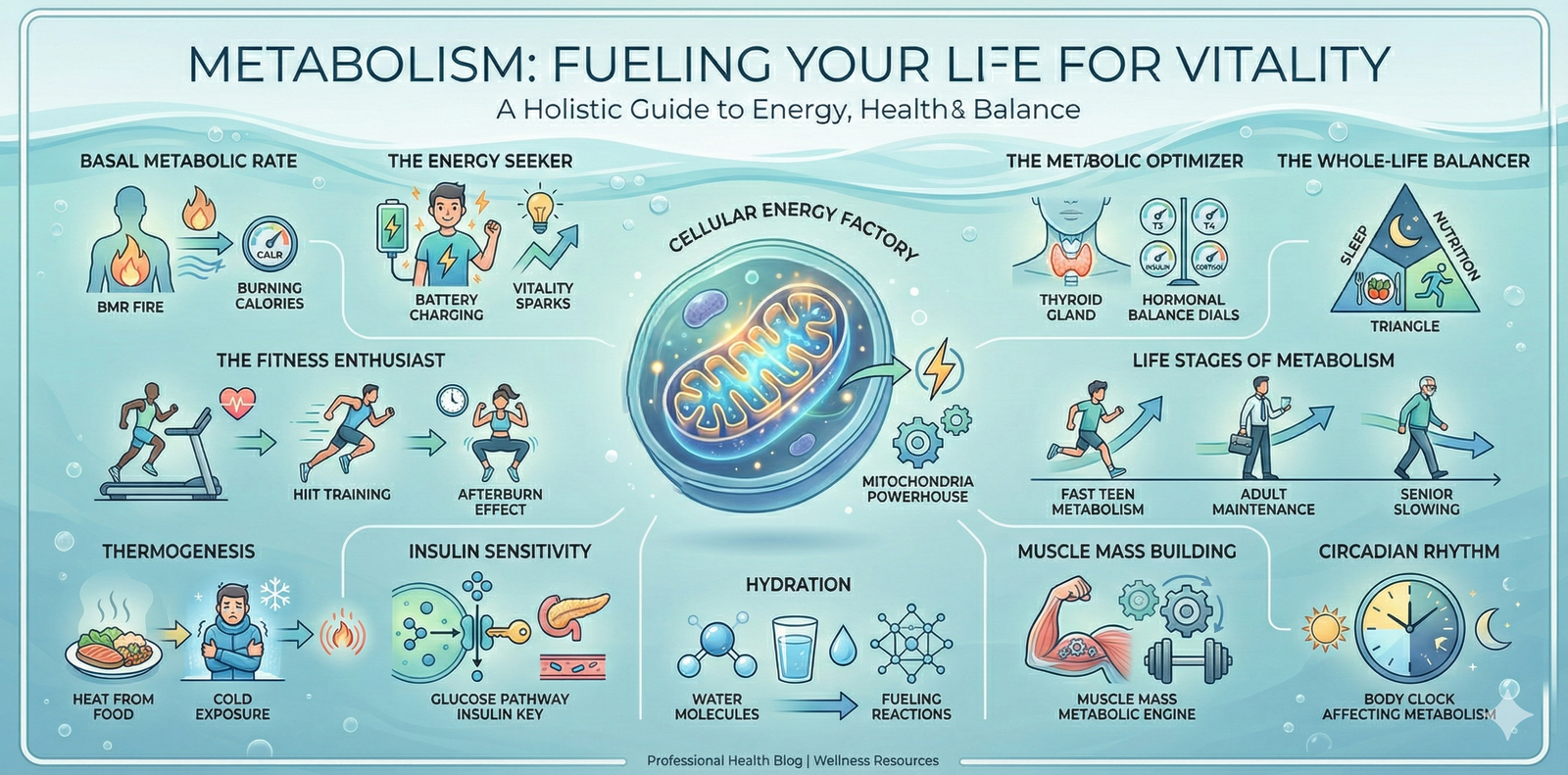
Most people think metabolism is something fixed at birth. But your metabolism responds to how you move, what you eat, and even how you sleep.
This guide explains what metabolism really is, what controls it, and the proven ways to influence it naturally.
What Is Metabolism?
Metabolism is the sum of all chemical processes happening inside your cells that allow you to live and function. When you eat food, your body breaks it down into smaller molecules. These molecules travel through your bloodstream to your cells, where they're converted into energy your body can use immediately or store for later.
Not medical advice.
The word metabolism comes from the Greek word for 'change.' Your metabolism is constantly changing—breaking down food, building new tissues, removing waste, and adjusting to whatever demands you place on your body. This happens whether you're exercising hard, relaxing on the couch, or sleeping deeply.
Surprising Insight: Surprising Insight: Contrary to popular belief, your metabolism doesn't actually slow down significantly until around age 60. Recent research tracking people over 40 years found that metabolism stays relatively stable from your 20s through your 50s.
How Your Body Converts Food Into Energy
A three-stage process showing digestion, cellular conversion, and energy release
🔍 Click to enlarge
Why Metabolism Matters in 2026
In our modern world of constant stress, sedentary work, and processed foods, metabolic health has become increasingly important. Your metabolism influences not just your weight, but your energy levels, mental clarity, sleep quality, and overall health. When metabolism works efficiently, everything feels easier.
Understanding metabolism helps you make sense of your body's signals. Why do you feel tired at 3pm? Why does exercise sometimes feel harder? Why can some people eat more without gaining weight? The answers often lie in how your metabolism is functioning.
Metabolic health in 2026 is recognized as fundamental to preventing chronic diseases like type 2 diabetes, cardiovascular disease, and metabolic syndrome. It's not just about burning calories—it's about how efficiently your body converts fuel into function.
The Science Behind Metabolism
Your metabolism operates through two opposing processes: anabolism (building up) and catabolism (breaking down). Anabolism builds new cells, repairs tissues, and stores energy for future use. This is how you grow muscle, heal wounds, and maintain your body structure.
Catabolism breaks down large molecules into smaller ones to release energy. When you need energy—whether climbing stairs or thinking hard—catabolism activates. Both processes happen continuously, in balance. Understanding this duality explains why you can build muscle and lose fat simultaneously, or why rest days are essential for strength gains.
Anabolism vs Catabolism: The Two Sides of Metabolism
Comparison of building and breaking down processes in your body
🔍 Click to enlarge
Key Components of Metabolism
Basal Metabolic Rate (BMR)
Your basal metabolic rate is the number of calories your body burns at complete rest just to keep you alive. Your heart beating, lungs breathing, brain thinking, and cells functioning all require energy. BMR accounts for about 60-75% of your total daily energy expenditure. Lean muscle tissue is the biggest driver of BMR—muscle burns more calories than fat even when you're sleeping.
Thermic Effect of Food (TEF)
When you eat, your body uses energy to digest that food. This accounts for about 10% of daily energy expenditure. Interestingly, different foods require different amounts of energy to digest. Protein has the highest thermic effect, increasing your metabolic rate by 15-30%. Carbohydrates increase it by 5-10%, and fats by just 0-3%. This is why high-protein meals create a larger metabolic bump than high-fat meals.
Activity Energy Expenditure (AEE)
This is the energy you burn through intentional exercise and movement. Unlike BMR, this is within your control. A 30-minute strength training session burns more calories than 30 minutes of casual walking, partly because intense exercise elevates your metabolism for hours afterward.
Non-Exercise Activity Thermogenesis (NEAT)
This is often overlooked but crucial: the calories you burn through daily living—fidgeting, maintaining posture, occupational activities, and spontaneous movement. NEAT can vary by 2000 calories per day between individuals in the same body size, explaining much of why some people struggle with weight while others don't.
| Component | Percentage of Total | Key Factor |
|---|---|---|
| Basal Metabolic Rate | 60-75% | Lean muscle mass |
| Thermic Effect of Food | 8-15% | Protein intake |
| Exercise Activity | 5-10% | Intensity & duration |
| NEAT | 15-30% | Daily movement patterns |
How to Apply Metabolism: Step by Step
- Step 1: Assess your current baseline: Track your energy levels throughout a typical day. When do you feel most alert? When does energy dip? This awareness is your starting point.
- Step 2: Increase lean muscle through strength training: Resistance exercise 2-3 times weekly builds muscle tissue, which is metabolically active. Even small increases in muscle elevate your BMR.
- Step 3: Prioritize protein at every meal: Aim for 25-30g of protein per meal. This maximizes the thermic effect of food and helps preserve muscle mass while you exercise.
- Step 4: Stay hydrated consistently: Drinking water increases your metabolic rate by 10-30% for about an hour. Cold water may have a slightly greater effect as your body heats it.
- Step 5: Add high-intensity intervals: One 15-20 minute HIIT session weekly elevates your metabolism for hours afterward through increased oxygen consumption and metabolic adaptation.
- Step 6: Improve sleep quality: Deep sleep regulates hormones controlling hunger and metabolism. Aim for 7-9 hours of consistent sleep in a cool, dark environment.
- Step 7: Move throughout the day: Non-exercise movement (NEAT) is underrated. Use stairs, stand while working, take walking breaks. This accumulated movement significantly affects daily energy expenditure.
- Step 8: Include fiber-rich foods: Whole grains, vegetables, and legumes take longer to digest, creating a sustained metabolic boost and improved blood sugar stability.
- Step 9: Consider green tea regularly: The compound EGCG in green tea may increase fat burning and metabolic rate. About three cups daily showed effects in research studies.
- Step 10: Manage stress and cortisol: Chronic stress elevates cortisol, which impairs metabolism and increases fat storage. Practice stress reduction techniques you actually enjoy.
Metabolism Across Life Stages
Adultez joven (18-35)
During young adulthood, your metabolism is typically at its most efficient and flexible. You can build muscle more easily, recover faster from exercise, and often maintain body composition with less conscious effort. This is the ideal time to build the metabolic foundation through regular strength training and healthy eating habits. These patterns established now tend to persist into middle age.
Edad media (35-55)
During this stage, if you're not strength training, you naturally lose about 3-8% of muscle mass per decade. This loss directly reduces your basal metabolic rate. However, this is entirely preventable. People who maintain strength training throughout middle age show minimal metabolic decline. The key shift is that weight maintenance now requires more intentionality.
Adultez tardía (55+)
Around age 60, metabolism does slightly decline at about 1% per year. However, this is far smaller than most people expect. Research shows that active individuals in their 60s, 70s, and beyond maintain metabolic function surprisingly well. Strength training becomes even more valuable, as preserving muscle becomes the primary metabolic lever.
Profiles: Your Metabolism Approach
The Energy Seeker
- Consistent fuel every 3-4 hours
- Mix of protein and complex carbs
- Regular movement throughout day
Common pitfall: Skipping meals then overeating. Long gaps without food destabilize blood sugar and metabolism.
Best move: Establish 4-5 small meals or snacks daily with protein at each. This stabilizes energy and keeps metabolism active.
The Fitness Enthusiast
- Adequate calories for training recovery
- Strategic pre/post-workout nutrition
- Rest days for metabolic adaptation
Common pitfall: Under-eating while training. Thinking 'less is more' actually suppresses metabolic adaptation and performance.
Best move: Eat enough to fuel your training. Include carbs post-workout and protein throughout the day. Metabolism adapts through adequate nutrition.
The Metabolic Optimizer
- Data on personal metabolic response
- Personalized macro ratios
- Biohacking approaches like tracking
Common pitfall: Over-complicating metabolism with too many tweaks at once. Complexity without consistency yields no results.
Best move: Track one variable at a time. Change one habit for 2-3 weeks and measure impact. Build incrementally on what works for your body.
The Whole-Life Balancer
- Sustainable habits fitting daily life
- Stress management equal to exercise
- Sleep consistency as priority
Common pitfall: Assuming metabolism only responds to diet and exercise. Stress and sleep are equal metabolic factors.
Best move: Build a foundation of 7-8 hours sleep and stress management first. Then add consistent movement. Metabolism flourishes in a balanced life.
Common Metabolism Mistakes
The biggest metabolism mistake is thinking of it as fixed. Many people believe 'I have a slow metabolism' and give up. In reality, metabolic rate is highly responsive to behavior. You can influence it through exercise, nutrition, sleep, and stress management.
Another common error is extreme calorie restriction. When you drastically cut calories, your body perceives starvation and actually preserves energy, slowing metabolism. Paradoxically, eating too little can make weight loss harder. Moderate calorie deficits (10-20%) combined with adequate protein preserve metabolic rate while losing fat.
A third mistake is neglecting strength training while doing only cardio. While cardio burns calories, strength training builds the muscle tissue that drives your basal metabolic rate. The most metabolically efficient people combine both: strength training 2-3x weekly and moderate cardio activity.
Metabolism Myths vs. Reality
Common misconceptions about metabolism and the scientific truth
🔍 Click to enlarge
Ciencia y estudios
Metabolism research has advanced significantly in recent years, challenging long-held myths with solid evidence. Studies from NIH, Harvard, and endocrinology journals consistently show that metabolic rate is far more modifiable than previously thought. The hormonal regulation of metabolism—particularly through thyroid hormones and insulin—is now well understood. And recent research on basal metabolic rate demonstrates that lean muscle mass is the primary driver, not age or genetics alone.
- Cleveland Clinic (2024): Comprehensive review of metabolism physiology showing anabolic and catabolic pathways and how they interact.
- NIH/StatPearls (2024): 'Physiology, Metabolism' providing peer-reviewed evidence on metabolic rate determination and body composition relationships.
- Harvard Health (2021): Meta-analysis showing metabolism remains stable from age 20-60, challenging the 'metabolism slows with age' myth.
- National Institutes of Health (2024): Recent advances in understanding thyroid hormone function and its metabolic regulation across life stages.
- Medical News Today (2024): Evidence-based review of 12 natural metabolic enhancement strategies with scientific support for each approach.
Tu primer micro hábito
Comienza pequeño hoy
Today's action: Add 15 minutes of walking after your largest meal of the day. This stabilizes blood sugar, reduces the metabolic load on digestion, and activates muscles.
Post-meal movement activates muscles to absorb glucose, reducing blood sugar spikes. Over time, this single habit improves insulin sensitivity and metabolic flexibility. It's also the easiest change to maintain consistently.
Track your metabolic habits and get personalized AI coaching with our app.
Evaluación rápida
How would you describe your current relationship with energy levels throughout the day?
Your energy pattern tells us about metabolic stability. Consistency suggests good metabolic function, while crashes suggest blood sugar instability or insufficient movement patterns.
Which best describes your approach to exercise?
Exercise type directly shapes metabolism. Those combining strength and cardio see the best metabolic adaptation because muscle tissue drives basal metabolic rate.
What's your primary motivation to understand and improve your metabolism?
Your motivation shapes which metabolic strategies will feel most sustainable. Energy seekers thrive with meal timing changes, while fitness enthusiasts respond to training adjustments.
Take our full assessment to get personalized recommendations for your metabolism and energy.
Discover Your Style →Preguntas frecuentes
Próximos pasos
Your metabolism is not fixed. It responds to what you do—how you move, what you eat, how you sleep, and how you manage stress. Start with the micro habit suggested above: a 15-minute walk after your largest meal. This single change, maintained for 3-4 weeks, creates measurable improvements in energy and blood sugar stability.
From there, add one more change: prioritize strength training 2-3 times weekly if you're not already. This combination—post-meal movement plus muscle-building exercise—creates the metabolic foundation everything else builds upon. Track how you feel, not just what you weigh. Energy, recovery, strength, and sleep quality are more sensitive metabolic indicators than scale weight.
Get personalized guidance with AI coaching to optimize your metabolism and energy.
Start Your Journey →Research Sources
This article is based on peer-reviewed research and authoritative sources. Below are the key references we consulted:
Related Glossary Articles
Frequently Asked Questions
Can I really speed up my metabolism?
Yes, but perhaps not as dramatically as marketed. You can improve your metabolic rate through strength training (builds muscle), adequate protein intake (increases thermic effect), improved sleep (regulates hormones), and stress management (reduces cortisol). Realistic improvements range from 5-15%, which compounds significantly over time.
Does metabolism slow down with age?
Not as much as commonly believed. Research shows metabolism stays relatively stable from age 20 to 60. After 60, there's about 1% decline yearly, but this is largely due to decreased activity and muscle loss, not aging itself. Active individuals show minimal metabolic decline.
What's the best diet for metabolism?
There's no single 'best' diet. However, high-protein diets support metabolism by building muscle and increasing the thermic effect of food. Whole foods that require more digestion (fiber-rich, less processed) also boost metabolic rate. The best diet is one you'll maintain consistently.
How much does exercise need to boost metabolism?
Modest amounts yield real results. Two 30-minute strength training sessions weekly plus 150 minutes of moderate activity (or 75 minutes of intense activity) is the standard recommendation. Even 15-20 minutes of high-intensity interval training weekly significantly elevates metabolism.
Why do some people stay thin without trying?
Higher activity (especially NEAT—non-exercise movement), more muscle mass, or better metabolic efficiency from genetics or past activity patterns. But most of this difference is behavioral. 'Naturally thin' people often move more, eat slightly less intuitively, and maintain consistent activity throughout life.
Take the Next Step
Ready to improve your wellbeing? Take our free assessment to get personalized recommendations based on your unique situation.
- Discover your strengths and gaps
- Get personalized quick wins
- Track your progress over time
- Evidence-based strategies